
General
Over UGX150 million raised for International Symposium on Non-Communicable Diseases

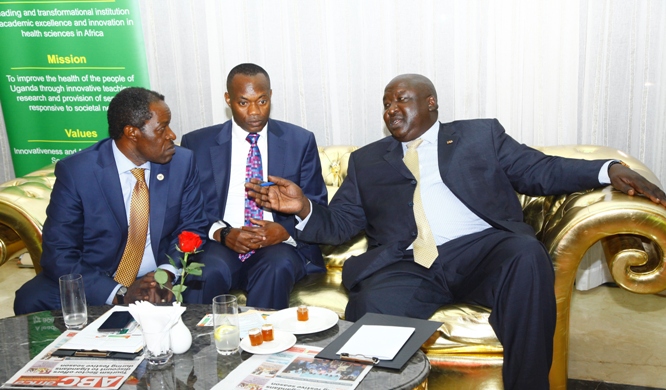
On 12th December 2017, over UGX150 million was raised during the Mak Fundraising dinner organised by Makerere University College of Health Sciences together with St. Augustine International University to mobilise resources for the upcoming 1st International Non Communicable Diseases (NCDs) Symposium scheduled to take place from 12th to 15th February 2018 at Speke Resort Munyonyo.
The Minister of State for International Affairs, Hon. Oryem Henry Okello officiated at the fundraising drive that engaged corporate and development partners from both public and private sector as well as partners from the business world.
The Minister acknowledged the tremendous support from development partners towards fighting against NCDs in Uganda and encouraged them to continue soliciting funds to boost the health sector of the country. He pledged to mobilise more partners, fellow ministers and friends to work with the committee and also contribute towards the noble cause.

Hon. Oryem applauded the brains behind the 1st International Non Communicable Diseases Symposium saying that, Uganda has yarned for an awareness campaign on Non Communicable Diseases. “We live in a terrible situation without knowledge on NCDs. The percentage of victims of NCDs in Uganda is very high, including myself. This drive is a formidable one and I believe we are going to achieve the intended goals,” he said.
He encouraged Ugandans to go for screening so that they can understand their status earlier and adopt the preventive measures or start the medication. He pledged to extend the campaign to fellow ministers so that they can also carry out the test “talk to your friends and family about this and encourage them to go for tests and screening. I pledge to reach out to the cabinet ministers so that they can also be tested and screened during this drive. We need to fight this killer disease before it fights our population,” the Minister remarked.
Representing the Vice Chancellor, the Acting Deputy Vice Chancellor for Finance and Administration Prof. William Bazeyo called for a collective measure to create awareness among Ugandans on the Non Communicable Diseases. He also urged Ugandans to embrace the development of a research fund geared towards collecting data aimed at finding lasting solutions on Non Communicable Diseases.
“We discovered that little research has been done on NCDs. Africans we are depending on research done by the western world. We need to support our own research. Makerere University might not be endowed with funds but it is endowed with human capacity to do research. Therefore if we raise funds, I am sure the University together with other partners can carry out research on the NCDs,” said Prof. Bazeyo.

He thanked all the developmental partners that have immensely contributed towards the symposium as well as the Research fund. Prof. Bazeyo recognised the efforts of H.E King Caesar Augustus Mulenga to mobilise funds for the symposium and the research fund. He thanked the Principal of College of Health Sciences Prof. Charles Ibingira for commitment to hosting a successful symposium.
The Deputy Vice Chancellor informed the audience that Makerere University Council chaired by Eng. Charles Wana-Etyem would contribute UGX50million. Prof. Bazeyo also pledged to contribute UGX5million towards the Symposium on Non-Communicable Diseases.
Appreciating the drive to fight against NCDs in Uganda, the Chairman of St Augustine International University H.E King Caesar Augustus Mulenga, pledged to contribute UGX100milliom towards the Symposium and also pledged on behalf of St Augustine International University to raise UGX50 million annually for a period of 7 years towards development the research fund.
H.E King Caesar Augustus Mulenga emphasized the need to create awareness on NCDs when he said, “there is a need to make Ugandans know that Non Communicable Diseases are here and here to kill. We therefore need to provide this information. We must teach them about the prevention of NCDs.”
“Ugandans should develop a culture of early screening to detect and treat the diseases in infancy stages. We need to make it a rule or a policy that there must be early screening in schools, organisations, institutions and also screening among family members,” he added.

The 1st International Non Communicable Diseases Symposium will take place from 12th -15th February 2018 at Speke Resort Munyonyo. Organised by Makerere University College of Health Sciences and St Augustine International University under a theme: “Building momentum to address the epidemic of Non-Communicable Diseases in Africa,” the symposium focuses on creating attention to the NCDs epidemic in Uganda and the region among general public, business community, researchers, clinicians, funders, and policy makers that will result into a formidable multi-disciplinary response to stop the epidemic. It also aims at creating networks and consortium that will generate data and design interventions for prevention, early detection and treatment of NCDs as well as creating national policies, frameworks and multi-disciplinary health systems to curb the ill health and early deaths from the Diseases.
According to the Chairperson of the National Organising Committee, Prof. Fred Wabwire, the symposium will inform research focused on finding innovative solutions to epidemic and endemic diseases.
In a presentation, the Principal of College of Health Sciences, Prof. Charles Ibingira said that the minimal response to the NCDs by Ugandans has been due to low public awareness, and weak health systems that are aligned to only communicable diseases and limited data to support the design of presentation and intervention.
“Many Ugandans have died due to lack of knowledge about the diseases. So many of them have gone to hospitals only to be diagnosed of cancer in its advanced stages. Another issues is that we have weak and poorly facilitated health centres with no screening equipment,” he said.

He encouraged the public to support the awareness drive that the College of Health Sciences together with St Augustine International University is organising to enable the society understand the preventative measures for Non-Communicable Diseases. Prof. Ibingira urged Government to support health centres with equipment and necessary facilitation in line with Non Communicable Disease prevention and awareness.
The Makerere University Fundraising Dinner was graced by the Managing Director of Bank of Baroda Mr. Ashwini Kumar, Chairman Crown Beverages Ltd (Franchise holder for Pepsi in Uganda) Mr Amos Nzeyi, the Director, Directorate of Socio-Economic Monitoring and Research (DSEMR) in the Office of the President Hon. Vincent Tumusiime, representatives from DFCU Bank, Stanbic Bank, Victoria Motors, Uganda Health Marketing Group (UHMG), Aga Khan Hospital among others.
Article by: MAK Public Relations Office




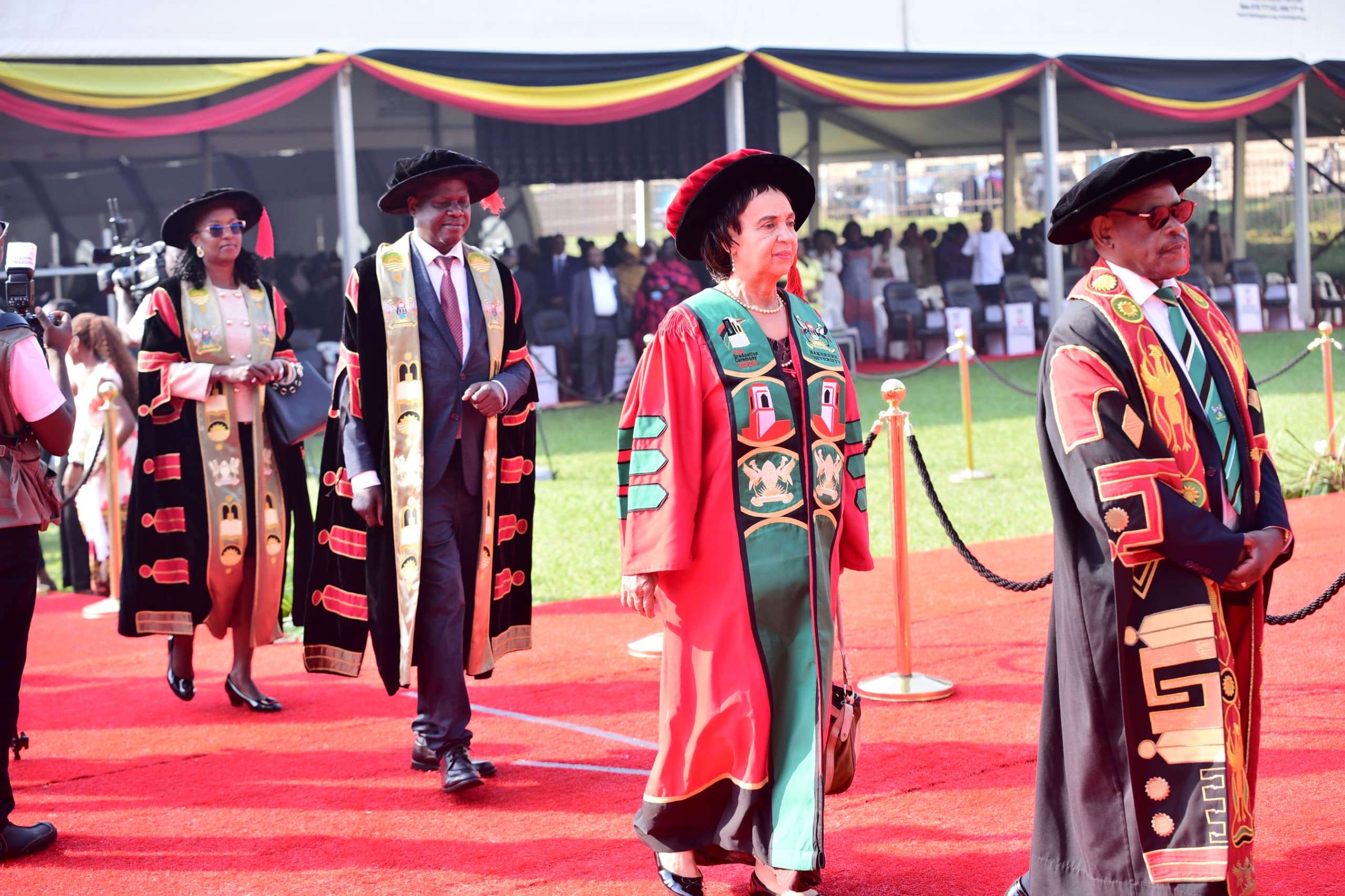
The Board Chairperson of the Makerere University Endowment Fund (MakEF), Dr. Margaret Blick Kigozi, has urged graduands in Health and Life Sciences to uphold professional ethics and serve humanity with diligence and compassion.
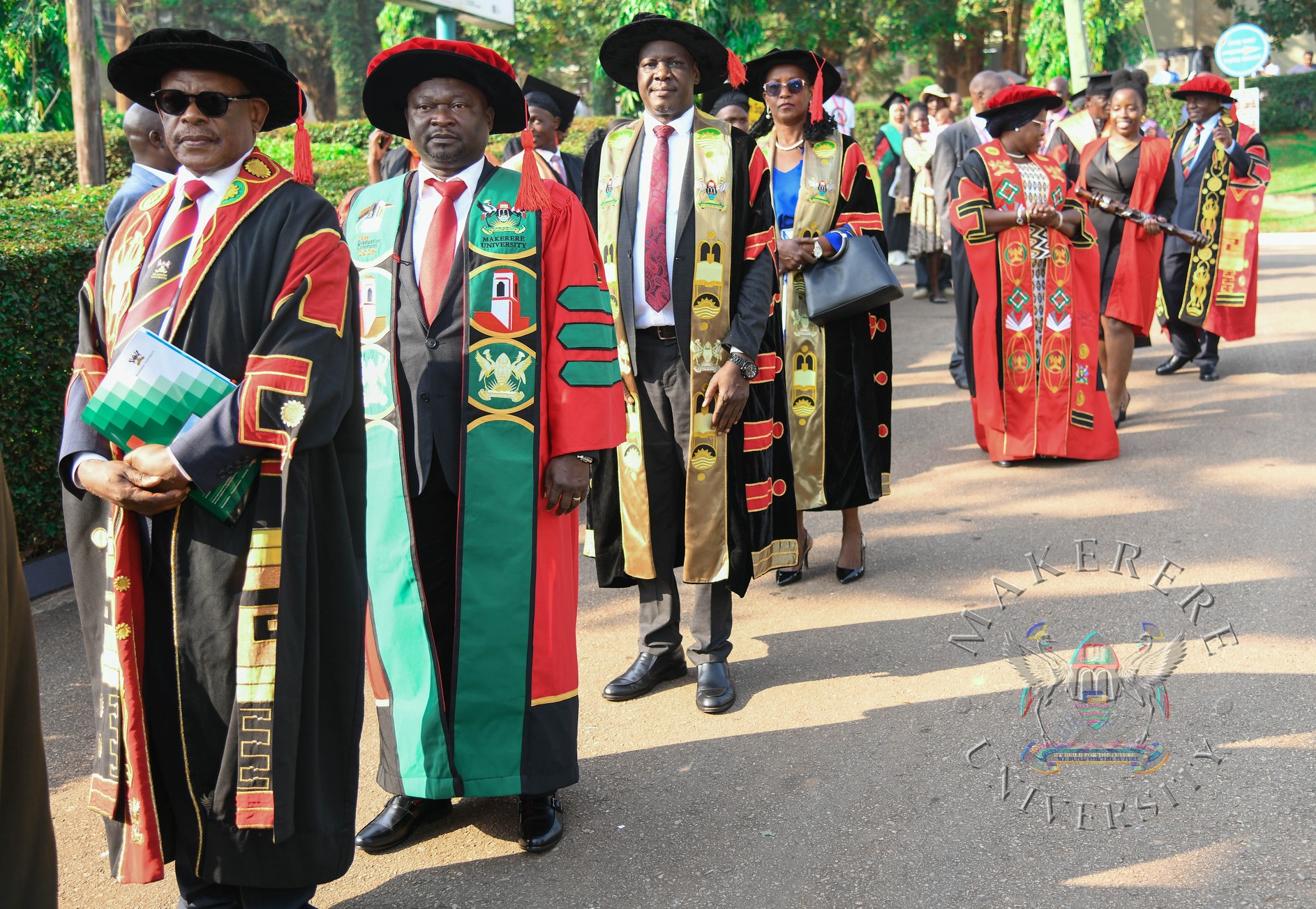
Her appeal came during the passing out of graduates from the College of Natural Sciences (CoNAS), the College of Veterinary Medicine, Animal Resources and Bio-Security (CoVAB), the College of Health Sciences (CHS) and the School of Public Health (SPH) on Day Two of the 76th Graduation Ceremony of Makerere University.
“Class of 2026, you are now part of the Makerere legacy. Wherever you go clinics, laboratories, farms, boardrooms, or classrooms, you carry this institution with you. Serve your patients with skill and compassion. Care for animals and communities responsibly. Question boldly and keep learning,” Dr Kigozi, said.
Delivering the commencement address, Dr. Kigozi lauded the graduates for their dedication to careers that directly impact lives and communities. She encouraged them to use their knowledge generously and exercise their power gently.
“Your education has trained you to ask better questions. Your humanity must guide the answers. Never forget that behind every chart, every case, every animal, every experiment, there is life. And life deserves care, patience, and dignity. Give every person you come in contact with care, patience and dignity,” Dr Kigozi, noted.
As the graduates embark on their professional journeys, Dr. Kigozi emphasized the importance of cultivating basic business acumen and financial literacy to ensure sustainability in their work.
“You do not need to become accountants but you must be able to read the essentials: understand simple financial statements, budgets and key metrics so you can judge whether a clinic, lab, or program is sustainable. You are encouraged to start your business. There are numerous investment opportunities in your areas of training. You can provide services to our people and create jobs,” Dr Kigozi, said.
She shared candidly how, when she first stepped into leadership, she realised she did not understand balance sheets or budgets well enough. So, she returned to Makerere for short courses to strengthen herself.
“A well-run Hospital, clinic or lab delivers better outcomes, attracts staff, and secures funding. Business savvy is not only about profit, it’s about sustainability and the freedom to serve ethically and effectively. Carry clinical skill with business sense so your work endures and grows,” Dr. Kigozi, noted.
Quoting renowned writer and producer Shonda Rhimes, creator of Grey’s Anatomy, who once reflected that succeeding in one area of life can sometimes mean falling short in another, Dr. Kigozi encouraged women graduates to intentionally balance professional ambition with family responsibilities.
“When one area thrives, another is often under strain. When Navio was graduating from school I had to manage the Presidential Investor Round Table on the same day as Executive Director Uganda Investment Authority. I chose my job and delegated his siblings to attend Navios graduation. I learnt from this. I choose family always after that thing you achieve once and keep forever,” Dr Kigozi, said.
In his speech, the Prof Barnabas Nawangwe, the Vice Chancellor, informed the congregation that Makerere’s ranking on all university ranking platforms has remained stable, placing Makerere among the top 10 African universities and within the top 4.5% globally.
“In the Times Higher Education global ranking, Makerere University made a formidable jump from the 1200-1500 bracket to the 800-1000 bracket. This was no mean achievement and I congratulate all members of the Makerere Community on this stellar performance,” Prof Nawangwe, said.
-
 Humanities & Social Sciences5 days ago
Meet Najjuka Whitney, The Girl Who Missed Law and Found Her Voice
-
 Health1 week ago
Uganda has until 2030 to end Open Defecation as Ntaro’s PhD Examines Kabale’s Progress
-
 Agriculture & Environment1 week ago
Uganda Martyrs Namugongo Students Turn Organic Waste into Soap in an Innovative School Project on Sustainable Waste Management
-
 General4 days ago
76th Graduation Highlights
-

 General1 week ago
Mastercard Foundation Scholars embrace and honour their rich cultural diversity