
General
Meet Dr. Steven Nyanzi: The Mak Graduation Guru

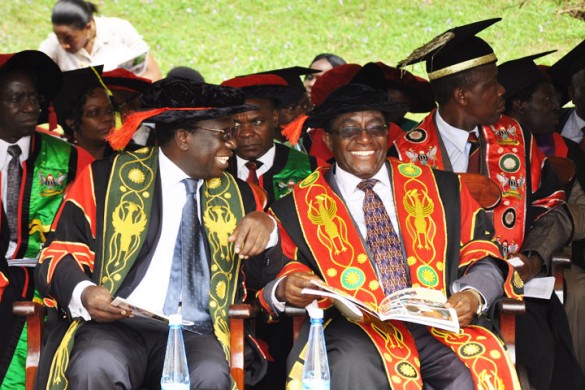
Assoc. Prof. Steven Allan Nyanzi is the reigning Chairperson of the Makerere University Ceremonies Committee, a position he has held for the last 5 years. Dr. Nyanzi took over from the former Deputy Vice Chancellor in charge of Finance and Administration, Prof. Tickodri Togboa. He holds a First Class Doctor of Science degree in Chemistry from the University of Karlsruhe (Germany), a Master of Science degree in Chemistry from the University of Nairobi and a Bachelor of Science degree with a Concurrent Diploma in Education from Makerere University. Below he shares his experience and thoughts of the Makerere University Graduation Ceremony with Marion Alina.
The Chairperson
As Chairperson of Ceremonies Committee, Dr. Nyanzi works with a committed team of about 20 Members of the Committee. In planning each graduation, more members are co-opted including the College Communication Officers, Public Relations Office, Vice Chancellor’s Office and Staff from other units. “I was a College representative to Senate but Prof. Baryamureeba, the then Acting Vice Chancellor believed that I could Chair the Ceremonies Committee. My name was proposed and I was unanimously elected by Senate,” says the Senator.
Changes in Graduation at Mak
With more students graduating each year, Dr. Nyanzi reveals that the next graduation ceremony will be organized and conducted by the Colleges but in liaison with the Ceremonies Committee. The College-based Graduation ceremonies will still be presided over by the Chancellor, Prof. George Mondo Kagonyera. “A recent sitting of Senate approved that graduation ceremonies be moved to Colleges to cut costs. Each graduation costs us between 500m- I billion shillings. The College-based graduation ceremony will require less personnel and will be easier to manage with smaller numbers of graduating students. We think it might also be less costly, especially if some Colleges combine their graduation ceremonies. The College Administration will fully exercise its autonomy on this issue and also identify a convenient place within the University to conduct its graduation ceremony. We welcome further proposals on this shift,” he explains.
 The experience
The Makerere University Graduation ceremony is a big national event, with between 13,000 – 14,000 students graduating. Each graduand is allowed to invite a maximum of two people as witnesses of this special day. By implication, each graduation ceremony sits over 35,000 people spread throughout the graduation duration. Giant screens, a powerful public address system, huge tents, entertainment, high-level security deployment and refreshments are some of the items that heavily draw on the budget. “I used to think Graduation is a simple event but I have come to learn that there are a number of people who work so hard to make it a success. These include the unsung heroes in the Registrar’s Department who compile names and proof read the draft graduation booklet, the University printery which edits the graduation booklet, the security team and other categories of people,” he adds. In some cases, the graduation has not gone smoothly, necessitating printing of addendum lists of graduating students. Dr. Nyanzi says this delay starts from the Departments that are supposed to submit marks on time, and spills over to all the other processes. He nonetheless admits that some Departments have timely submissions, but the process cannot be complete until all submissions have been made.
Dr. Nyanzi is grateful that after the 64th Graduation ceremony, January 2014, the Vice Chancellor Prof. John Ddumba-Ssentamu hosted a thank-you dinner at his residence and invited most of the people who made this graduation a success. “This was the first recognition of its kind and we hope the practice is maintained. The 64th Graduation was indeed unique because for the first time, we had more female students, 50.3% graduating, compared to the 49.7% male students. It is said that once you educate a girl child you prepare the nation for better times. I am glad we are having more female graduates. It is also at this graduation that the Vice Chancellor insisted that the ceremony be held in four days as opposed to the usual 5 days, to cut costs. Indeed we saved some money. He had also proposed that we hold the 65th graduation in 2 days but this became impossible, so we will have it spread over three days. Prof. Ddumba-Ssentamu will leave behind a legacy of cutting costs, so that the money is diverted to other wanting areas. He is a true economist and we appreciate this,” he says.
Makerere University has also witnessed an increase in the number of students graduating with Masters and doctorate (PhD) degrees. Dr. Nyanzi is bothered that most of the research work of this category of graduates is not funded by government. “During graduation you hear funders from Sweden, Norway, Germany, South Africa and the like, a sign that they have confidence in what we do. But you hardly hear of funding from Ministry of Finance, Ministry of Education or other Government entities and yet there are important areas for us as a nation that Government can choose to fund. We need people in Government to realize that there is value in ‘growing your own timber,’ if I am to borrow the words of Prof. Mamdani,” he says emphatically. “I am also pleasantly surprised by the increasing number of people who graduate in the distance education mode. I know that State Minister for Mineral Development Hon. Peter Lokeris, the first lady Hon. Janet Museveni and other important personalities have benefitted from this arrangement and I sincerely appreciate the efforts of our colleagues in Distance Education,” he adds.
Employment for Graduates
With Makerere University sending over 13,000 trained graduates each year to the already strained job market, the scare of insufficient jobs continues to worry many. “We need to think of how to skill students from an early age and make the curricula more practical to Uganda’s needs, lest we risk having a mass of disgruntled youth. It is up to Government to agree that the curricula is not serving the purpose and change it as soon as yesterday, right from Kindergarten,” Dr. Nyanzi reasons.
Honorary Doctorates
Makerere University also awards Honorary doctorates to outstanding members of society. The names of Such individuals are suggested by a College or School and forwarded to Senate for approval. “An Honorary doctorate is usually awarded to someone whose work is defendable and self explanatory as is the case with H.E. Mwai Kibaki the former President of Kenya and H.E. Yoweri Museveni the President of Uganda. Senators take time to debate the choices before the award is given,” he explains. Dr. Nyanzi believes that the awards also need to target other categories of people who have delivered exceptional services. “For example Dr. Mathew Lukwiya who lost his life saving ebola patients could be awarded an honorary doctorate posthumously. Fortunately, Senate has set up a special Committee to identify people who should be recognized. There are a number of women fighters like Rhoda Kalema who have fought for the rights of the girl child. The School of Women and Gender Studies or the Directorate of Gender Mainstreaming can propose such names with ample justification.”
Moving on
The Chemist is now thinking of retiring from the responsibility of Chairperson Ceremonies Committee and focusing on mentoring students and his research. “I am looking at how to purify water for the benefit of people with low incomes, especially in the remote settings. I also have interest in projects on cancer research, alternative energy sources like biofuels, and environmental conservation,” he says with a sparkle in the eye.
Dr. Steven Allan Nyanzi is grateful to all categories of Staff for the team work that has seen Makerere University successfully conduct graduation ceremonies. He remains optimistic that this high level team work will be maintained as Makerere University continues to scale the heights.



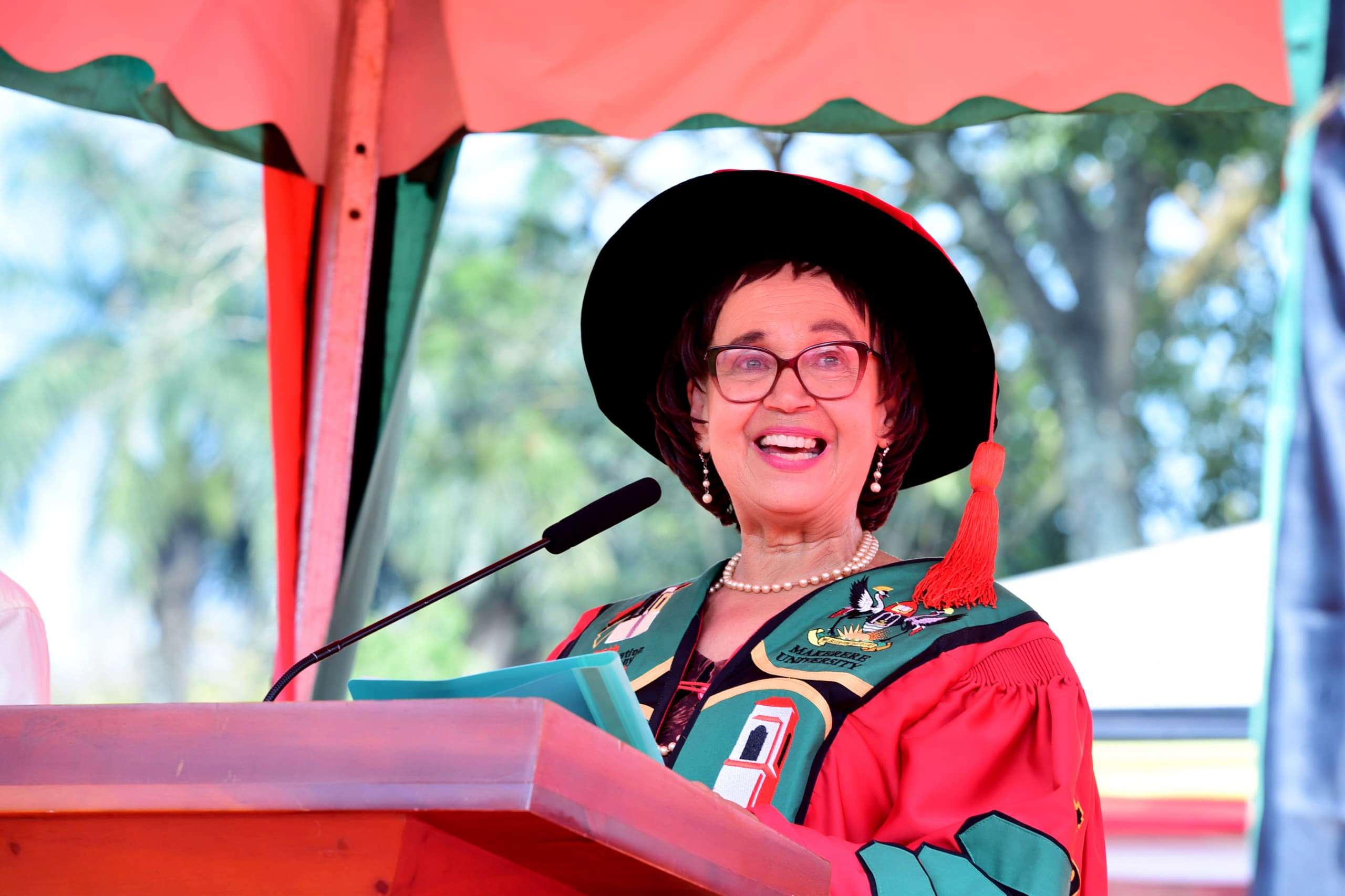
The Board Chairperson of the Makerere University Endowment Fund (MakEF), Dr. Margaret Blick Kigozi, has urged graduands in Health and Life Sciences to uphold professional ethics and serve humanity with diligence and compassion.
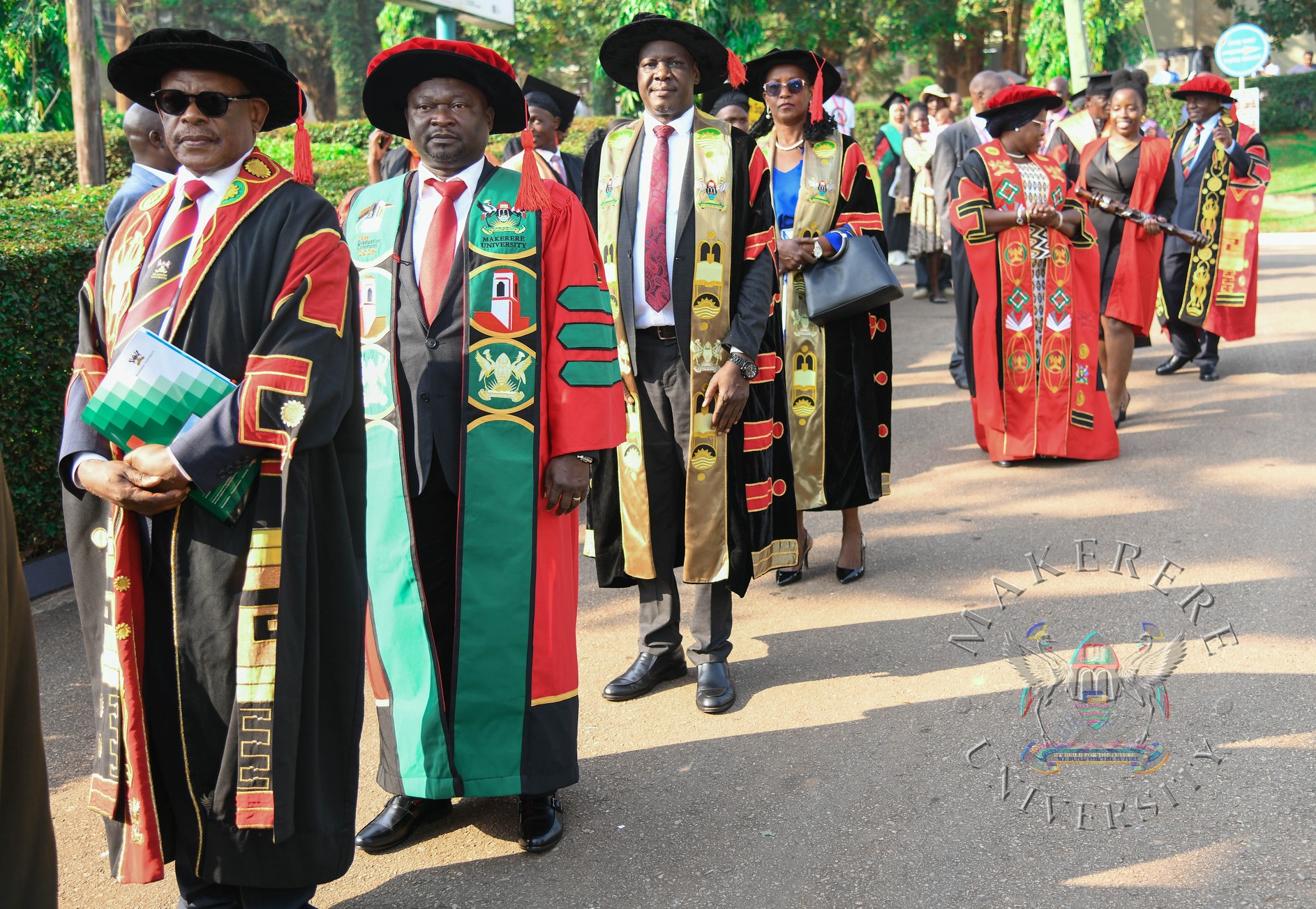
Her appeal came during the passing out of graduates from the College of Natural Sciences (CoNAS), the College of Veterinary Medicine, Animal Resources and Bio-Security (CoVAB), the College of Health Sciences (CHS) and the School of Public Health (SPH) on Day Two of the 76th Graduation Ceremony of Makerere University.
“Class of 2026, you are now part of the Makerere legacy. Wherever you go clinics, laboratories, farms, boardrooms, or classrooms, you carry this institution with you. Serve your patients with skill and compassion. Care for animals and communities responsibly. Question boldly and keep learning,” Dr Kigozi, said.
Delivering the commencement address, Dr. Kigozi lauded the graduates for their dedication to careers that directly impact lives and communities. She encouraged them to use their knowledge generously and exercise their power gently.
“Your education has trained you to ask better questions. Your humanity must guide the answers. Never forget that behind every chart, every case, every animal, every experiment, there is life. And life deserves care, patience, and dignity. Give every person you come in contact with care, patience and dignity,” Dr Kigozi, noted.
As the graduates embark on their professional journeys, Dr. Kigozi emphasized the importance of cultivating basic business acumen and financial literacy to ensure sustainability in their work.
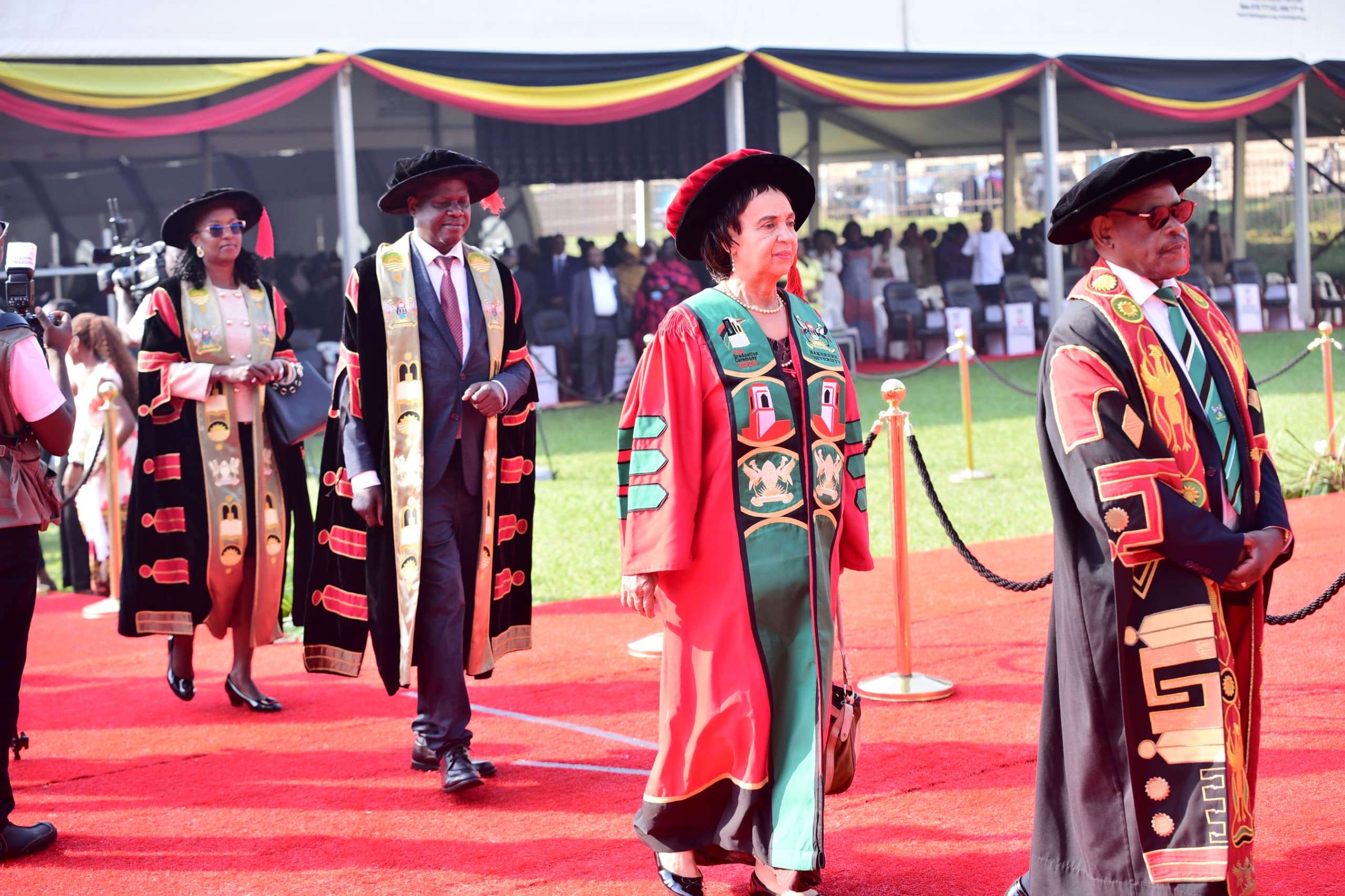
“You do not need to become accountants but you must be able to read the essentials: understand simple financial statements, budgets and key metrics so you can judge whether a clinic, lab, or program is sustainable. You are encouraged to start your business. There are numerous investment opportunities in your areas of training. You can provide services to our people and create jobs,” Dr Kigozi, said.
She shared candidly how, when she first stepped into leadership, she realised she did not understand balance sheets or budgets well enough. So, she returned to Makerere for short courses to strengthen herself.
“A well-run Hospital, clinic or lab delivers better outcomes, attracts staff, and secures funding. Business savvy is not only about profit, it’s about sustainability and the freedom to serve ethically and effectively. Carry clinical skill with business sense so your work endures and grows,” Dr. Kigozi, noted.
Quoting renowned writer and producer Shonda Rhimes, creator of Grey’s Anatomy, who once reflected that succeeding in one area of life can sometimes mean falling short in another, Dr. Kigozi encouraged women graduates to intentionally balance professional ambition with family responsibilities.
“When one area thrives, another is often under strain. When Navio was graduating from school I had to manage the Presidential Investor Round Table on the same day as Executive Director Uganda Investment Authority. I chose my job and delegated his siblings to attend Navios graduation. I learnt from this. I choose family always after that thing you achieve once and keep forever,” Dr Kigozi, said.
In his speech, the Prof Barnabas Nawangwe, the Vice Chancellor, informed the congregation that Makerere’s ranking on all university ranking platforms has remained stable, placing Makerere among the top 10 African universities and within the top 4.5% globally.
“In the Times Higher Education global ranking, Makerere University made a formidable jump from the 1200-1500 bracket to the 800-1000 bracket. This was no mean achievement and I congratulate all members of the Makerere Community on this stellar performance,” Prof Nawangwe, said.
-
 Humanities & Social Sciences5 days ago
Meet Najjuka Whitney, The Girl Who Missed Law and Found Her Voice
-

 Health1 week ago
Uganda has until 2030 to end Open Defecation as Ntaro’s PhD Examines Kabale’s Progress
-
 Agriculture & Environment1 week ago
Uganda Martyrs Namugongo Students Turn Organic Waste into Soap in an Innovative School Project on Sustainable Waste Management
-
 General4 days ago
76th Graduation Highlights
-
 General1 week ago
Mastercard Foundation Scholars embrace and honour their rich cultural diversity