
General
Another Double win for African Film and Oral Literature

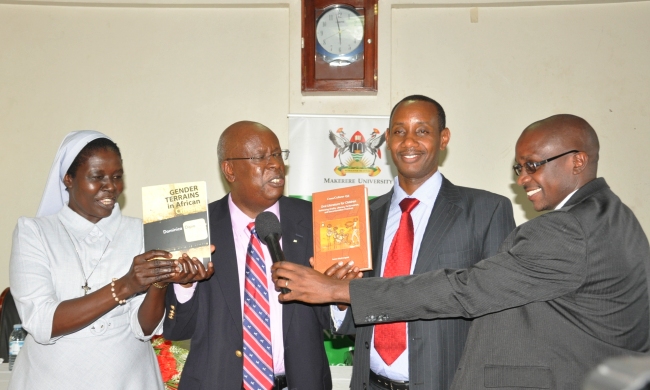
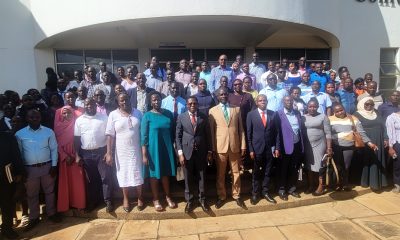
The month of October 2014 ended on a spectacular note when the College of Humanities and Social Sciences (CHUSS) held a double book launch for two of her enormous army of prolific academics and writers. The audience, most of who had to brave the afternoon downpour on 31st October 2014 to make it in time was kept entertained by Mengo Senior School students’ recitals of Kanemu Kanabiri, Mpenkoni and many other traditional play songs as derived from Dr. Aaron Mushengyezi’s Oral Literature for Children book. On the other hand Sr. Dr. Dominica Dipio’s book Gender Terrains in African Cinema left the audience more appreciative than ever of the power mothers wield over the African film industry and society in general.
In her enthusiastic welcome address Dr. Susan Kiguli, Head-Department of Literature, CHUSS commended everyone for sparing time to attend the launch, especially the Chief Guest Mr. James Tumusiime-Chairman of Fountain Group and her own aunt Mrs. Sheila Goa who at 86 years of age was still sharp and sprightly. She further thanked Mr. Tumusiime for not only accepting her invitation but also actually taking time to read the books, “Our unanimous response was we are going to have a Guest of Honour who has actually read the books” she said, much to the amusement of the audience, before hastening to add “Of course we did not expect less but we are also happy that our judgment was as our students say ‘spot on’.”
 She thanked the African Humanities Program (AHP) supported by the American Council of Learned Societies (ACLS) and Carnegie Corporation of New York (CCNY) for ensuring that Dr. Aaron Mushengyezi and Sr. Dr. Dominica Dipio published their books. “I want to welcome and warmly congratulate our authors for this landmark achievement and for ensuring that our Department’s name stays on the sparkling pedestal,” said Dr. Kiguli, directly addressing the authors. She also commended Prof. Austin Bukenya and Dr. Consolata Kabonesa for their moving reviews of Dr. Mushengyezi’s and Dr. Dipio’s books respectively, as published in the New Vision newspaper of 30th and 31st October 2014.
Associate Professor Aaron Mushengyezi is the Dean-School of Languages, Literature and Communication, CHUSS, a book author and editor who has won several awards from the International Scholarship Programme of the Ford Foundation, the African Humanities Program (AHP). His latest book Oral Literature for Children: Rethinking Orality, Literacy, Performance and Documentation Practices seeks to take the oldest form of communicating traditional cultural values and information to the next level.
“We have recognized the value that these texts for young people play. They embody the cherished cultural values of hard work, respect for each other, and charity as well as numeracy skills. These texts also have a role to play in promoting social relationships and sometimes even teaching children their gender roles and relationships, which help our children to stay focused on what society expects of them as mature men and women” shared Dr. Mushengyezi. He further intimated that the current uncertainty surrounding our sexuality and whom we should marry or not could be attributed to an extinction of cultural values which were previously handed down by traditional oral literature.
 Dr. Mushengyezi emphasized the need to work more with culture-based industries so as to get the traditional texts to provide educational value in our schools. He commended Mr. James Tumusiime whose efforts through Fountain Publishers and Igongo Cultural Centre have gone a long way in promoting local cultural practice and conservation. He challenged the Government of Uganda through the Ministry of Gender, Labour and Social Development to invest in the promotion of culture-based industries through support to cultural tourism and traditional resources marketing. He also challenged Mr. James Tumusiime to consider having local publications of the books done through Fountain Publishers so as to reduce on their cost and improve their availability. He paid special tribute to his wife, children, family and Makerere University for the support that had enabled him complete the book.
Dr. Okot Benge is a Lecturer in the Department of Literature, CHUSS whose writing also neatly straddles both gender and oral literature aspects. As the moderator for this particular session of the day, he sent the audience doubling over when he recollected Prof. Austin Bukenya’s experience, who when asked for his publications prior to promotion to the rank of Senior Lecturer returned with a sack load of books, and even inquired if those would suffice! The evergreen Prof. Bukenya took it all smilingly and on assuming his position at the podium, and as has now become his pre-address tradition, started off with a recital of William Wordsworth’s 19th Century poem My Heart leaps when I behold.
He profusely thanked Dr. Aaron Mushengyezi for “bringing back his youth” through his book, whose review he had felt very privileged to write. Recollecting two childhood memories; i) Njabala – the last folktale his late mother shared with him before her passing and ii) Rosa Nyanzira – his first girlfriend whose storytelling charmed the then four year old Austin, Prof. Bukenya commended the author for exquisitely blending these special memories into one awe-inspiring publication.
Prof. Bukenya shared that he felt both gratified and shamed when he read the book, for in one shot, Dr. Mushengyezi had struck down the targets that he (Prof. Bukenya) had been taking aim at since 1968, when as a graduate student he was assigned the task of systemizing oral literature at Makerere under the guidance of Pio Zirimu. “You brought this process to a new level by showing us what can be done all the way from collection, from transcription, from translation to interpretation, and this starts a very useful scholarly discussion,” said Prof. Bukenya.
 He shared that this book brought out the richness of our multilingual culture “This book really enables us to share and if you want to appreciate it, read it in the original text and only read the translated one thereafter” he said. He advised that reading the book this way, we would gain a greater appreciation of how much similarity our languages share. “You have given us a comparative approach of the various rhymes which we can find in our languages” added Prof. Bukenya. He thanked Ms. Emily Drani, Executive Director, Cross-Cultural Foundation of Uganda for promoting the Nation’s non-tangible culture. “The Arts that make us human are not useless and I will say that loudly and proudly” concluded Prof. Bukenya.
Associate Professor Dominica Dipio the second author of the day is a former Fulbright Research Fellowship and African Humanities Program Fellow who has initiated and coordinated a number of projects such as the Makerere-Bergen Folklore project. Dr. Dipio is a videographer with thirteen titles of both full and short length films to her credit. She has over thirty academic journals and book chapters to her name, her most recent publication being Gender Terrains in African Cinema.
“I came into contact with Film as a Graduate student at the Pontifical Gregorian University in Rome in 1999. At that time it was being taken as a window into the African world; that is for the outsider and not for the Africa,” said Dr. Dipio in giving a brief background of her inspiration. She defended her choice of Francophone films dating from 1970-2000 for her research because France’s colonial policy supported cultural engagement, which led to a flourishing film industry. “However, a similar process as I have done could be undertaken by students and scholars in East Africa because filmmaking in the region is becoming a very serious engagement” she challenged.
In her analysis of the films, she took inspiration from one African filmmaker who observed that “Evolution is not possible without women’s active involvement and that is especially true of the Arab world. The Arab man has given all he can and his achievements aren’t great. Maybe the Arab woman can reinvent the world… when I look at my mother; I see that her intelligence is intact. She hasn’t had a chance to use it” she read in quoting. Dr. Dipio’s Gender Terrains in African Cinema offers a logical analysis of whether these filmmakers and critics actually “walk the talk” in their films. She was therefore happy to discover that the filmmakers made commendable efforts at representing women and gender issues in a way that challenged the status quo.

“Since political and administrative powers lay mostly in the hands of men, women’s emancipation can only be effective with the active participation of men alongside the women; men in this respect need to equally be the target of male and female discourses. The turnaround made by mainstream men to join the direction of struggle for women’s emancipation against gender based violence always led to very positive results“observed Dr. Dipio. She recognized Ms. Gorettie Bamwanga among many others in the audience for their exceptional role in mentoring young women. Ms. Bamwanga is the author of Footmarks – a book profiling 100 pioneering Ugandan women.
The moderator Dr. Okot Benge was at it once again while introducing Dr. Consolata Kabonesa, Dean-School of Women and Gender Studies (WGS) and reviewer of Gender Terrains in African Cinema. Describing her as the “most amiable scholar I know who is widely published on the subject of women and gender studies”, Dr. Benge managed to elicit that warmth from Dr. Kabonesa that literally made waves as it radiated across the room. “When I started reading the book, all I could keep saying to myself was wow! Dr. Dipio deserves to be in the School of Women and Gender Studies because she tackled gender issues so well” enthused Dr. Kabonesa in her opening statements.
 Dr. Kabonesa commended Sister Dipio for making the often-silenced girl child talk speak out through her well scripted narratives in the book. “We don’t see this in the film but in Sr. Dipio’s analysis of the gender terrains in cinema” she observed. She commended Dr. Dipio for highlighting the vital role played by mothers in streamlining gender identities and leveling out gender inequalities in society, “it is we the mothers who actually make these young men who they are and so if we start early with them, we will be able to advance this cause.” She further noted that Sr. Dipio attains a number of goals by representing the various categories of women, engaging them in discourse and critiquing their positions through the lenses of class and age range. “This she attains by weaving in and out of this generation to the other, this class to the next which makes for very interesting reading. You need to read it” commended Dr. Kabonesa.
Dr. Patrick Mangeni is not only the Head-Department of Performing Arts and Film (PAF), CHUSS but also a recognized author of books, poetry and prose. As the country grappled with averting the rapid spread of the HIV scourge in the late 1980s, Fountain Publishers came up with the FFF (Fact, Fiction and Facilitation) project to reach out to the youth. To help develop the Fiction component, Fountain Publishers turned to Makerere University and Dr. Mangeni was one of the authors who tremendously contributed to this project.
Introducing the day’s Guest of Honour, Dr. Mangeni commended Mr. Tumusiime for not only supporting Ugandan and regional authors but also helping to revitalize the University Bookshop in 1996. “We appreciate the Guest of Honour for being innovative and not being afraid to take on challenges. You know what the publishing industry is like but I can proudly say that Fountain Publishers is the leading publisher in this country and it has not been by mistake but by effort, determination and being able to take on risky ventures,” extolled Dr. Mangeni.
 The Guest of Honour Mr. James Tumusiime despite the praise heaped upon him managed to make to the podium and graciously thank the Literature Department for honoring him with the invitation. He chose not to bask in this limelight alone but rather chose to share it with his Publishing Manger-Dr. Tom Tibaijuka, and Wordsmith and Editor-Mr. Julius Ocwyino among other Fountain Group staff present. He expressed his delight at being associated with Makerere University Authors especially the day’s guests; Sr. Dr. Dominica Dipio-who has relentlessly contributes to Fountain Publishers’ Madi publications and Dr. Aaron Mushengyezi who co-edited the bilingual Runyankore/Rukiga-English Dictionary.
“I wish to thank you the two authors for elevating seemingly simple subjects of folktales and cinema to the intellectual realm of scholarly work and I hope they are going to trigger debate and discussion so that we see more and more books tackling these important subjects” remarked Mr. Tumusiime. To illustrate the important role played by mothers in African society, Mr. Tumusiime drew inspiration from Rwanda during the era of Kingdoms where a King never took to the throne without the presence of a mother. Similarly he reflected on the example of Ankole where the King was kept in check by a mother’s belt, which if used to sound the royal drum meant that the King had to commit suicide.
 Commenting on the current Sciences versus Arts debate, Mr. Tumusiime labeled as “saddening” the current disinformation about the role played by humanities in societal development. He urged scholars to create a lobby group and work with the media to request for an audience with the leadership. “There is science that can develop and liberate our economies but we cannot neglect our own culture, thinking and humanities, and sacrifice them at this altar of science” counseled the Guest of Honour. “We all aspire to be like the developed countries but wherever you have Isaac Newton being celebrated, there is Shakespeare on the side and although science has advanced over the years, Shakespeare is still with us” he said to resounding applause. “And so let us contextualize this debate properly” added Mr. Tumusiime.
He commended Ms. Emily Drani and Artists from the Margaret Trowell School of Industrial and Fine Arts (MTSIFA), CEDAT for their contribution to the successful establishment of the Igongo Cultural Centre, Mbarara. “The museum (centre) was part of that expression of another form of delivering content. Museums and cultural tourism in the world have an annual turnover of 1trillion Dollars compared to Nature tourism. So culture, literature, cinematography and museums are very important assets for this country and we should nurture them” urged Mr. Tumusiime.
Dr. James Ocita a Lecturer in the Department of Literature moved the day’s vote of thanks and commended Fountain Publishers and Mr. James Tumusiime for improving the reading culture in Uganda. He also commended the Fountain Group for setting up the Fountain Living Youth Series which had mentored a number of young writers such as him and honed their writing skills. He thanked The New Vision, Makerere University, Mengo Senior School, FEMRITE and other entities and individuals for making the launch a success. The day’s proceedings were ably emceed by Dr. Danson Kahyana.
Article by Public Relations Office

By Dr. Racheal Ddungu Mugabi
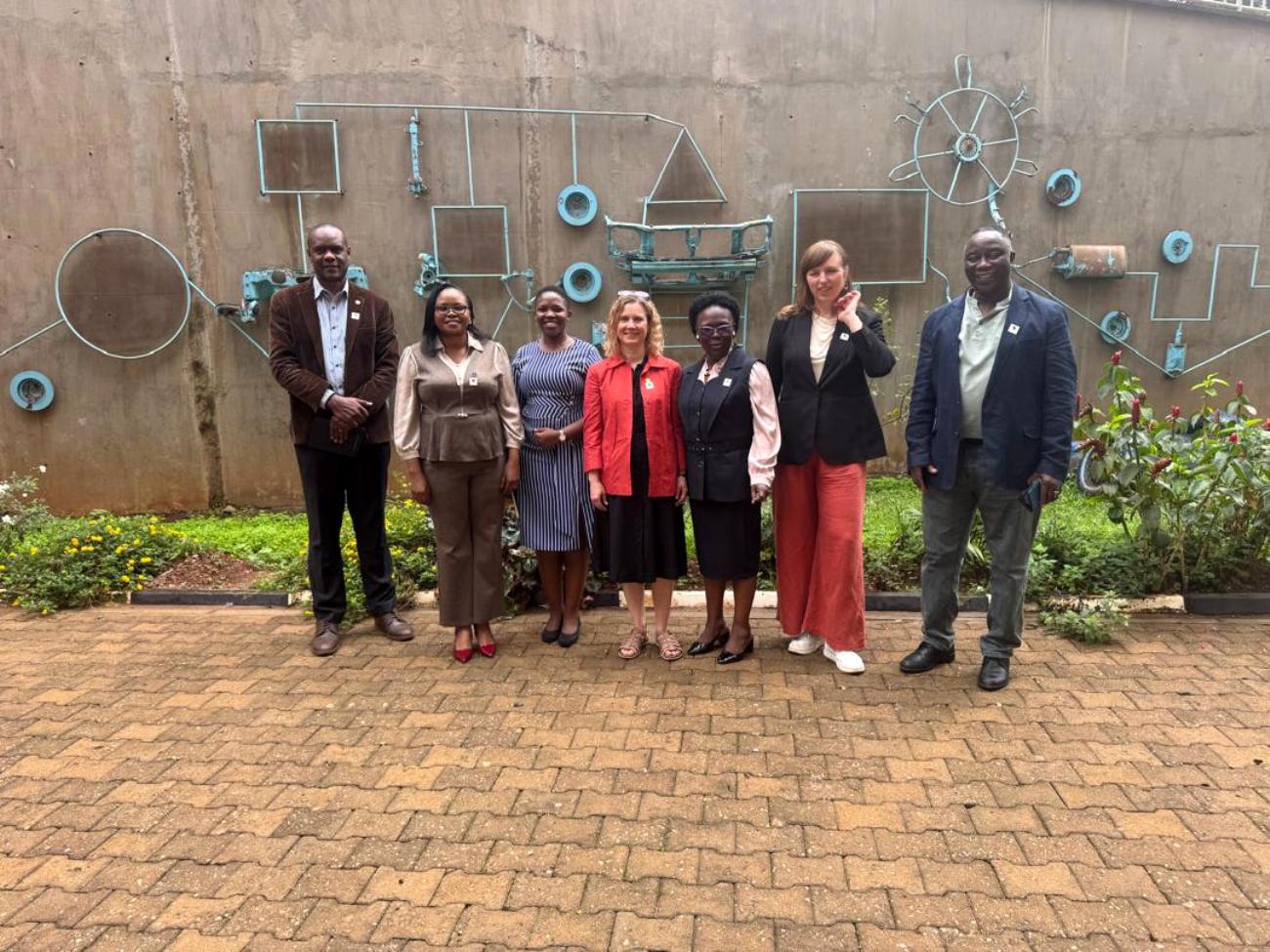
The Alliance for African Partnership, Africa Office, today received a delegation from the University of Bergen (UiB)’s Division of Research and Innovation. The visiting team comprised Kristin Svartveit, Vivil Valvik Haraldsen, and Emmanuel Ovon Babatunde.
The delegation was officially introduced by Prof. Sylvia Tamale Tamusuza, Head, Grants Administration and Management Support Unit (GAMSU), together with Dr. Ronald Semyalo (Makerere University coordinator for UiB)
The visit aimed to strengthen institutional collaboration and promote research excellence through international partnerships. The key objectives of the meeting included:
- UiB team sharing information and experiences on enhancing success in EU grant acquisition and management.
- UiB application support process for Postdoc fellowships at Bergen up to a period of 2 years
- AAP Africa Office providing insights into the AAP consortium programs and activities in order to foster collaboration between the AAP consortium and UiB.
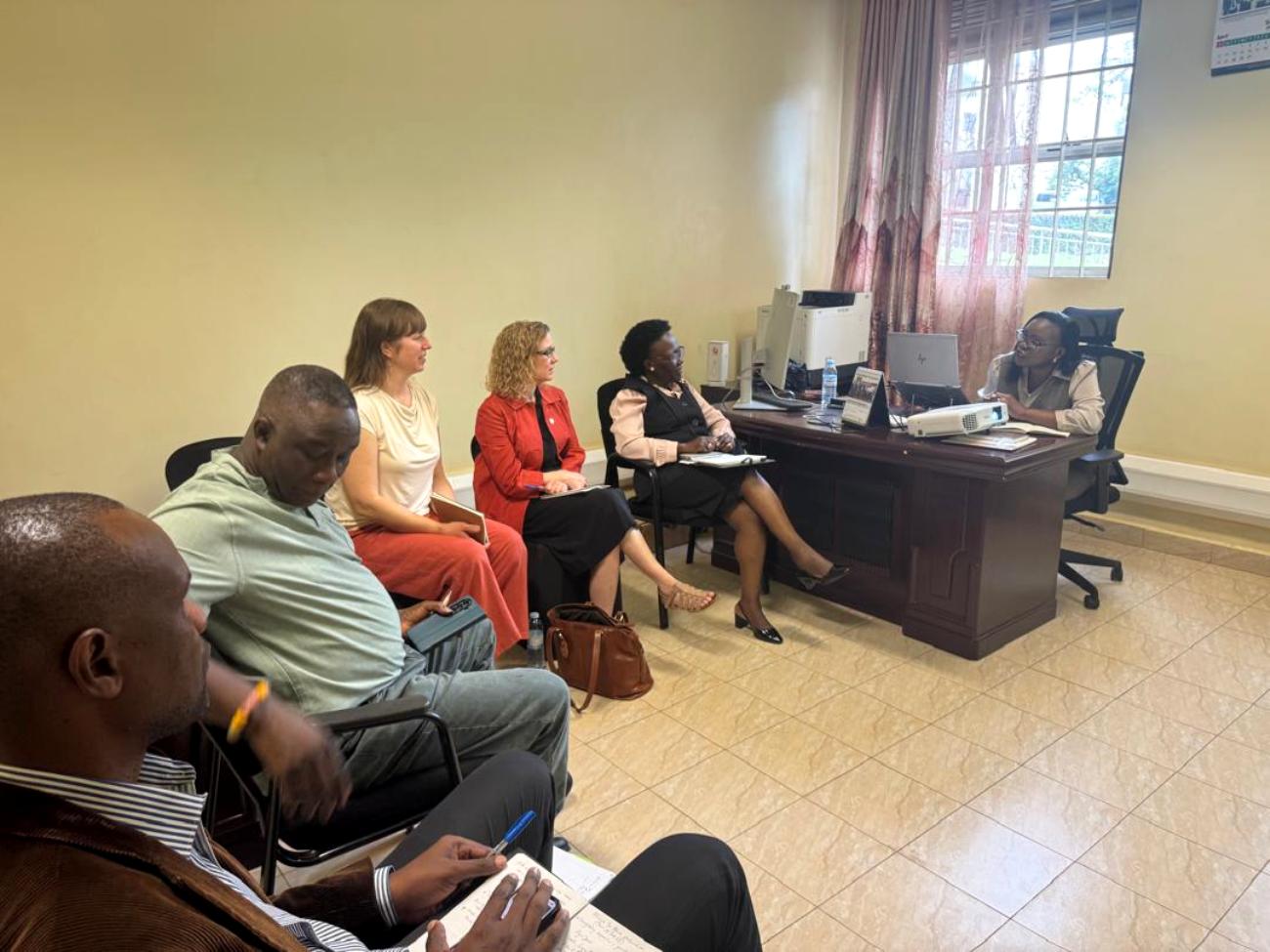
The engagement provided an important platform for knowledge exchange, networking, and exploring opportunities for future collaborative research initiatives between Makerere University, the AAP consortium, and the University of Bergen.
The Author is the Director of the AAP Africa Office
General
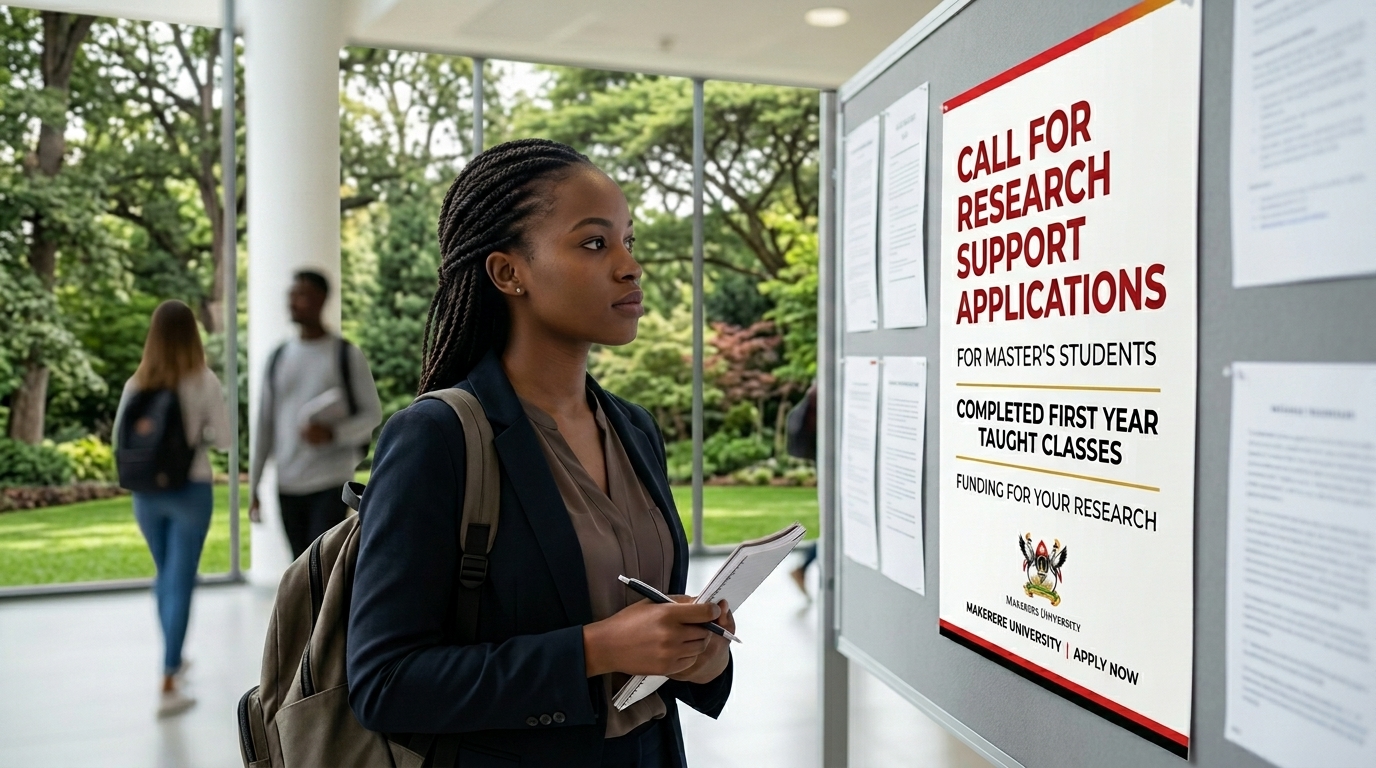
Call for Research Support Applications from Master’s Students who have Completed their First Year of Taught Classes at Makerere University

-
 General5 days ago
Bachelor of Laws Pre-Entry Examination Results 2026/2027
-

 General2 weeks ago
Mature Age Admission List – Government Sponsorship 2026/27
-
 General2 weeks ago
Makerere University DVCFA Accomplishments will continue – Prof. Alinaitwe
-
 General3 days ago
Call for Research Support Applications from Master’s Students who have Completed their First Year of Taught Classes at Makerere University
-
 General2 weeks ago
From Information to Innovation: ‘This Is a Marathon, Not a Sprint’—Academic Registrar and Director of Graduate Training Urge PhD Cohort 11