
General
Mak University Secretary scoops Visionaries Award

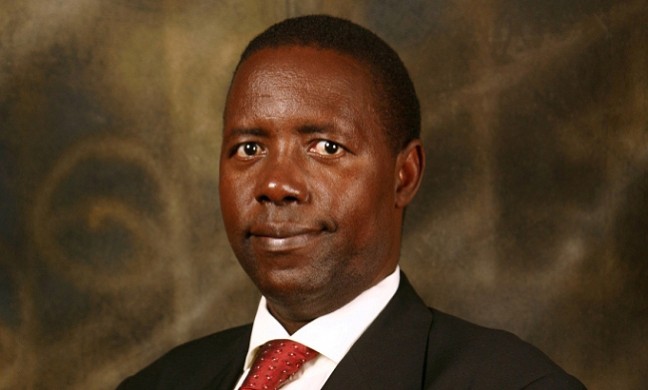
The Makerere University Secretary, Mr. David Kahundha Muhwezi, was recognized as one of the Visionaries in an awards ceremony presided over by Prime Minister Rt. Hon. Amama Mbabazi on 6th Dec. 2013 at the Serena Hotel in Kampala. The awards ceremony, the first of its kind, set out to recognize companies and individuals who have made/are making a contribution towards realization of Uganda’s Vision 2040. This vision, as stated by Government, sets out to achieve ‘A transformed society from a peasant to a modern and prosperous country within 30 years.’
Mr. Muhwezi was recognised for championing good governance at Makerere University. As the first Board Secretary of the Makerere University Retirement Benefits Scheme (MURBS), he enforced compliance of contribution remittances to the Custodian and monitored the investment of funds by the Fund Managers. These efforts are highlighted in the Visionaries book; THE VISIONARIES OF UGANDA HAND BOOK, which was launched on the same day by the Prime Minister Rt. Hon. Amama Mbabazi. His award certificate reads ‘In recognition of your outstanding contribution to the Nation’s Development. Your commitment towards the socio-economic transformation of Uganda has earned you this esteemed honour.’
“As the first Board Secretary, I did a lot to see that the scheme works. I also initiated the Governance Website <http://governance.mak.ac.ug> in Makerere University and I have used numerous channels to preach the ideals of good governance to both internal and external stakeholders of Makerere University,” he said in an interview about the recognition. Mr. Muhwezi worked in the Finance Department in various capacities since 1994, before rising to the position of University Secretary.
 He however believes that the award is for the entire University. “It is not a Muhwezi achievement but the Institution’s. The efforts that individuals put in at all levels have led to this recognition. It is a vote of confidence in us all and I take this opportunity to thank the entire team. As an Accounting Officer, I have provided oversight to the initiatives in this institution including the Presidential Initiative but a bigger team is appreciated for the successful implementation which has helped further boost donor and public confidence in Makerere University,” he asserted.
The Prime Minister challenged the organizers to profile community and social leaders who go unnoticed yet they too make contributions. “Establish a link with the national honours in the Office of the President to ensure that these are also captured. The national honors are not a preserve of politicians,” he emphasized.
Among the other people recognised included Hon. Betty Bigombe, Hon. Justice Benjamin Odoki, Hon. Ruhakana Rugunda, Prof. Badru Kateregga, Prof. Elijah Mushemezi, Dr. Kihumuro Apuuli, and Prof. Lawrence Mukiibi. The companies recognized included Britania Industries, Roko Construction, Case Medical Centre, Butabika Hospital, Farm Support Ltd and Swift Safari Buses.
Article by Marion Alina, Public Relations Office


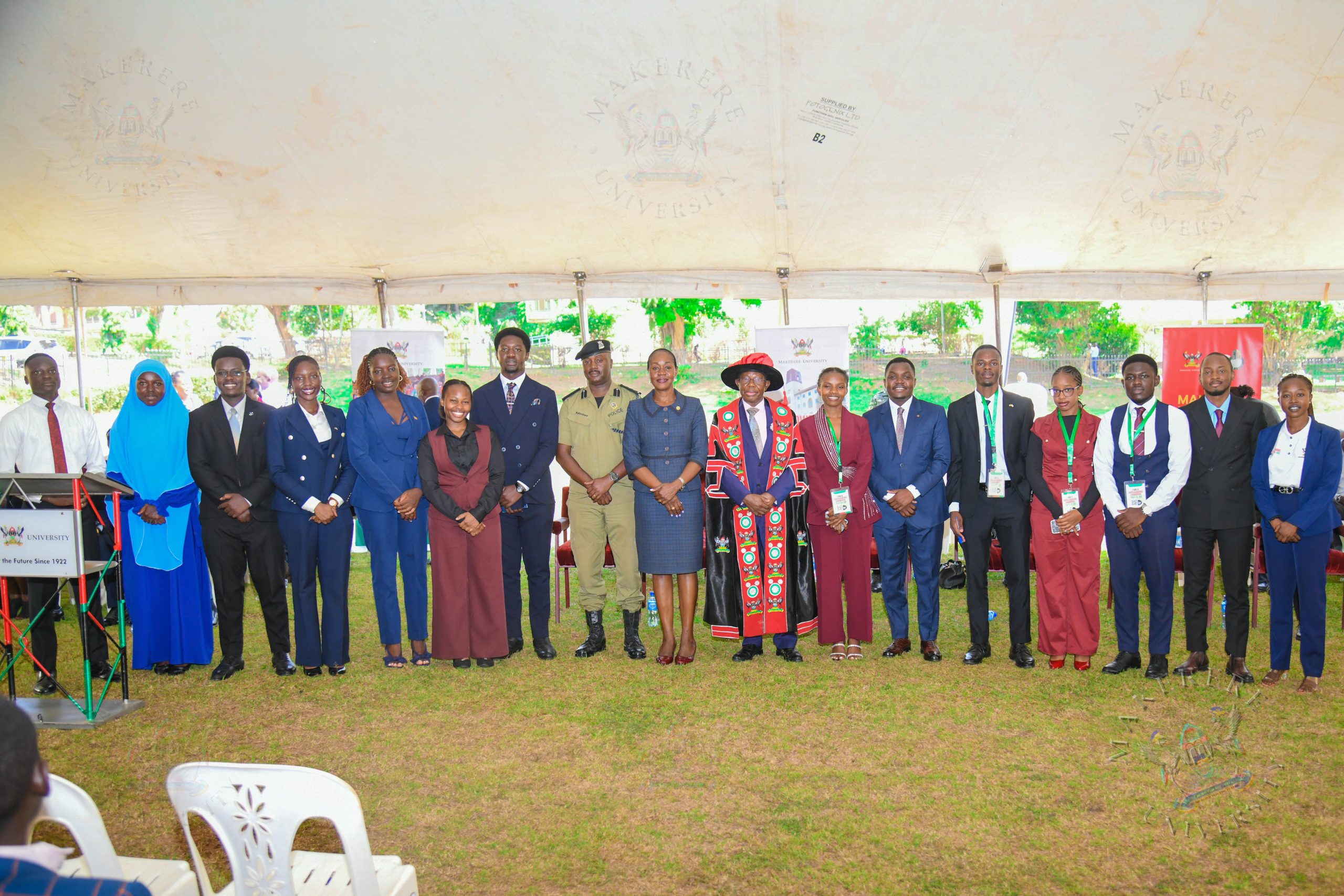
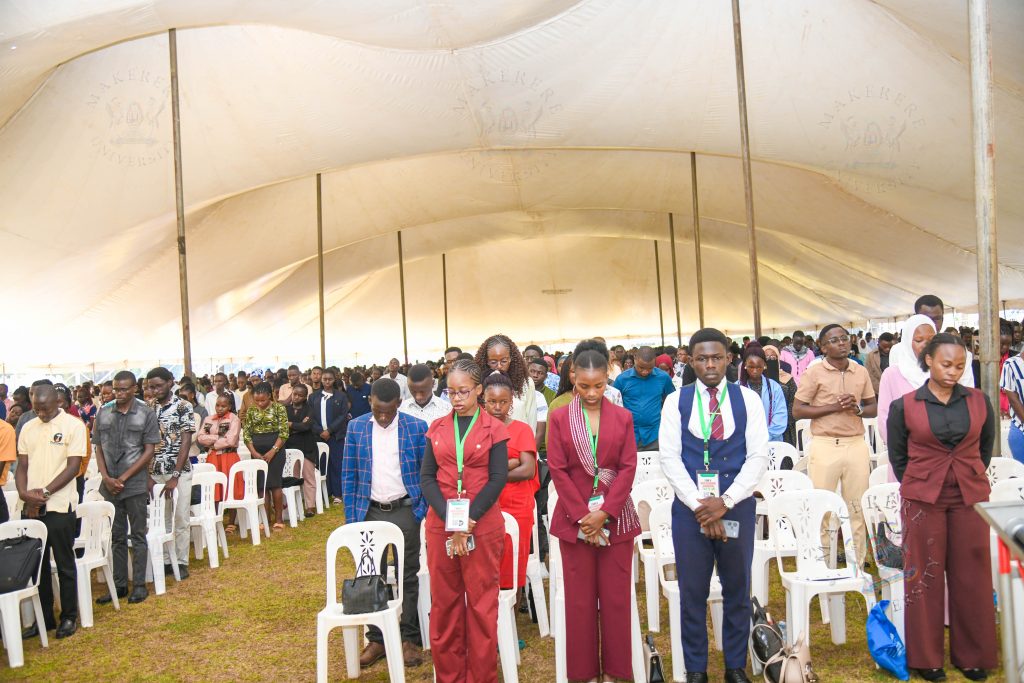
Makerere University has officially welcomed the 2026/2027 cohort of freshers, urging them to pursue academic excellence, uphold integrity, embrace diversity and make the most of the opportunities available throughout their university journey.
The opening of Orientation Week, held at the Freedom Square on Monday, 3rd August 2026, brought together University leaders, staff and thousands of newly admitted students. Throughout the event, speakers emphasized academic discipline, personal responsibility, leadership, student welfare and the values that have defined Makerere University for over a century.
Academic Registrar Welcomes Freshers
Delivering his remarks, the Academic Registrar, Prof. Mukadasi Muyinza, congratulated the freshers upon their admission and welcomed them into Makerere University’s long standing tradition of scholarship, research and innovation.
He reminded the students that joining Makerere University marked the beginning of a new chapter in their lives; one in which they would take full responsibility for shaping their future.
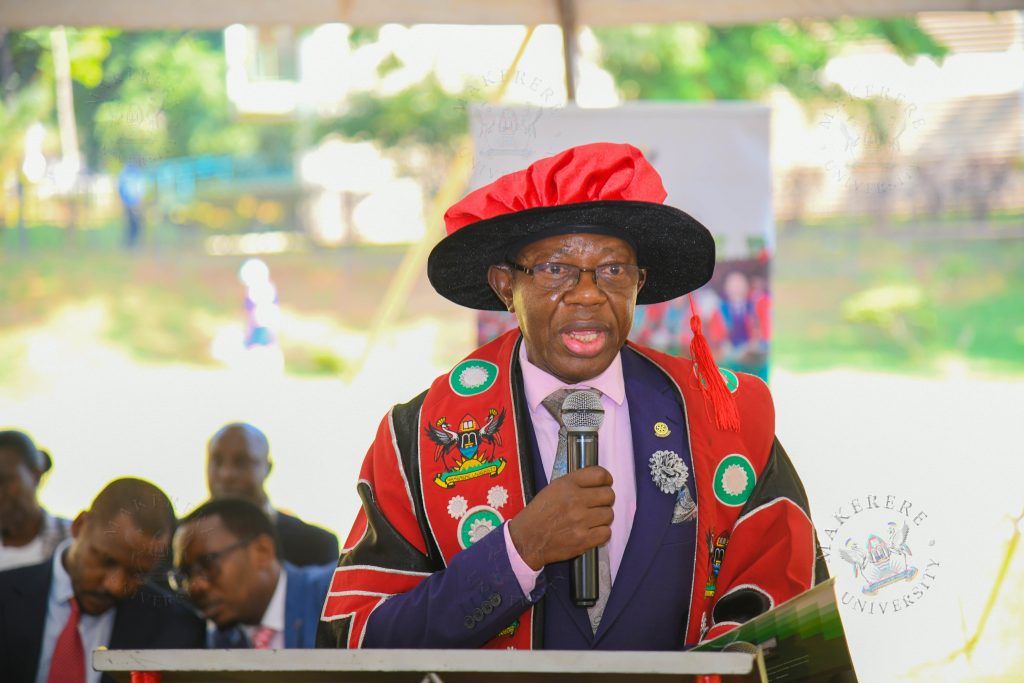
“Your arrival at Makerere marks a new chapter in your own life. This chapter is different because now you have the opportunity to determine the direction of your own story.”
Prof. Muyinza encouraged students to actively participate in academic activities, complete assignments on time and uphold integrity throughout their studies.
He cautioned against examination malpractice, forgery and other forms of academic misconduct, emphasizing that such offences could lead to dismissal from the University.
The Academic Registrar also stressed the importance of completing registration within the prescribed period, reminding students that admission remains provisional until registration requirements have been fulfilled.
“Technically, you are not yet students until you register.”
He further guided students on programme changes, registration procedures, and tuition payment requirements and urged them to carefully read the University’s Joining Instructions.
Beyond academics, Prof. Muyinza advised students to exercise financial discipline, avoid online scams and make responsible personal decisions while adjusting to university life.
Dean of Students Highlights Student Welfare
The Dean of Students, Dr. Winifred Kabumbuli, briefed freshers on accommodation, health services, and feeding, spiritual welfare and leadership opportunities available at the University.
She advised students seeking off campus accommodation to choose only accredited private hostels approved by the University.
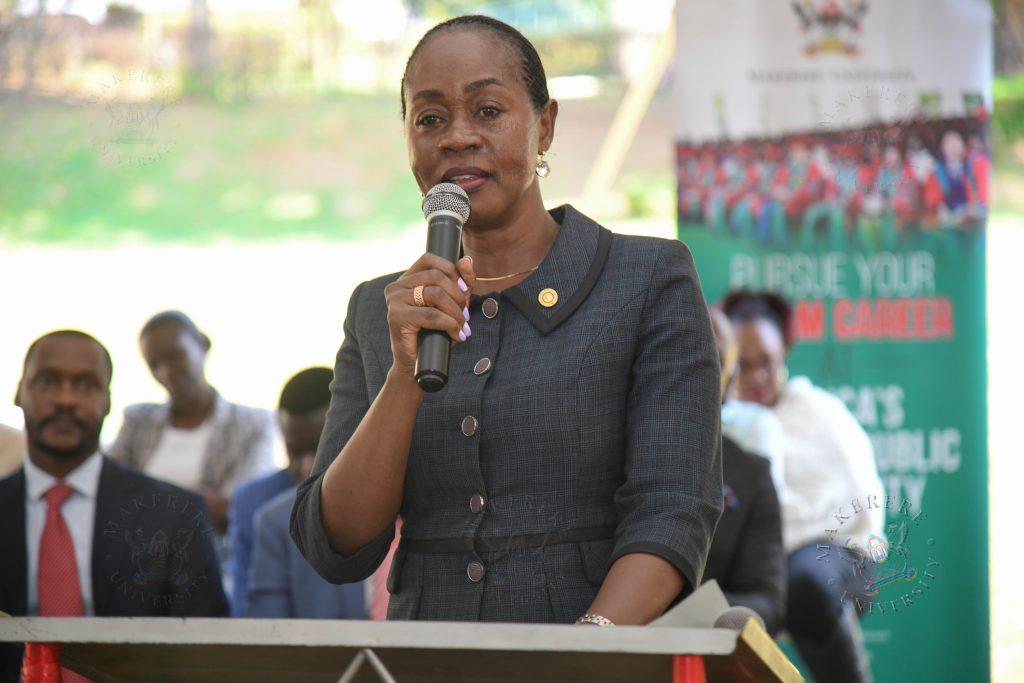
“Please make sure you choose a hostel that is safe, comfortable and closer to campus.”
Dr. Kabumbuli also encouraged students to open medical files at the University Hospital instead of self-medicating whenever they fall ill.
“Don’t ignore illness. Don’t self-prescribe. Go for proper medical attention through the University Hospital.”
She urged students to participate in spiritual fellowship through the University’s places of worship and to embrace leadership opportunities available at class, hall and college levels.
Welcoming international students, Dr. Kabumbuli noted that Makerere University has admitted more than 800 international students from 55 countries across five continents, reaffirming the institution’s commitment to providing an inclusive learning environment.
Former Guild President Shares His Makerere Journey
Hon. Lawrence Ariong Dangote, inspired the freshers through his personal story, recalling how he joined Makerere University in 2019 as a young student from Arua “with an empty pocket and a bag full of dreams.”
He described Makerere as “the hill of endless possibilities” and challenged students to maximize every opportunity available during their university life.
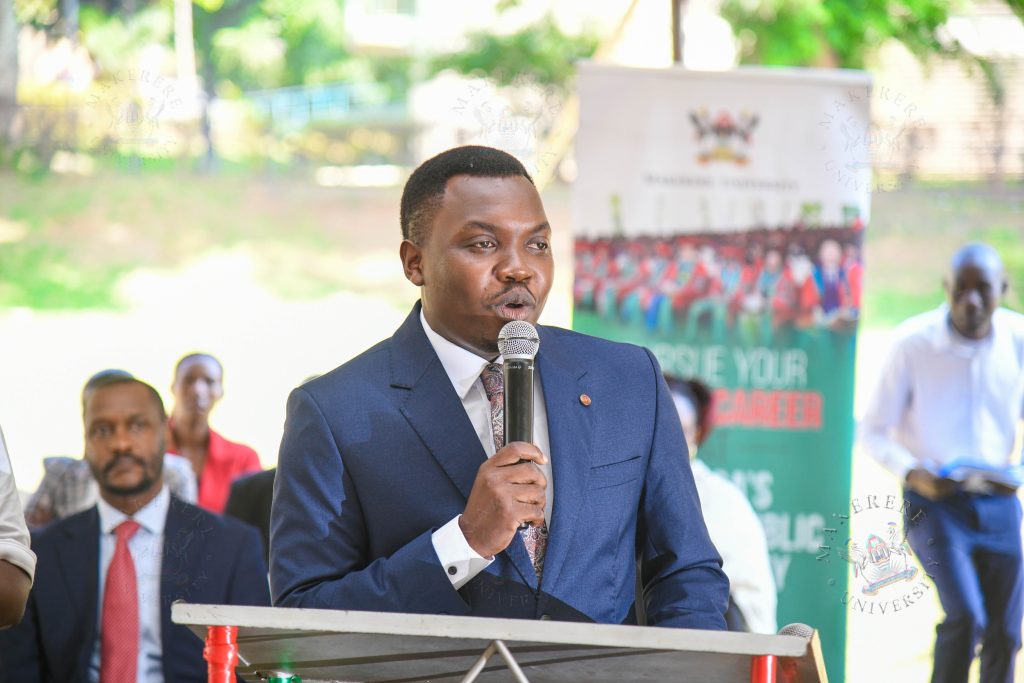
“The answer to whether you reach the top of the hill lies in what you do between now and the day you graduate.”
Drawing lessons from his own experience, Dangote cautioned students against peer pressure, financial recklessness and online investment scams, encouraging them to choose friends wisely and remain focused on their academic goals.
“Hard work beats talent if talent does not learn to work hard.”
Academic Registrar Clarifies Registration Process
Returning to the podium, Prof. Muyinza clarified registration procedures, programme change guidelines and admission requirements.
He reminded students that failure to register within the stipulated period would result in forfeiture of admission.
“Registration is the most important step that will determine whether you become a university student or not.”
He also advised students seeking programme changes to ensure they meet the required cut-off points and available vacancies before submitting applications.
Prof. Sarah Ssali Calls for Excellence and Integrity
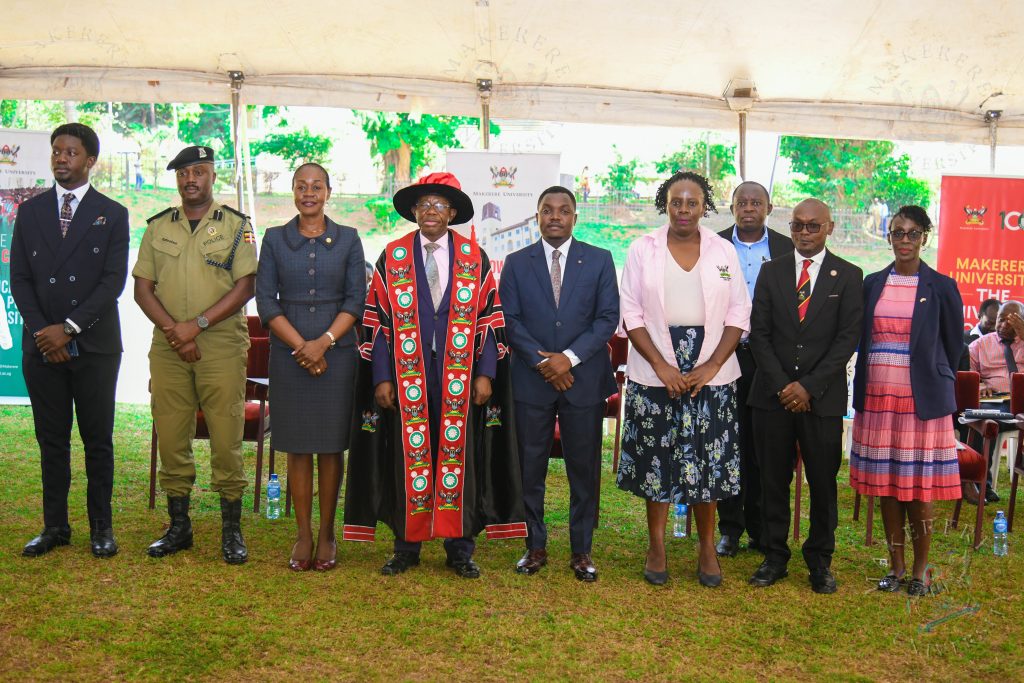
Closing the orientation, the Deputy Vice Chancellor in charge of Academic Affairs, Prof. Sarah Ssali, who represented the Vice Chancellor, Prof. Barnabas Nawangwe, officially welcomed the freshers to Makerere University.
Beginning her remarks, Prof. Ssali asked students admitted to the Bachelor of Arts in Social Sciences to identify themselves before revealing that she too had studied the same programme.
Using her own experience, she reminded students that every academic programme offered by the University is valuable.
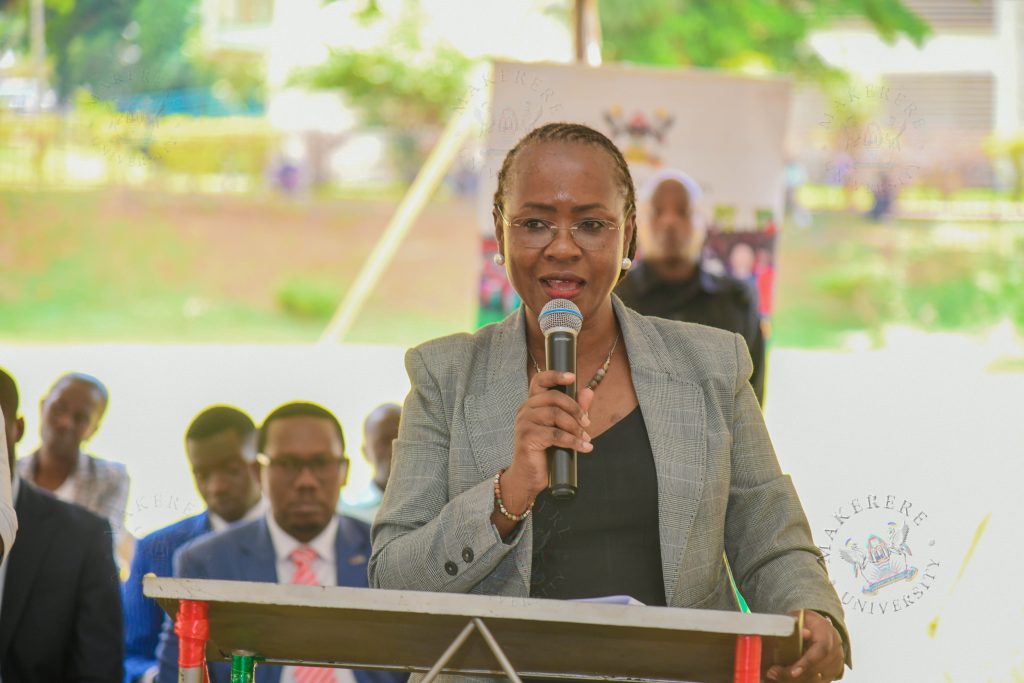
“Every course matters. Whatever you have been given, do it as if your life depends on it.”
She congratulated the incoming students, she describing their admission as the beginning of a transformative journey that would prepare them to become responsible citizens and future leaders.
“Your achievement reflects your hard work, determination and potential, and we are delighted that you have chosen Makerere University as the next step in your academic journey.”
Prof. Ssali reminded students that every academic programme matters and encouraged them to pursue excellence regardless of the course they had been admitted to.
“Whatever you have been given, do it as if your life depends on it.”
She reassured students that Makerere remains committed to providing a supportive and inclusive learning environment through academic staff, the Dean of Students’ Office, counselling services, student leaders and other support units.
She particularly encouraged students facing personal or academic challenges to seek help whenever necessary.
Prof. Ssali reaffirmed the University’s zero-tolerance policy on sexual harassment and exploitation.
“Do not suffer silently. Raise your voice. We have zero tolerance for sexual harassment and exploitation of students.”
Encouraging students to engage beyond the classroom, she urged them to participate in research, innovation, sports, leadership, community engagement and international programmes that complement academic learning.
She also called upon students to reject examination malpractice, plagiarism, violence, substance abuse and all forms of misconduct that undermine the University’s values.
“University education is not only about earning a degree; it is about developing the knowledge, character, values and competences required to make a meaningful contribution to society.”
As she concluded, Prof. Ssali challenged the freshers to think about the legacy they wished to leave behind at Makerere University.
“Pursue a life of excellence. Take ownership of your learning, build strong networks and make the most of every opportunity the University offers.”
The 2026/2027 Orientation Week continues with college based sessions that will introduce freshers to academic programmes, registration processes, student support services and university life before the commencement of the new academic year.

By Moses Lutaaya
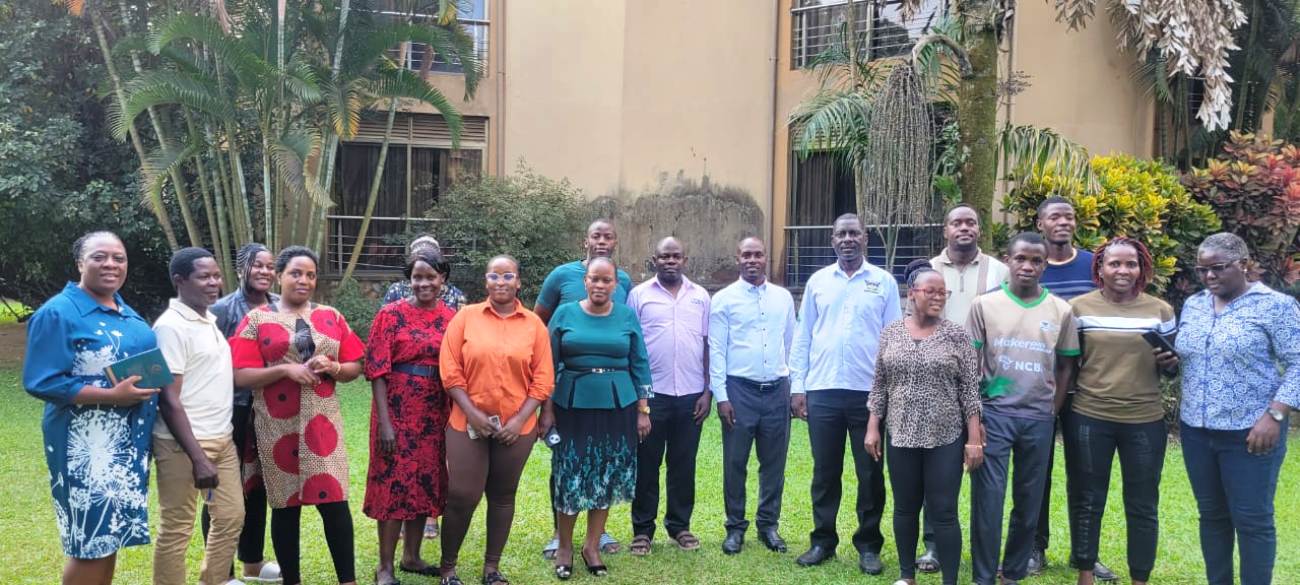
The Directorate of Graduate Training (DGT) at Makerere University has set an ambitious course for the next five years after a three-day strategic planning retreat held at Royal Suites Hotel, Bugolobi, from July 29–31, 2026. The retreat brought together staff, officials from the Directorate of Planning and invited facilitators to review the Directorate’s performance, identify challenges and opportunities, and develop a strategic plan that aligns with Makerere University‘s vision of becoming a research-led institution.
Opening the retreat, the Director of the Directorate of Graduate Training, Prof. Julius Kikooma, reminded staff that the Directorate occupies a central position in the implementation of Makerere University‘s Strategic Plan and must therefore position itself to deliver measurable results.
Prof. Kikooma said one of the University’s key strategic priorities is to increase graduate student enrolment and improve graduate completion rates, making the Directorate’s work more critical than ever before.
He explained that under the University’s Strategic Plan, graduate education is expected to grow significantly over the next five years, with graduate students projected to constitute about 40 per cent of the University’s total enrolment by 2030.
“It is not enough to simply increase admissions,” Prof. Kikooma said. “Our responsibility is to ensure that the students we admit are supported to complete their programmes on time. Graduate completion rates are now one of the University’s strategic priorities.”
He noted that while graduate enrolment is expected to increase substantially, completion rates must also improve if the University is to achieve its research-led aspirations.
The Director emphasized that the Directorate must move beyond reporting admission figures and instead closely monitor student progression from admission through graduation using the Research Information Management System (RIMS). He said the system would enable the University to track every graduate student throughout their academic journey and generate reliable data for planning and decision-making.

Prof. Kikooma challenged staff to embrace the system fully, warning that inaccurate or outdated information compromises the University’s reporting to management and Council.
“We must ensure that the information we present is clean, accurate and reflects active graduate students. RIMS is no longer optional; it is central to how we monitor graduate training and account for our performance.”
He revealed that academic staff supervising graduate students would increasingly be required to demonstrate active use of RIMS before receiving administrative clearance, a move intended to improve accountability and strengthen graduate student tracking.
The Director also highlighted operational challenges facing the Directorate, particularly during peak admission periods when staff experience overwhelming workloads.
He encouraged staff to embrace teamwork and support one another beyond their designated responsibilities whenever the Directorate faces periods of high demand.
“When it’s admissions peak, the pressure belongs to all of us. Even those whose primary roles are elsewhere should step in because we are one Directorate,” he said.
Prof. Kikooma further stressed the importance of proper planning, timely resource mobilization and continuous staff development, noting that changing technologies and administrative systems require continuous learning and capacity building.
“The way we succeeded yesterday cannot guarantee our success tomorrow. We must continue building our skills because the demands of graduate administration keep changing,” he observed.
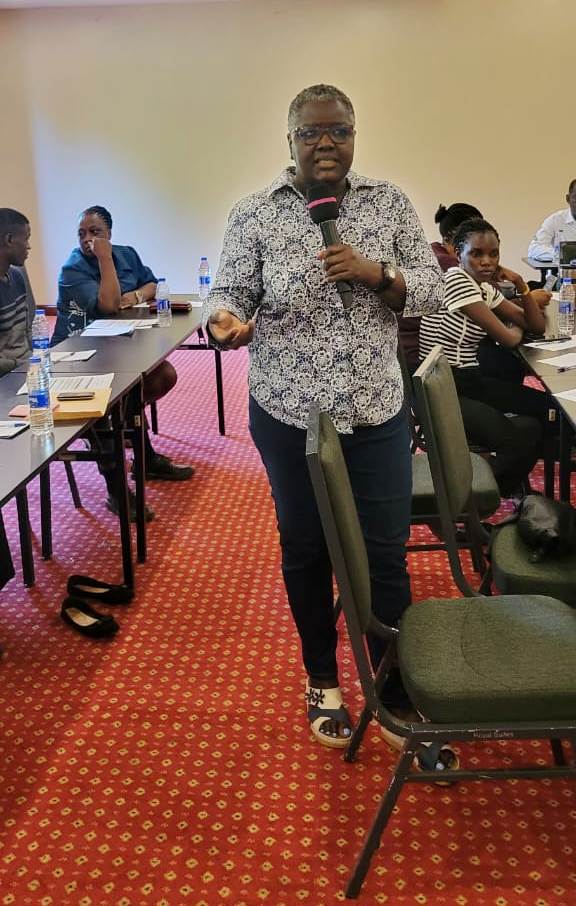
As the retreat progressed, participants held intensive discussions on institutional priorities, performance targets, work planning, policy implementation and strategies for improving service delivery across the Directorate.
Delivering his closing remarks, Prof. Kikooma expressed satisfaction with the outcome of the retreat, saying the Directorate had successfully reflected on the key issues that will shape its future.
“I’m happy that we have reached this moment. We had a very tight programme, but I believe we have touched on everything we intended to discuss. Some of the messages have encouraged us, while others have provided practical and technical guidance on improving the way we work,” he said.
He urged staff to return to their offices and translate the lessons from the retreat into practical improvements in service delivery.
Prof. Kikooma thanked the organizing committee for ensuring the retreat became a reality despite earlier uncertainties and acknowledged the contribution of the facilitators, especially colleagues from the Directorate of Planning.
He particularly commended Dr. Christine Amito for her commitment and technical guidance in developing the Directorate’s strategic plan, describing her as instrumental in ensuring that the Directorate’s priorities remain aligned with the University’s overall strategic direction.
He also recognized the contributions of newly assigned planning staff whose early involvement had already strengthened the Directorate’s planning processes.
The Director applauded the graduate interns attached to the Directorate for the valuable support they provided during their placement.
“The work you have done has been real work that would ordinarily have been done by employed staff. Beyond your academic training, I hope you have also learnt the soft skills that are essential in every workplace,” he said.
Prof. Kikooma disclosed that the retreat marked only the beginning of the Directorate’s strategic planning process, noting that the resolutions would be compiled into a comprehensive report for discussion by the Directorate’s management before implementation.
He assured staff that recommendations requiring higher-level consideration would be forwarded to the relevant University authorities.
“The University is banking very much on what we do in graduate training to achieve its vision of becoming a research-led university. Admissions, graduate student tracking, policy development and graduate completion are all at the heart of that agenda.”
The Director also announced that the Directorate would institutionalize a culture of recognizing staff members for their dedicated service.
He observed that employees spend most of their lives in the workplace and therefore deserve appreciation from the institutions they serve.
“As a Directorate, we want everyone who has worked with us to know that they remain part of the DGT family. We are a winning team, but a winning team must also be a happy team.”
One of the emotional moments of the retreat came when the Directorate honoured its former Head of Registry, Ms. Prossy Nakayiki, with a special gift in recognition of her outstanding service and contribution to graduate training.
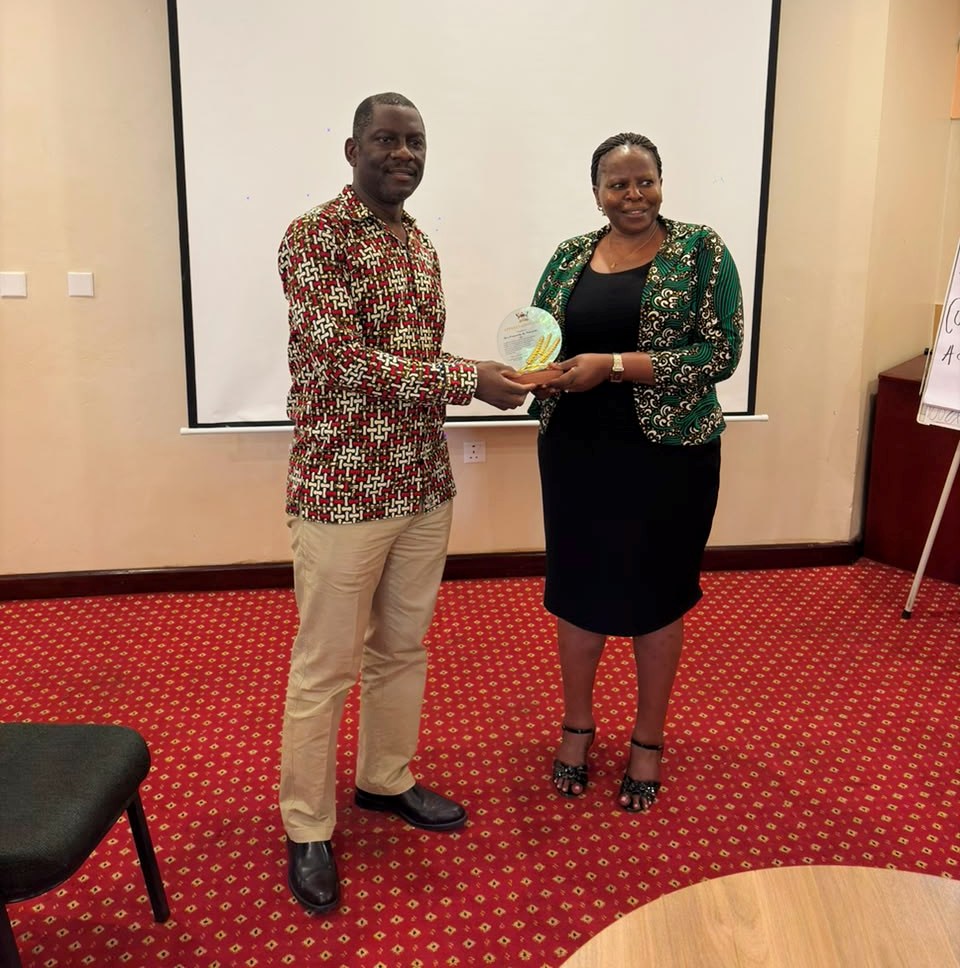
Receiving the award, Ms. Nakayiki thanked the Directorate for remembering her, saying the recognition affirmed that dedication and integrity are eventually rewarded.
“I take it at heart that when you do well, you are appreciated,” she said.
She recounted her professional journey from joining the then Directorate of Research and Graduate Studies as an admissions officer, rising through the ranks to head the Directorate’s Registry before her appointment as Deputy Academic Registrar in charge of Examinations, Transcripts and Graduation.
Ms. Nakayiki encouraged staff to remain committed to excellent customer care, urging them to treat every student with empathy and professionalism.
“When serving a student, think of that student as your own child. Even when you cannot provide an immediate answer, communicate honestly and assure them when you will be able to help. Our work is about service.”
She attributed the Directorate’s earlier achievements to teamwork, clearly defined responsibilities and effective communication among staff.
She advised employees to understand their roles, support one another and resolve workplace misunderstandings through open communication rather than conflict.
“Our supervisors can only succeed if we, the foot soldiers, perform our responsibilities well. Let us continue working together for the good of the Directorate and for the success of every graduate student who walks through our doors.”
The retreat ended with renewed commitment from staff to implement the Directorate’s five-year strategic plan and strengthen graduate training as a key pillar in advancing Makerere University‘s research excellence agenda.
-
 General9 hours ago
Undergraduate Admission Lists 2026/2027
-
 General1 week ago
Admission Lists for Postgraduate Programmes 2026/27
-
 General2 weeks ago
Gulu University Benchmarks Makerere University’s Management of Mature Age Entry Examinations
-
 General2 weeks ago
Makerere, Southwest Minzu University and NARO Forge Strategic Partnership to Advance Livestock Research and Innovation
-

 General2 weeks ago
Makerere’s Research Billions Offer MUST a Blueprint for Managing Grants