
General
MURBS has declared 13.40% interest on members’ balances for the financial year that ended on 30th June 2024.

By: Ritah Namisango
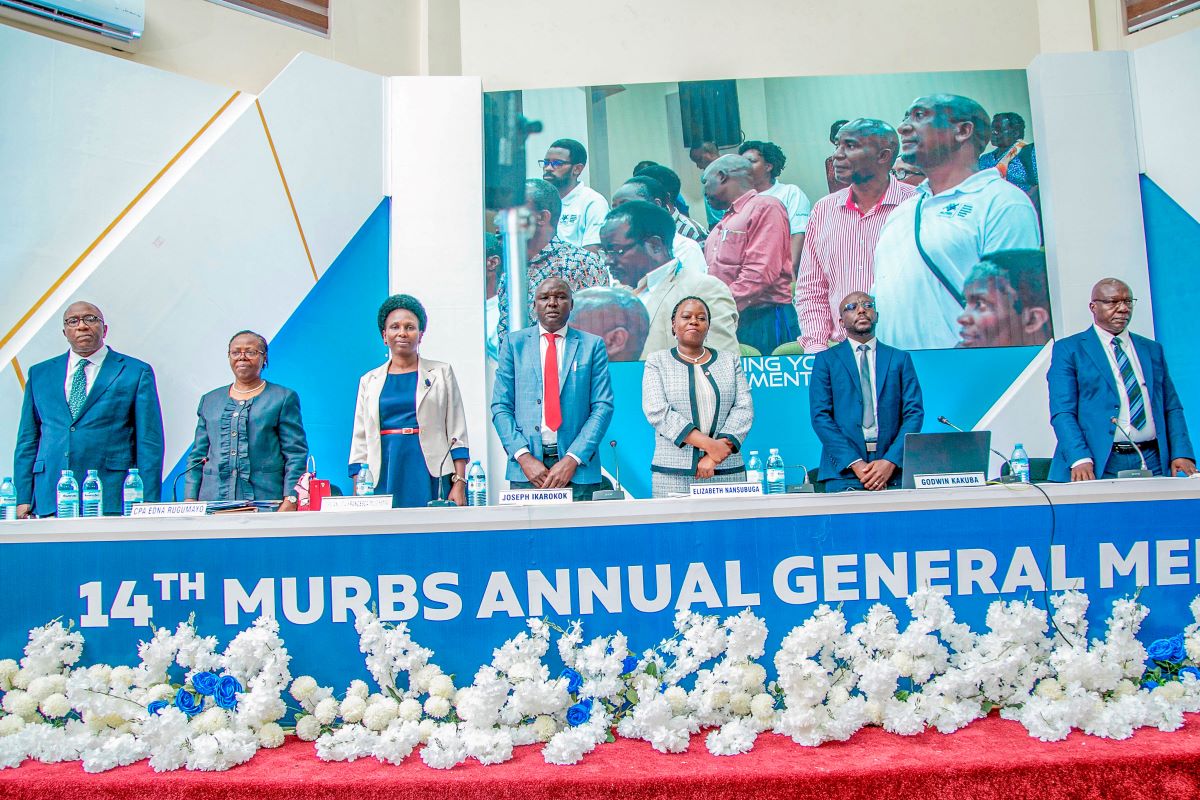
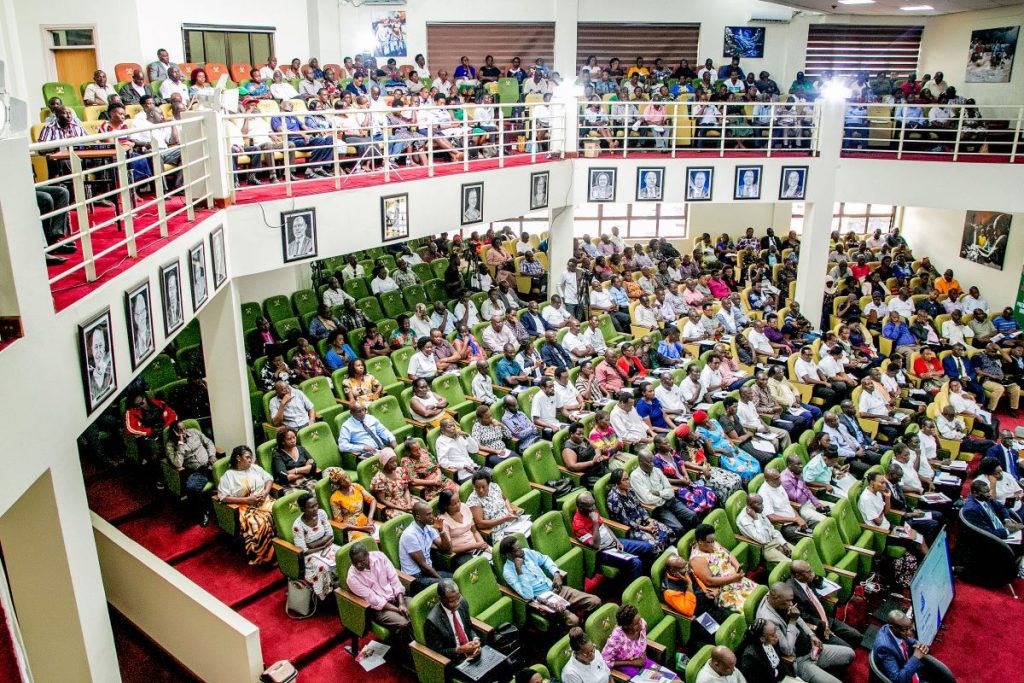
Dr. Elizabeth Patricia Nansubuga, Chairperson of the Makerere University Retirement Benefits Scheme (MURBS) Board of Trustees, announced this milestone during the 14th Annual General Meeting (AGM) for the year 2023/24 held on Thursday, 24th October 2024, at Makerere University Main Campus, School of Public Health Auditorium.
The AGM attracted various stakeholders, including trustees, Audit Committee Chairperson CPA David Ssenoga, Board Evaluation Consultant Vincent Kaheeru, URBRA Representative Mark Lotukei, Audit Committee members, co-opted members, and university administrators.
Presenting the performance report, on behalf of the Board of Trustees, Dr. Nansubuga highlighted that this is the highest interest declared by the scheme in the past five years, and she anticipates continued improvements. She noted that for the previous financial year, which ended in June 2023, the Board of Trustees declared an interest an interest of 12.34%.
Dr Nansubuga also announced that the scheme has achieved a Net Investment Income of UGX 44.6 billion, far higher than the UGX34.4 billion collected in Contributions during the year.
The Chairperson of the Board also revealed that the fund value had grown from UGX352.4 billion recorded at the end of the last financial year to UGX409.2 billion, indicating an increase of 16.1%.
“By 30th June 2023, MURBS had a fund value of UGX 352.4 billion. The Board of Trustees targeted Fund growth of 17%, and I am glad to inform you, that the fund value of MURBS, as per the Audited Financial Statements of 30th June 2024 is UGX 409.2 billion, which is an increase of 16.1%. This achievement was made possible by strategic periodical activities undertaken by the Board and our fund managers, supported by the strong oversight committees of the Board,” she reported.
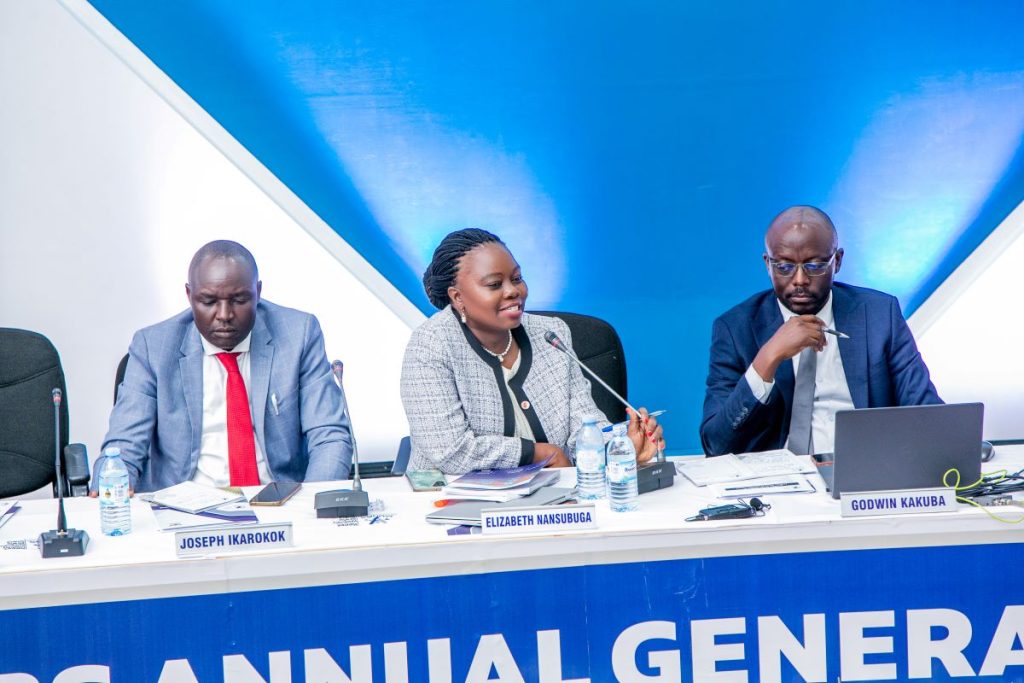
She attributed the positive growth to factors such as improved debt recovery, operational efficiency, timely remittance of contributions by the sponsor (Makerere University), an increase in project and contract contributions, and the recovery of UGX8.85 billion in debts.
Dr. Nansubuga also expressed gratitude to Makerere University, the scheme’s sponsor, for consistently remitting contributions, a key factor that has significantly contributed to MURBS’ smooth operation. “I am happy to announce that the sponsor-Makerere University remitted your retirement benefits for the financial year 2023/24,” she said.
In the same development, Dr. Nansubuga reported that MURBS registered a legal victory against Uganda Revenue Authority (URA) over a real estate investment in Sonde undertaken in 2019, and which URA sought to tax heavily. She notified the AGM that MURBS won the case and was awarded costs which also set a precedent.
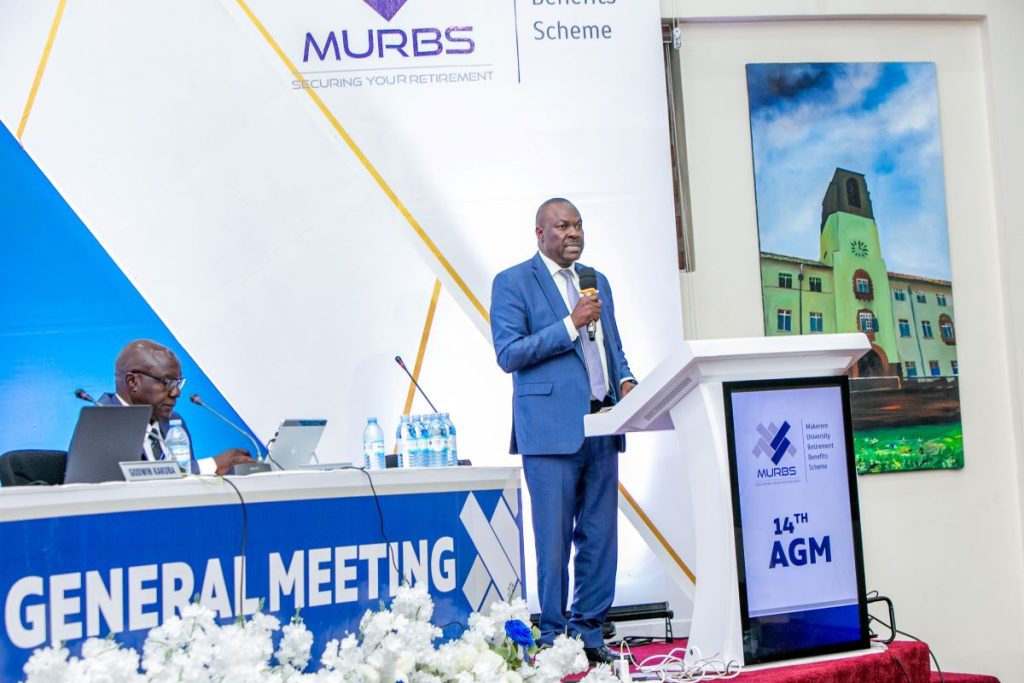
“On behalf of the Board of Trustees, I am pleased to inform you that during the financial year, we received a favorable outcome on a key court case. How did we end up with this case? In 2019, MURBS invested in real estate, we bought land in Sonde,” Dr Nansubuga explained.
“Uganda Revenue Authority (URA) then charged us with a tax assessment worth UGX600 million. It has been four (4) years in the tax appeals tribunal. Since then, the lawyers, the former and current trustees, have been appearing before the appeals tribunal, but in December 2023, MURBS won the case. We challenged URA, and this case was awarded with costs. URA has to pay MURBS. We therefore saved UGX600 million,” she added.
In terms of governance, Dr Nansubuga said that the scheme made changes in the board. Initially, the trustees were six and they needed a seventh member, and following a competitive race, they recruited another trustee; CPA Edina Rugumayo who has over thirty years in accounting.
“In terms of governance, we continue to uphold good governance practices and we align with international standards. Last year during the presentation, I said we were six and we needed to have the seventh trustee because the Board composition is supposed to be seven,” she explained.
“So, following a competitive process, we recruited an independent trustee. It was a very competitive position. You must have served on board which has over UGX50 billion. So, from that process, we were able to recruit CPA Edna Rugumayo Simbwa. She is a certified public accountant with over thirty years of experience in accounting, taxation, and corporate governance,” she mentioned.
She also thanked other stakeholders for making sure that MURBS activities run smoothly. These entities include Makerere University, KPMG, Gen Africa, Arcadia Advocates, Zamara, URBRA, and Stanbic Bank among others.
While discussing investments, Dr. Nansubuga mentioned that 86% of MURBS’ funds are currently invested in government bonds, but added that the Board is exploring diversification to reduce risks.
“86% percent of our money is invested in government bonds, and sometimes, you do not have to put all your eggs in one basket, there is a high concentration of risk. so that is one of the key material risks that we want to address to reduce the amount we have in government securities. We want to diversify our portfolio and avoid investing heavily in government securities. The Board will venture into other fields in order to earn money or return on investment from the diverse undertakings,” she said.
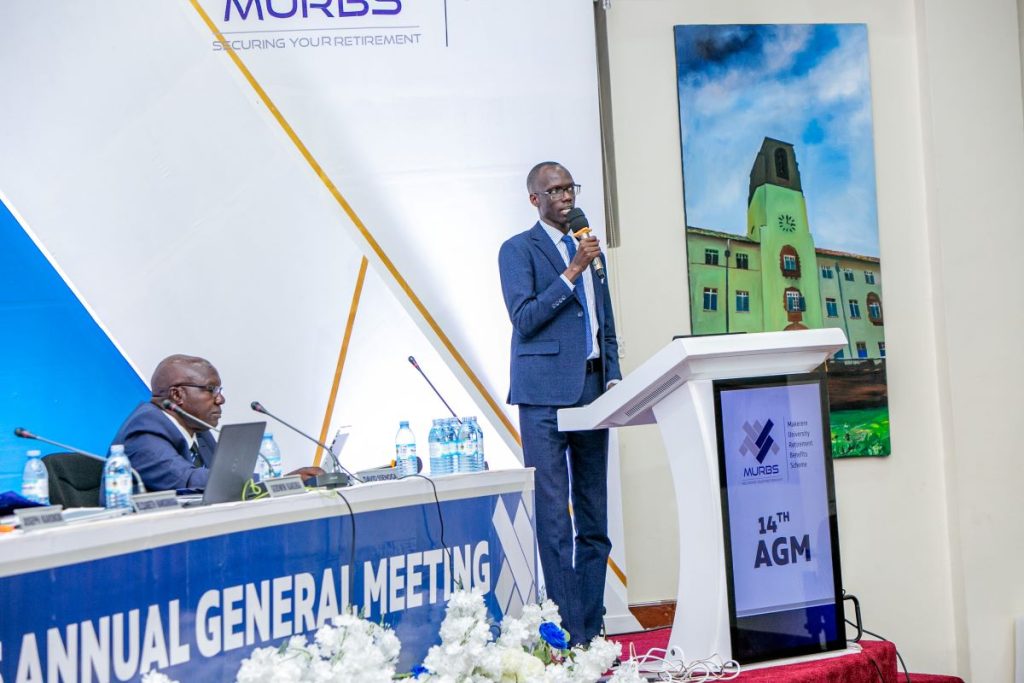
In terms of membership, Dr. Nansubuga reported a 4.4% increase, with the number of members rising from 8,229 to 8,590. She attributed this growth to the reinstatement of in-house beneficiaries and an increase in project and contract staff.
Dr. Kakuba also thanked the sponsor-Makerere University for remitting the membership contributions timely which has helped the scheme to grow.
Dr. Godwin Kakuba -Secretary, MURBS Board of Trustees, who presented the record of the 13th Annual General Meeting stressed that the AGM climaxes a financial year and the Board of Trustee has been vigilant on this and has not missed any AGM for 14 years now.
“We applaud the sponsor because many of these positives in the chairperson’s report can only be attributed to the support by the sponsor through fulfilling the obligation of remitting members’ contributions to the scheme,” he added.
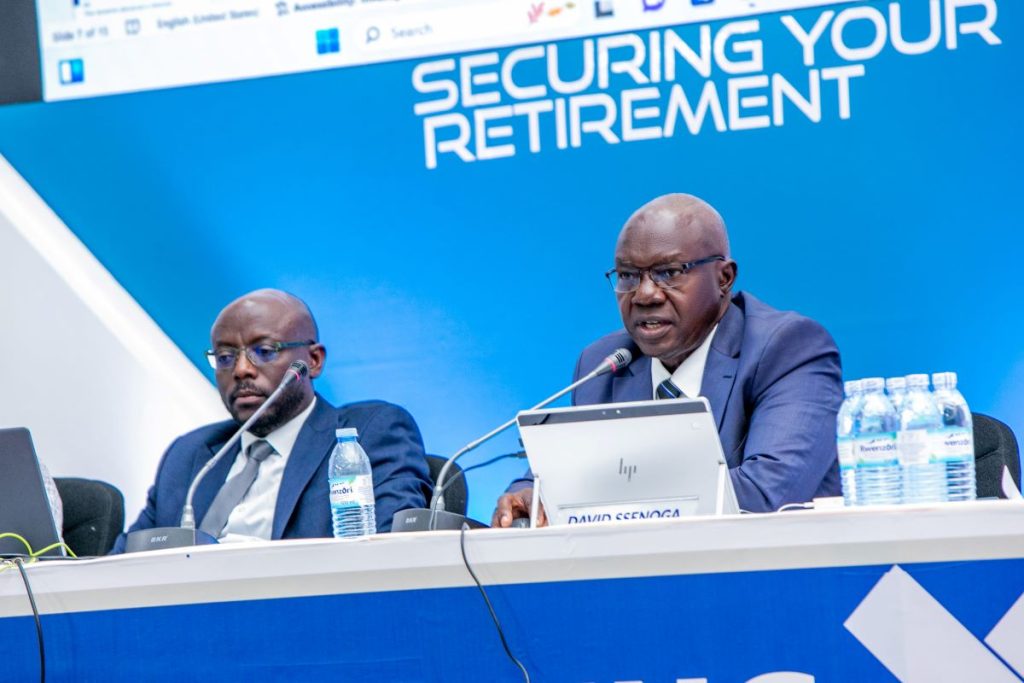
Partner Asad Ssenoga, an independent auditor who audited the scheme said that he was impressed with the level of compliance that the scheme exhibited in all aspects. He said they focused on ensuring that the member contributions are supported with statements and allocated to members appropriately.
“Overall we were satisfied with the work we did on the audit, the numbers that were presented by the Chairperson are the correct numbers that we audited. We were comfortable with those numbers, due process was followed during the audit,” he said.
Mr. Mark Lotukei who represented the CEO of Uganda Retirement Benefits Regulatory Authority (URBRA) thanked the Trustees for always prioritizing governance, which has helped them to reach several milestones.
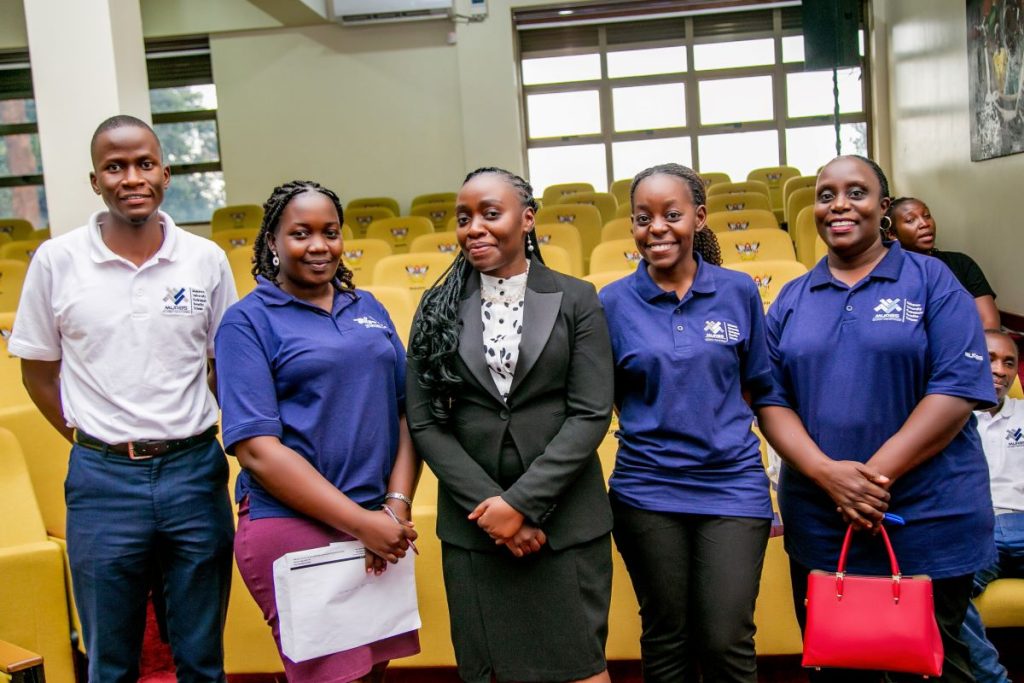
“As URBRA, we look at governance as the biggest component of our compliance. MURBS Trustees from the former to the current, have taken governance as the most important aspect. We really encourage them to continue with this good practice because governance informs all the other aspects,” he said.
Mr. Arthur Kibira, a member in attendance, expressed his appreciation for the Board’s efforts. He urged them to explore higher-risk investments for potentially greater returns. He expressed concern over the scheme’s heavy reliance on government bonds.
“Dr Elizabeth Nansubuga, I want to congratulate you, and your team and also congratulate ourselves. But, I want to believe that there is room for improvement. I am one of those who do not believe that the sky is the limit, we are limited by our own thinking. I am thinking that high risks give high returns. Is there a way of managing those risks, so that we could push this 13.40% interest to a figure much higher? If we do so, we shall say we have learnt how to manage risks,”, he guided.

General
Makerere University and Xiangtan University Advance Strategic Partnership in Chemical Engineering

Makerere University and Xiangtan University are set to update their close to 20-year academic partnership, with a new focus on launching a joint Master’s degree program in Chemical Engineering and expanding student and staff exchange initiatives.
The commitment was reaffirmed during a recent visit by a delegation from Xiangtan University to Makerere University headed by Professor Dingyu Ou, in the company of Mr. Tang Fei and Professor Gilbert Gumshabe, the Chinese and Ugandan Directors of the Confucius Institute at Makerere University respectively.
While addressing the delegation, Professor Nawangwe highlighted that this initiative is part of a broader strategy to diversify academic offerings and contribute to national development through training in Chemical Engineering. Through this new initiative, the University will better prepare graduates for the petrochemical industry and support the country’s industrial growth.
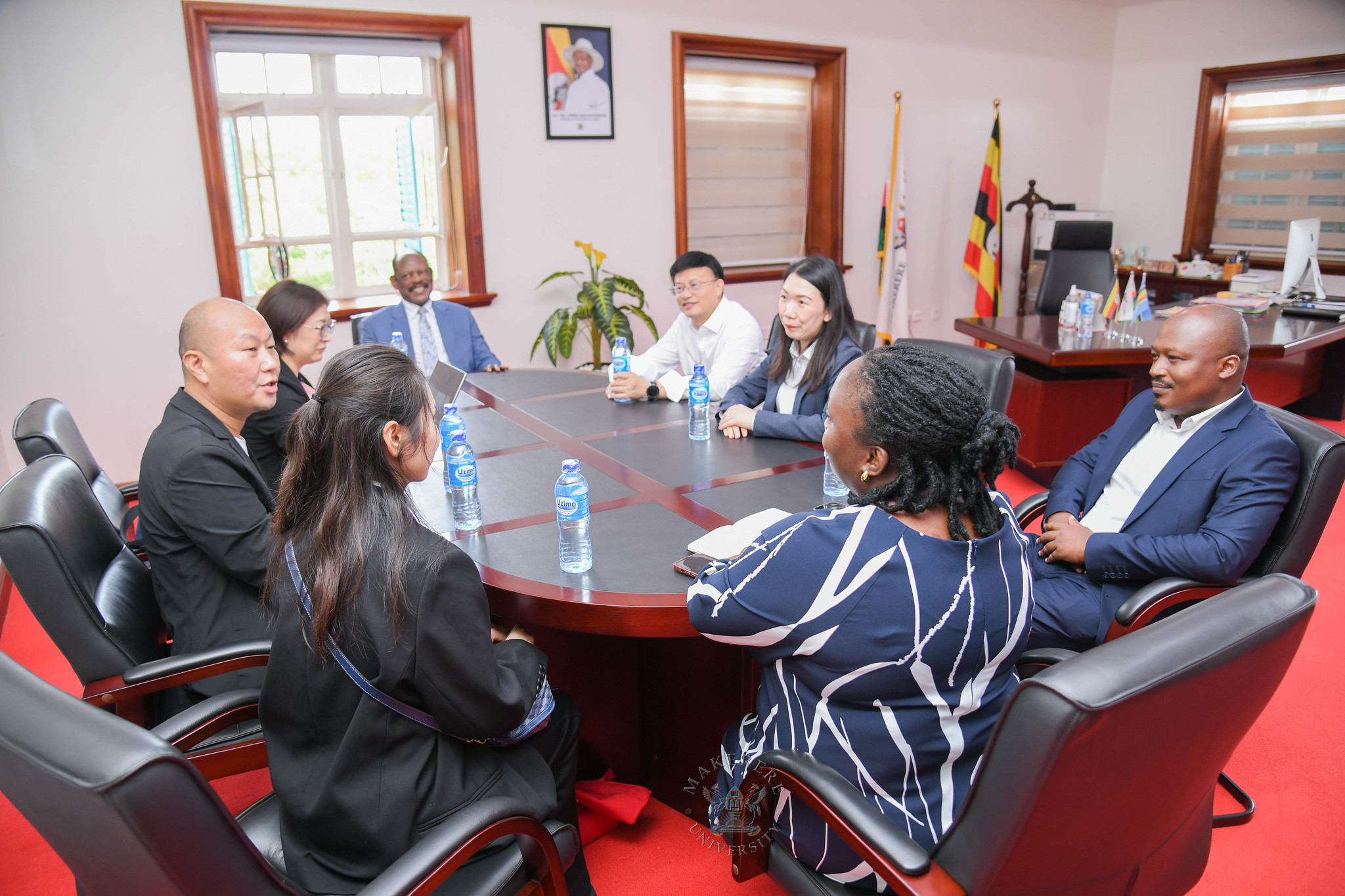
The Vice Chancellor appreciated that the proposed collaboration aims to address Uganda’s growing need for industrial expertise, particularly as the country develops its petroleum sector. The two universities here are working toward a 1+2 training model, which will enable Makerere students to gain practical experience and access advanced laboratory facilities at Xiangtan University.
Professor Nawangwe further reiterated that “our relationship with the people of China, not just for Makerere but also for a big part of Uganda, has been opened wider by the establishment of the Confucius Institute, considering that many other collaborations like one being discussed now have come through this collaboration.”
The head of the Xiangtan delegation, Professor Dingyu Ou, expressed appreciation for the meeting, and acknowledged the history between the institutions. “As mentioned, we have a very long relationship and a very stable friendship between our two universities.”
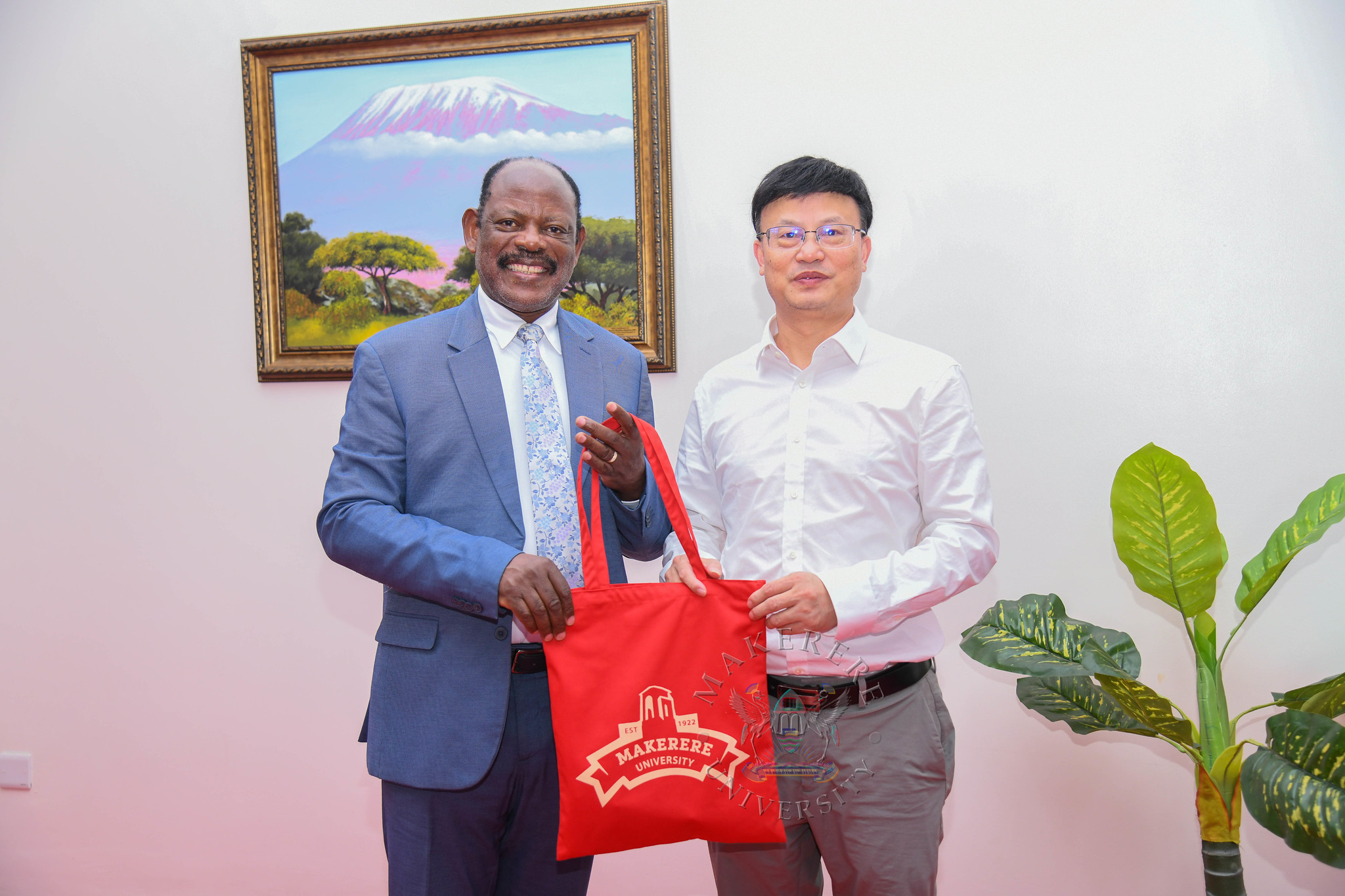
Professor Ou extended appreciation for the support provided to the Confucius Institute at Makerere, the care shown to his colleagues, and looked forward to the successful start of the Chemical Engineering collaboration.
Assuring the delegation of Makerere’s readiness for the collaboration, Ms. Hawa Ndagire Kajumba the Lead, Partnerships and Stakeholder Engagement, Makerere University Advancement Office, aligned with the Vice Chancellor’s emphasis of University goal to have both theory and practice imparted to the students.
She said “the curriculum of the university and Uganda as a whole is moving towards competence-based education training to ensure students are equipped to demonstrate those skills in the actual field, particularly regarding petroleum exploration.”
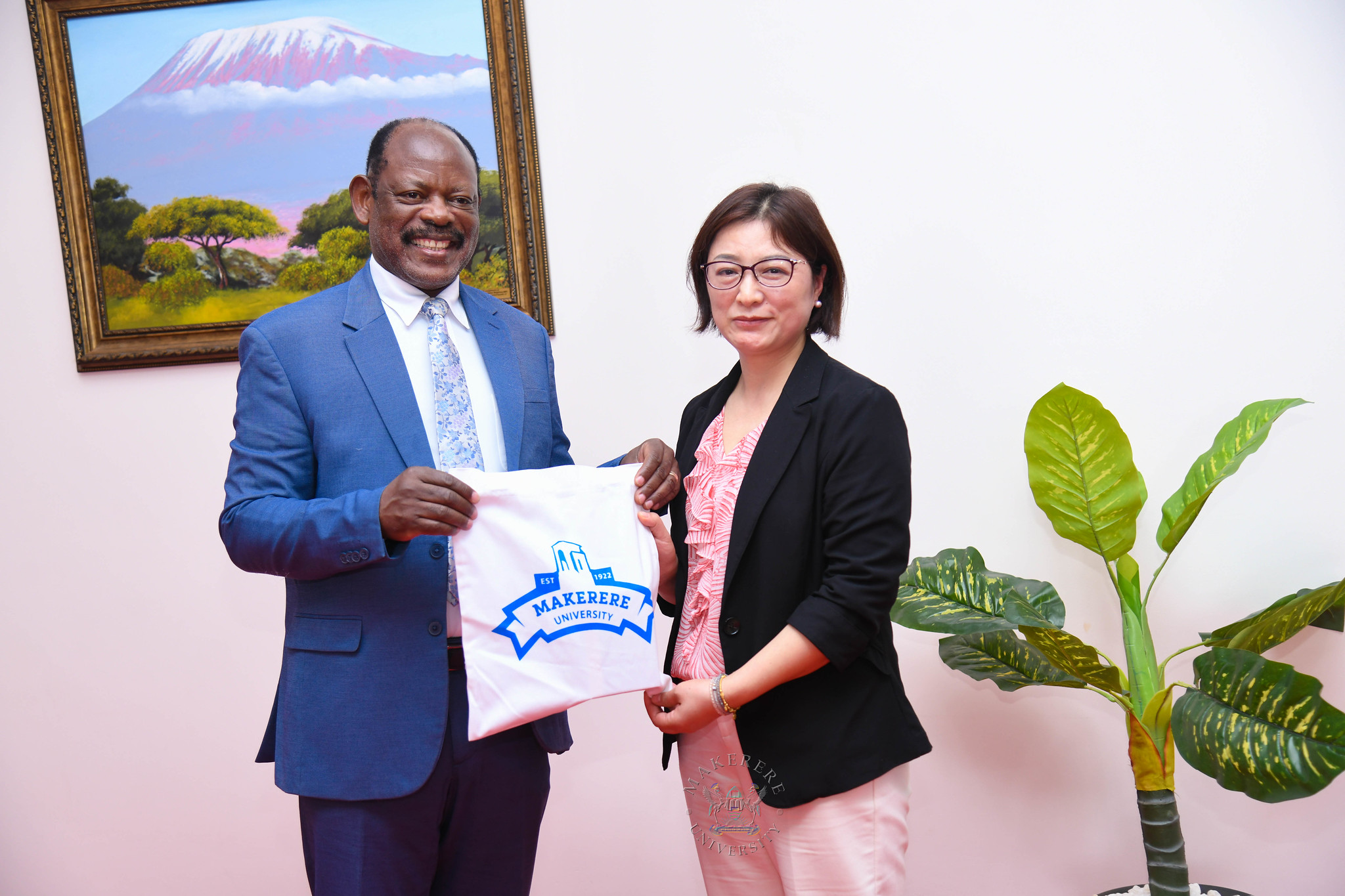
Ms. Ndagire Kajumba also emphasised a shift in strategy for the partnership office, saying, “we are moving away from just signing MOUs that collect dust, and moving towards those that are more collaborative to benefit our faculty and students, just like this one.”
Professor Gilbert Kumushabe aligned his remarks with those of the Vice Chancellor and Ms. Ndagire Kajumba, and described the method used at Xiangtan University as “actually competence-based teaching.”
Based on his recent visit, Prof. Gumoshabe shared that students in China are divided into groups with dedicated teachers to perform practical, hands-on work beyond the theoretical lecturers. He expressed gladness that the same was being adopted for the Ugandan context.
Both institutions are now working to finalise the specific agreements for the joint degree and exchange programs. Beyond academic training, the collaboration will advance cultural and professional exchange.

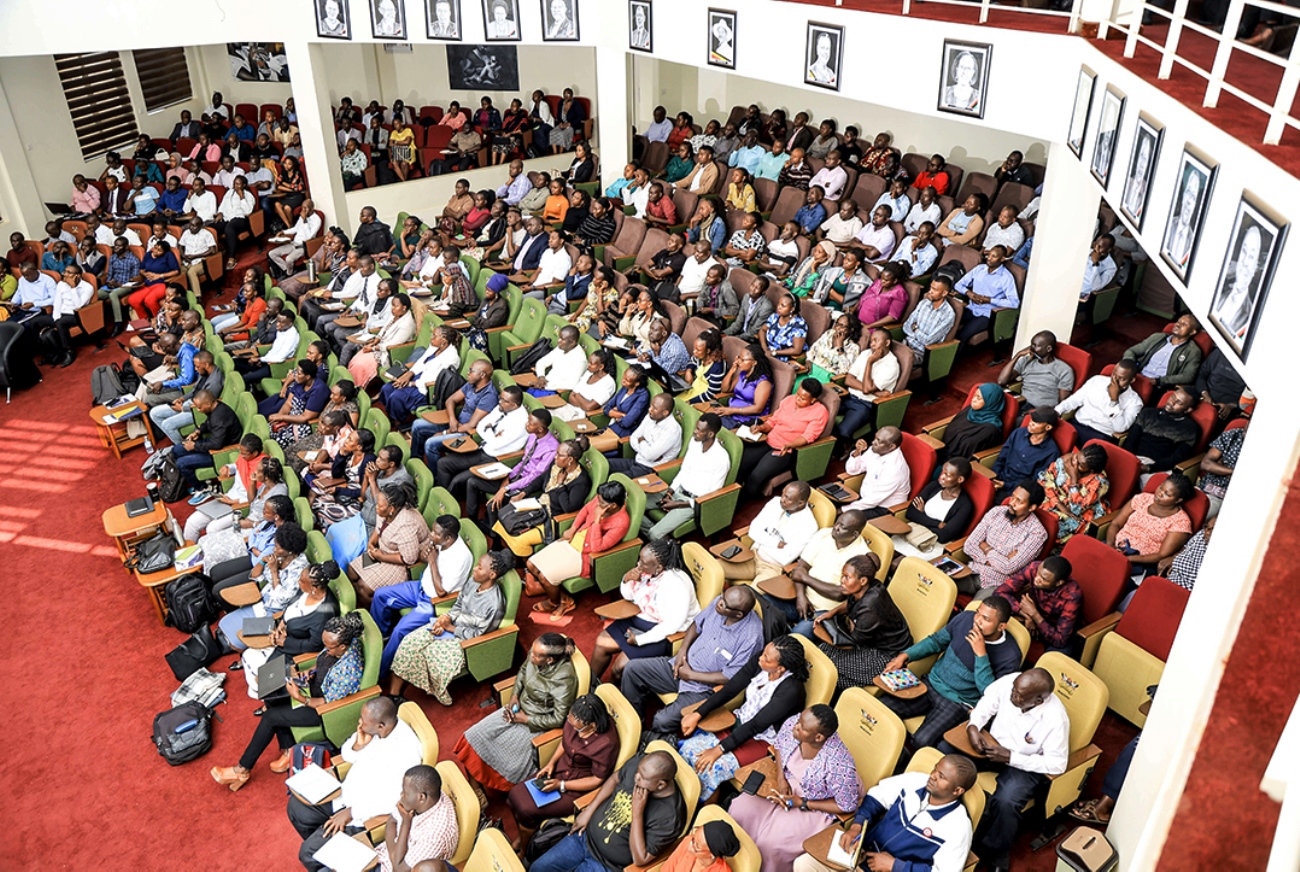
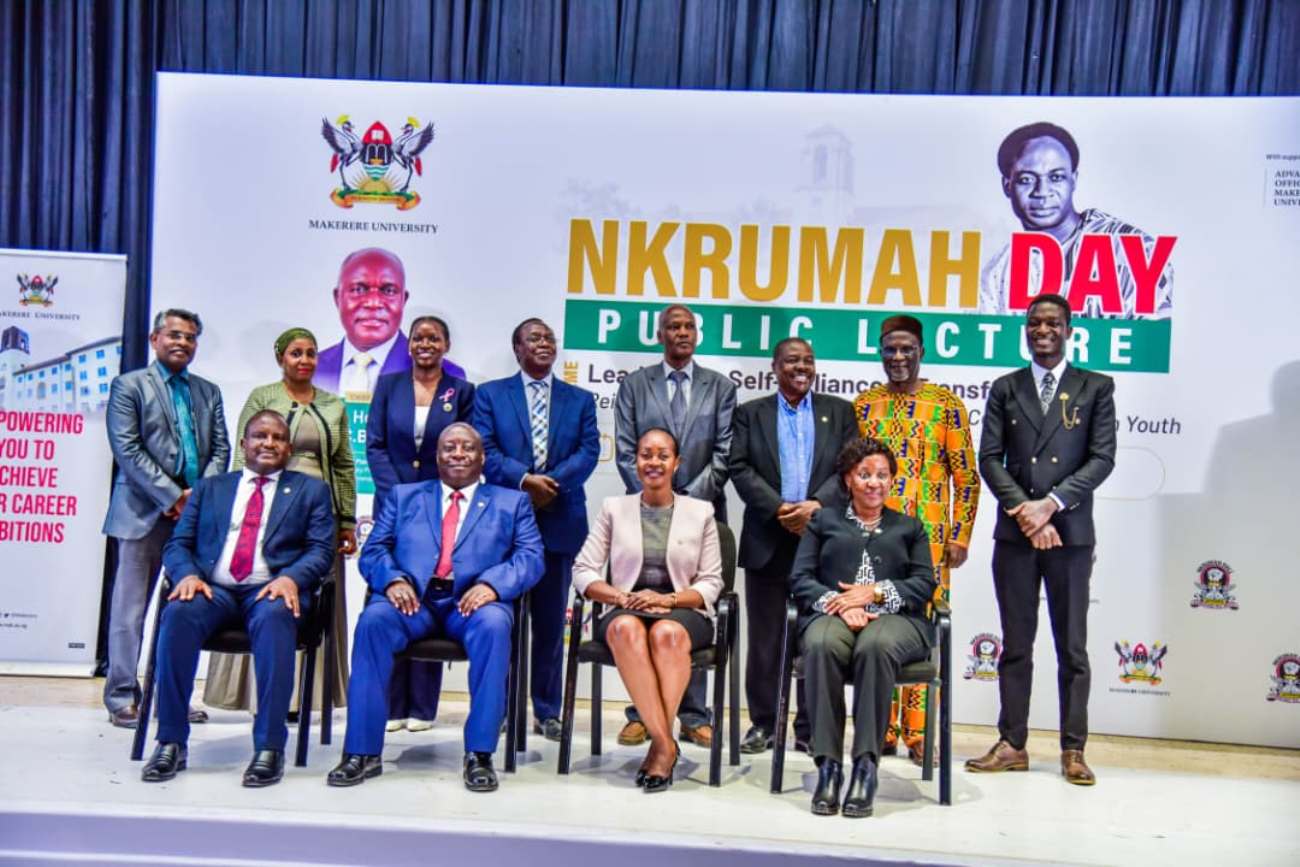
Makerere University on October 8, 2026 commemorated Nkrumah Day with a Public Lecture at the Yusuf Lule Central Teaching Facility Auditorium. The Lecture gathered students, academics, historians and distinguished guests to discuss Kwame Nkrumah’s contribution and its relevance to Africa.
Organised by Nkrumah Hall under the theme “Leadership, Self-Reliance and Transformation: Reimagining Nkrumah’s Vision for the 21st Century African Youth,” the lecture explored how Nkrumah’s ideals of Pan-Africanism, self-reliance and African unity can guide the continent beyond political independence.
Endorsing Nkrumah’s Vision of Investing in Africa
The First Deputy Prime Minister and Chancellor of Makerere University, Rt. Hon. Dr. Crispus Walter Kiyonga, was the chief guest.
In remarks delivered on his behalf by Dr. Charles Kahigiriza, Dr. Kiyonga said the day was a moment to reflect on Nkrumah’s views on Pan-Africanism and the lessons on self-reliance still held for Africa today and emphasised the importance of keeping Africa’s young talent at home (in Africa).
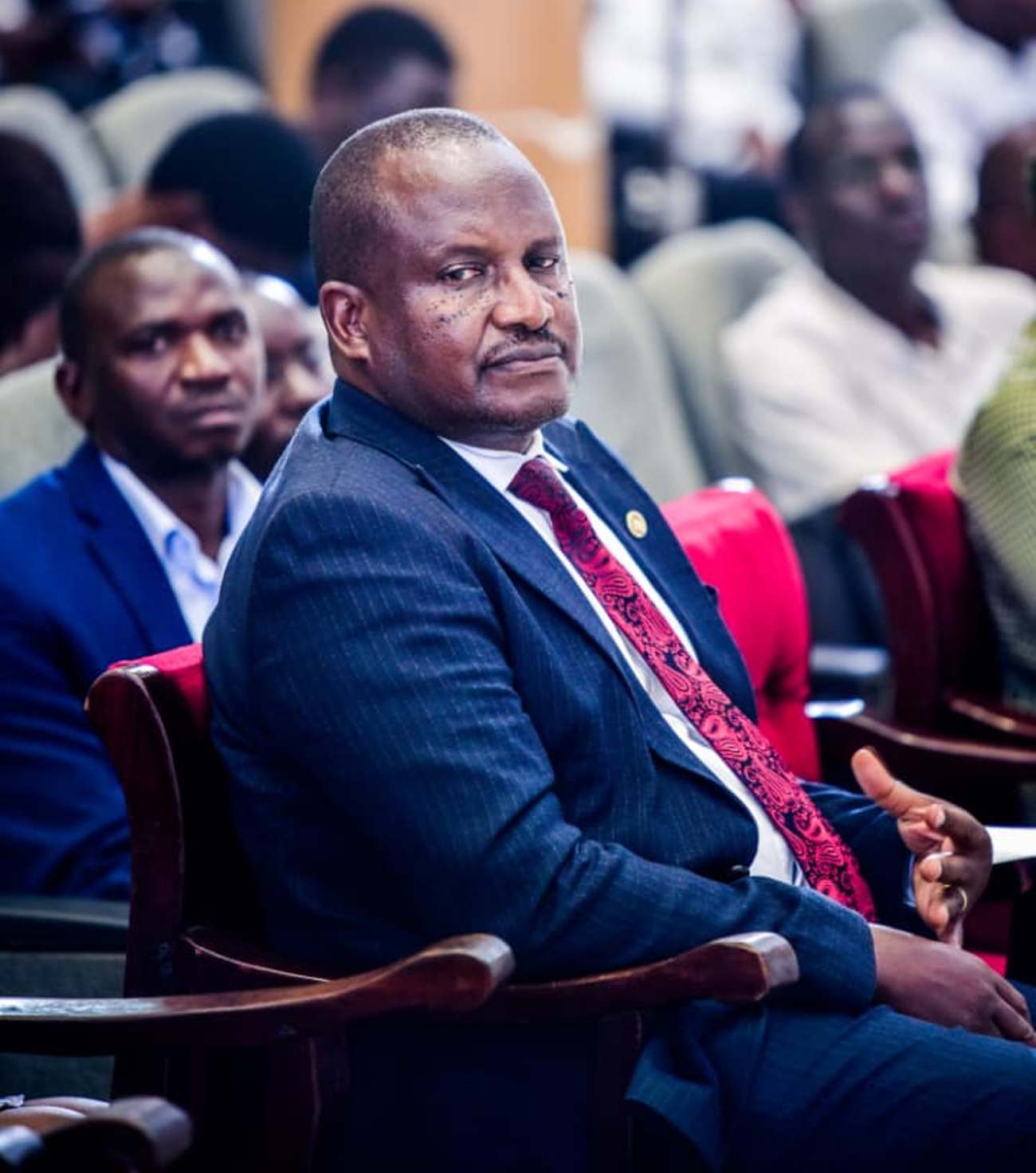
He then discussed ways of encouraging young people to achieve Nkrumah’s vision, pointing out that Africa is losing skilled people to brain drain as many go abroad to work.
He encouraged young Africans to stay and contribute to the continent’s growth, describing Africa’s potential as a promising asset.
Transformation Requires Discipline
The keynote address was delivered by Prof. Gerald Karyeija, a political analyst and Head of Quality Assurance at the Uganda Management Institute (UMI).
He discussed Nkrumah’s role in championing Pan-Africanism and the formation of the African Union. He acknowledged that “his legacy was also very complex” due to a number of challenges.
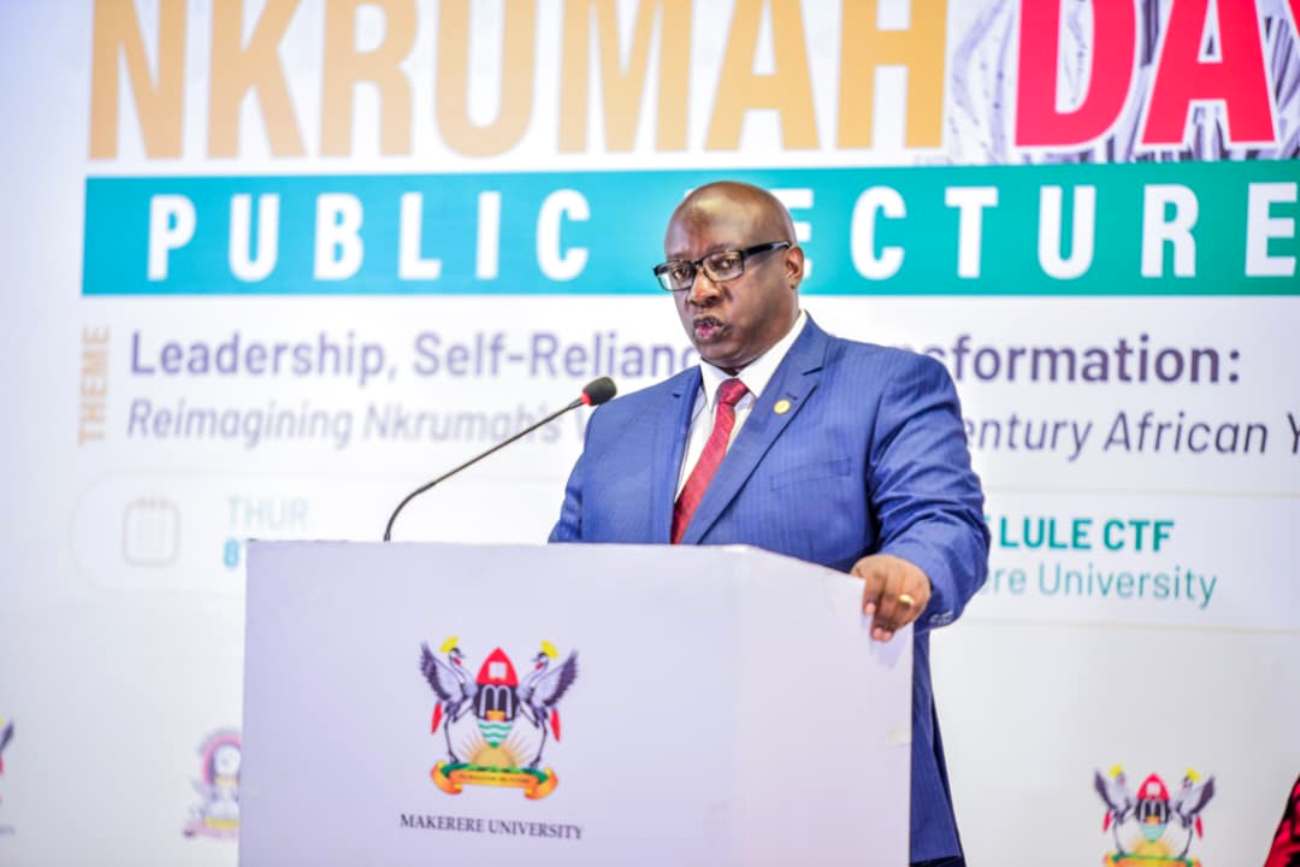
Regarding leadership, the professor argued, “leadership does not begin with the title. It begins with responsibility,” adding that “leadership is not only about power, privilege, entitlement, or status. It’s about service. It’s about stewardship.”
He encouraged attendees to emulate Nkrumah by using their knowledge and power for good.
“Don’t get the intellectual power from Makerere to become evil,” he cautioned, stressing that transformation requires discipline.
Universities Turn Knowledge into Action
Associate Professor Gorettie Nabanoga, the Acting Deputy Vice Chancellor for Finance and Administration, represented Professor Barnabas Nawangwe, the Vice Chancellor of Makerere University.
She aligned herself with the previous speakers and urged participants to move beyond simply celebrating Kwame Nkrumah’s memory and begin implementing his vision.
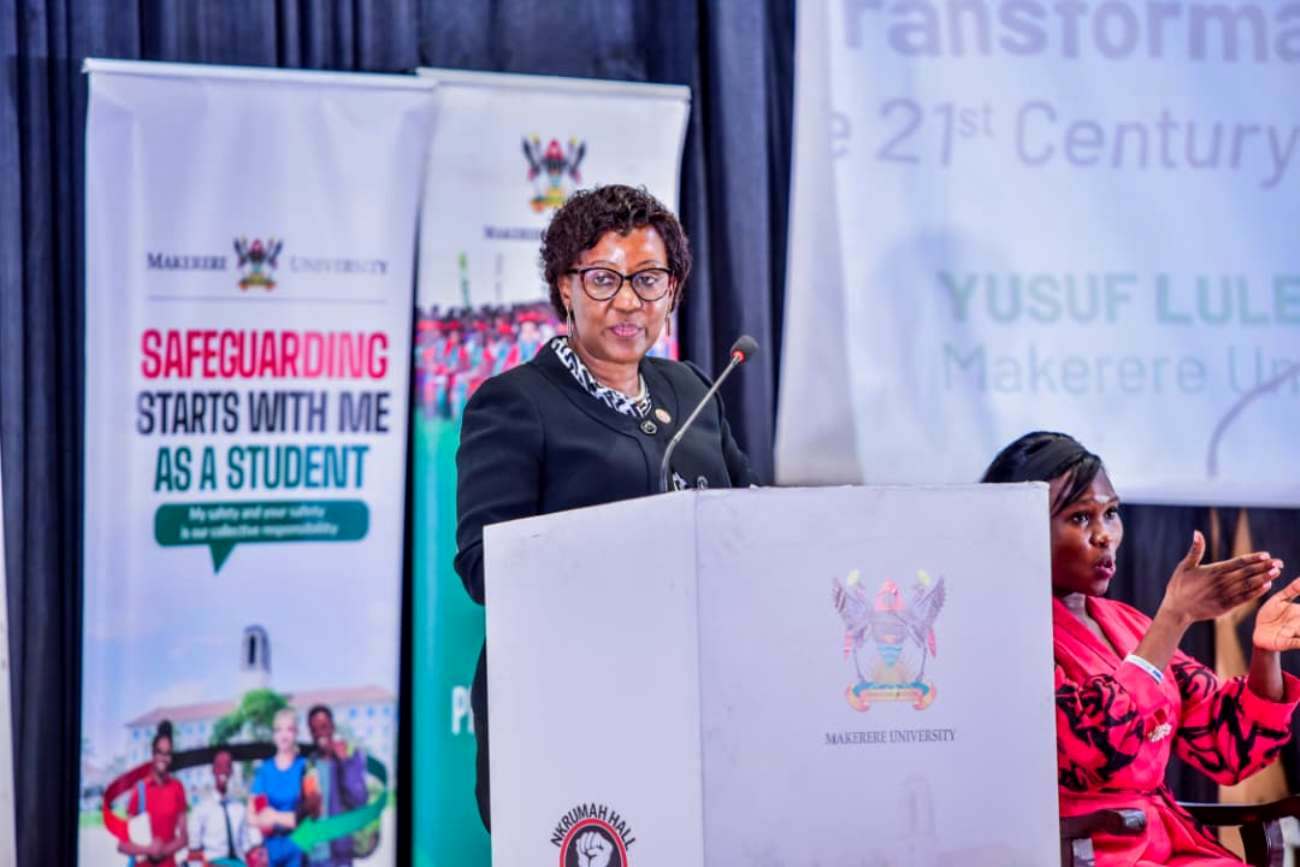
She called for practical action, urging the mobilisation of Pan-Africanism beyond slogans. “Perhaps the Pan-Africanism of this generation must therefore move from solidarity to capacity, from rhetoric to institutions, from potential to production, and from aspirations to implementation,” she said.
On the role of universities, she reiterated that Makerere University is a hub for innovation rather than just a degree-granting institution.
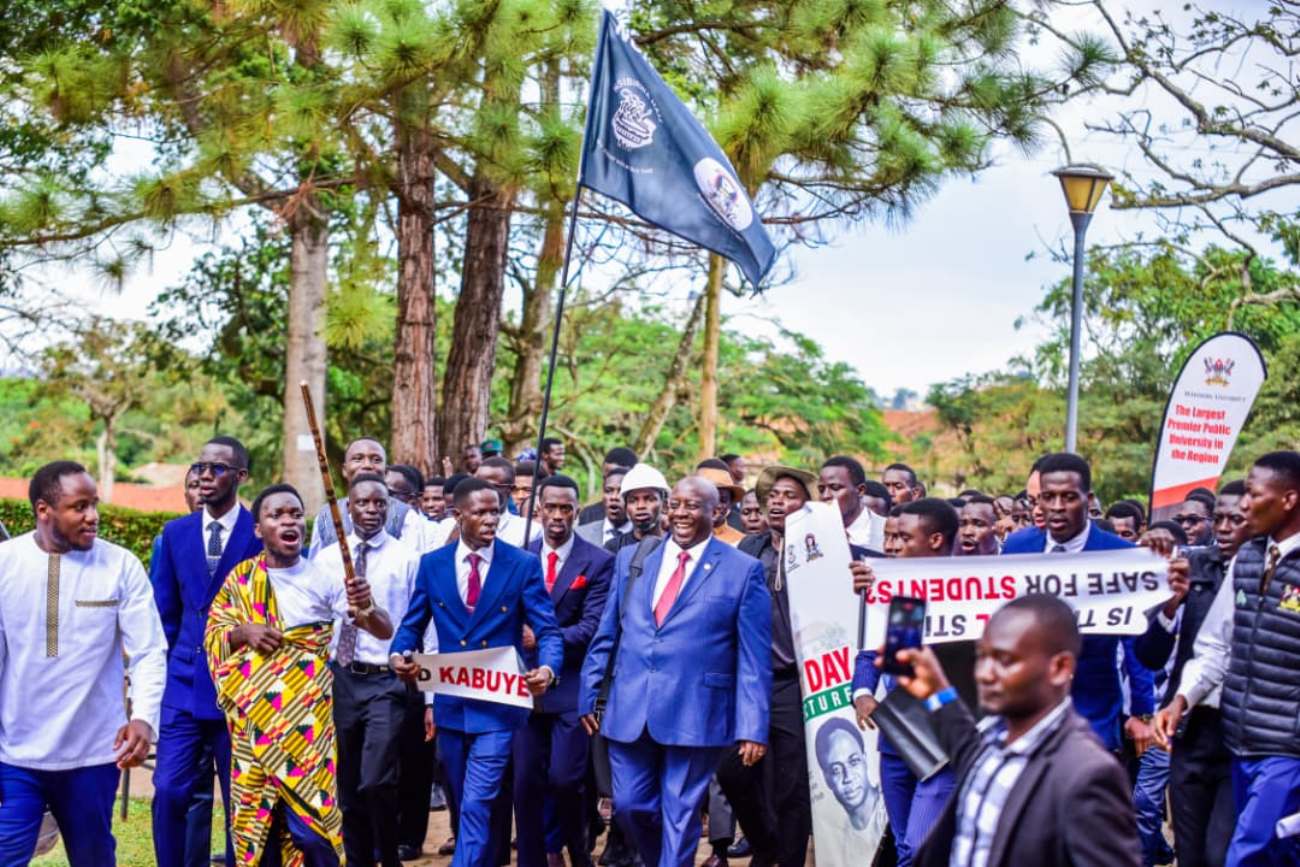
“We are building for the future when we develop people who can think critically, when we generate knowledge, when we challenge perceived knowledge and wisdom, and when we innovate,” she said.
Addressing the students present, she said, “You are not simply the leaders of tomorrow; you are citizens of Africa today. The opportunity you enjoy at Makerere University comes with responsibility.”
Dr. Winifred Kabumbuli, the Dean of Students at Makerere University, set the tone at the 2026 Nkrumah Day Public Lecture.
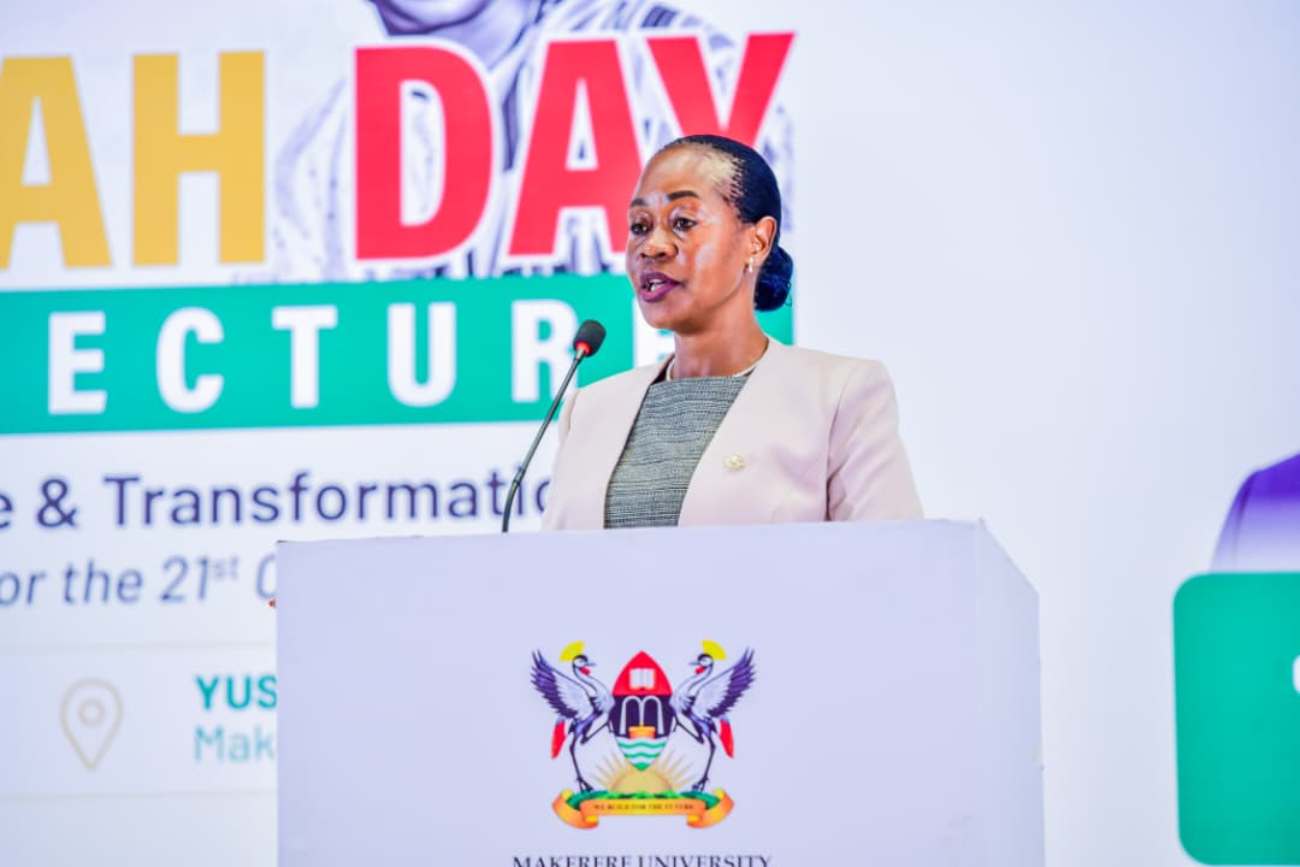
She revealed that this lecture organised under Nkrumah Hall highlights its significance as a symbol of Makerere University‘s commitment to Pan-Africanism. “The name Nkrumah Hall has stood the test of time and sounds like a horn beautifully over the African continent and beyond,” she said.
She elaborated on the lecture’s theme of leadership, self-reliance and transformation, noting its alignment with the university’s mission to nurture future leaders.
Direction of Pan-Africanism
During a panel discussion, speakers questioned how far Africa has come. Associate Professor Zahara Napeewo, Deputy Dean of the School of Law at Makerere University, stated that the continent was still lagging behind the progress Nkrumah would have wanted.
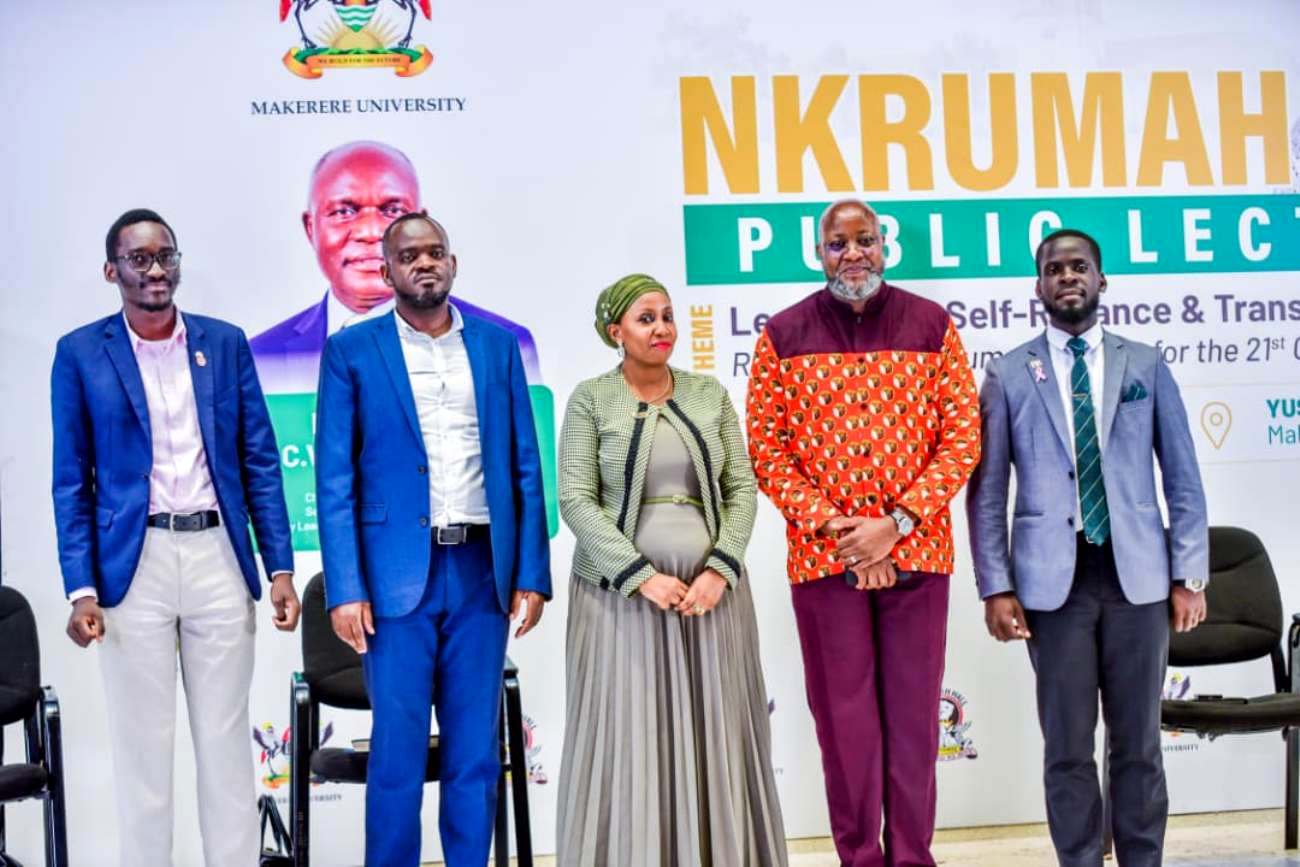
She shared that while educational institutions provide knowledge, they must go further and encourage graduates to become problem-solvers who can create employment for themselves rather than wait to be employed.
Dr. Zaid Sekitto, a Lecturer in the Department of History, Archaeology and Heritage Studies at Makerere, added that the structures of colonialism that Nkrumah fought against were still in place. “They must be addressed”, he said, or Africa would remain trapped in colonialism and lose sight of Nkrumah’s vision.
The Youth and the Unfinished Struggle
The students also had an opportunity to share their perspectives on the unfinished struggle for Pan-Africanism.
Nkrumah Hall Chairperson Joseph Sekabira noted that the Africa Nkrumah fought for was not the Africa that exists today.
He urged young people to take up leadership now rather than wait until they were older.
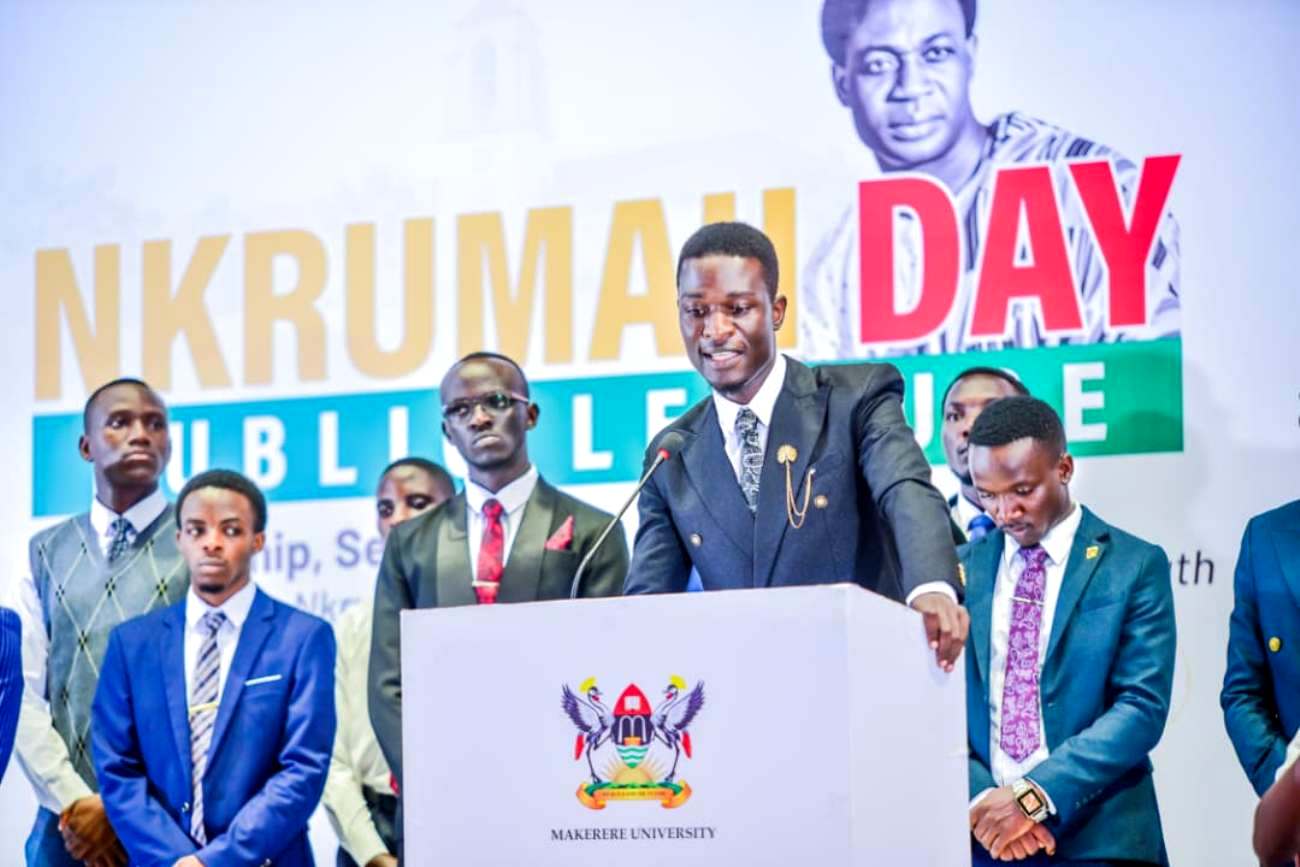
Mark Kwikiriza, a final-year Bachelor of Arts in Music student and resident of Nkrumah Hall, said Nkrumah’s legacy remained relevant because the problems he faced in Ghana were similar to those society faces today.
He recommended that society could rejuvenate the spirit of “Osagyefo,” the title meaning “redeemer” by which Nkrumah was known.
Honouring 13 Years of Service
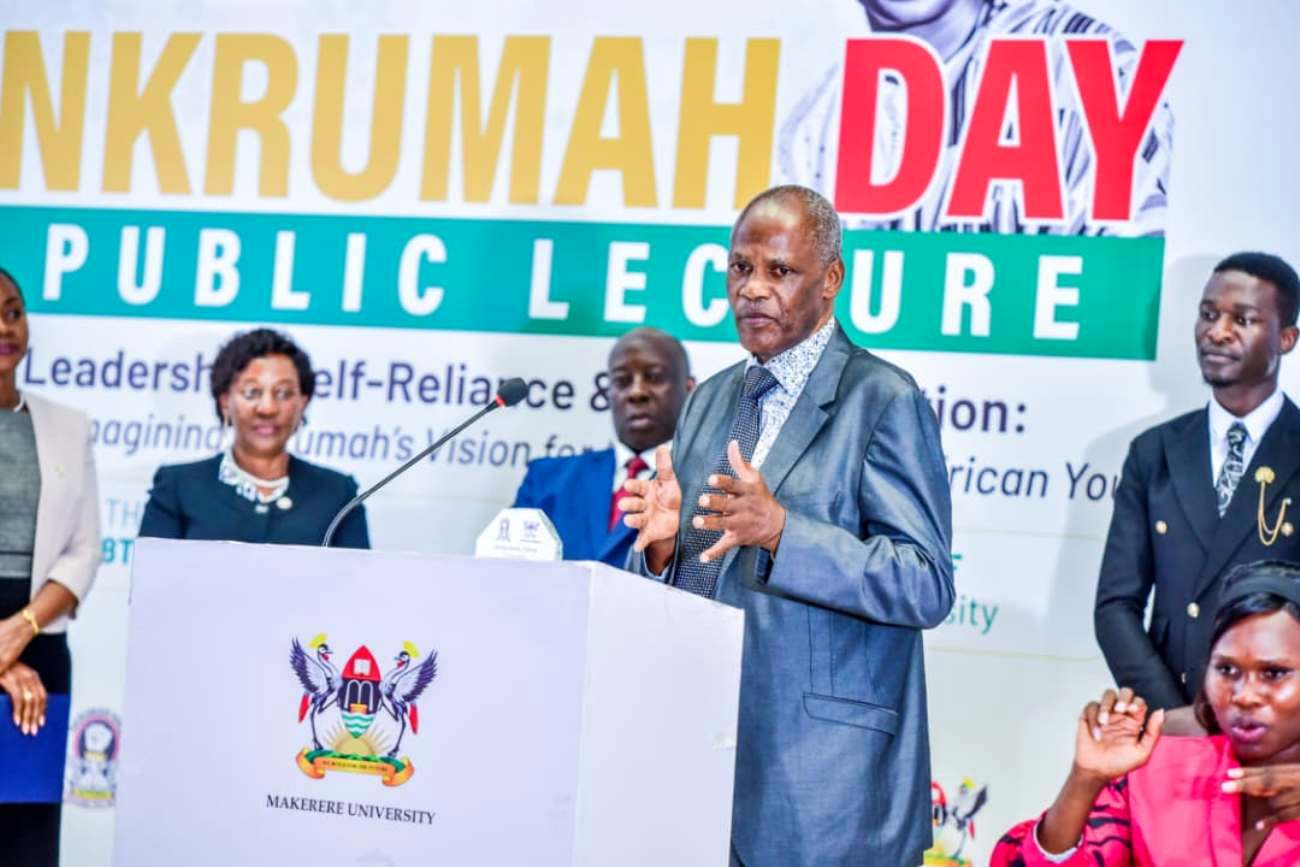
The event also recognised Mr. John Kamya for his 13 years of outstanding service as Warden of Nkrumah Hall, a position he held from 2007 to 2020.
He received an appreciation award presented by the Chief Guest’s representative in the presence of the Hall Chairperson and other dignitaries.
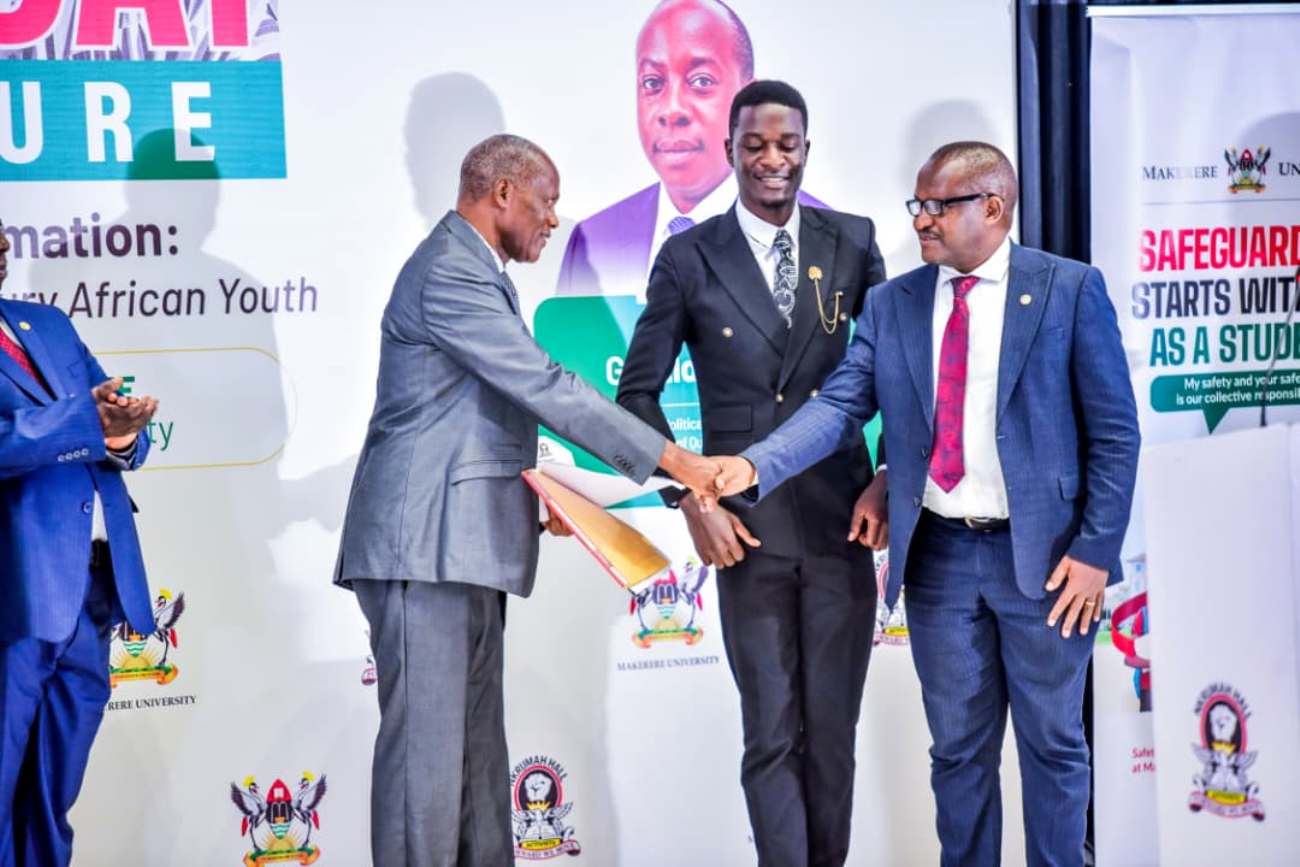
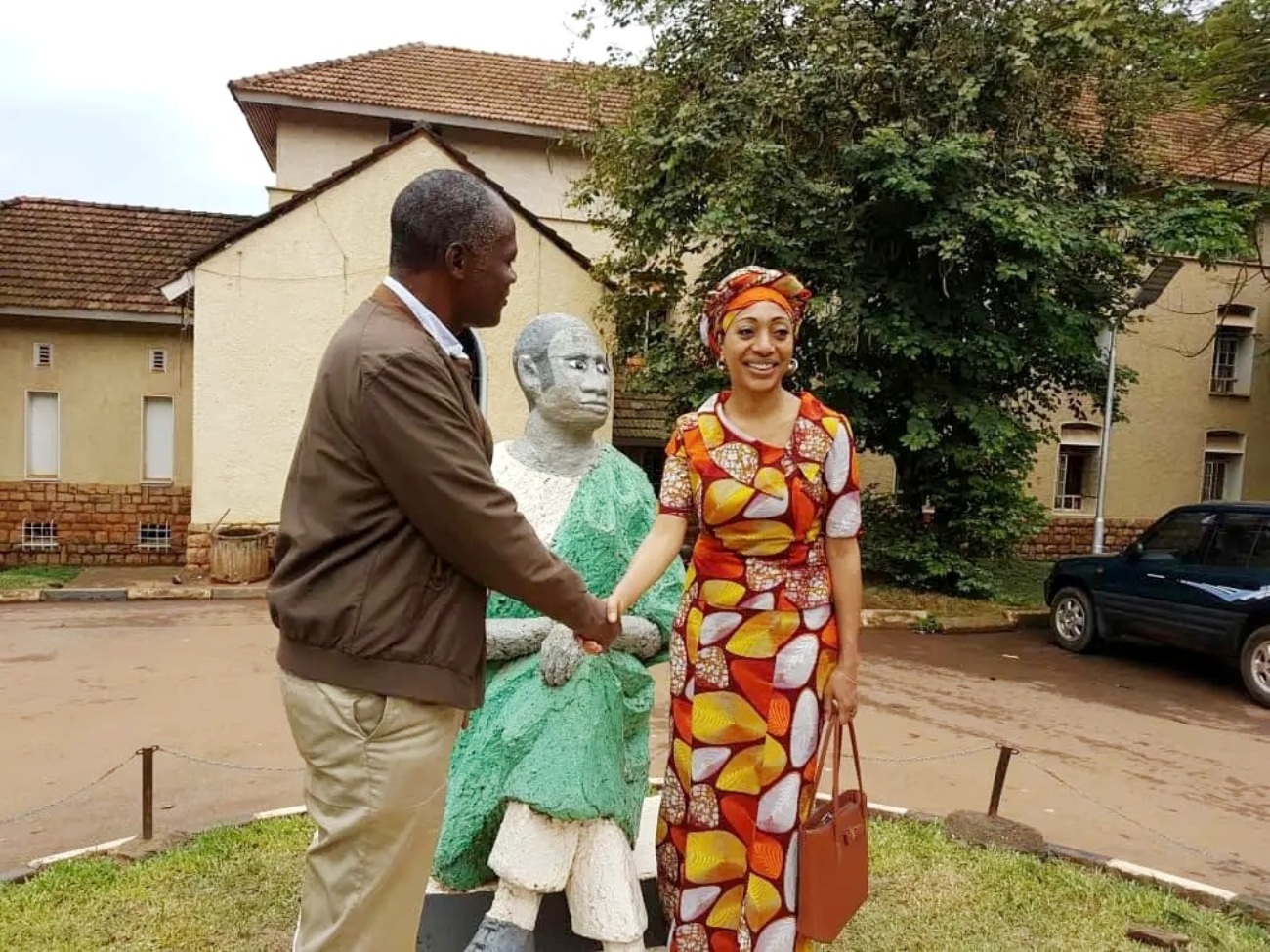
In his acceptance remarks, Mr. Kamya noted that the 2018 visit to the Hall by Kwame Nkrumah’s daughter, Ms. Samia Yaba Nkrumah, was one of the fondest memories of his time in office. He thanked Makerere for the opportunity to serve the University community and its stakeholders.
At the peak, the event concluded with tree planting and cake-cutting activity in front of Nkrumah Hall. The audience was left contemplating one message of Kwame Nkrumah’s vision of a united, self-reliant Africa, freed first in the mind, that remains unfinished and in the words of some speakers, has been handed to the current generation as a task to accomplish.

-
 General2 weeks ago
Statement on Concerns Circulating Regarding a Member of Academic Staff
-
 General2 weeks ago
Beyond Map Size: Africa’s Agency Should Not Be Funded by Other People
-
 General6 days ago
Timothy Khabusi: From Barefoot Walks to shaping Uganda’s Eye health Future
-
 General2 weeks ago
Press Statement: Incident Involving Death of a Student at Makerere University
-

 Agriculture & Environment2 weeks ago
Makerere Students Win Inter-University Tourism Quiz Competition