Connect with us

Health

Call For Applications: Joint Postdoctoral Fellowship in Global Health Ethics

Published

on

Joint Postdoctoral Fellowship in Global Health Ethics
Fogarty African Bioethics Post-Doctoral Fellowship (FAB-PDF) Program

Call for Applications

The Johns Hopkins Berman Institute of Bioethics (BI), Makerere University College of Health Sciences (MakCHS) and University of Oxford Ethox Centre (Ethox) invite applications for the Fogarty African Bioethics Post-Doctoral Fellowship Program (FAB-PDF) – an 18-month advanced bioethics postdoctoral training program for scholars from sub-Saharan Africa who hold a bioethics-related PhD. Funded by the Fogarty International Center, NIH, USA, the program focuses broadly on global health ethics, with particular opportunities for fellows to concentrate on issues involving global infectious disease ethics and advanced international research ethics. The fellowship will begin approximately January 13, 2025.

Opportunities

  • Complete fellowship activities across multiple institutional contexts:
    • 4.5 months based at Johns Hopkins in Baltimore, USA
    • 1 month based at MakCHS in Kampala, Uganda
    • 1 month based at Ethox in Oxford, UK
    • 11.5 months based at the postdoctoral fellow’s home institution
  • Access bioethics mentorship, coursework, seminars and scholarly/practice/training networks
  • Conduct individual and international collaborative mentored research and writing
  • Participate in international global health ethics and research ethics conferences
  • Plan and complete a funded global health ethics leadership project

Eligibility

  • Current national of a country in sub-Saharan Africa
  • Completed a bioethics-related PhD or related doctoral research degree, generally within 5 yrs of the fellowship start

Preference will be given to candidates who:

  • Previously completed an NIH Fogarty-sponsored bioethics training (at any level)
  • Previously worked on global health ethics, infectious disease ethics, or international research ethics topics
  • Have strong discipline-appropriate methods training used to conduct bioethics research and writing
  • Have a record of bioethics scholarly publication, presentation, and/or professional service
  • Hold a faculty position in an institution of higher-education in sub-Saharan Africa, or demonstrate institutionalcommitment to providing such a position

Salary/Benefits

  • Stipend of $4,707 USD/month (pre-tax) to cover accommodations, meals, and incidentals during the months while in residency at BI, MakCHS and Ethox, plus health benefits
  • Airfare, ground transport and visa fees for residency requirements; modest budgets for leadership project, technology and supplies; fee coverage for required courses and conference registration

Applications are due by June 1, 2024 and must be uploaded via Interfolio (http://apply.interfolio.com/143696).

Candidates must submit:

  • CV
  • Personal statement describing: 1) motivation to pursue the fellowship, 2) nature of previous bioethics training, 3)bioethics scholarly research and writing interests, including description of any works in progress that will becompleted during the fellowship, and 4) idea(s) for a potential leadership project (nature of the project, how it alignswith local priorities, personal skills that will be advanced, and any relevant preparations)
  • Two (2) letters of recommendation
  • One (1) letter of institutional commitment, signaling sufficient leave from employment for all fellowshipactivities, and a commitment to, at minimum, position retention and support in undertaking the leadership project andin integrating bioethics capacity on completion
  • Copies of graduate transcript(s)

For more information, please contact Joseph Ali, JD (jali@jhu.edu) and/or Nancy E. Kass, ScD (nkass@jhu.edu).

Mak Editor

Health

Announcement: 2026 Intake – Certificate in Applied Health Systems Research

Published

on

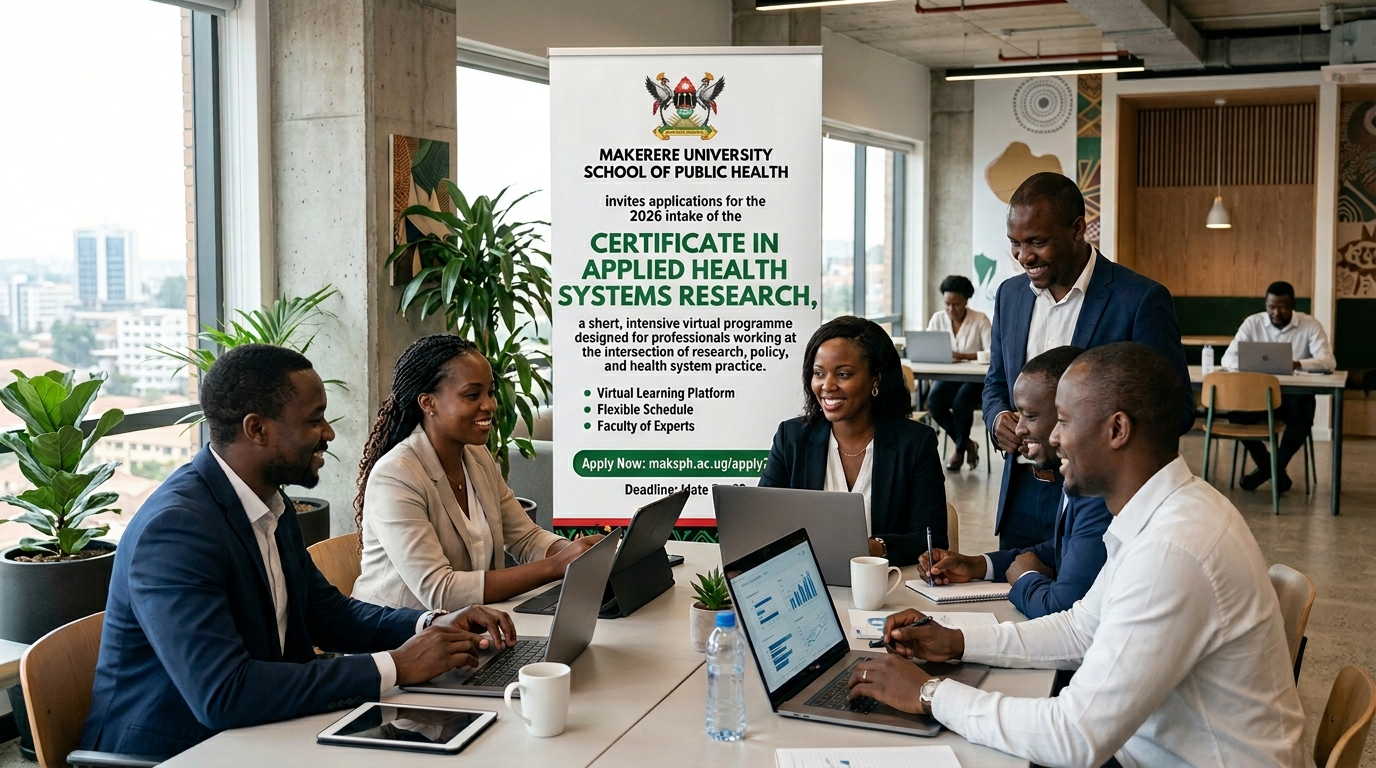
Announcement: 2026 Intake – Certificate in Applied Health Systems Research. Photo: Nano Banana 2

Makerere University School of Public Health invites applications for the 2026 intake of the Certificate in Applied Health Systems Research, a short, intensive virtual programme designed for professionals working at the intersection of research, policy, and health system practice.

Why this course matters

Health system challenges are rarely linear. They are shaped by institutional complexity, political realities, and competing stakeholder interests. In many cases, the issue is not the absence of evidence, but the difficulty of producing research that is relevant, timely, and usable within real decision-making environments. This course is designed to address that gap, equipping participants to generate and apply evidence that responds to actual system constraints.

Apply via: https://docs.google.com/forms/d/1SjPWK37nZGuLb25S2X6d9NPtME2AKlEW_kJjCimivhY/viewform?ts=6821a62d&edit_requested=true

What you will gain

Participants will develop the ability to:

  • frame research problems grounded in real system conditions
  • analyse complex interactions within health systems
  • design policy-relevant and methodologically sound studies
  • translate findings into actionable insights for decision-making

Course format and key details

The programme runs virtually from 6th to 17th July 2026 (2:00–5:45 PM EAT) and combines interactive sessions, applied learning, and expert-led discussions across:

  • systems thinking and problem framing
  • research design and mixed methods
  • evidence use in policy and practice

For full course details:https://sph.mak.ac.ug/program-post/certificate-in-health-systems-research/

Who should apply

This course is suited for:

  • Researchers and graduate students
  • Policy analysts and programme managers
  • Health practitioners involved in planning, implementation, or evaluation

Fees

  • Ugandan participants: UGX 740,000
  • International participants: USD 250

Application Deadline: 14 June 2026

Please find the course details below:

View on MakSPH

Mak Editor

Continue Reading

Health

WHO Report Highlights Global Drowning Burden as MakSPH Contributes to Evidence and Action

Published

on

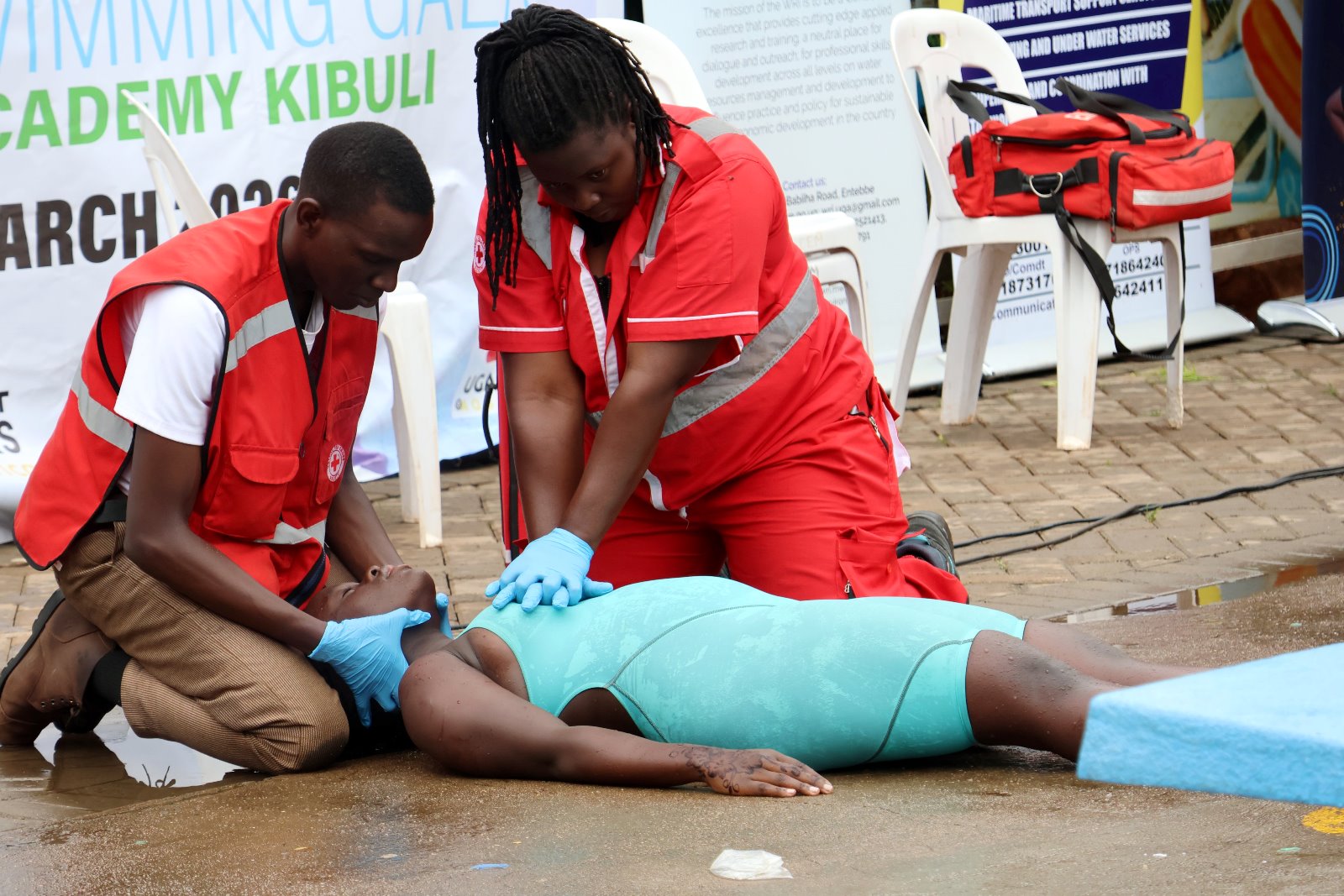
Demonstration of emergency medical procedures performed by the Uganda Red Cross Society at the first-ever National Water Safety Swimming Gala organised by the Ministry of Water and Environment at Greenhill Academy in Kibuli on March 21, 2026. Photo: Makerere University School of Public Health (MakSPH), Kampala Uganda, East Africa.

Makerere University School of Public Health, through its Centre for the Prevention of Trauma, Injury and Disability, contributed to the Global Status Report on Drowning Prevention 2024, the first comprehensive global assessment of drowning burden, risk factors, and country-level responses.

Published by the World Health Organisation, the report estimates that approximately 300,000 people died from drowning in 2021, with the highest burden in low- and middle-income countries, which account for 92% of deaths. The African Region records the highest mortality rate, underscoring the urgency of targeted interventions. Children and young people remain the most affected, with drowning ranking among the leading causes of death for those under 15 years.

While global drowning rates have declined by 38% since 2000, progress remains uneven and insufficient to meet broader development targets. The report highlights critical gaps in national responses, including limited multisectoral coordination, weak policy and legislative frameworks, and inadequate integration of key preventive measures such as swimming and water safety education.

It further identifies persistent data limitations, with many countries lacking detailed information on where and how drowning occurs, constraining the design of targeted interventions. At the same time, the report notes progress in selected areas, including early warning systems and community-based disaster risk management.

MakSPH’s contribution to this global evidence base reflects its role in advancing research, strengthening data systems, and supporting context-specific approaches to injury prevention. Through its Centre, the School continues to inform policy and practice, contributing to efforts to reduce drowning risks and improve population health outcomes in Uganda and similar settings.

The full report can be accessed below:

View on MakSPH

John Okeya

Continue Reading

Health

MakSPH Contributes to Global Strategy to Reduce Drowning Deaths

Published

on

Illustrative photo of a man splashing in a water body. Photo: MakSPH

Makerere University School of Public Health, through its Center for the Prevention of Trauma, Injury and Disability, contributed to the Global Strategy for Drowning Prevention (2025–2035): Turning the Tide on a Leading Killer, a landmark framework guiding coordinated global action to reduce drowning.

Developed through the Global Alliance for Drowning Prevention, a multi-agency platform hosted by the World Health Organization, the strategy identifies drowning as a leading yet preventable cause of death, responsible for over 300,000 deaths annually. The burden falls disproportionately on low- and middle-income countries, particularly among children and young people.

The strategy sets a global target of reducing drowning deaths by 35% by 2035 and outlines six strategic pillars, including governance, multisectoral coordination, data systems, advocacy, financing, and research. It also prioritises ten evidence-based interventions such as strengthening supervision, improving water safety and swimming skills, enhancing rescue capacity, and enforcing safety regulations.

MakSPH’s inclusion in the Global Alliance for Drowning Prevention reflects its contribution to advancing research, policy engagement, and capacity strengthening in injury prevention. Through its Centre, the School supports the generation and application of context-specific evidence, positioning itself as a key contributor to global efforts to reduce drowning and strengthen community resilience.

The full document can be accessed below:

View on MakSPH

John Okeya

Continue Reading

Trending