
Education
Youth & Innovation Expo to nurture financially stable teachers

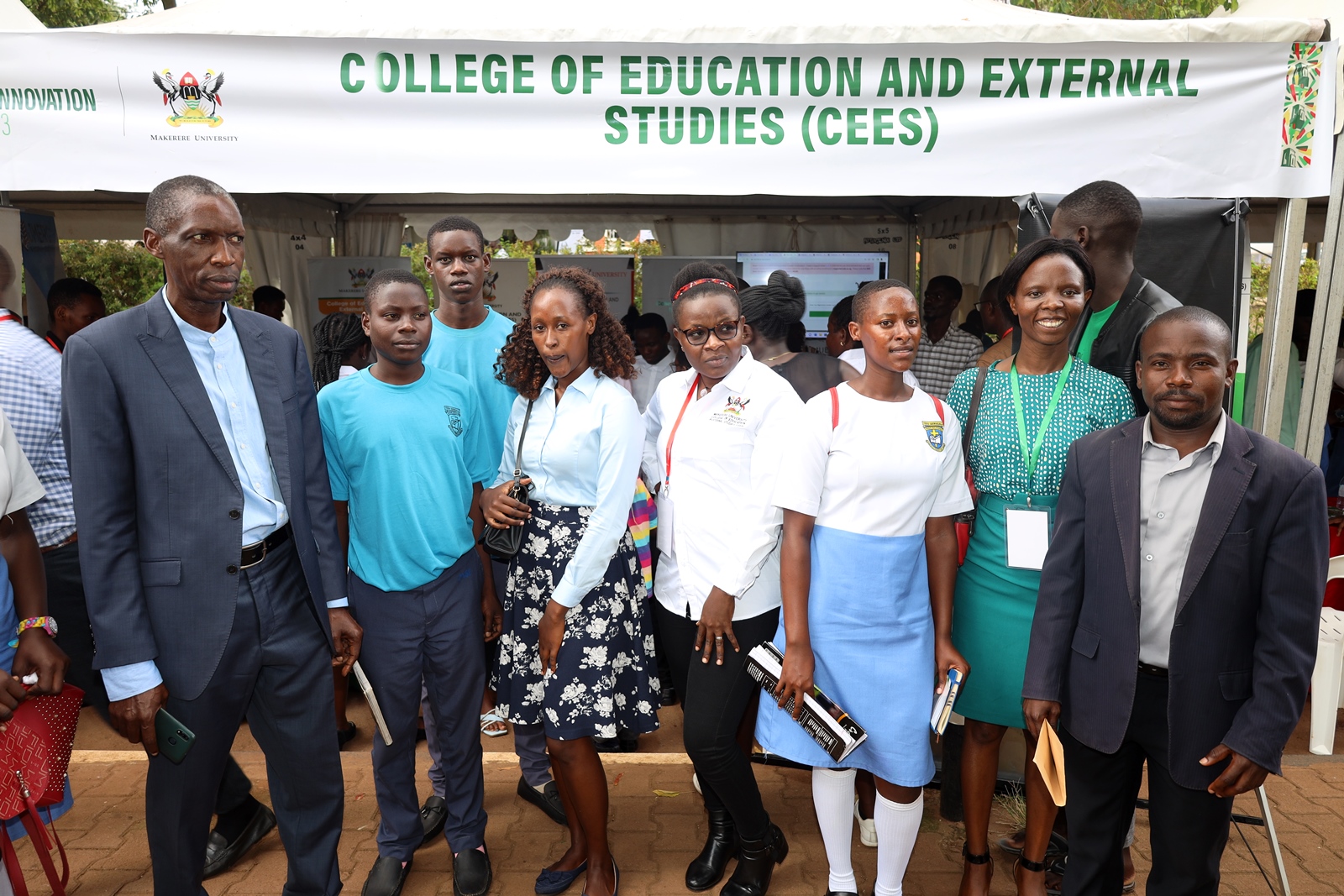
The Makerere University Youth and Innovation Expo 2023 that kicked-off on Friday, October 06 with the grand opening ceremony presided over by key persons in the country ended on Saturday, October 07, with student innovators exposed to the market and ushered into how they can commercialize their products.
The two-day event attracted student- innovators from all walks of life exhibiting their products for the world to give them a go ahead after obtaining trademarks.
Prof. Anthony Muwagga Mugagga the Principal College of Education and External Studies (CEES) said they are intending to implement the competence based curriculum in the lower and upper secondary.
“The innovation of teacher trainees is a show of our support to government in implementing this curriculum. Students have manufactured shoe polish, soap, medicine, and snacks among others. These things are going to be replicated by the school children when they go back to the field,” he said.
He lauded the sponsors including the University, United Nations Development Programme (UNDP), MTN and others for coming up to sponsor the expo.
“We don’t expect poor teachers who beg all the time. We expect teachers who make their own money. And even some are going to be self-employed. The students learn the usefulness of being innovative and how to market themselves. This is like teaching practice; we are monitoring what they are doing.” Prof Mugagga added.
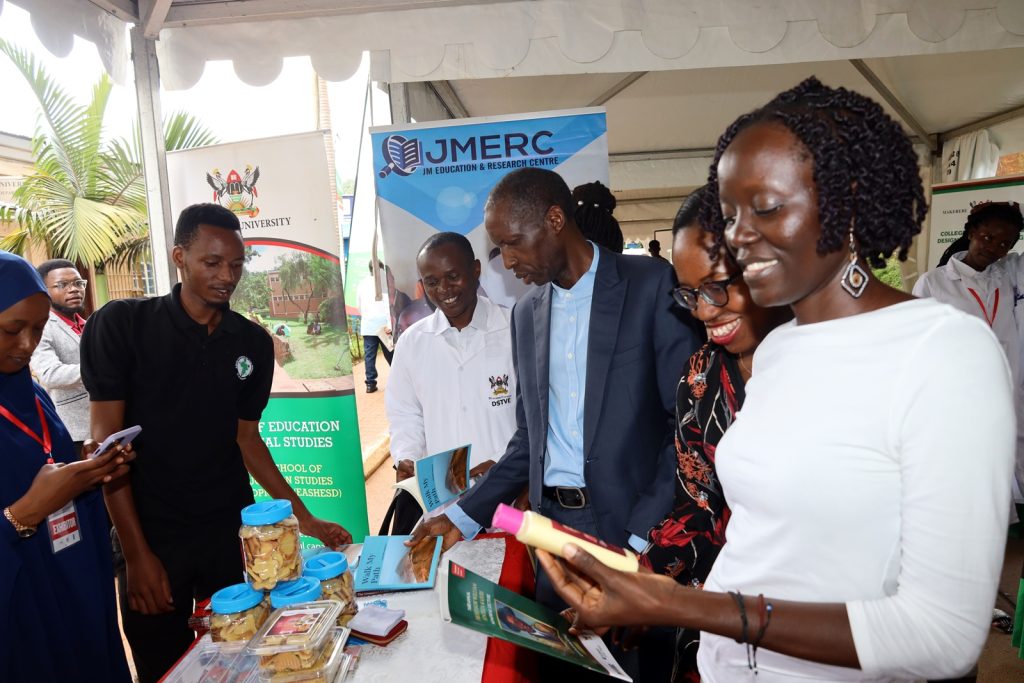
Prof Barnabas Nawangwe, the Makerere University Vice Chancellor noted that this is the first ever youth expo in the history of Uganda and showed hope of how this initiative shall breed youngsters helping government to create job opportunities for the poor Ugandans.
“We are all aware Uganda is a youthful country, majority of the people are youth and we must tap into their energies to move this country forward positively. Makerere University has resolved to be a leader in research and innovations because we realize we must empower these youths to create jobs for themselves and other people who are disadvantaged,” he remarked on Friday.
He said that with youths identifying the problems and going ahead to provide solutions to these problems in their societies through innovations, it will be a supplement to investors and there is hope many people will move out poverty.
He revealed that they are planning to establish an innovation hub that will provide support to these young innovators to have their dreams come true.
“UNDP is supporting us to come up with an innovation hub, the first of its kind I believe in East Africa and our youth will have the opportunity to come here and develop their ideas and move out of these gates with companies in their pockets to go out and create jobs for all the Ugandans.” He revealed before saying “we have already created the first university-wide innovation hub and young people with their good ideas will come to learn how to keep money, how to improve the products that they have come up with, and to improve the processes.”
The VC called upon all innovators to come and get support from professors to help them until they go out to commercialize whatever they have through their companies.
Patience Afoyorwoth, a student at CEES who came up with a cough syrup said her medicine is 98 percent effective.
“We used mango leaves, guava leaves, ginger, bottle brush and honey. The honey works as a preservative and it also makes it sweet. And it is also an antibiotic itself,” she noted.
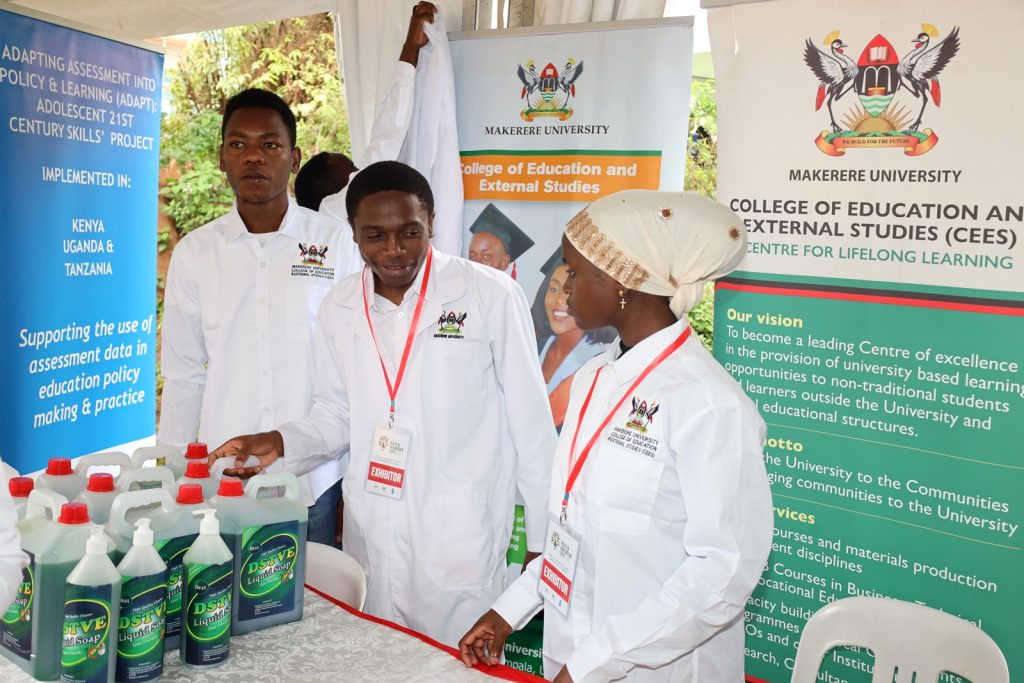
She started with 30 bottles of the cough syrup and plans to make more in the future with each bottle sold at Shs2500.
While opening the expo, Hon. Thomas Tayebwa, the Deputy Speaker pledged government support to innovation and lauded Makerere for transforming from training job seekers to job creators.
“I am really excited to see the transition that Makerere is going through,” he said.
He asked other universities to emulate Makerere and revealed how innovation is widening the tax gap of the government as there is more tax payers who are going to emerge out of the institution.
“Makerere you are the leader in youth innovation, let other institutions follow this. Be creative and look at creative funding. Now let us look at commercializing the innovations. Write proposals and we as government, we shall give you money since you are doing a good job,” he pledged.
He promised full support of the young innovators saying: “As government, we are looking at how we can support local innovators, we are going to update the copyright law so as your innovations are well protected under the law such that no one benefits from them.”
Mrs Lorna Magara, the Chairperson of the University Council said Makerere is transforming from a second-Generation University to a third generation University.

“We are fully cognizant of our exploding youth population and the challenges that this poses so their creativity and numbers have to be put to productive use,” she said.
It is our hope that the Youth and Innovation Expo will serve as an annual rallying point to foster entrepreneurship through the provision of master classes, inspirational lectures, access to financing, market opportunities through product launches and game-changing technology tools,” she stressed.
Third generation universities are known to enhance competitiveness of enterprises. And the enhancement is born out of proficiency in the utilization of knowledge, and deeper connection between industry and universities.
Ronald Kiyimba, a student of Distance Education and an innovator from the Knowledge Rethink Bureau Uganda (KRBU) exhibited the mental health knowhow game, an innovation that helps boost mental abilities.
He said the game will help to realize the Sustainable Development Goal (SDG) number three that deals with mental capacities.
“The game has come embracing knowledgeability and reasonability. There are so many people internationally who do not play any game. They are watchers, they are supporters so we are transforming the greatest majorities who do not play to become active players as the UN wants.” He explained.
The mental health knowhow game has sessions including the vocabulary development. The component ensures that every learner or participant generates 10,000 vocabularies without cramming and copying.






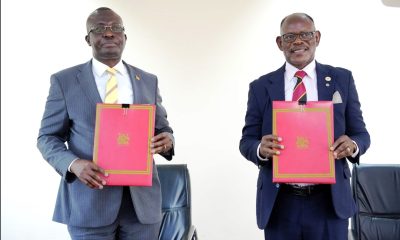

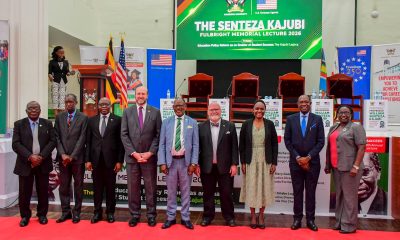





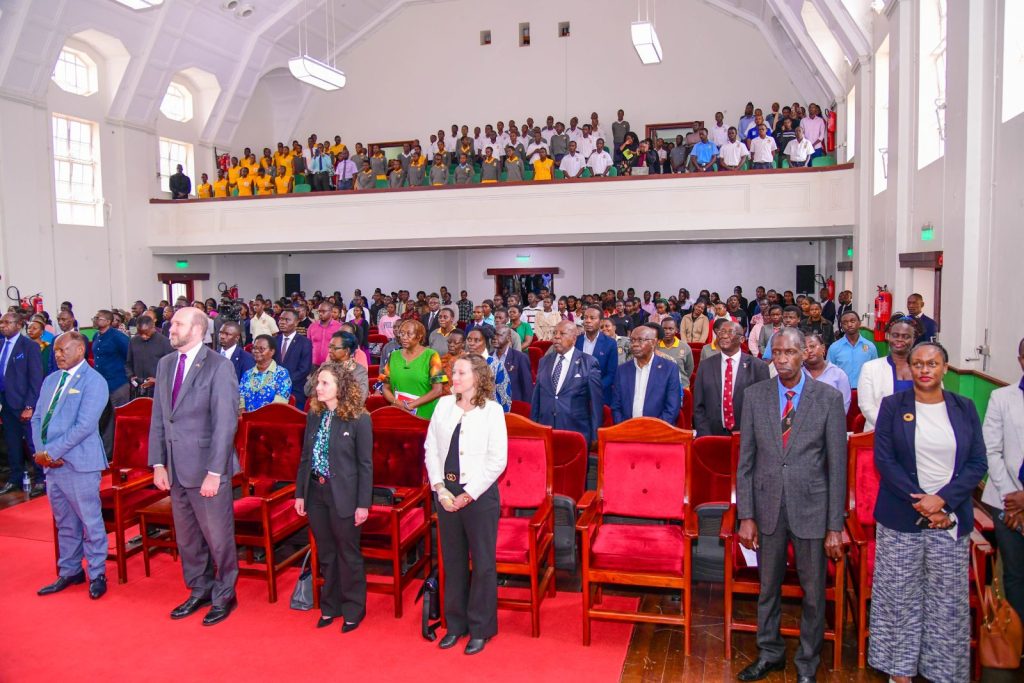
On Thursday 23rd April 2026, people from different spheres of life, filled the Makerere University Main Hall to the brim, while other friends, partners and admirers, followed the proceedings virtually in a display of love and continuity, in honour of the legacy of Professor George William Senteza Kajubi, a distinguished scholar and educationist.
Prof. George William Senteza Kajubi, respected for being the first African Fulbright Scholar, served as a Vice Chancellor at Makerere University from 1977 to 1979, and 1990 to 1993.
He passed away on 1st May 2012, but his good works, knowledge, vocation, continue to inspire countless individuals across the globe.
Education Policy Reform as an Enabler of Student Success: The Kajubi Legacy
The 6th Annual Professor Senteza Kajubi Fulbright Memorial Lecture brought onboard the family of the late, the US Ambassador to Uganda, senior government officials, the Vice Chancellor and members of the University Management, the Uganda Vice Chancellors’ Forum, academics, staff, alumni, university and secondary school students, and international partners. All gathered for a detailed reflection on Uganda’s education system under the theme “Education Policy Reform as an Enabler of Student Success: The Kajubi Legacy.”
The lecture, organised by the College of Education and External Studies (CEES) at Makerere University in partnership with the U.S. Embassy in Uganda and the Fulbright Program, evolved into a wide-ranging policy dialogue on curriculum reform, student learning outcomes, teacher training, digital transformation, and the legacy of Prof. William Senteza Kajubi.
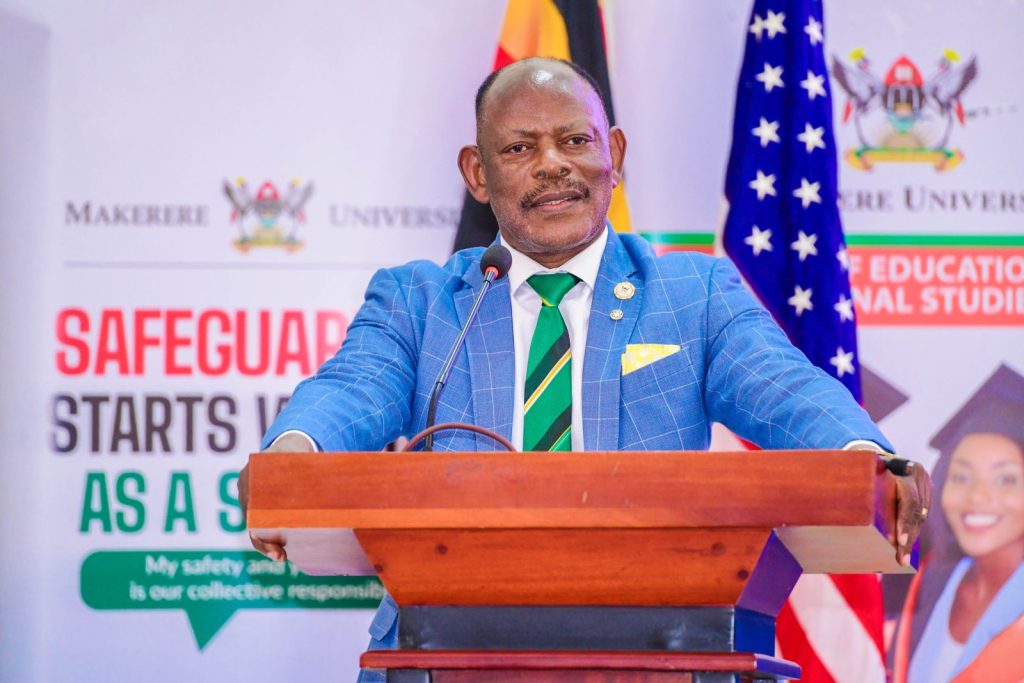
Speakers repeatedly cited Kajubi’s 1989 Education Policy Review Commission Report, which many described as the foundation of modern Uganda’s education architecture, including the 1992 Government White Paper on Education for National Development.
Senteza Kajubi was a pioneering intellectual and reformer
The Vice Chancellor of Makerere University, Prof. Barnabas Nawangwe re-affirmed Senteza Kajubi’s intellectual depth and policy influence and shared personal reflections on his legacy.
“Prof. Senteza Kajubi was an exceptional intellectual. I had the opportunity to travel with him for two weeks—witnessing his depth of intelligence, clarity of thought, and remarkable generosity in sharing knowledge.”
Prof. Nawangwe emphasized Senteza Kajubi’s contribution to Uganda’s education policy framework. “Prof. Senteza Kajubi authored the 1989 Education Policy Review Commission Report—still one of the most comprehensive analyses of Uganda’s education system. Many reforms today echo his forward-looking recommendations.”
Prof. Nawangwe highlighted Senteza Kajubi’s leadership at Makerere, where he served as Vice Chancellor of Makerere University at critical moments, shaping the institution into what it is today.
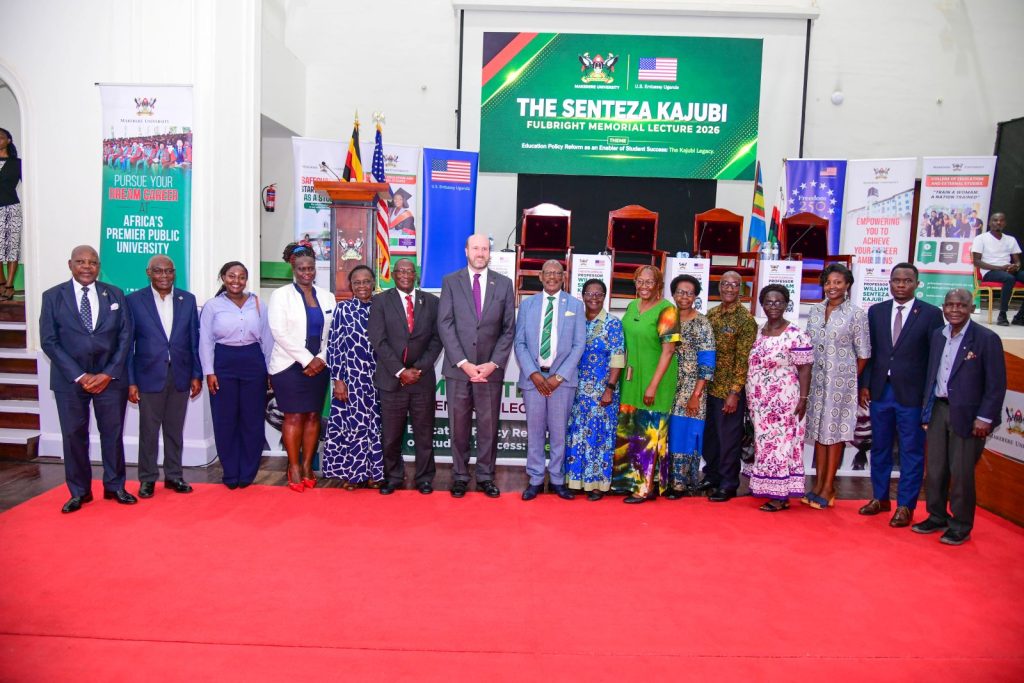
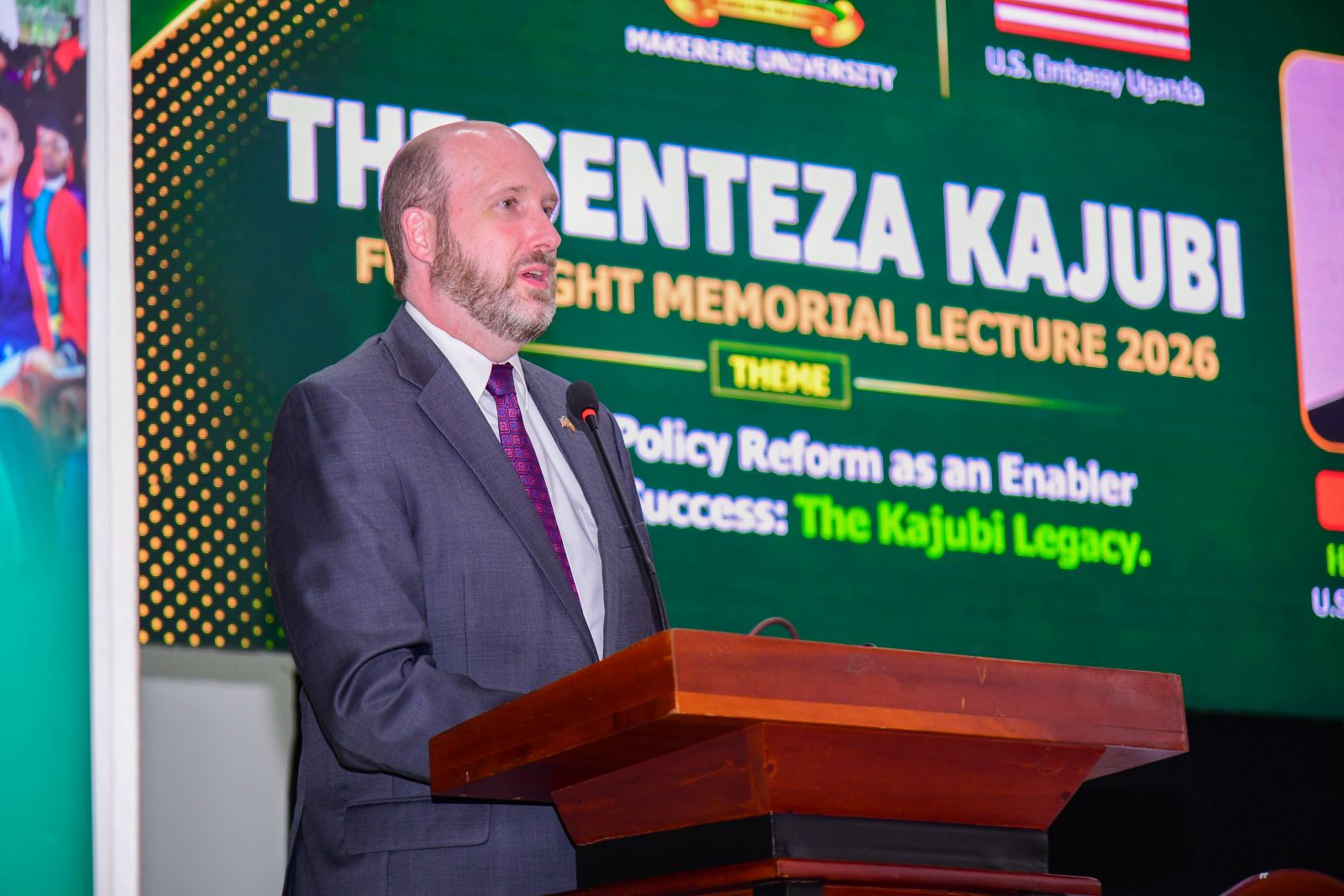
On international cooperation, Prof. Nawangwe stated that the United States remains central to Uganda’s development. The Vice Chancellor, acknowledged the U.S for being a strong supporter of education and research at Makerere University. He then welcomed the U.S. Ambassador to Uganda, H.E William Popp, to address the congregation, at Makerere University Main Hall.
Education is a bridge between nations
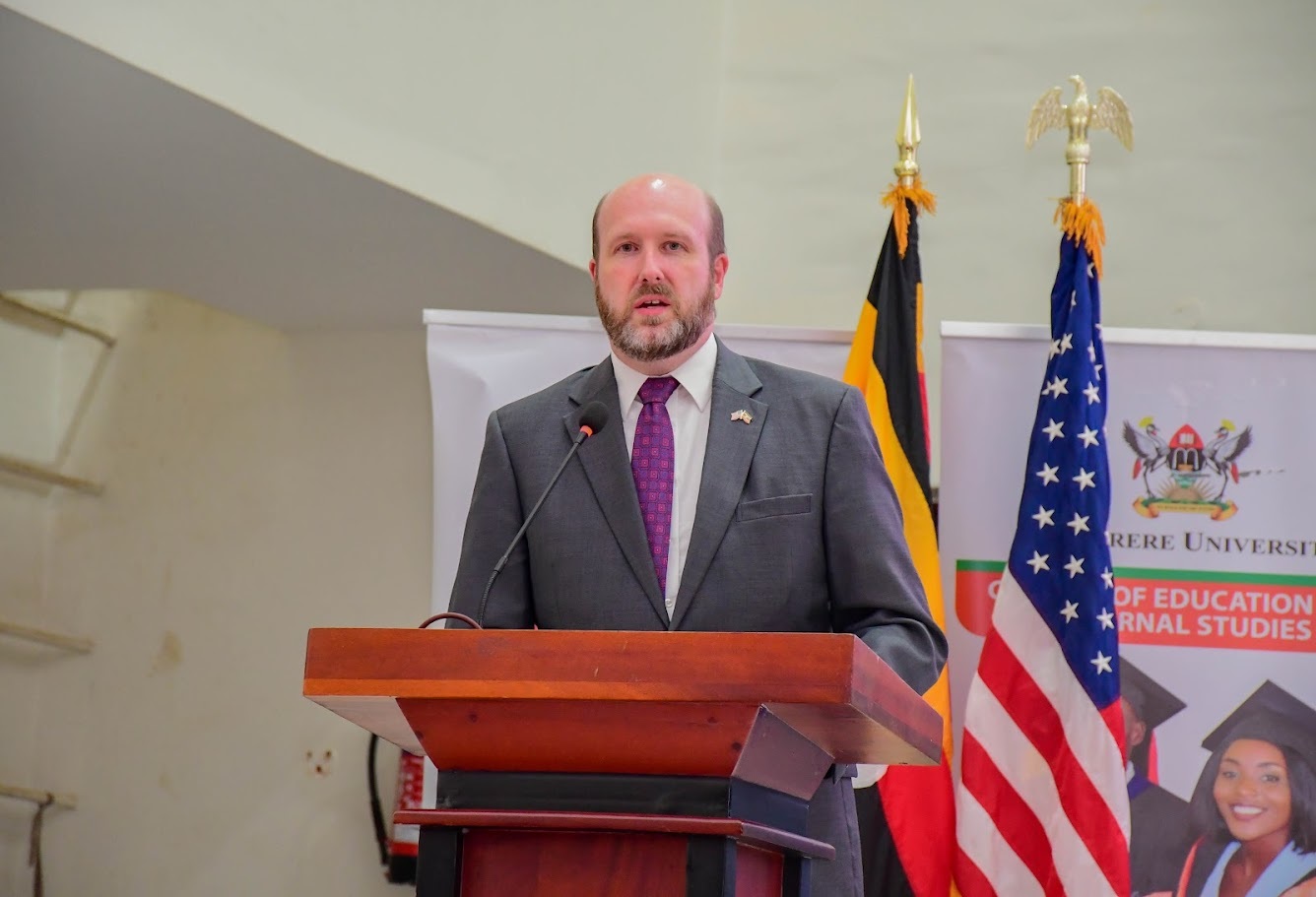
The U.S. Ambassador to Uganda, H.E. William Popp, framed the lecture within the broader philosophy of international education exchange. “Education is one of the most powerful instruments for promoting relations between people and building bridges across cultures,” he said.
The Ambassador highlighted Senteza Kajubi’s historic role in the Fulbright Program: “Professor Senteza Kajubi was the first Fulbright scholar from Africa. He bridged two worlds and returned not only with knowledge, but with a vision for what Ugandan education could become.”
He emphasized education as a tool for transformation: “Education policy must serve students—the young people whose families and nations depend on them.”
He argued that education systems must prepare learners for an uncertain future: “Students must be prepared not only for today’s jobs, but for careers that do not yet exist.”

H.E. Popp stressed the dual nature of education: “The best education provides technical skills for employment and develops creativity, independent thinking, and problem-solving abilities” he said, adding “Let us honour the legacies of Senator Fulbright and Professor Kajubi not only in words, but in action.”
Senteza Kajubi remains the foundation of Uganda’s education reforms
Prof. Anthony M. Mugagga, Principal of CEES, described Prof. William Senteza Kajubi as central to Uganda’s education system design and reform trajectory.
“It is very hard to talk about education reforms in Uganda without mentioning the name William Senteza Kajubi,” Prof. Mugagga said. “For over thirty years, Uganda’s education system has had as its fulcrum the Kajubi Report (1989) and the resultant Uganda Government White Paper on Education for National Development (1992).”
He emphasized that Senteza Kajubi’s influence extended beyond policy documents into the broader transformation of Ugandan society. “His vision and dedication to education have had a lasting impact on Uganda, not only as an education system, but also on the entire Ugandan polity served by this system.”
Prof. Mugagga described Senteza Kajubi as a “beacon of academic excellence” and highlighted his leadership roles at Makerere University during periods of institutional and national crisis.
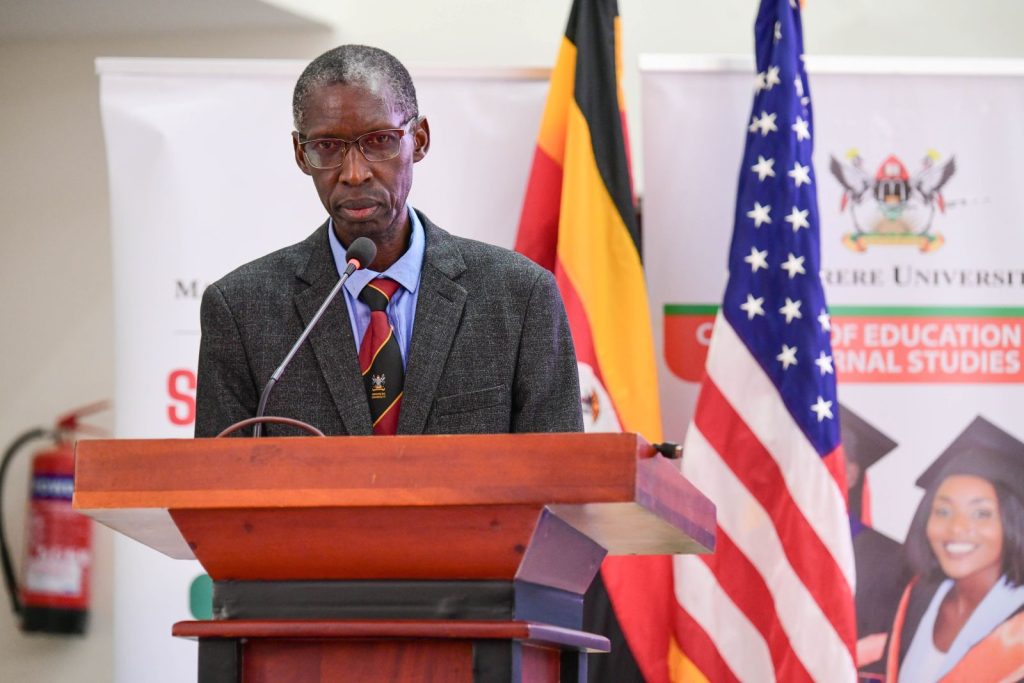
“His leadership, particularly during challenging times, serves as a testament to his unwavering commitment to fostering a higher education system that is not only academically rigorous but also deeply rooted in responsibility, ethics, and civic engagement.”
He connected Senteza Kajubi’s philosophy to the current reforms in the education sector, which provide a transition to the competence-based curriculum.
Reflecting on Senteza Kajubi’s legacy, Prof. Mugagga stressed that universities must remain relevant by engaging in continuous policy dialogue. “The only way the College of Education and External Studies can justify its existence is by engaging in meaningful dialogue about education policy reforms from pre-primary to university level.”
“Implementation defines policy success”
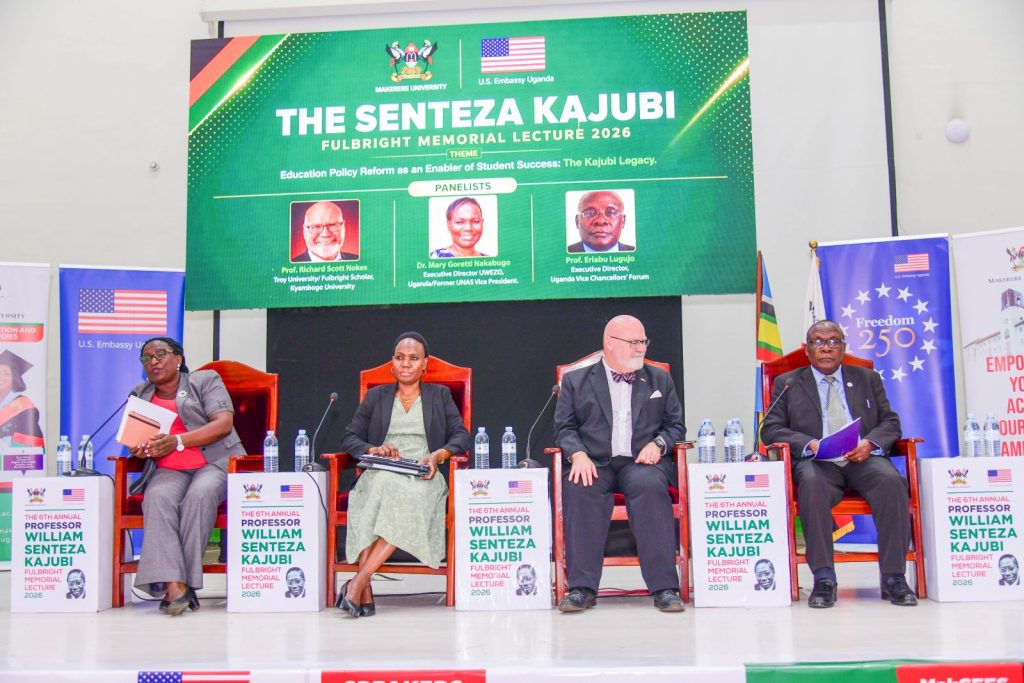
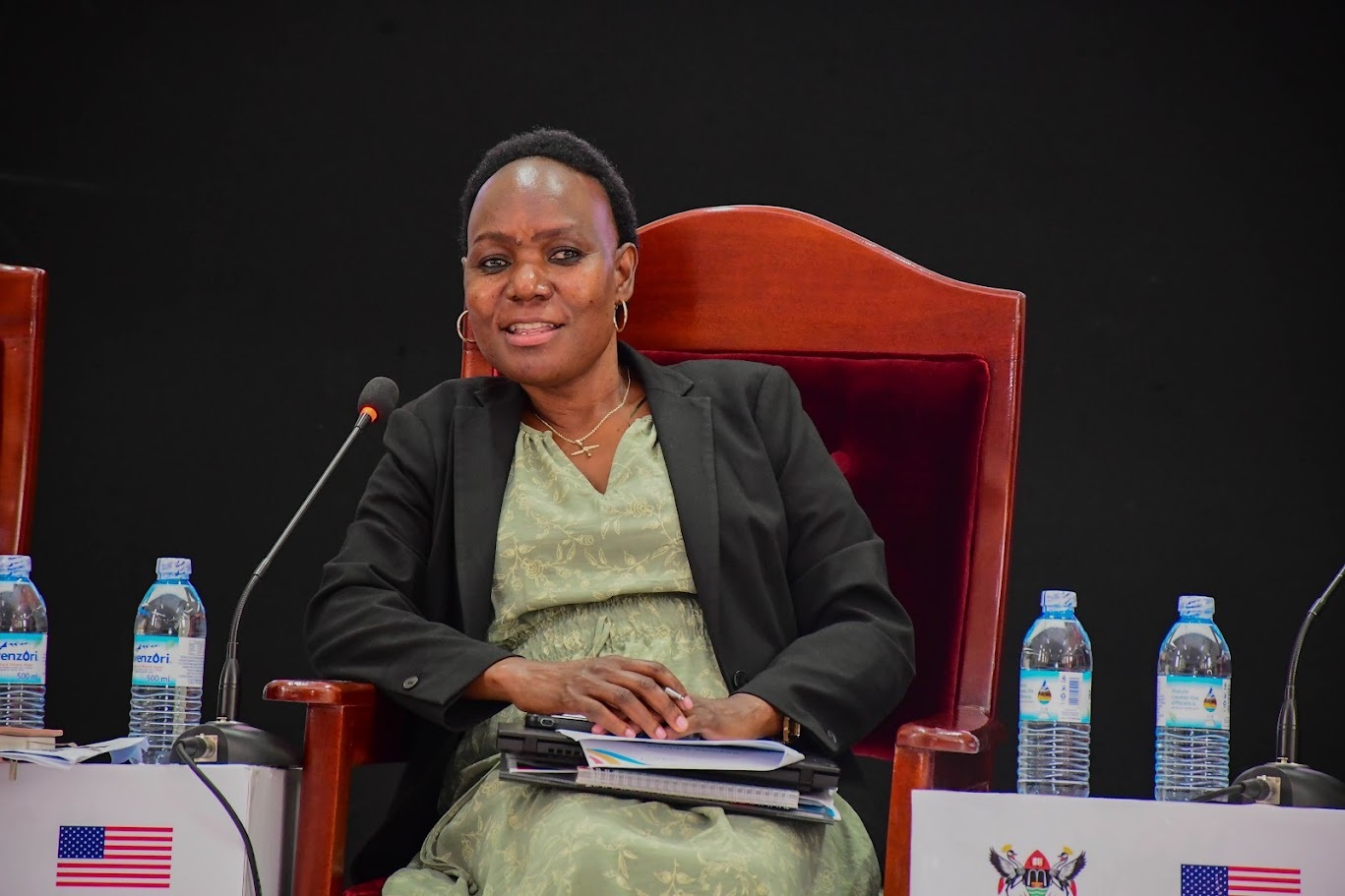
Delivering the keynote address, Dr. Mary Goretti Nakabugo, Executive Director of Uwezo Uganda, described Kajubi’s policy legacy as the backbone of Uganda’s education system. “A policy is as good as its implementation,” she stated.
She outlined the foundational principles of the 1989 Commission: “Education is for everyone, and education should produce responsible citizens.”
She explained that Senteza Kajubi’s reforms prioritized inclusion and equity: “The commission emphasized universal access, teacher training, foundational learning, and inclusion of marginalized groups.”
She warned that Uganda faces persistent learning gaps: “Even at Primary Seven, some learners cannot read basic texts.”
She criticized the overemphasis on enrolment over learning outcomes: “For too long, the focus has been on access rather than whether children are actually learning.”
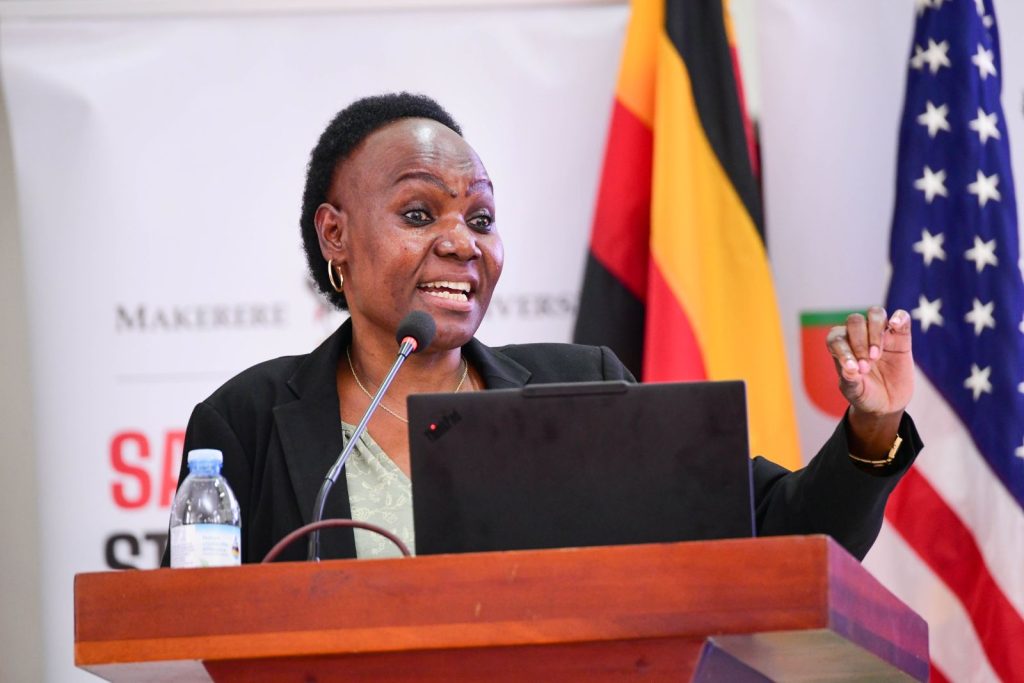
Dr. Nakabugo called for systemic reforms: “We must strengthen school management, expand pre-primary education, and invest in inclusive learning systems.” She stressed: “If we are to honour Professor Senteza Kajubi’s legacy, we must ensure that every child not only enters school, but succeeds in it.”
Senteza Kajubi’s vision was holistic education for life
Prof. Eriabu Lugujjo, Executive Director of the Uganda Vice Chancellors’ Forum (UVCF), offered a deeply reflective account of Senteza Kajubi’s philosophy of education, grounded in five core pillars.
He recalled first meeting Senteza Kajubi in 1960: “I first met Professor Senteza Kajubi when I was in Senior One at Makerere College School. He was among the top student teachers at the time.”
Prof. Lugujjo explained Senteza Kajubi’s core educational philosophy: “He emphasized that learning should involve and engage the learners. Students must be confident, know what they want, and express themselves clearly.”
To drive home the point, Prof. Lugujjo informed the audience in the Main Hall and those following the lecture virtually, that Prof. Senteza Kajubi always emphasized the need for student confidence: “He told us to look people in the eye when speaking. That built confidence in us.”
He outlined the five pillars of Kajubi’s education philosophy: “Learning to be, learning to know, learning to do, learning to learn, and learning to live together.”
He emphasized lifelong learning: “Learning should never stop, especially in developing countries where skills must continuously evolve”, and concluded by reiterating “Education should produce confident, skilled, adaptable, and socially responsible individuals.”
Technology must remain human-centred.
Dr. Richard Scott Nokes, a Full Professor of English at Troy University and currently a Fulbright Scholar in Uganda, situated education within historical technological transformations. “Technology must serve the human. The human must never serve the technology.”
He examined the evolution of education through three major shifts: the printing press, global mobility through Fulbright exchanges, and digital technologies.
On online learning: “Students can now learn across continents without travelling, but the classroom community has weakened.”
On artificial intelligence, he emphasized the need for balance:“We need AI that knows Uganda and the world—not one or the other,” he pointed out. “None of these technologies teach by themselves. They are tools we use to teach one another” he added.
Senteza Kajubi as a man of culture, humility, and access
Representing the family, Beverley Nambozo, Prof. Senteza Kajubi’s eldest granddaughter and founder of the Babishai Niwe (BN) Poetry, delivered a personal tribute.
“Professor Senteza Kajubi was a gentleman who carried much of the legacy of Africa’s Fulbright experience on his shoulders in the 1950s.”
She recounted his experience studying in the United States: “He spoke about long bus rides across Chicago and the challenges he faced as a young man abroad.”
She highlighted his support for education and literature: “Every time I published a book, he would buy at least five copies.”
She emphasised his inclusive philosophy: “He spoke to gardeners and household workers about their views on education” and concluded with a quote “Time stays and we go, but time cannot erase the legacy we create.”
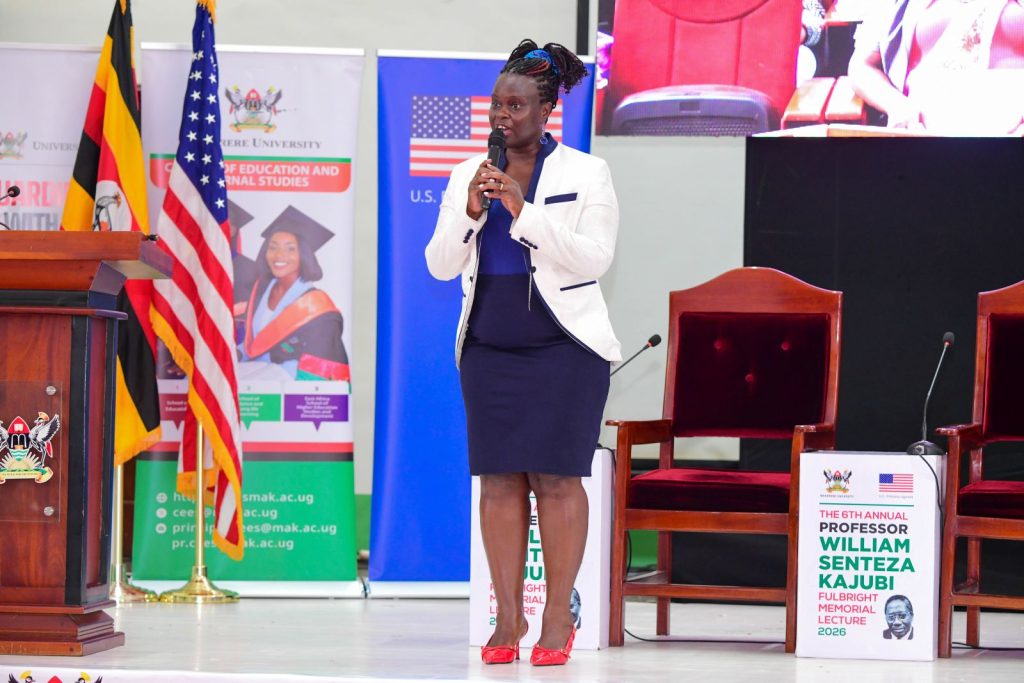
During a panel discussion, moderator Dr. Leah Namatome-Sikoyo, a member of faculty at CEES, emphasized collective responsibility in education reform. “To realise transformative education, everyone has a role to play—government, policymakers, teachers, learners, parents, and citizens.”
The 2026 Senteza Kajubi Fulbright Memorial Lecture reaffirmed Kajubi’s central role in shaping Uganda’s education system and highlighted urgent challenges in implementation, learning quality, inclusivity, and digital transformation.
The family of the late Prof. Senteza Kajubi and the Principal of the College of Education and External Studies, commended the Organizing Committee chaired by the Deputy Principal, Prof. Ronald Bisaso for the excellent planning, coordination and execution.
Event Photos: https://flic.kr/s/aHBqjCS7up
Education
Advancing Education Policy Dialogue through Partnership: Makerere Hosts the 2026 Senteza Kajubi Fulbright Memorial Lecture

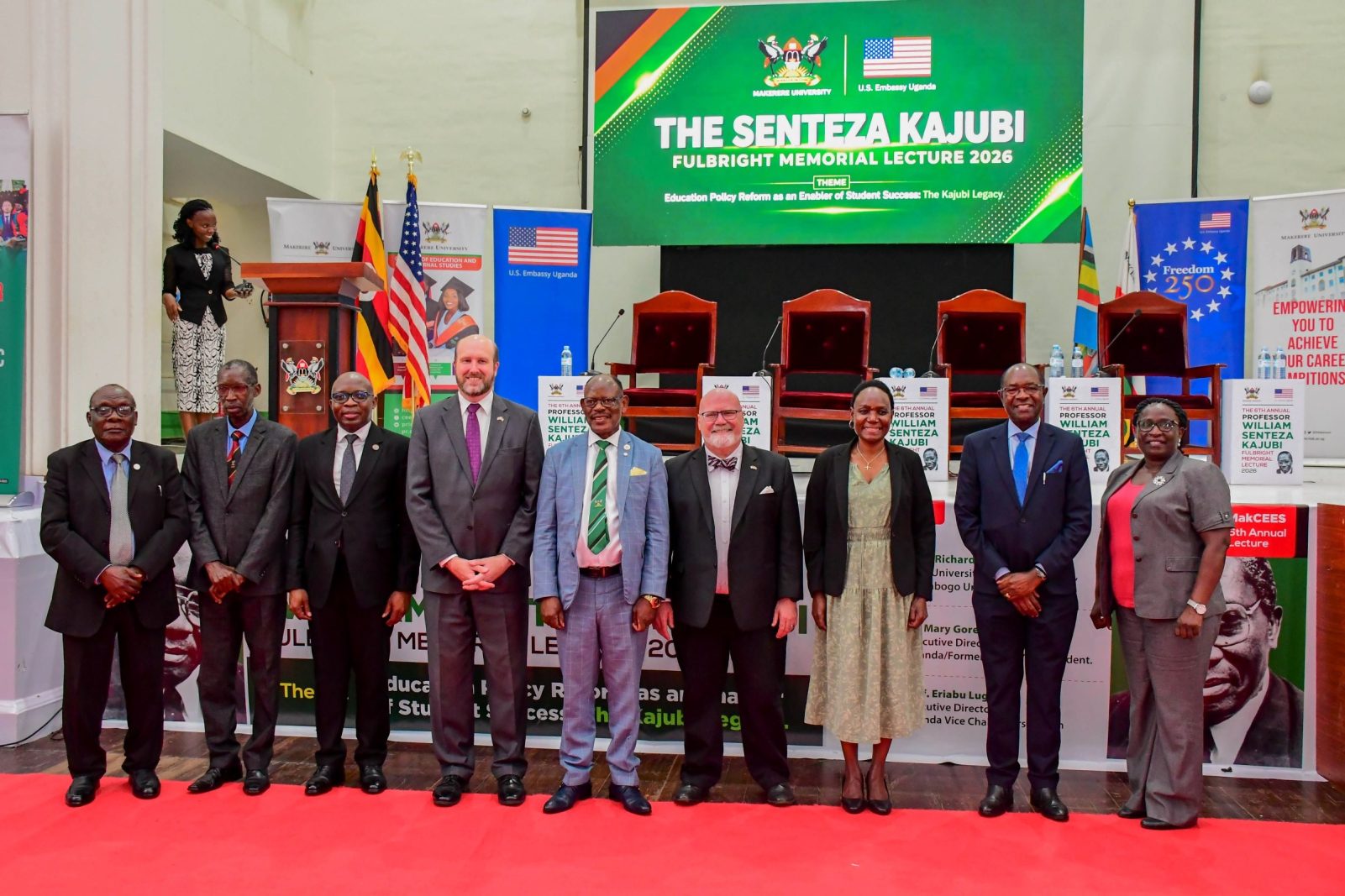
Makerere University continues to position itself as a hub for global academic exchange and strategic partnerships, as demonstrated by the successful hosting of the 2026 Professor William Senteza Kajubi Fulbright Memorial Lecture.
Now in its fourth edition since the revitalisation of the lecture series in 2022, the Kajubi Lecture has evolved beyond a commemorative academic event into a powerful platform for institutional collaboration, most notably between Makerere University and the United States Embassy in Uganda. This partnership, anchored in the shared legacy of Professor William Senteza Kajubi as the first African Fulbright Scholar, reflects a deeper commitment to knowledge exchange, diplomacy, and education reform.
The 2026 lecture, held on April 23 at the Makerere University Main Hall, convened a diverse audience of policymakers, scholars, Fulbright alumni, students, and development partners, underscoring the multi-stakeholder approach required to drive meaningful education reform.
At the heart of this collaboration is a shared belief in the transformative power of education and international exchange. In his remarks, the United States Ambassador to Uganda, William W. Popp, emphasised that the Fulbright Program represents more than academic mobility; it is a bridge between nations, fostering mutual understanding and long-term cooperation. He noted that such exchanges strengthen both countries by creating enduring networks of collaboration and shared knowledge.
This partnership is not incidental but rather intentional. Through the Advancement and International Office, Makerere University has strategically aligned the College of Education and External Studies (CEES) with the U.S. Embassy to ensure that the Kajubi Lecture serves as both an intellectual platform and a diplomatic touchpoint. The lecture reinforces ongoing cooperation while also expanding opportunities for academic exchange, research collaboration, and alumni engagement.
Delivering the keynote address, Dr. Mary Goretti Nakabugo, Executive Director of Uwezo Uganda, brought the discussion back to the core purpose of education policy: enabling student success. Her address traced the enduring influence of the Kajubi legacy on Uganda’s education system, highlighting both progress and persistent challenges in access, quality, and relevance.
At the heart of her message was a return to Kajubi’s foundational belief: that education is both a basic human right and a tool for shaping responsible citizens. Education, she emphasised, must go beyond the acquisition of certificates to cultivate values, critical thinking, and a sense of civic responsibility.
A central critique in the keynote was the increasing dominance of technocratic approaches to education policy. While economic growth and workforce readiness are important, Dr. Nakabugo cautioned against reducing education to a tool for productivity alone. In doing so, systems risk neglecting the broader purpose of education, to nurture well-rounded individuals capable of contributing meaningfully to society.
This calls for a redefinition of student success. Success, she argued, should not be measured solely by enrollment or completion rates, but by meaningful outcomes: literacy, competence, retention, and the ability to apply knowledge in real-world contexts. It is about preparing learners not just for jobs, but for life.
To achieve this, Dr. Nakabugo called for a renewed commitment to the Kajubi vision. This includes making education truly universal and equitable, investing in teachers and infrastructure, strengthening inclusive support systems, and reducing the financial burden on families. Equally important is the need to re-centre values such as critical thinking, citizenship, and accountability within the education system.
The Vice Chancellor of Makerere University further underscored this point, noting that education remains one of the most powerful instruments for building bridges between people and cultures. He expressed appreciation to the United States for its continued support, recognising the partnership as a critical contributor to Uganda’s development and to Makerere’s global outlook.
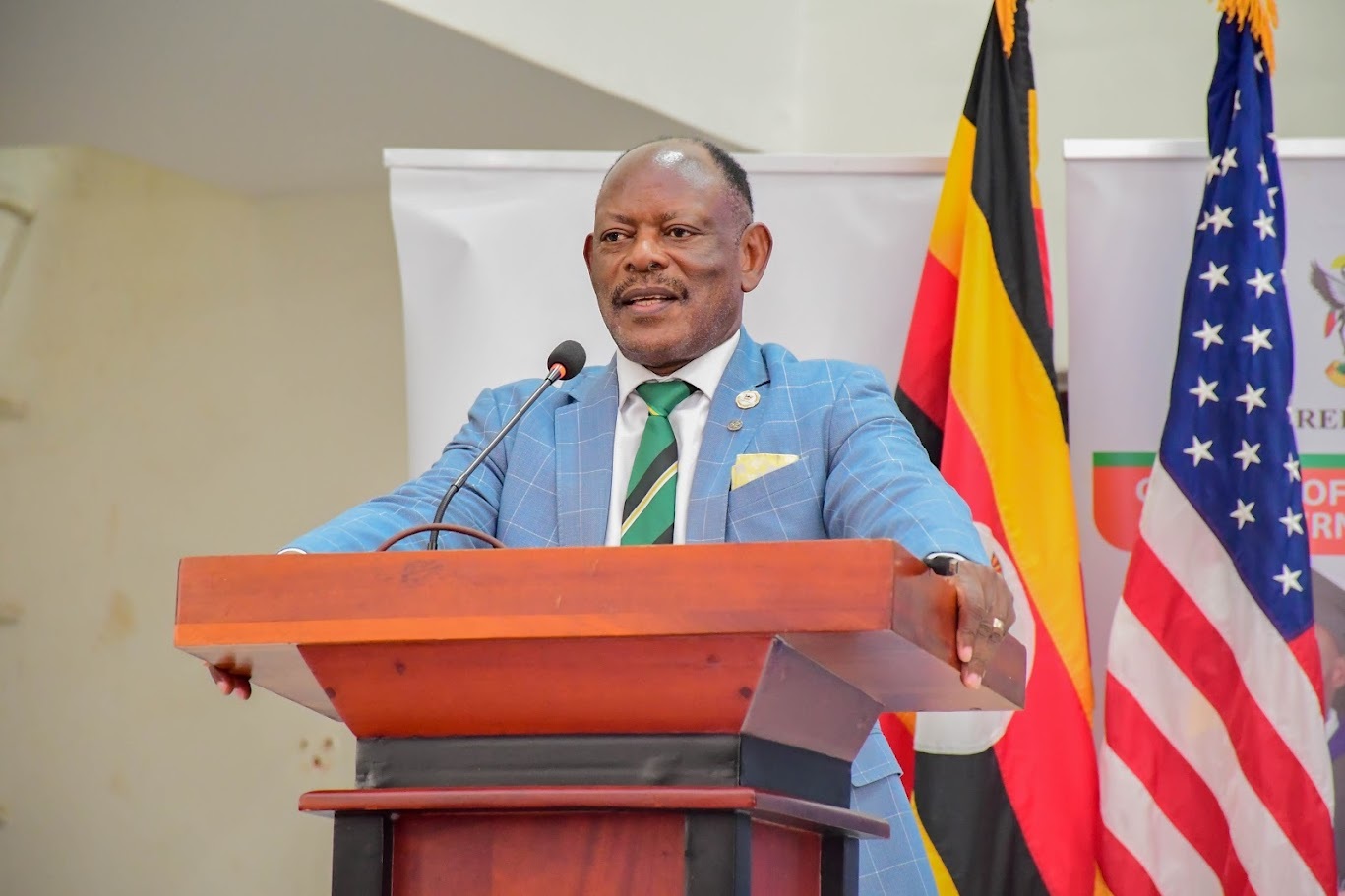
Before the Senteza Kajubi Memorial lecture, at a farewell cocktail session for H.E Ambassador. William Popp, the Vice Chancellor, expressed sincere appreciation to H.E. Amb. William W. Popp for his distinguished service and steadfast support to Makerere University during his tenure. He noted that the United States has remained a key partner in advancing the University’s global engagement, with a significant number of Makerere’s academic and institutional partnerships anchored in collaborations with U.S. universities. The Vice Chancellor commended Ambassador Popp for strengthening these ties and for his commitment to fostering academic exchange, research collaboration, and mutual understanding between Uganda and the United States.
Importantly, the Kajubi Lecture continues to serve as a convening space for Fulbright alumni, policymakers, and scholars, reinforcing a growing network of individuals committed to shaping the future of education in Uganda and beyond. This aligns with the broader objective of the lecture to initiate and sustain conversations on education policy reform while strengthening institutional and international cooperation.
As Makerere University advances its strategic priorities in internationalisation and alumni engagement, the Kajubi Fulbright Memorial Lecture stands out as a model of how legacy, partnership, and purpose can converge to drive impact.
Kainomugisha Caroline is the Communications Officer, Advancement Office, Makerere University.
-
 General7 days ago
Bachelor of Laws Pre-Entry Examination Results 2026/2027
-

 General2 weeks ago
Mature Age Admission List – Government Sponsorship 2026/27
-
 General5 days ago
Call for Research Support Applications from Master’s Students who have Completed their First Year of Taught Classes at Makerere University
-
 General2 weeks ago
Makerere University DVCFA Accomplishments will continue – Prof. Alinaitwe
-
 Sports1 week ago
Making Waves: The Rise of the Mak Sharks and Makerere University’s Aquatic Legacy