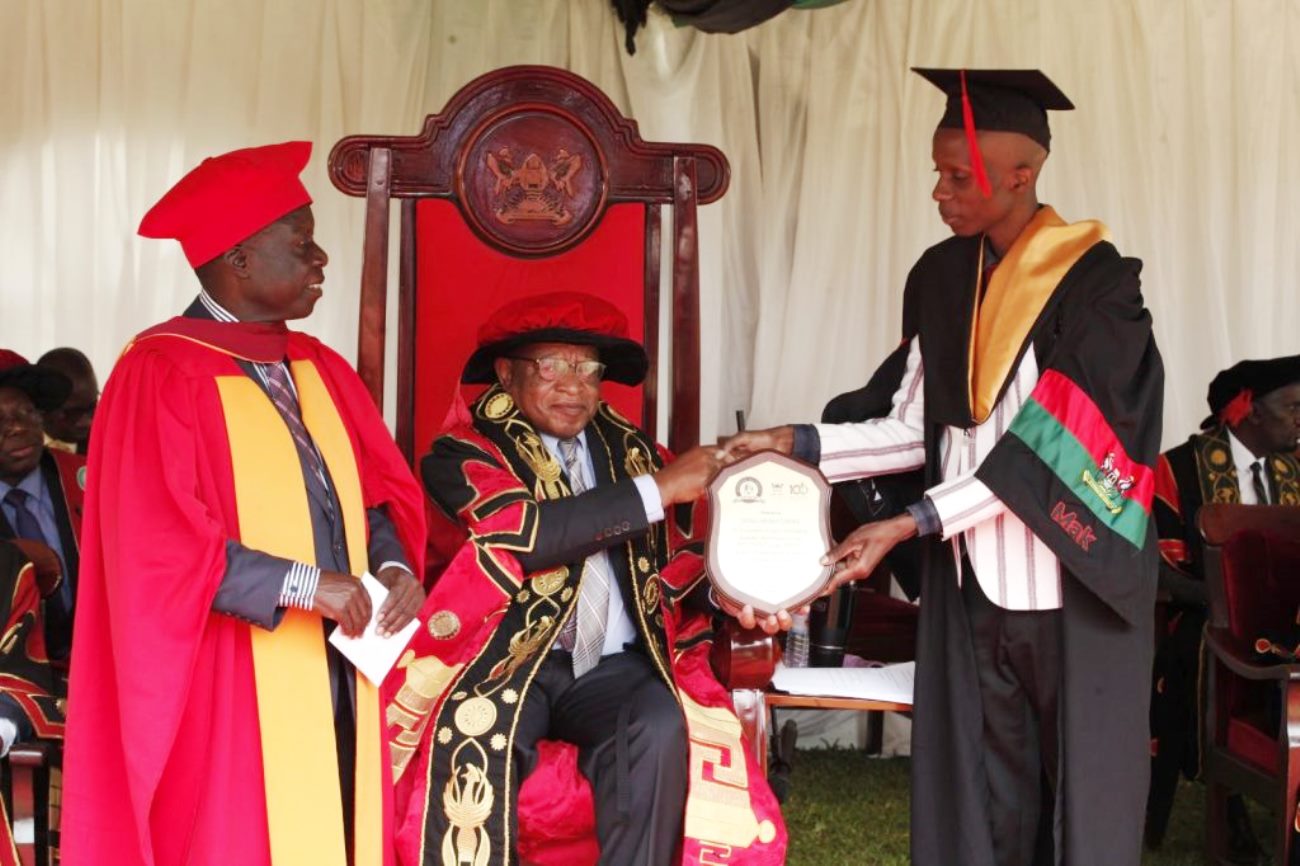
Sanga Arnold Lukoda from CoCIS who emerged the overall best science student for the Mak 73rd Graduation ceremony with a CGPA of 4.85 out of 5.0 receiving a plaque from the Chancellor Prof. Ezra Suruma on Day 3 of the 73rd Graduation Ceremony, 15th February 2023.
The 3rd Session of the Makerere University 73rd Graduation ceremony was held on 15th February 2023 at the university Freedom Square presided over by the Chancellor Prof. Ezra Suruma.
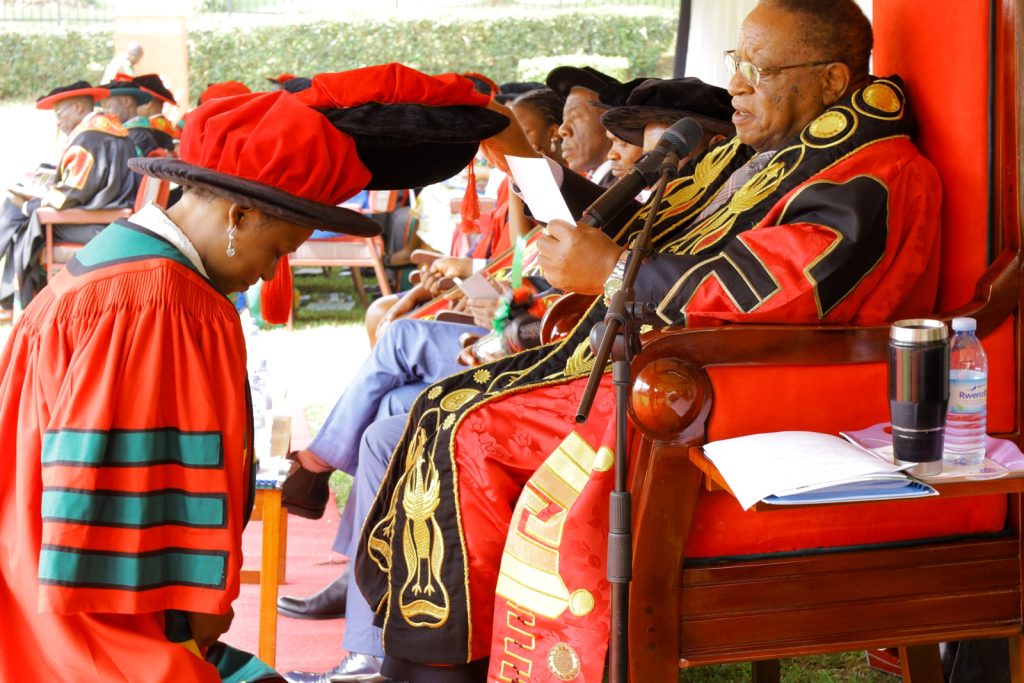
Prof. Ezra Suruma conferring a PhD upon one the female candidates.
Prof. Suruma conferred degrees on graduands from the College of Computing and Information Sciences (CoCIS), the College of Veterinary Medicine, Animal Resources and Biosecurity (CoVAB) and the College of Business and Management Sciences (CoBAMS).
Sanga Anold Lukoda from CoCIS who has been pursuing a Bachelor of Information Systems and Technology emerged the overall best science student for the Makerere University 73rd Graduation ceremony with a CGPA of 4.85 out of 5.0.
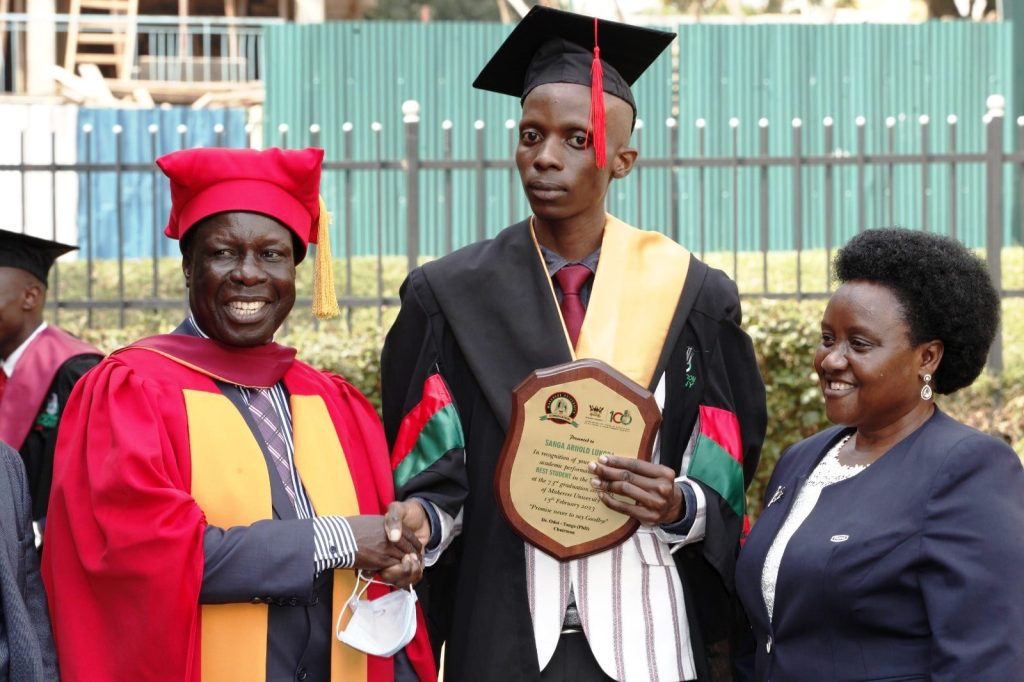
Chair Convocation-Dr. Tanga Odoi (L) and Deputy Chair Convocation-Mrs. Diana Hope Nyago (R) congratulate the Best Overall Sciences Student-Mr. Sanga Arnold Lukoda (C) who attained a CGPA of 4.85 in the Bachelor of Information Systems and Technology to emerge the Best Overall Sciences Student at the 73rd Graduation Ceremony of Makerere University.
Sanga received the recognition convocation award during the 3rd session of the graduation comprising the convocation plaque and one million Uganda shillings.
Sanga was grateful to God for this academic excellence and implored students remember God in all their endeavors and to be obedient.
“Always trust God and follow instructions”, Sanga advised.
The Principal CoCIS Prof. Tonny Oyana, said the college celebrates the victory and congratulated Sanga upon this exemplary performance. Prof. Oyana explained the three important prerequisites to produce such an excellent student.
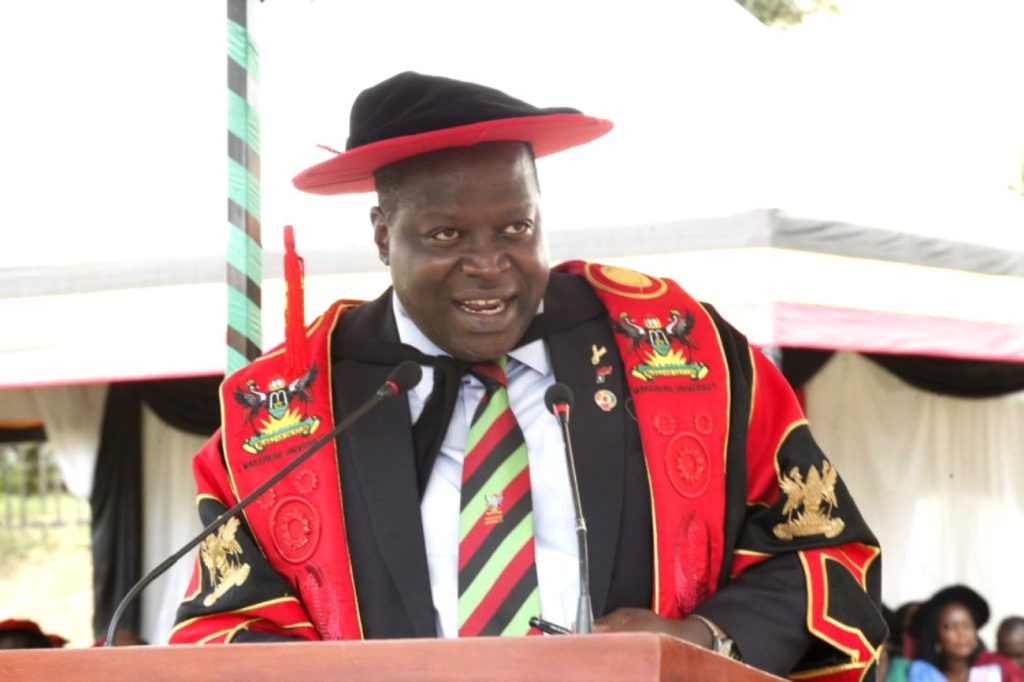
The Principal CoCIS, Prof. Tonny Oyana makes his remarks.
“Number one, they come with superior foundation from High school. Two, they are dedicated to their programme – the type of students that ask lecturers questions, stay in the lab and they want to learn more. Number three they are inspired by their career goal but also they want to be better,” Prof. Oyana said.
In his message to CoCIS students and staff, the Principal demanded for more.
“We want more. I know we can only have one number one but, we can have many in between so that they get opportunities because students with very good grades can be supported to do masters and admitted to any other university because they give a lot of hope. So, I encourage our staff that we should produce more high quality students who can become faculty”, Prof. Oyana stated.
He said such exemplary students will be invited to talk to final third year students and during orientation of first years to inspire them that it is possible and to build good grades from the beginning of their university life.
During this 3rd session of the Makerere 73rd graduation ceremony CoCIS presented 8 PhDs (5 Males and 3 Females), 23 Masters (18 Male and 5 Females) and 571 (322 Male and 249 Female) undergraduate and 2 Post Graduate (Male) Diploma candidates.
The eight PhD candidates presented from CoCIS were Bbosa Francis Fuller, Mugejjera Emmanuel, Ndagire Lillian, Ongaya Kizito, Nagwovuma Margaret, Odongto Godfrey, Mubangizi Martin Gordon and Nakirrija Justine. They conducted relevant and significant research contributing to Uganda’s needs.
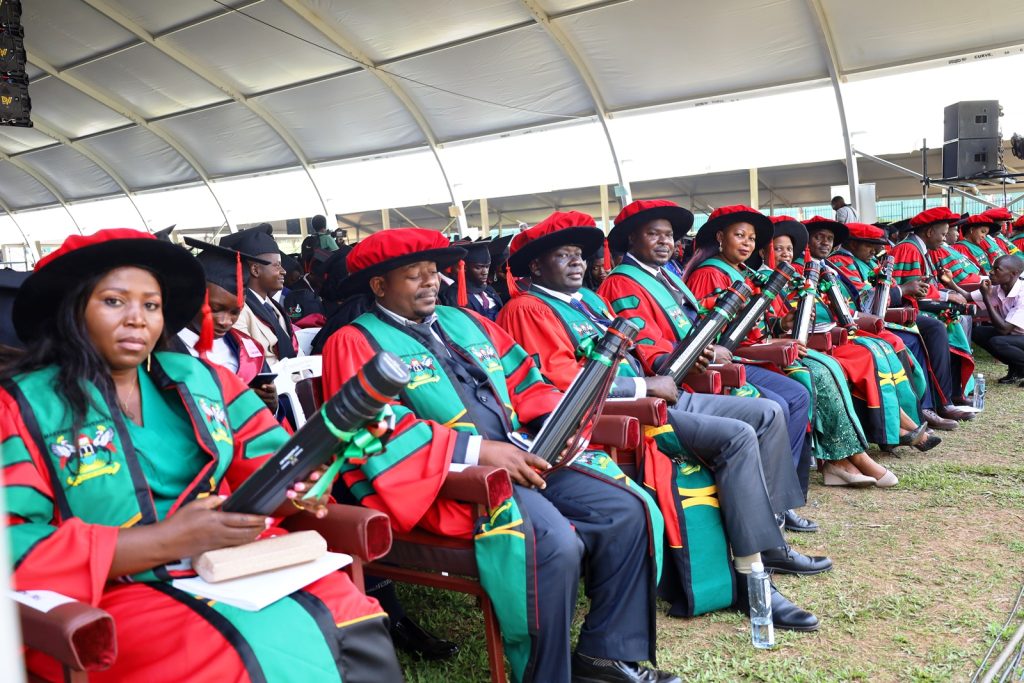
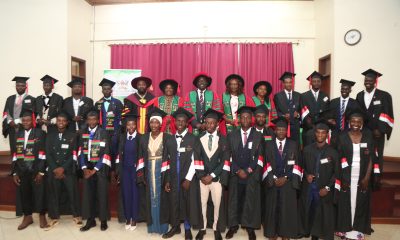
PhD Graduates from CoCIS pose with their awards during the Third Session of the 73rd Graduation Ceremony of Makerere University on 15th February 2023.
The Chancellor Prof. Suruma made a cursory examination of the doctoral research carried out by the doctoral candidates in the three colleges and commended the subject matter and their findings.
With regard to computing and information Sciences, Prof. Suruma took note of the study on disease surveillance with specific regard to the nodding syndrome. Nodding Syndrome has been a serious disease especially in Northern Uganda.
“The study indicated that there is need for surveillance and control of the black fly. I also found the study on water resource management using Lake Victoria basin as a case study extremely vital and relevant as it provides strategies for different stakeholders such as communities, managers and policy makers on how to improve water management”, The Chancellor commended.
The Chancellor appreciated graduands for the spirit of hard work, endurance, self-control and discipline that have brought them this far.
“The degrees we are awarding you today testify to the hardships, the discipline, the commitment, the brain and tears you have shed over decades of academic struggle. Your graduation today is a testimony that in the face of adversity, poverty deprivation, doubt and danger, you found the determination to hold on and to rise after fall. Today you are counted among the heroes and survivorship many intellectual battles”, Prof. Suruma appreciated.
Prof. Suruma recognized that Makerere University has been an integral part of the graduands success. He thanked the academic, administrative and support staff for the efforts and guidance that enabled students go through the complexities of the academic life.
The Vice Chancellors’ remarks
The Vice Chancellor of Makerere University Prof. Barnabas Nawangwe congratulated the graduands upon staying focused and fulfilling the requirements for the award of the various qualifications.
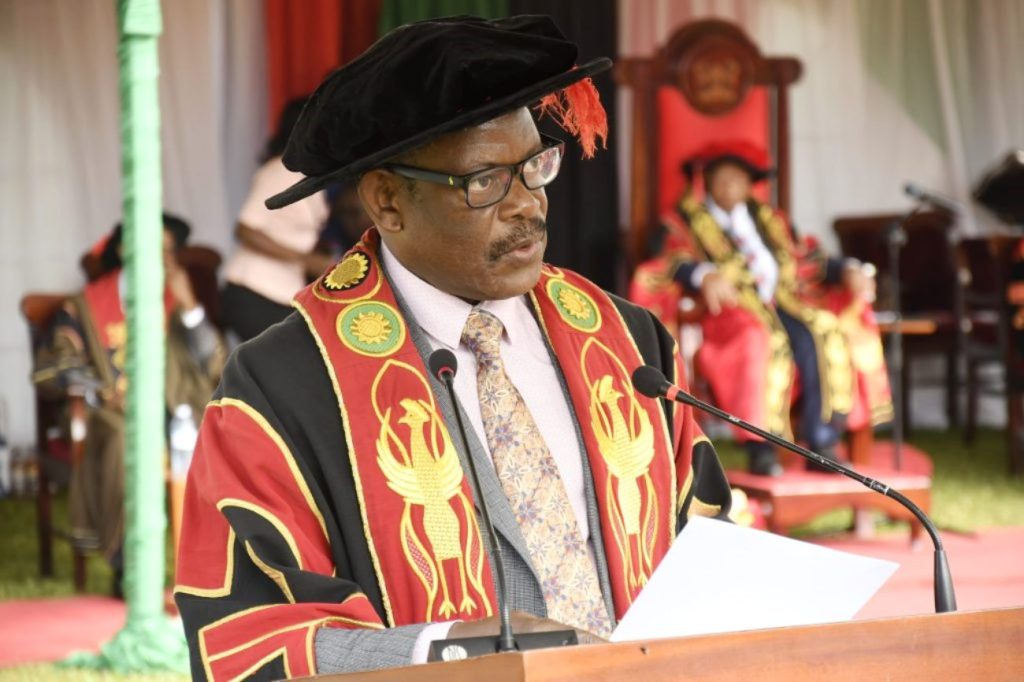
The Vice Chancellor, Prof. Barnabas Nawangwe delivers his address during the Third Session of the 73rd Graduation Ceremony of Makerere University on 15th February 2023.
Prof. Nawangwe appreciated Government of Uganda for the Research and Innovation Fund given to the university as it strives to transform into a research led university.
“ The Research and Innovation Fund, that was made possible through a Government grant of UGX 30bn annually, has transformed Makerere tremendously with very many innovations in agriculture, and food security, health, engineering, education, veterinary medicine, artificial intelligence, economics and business management”, The Voce Chancellor reported.
He pointed out that the research on use of Artificial Intelligence in everyday life by CoCIS and many others from other colleges were of great importance to ensuring the stability and prosperity of Uganda.
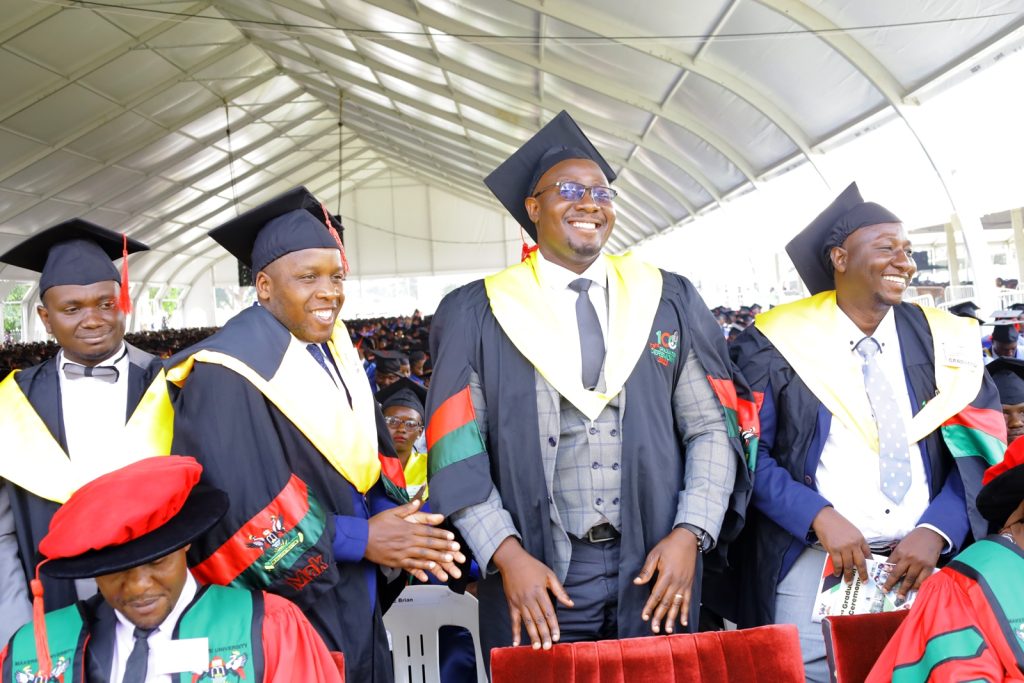
Some of the Masters Graduates from CoCIS at the 73rd Graduation Ceremony.
In his message to the graduands, Prof. Nawangwe reminded them that they occupy a special place in Uganda’s development agenda.
“It is you that must ensure that our business are run on sound business principles, that our country embraces the digital era and use Artificial Intelligence in solving our development challenges.
We have done our best to impart on you knowledge that should enable you to face the world out there with confidence, to become part of the solution and not part of the problem. We have empowered you to be critical thinkers and to be entrepreneurs and good managers of our economy”, Nawangwe advised.
The Vice Chancellor reminded graduands that success does not only come through technical skills acquired but more through soft skills of knowing that they are part of a small privileged elite tasked to move people out of poverty and hence, the need to be humane and humble with determination to succeed.
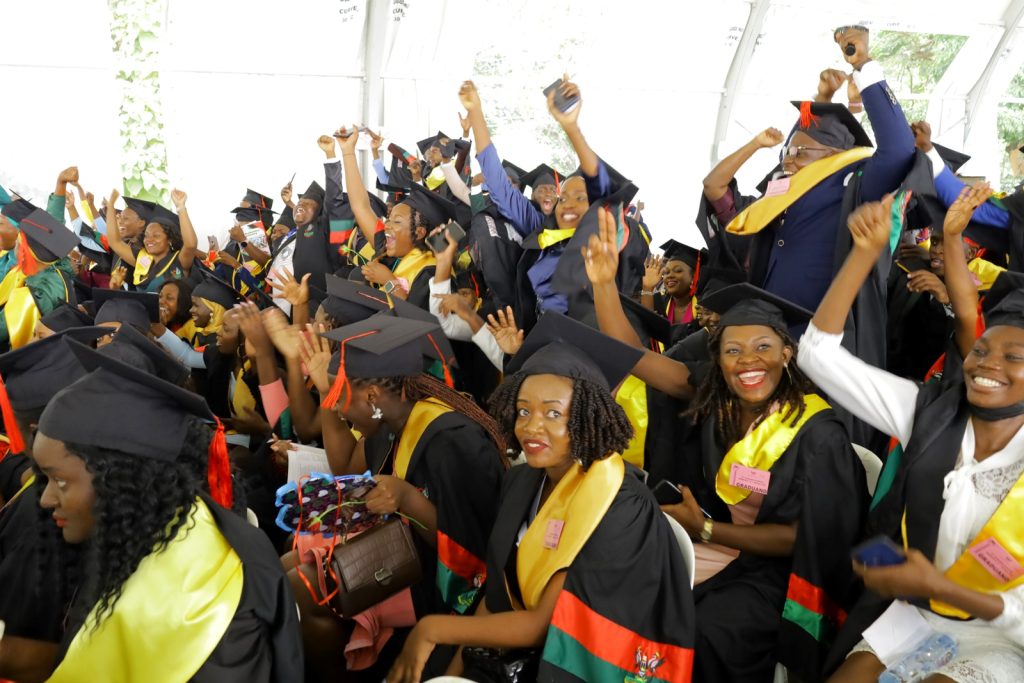
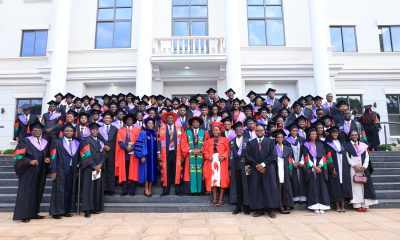
Some of the undergraduate candidates from CoCIS celebrate during the Third Session of the 73rd Graduation Ceremony.
“As you leave the Gates Makerere, I urge you to always be proud of your Alma Mater and be her good ambassadors. Put your trust in God and honor your parents and opportunities will be opened for you. And please, do not forget the Gates of Makerere. Remember that learning never ends and Makerere gates will always be open for you”, The Professor advised.
The week long 73rd Graduation Ceremony started on 13th -17th February 2023. A total of 13,221 students will be awarded degrees and diplomas of Makerere University. Of these, 102 will graduate with PhDs, 1,378 with Masters Degrees, 11,598 with Bachelor’s degrees, and 143 with undergraduate and postgraduate diplomas. 52% of the graduands are female and 48% male. 41 of the 102 PhD graduands and 563 of the 1,378 Masters graduands are female.

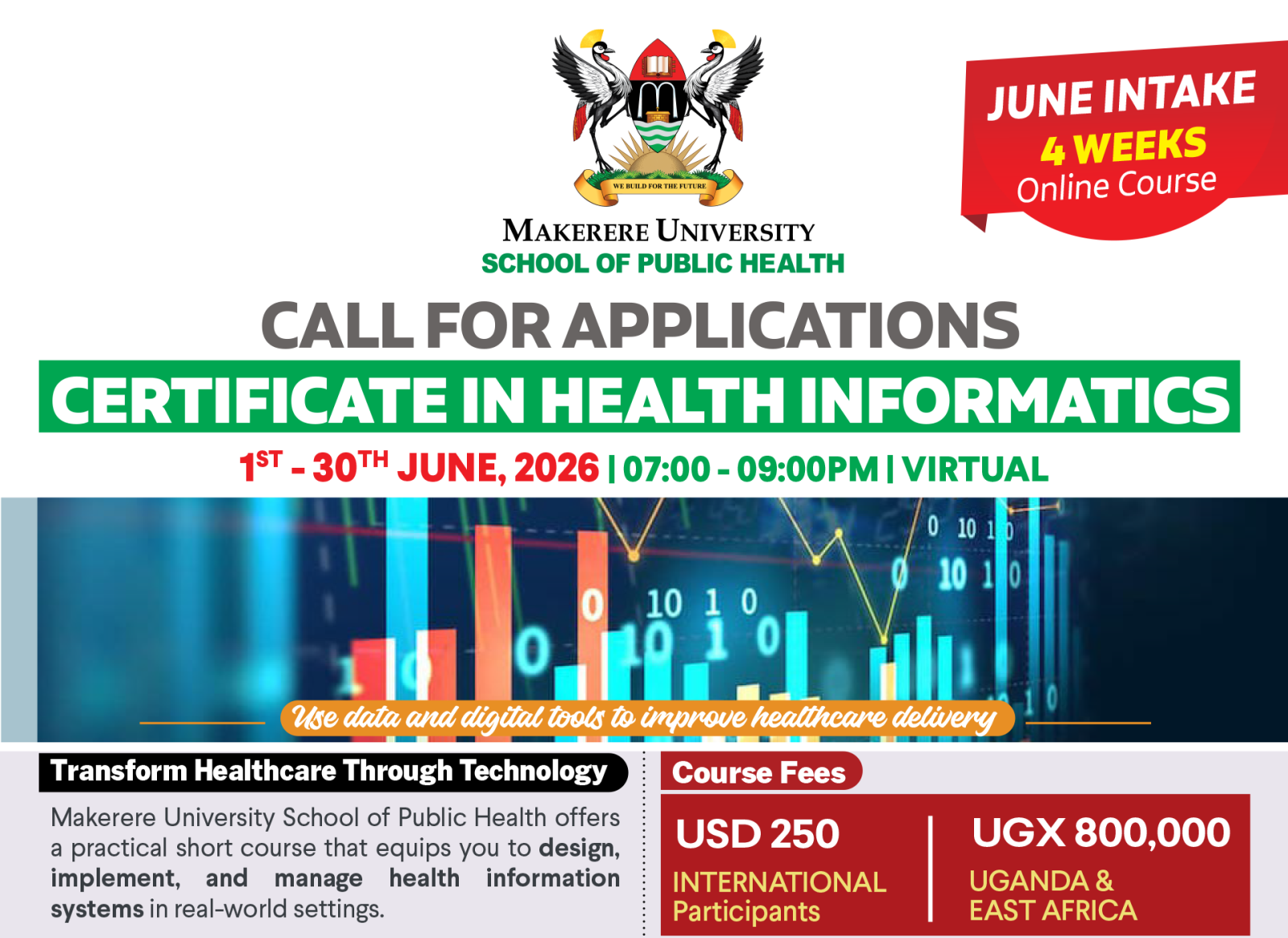
Makerere University School of Public Health (MakSPH) invites applications for the June 2026 intake of its 4-week Certificate in Health Informatics short course, designed to equip professionals with practical skills to use data and digital technologies to improve healthcare delivery.
Course Overview
Information and Communication Technologies (ICTs) are transforming healthcare delivery across Africa. However, many professionals are trained in either health or informatics, creating a gap in the effective use of digital solutions in healthcare.
This course is tailored to bridge that gap by equipping participants with practical knowledge and skills to design, implement, and manage health information systems. Through case-based learning and real-world examples, participants will explore how technology can improve healthcare delivery, particularly in resource-constrained settings.
Course Aim
To equip health professionals with the knowledge and skills to effectively implement and utilise health informatics for improved healthcare service delivery.
Learning Outcomes
By the end of the course, participants will be able to:
Apply Health Information Technology (HIT) to improve healthcare systems
Understand and use Electronic Medical Records (EMRs), including integration and interoperability
Manage digital health innovations such as telemedicine, mHealth, and wearable technologies
Apply data analytics, Artificial Intelligence (AI), and Machine Learning (ML) concepts
Address ethical issues in health data, including privacy, security, and governance
Course Modules
Health Information Technology
Adoption and Diffusion of Healthcare IT
Clinical Decision Support Systems
Electronic Health Records
Healthcare IT Industry & Global Policies
Telemedicine
Ethics, Security, Confidentiality & Privacy of Health Records
Healthcare Data Collection and Management
Course Schedule
Dates: 1st June – 30th June 2026
Duration: 4 weeks
Sessions: Daily (2 hours)
Time: 7:00 PM – 9:00 PM (EAT)
Mode: Online (Zoom)
Target Audience
This course is suitable for:
Health professionals (doctors, nurses, pharmacists)
Paramedical personnel and hospital administrators
Statisticians, data managers, and social scientists
IT professionals and health IT implementers
Medical science graduates
Applicants should have relevant experience or interest in improving healthcare delivery using technology and be willing to work in multidisciplinary teams.
Course Fees
UGX 800,000—Ugandans & East African Community participants
USD 250 —International participants
How to Apply
Interested applicants should complete the online application form:
VC Emphasizes Research as Key to Africa’s Global Integration
Makerere University Vice Chancellor, Prof. Barnabas Nawangwe, has urged universities across Africa to invest in research, publication, and innovation as a pathway to greater participation in the global knowledge economy.
Speaking at the launch of From Records to Publication: A Guide to Academic Authorship, edited by Prof. Elisam Magara of the East African School of Library and Information Sciences, Prof. Nawangwe highlighted Africa’s low contribution to global scholarship. “Although Africa accounts for 15 percent of the world’s population, it produces only 3 percent of global research publications,” he said.
“There are historical reasons for this,” the Vice Chancellor continued, referencing centuries of slavery and colonialism. “You cannot brush away 600 years of subjugation. And we Africans have not even written enough about that. If we want to move Africa back into the global community, we must invest in research, publication, and innovation.”
Prof. Barnabas Nawangwe speaking during the book launch.
He cited China as an example, noting how the country’s investment in research and education has translated into economic and global influence. “When we say China is the factor of the world, it is not that people just wake up and begin making things. They invest in education, in publication, in research. If we want to transform Africa, we must do the same.”
Prof. Nawangwe highlighted Makerere’s progress, revealing that annual peer-reviewed publications have grown from about 500 a decade ago, to 700, and now exceed 2,000. He acknowledged that the university still trails South African institutions, partly because they operate numerous local journals that absorb significant volumes of research. “We are not fully utilising the brand of Makerere University Press,” he said, pledging support to strengthen the press and scale up journal production.
Prof. Elisam Magara, Prof. Barnabas Nawangwe , Prof. Tonny Oyana and Dr. Sarah Kaddu during the launch.
He also reaffirmed the university’s strategy to reduce excessive undergraduate enrolment and expand graduate training to boost research output. “Let us create time for professors to do research and supervise more graduate students,” he said.
Commending Professor Magara and his team for producing the authorship guide, Prof. Nawangwe described the book as an essential handbook for Master’s and PhD students, early-career researchers, and universities across the region striving to become research-led. “This is at the heart of the university. If we invest in research and publication, we secure our future,” he said.
Book Recommended as Mandatory Guide by College Principal
Makerere University’s Principal of the College of Computing and Information Sciences, Prof. Tonny Oyana, called for the newly launched volume to be adopted as a mandatory guide for graduate students and newly appointed lecturers. “This is not a bad book for our first-year PhD students to start with,” he said. “Even those who are hired as junior lecturers still need mentorship. If I were the Vice Chancellor, I would put this book as required reading for every new hire.”
Prof. Tonny Oyana speaking during the launch.
Prof. Oyana reflected on his personal contribution to the book, revealing that administrative responsibilities nearly forced him to withdraw. “Because of the work that I do, I was about to give up,” he admitted. “But Professor Magara was persistent. He came back to me and gave me more time.”
He credited a PhD student, Caroline Ilako, for assisting with library research and literature reviews, saying, “She did a wonderful job. We went back and forth through revisions, but finally we produced the work.”
On the quality of the book, Prof. Oyana said, “When you pick up a book, look at how it is laid out. The quick judgment tells you about the quality. This is well put together. We are beginning to show quality comparable to Western presses.”
He also challenged traditional notions of “publish or perish,” noting, “As scholarship evolves, those who evaluate scholarship must also adjust. Impact, innovation, and tangible products are increasingly valued alongside journal articles.”
Editor Highlights Research-Based Approach
Prof. Elisam Magara, the book’s editor, explained that the guide is designed to support scholars from the moment they conceive a research idea to the point their work is published and read. “I looked at the books we were using and asked myself: which kind of book can truly guide students? We needed a clear guide from the time a scholar thinks of writing up to the time the book is read,” he said.
Prof. Elisam Magara giving the details of the publishing process.
He detailed the rigorous editorial process that began in 2022, including international calls for contributions, peer review of abstracts, writeshops for feedback, and multiple rounds of chapter reviews. “Don’t write and keep,” he advised. “Your book must have impact. It must reach the public and be used.”
Prof. Magara also acknowledged the sabbatical granted by the Vice-Chancellor, which enabled him to balance teaching and editorial responsibilities. “This book is meant not just for Makerere but for scholars across the region and beyond,” he said.
Mak Press Outlines Rigorous Publishing Process
Dr. Isaac Tibasima, representing the Managing Director of Makerere University Press, explained the publication pathway. “Once you bring your manuscript to the press, we take it through evaluation, external peer review, revisions, copy-editing, typesetting, and pre-press review before printing,” he said.
Prof. Elisam Magara hands over the book to Prof. Barnabas Nawangwe.
He also highlighted the press’s efforts to strengthen college-based journals. “We will not run the journals, but they will be published under the imprint of Makerere University. If we produce consistent issues, we can then move toward global indexing,” Dr. Tibasima said.
All new journals and articles now carry Digital Object Identifiers (DOIs) to enhance discoverability, while past publications are being retroactively assigned DOIs. “We are not there yet, but we are moving there, and we are intentional about getting there,” he added.
School Leaders Celebrate Scholarship and Mentorship
In welcome remarks, Dr. Sarah Kaddu, Dean of the School, said, “This event is a celebration of scholarship, intellectual discipline, and the journey of knowledge creation. This book speaks directly to one of the most critical challenges facing scholars—transforming research records into publishable work.”
Dr. Sarah Kaddu Dean, EASLIS speaking at the book launch.
Dr. Sylvia Namujuzi, Head of the Department of Records and Archives Management, added, “This book is timely. It responds to real challenges faced by early-career researchers, postgraduate students, and even seasoned academics—questions of structure, authorship ethics, citation, collaboration, and navigating the publication ecosystem.”
Prof. Elisam Magara and Ag. Head of Department Dr. Sylivia Namujuzi.
She concluded: “Well-managed records are not endpoints; they are the beginning of inquiry, reflection, and publication. This guide demonstrates that pathway.”
Dr. Isaac Tibasiima representing the Managing Director MakPress.
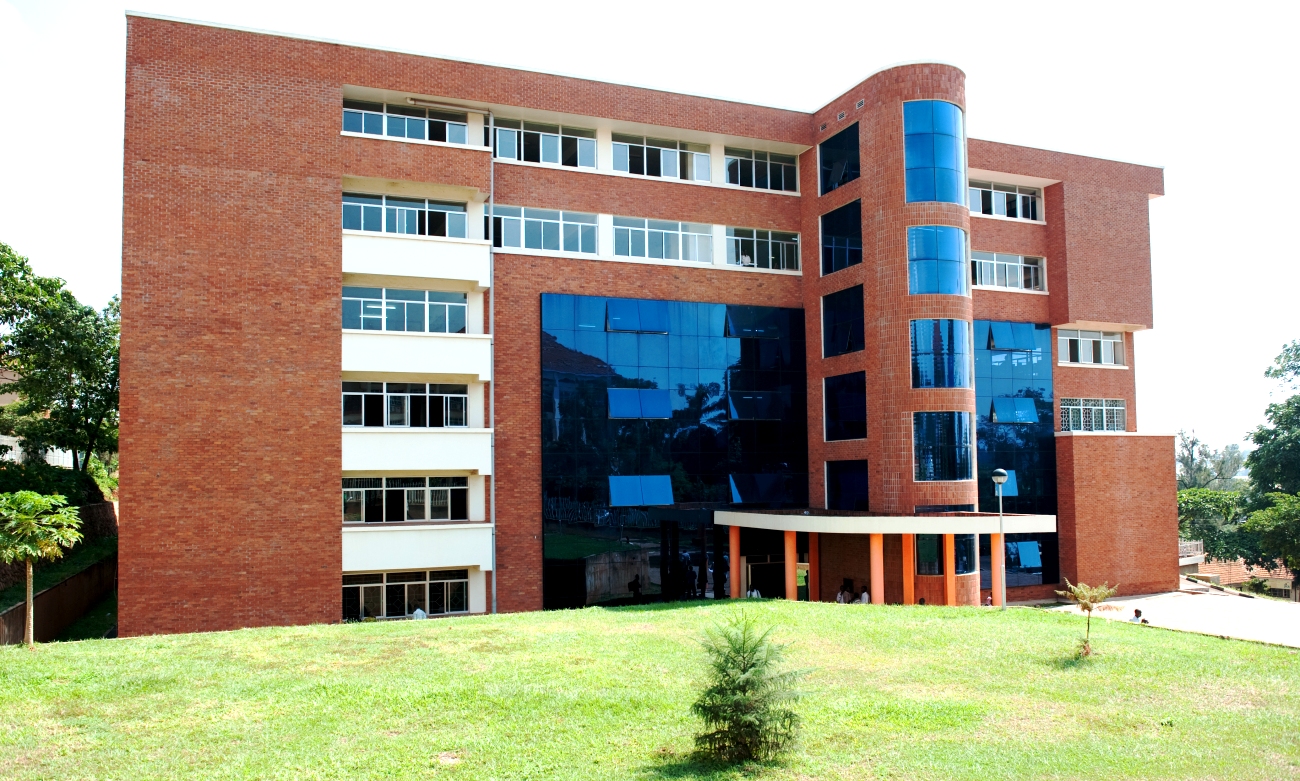
Makerere University College of Computing and Information Sciences (CoCIS) is the main ICT Training, Research and Consultancy Centre in Makerere University. The College has six Academic departments comprising of the Department of Computer Science, Department of Networks, Department of Information Technology, Department of Information Systems, Department of Library and Information Sciences, and the Department of Records and Archives management.
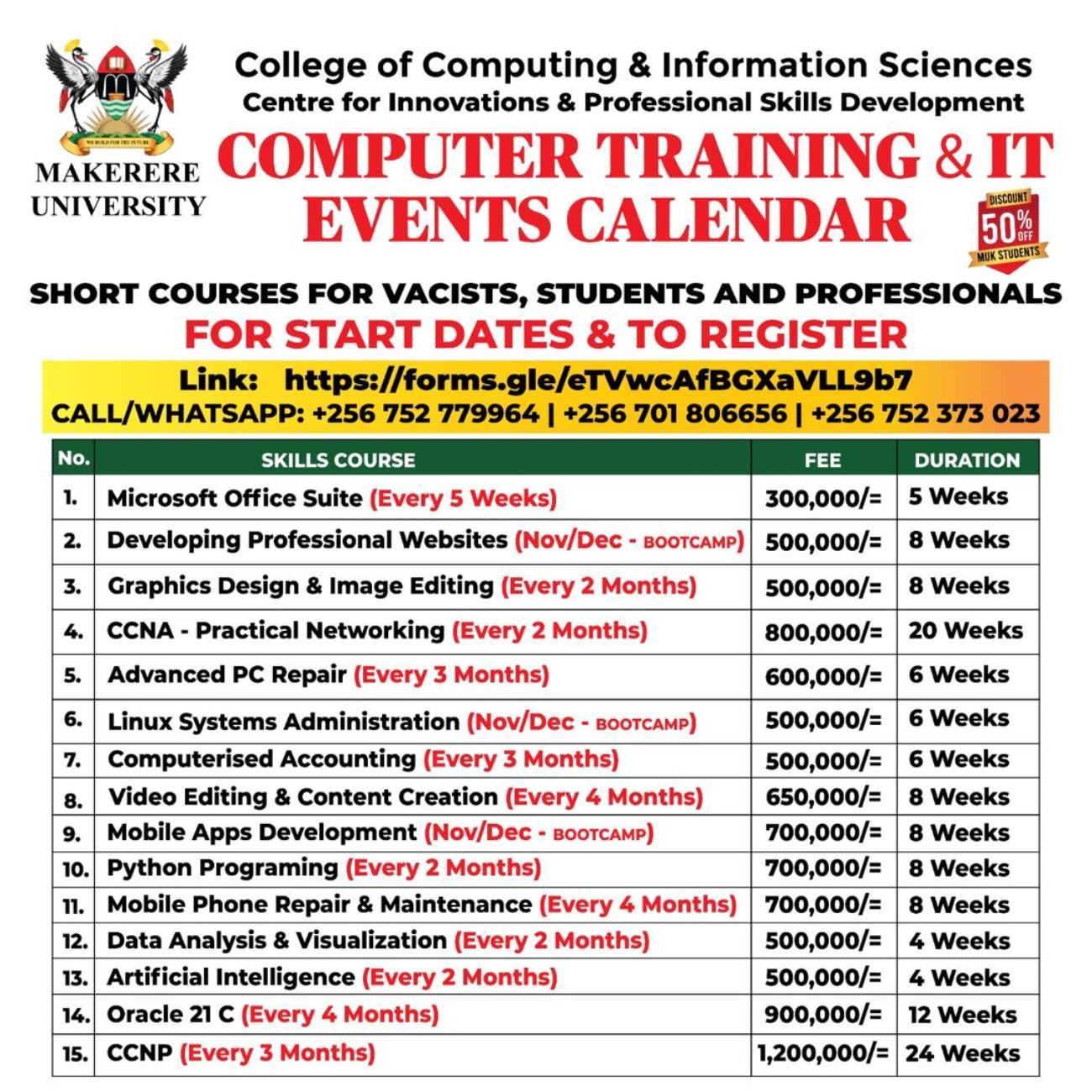
In addition to the mainstream degree programmes, CoCIS has a specialized Center for Innovations and Professional Skills Development (CIPSD) which delivers state-of-art training in ICT e.g. the Cisco Networking Academy for Cisco related courses, the Microsoft IT Academy Program for Microsoft related courses, International Computer Driving License course, Oracle Certified Training center for Oracle, Linux and Unix Training center. CIPSD also offers Machine Learning, Big Data Analytics, Data Science, Artificial Intelligence (AI) and Ethical Hacking as online courses. The College is an authorized Testing center, operating under PearsonVUE and Kryterion. Listed in the table (see download below) are the courses currently offered at the Center with their next start dates, duration, and cost.
All courses are at affordable fees catering for Students, Vacists, Professionals and
Anyone who wants to start a career in ICT or polish his/her ICT skills.