
Humanities & Social Sciences
CHUSS selects 15 out of 35 poems for the Centennial Poetry Competition








Humanities & Social Sciences
Symposium on Pan-Africanism and Reparatory Justice Ignites Debate on African Unity and Decolonisation of Systems

By Charles Iga and Ritah Namisango
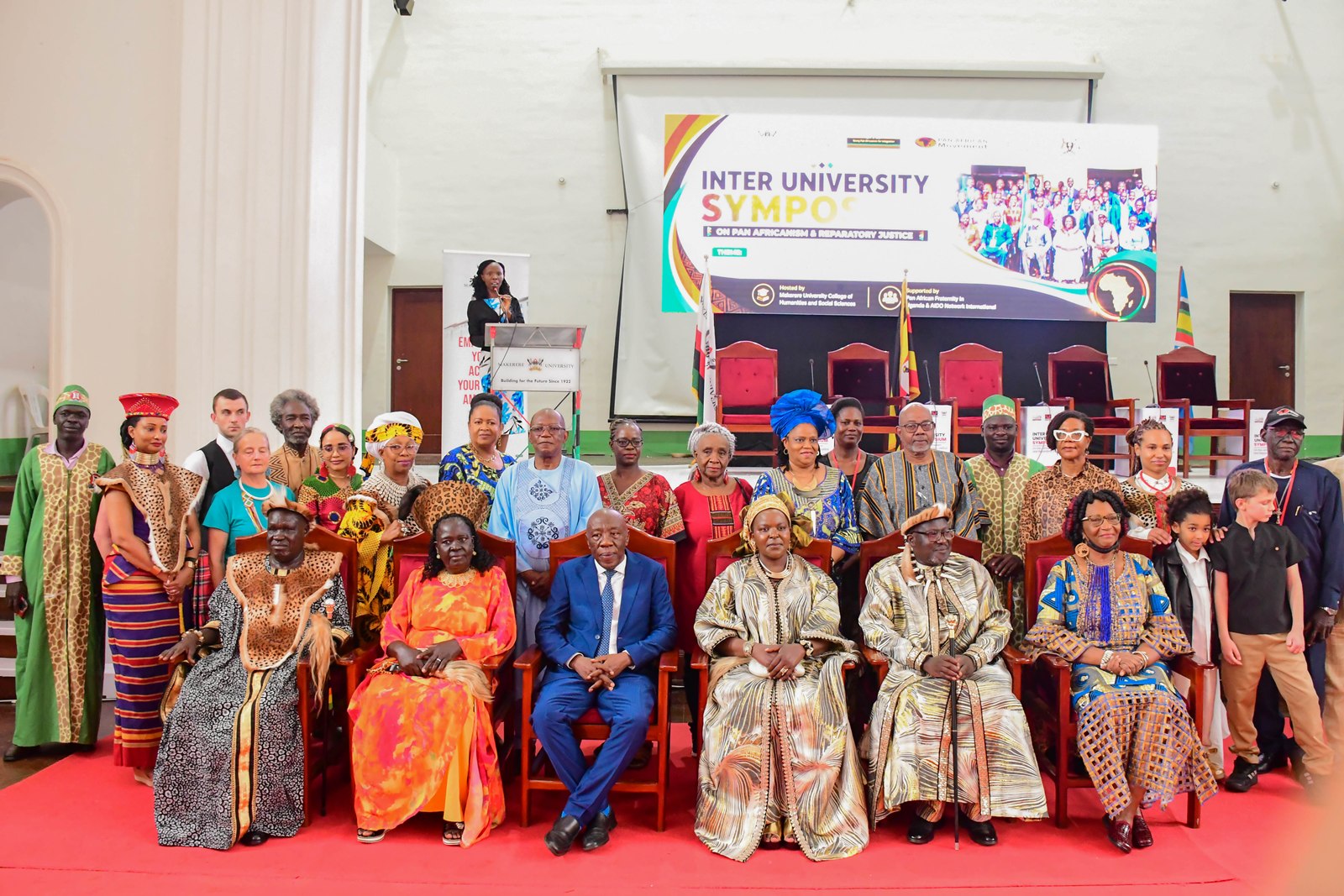
On 21st May 2026, candid discussions and reflections on the dignity and survival of the African people took centre stage as Pan-Africanists, youths, global diaspora leaders, esteemed royals, and scholars, convened at Makerere University, for the Inter-University Symposium on Pan-Africanism and Reparatory Justice.
Held ahead of the Africa Day Celebrations on 25th May 2026, the Symposium with over 23 participating Universities re-awakened the spirit of Pan-Africanism, African Unity, and the need to defend the dignity and the future of the African People.
The different speakers, panelists and participants rallied African nations to demand for reparation from those who dehumised the African people through slaverly, torture, conolialism, and any form of injustice.
“Pan-Africanism is about survival, dignity and power. It’s the understanding that Africa’s problems cannot be solved in isolation. It has a huge diaspora. It has to be holistic. Division is our greatest weakness. Unity is our strongest weapon,” said Chief Eric Phillips, the Keynote Speaker at the Inter-University African Symposium hosted by Makerere University’s College of Humanities and Social Sciences, in partnership with the Pan Afican Fraternity in Uganda, CARICOM, and AIDO International Network.
This is global citizenry in action
Opening the symposium on behalf of Vice Chancellor of Makerere University, Prof. Barnabas Nawangwe, the Acting Vice Chancellor Prof. Henry Alinaitwe described the gathering as a historic convergence of global African identity.
“As we gather in the Makerere University MainHall, we are deeply honoured to host distinguished delegates from across Africa, the Caribbean, Europe, Asia, and the wider global African diaspora,” Prof. Alinaitwe said.
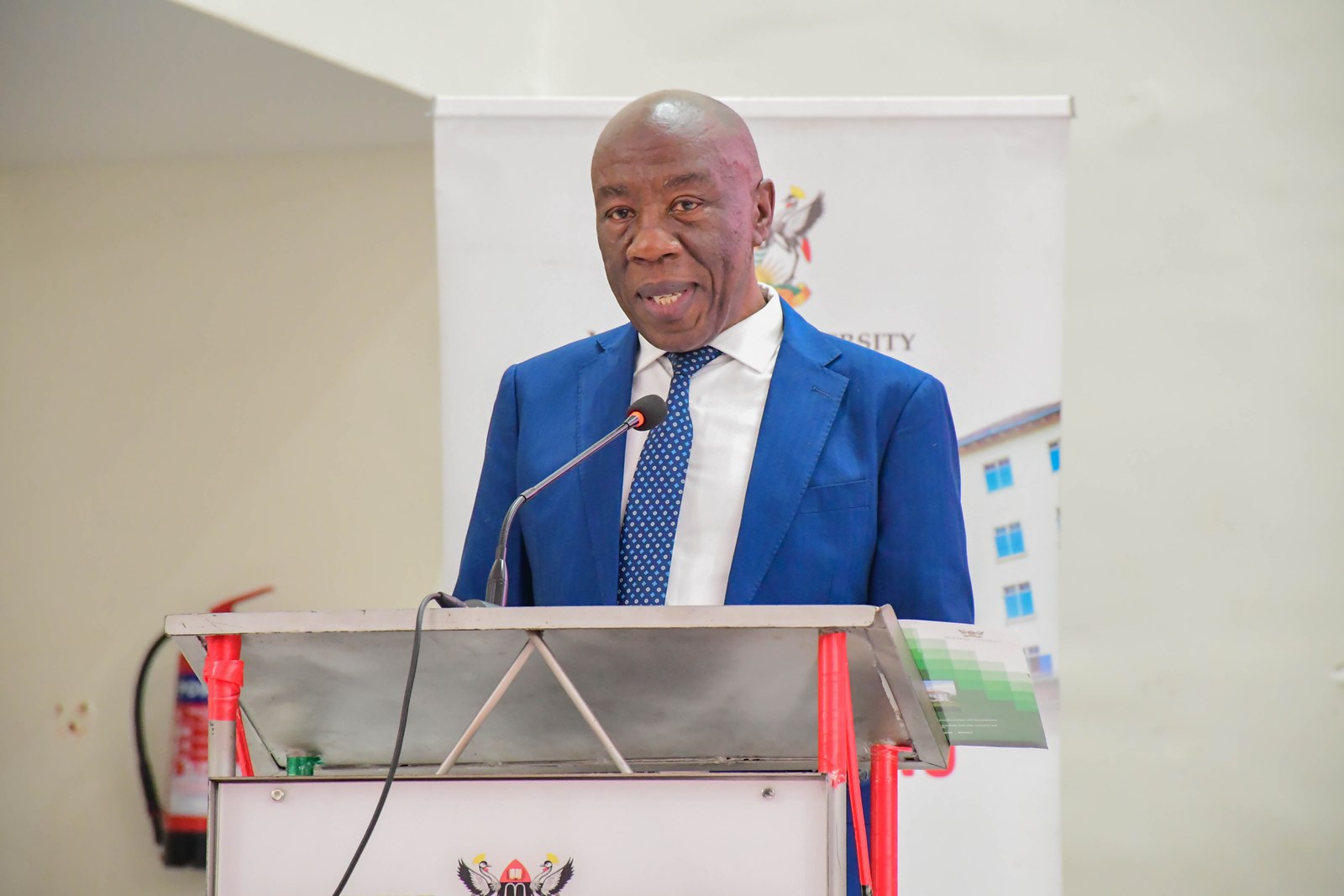
He added, it is a meeting of minds, cultures, generations, and visions committed to shaping Africa’s collective future, emphasizing that African liberation must extend beyond political independence into economic and intellectual sovereignty.
“This symposium is happening at a critical moment in global history when Africa and people of African descent are redefining their place in a multipolar world,” he said.
Makerere re-affirms role as Pan-African Intellectual Hub
Re-affirming Makerere University as a critical centre for intellectual liberation and African-centred knowledge production, Prof. Alinaitwe noted that the struggle for African liberation continues through economic sovereignty, reparatory justice, cultural dignity, and decolonisation of knowledge systems.
He tipped the students that the future of Pan-Africanism will be shaped by their ideas, courage, and innovation.
Humanities hold the key to transformation
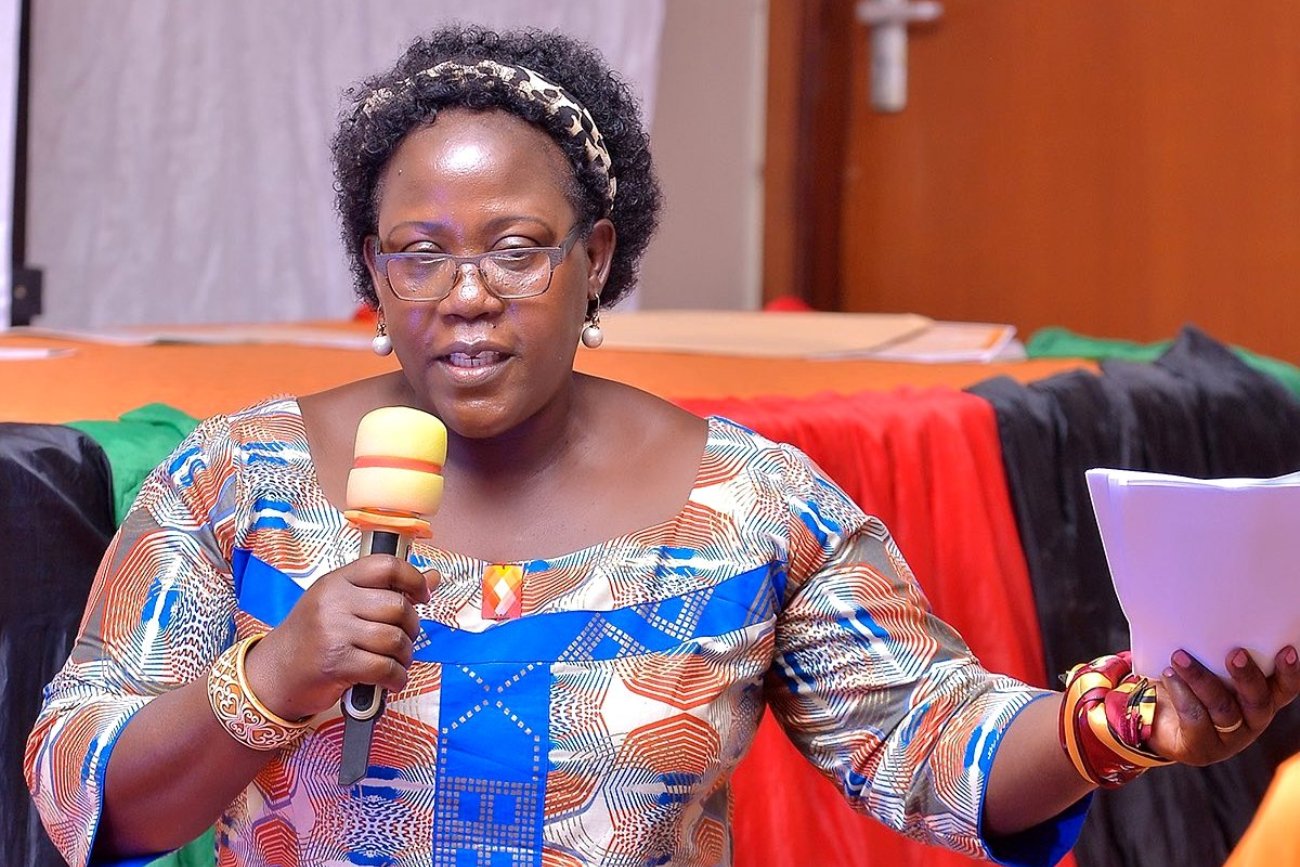
Citing the theme of the Symposium, Pan-African Intellectualism: The Urgency to Defend the Dignity and Future of the African People, the Principal of the College of Humanities and Social Sciences at Makerere University, Prof. Helen Nambalirwa Nkabala, stressed the central role of African scholarship in social transformation.
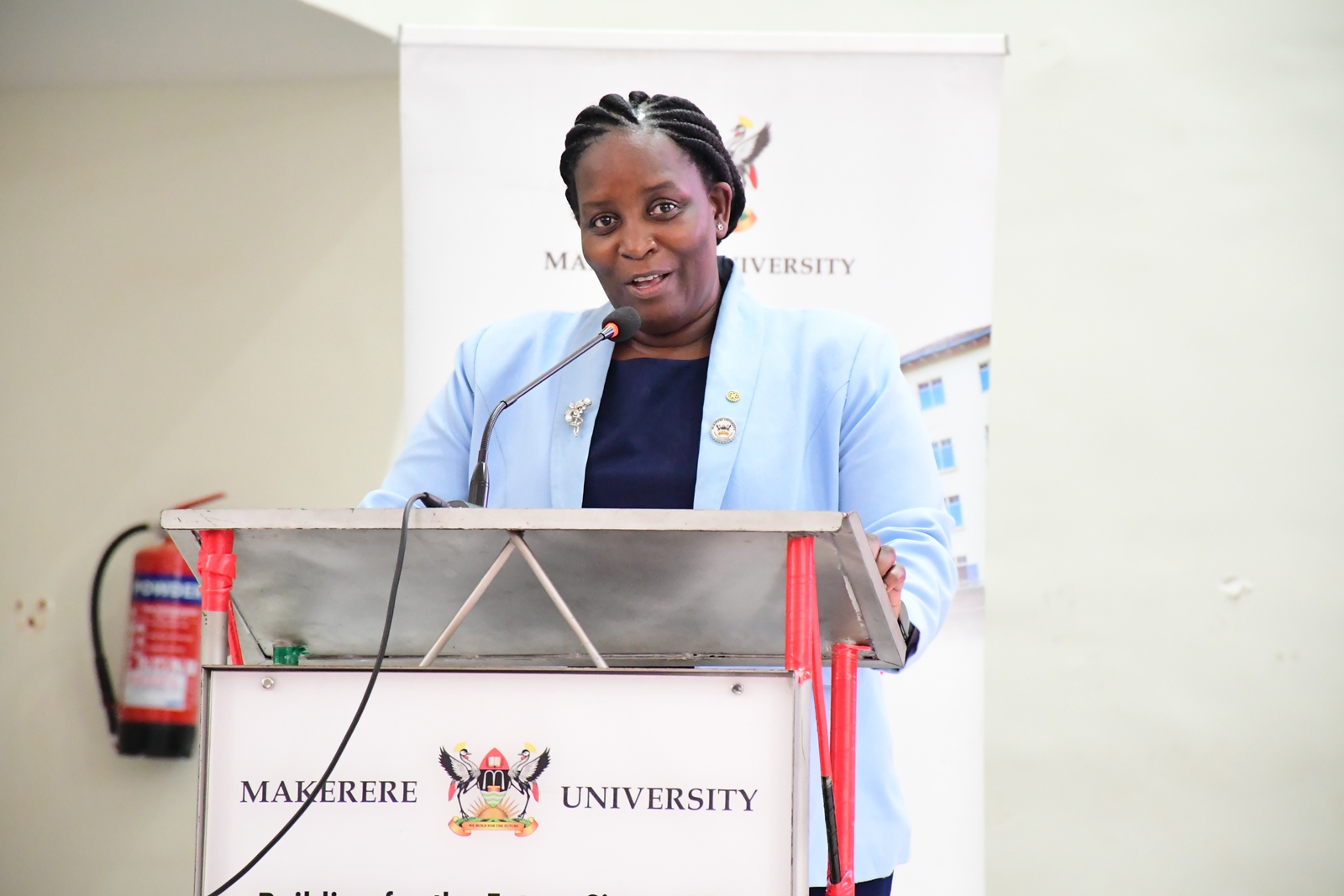
“Our presence here reflects the urgency of defending the dignity and future of African people through knowledge,” Prof. Nkabala said.
She added, “Humanities and Social Sciences are vital for social transformation because without those disciplines, there can never be societal change. The humanities and social sciences hold the key to understanding society and reshaping it.”
The issue of reparations is central
The Deputy Principal, College of Humanities and Social Sciences, Prof. Eric Awich Ochen, reiterated the African voices on the need for reparation. “In December 2025, I represented Makerere University at the African Diaspora Summit in Accra, Ghana. The President of the Republic of Ghana, and the President of the Republic of Togo, spoke very strongly about the issue of reparation justice,” he said.
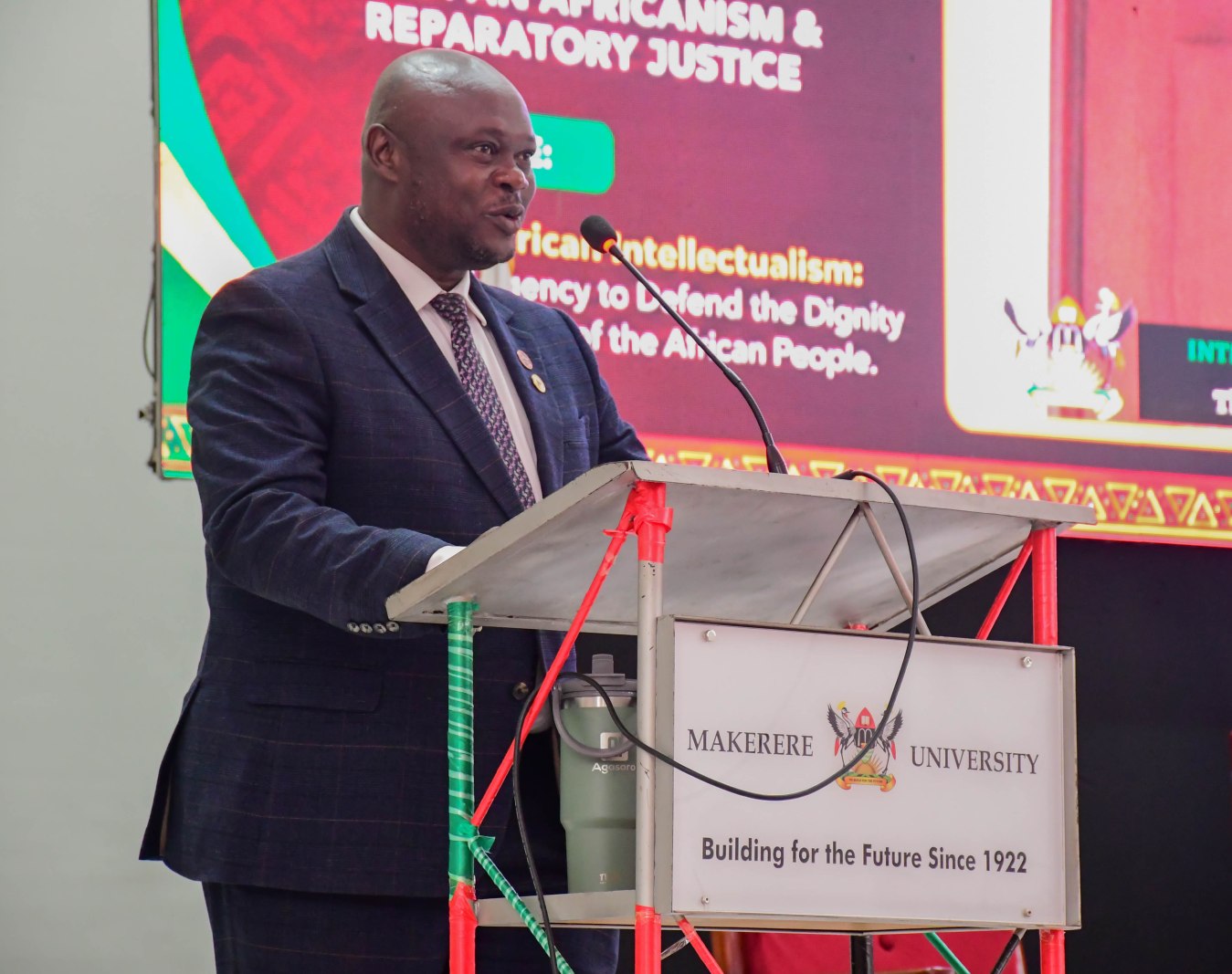
“When we talk about reparation. Africa suffered from slavery and a lot of injustices during that period. Those responsible for that kind of injustice to us, may need to find away of making some compensation to Africa,” said Prof. Awich Ochen.
Inter-University Symposium kicks off the Africa Week celebrations
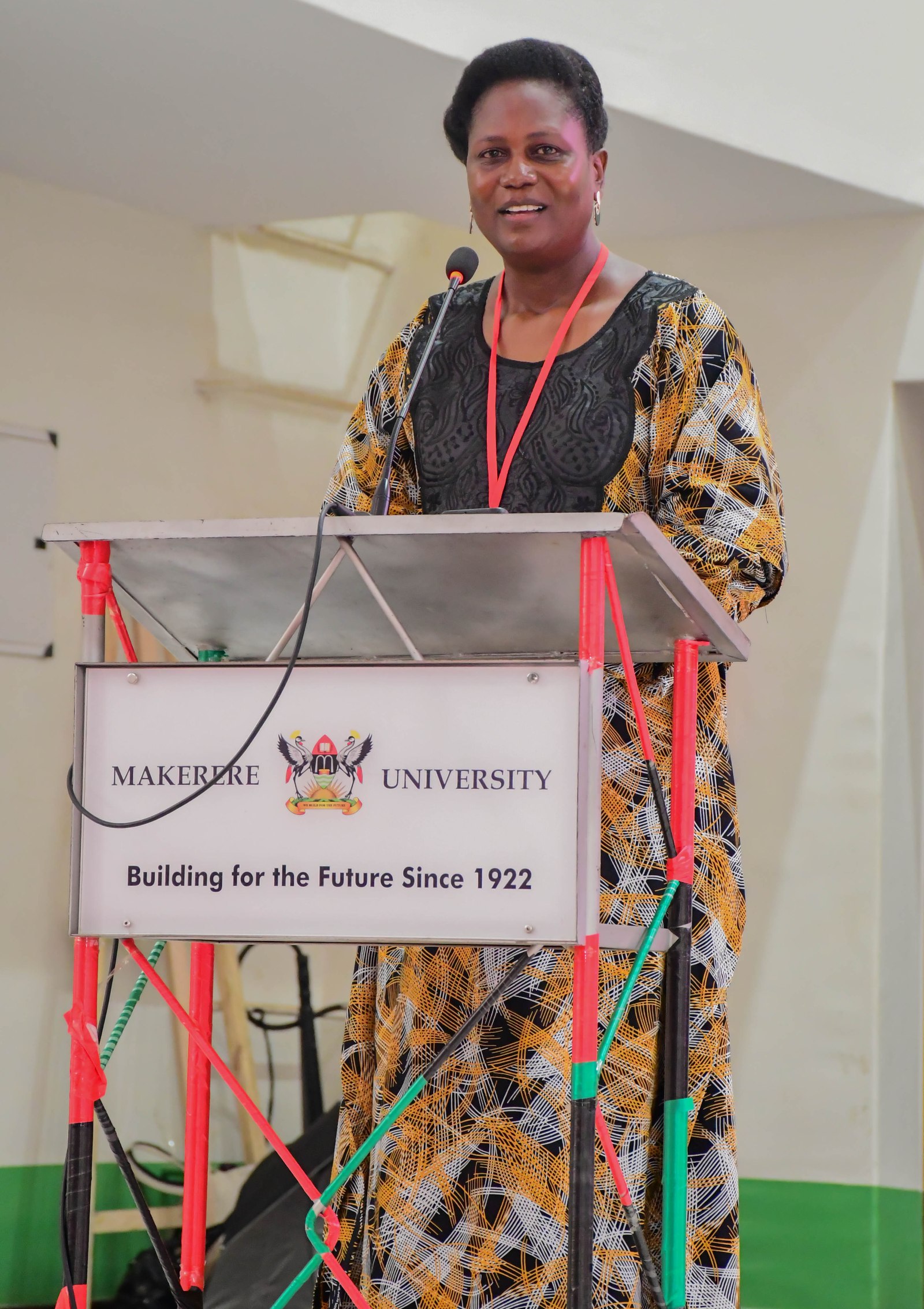
In a very special way, Dr Sarah Hasaba, the Chairperson of the Organizing Committee for the Pan-African Liberation Week (21st to 25th May 2026) welcomed the participants who had travelled from the different parts of the world and within Uganda, to be part of the 5th Inter-University Symposium.
“As we celebrate the 63rd Africa Liberation day, we are honoured to start with the Inter-University symposium at Makerere University. As we engage in dialogue today, let us exchange ideas and build strategic partnerships. May this symposium be an opportunity for practical solutions, strong collaboration, and renewed commitment to the Pan-African vision of unity and transformation,” remarked Dr. Hasaba.
The Youth are an integral pillar of the Pan-African agenda
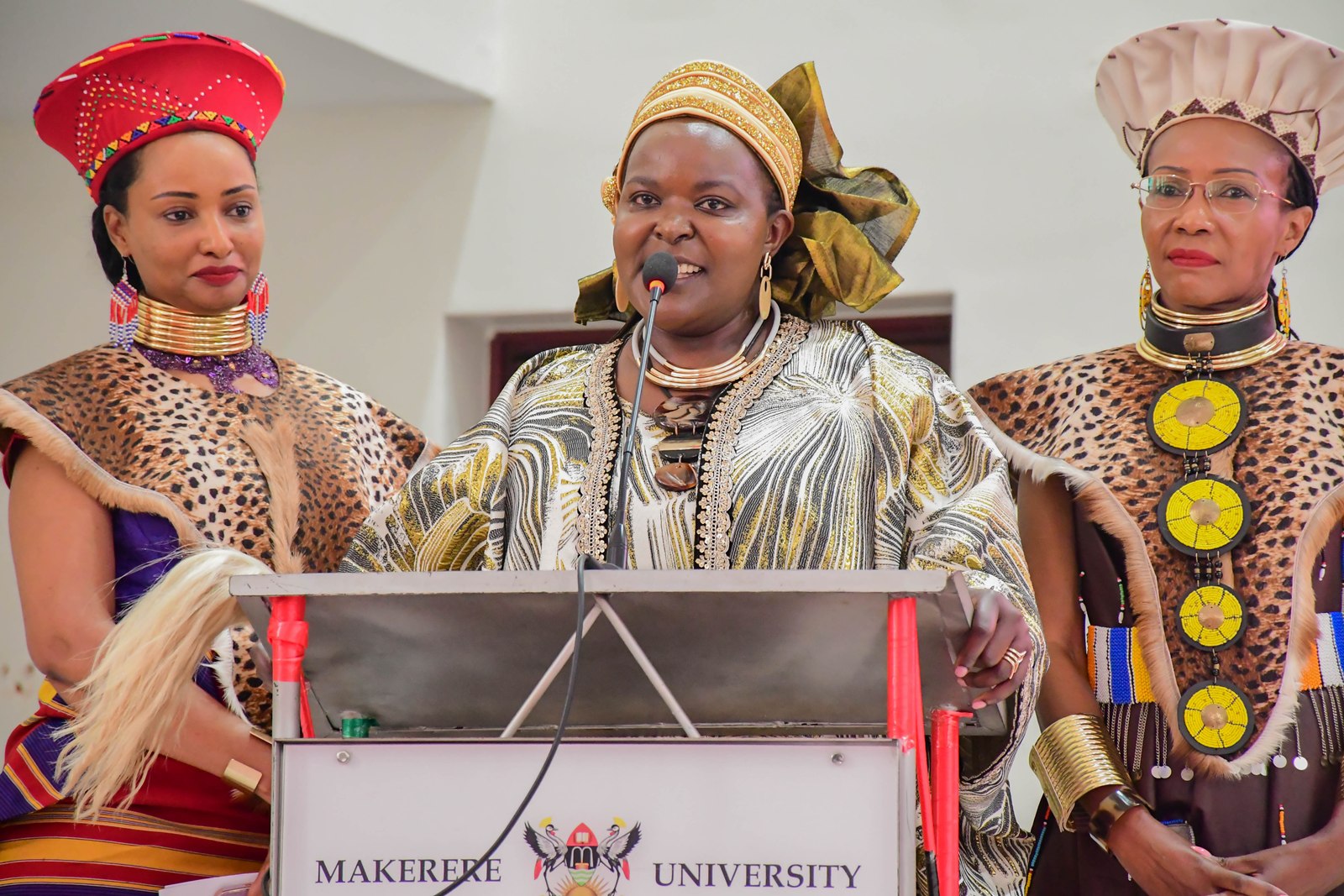
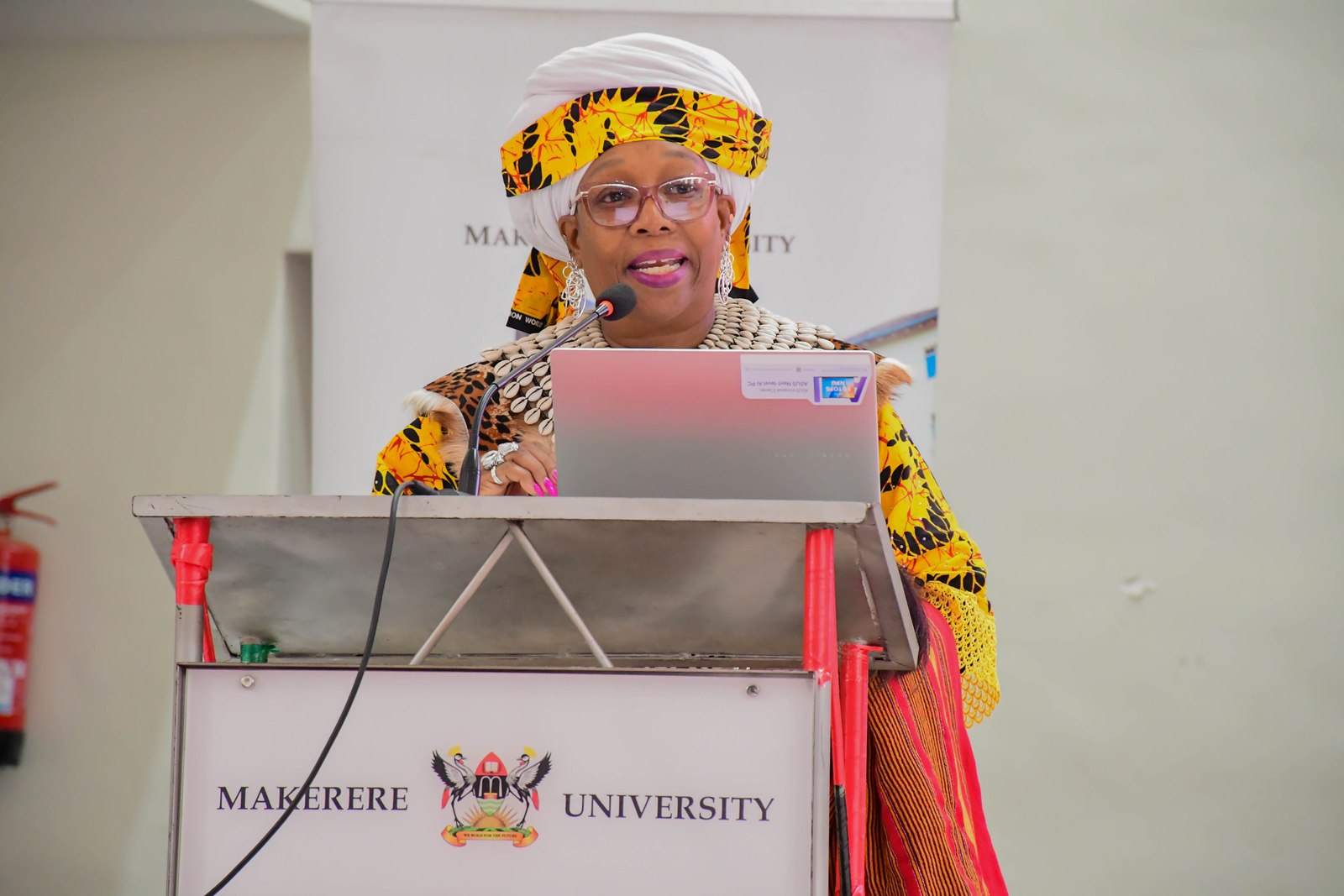
Her Highness Dr Queen Grace Eganda, was delighted to return to Makerere University, where her academic and leadership potential was nurtured in the 1990s. During that time, she was privileged to have served as the Chairlady of Mary Stuart Hall, and happy to return to Makerere University, in the capacity of a global leader, and General Secretary of AIDO Network International.
Emphasizing the importance of the symposium, she said: “This is a significant moment because we are looking at a bridge between the past and the present. As we reflect on the journey of Pan-Africanism, we are looking at our historical realities, present situations, and exploring how do we move forward progressively. We are working with the youth and the academia to promote the Pan-Africanism agenda.”
Underscoring the role of the youth, the Queen articulated: “ Any space where there’s no youth, any organization or planning where there is no youth is a dying moment. We are therefore encouraged to see many brilliant young people participating in the Symposium, we are passing the baton, the future is bright, and where we end, we know that the fire will keep burning.”
Building partnerships and promoting collaboration
With nostalgia, the President of AIDO Network International, and Chairman of the Global Africa Diaspora Kingdom, His Highness Papa, Dr Paul Jones Eganda, was pleased to return to Makerere University.
“In the 1990s, I was at this great University. I stayed in Lumumba Hall. Today, I come back, not as a student, but as a King and global leader with over 2.5 million followers globally,” he said amidst applause from the audience.
He informed the audience that the delegation consisted of 70 royals and key personalities who travelled to Uganda to participate in the activities of the Africa Liberation Week. “Some of them have remained at Speke Resort Munyonyo because the Head of State, H.E President Yoweri Kaguta Museveni is launching the Uganda Tourism Expo. Some of us have made it to Makerere University, to participate in the Inter-University symposium,” he remarked.
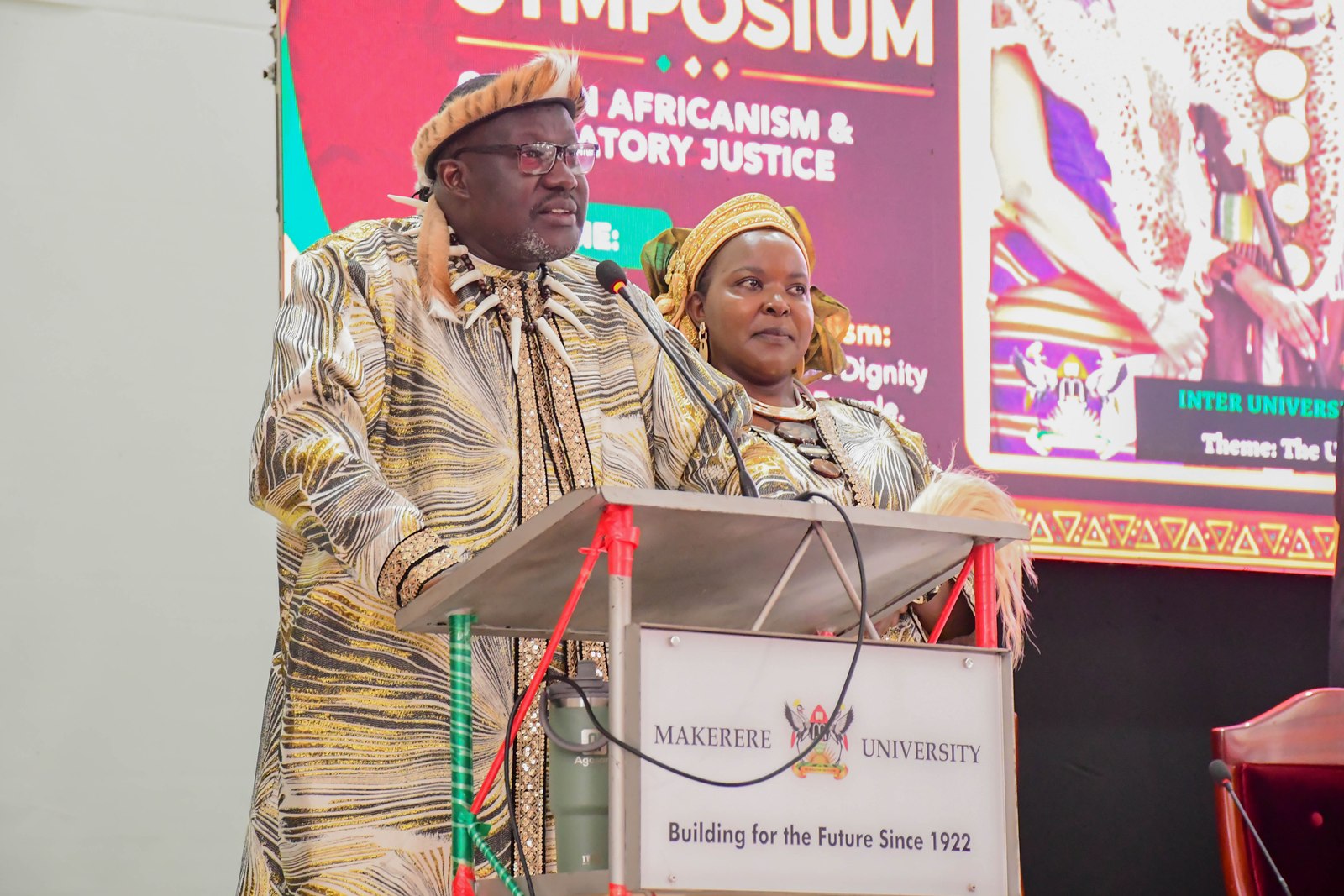
His Highness Papa Dr Eganda said the AIDO Network International and the Inter-University Symposium, present to the African people, a platform to strengthen partnerships and collaboration, undertake joint research, and advocate for scholarships.
“We are here to listen and learn from each other, and build partnerships. We would like to promote inter-university collaborations, research opportunities, and scholarships,” he stated.
In a very special way, he recognized Maj. Gen. Felix Kulayigye and Lieutenant Gen. Amanda Magambo, for their commitment to the Pan-Africanism agenda.
Keynote Speech on Pan-Africanism and Reparation
A sense of quiet reflection and re-awakening was evident as the Keynote Speaker, Chief Eric Phillips, passionately shared his views about Pan-Africanism and reparation.
Highlighting the roots of Pan-Africanism, he said: “Before borders were drawn, before Africa was divided in Berlin, before the world told us who we were, Africans were already connected by culture, by trade, by identity and by civilization. But then came slavery, colonization, and the forced scattering of millions of Africans across the world.”
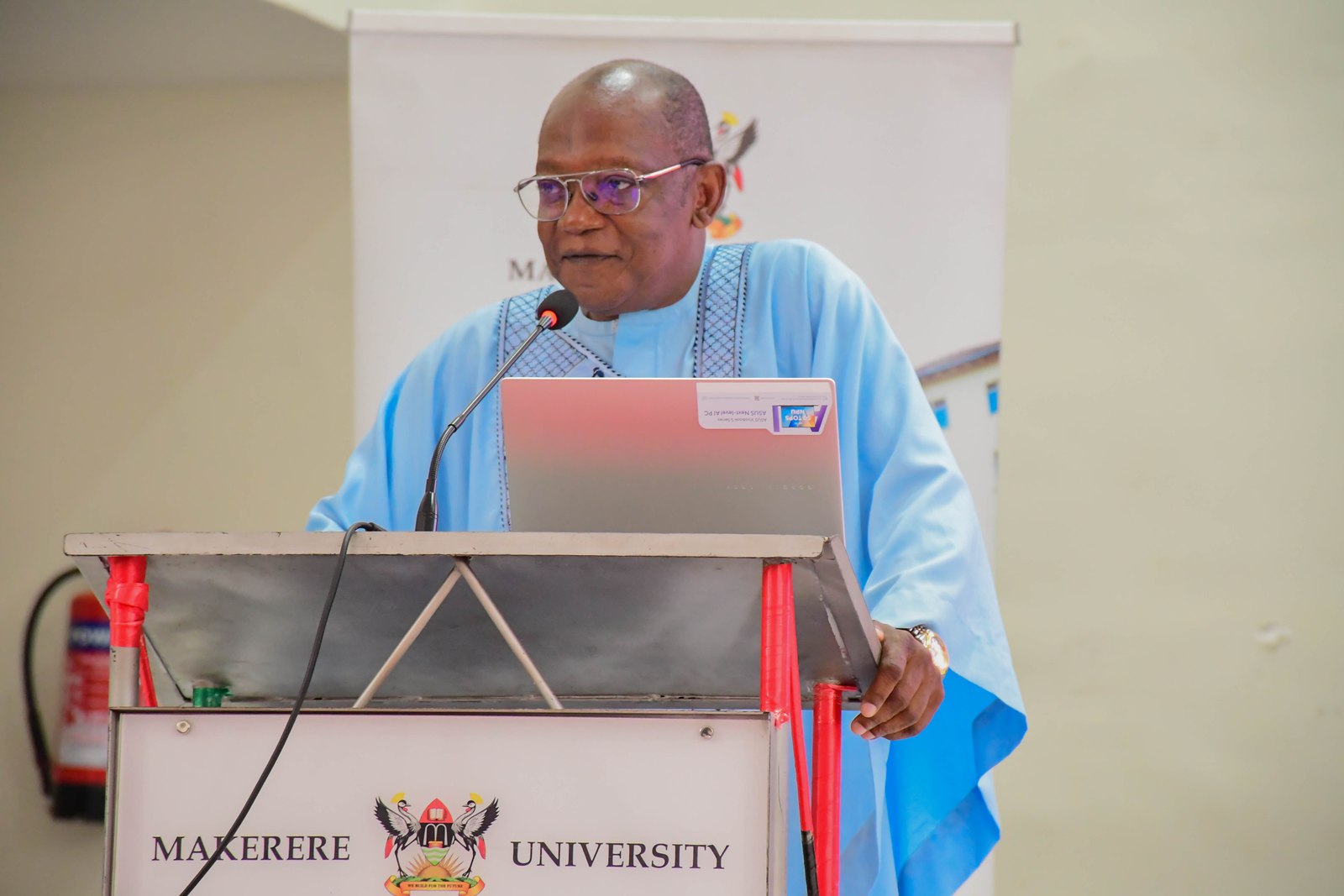
The keynote speaker articulated that from that pain, Pan-Africanism was born-starting in the hearts of enslaved Africans who refused to forget who they were.
“Today, the chains may look different, economic dependency, mental colonization. But the mission of Pan-Africanism remains the same. A united Africa is not a dream. It’s a necessity,” he emphasized.
Geopolitics of Reparatory Justice
The Keynote Speaker informed the participants that the geopolitics of reparatory justice is not often spoken about, yet it impacts people of Africans daily.
“European nations do not want to pay financial reparations. Financial reparations have been paid to the Jewish nation, the Japanese, and to many other people across the world. But when it comes to reparations for people of African descent, there seems to be a resistance, a denial, as if they still consider us as not being human,” he wondered.
Panel on Pan-Africanism and Intellectualism
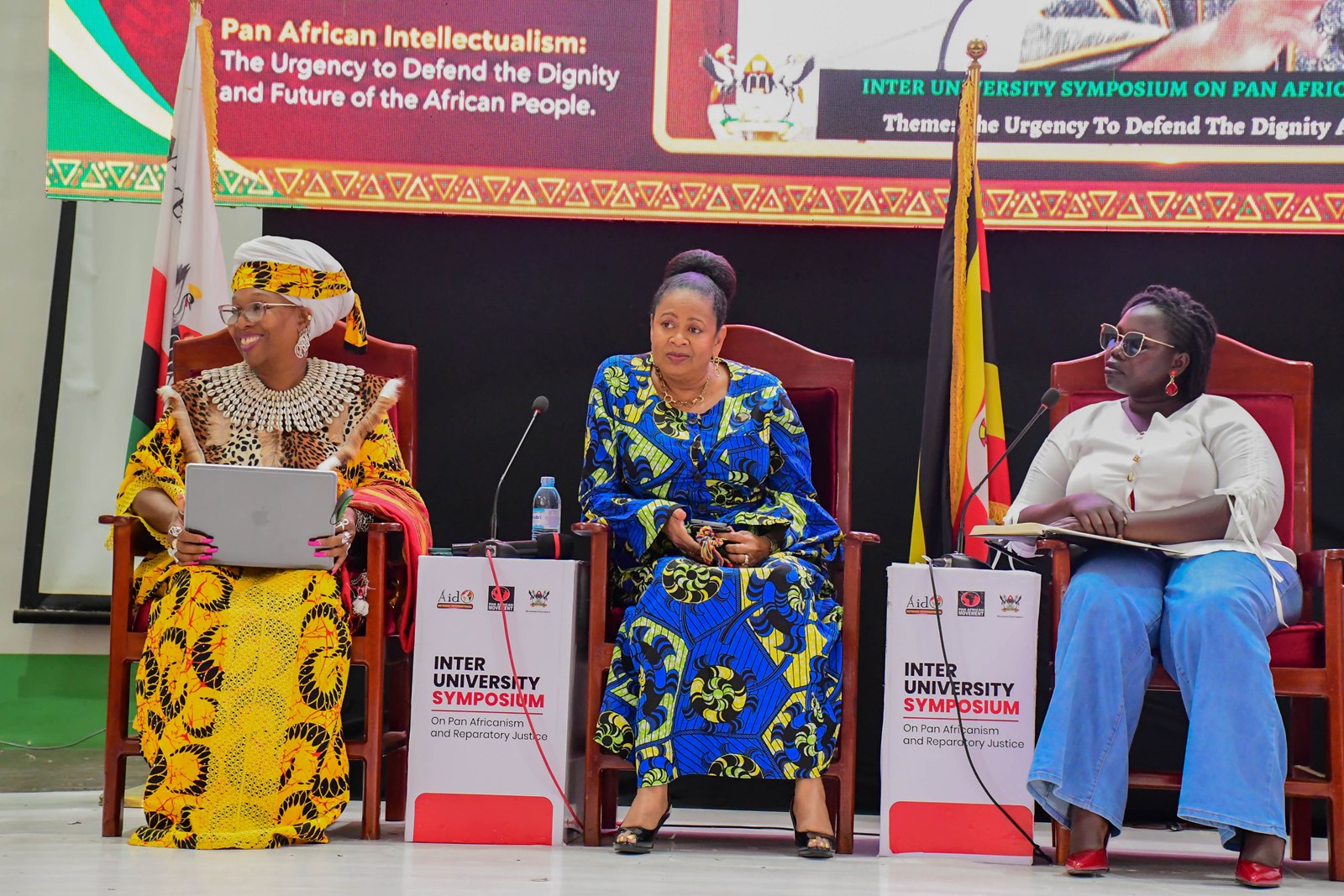
Moderated by Callistus Mubangizi, the panel consisted of the following discussants: Dr. George Okiror-Makerere University, Department of Political Science and Public Administration, the Keynote Speaker-Chief Eric Phillips, Prof.Eria Hisali-Makerere University College of Business and Management Sciences, Associate Professor Robert Ojiambo- Department of History, Archaeology, and Heritage at Kyambogo University, and Dr. Shadat Semakula from Canada.
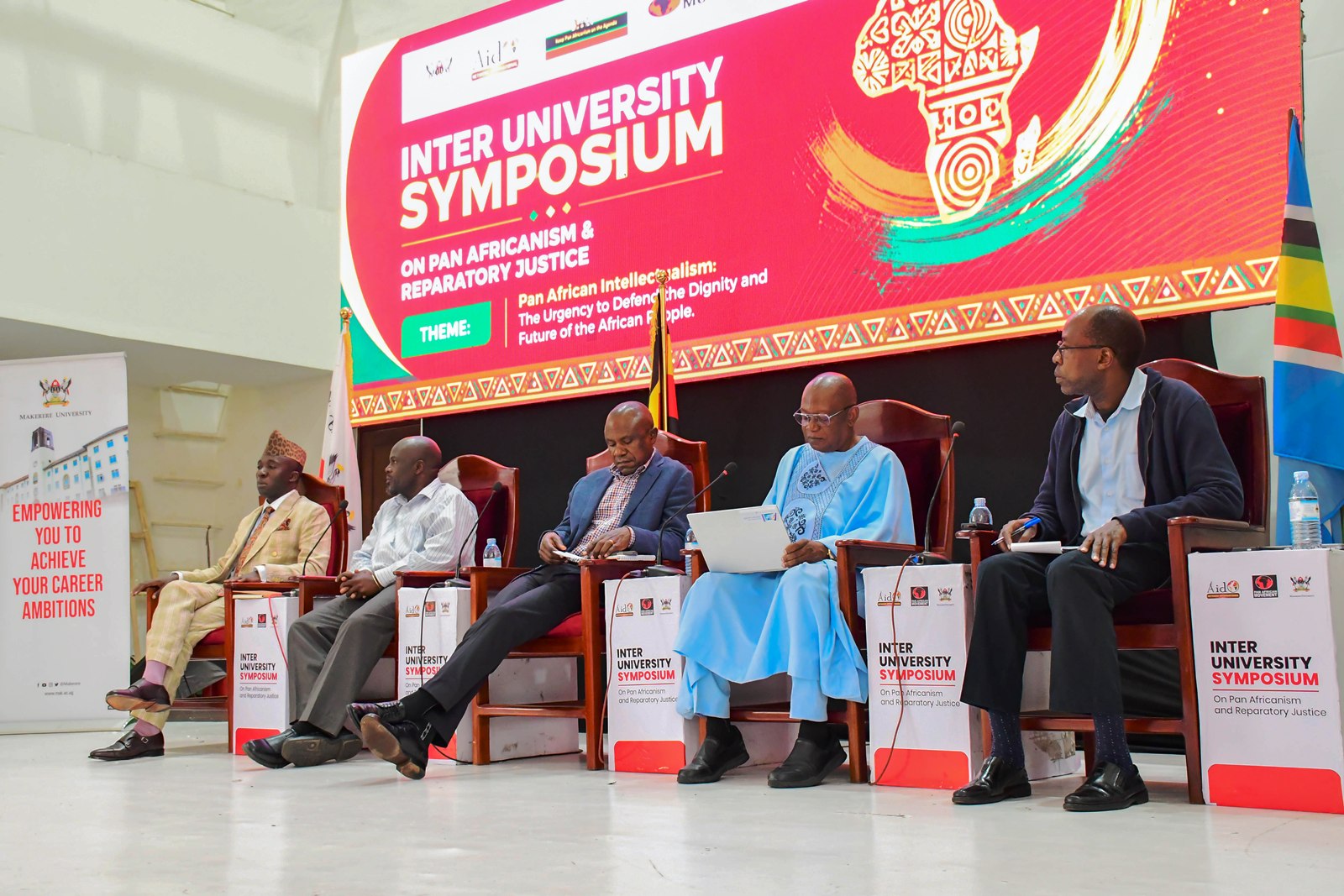
The discourse indicated that Intellectualism still continues to be the basis upon which Pan-Africanism lives. The panel tackled the relevance of Pan-African intellectualism as the framework for addressing structural inequalities and neocolonialism, as well as, the need for a unified African-led development.
Reparatory Justice is about Dignity, Not Only Money
Throughout the symposium, scholars and activists repeatedly emphasised that reparatory justice must go beyond financial compensation. “Reparations is not just about money. It is about restoring dignity, identity, truth, education, land, psychology, and institutions.”
It was crystal clear that reparatory justice must begin with us. “We cannot ask for reparations while abandoning our languages, our knowledge systems, and our identity. Reparatory justice must begin internally.”
We Lost Kingdoms, Artifacts, and Memory
Dr Davidson Amooti, representing Bunyoro cultural and administrative structures, gave a deeply historical account of colonial-era losses. “On behalf of Bunyoro Kingdom, we lost 2.5 million human beings during colonial wars,” he said.
Additionally, “We also lost more than 3,000 artifacts. The British government could not allow me to access museums and libraries. I had to go to court to obtain permission.”
Dr Amooti called for structured documentation and legal action. “We must mobilise every citizen in our cultural institutions for development. We cannot keep begging. We must research, document, and sign agreements.”
Education is not neutral
Dr Zaid Sekito, Lecturer in the Department of History, Archaeology & Heritage Studies at Makerere University, reframed reparatory justice as an educational and intellectual process.
“Reparatory justice is a pedagogical practice. We must understand what was destroyed, how it was destroyed, and how to rebuild it,” he said.
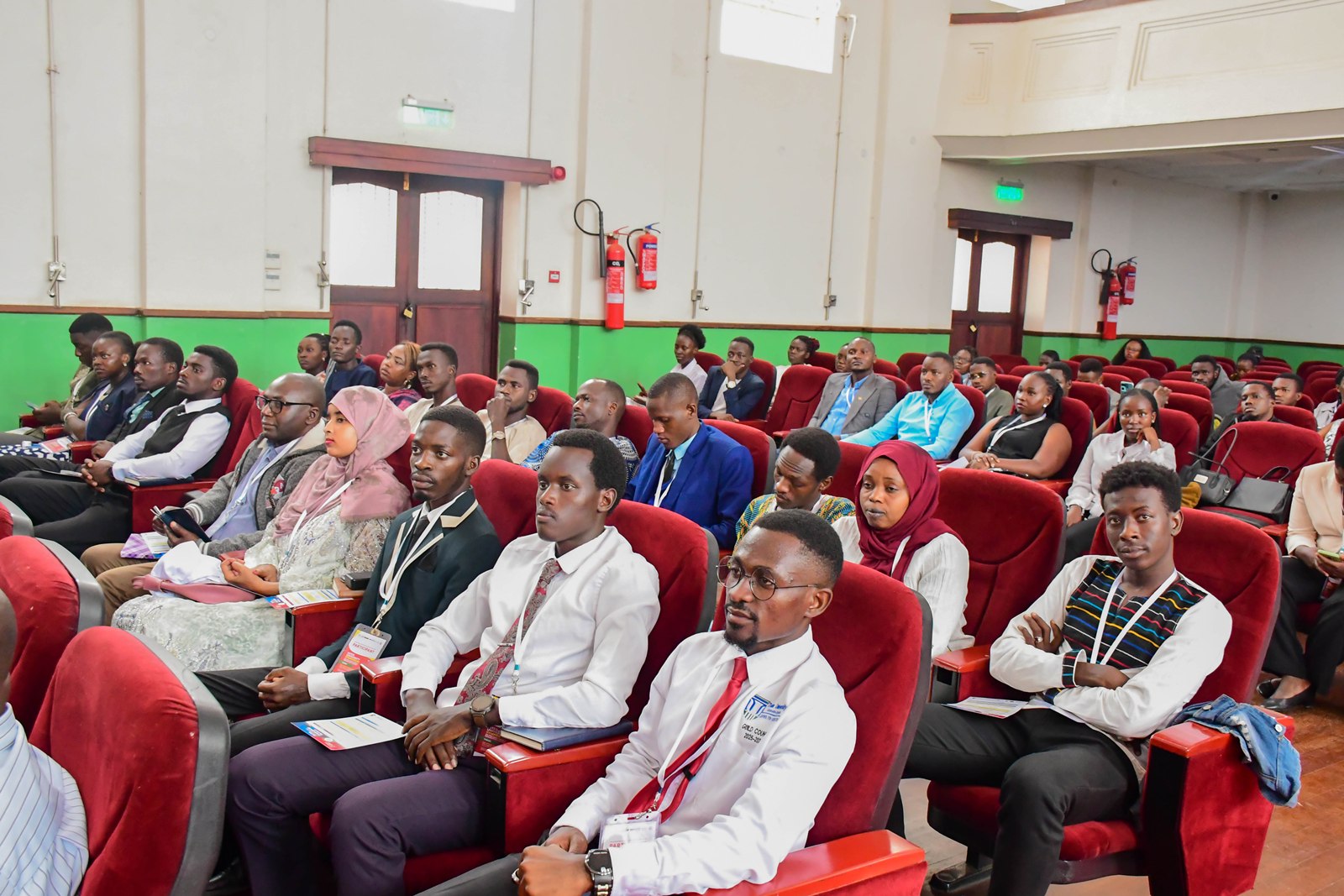
He highlighted that education systems continue to shape consciousness. “The classroom is not neutral. Even today’s curriculum is not neutral.”
Dr Sekito urged students to take leadership in transformation. “You have the power to influence institutional change. Youth movements have always been at the centre of African transformation.”
We must transform education and mindset
Speakers consistently called for curriculum reform and African-centred education. Some of the proposed reforms included: Introducing African-centred history from primary school; funding African research; supporting African languages; and building exchange programs with the diaspora.
A critical analysis indicated that colonial education was designed to produce obedience, not freedom. “Africans must now design education for liberation.”
Reparations requires Organisation, Not Rhetoric
Tackling this pertinent issue, the panelists and participants agreed as follows:
- Pan-Africanism must move beyond conferences into action. Any plan is dependent upon discipline and execution.
- Reparations will not be achieved by governments alone. It requires organised people, informed people, and committed youth.
- CARICOM’s reparations agenda did not happen by chance. It happened because people organised, studied, and persisted.
You are the Next Movement
Dr Hilary Brown urged young Africans to take ownership of the Pan-African struggle. “To the young brother who asked, ‘What next?’ — you are the next,” she said. “The movement needs scholars, lawyers, journalists, musicians, filmmakers, and entrepreneurs. Everybody has a role.”
Therefore, “I request you to form reading circles, join Pan-African organisations, document your histories, engage leaders, and build networks across borders.”
Unity between Africa and its diaspora
The convening emphasised unity between Africa and its diaspora. “Africa and her diaspora are one people—different histories, but one destiny. Pan-Africanism is not an event. It is a lifelong commitment.”
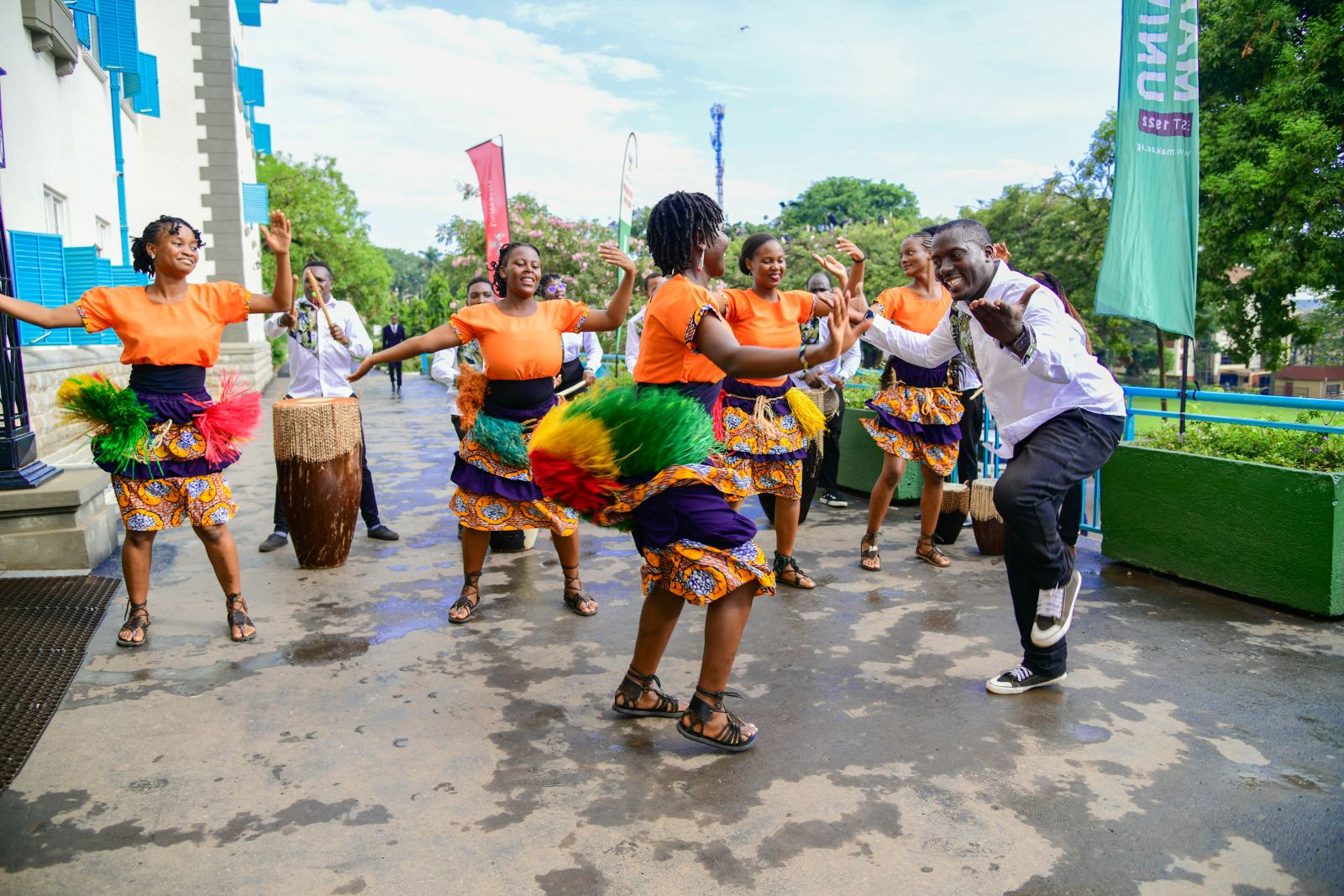
The symposium that included cultural performances, and a session on promoting a “drug free world” concluded with renewed calls for youth engagement, research collaboration, and institutional reform across Africa and the diaspora. The symposium also marked the official launch of Pan-African Week activities leading to Africa Day 2026, reinforcing calls for research-driven advocacy, continental unity, and structured reparatory justice frameworks.
-
 General1 week ago
Press Release: Updates on Makerere University’s Staffing, 2026/7 Academic Calendar, Ebola Response Leadership
-
 General2 weeks ago
Stakeholders of Mastercard Foundation Initiatives at Makerere University Convene to Review Progress and Strengthen Collaboration
-
 General7 days ago
DVCAA Commends RENU Industrial Training Programme, Calls for its Expansion
-
 Agriculture & Environment1 week ago
Call for Applications for PhD positions in Dairy Nutrition & Agroforestry
-
 General2 weeks ago
Benchmarking Best Practices In Quality Assurance: Official Visit To The University Of Cape Town