
General
Charting The Course for Tomorrow; Makerere University Unveils its Strategic Plan 2026-2030

By Murungi Gloria N.
Building a century of excellence, Makerere University Strategic Plan 2026-2030 lays a clear roadmap to strengthen research, innovation, transformative education as well as national and global development over the next five years.
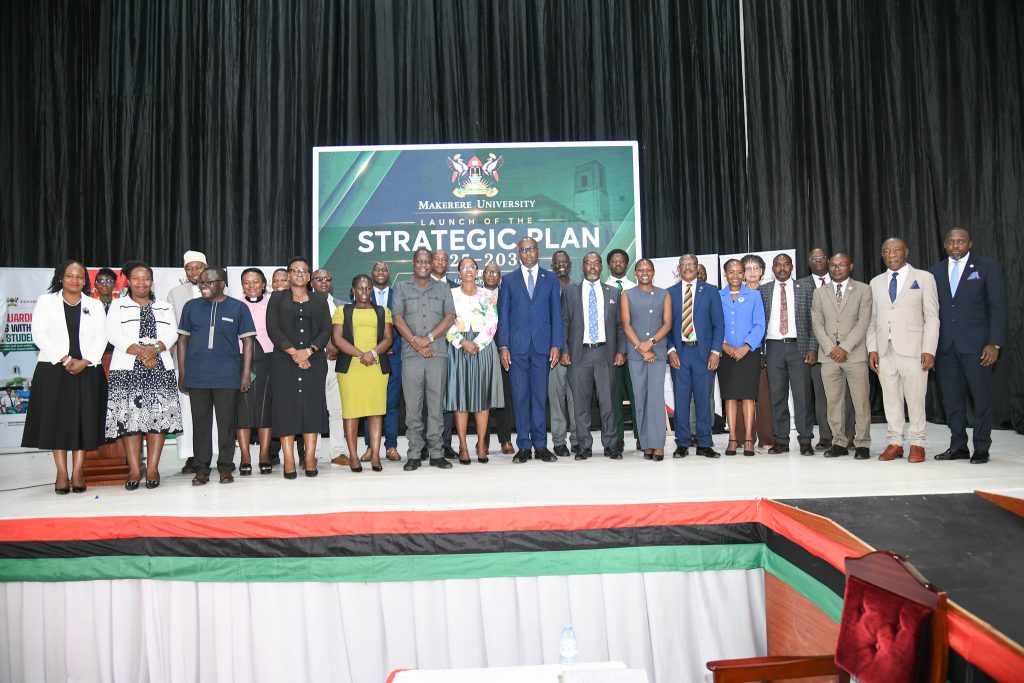
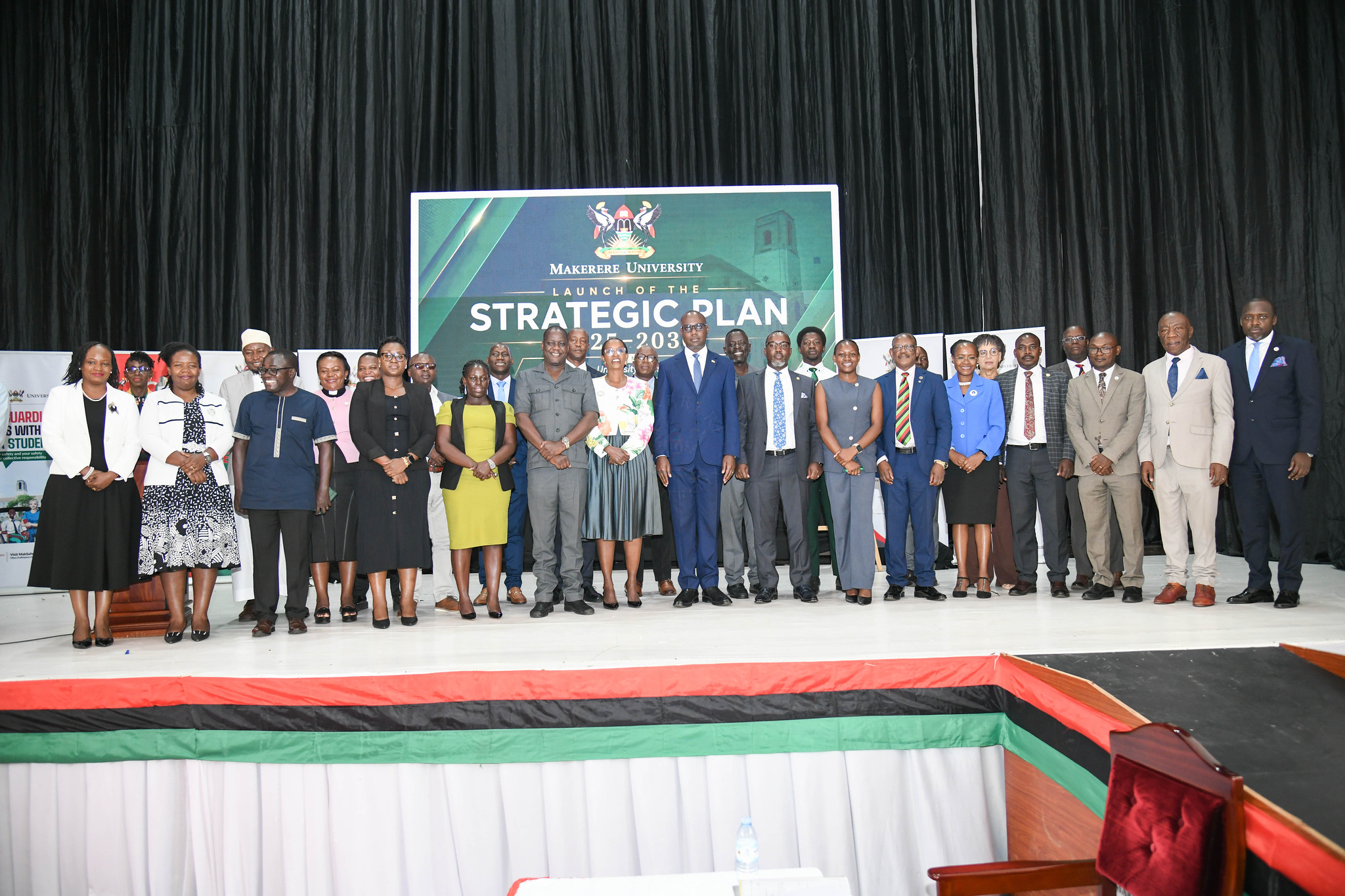
Makerere University launches the strategic plan 2025-2030 central (c) Hon. Henry Musasizi, left (L) Mrs. Lorna Magara, second right Guild President Makerere University, third right Prof. Barnabus Nawangwe
On Thursday 2nd July 2026, at Makerere Main Campus, the launching event gathered government leaders, development partners, university leaders and dignitaries such the Minister of Finance, Planning and Economic Development, representative of the Executive Director of the National Planning Authority as well as the University Vice Chancellor. Makerere launched its strategic plan under the theme; ‘Optimizing the University’s Research Potential for National and Global Transformation.’
Preparing the strategic plan
‘Preparing this plan has been a process,’ the Deputy Vice Chancellor Finance and Administration, Prof. Herny Alinaitwe said. He emphasized that the strategic plan was developed through careful consultation, review and participation rather than being created in isolation. The previous Makerere University plan used to have long term of 10years. However, around 2019-2020 the National Planning Authority advised to adjust to the five years of National Development Plan (NDP IV) ensuring that the University contributes directly to the country’s development.
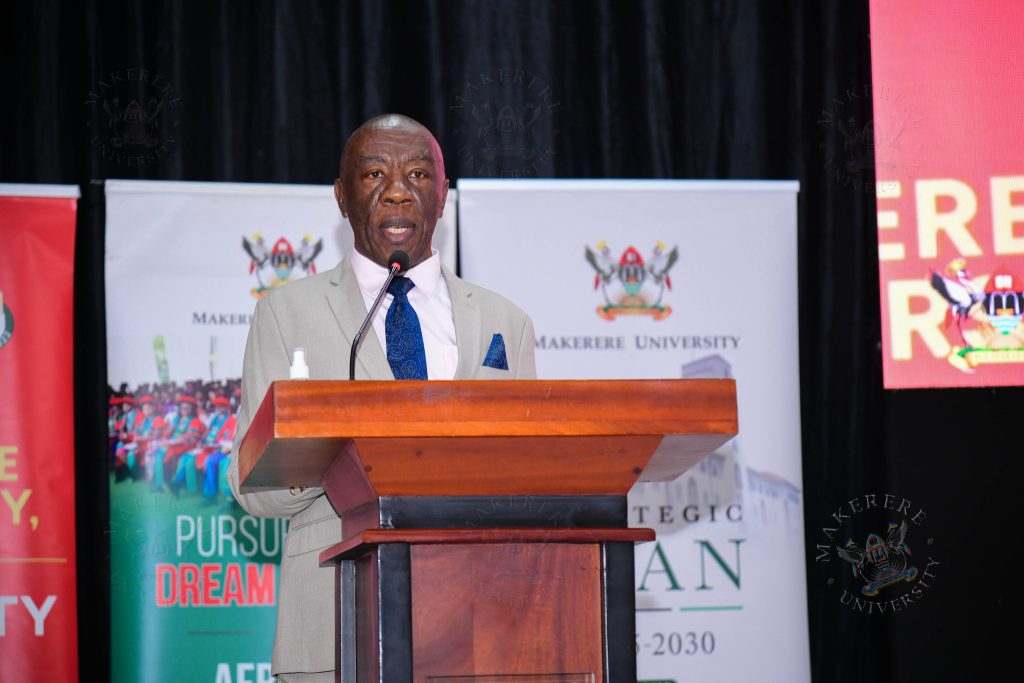
Prof. Henry Alinaitwe
Accelerating to national transformation
The Makerere University Vice Chancellor, Prof. Barnabas Nawangwe, began his speech by reaffirming University’s long-term vision. ‘Our vision is to be an outstanding leader of knowledge generation for societal transformation and development.’ He added the Makerere’s mission is to provide transformative and innovative teaching, learning, research and service responsive to dynamic national and global needs.
He emphasised that the new strategic plan is designed to transform Makerere into a research-led University and for this to happen we need to have more than 419 professors and 473 associate professors. Currently the university has 73 professors and 144 associate professors.
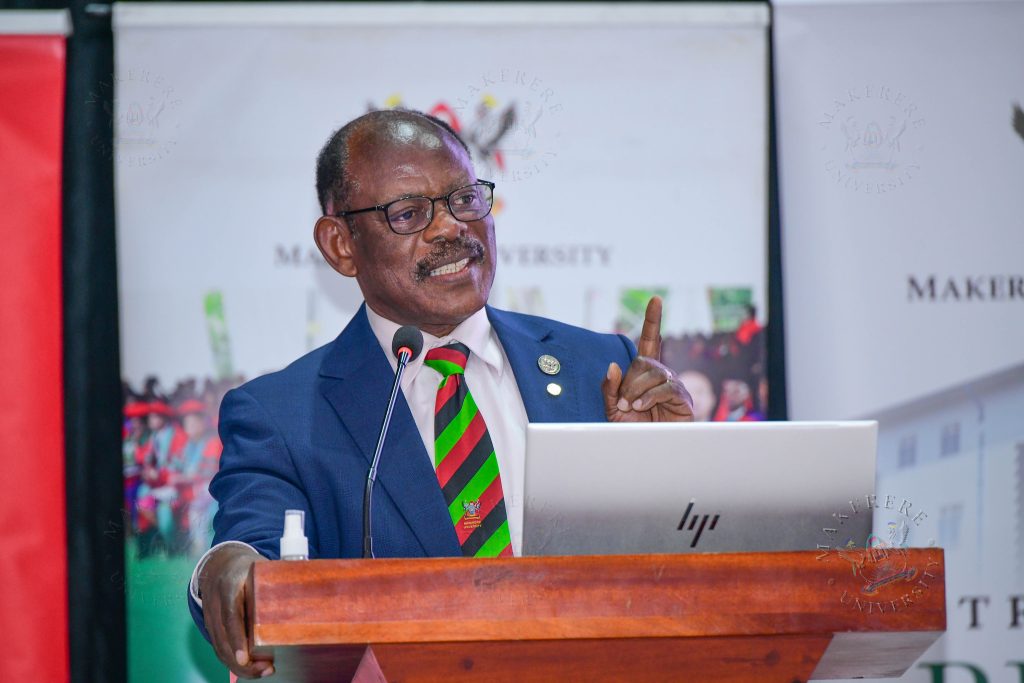
Prof. Barnabas Nawangwe
‘We are not removing undergraduate programmes but we want to reduce them gradually and increase graduate numbers because those are the ones going to do the innovations and transform the economy,’ continued Prof. Nawangwe. He stressed the postgraduate students play a crucial role in research and innovation and increasing postgraduates from 10% to 16.1% enrolment is therefore central to achieving the University’s vison of becoming a leading research institution.
He said, ‘Makerere University continues to contribute its fair share to transforming human capital in the country and economic development.’ He thanked and encouraged the government and other partners to further increase the goodwill towards the institution.
‘Today marks not the end of the process but the beginning of an even greater responsibility it’s successful implementation,’ noted the Chairperson of Makerere University Council, Mrs. Lorna Magara. reminded stakeholders that the launch is only the first step and its success will depend on faithful implementation.
She highlighted the central roles of higher education, research and innovation in Uganda’s economic transformation. ‘Let us therefore move with courage, lead with integrity, purse excellence without compromise and together we will build a much stronger Makerere for a stronger Uganda.’
Transformation objectives
Prof. Nawangwe and the chairperson University Council Mrs. Lorna presented possible targets in the strategic plan, among them increasing PhD student enrolment from 15% to 35%, registered patents from 15 to 45, commercialised innovations from 25 to 65, STEM enrolment from 32% to 55%, postgraduate enrolment from 3700 to 7000 by 2030 and raise graduate employability from 45% to 65%within six months of graduation.
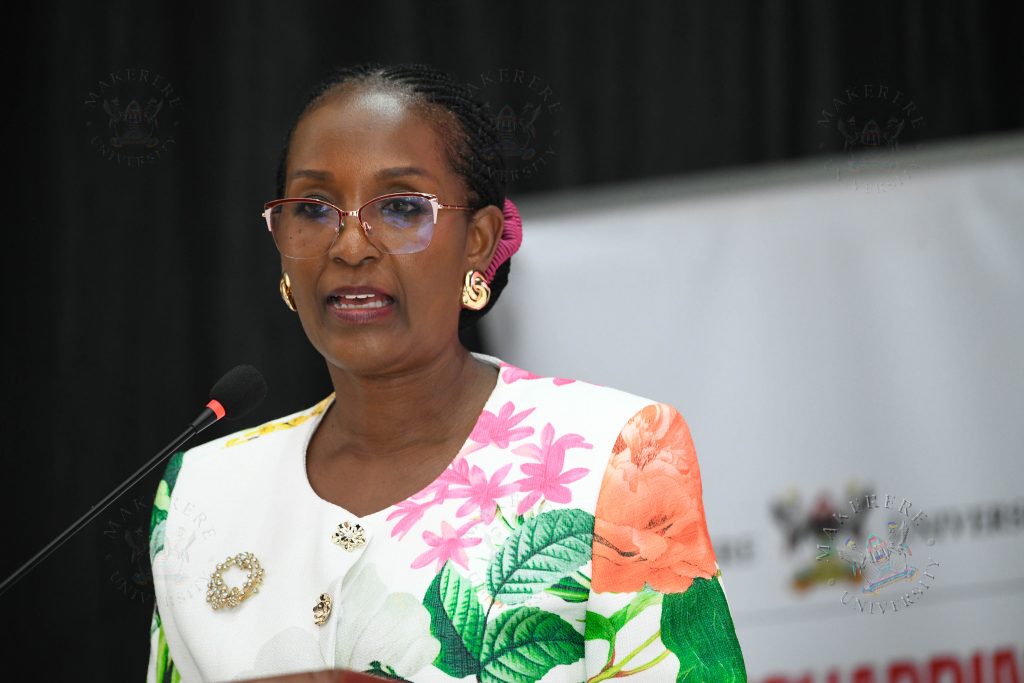
Mrs. Lorna Magara
Government commitment to the strategic plan
Speaking as the Guest of Honor, Minister of Finance, Planning and Economic Development, Hon. Henry Musasizi launched the strategic plan 2025-2030 describing it as a timely and forward-looking roadmap that aligns with Uganda’s vision 2040, the Fourth National Development Plan (NDP IV), and the country’s Tenfold Growth Strategy.
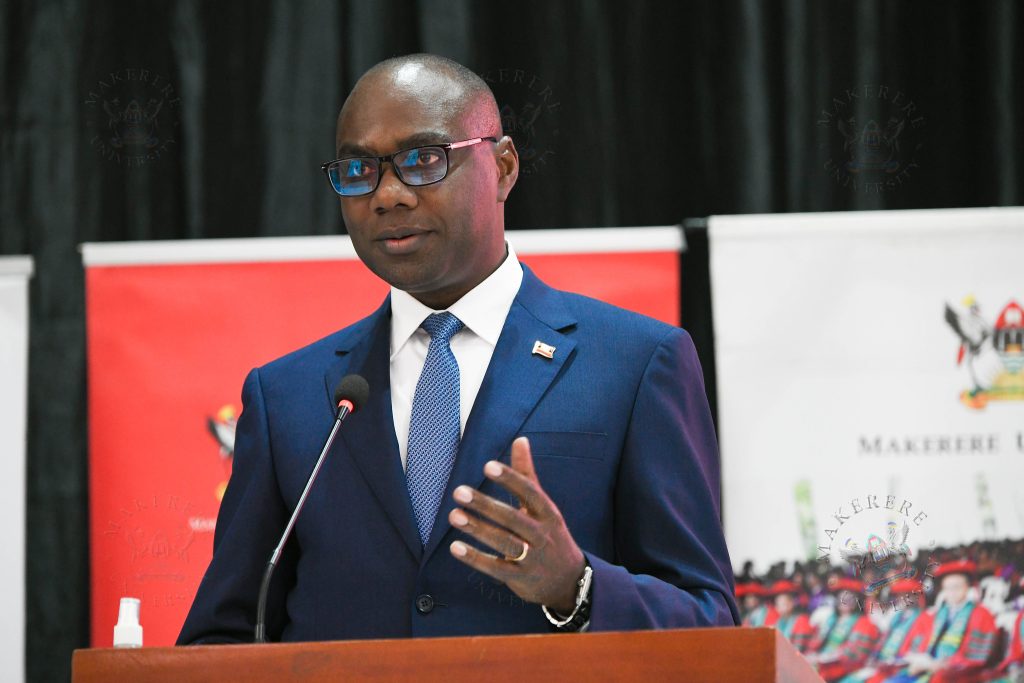
Hon. Henry Musasizi
‘This Strategic plan comes at an important time as the country works to grow its economy from about USD50 billion to over USD500 billion by 2040.’
The Chief Guest, Hon. Herny Musasizi noted that Uganda’s ambition to expand its economy from approximately USD50 billion to over USD500 billion by 2040 will require sustained investment in research, innovation, industrialisation and human capital development, with universities playing a central role in achieving these aspirations.
He reaffirmed government’s commitment to continue working with Makerere University to build a growing income, industrialised and knowledge driven economy while stressing accountability, innovation and the need to apply research in solving Uganda’s development hardships. He also commended Makerere for aligning its strategic priorities with national development goals, explaining that such alignment would facilitate government support and resource allocation through the national budgeting process.
Leading to national economic transformation through universities
Reflecting on the central role of higher education in Uganda’s economic transformation, Samuel Kasule, the Senior Planner for Education and Skills, National Planning Authority appreciated Makerere roles.
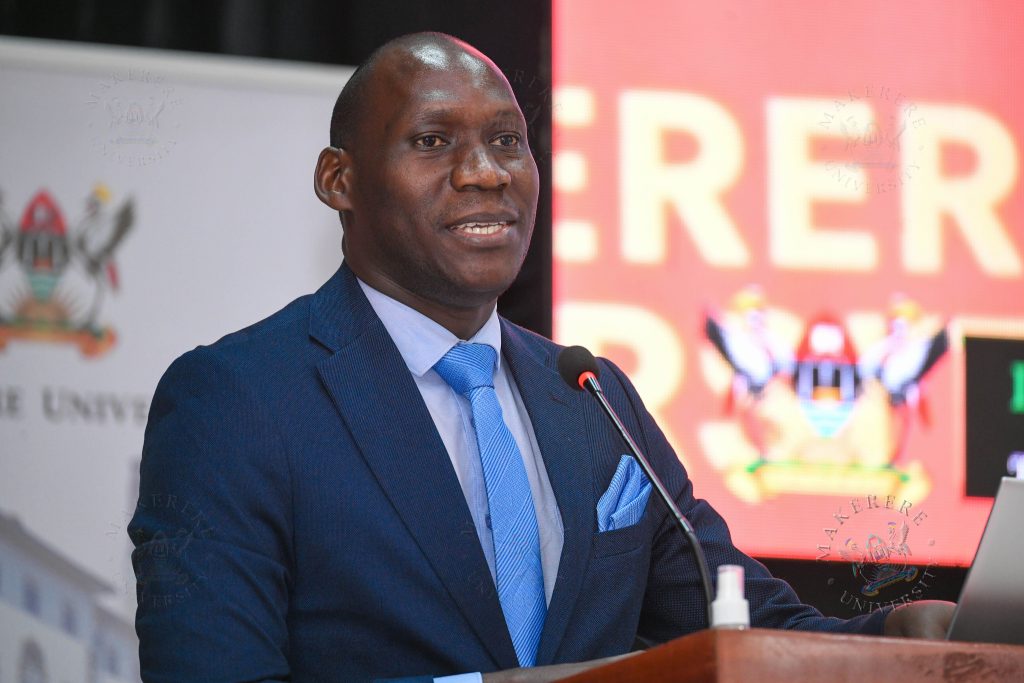
Samuel Kasule
‘At the cornerstone of increased labour productivity is the role of universities especially in supporting the high impact sectors identified in the tenfold growth strategy,’ Mr. Kasule remarked.
He elaborated that universities are expected to equip graduates with the knowledge, skills and competencies needed to drive innovation across sectors such as minerals, oil and gas, agro-industrialisation, tourism and agriculture. He also argued the by producing highly skilled human capital as well as fostering innovation institutions like Makerere University will play a pivotal role in increasing labour production and accelerate economic growth achieving Uganda’s ambition of becoming a USD500 billion from USD50 billion under the Tenfold Growth Strategy.
Conclusion
Guided by its strategies direction of excellence, accountability, professionalism, integrity and respect together with inclusivity, the University has reinforced its commitment to advancing quality education, research and innovation. The launch of strategic plan 2025-2030 reflects this commitment by positioning the University as a key partner in Uganda’s development and transformation, consistent with national priorities.


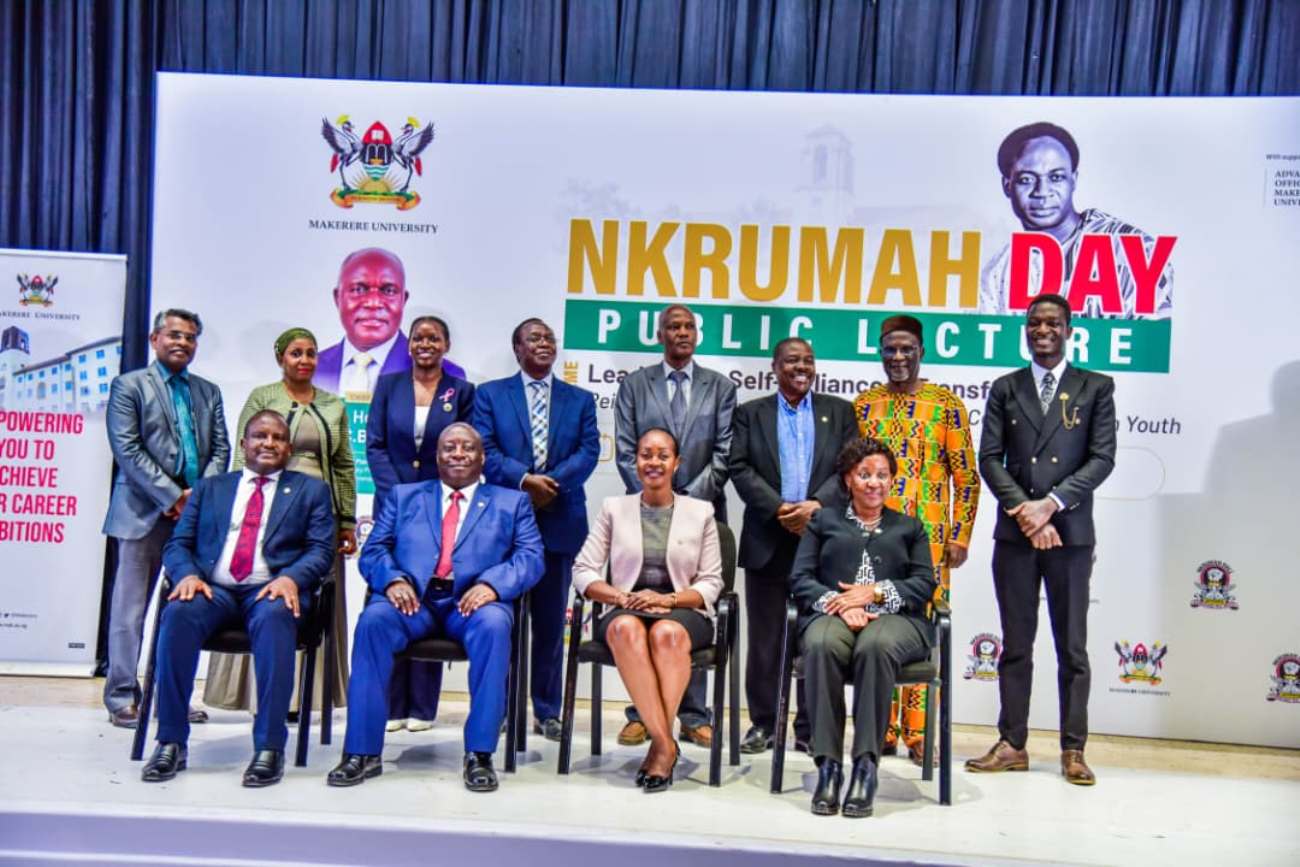
Makerere University on October 8, 2026 commemorated Nkrumah Day with a Public Lecture at the Yusuf Lule Central Teaching Facility Auditorium. The Lecture gathered students, academics, historians and distinguished guests to discuss Kwame Nkrumah’s contribution and its relevance to Africa.
Organised by Nkrumah Hall under the theme “Leadership, Self-Reliance and Transformation: Reimagining Nkrumah’s Vision for the 21st Century African Youth,” the lecture explored how Nkrumah’s ideals of Pan-Africanism, self-reliance and African unity can guide the continent beyond political independence.
Endorsing Nkrumah’s Vision of Investing in Africa
The First Deputy Prime Minister and Chancellor of Makerere University, Rt. Hon. Dr. Crispus Walter Kiyonga, was the chief guest.
In remarks delivered on his behalf by Dr. Charles Kahigiriza, Dr. Kiyonga said the day was a moment to reflect on Nkrumah’s views on Pan-Africanism and the lessons on self-reliance still held for Africa today and emphasised the importance of keeping Africa’s young talent at home (in Africa).
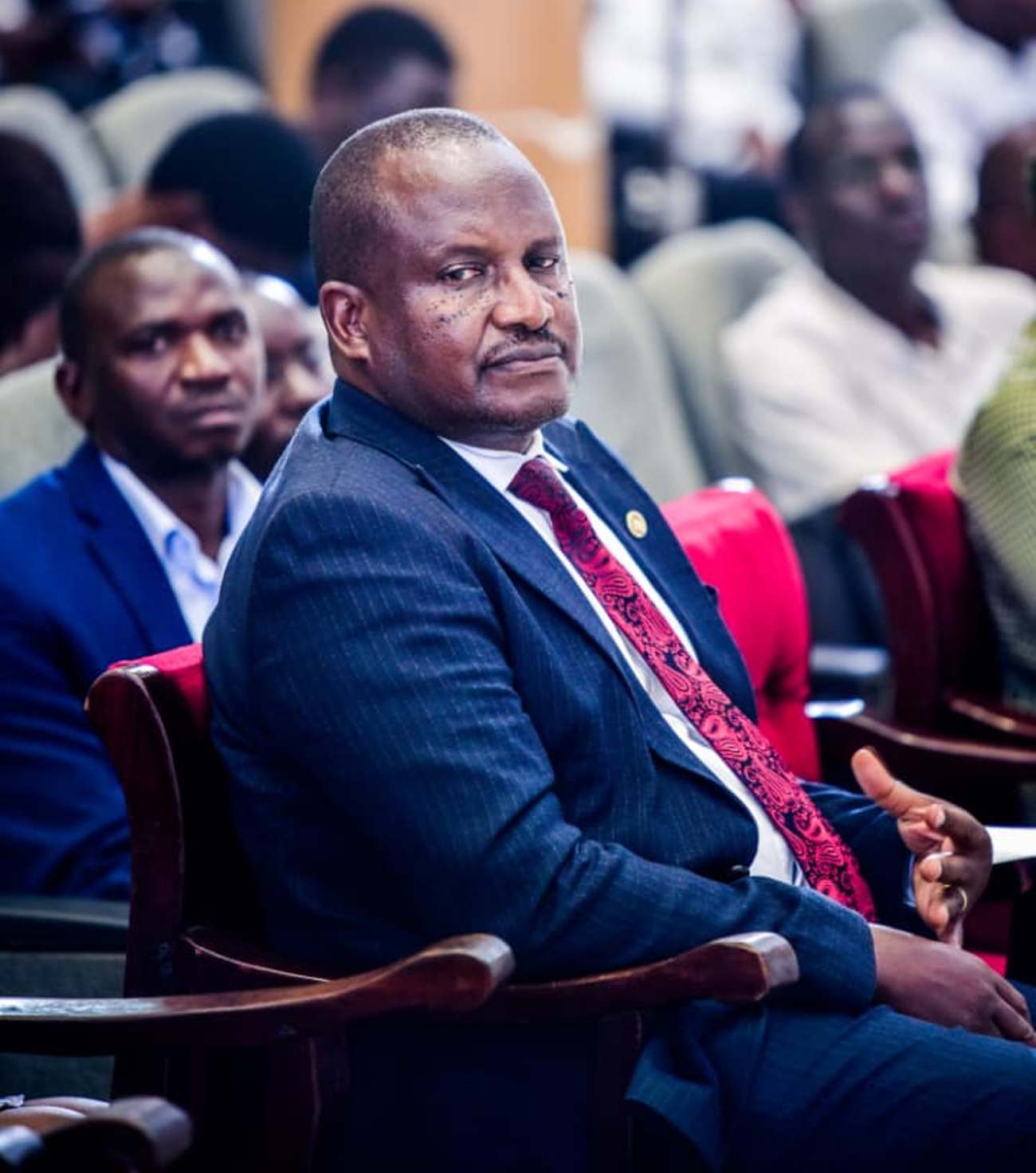
He then discussed ways of encouraging young people to achieve Nkrumah’s vision, pointing out that Africa is losing skilled people to brain drain as many go abroad to work.
He encouraged young Africans to stay and contribute to the continent’s growth, describing Africa’s potential as a promising an asset.
Transformation Requires Discipline
The keynote address was delivered by Prof. Gerald Karyeija, a political analyst and Head of Quality Assurance at the Uganda Management Institute (UMI).
He discussed Nkrumah’s role in championing Pan-Africanism and the formation of the African Union. He acknowledged that “his legacy was also very complex” due to a number of challenges.
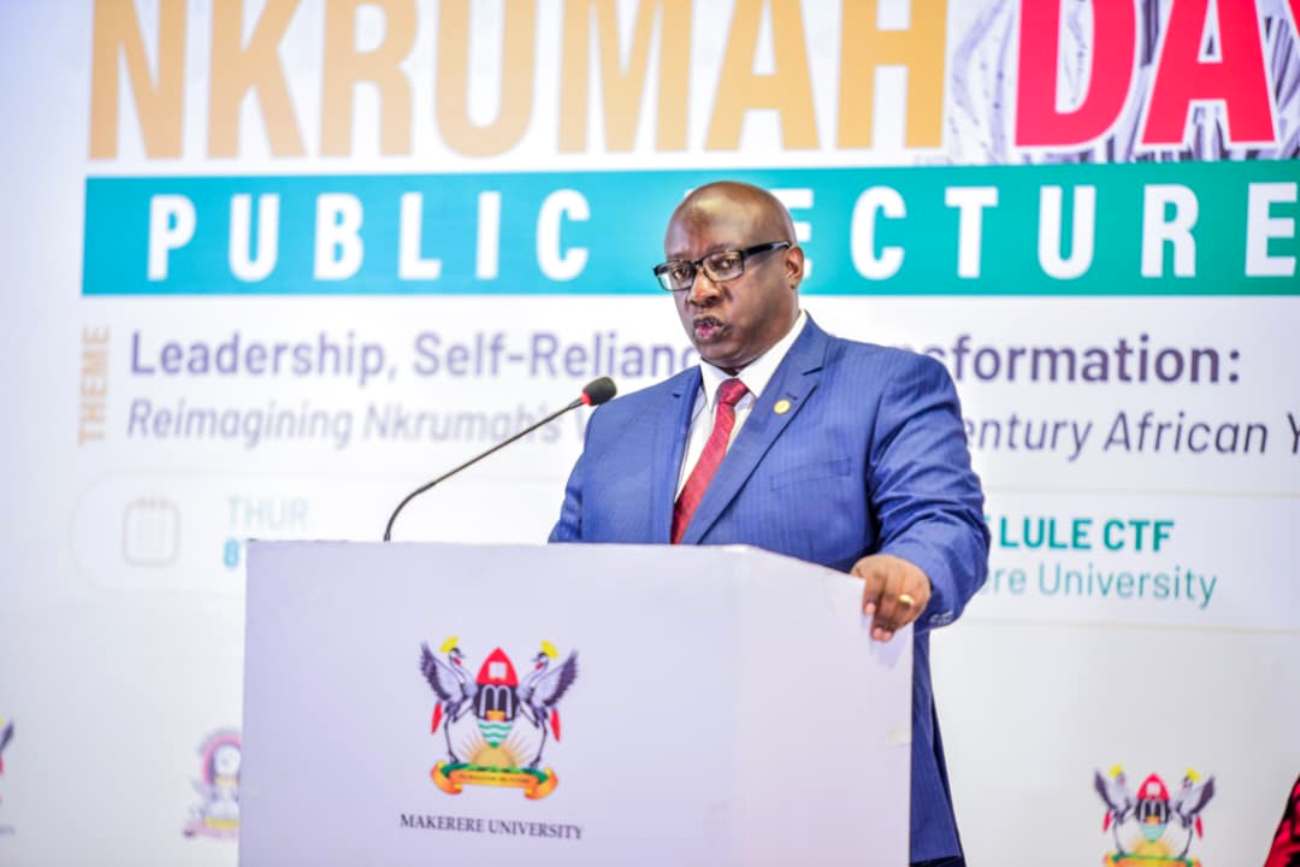
Regarding leadership, the professor argued, “leadership does not begin with the title. It begins with responsibility,” adding that “leadership is not only about power, privilege, entitlement, or status. It’s about service. It’s about stewardship.”
He encouraged attendees to emulate Nkrumah by using their knowledge and power for good.
“Don’t get the intellectual power from Makerere to become evil,” he cautioned, stressing that transformation requires discipline.
Universities Turn Knowledge into Action
Associate Professor Gorettie Nabanoga, the Acting Deputy Vice Chancellor for Finance and Administration, represented Professor Barnabas Nawangwe, the Vice Chancellor of Makerere University.
She aligned herself with the previous speakers and urged participants to move beyond simply celebrating Kwame Nkrumah’s memory and begin implementing his vision.
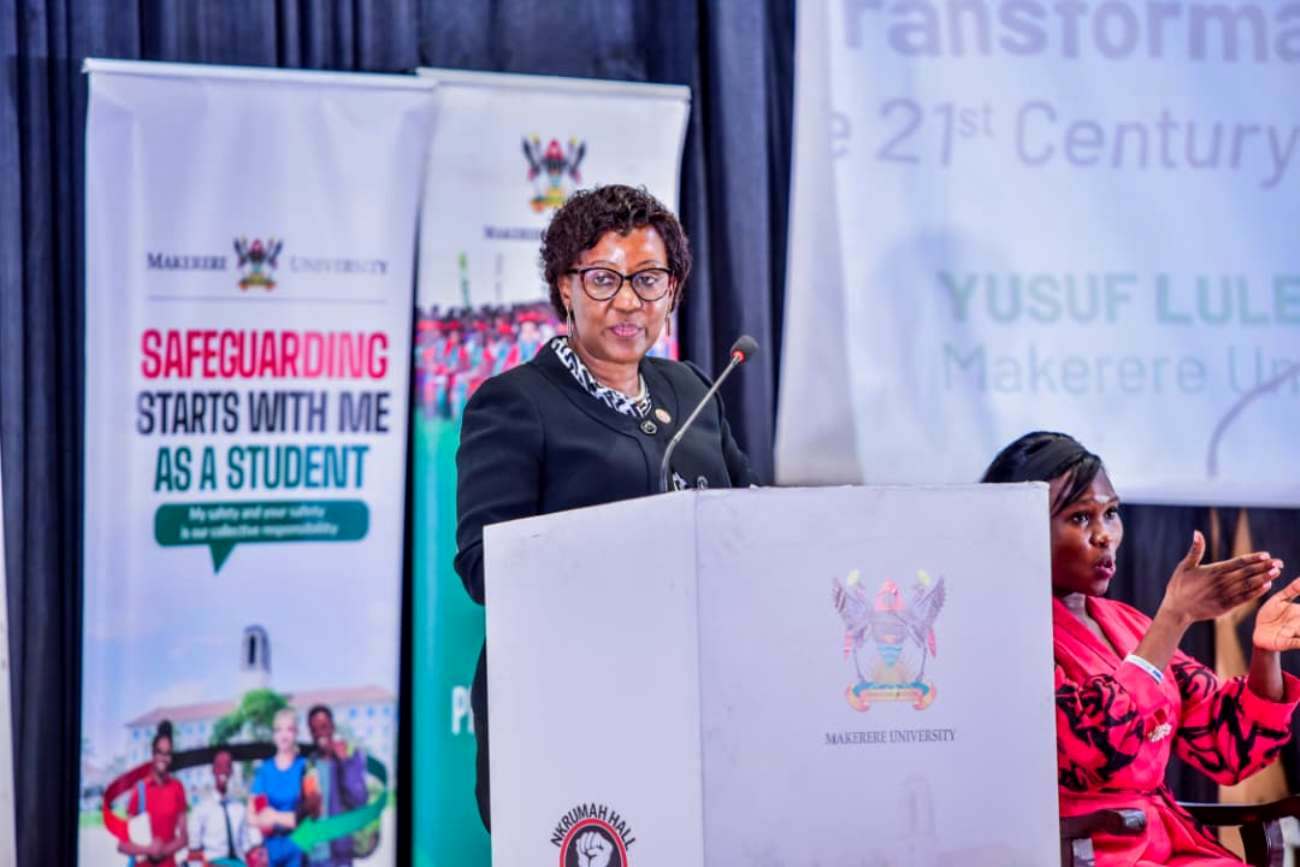
She called for practical action, urging the mobilisation of Pan-Africanism beyond slogans. “Perhaps the Pan-Africanism of this generation must therefore move from solidarity to capacity, from rhetoric to institutions, from potential to production, and from aspirations to implementation,” she said.
On the role of universities, she reiterated that Makerere University is a hub for innovation rather than just a degree-granting institution.
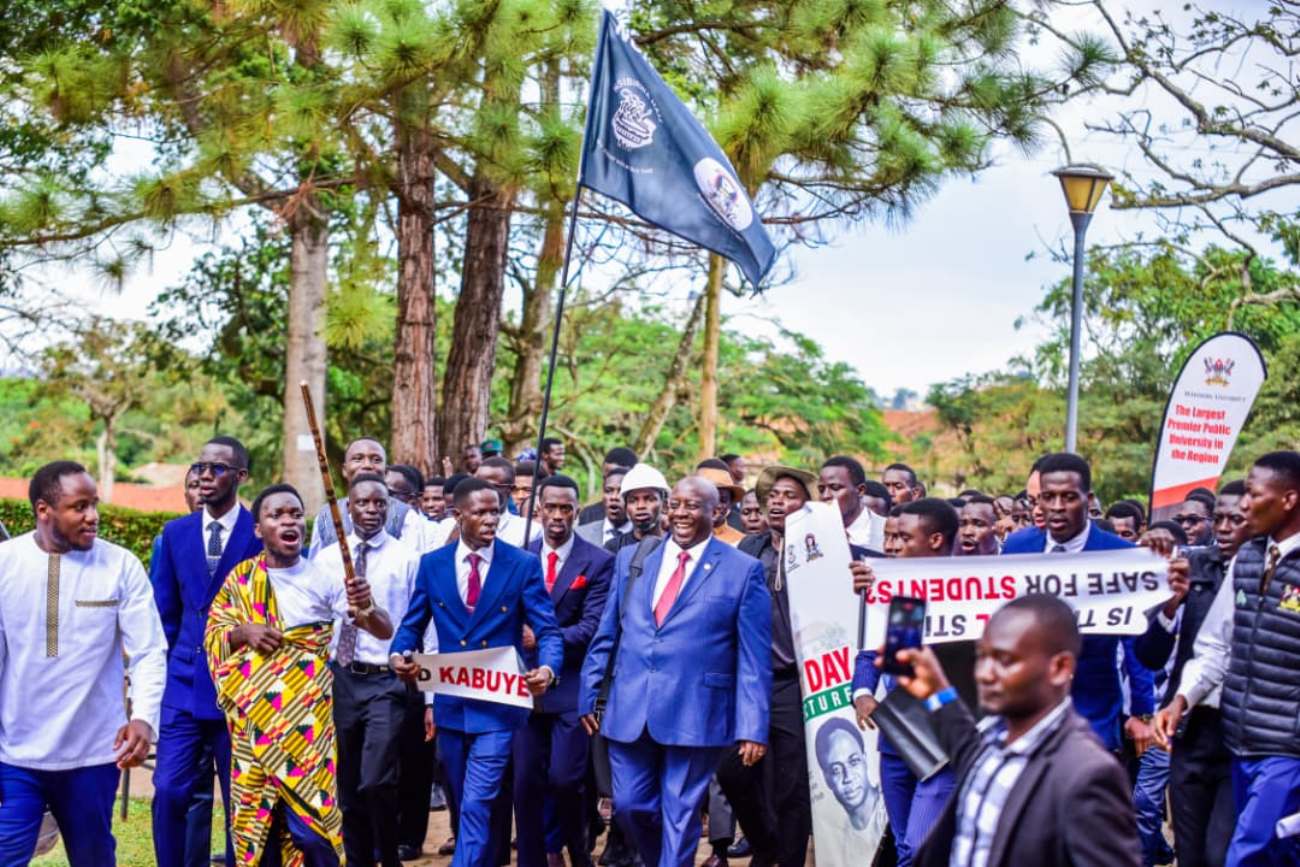
“We are building for the future when we develop people who can think critically, when we generate knowledge, when we challenge perceived knowledge and wisdom, and when we innovate,” she said.
Addressing the students present, she said, “You are not simply the leaders of tomorrow; you are citizens of Africa today. The opportunity you enjoy at Makerere University comes with responsibility.”
Dr. Winifred Kabumbuli, the Dean of Students at Makerere University, set the tone at the 2026 Nkrumah Day Public Lecture.
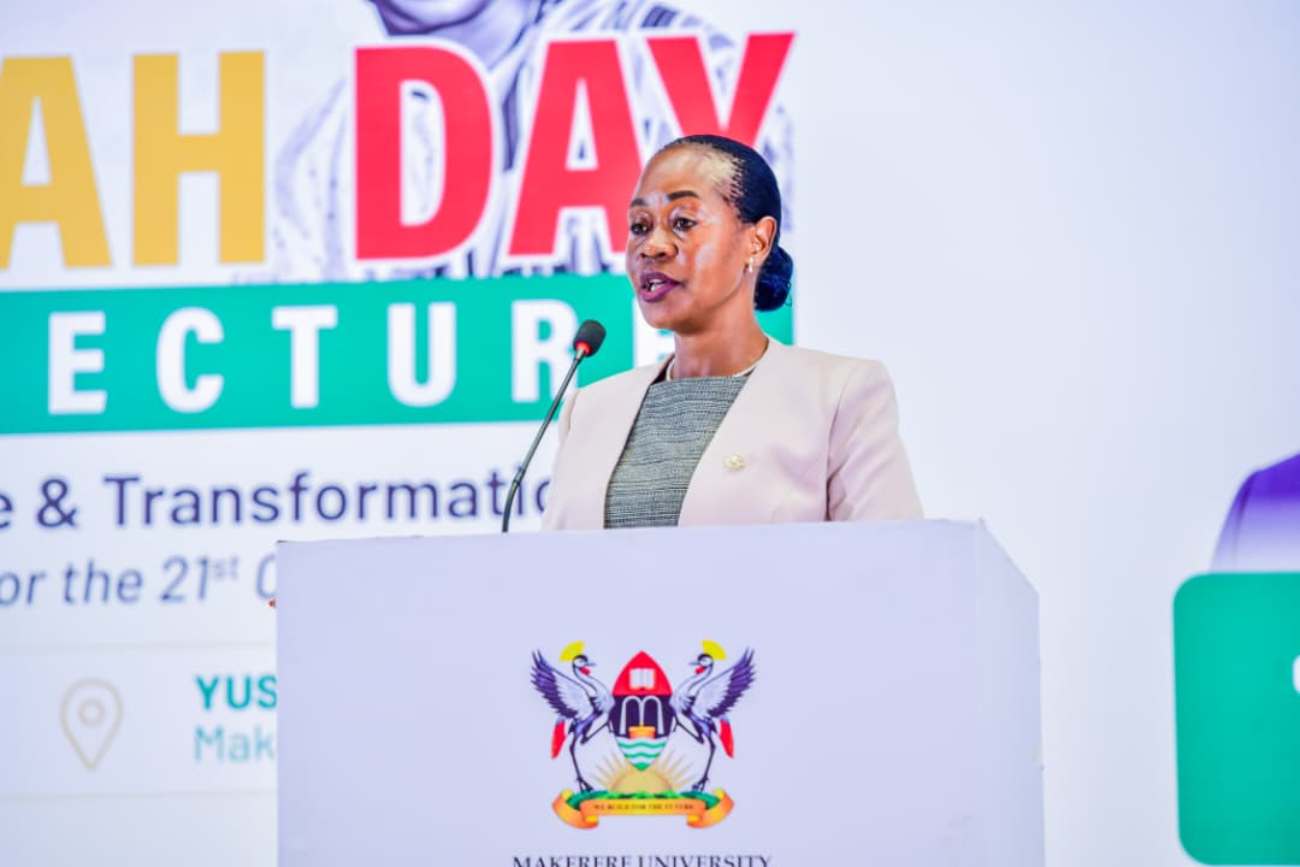
She revealed that this lecture organised under Nkrumah Hall highlights its significance as a symbol of Makerere University‘s commitment to Pan-Africanism. “The name Nkrumah Hall has stood the test of time and sounds like a horn beautifully over the African continent and beyond,” she said.
She elaborated on the lecture’s theme of leadership, self-reliance and transformation, noting its alignment with the university’s mission to nurture future leaders.
Direction of Pan-Africanism
During a panel discussion, speakers questioned how far Africa has come. Associate Professor Zahara Napeewo, Deputy Dean of the School of Law at Makerere University, stated that the continent was still lagging behind the progress Nkrumah would have wanted.
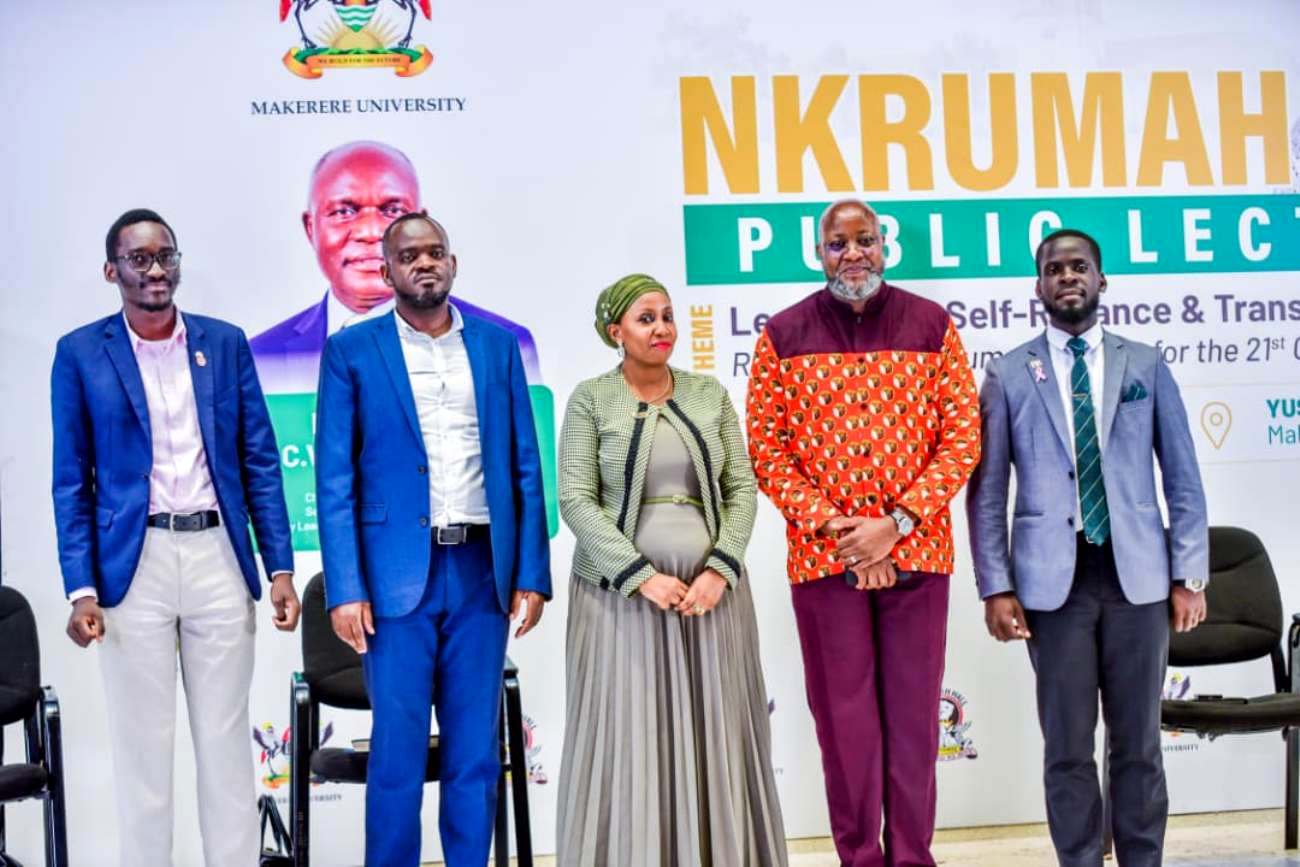
She shared that while educational institutions provide knowledge, they must go further and encourage graduates to become problem-solvers who can create employment for themselves rather than wait to be employed.
Dr. Zaid Sekitto, a Lecturer in the Department of History, Archaeology and Heritage Studies at Makerere, added that the structures of colonialism that Nkrumah fought against were still in place. “They must be addressed”, he said, or Africa would remain trapped in colonialism and lose sight of Nkrumah’s vision.
The Youth and the Unfinished Struggle
The students also had an opportunity to share their perspectives on the unfinished struggle for Pan-Africanism.
Nkrumah Hall Chairperson Joseph Sekabira noted that the Africa Nkrumah fought for was not the Africa that exists today.
He urged young people to take up leadership now rather than wait until they were older.
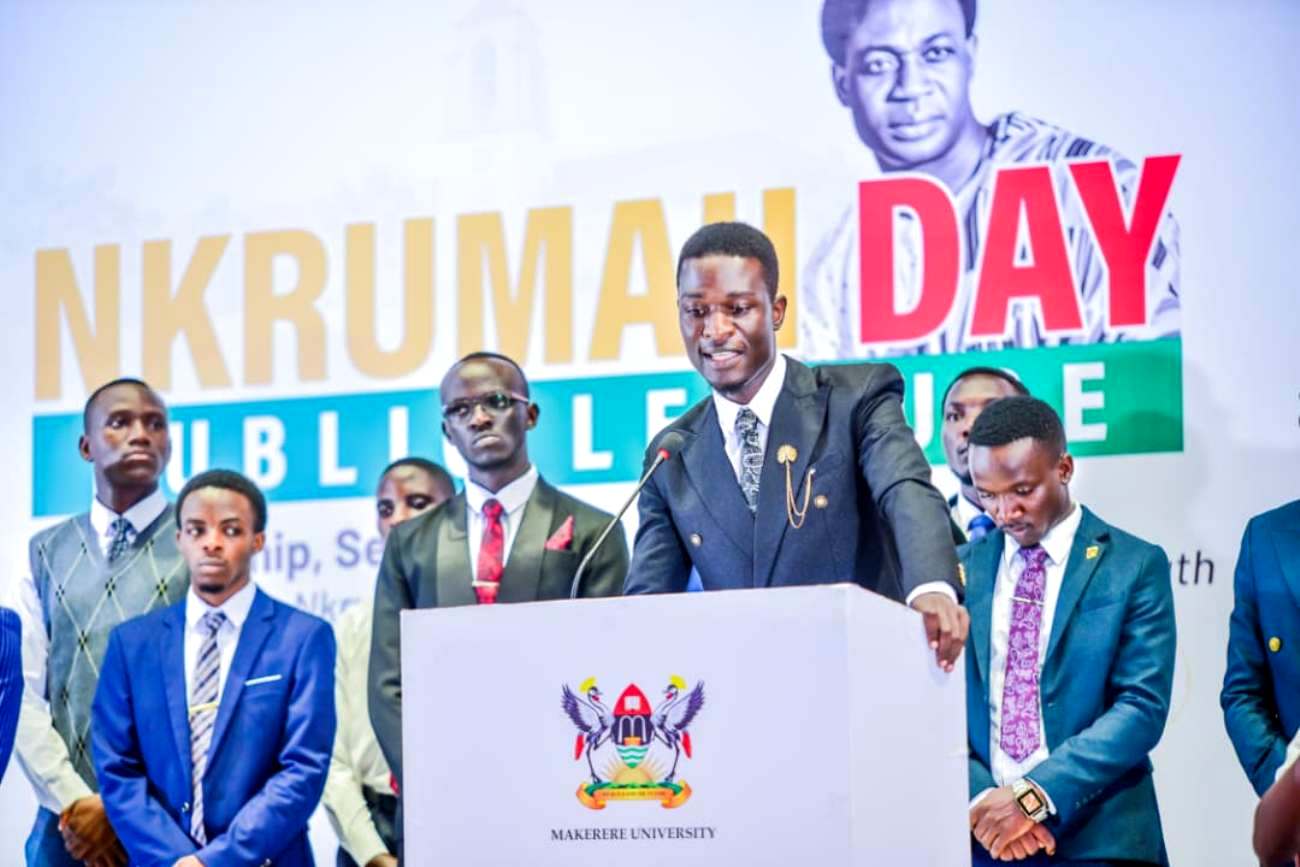
Mark Kwikiriza, a final-year Bachelor of Arts in Music student and resident of Nkrumah Hall, said Nkrumah’s legacy remained relevant because the problems he faced in Ghana were similar to those society faces today.
He recommended that society could rejuvenate the spirit of “Osagyefo,” the title meaning “redeemer” by which Nkrumah was known.
Honouring 13 Years of Service
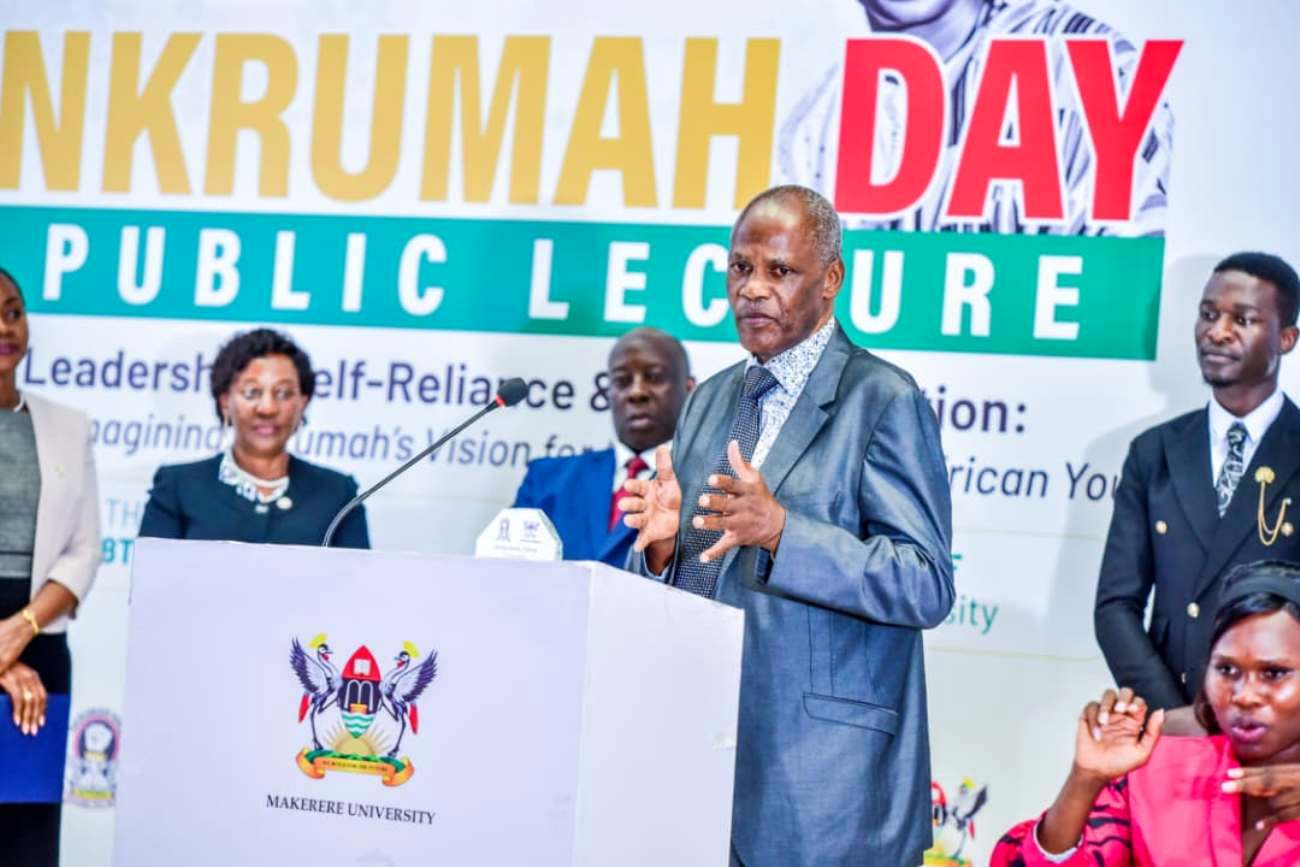
The event also recognised Mr. John Kamya for his 13 years of outstanding service as Warden of Nkrumah Hall, a position he held from 2007 to 2020.
He received an appreciation award presented by the Chief Guest’s representative in the presence of the Hall Chairperson and other dignitaries.
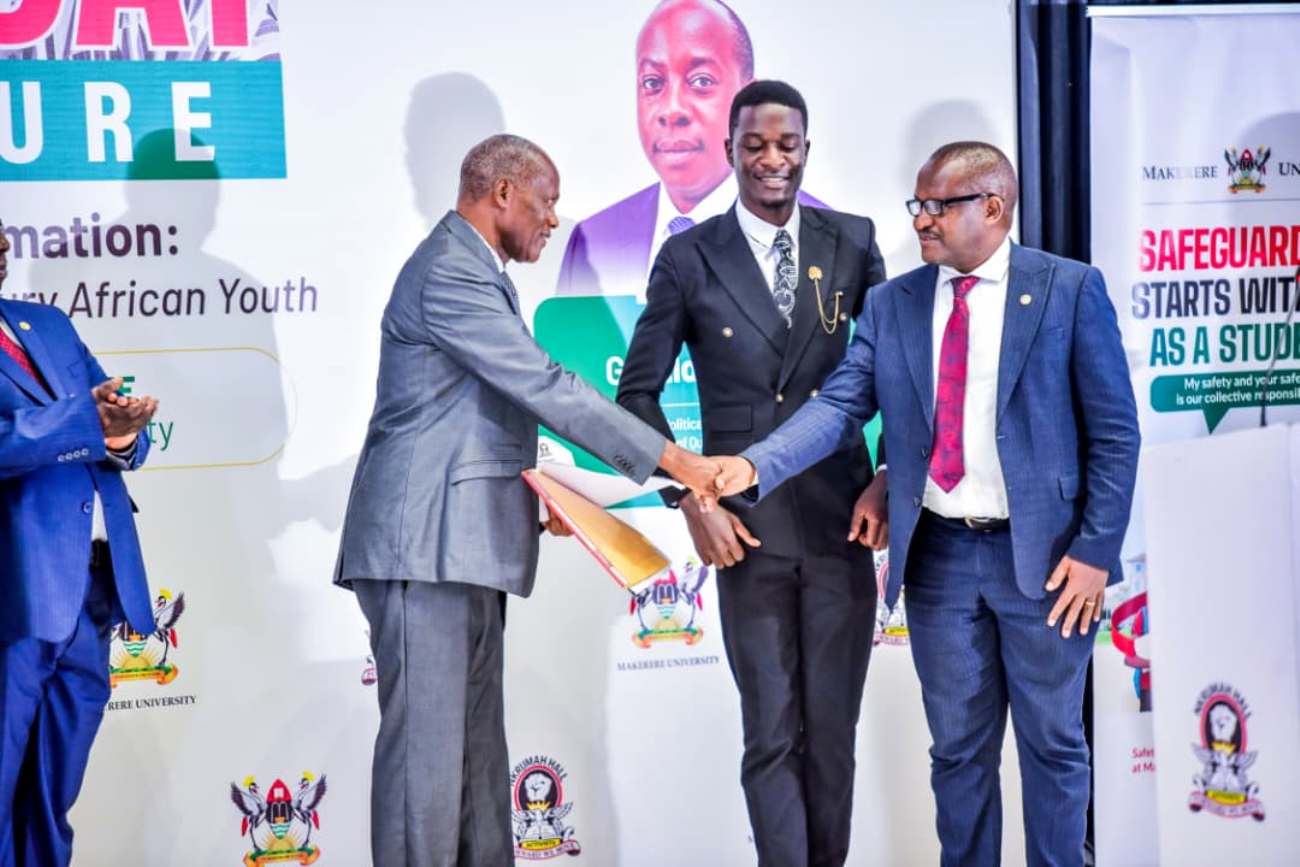
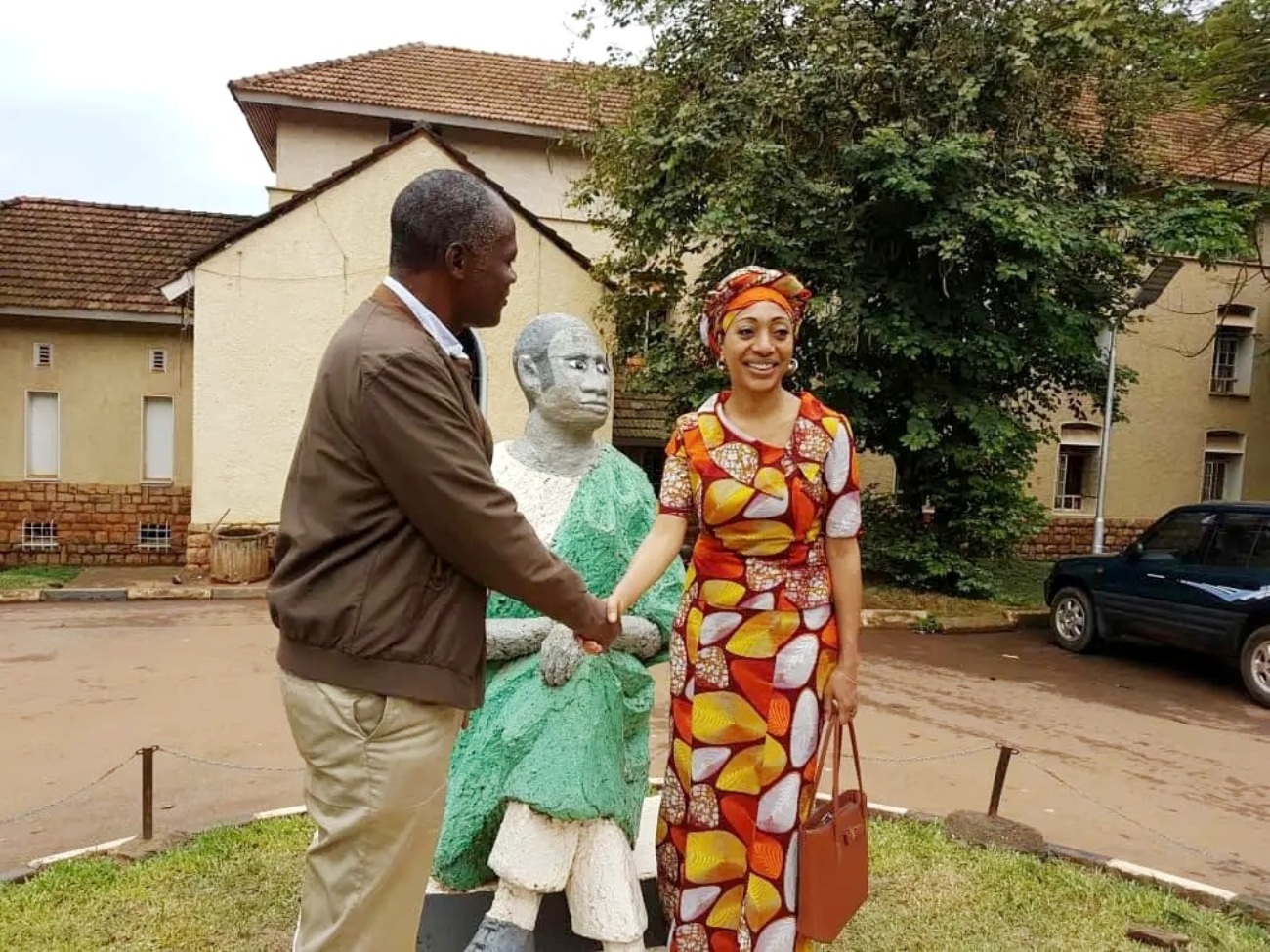
In his acceptance remarks, Mr. Kamya noted that the 2018 visit to the Hall by Kwame Nkrumah’s daughter, Ms. Samia Yaba Nkrumah, was one of the fondest memories of his time in office. He thanked Makerere for the opportunity to serve the University community and its stakeholders.
At the peak, the event concluded with tree planting and cake-cutting activity in front of Nkrumah Hall. The audience was left contemplating one message of Kwame Nkrumah’s vision of a united, self-reliant Africa, freed first in the mind, that remains unfinished and in the words of some speakers, has been handed to the current generation as a task to accomplish.


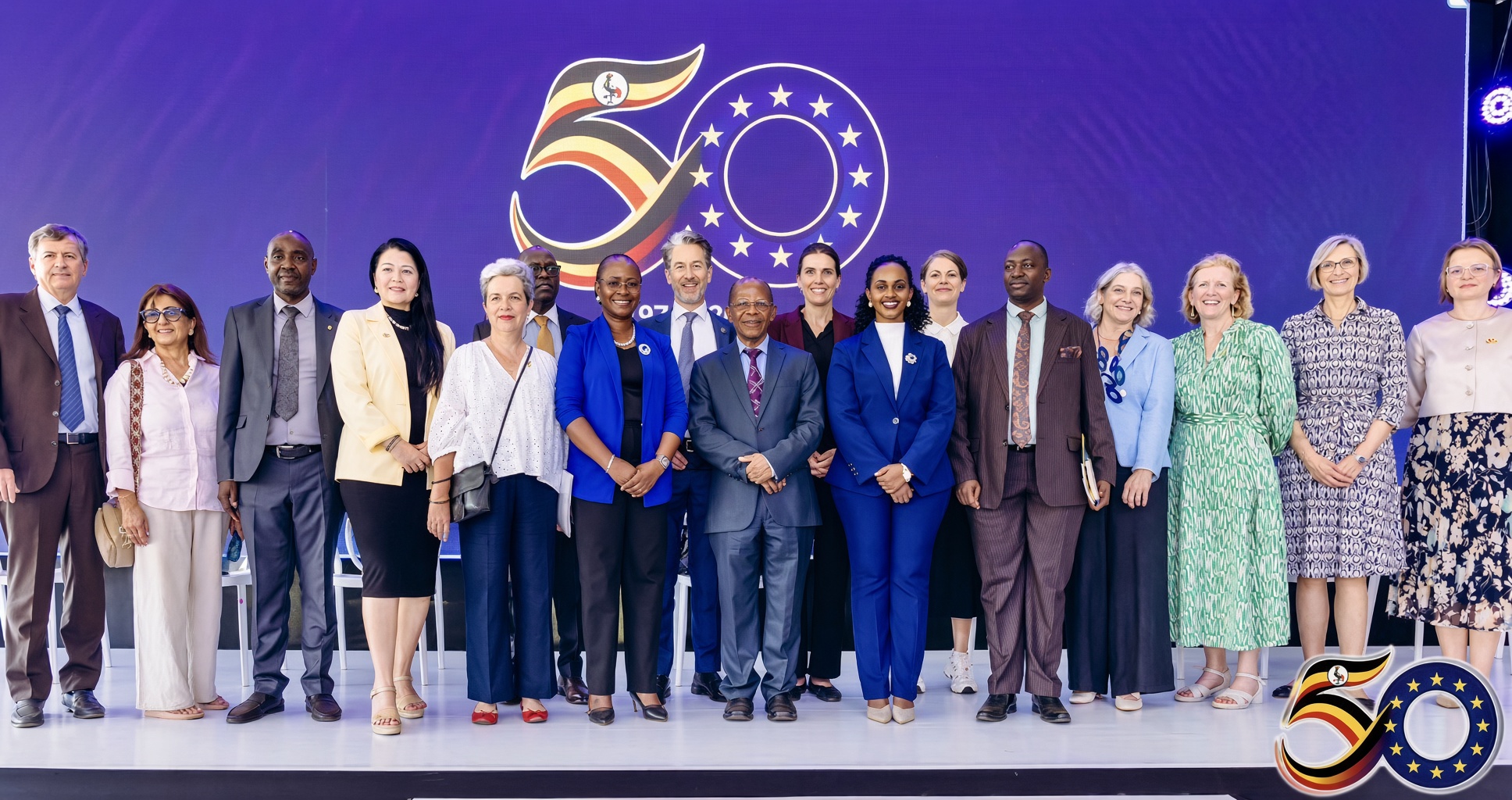
Today 8th October 2026, Makerere University has hosted the EU Uganda Research and Study Fair 2026, bringing together government officials, European Union representatives, researchers, academics, students, and young professionals to explore opportunities in education, research, innovation, and international collaboration.
The fair also marked 50 years of partnership between Uganda and the European Union, providing a platform for participants to learn about scholarships, research funding, exchange programmes, fellowships and opportunities for collaboration with European institutions.
Officially opening the fair, Acting Minister of Education and Sports Hon. Dr. John Chrysostom Muyingo commended the European Union, its member states, Makerere University and other partners for organising the event, describing international cooperation as important to Uganda’s education and research agenda.
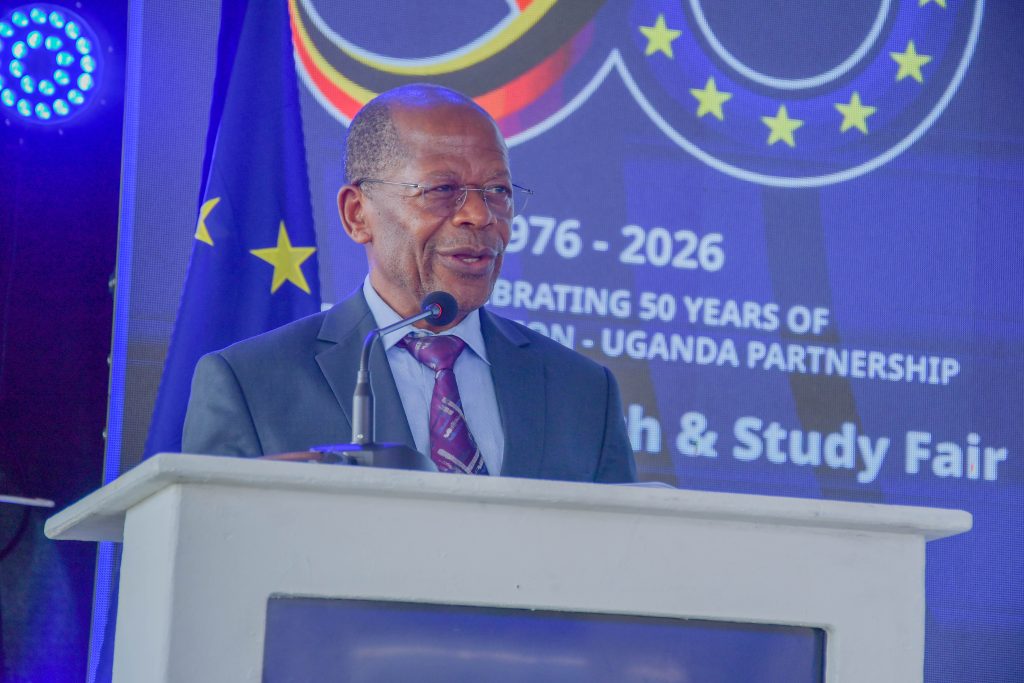
The Minister said Uganda’s young population presents a significant opportunity for national development if supported with the right investments in education, skills, creativity, research, innovation and entrepreneurship.
He encouraged universities and research institutions to strengthen links between education, research, innovation and the world of work, noting that research should not only generate academic knowledge but also contribute to policies, technologies and practical solutions to national challenges.
Dr. Muyingo also encouraged students and young professionals to engage with the European Union, its member states and alumni to understand the opportunities available and prepare themselves for future applications.
Makerere highlights value of partnership
The Acting (Ag.) Vice Chancellor and Deputy Vice Chancellor (Academic Affairs), Makerere University, Prof. Sarah Ssali said the fair provided an important platform for bringing education, research, innovation and international cooperation together.
She noted that the event was particularly significant as Uganda and the European Union celebrate five decades of partnership, with Makerere’s relationships with some European institutions extending even beyond 50 years.
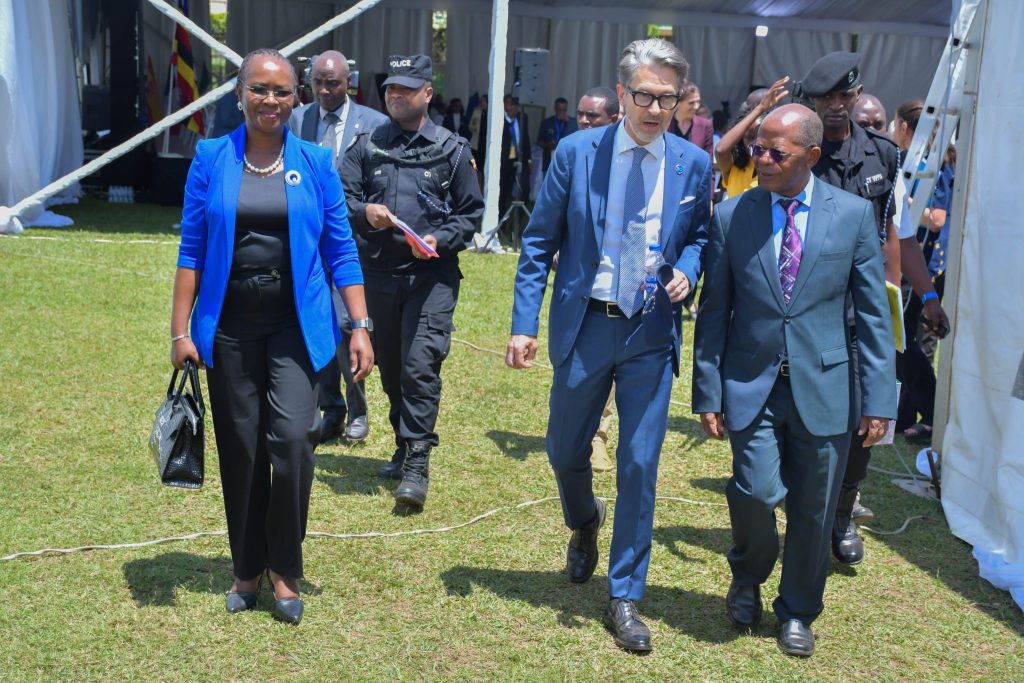
Prof. Ssali said the partnerships have supported education, research, skills development, innovation, institutional strengthening and human capital development, creating opportunities for Ugandans to acquire knowledge and skills, conduct research and establish international networks.
She called for the next chapter of the partnership to place knowledge, research, innovation, technology and young people at the centre.
“Research needs to move beyond publication of research, to influence policy, improve practice, create products and services, strengthen communities and contribute to the economic development of our country,” she said.
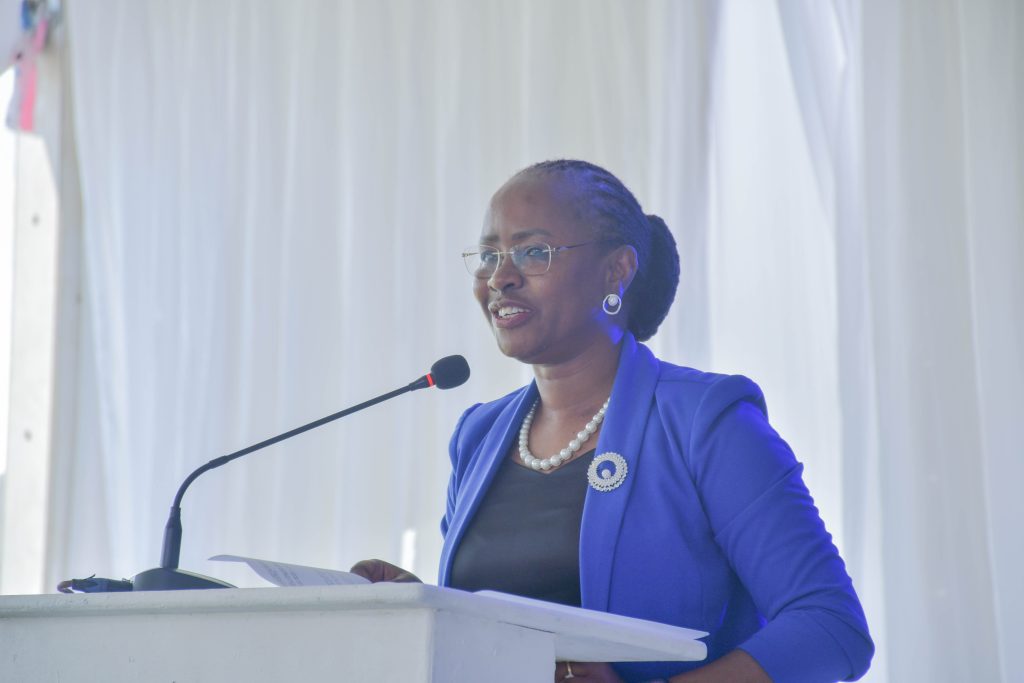
Prof. Ssali also encouraged participants to explore opportunities for scholarships, research, exchange programmes, doctoral studies, joint research and fellowships available through European partnerships.
She said the ultimate value of international education and research partnerships lies in how knowledge, skills, networks and technologies acquired through such opportunities contribute to Uganda’s development.
Human Response programme strengthens partnerships
The fair also showcased Makerere’s partnerships through programmes such as the Humanitarian Response, Health and Displacement Erasmus Mundus Joint Master Programme (Human Response).
Dr. Justus Twesigye, the Dean, School of Social Sciences, Makerere University and Co-Principal Investigator of Human Response, explained that the programme has created partnerships between Makerere and universities in Europe and Africa.
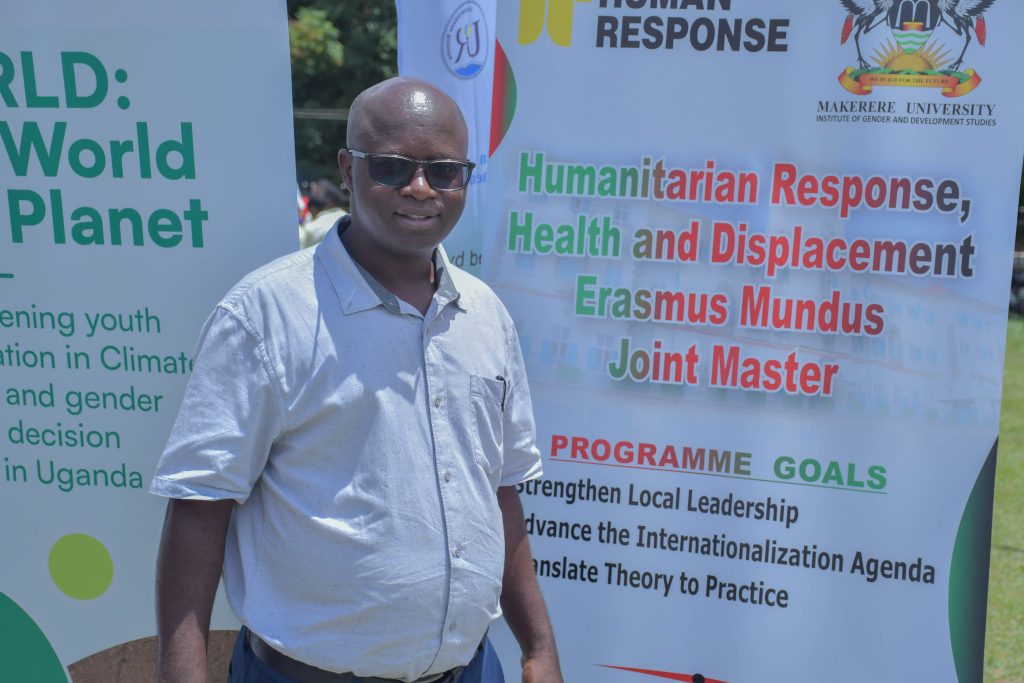
These include the University Institute of Lisbon in Portugal, Norwegian University of Science and Technology, University of Athens in Greece, University of Cape Verde and University of Rovuma in Mozambique, alongside associate partners including the Uganda Red Cross Society, Allied Uganda, Refugee Led Organisation Network and the Ministry of Water and Environment.
Twesigye said the partnerships have introduced new approaches to teaching and learning by involving practitioners directly in training and giving students opportunities for concurrent field practice.
He noted that organisations such as the Uganda Red Cross Society have participated in delivering classes, while students also gain practical experience in the field before returning to class for reflective learning.
The programme is also promoting joint research between academics and practitioners, moving away from approaches where researchers and practitioners work separately.
CEES project supports competence based education
The College of Education and External Studies (CEES) also presented an EU supported project aimed at helping higher education institutions and regulators transition to competence based education.
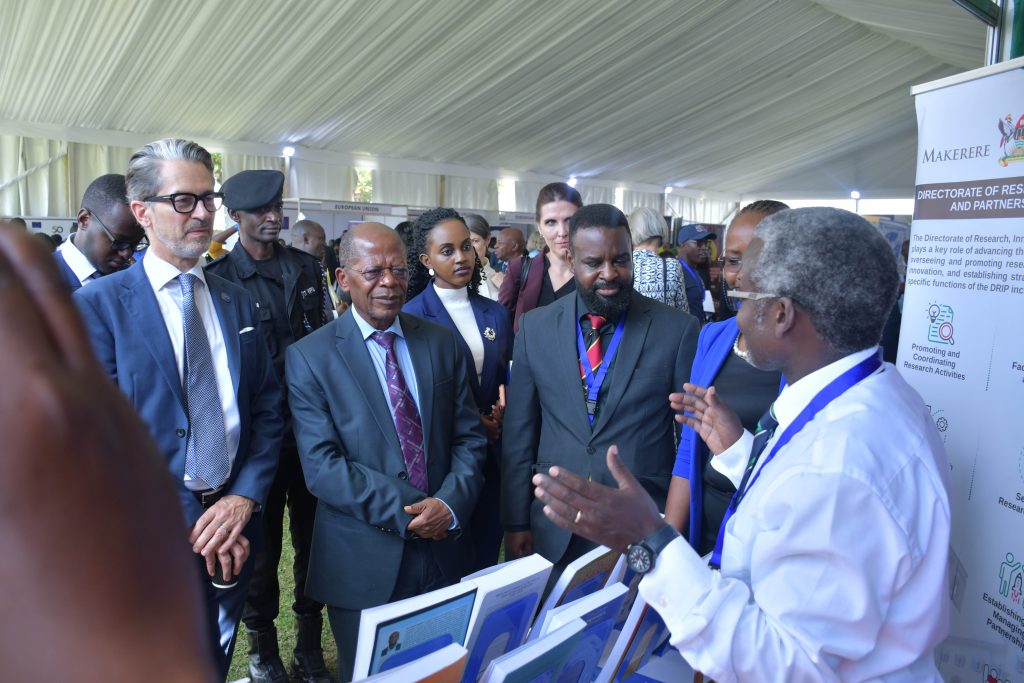
Assoc. Prof. Josephine Esaete, Senior Lecturer in the Department of Science, Technology and Vocational Education, said the project brings together nine partners from Uganda, West Africa and Europe.
She explained that the project seeks to strengthen the capacity of universities and higher education regulators in designing competence based curricula, teaching, assessment, monitoring and evaluation.
Makerere University is coordinating the four year project, with Mountains of the Moon University among the Ugandan partners.
Assoc. Prof. Esaete said the project is timely as universities work towards transitioning their programmes and curricula to competence-based education.
The project also seeks to strengthen collaboration between higher education institutions and industry so that students can acquire skills relevant to the world of work.
Fair creates opportunities for students and researchers
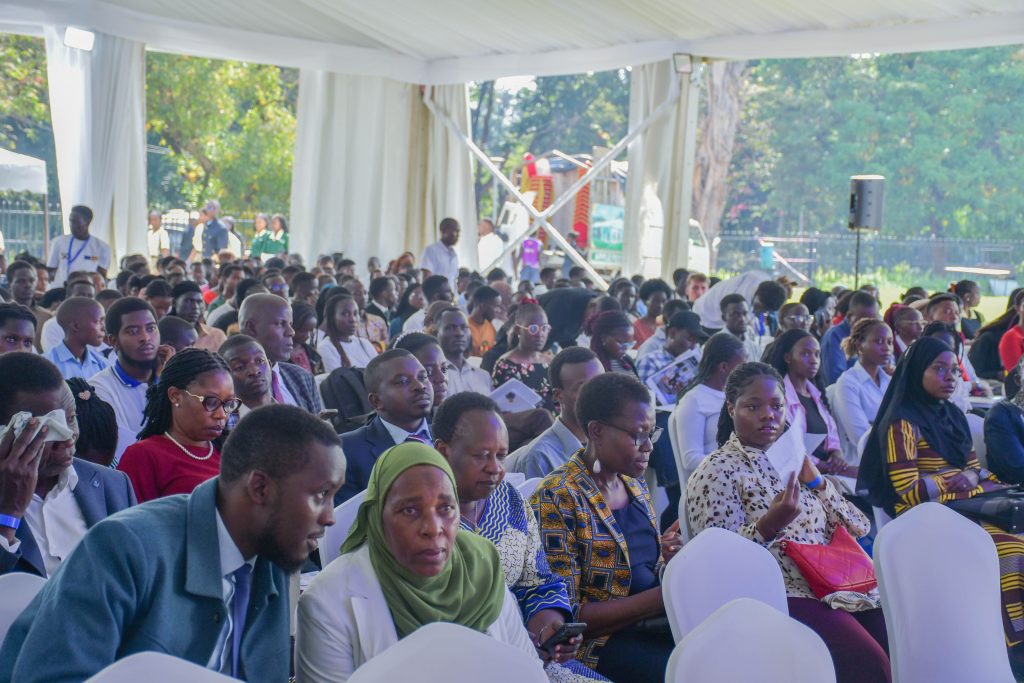
The exhibition brought together different EU supported research projects, academic programmes and institutional partnerships, allowing students, researchers and other participants to interact directly with project teams and representatives of European institutions.
The fair also provided opportunities for participants to learn from Makerere alumni who have benefited from international study and research opportunities.
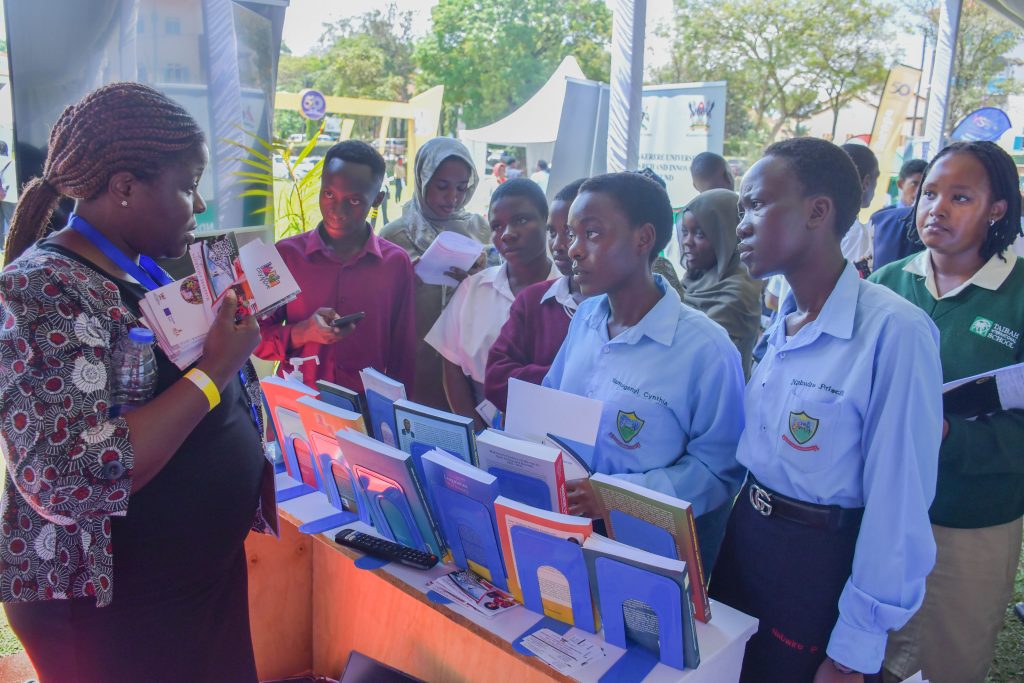
Prof. Ssali urged participants to use the opportunity to “engage, explore, connect, and discover” new possibilities while encouraging young people to dream boldly, seek knowledge, build networks and use what they learn to contribute to Uganda’s transformation.
Take ownership of your future
Officially closing the fair, the Director, Research Innovations and Partnerships (DRIP), Prof. Robert Wamala urged the students and young professionals who had participated in the fair to take ownership of their future because the Fair had shown that opportunities are real.
“Do not be afraid to ask questions, do not be afraid to apply, do not be discouraged by your first unsuccessful application, build your academic profile, build your research skills, build your networks, and remain curious”, Prof. Wamala encouraged.
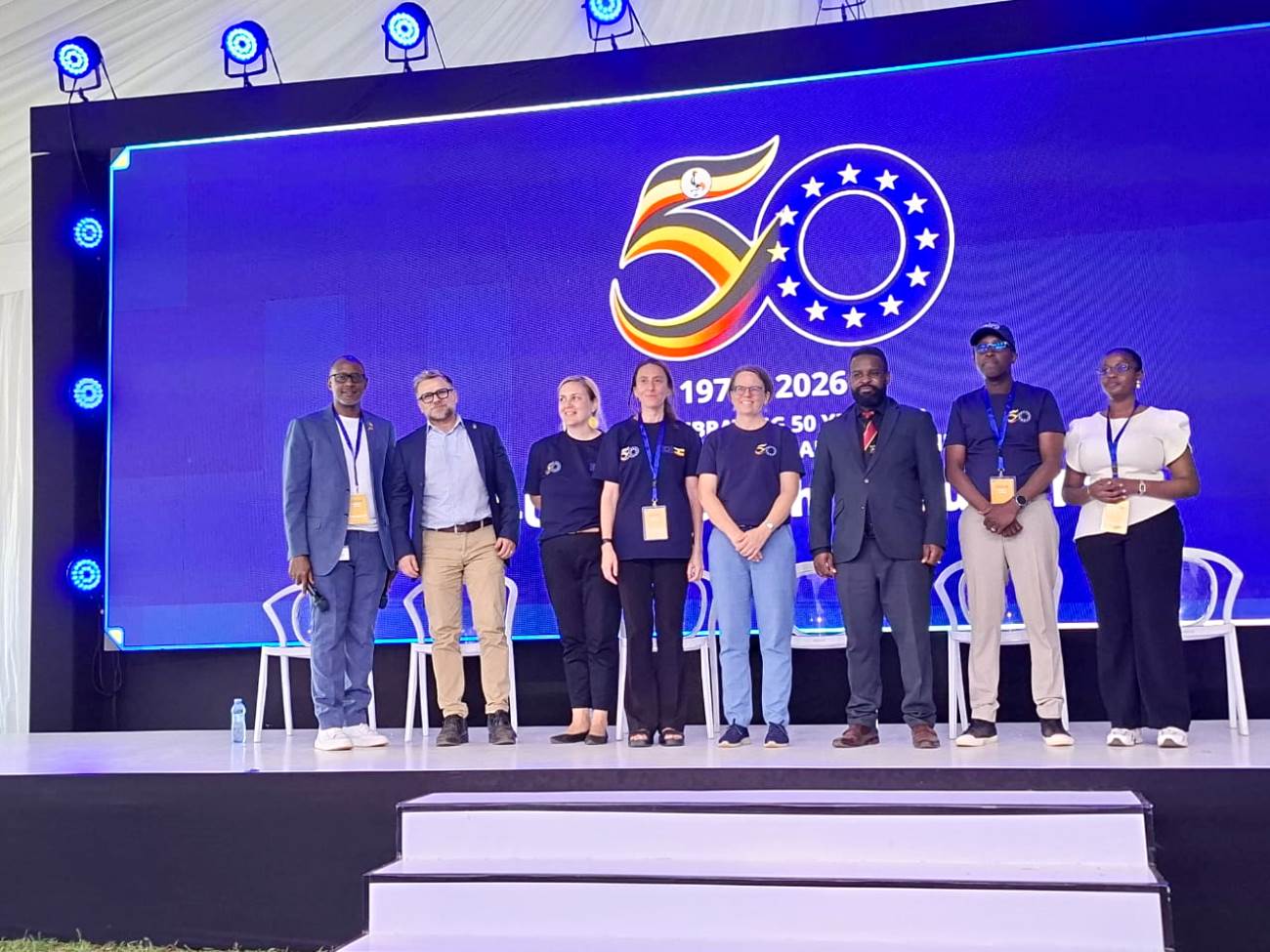
On behalf of Makerere University, he sincerely appreciated Team Europe, the European Union and its Member States in Uganda, for organising this important Fair and the Ag. Minister, Hon. Dr. J.C. Muyingo for presiding over the event and reiterating the Ministry’s commitment to strengthening education, research and international cooperation.
“At Makerere University, the Directorate of Research, Innovations and Partnerships remains ready to work with our European partners, the Ministry, researchers, students and other stakeholders to help translate the opportunities identified today into meaningful collaborations and outcomes” Prof. Wamala reassured.
The fair reaffirmed Makerere University‘s commitment to strengthening international partnerships that support research, innovation, human capital development and national transformation.

-

 General2 weeks ago
Statement on Concerns Circulating Regarding a Member of Academic Staff
-
 General2 weeks ago
Beyond Map Size: Africa’s Agency Should Not Be Funded by Other People
-
 General5 days ago
Timothy Khabusi: From Barefoot Walks to shaping Uganda’s Eye health Future
-
 General2 weeks ago
Press Statement: Incident Involving Death of a Student at Makerere University
-
 General2 weeks ago
JNLC Leadership Symposium Equips Young Leaders for Responsible and Transformative Leadership