
General
Prof. Senteza Kajubi Lecture Re-awakens Debate on Quality Education

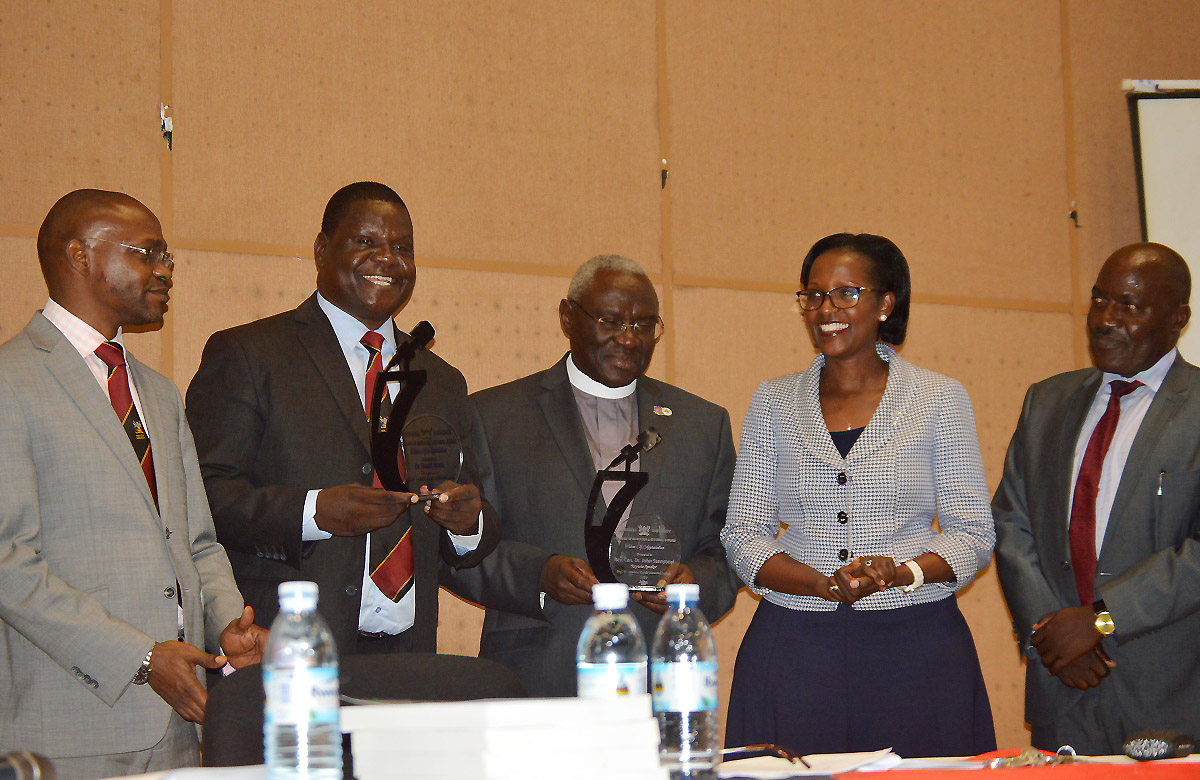
The Second Professor William Senteza Kajubi Memorial Lecture was yet another opportunity for the family, friends and educationists from all over Uganda and beyond to celebrate the life of this gallant alumnus and career teacher. Held in the Central Teaching Facility 2 (CTF 2) Auditorim, Makerere University on Thursday 14th November 2019, the Lecture was organised by the College of Education and External Studies (CEES) with support from friends and the family of the late Professor William Senteza Kajubi.
Delivering the keynote address on the theme, "Fostering the Quality of Education in Uganda" the Vice Chancellor, Uganda Christian University (UCU) Rev. Canon Dr. John Senyonyi expressed his joy at being chosen to deliver the Second Memorial Lecture in honour of a man he first met as an S.5 student at King’s College Budo in 1973.
“Prof. Senteza Kajubi later on become my Vice Chancellor at Makerere University, where I returned in 1978 to teach in the Department of Mathematics” he added.

Rev. Canon Senyonyi’s lecture was insightful and holistic as it tackled the subject of quality right from pre-primary level to higher tertiary education institutions. It regularly posed questions that provoked members of the audience to ponder, and was full of quotes from fellow educationists, philosophers and world leaders.
One of these was from the President John F. Kennedy’s inaugural address of 1961, “And so, my fellow Americans: ask not what your country can do for you – ask what you can do for your country.”
His resounding call at the end of each discourse on a level of education was the need for Government to step in and regulate the seemingly ‘runaway’ establishment of institutions. In particular, he noted that “Government should take a keen interest in Pre-Primary education… setting up an independent institution to handle the regulation of Pre-Primary Education will ensure quality right from the start.”

Dr. Senyonyi explained that learners at this stage are very susceptible to bias and any bad experience that causes them to detest going to school could stay with them the rest of their academic life. This, he noted, is much harder to undo as the student advances, hence the need to ensure quality right from the foundational stages.
The discourse on Higher Tertiary Education is where the need for better quality came to roost. Here, Dr. Senyonyi started on a poignant note saying “Higher Education might not be for all and yet the development of our country cannot do without it…”
He discussed the mismatch between the increasing numbers of graduates who cannot find jobs and the job market that cannot absorb qualified ones owing to their lack of practical skills. The Keynote speaker in this case proposed the need to establish a network of incubation centres, where learners ought to spend considerable time honing their ability to translate the theory learnt in class into practical skills.

The presence of strong regulatory bodies in any industry is one of the guarantors of good quality outputs. Dr. Senyonyi in this case called for the need to strengthen the education regulatory bodies by funding them adequately. He noted that this would be the only way to ensure that these bodies are able to carry out their work autonomously and effectively, political interference notwithstanding.
Touching on the sensitive subject of moonlighting by lecturers, Dr. Senyonyi shared that “it is a reality today that universities are sharing full-time staff.” He attributed this to the lack of a critical mass of qualified lecturers and the absence of a proper tracking mechanism. The UCU Vice Chancellor therefore called for the need to establish a database of all academic staff by which they can be monitored and accredited.
The evolution of technology and its effect on teaching and learning was another subject that the keynote address tackled. “Higher Tertiary Education cannot ignore the need for E-learning, E-teaching, E-Libraries and other E-resources in the delivery of quality education” noted Dr. Senyonyi. He however, warned against “death of contact” as the negative consequence of e-learning. Personal contact between teachers and their students, he noted, is important in imparting other social skills useful in the job market.

Conducting prolific research without a clear strategy for dissemination is a drawback for many academic institutions and research agencies. In his now familiar style of posing questions, Dr. Senyonyi challenged his audience to reveal the conferences or other platforms through which Ugandan research institutes and bodies disseminate the findings of their work.
Funding for Higher Education Institutions is another topic whose discussion can rage on for days. Dr. Senyonyi who presides over a privately-funded institution challenged his hosts despite being a Government-funded institution, not to overly rely on this mode of funding. He instead recommended that Higher Education Institutions be supported by Government to build endowment funds, which can then be used to fund their operations.
The keynote lecture discussant Dr. David Onen, Senior Lecturer, CEES, was equally up to the task as he gave an emotional but rousing response to the keynote address. He thanked his college of recognizing Prof. William Senteza Kajubi, noting that his contribution to Uganda’s education sector cannot be ignored. The discussant therefore gave his response in the context of Prof. Senteza Kajubi’s exemplary life versus the current situation.

Dr. Onen cautioned the audience to think about the inequality that has cropped up in our schools in terms of different amounts of fees paid by schools in Kampala and those in the rural areas. He noted that this inevitably leads to a difference in the quality of education delivered in rural and urban settings, which wasn’t the case when Prof. Senteza Kajubi went to school.
“Professor Senteza Kajubi loved teaching, he loved his colleagues and his students unlike today’s teachers who are no longer dedicated” said Dr. Onen as he addressed another topic, before adding “Most teachers in Uganda today are angry people; they come to class annoyed and leave even more annoyed.”
The discussant also shared that whereas Prof. Kajubi did not attain a PhD, his writings and manuscripts portray him as a man of quality and a distinguished scholar. He added that as an Educational Administrator, Prof. Senteza Kajubi was a jolly man who knew how to cooperate with colleagues.

Dr. Onen however decried what he termed as ‘today’s generation’s loss of the sense of what true quality is’, instead settling for anything goes. “Quality education must focus on truth” he appealed. “However, people only say what they want people to hear and as a result, truth is a causality among us for several reasons” added Dr. Onen almost sorrowfully.
The discussant concluded his response by noting that none of the recommendations made by Dr. Senyonyi in his keynote address, unfortunately, were new to the audience. He nevertheless noted that we, as a country, need to do a better job of implementing the wonderful recommendations of various committees.
Responding to the day’s presentations, the Principal CEES, Prof. Fred Masagazi Masaazi reassured the audience that the content from Dr. Senyonyi’s keynote address and Dr. Onen’s response would be published so as to reach a wider audience. He added that the findings from the keynote address and recommendations from the day’s proceedings would be shared with stakeholders in the Ministry of Education and Sports.

Delivering his remarks at the lecture, the Acting Vice Chancellor and Deputy Vice Chancellor (Academic Affairs), Dr. Umar Kakumba, quoting a poem paying tribute to Professor William Senteza Kajubi following his demise, noted that “he was a candle that lit other candles”. He therefore thanked CEES, friends and Prof. Senteza Kajubi’s family for ensuring that his legacy still lives on today through events such as the Memorial lecture.
Dr. Kakumba shared that Makerere University has made great strides in training quality human resource for Uganda and the region as was shown by the diversity of alumni; some well over 60 years of age, who graced the Memorial Lecture. “Our very own Chairperson of Council is an alumna of the School of Education” he added, followed by thunderous applause and cheers from the audience.
The Acting Vice Chancellor nevertheless challenged CEES to organize more debates discussing the quality of education and topics of similar importance, especially as Makerere University prepares to celebrate 100 years of existence in 2022.

The Chief Guest at the Memorial Lecture and Chairperson of Council, Mrs. Lorna Magara in her address to the gathering thanked the University Management and CEES for organizing the Memorial Lecture and encouraged them to continue providing many similar forums where in-depth discussions that are of generational impact on society can be shared.
“I am honoured to be at this very distinguished session and discussion celebrating the life of Professor William Senteza Kajubi who was a door opener; he opened doors of opportunity for many” she said.
Mrs. Magara added that quality education is a multi-dimensional aspect that goes beyond the transference of information from teacher to student to the impartation of life. She therefore decried the current trend that celebrates the academic prowess of a few prolific candidates and not quality education.
“It saddens my heart when for weeks after the release of PLE results by UNEB, our newspapers are awash with candidates who have got 4 aggregates… what we applaud becomes the standard… can we kindly move away from the 4 aggregates to what the value of quality education is?” pondered Mrs. Magara.

The Chairperson of Council concluded her remarks by urging all teachers to ensure that they go beyond simply communicating knowledge to being the true embodiment of quality in whatever they do and the character they portray to their students.
Speaking on behalf of the family, Mr. Wasswa Kajubi could not help but express his gratitude to Makerere University, CEES, friends and sponsors for the spirit and effort that goes into organizing the Professor William Senteza Kajubi Memorial Lecture. Wasswa is a son, and one half of the three sets of twins that Professor William Senteza Kajubi and his wife Princess Elsie Nabaloga had, a feat that none of the offspring are yet to replicate. He nevertheless sent the audience into rapturous laughter when he added, “however, there is still hope and in the spirit of the Gayaza High School motto, we shall NEVER GIVE UP.”
Mr. Kajubi also thanked several distinguished personalities as well as all members of the audience for sparing time off their busy schedules to attend the Memorial Lecture. He concluded by thanking CEES for hosting and maintaining the bust erected in honour of Professor William Senteza Kajubi at the School of Education.
Please see Downloads for the Keynote address and Response
Article by Public Relations Office
Related article
Mak Immortalises Prof. William Senteza Kajubi

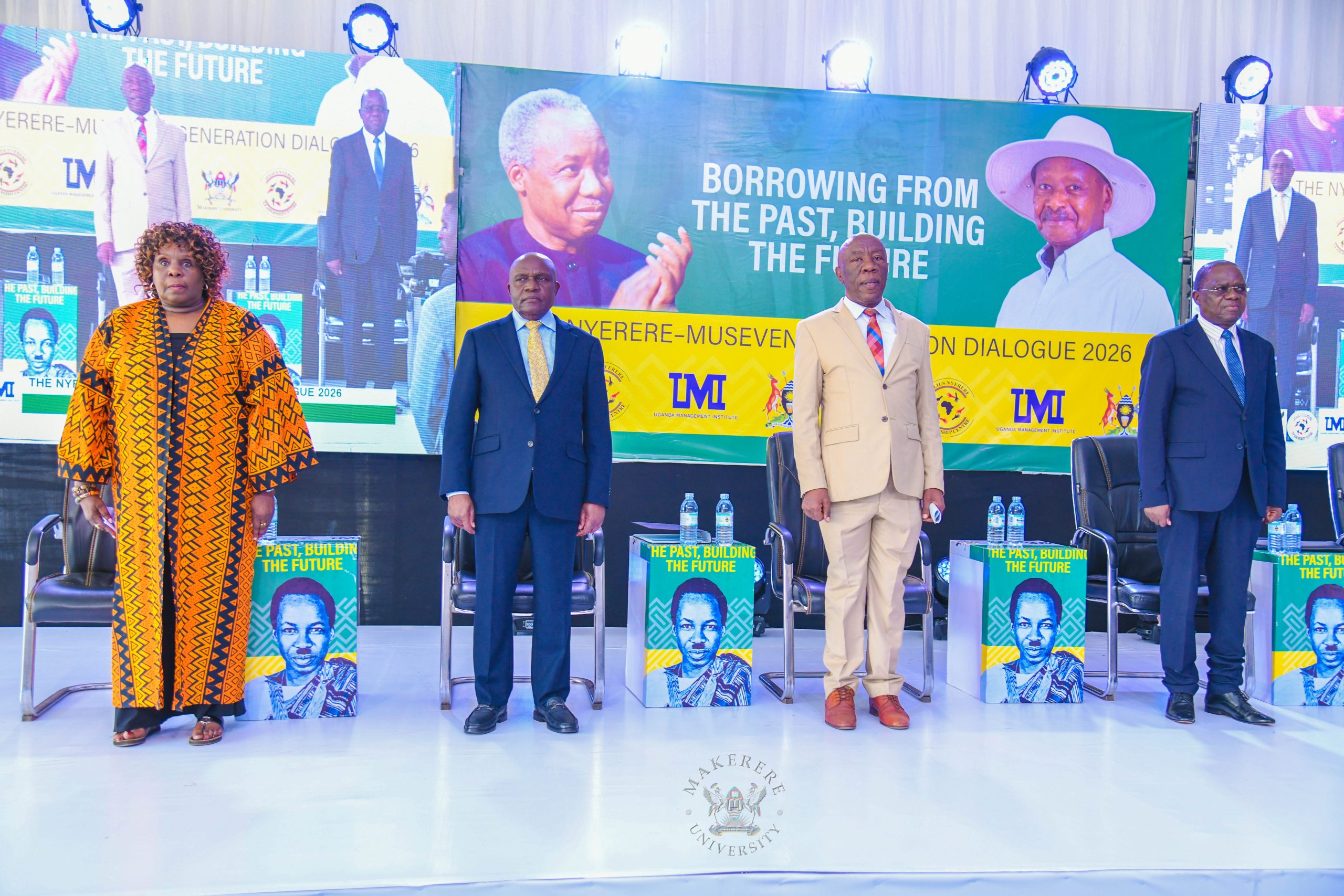
President Yoweri K. Museveni while officiating as Chief Guest at the Julius Nyerere Annual Symposium 2026: Nyerere-Museveni Dialogue at Makerere University called upon the audience not to merely hold Nyerere’s Legacy as a historical footprint but as a masterplan for the future that remains unfinished. Organised by the Julius Nyerere Leadership Centre (JNLC), the symposium was a two day event that started with “ekyooto” on 13th October at the JNLC gardens and climaxed on 14th October in Freedom Square. The second day hinged on the theme: Borrowing from the Past, Building the Future.
In the President’s message delivered by Rt. Hon. Dr. Crispus Walter Kiyonga the Second Deputy Prime Minister and Chancellor of Makerere University, the president spotlighted, “Mwalimu Nyerere as the greatest African that ever lived in terms of contribution to the African people’s efforts for freedom, human rights, and dignity.”
This greatness, he notes, spilled not just to political ideals but also to economics and security. The President agreed with him and warned that “freedom without economic transformation and economic prosperity, without a robust strategic security, remains incomplete.”
Reaching out to the younger generation of scholars and leaders, the President issued a strong warning to move beyond simply remembering Nyerere to action. He said, “you must carry forward the torch of pan-Africanism, reject sectarianism and tribalism, build our regional markets, and champion the total political integration of our motherland.”
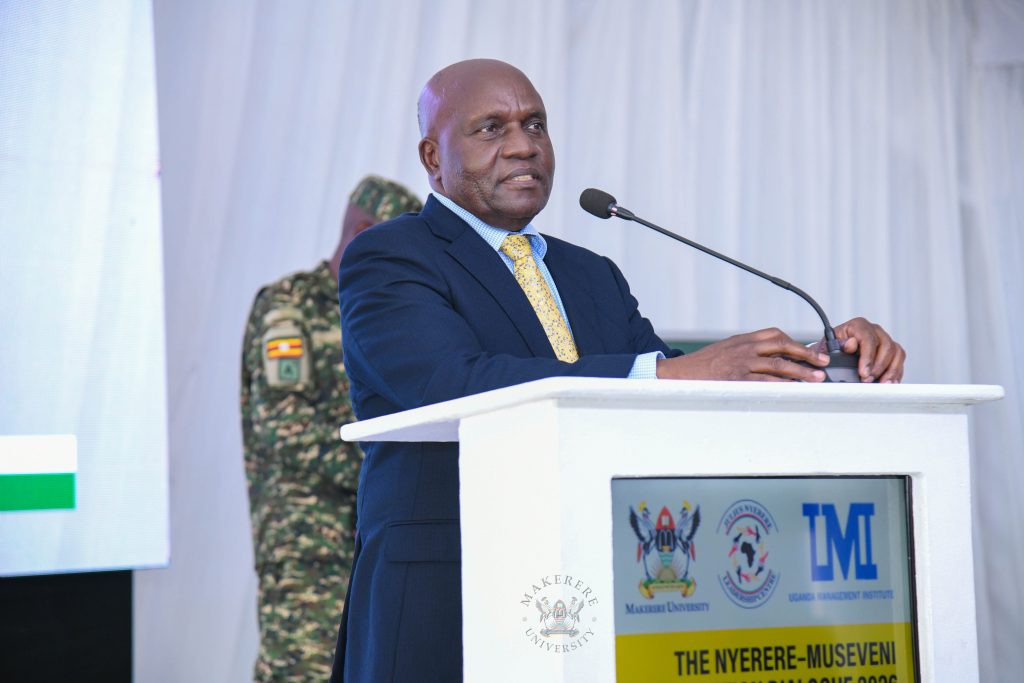
He appreciated Mwalimu for his; unwavering support for the struggle of the East African Federation, courageous backing of the armed anti-colonial struggles in the southern half of Africa, principled and decisive support for the anti-Idi Amin struggle, pro-people and pro-unity policies that kept Tanzania peaceful for decades, and ensuring that Tanzania remained a strategic rear base for the entire African resistance.
As a believer in Nyerere’s ideals, the President urged the audience to honor Mwalimu “not merely through commemorative speeches, but through completing the historical task of uniting, defending, and prospering our motherland,” for the motive is to ensure that the independence wars won by our predecessors were not in vain.
To this note, he reiterated the case for Uganda, saying “we shall never forget his profound contribution” to Africa.
Professor Nyamsenda’s Keynote Unparked Pan-Africanism
During the Nyerere-Museveni Dialogue symposium at Makerere University, Professor Sabatho Nyamsenda, a lecturer at the University of Dar es Salaam delivered the Keynote Address titled “The Unfinished African Project: From Liberation Legacies to a New Generation of Transformation” during the symposium”.
He started on a lighter noticing “Nyerere is being Ugandanised.” This he said looking at the annual Public Lectures dedicated to his name and felt like challenging his home institutions to follow suit.
At the calm of the room, he presented a critique of the current state of Pan-Africanism, arguing that it has been grabbed by the ruling elites, a challenge Professor Nyamsenda identifies to have started in the period of 1960 -1980.
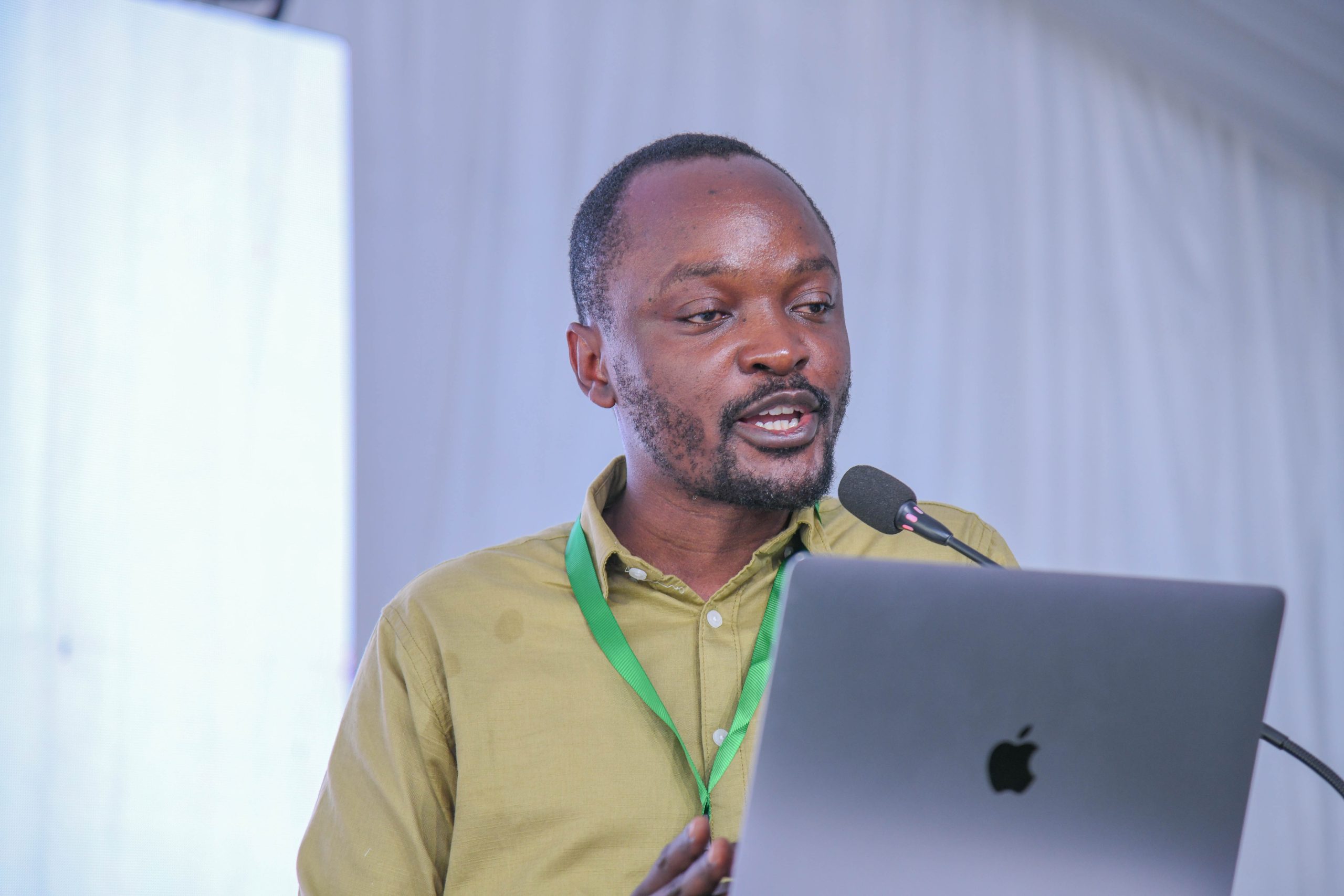
He explained that it was around this time period that Pan-Africanism was snatched away from the masses and it became a state project. Currently, he said the ideology exists in two forms: Boardroom and Street Pan-Africanism.
Professor, characterised Boardroom Pan-Africanism as a State Project. He said “boardroom Pan-Africanism sits comfortably with imperialism and elite-centered accumulation.” While Street Pan-Africanism to which Professor advocates, he emphasised that historically, this approach “united the African liberation movement and liberated the African continent from the most barbaric colonial powers.”
As he concluded, Professor Nyamsenda joined Mwalimu and the President of Uganda in urging youth to consider joining and leading the struggle for a better Africa.
Role of JNLC in Realising Nyerere’s Ideas
Professor Saturninus Kasozi Mulindwa, the JNLC Board Chair highlighted the primary objective of the center as “imparting knowledge and sharing experiences from the old generations to the new generations.” Therefore, JNLC contributes to the actualisation of Nyerere’s ideas by focusing on the development of the next generation of African leaders.
To supplement this, Dr. Nansozi K. Mwanga the Executive Director at JNLC said that the center is committed to “nurturing ethical, conscious, and transformative leaders inspired by Mwalimu’s ideas of service, human dignity, self-reliance, and Pan-African solidarity.”
She explained their focus is on several key areas with training as core. They have “trained over 1,500 young people and young leaders from across Uganda.”, and developed leadership programs “grounded in ethical decision-making, civic responsibility, public service, and action.”
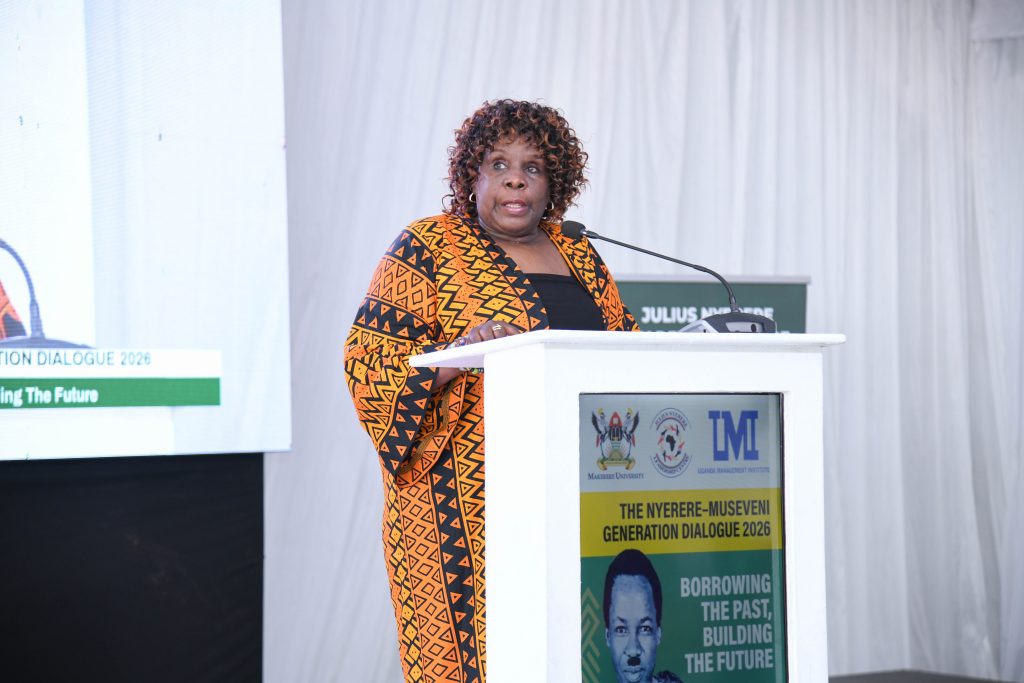
In her remarks, it was observed that training alone is not enough; they are also doing mentorship, to provide opportunities for networking and learning from experienced leaders. There are already testimonies when you visit the Centre wall of fame. To which Dr. Nansozi revealed “leadership development matters when learning becomes service and meaningful action.”
The Centre remains proud of those they have touched and are eager to support as many cohorts.
Julius Nyerere Family Pour their Heart out
Mama Maria Nyerere, addressed the Symposium virtually and commended the Centre for keeping Mwalimu’s values alive.
As a memory of her husband, she reminded the audience that his greatest legacy was anchored on the values by which he lived: service, humility, integrity, unity and love for Africa and its people. She also urged the young people to take up leadership responsibilities and lead with humility, integrity and always remember the people they serve.
Mama Nyerere also advised the youth to learn from those who came before them like her husband with courage to build a better Africa for their generation and those who will come after them.
Joining Mama Nyerere, on behalf of the Nyerere family was Ms. Julia Nyerere, a granddaughter, who attended physically and thanked H.E. Kaguta Museveni for supporting the establishment of the Julius Nyerere Centre at Makerere University and also commended the Keynote Speaker Professor Nyamsenda for Critiquing Nyerere’s ideas.
Julia further shared an understanding of her grand-father’s interest in preserving humanity as a moral.
As a family they are happy that his (Nyerere) values and legacies continue to inspire Africa and beyond.
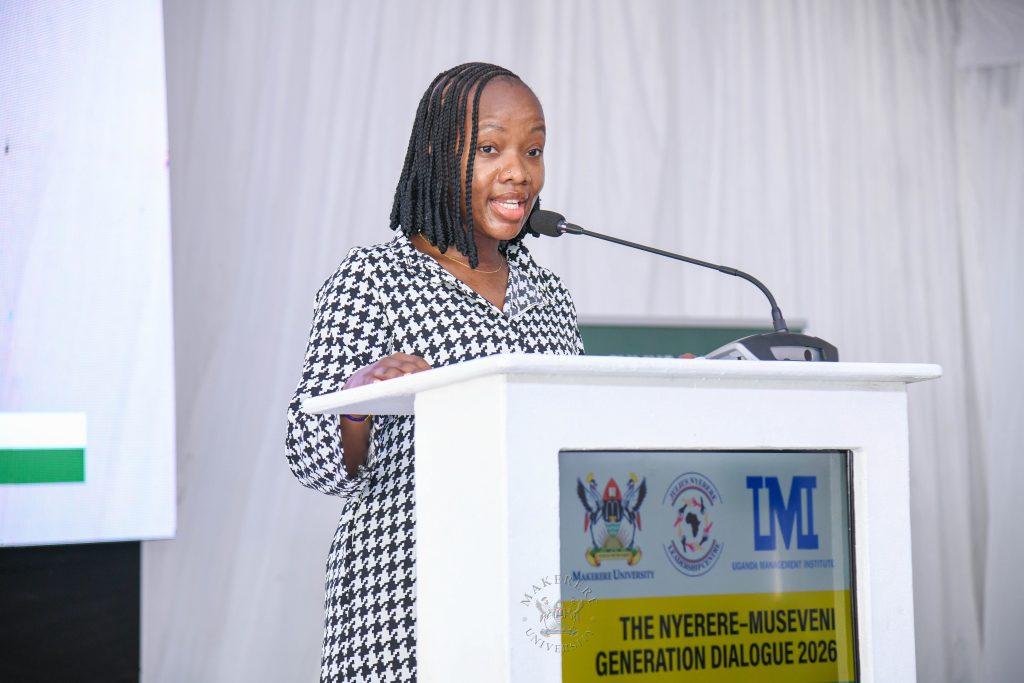
Appreciation for All who Made the Symposium Possible
Addressing the symposium, the Vice Chancellor of Makerere University, represented by Professor Henry Alinaitwe the Deputy Vice Chancellor in Charge of Finance and Administration expressed the University’s appreciation and commitment.
He thanked “the government of Uganda for the support they are giving to the Julius Nyerere Leadership Center,” and requested Dr. Kiyonga to “convey the message to the fountain of honour for this initiative that Makerere University is happy for, and is going on well.”
To the leadership of the Center, he specifically thanked the Director Dr. Nansozi for her focused leadership. He stated, “I commend my friend, Dr. Nansozi, for the work that you are doing.”
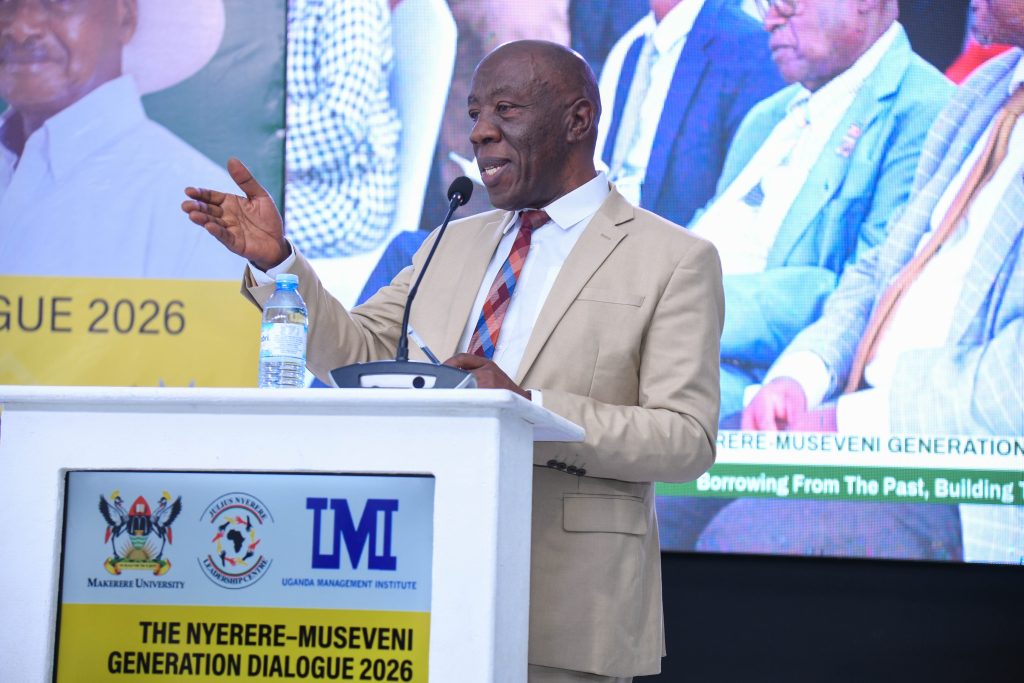
Professor Alinaitwe also emphasized “we” value these symposiums, saying, “as a university, we acknowledge that such activities create great visibility.”
Dr. Kiyonga was also thanked for delivering the President’s message, together with veterans like Professor Kabwegyere, among other distinguished guests and partners that attended.
Professor Tarsis Bazana Kabwegyere as well appreciated all and emphasised the collective duty of the youth in building the next generation.
He advised “your responsibility is to identify and build Africa forward, building on the legacies and foundations of our forefathers,”.
The Professor also argued that “being young on its own is not a virtue. It is what you are when you are young.” He challenges the audience to avoid being ignorant and claim that you are young.
Background of the Nyerere Symposium
The Julius Nyerere Annual Symposium is an intergenerational gathering hosted at Makerere University. For more than six years now, it has been connecting past leadership legacies of Nyerere and other revolutionaries with current regional and continental priorities under the (JNLC) centre.
The Julius Nyerere Leadership Centre (JNLC) serves as a training ground and research hub designed to mentor the next generation of African leaders. Co-hosted by Makerere University and the Uganda Management Institute (UMI), the Centre bridges the gap between older statesmen and youth by focusing on Pan-African ideals, ethical governance, and social transformation.

General
Makerere University and Xiangtan University Advance Strategic Partnership in Chemical Engineering

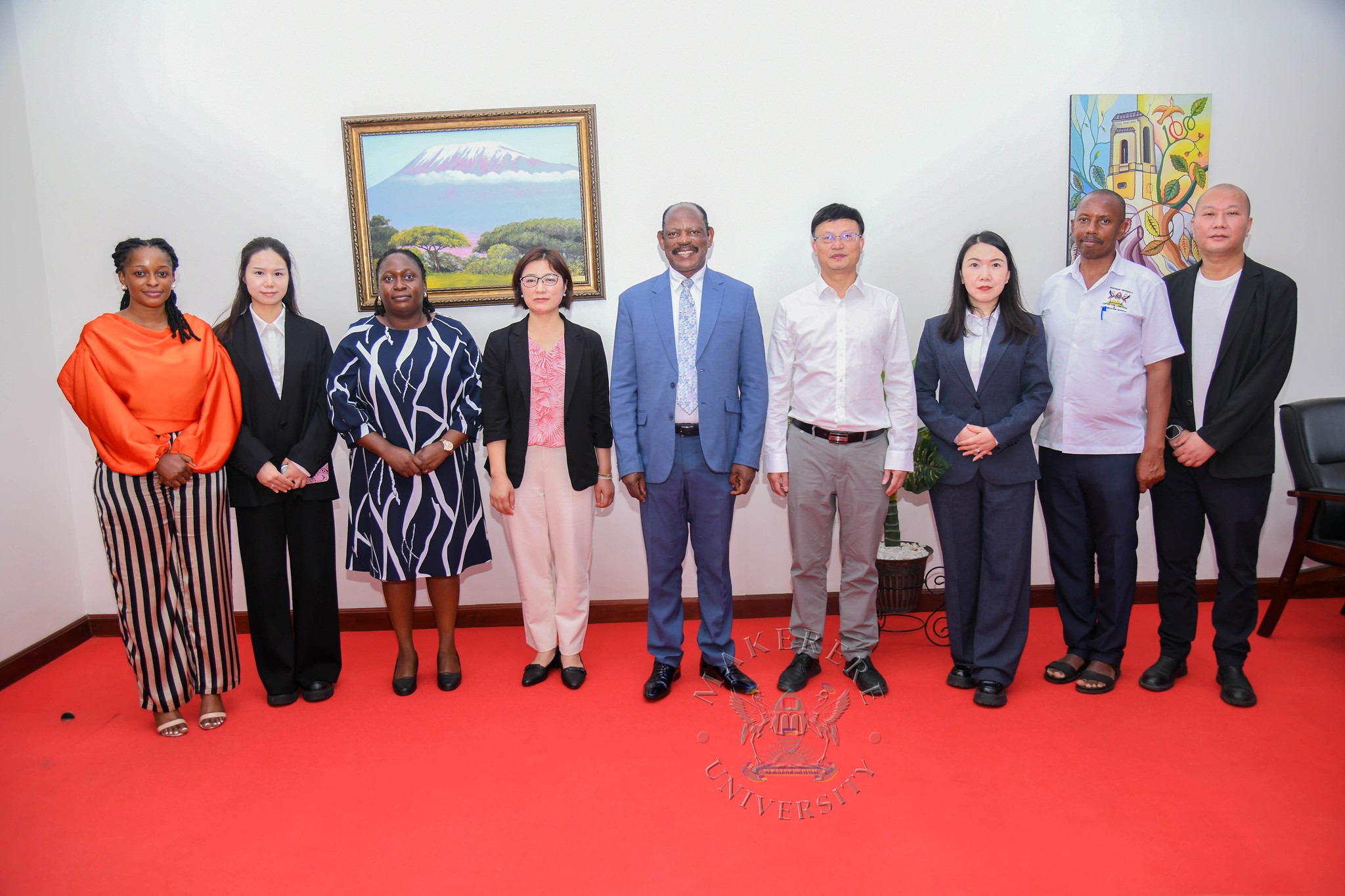
Makerere University and Xiangtan University are set to update their close to 20-year academic partnership, with a new focus on launching a joint Master’s degree program in Chemical Engineering and expanding student and staff exchange initiatives.
The commitment was reaffirmed during a recent visit by a delegation from Xiangtan University to Makerere University headed by Professor Dingyu Ou, in the company of Mr. Tang Fei and Professor Gilbert Gumshabe, the Chinese and Ugandan Directors of the Confucius Institute at Makerere University respectively.
While addressing the delegation, Professor Nawangwe highlighted that this initiative is part of a broader strategy to diversify academic offerings and contribute to national development through training in Chemical Engineering. Through this new initiative, the University will better prepare graduates for the petrochemical industry and support the country’s industrial growth.
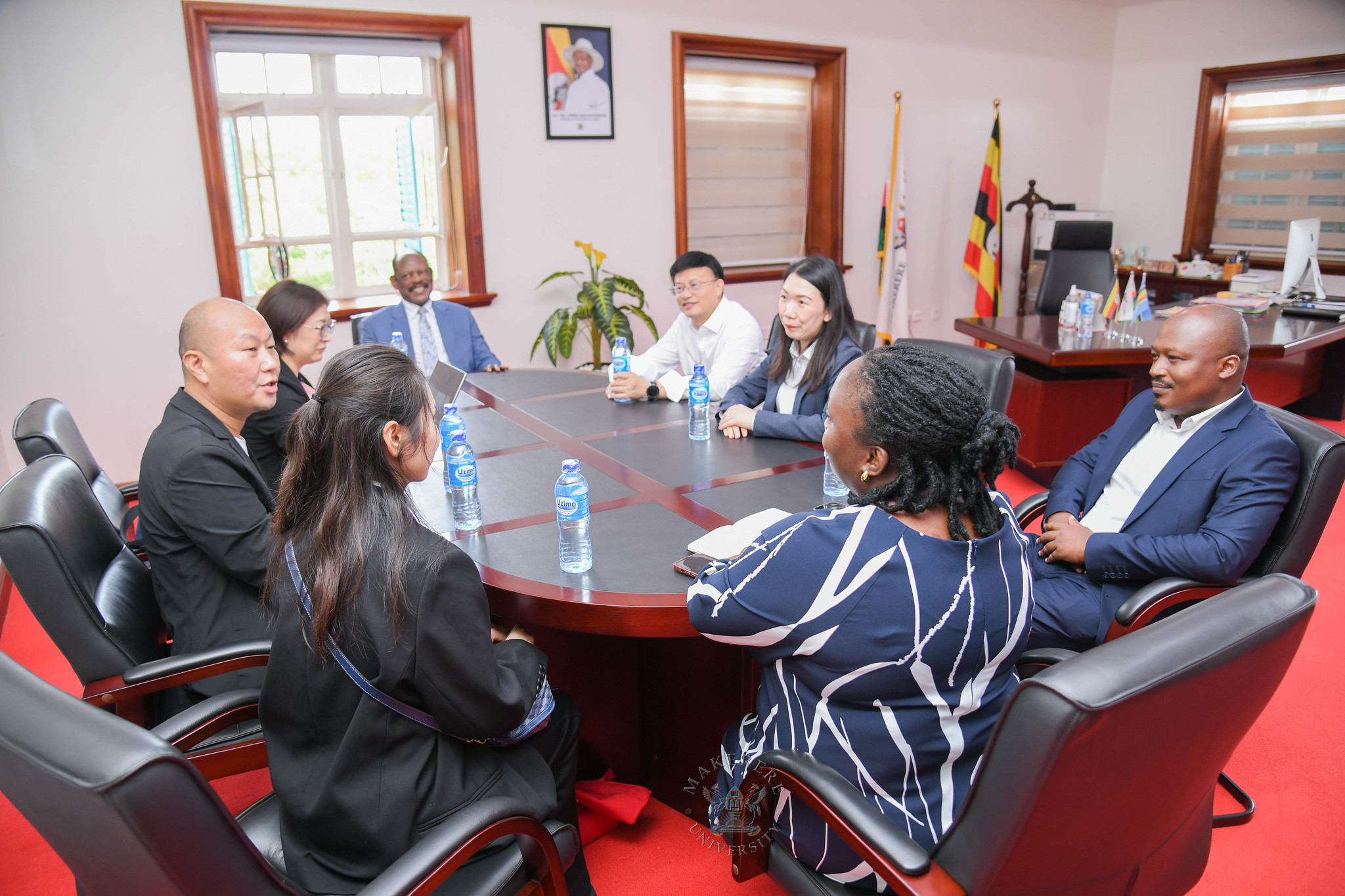
The Vice Chancellor appreciated that the proposed collaboration aims to address Uganda’s growing need for industrial expertise, particularly as the country develops its petroleum sector. The two universities here are working toward a 1+2 training model, which will enable Makerere students to gain practical experience and access advanced laboratory facilities at Xiangtan University.
Professor Nawangwe further reiterated that “our relationship with the people of China, not just for Makerere but also for a big part of Uganda, has been opened wider by the establishment of the Confucius Institute, considering that many other collaborations like one being discussed now have come through this collaboration.”
The head of the Xiangtan delegation, Professor Dingyu Ou, expressed appreciation for the meeting, and acknowledged the history between the institutions. “As mentioned, we have a very long relationship and a very stable friendship between our two universities.”
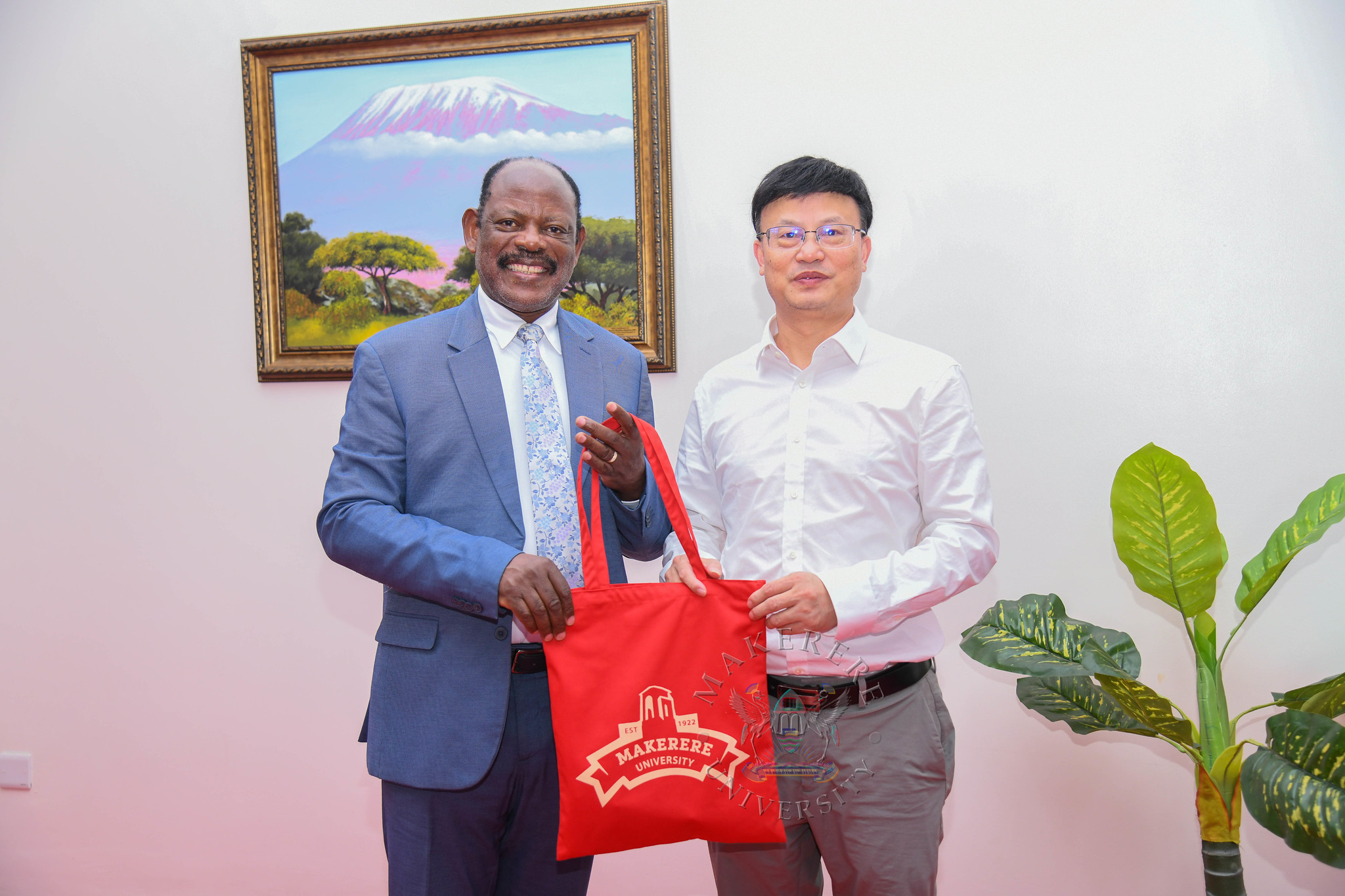
Professor Ou extended appreciation for the support provided to the Confucius Institute at Makerere, the care shown to his colleagues, and looked forward to the successful start of the Chemical Engineering collaboration.
Assuring the delegation of Makerere’s readiness for the collaboration, Ms. Hawa Ndagire Kajumba the Lead, Partnerships and Stakeholder Engagement, Makerere University Advancement Office, aligned with the Vice Chancellor’s emphasis of University goal to have both theory and practice imparted to the students.
She said “the curriculum of the university and Uganda as a whole is moving towards competence-based education training to ensure students are equipped to demonstrate those skills in the actual field, particularly regarding petroleum exploration.”
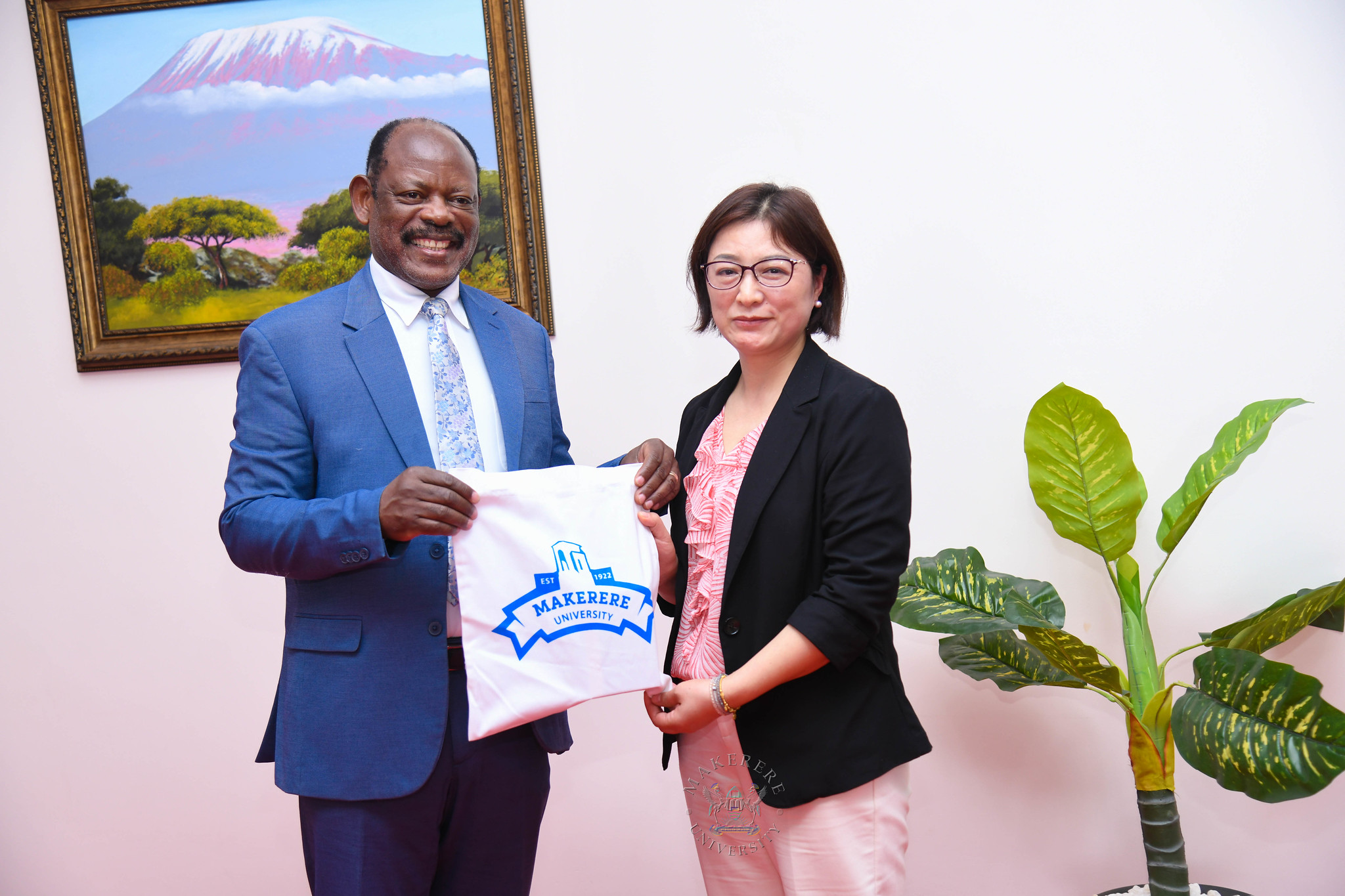
Ms. Ndagire Kajumba also emphasised a shift in strategy for the partnership office, saying, “we are moving away from just signing MOUs that collect dust, and moving towards those that are more collaborative to benefit our faculty and students, just like this one.”
Professor Gilbert Kumushabe aligned his remarks with those of the Vice Chancellor and Ms. Ndagire Kajumba, and described the method used at Xiangtan University as “actually competence-based teaching.”
Based on his recent visit, Prof. Gumoshabe shared that students in China are divided into groups with dedicated teachers to perform practical, hands-on work beyond the theoretical lecturers. He expressed gladness that the same was being adopted for the Ugandan context.
Both institutions are now working to finalise the specific agreements for the joint degree and exchange programs. Beyond academic training, the collaboration will advance cultural and professional exchange.
-
 General1 week ago
Timothy Khabusi: From Barefoot Walks to shaping Uganda’s Eye health Future
-
 Health1 week ago
Uganda’s HIV Treatment Gains Bring the Youth Gap into Focus
-
 Agriculture & Environment1 week ago
Makerere University Welcomes 50 Youth Skilling Program trainees under the Africa Climate Collaborative, Supported by Mastercard Foundation
-

 Health2 weeks ago
MakSPH reseachers calls for health data to be used in decisions
-
 Natural Sciences2 weeks ago
Mak, CoRE-MATH Project Partners Develop Models to Address Regional Development Challenges