Connect with us

General

Guidelines for Freshers of 2018/2019 Academic Year

Published

on

First Year students (Freshers) are by tradition given an “acclimatization” period of normally one week which is referred to as the “Orientation Week”. The Freshers report on Campus one week earlier than the Continuing students and during this week they are introduced to the key facilities in the University as well as other important aspects of life at the University.

Schedule of Semesters for Academic Year 2018/2019

Orientation Week:

Getting used to a new place can be pretty daunting, but that is what orientation week is all about; getting to know your surroundings, meeting students and staff members. This makes you feel comfortable enough to hit the ground running when the semester starts. It is a great chance for you to familiarize yourself with the University.

Saturday 4th August, 2018 to Friday 10th August, 2018 (7 Days) – Orientation Week

Semester One

Saturday 11th August, 2018 to Saturday 8th December, 2018 (17 Weeks)

Semester One Vacation

Saturday 8th December, 2018 to Friday 18th January, 2019 (7 Weeks)

Semester Two

Saturday 19th January, 2019 to Saturday 18th May, 2019 (17 Weeks)

Semester Two Vacation

Saturday 18th May, 2019 to Saturday 27th July, 2019 (10 Weeks)

During this week, arrangements are made to enable the Freshers meet and be addressed by Key Officers, Wardens and Student Leaders who welcome the students.

Arrangements are also made to enable the Freshers acquaint themselves with such key facilities at the University like the Library, University Hospital, Games and Recreation Facilities etc. Freshers are expected to take advantage of the week to survey and acquaint themselves with the general Campus lay out. Another major activity during the Orientation Week is Registration.

All Freshers must ensure that they are registered first centrally and then with each of their respective Colleges/Schools/Departments/Halls.

Orientation Events

Saturday 4th August, 2018

Resident Freshers report to their respective Halls of residence or private Hostels by 5.00 p.m. It is the responsibility of each student to make his/her own travel arrangements to the University or private hostel.

Monday 6th August, 2018

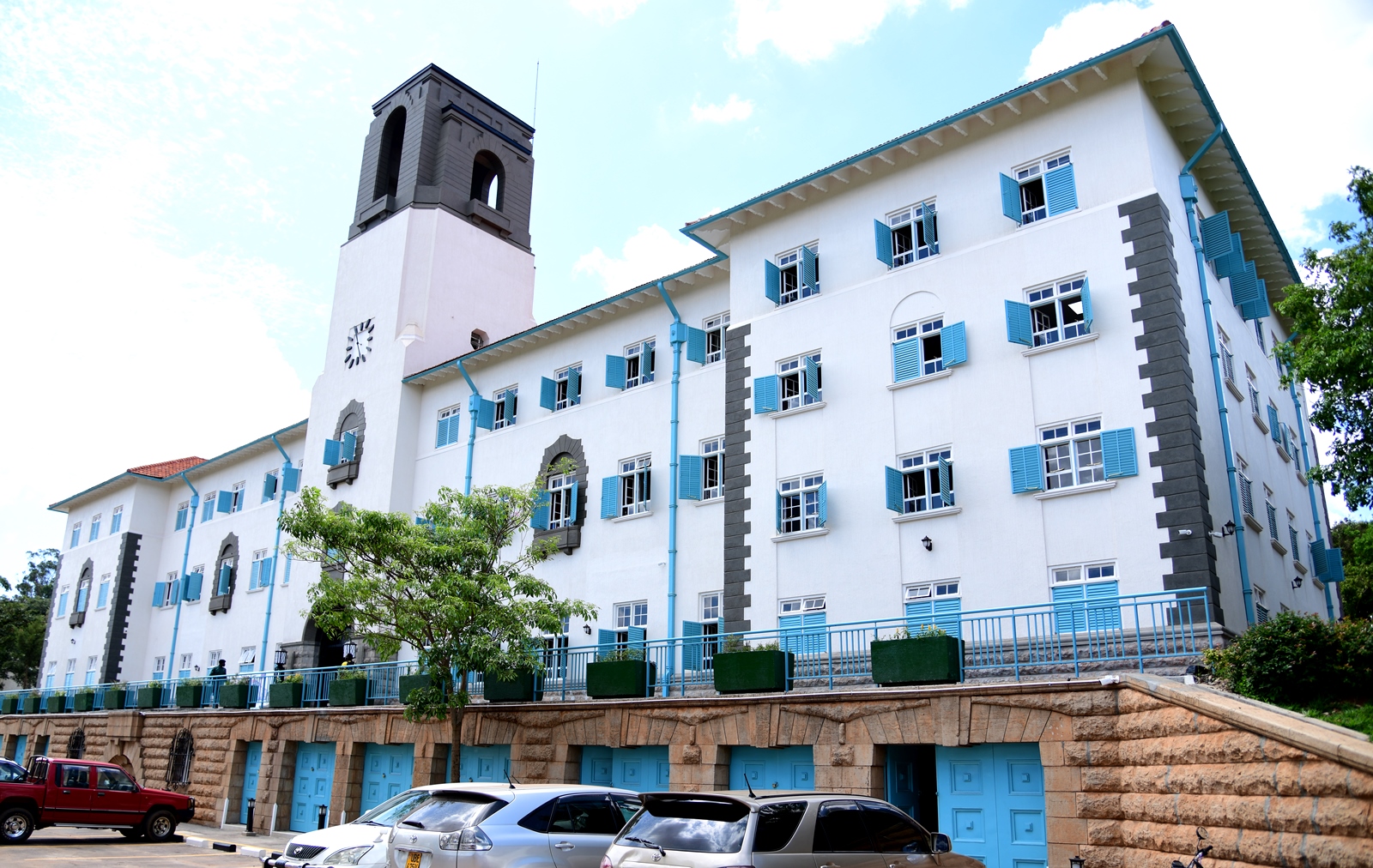
All Freshers shall report to the Freedom Square for a meeting with the University officials at 9.00 a.m. The Freedom square is the open ground in front of the Main Administration Building where official functions of the University are normally performed. Freshers are expected to be seated by 9.00 a.m.

Registration

For a candidate to qualify to be a bonafide student of the University, he/she must be registered. Registration is a mandatory requirement of the University which must be done within the first two (2) weeks from the beginning of the semester by every student. Privately sponsored students will pick their original admission letters after payment of 60% tution and all functional fees from their respective colleges.

Registration will commence on Monday 6th August, 2018 starting at 9.00 a.m. each day.

Ensure that you complete all the required registration formalities within the prescribed time in order to avoid disappointments later.

Registration Requirements

For registration purposes, all first year students MUST produce their original documents. Government sponsored students shall pay the following fees to Makerere University Fees Collection Accounts:

  1. University Rules Booklet – Shs.2,300/=
  2. Undergraduate Gown – Shs.18,400/=
  3. Identity Card – Shs.45,000/=
  4. Guild Subscription fee (Per Year) – Shs.11,500/=
  5. Endowment fee (Per Year) – Shs.11,500/=
  6. Senior Common Room fee (Per Year) – Shs.5,750/=
  7. Sports Contribution fee (Per Year) – Shs.17,250/=
  8. Medical fee (Per Year) – Shs.50,000/=

Total – Shs.164,000/=

NB

(i) The above fees replace the ones on Page 13 in the Freshers Joining Instructions for government sponsored students.

(ii) The Fees Structure (bill) for either Government or Private is attached on your admission letter.

Other Fees

  1. National Council for Higher Education fee (Per Year)-Shs.20,000/= (Payable to the National Council for Higher Education Account in Stanbic Bank)                                                                                               
  2. UNSA Subscription fee(per year)-Shs.2,000/=(payable to Stanbic Bank,City Branch,A/C 0140007248501)

​Payment Procedure

Beginning Semester I 2018/19, all payments are to be made through AIMS System.

Login your account at https:/student.mak.ac.ug and generate a Payment Reference Number (PRN). The PRN is required make a payment in the bank.

Should you find difficulties in generating the reference number, banks at the campus have helpdesk dedicated to assisting students generate reference numbers and make tuition payments.

For inquiries, you can contact the Revenue Office on the ground floor, Main Building or send an email to finance@finance.mak.ac.ug

Payment of Living-out/Food Allowances 2018/18 Academic Year

All Government Sponsored students are required to submit Bank Account Names and Numbers to the office of the University Bursar as soon as they receive their admission letters to the University for purposes of processing the above allowances. Payment of the Living-out/food allowance shall only be done after registration with the University. 
Students are therefore advised to pay the prescribed University dues and register at the earliest opportunity.

Change of Programme/Subjects

(a)      Change of Programme

Since selection for specific programmes was made according to each candidate’s performance and order of programme choices, taking into account the available subject combinations and time-table limitations, there is normally little need to change the programme or subjects.  However, some places become vacant when some of the students admitted do not take up the offers.  Such places are filled through the change of programme/subjects.

Students who wish to change programmes first of all register according to the registration time-table for the programmes and subjects (where applicable) to which originally have been admitted.  Each student who may wish to change his/her programme/subject is required to pay an application fee of Shs.6,000/= plus the bank charges to Stanbic Bank, dfcu Bank, Post Bank, Centenary Bank and Post Bank.

(b)      Change of Subjects

Students in the College of Humanities and Social Sciences, Natural Sciences or the College of Education and External Studies may wish to change their subjects.  Change of Subject will be done online on payment of Shs.6,000/=, to either Stanbic Bank, dfcu Bank, Post Bank, Centenary Bank.

Students should be aware that changing one subject may result in a change of College.  Before students apply to change their programmes, Colleges and Subjects, they are encouraged to seek advice on the cut-off point(s) for programmes, requirements for specific subjects and possible subject combinations.

Students are notified and warned about this Senate ruling that any one transferring to another subject or College without proper authority will be liable to discontinuation from the University.

A student who has been permitted to change his/her programme or subject(s) is issued with a letter stating so, and on receipt of such a letter that student should complete the ACCEPTANE Part and return a copy of each to the Undergraduate Admissions and Records Office, the former and the new College/School.

The change of programme/subjects will be done online from Monday 6th August, 2018 to Friday 10th August, 2018 at Level 3, Senate Building.

N.B:    It is advisable that only those students who meet the cut-off points for the desired programmes may apply.

Alfred Masikye-Namoah

ACADEMIC REGISTRAR

Elias Tuhereze

Continue Reading

General

Prof. Sarah Ssali shares institutional best practices ahead of The Trust Summit

Published

on

Prof. Sarah Ssali, Panelist, Virtual Round Table on Restoring Trust in Academia and the Knowledge Economy, September 15, 2026. Graphic: X/@GTSummit2026

Prof. Sarah Ssali the First Deputy Vice Chancellor in charge of Academic Affairs (DVCAA) at Makerere University was one of the panelists that addressed the complex challenges facing African higher education during a Virtual Round Table on Restoring Trust in Academia and the Knowledge Economy held September 15, 2026. The event was organised by Strathmore University as part of the pre-summit events for The Trust Summit (TTS), due to be held in Nairobi, Kenya from October 21-23, 2026.

She was also welcomed in her capacity as the Director of the African Research Universities Alliance (ARUA) Centre of Excellence in Notions of Identity, a platform she used to deliver warm regards from the Vice Chancellor, Prof. Barnabas Nawangwe. Other panelists included; Dr. Vincent Ogutu-Vice Chancellor, Strathmore University and Prof. Gilbert Kokwaro-Director, Institute of Healthcare Management, Strathmore University Business School, while the Moderator was Dr. Maureen Syallow-Senior Lecturer, Strathmore University.

In her submission, Prof. Ssali emphasised the need to understand that universities are working in a turbulent times, and do not deserve to be at the receiving end of some of the challenges being ascribed to them. She added that challenges affecting society ought to be handled in partnership with other stakeholders and key players.

An example of this kind of criticism is on the question on the quality and integrity of degrees that has come up severally and is being fueled by the fact that not many graduates can find gainful employment after completing university.

“We have many more people living longer, getting educated, and chasing fewer jobs. For example, in the case of Uganda, we graduate around 40,000 students per year, but only 700 jobs are being created in the public sector per year” she noted.

Turning to the need to maintain standards and trust, Prof. Ssali outlined the rigorous systems already in place. These include holistic curriculum development involving stakeholders such as the National Council of Higher Education, Government Ministries, and the National Planning Authority.

Prof. Ssali also highlighted the importance of quality assurance, international benchmarking, and constant evaluations. She nevertheless conceded that despite having all these efforts in place, universities still face immense pressure from ranking systems and the need to prove their worth.

Reflecting on the historical debate regarding the role of an African university, she contrasted the school of thought advocating for global competitiveness with that emphasising practical relevance to local development challenges, concluding that taking the middle path; globally competitive and locally relevant, remains the viable option.

Addressing the issue of trust directly, Prof. Ssali noted that universities, just like the aviation and healthcare industries, are more concerned with what systems are in place to correct any errors should they arise.

She explained that just as one plane crash does not shut down the aviation industry, a single failure in a university does not warrant shutting it down. Instead, the focus should be on checking the black box, correcting errors, and improving standards to ensure the institution continues to serve its purpose.

Elvis Lubanga, Makerere University, Kampala Uganda, East Africa.
Elvis Lubanga

Continue Reading

General

“We are moving in the right direction” Prof Nawangwe to Press

Published

on

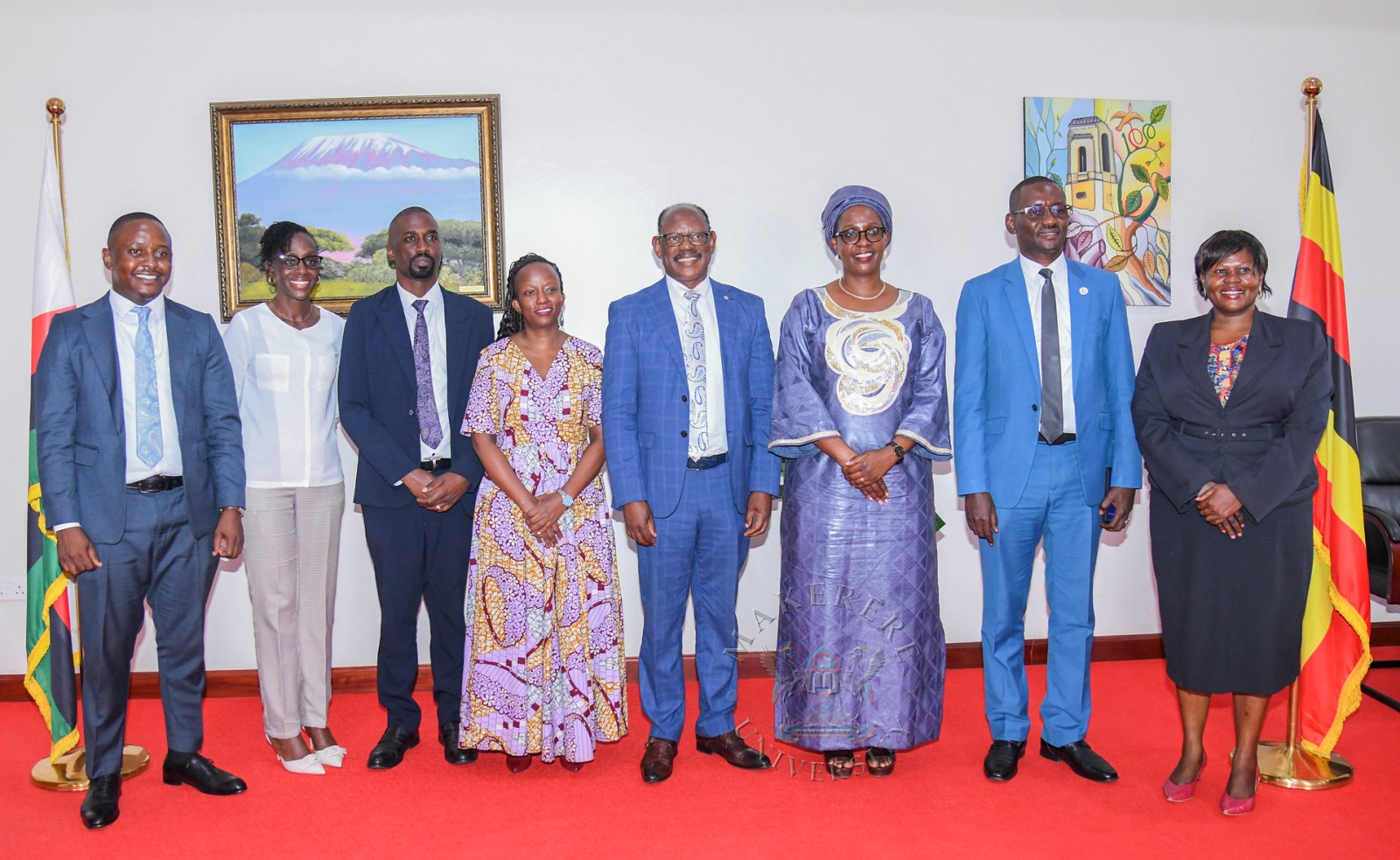
Seated: Prof. Barnabas Nawangwe (C) flanked by Prof. Sarah Ssali (2nd L) and Prof. Moses Musinguzi (2nd R), Members of Management and other officials (Seated and Standing) at the Press Conference on 15th September 2026. Vice Chancellor's Press Conference, VC's Boardroom, Main Building, Kampala Uganda, East Africa.

Addressing members of the Media at the Vice Chancellor (VC)’s September 15, 2026 Press Conference, Prof. Barnabas Nawangwe shared that Makerere University rose 295 places moving from 1,071st in 2025 to 776th in the July 2026 Webometrics Ranking of World Universities. This is a noteworthy improvement on a global scale and on continental level, where the university moved from 13th place earlier this year to 11th.

Still in the right direction, the number of graduate students completing their studies at Makerere has nearly doubled over the past five years as the University steps up efforts to improve training and research output. The completion rates have increased from 1,588 in 2023 to 1,874 in 2024, 2199 in 2025 and 2,922 in 2026.

The Vice Chancellor attributed this growth partly to government funding and digital systems that have been set up to track student progress.

Improving the Academic Environment

In alignment with VC, the First Deputy Vice Chancellor in charge of Academic Affairs (DVCAA), Prof. Sarah Ssali assured the media that a number of quality assurance measures have been put in place to improve the university’s core functions. These range from assessment forms that enable students to evaluate their courses and provide feedback that can be used to improve teaching and learning as well as research environments.

In line with digitalisation of University processes, Prof. Ssali noted that the Academic Management Information System (ACMIS) enables supervisors, colleges and University Management to identify delays in student progress and take corrective action.

The system currently empowers students to track their academic progress and print their own testimonials, and in future, transcripts, without having to queue up. These services are accessible by students who have fulfilled their tuition obligations.

Infrastructure Development

The Acting Second Deputy Vice Chancellor in charge of Finance and Administration (DVC F&A) and Principal, College of Engineering, Design, Art and Technology (CEDAT), Prof. Moses Musinguzi, shared that the university has undertaken extensive infrastructure expansion and renovation projects, with funding from government, philanthropists and donors.

“One of the infrastructures being the building that is going to house the graduate school, among others” he elaborated.

Research News – FLOWERS Project

Makerere University prides itself as a thought leader in knowledge generation for societal transformation and development. Makerere researchers and partners have launched the FLOWERS Project — Facilitating Local Organic Waste Exchange for Regenerative Systems. Led locally by Assoc. Prof. Charles B. Niwagaba, the two-year project (2026–2028) aims to turn restaurant food waste in Kampala into animal feed and organic fertiliser. Project Kick-off Meeting: https://news.mak.ac.ug/2026/09/makerere-partners-kick-off-flowers-project-to-turn-restaurant-waste-into-a-regenerative-resource/

Upcoming Events highlighted

Makerere Marathon
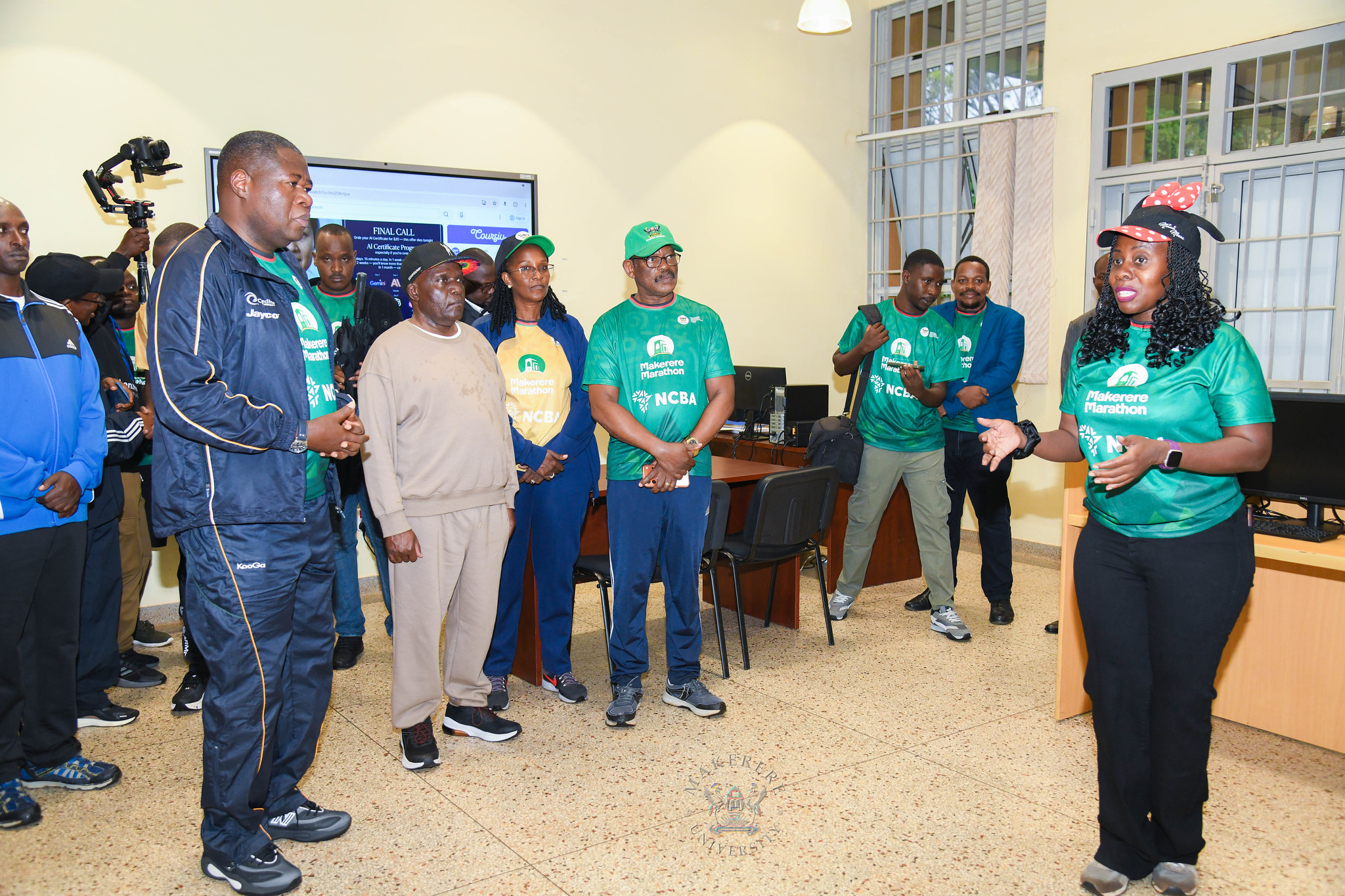
The sixth edition of the Makerere University Marathon will take place on Sunday, 27 September 2026, starting and finishing at Freedom Square. Marathon kits are available at UGX 50,000 and can be purchased online via https://shorturl.at/Vjovo

The Annual Makerere Guild Medical Camp
The camp will be held from 17th to 18th September 2026, starting at 8:00 a.m. to 5:00 p.m., in the Freedom Square. The Camp is organised by Guild leadership under the Office of the Dean of Students. Link: https://events.mak.ac.ug/events/2026/09/17/816

The Press Conference was graced by Members of Management, Staff and the media fraternity who were all appreciated for their contribution informing the public about developments at Makerere. This press briefing is part of the media engagements organised by the university Public Relations Office aimed at fostering open communication lines with the public through the media. It happens every two months with the previous one having taken place on 15th July 2026.

Please see Downloads for the Press Statement and its supporting documents.

Photography by Benite Uwase, Volunteer, Public Relations Office, Makerere University

Elvis Lubanga, Makerere University, Kampala Uganda, East Africa.
Elvis Lubanga

Continue Reading

Agriculture & Environment

Makerere Hosts Inaugural Falling Walls Lab Competition as Innovators Pitch Solutions to National Challenges

Published

on

Students and researchers from Makerere University and other institutions pitched 12 innovations addressing challenges in healthcare, clean energy, agriculture, waste management and community resilience during the inaugural Falling Walls Lab Kampala, held at the School of Public Health Auditorium, Makerere University.

The competition brought together emerging innovators to present solutions to practical challenges through a three minute pitch, followed by questions from a panel of judges.

Modelled on the Falling Walls format that originated in Berlin, the event required each participant to identify a “wall” a problem or barrier, and demonstrate how their innovation seeks to break it down.

Mudhasi wins with newborn jaundice screening device

Andrew Mudhasi of Makerere University emerged as the overall winner with a score of 90 per cent for a low cost medical device designed to improve newborn jaundice screening across different skin tones.

Overall competition winner Andrew Mudhasi (left) receives his first Place award certificate for his innovation

Mudhasi explained that the device uses optical sensor technology and a skin tone targeting algorithm to provide a rapid reading, with the aim of helping nurses and clinicians identify jaundice more efficiently.

During questions from the jury, Mudhasi said the device had not yet been tested on actual babies but had undergone laboratory testing using simulated skin tones.

He reported an accuracy rate of 94 per cent when the device was compared with laboratory spectrophotometers.

The innovation is intended initially for use in clinics and hospitals, with Mudhasi saying the team is also considering a version that could eventually allow mothers to screen babies at home.

Mudhasi’s innovation has previously received recognition at the African Business Concept Challenge and the iF Design Student Award, according to his presentation.

Rhonda’s innovation tackles diaper waste

Rhoda John of the University of Nairobi emerged in second place with 89.6 per cent for an innovation addressing the problem of used diaper waste.

Rhondah John pitches her innovation repurposing diaper waste into soil moisture retention

Under the theme “Breaking the wall of diaper waste and drug soils,” Rhonda explained that her team extracts sodium polyacrylate, the absorbent polymer found in diapers, and replaces the sodium with potassium.

The resulting potassium based superabsorbent material is designed to act as a “water battery” in soil by absorbing and retaining water for plants during dry periods.

John said testing showed a 99 per cent increase in germination and a 23 per cent increase in drought resistance.

The innovation also seeks to reduce the amount of used diapers ending up in landfills and the environmental effects associated with their decomposition.

During the question and answer session, John explained that her team was working with government environmental officials in Nairobi on a pilot collection system to address the challenge of gathering used diapers at scale.

Mahera takes third place with herbal peptic ulcer treatment

Stuart Mahera of Makerere University finished third with 86.2 per cent for a herbal formulation targeting peptic ulcers.

Stuart Mayira (left) receives his 3rd Place award certicate at the school of Public Health Auditorium.

Presenting under the theme “Breaking the wall of Nature and Modern Medicine,” Mahera argued that conventional treatment for peptic ulcers can involve multiple medicines and may be associated with side effects and antimicrobial resistance.

His proposed formulation, MARAC capsules, is intended as a monotherapy, combining properties required for peptic-ulcer treatment in a single capsule.

Mahera said his team had carried out quality control work, including characterisation and dose quantification, and had conducted preclinical trials on laboratory mice.

He also told the jury that an application had been submitted to the National Drug Authority as the team awaits the next stage of the regulatory process.

According to Mahera, the proposed seven day treatment would cost about Shs21,000, compared with the existing 14 day treatment approach.

Innovators present solutions to practical challenges

The remaining presentations covered a wide range of challenges.

Esther Nakungu of Utamu University presented Agri-Track, a digital record keeping solution intended to improve visibility, accountability and management of farm operations and financial information.

Dr. Jimmy Chachiga, a Makerere University participant, presented a solar photovoltaic cooker with a heat storage system designed to provide a cleaner and more reliable cooking option during both sunny and non sunny periods.

His presentation focused on reducing dependence on biomass fuels and addressing the challenges associated with intermittent solar energy.

Abdul Noor Luttamaguzi, a PhD student and senior government fisheries officer, presented a mobile application aimed at helping fish farmers and extension officers report, track and manage disease outbreaks.

Henry Duke Tamale presented a herbal cream targeting antibiotic resistant biofilm infections associated with diabetic foot ulcers.

Marvin Seruwu proposed adapting existing near infrared brain monitoring technology to help detect extra-axial brain bleeds in health facilities where access to CT and MRI equipment is limited.

His proposal seeks to repurpose existing technology towards a diagnostic need that could be particularly important in settings where advanced imaging facilities are not readily available.

Kennedy Kisame presented a poultry alert and diagnosis system combining satellite weather information with computer vision disease detection. The proposed system could be accessed through a smartphone application, SMS or USSD, making it potentially usable by farmers with limited internet access.

Frank Atwiine proposed a solar powered mobile diagnostic van designed to bring ultrasound and other diagnostic services closer to rural communities.

Johnson Makmot, a software and blockchain developer, presented a platform that combines GPS tracking and blockchain-based tokens to incentivise and verify plastic-waste collection in Kampala.

Dr. Nelson Ndugu, from a partner university, presented an artificial intelligence tool designed to translate agricultural research publications into local Ugandan languages and generate voice notes for radio-based extension delivery.

The final presentation came from Dr. Juliet Akola, a Ugandan post doctoral researcher at Mangosuthu University of Technology in South Africa.

Akola presented a community digital resilience initiative focused on mapping risks in Kampala’s informal settlements, including flooding, fire, poor sanitation, waste management and inadequate infrastructure.

Her proposal seeks to combine local community knowledge with geographical information systems and link identified risks to action plans involving municipalities and other stakeholders.

Nawangwe calls for more investment in innovation

Closing the event, Prof. Nawangwe congratulated all the participants and described their presentations as an important beginning for Makerere University, Uganda and the wider region.

Vice Chancellor, Prof. Banabas Nawangwe giving his remarks

Drawing on his experience attending the Falling Walls conference in Berlin, the Vice Chancellor said initiatives of this nature are important because innovation will play a major role in determining the future of countries.

He encouraged participants to make their pitches more precise by clearly identifying the problem they are addressing, explaining their proposed solution and demonstrating what they have already achieved.

Prof. Nawangwe also welcomed the participation of innovators from other universities and countries, noting that the Kampala event had attracted participants beyond Makerere.

He thanked the Africa Office of the Falling Walls Foundation for its role in bringing the initiative to Makerere and encouraged continued support for innovation.

The Vice Chancellor further linked innovation to Uganda’s growing youth population and the need to develop home-grown solutions to address challenges such as youth unemployment.

The inaugural Falling Walls Lab Kampala ultimately provided a platform for innovators to move ideas beyond the classroom and laboratory and demonstrate how research, technology and creativity can be applied to challenges affecting communities.

PositionWinnerInstitutionScore
1stAndrew MudhasiMakerere University90%
2ndRhoda JohnUniversity of Nairobi89.6%
3rdStuart MaheraMakerere University86.2%

Allan Ainematsiko

My name is Ainematsiko Allan. I am a student of Makerere University and currently in my final year. I am pursuing a Bachelors in Journalism and Communication.

Continue Reading

Trending