In 2017, the Leadership placed the management of the Makerere University Health Services under the College of Health Sciences (CHS). This decision coincided with works being undertaken by the Kampala Capital City Authority (KCCA) under a Memorandum of Understanding (MoU) with Makerere University as compensation for the land annexed during expansion of Makerere Hill Road.
The works under the MoU which included resurfacing of roads, parking lots, construction of walkways as well as installation of street lighting within the Main Campus also had a component that catered for renovations at the University Hospital.
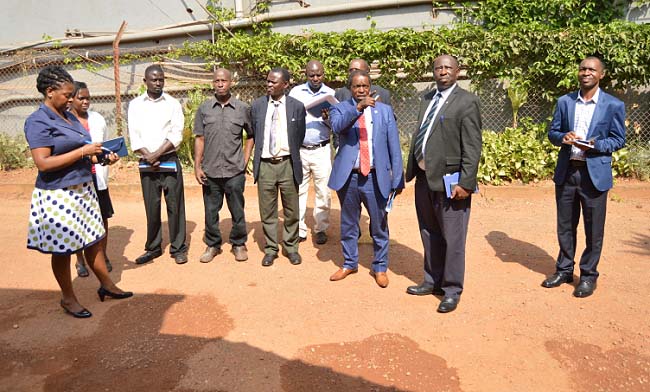
On Tuesday, 23rd January 2018, the Deputy Vice Chancellor (Finance and Administration)-Prof. William Bazeyo, accompanied by Director Estates and Works-Eng. Christina Kakeeto, Principal CHS-Dr. Charles Ibingira, Acting Director, Engineering and Technical Services, KCCA-Eng. Justus Akankwasa, Director University Hospital-Dr. Margaret Wandera and other officials from Makerere and KCCA were taken on a guided tour of works completed under Phase I of the hospital renovation by the contractor.
In her remarks, Eng. Christina Kakeeto congratulated the contractor upon successfully completing the works which gave the University Hospital a new paintjob. She however urged the contractor’s representative to take note of all the observations made during the site tour and have them corrected by the next site meeting.
Dr. Margaret Wandera who was all praise for the facelift thanked members of Management and stakeholders present for making time to attend the site inspection. She noted that whereas Phase I had given the buildings a much needed new look, she looked forward to even more improvements in subsequent phases.
The Principal CHS, Dr. Ibingira applauded the Estates and Works Department (EWD) for being on ground to supervise the works and thanked the University Management for allocating funds to the renovations. “We have a lot of faith that the Makerere Administration will give us all the necessary support to continuously remodel this facility until all clinical, fencing, plumbing and other structural needs are met.”
He noted that apart from the structural facelift, a lot of equipment is needed to improve the services of the facility and hoped that the support would be forthcoming.
Eng. Justus Akankwasa in his remarks expressed happiness at once again being at Makerere. “I have a deeply entrenched sense of care for Makerere University as an institution I served for twelve years under the Estates and Works Department” he said, further adding “My career was founded here.”
He thanked Makerere for trusting KCCA to implement all the compensation works under the Kampala Institutional and Infrastructure Development Project (KIIDP 2). Under KIIDP 2, KCCA is widening and upgrading roads and drainages in Kampala. It also is easing revenue collection, house and road location.
In his remarks, Prof. William Bazeyo, thanked the contractor for a job well done and tipped him to satisfactorily complete the remaining works, so as to better his chances of being considered for subsequent renovation Phases. He thanked KCCA for all the renovation works undertaken at the Main Campus, noting that, “everyday, I receive an increasing number of requests from parties who want to tour Makerere University, thanks to the attractive facelift by KCCA.”
Prof. Bazeyo challenged the University Hospital leadership to not only focus on the facelift but also the clinical services. “As you are aware, the Staff Health Insurance Scheme is now operational, and if you improve the services here, you will be able to attract the staff and more revenue” he concluded.
Makerere University has intensified efforts to strengthen research governance and ethical oversight, with university leaders calling for greater institutional support for Research Ethics Committees (RECs), whose role has become increasingly central to the institution’s research-led agenda.
The call was made during a high-level meeting between University Management and Chairpersons of Research Ethics Committees held at the Vice Chancellor’s Boardroom at the Makerere University Main Building on May 25, 2026.
Opening the meeting, the Director of Research Innovations and Partnerships (DRIP), Prof. Robert Wamala, highlighted a number of operational and administrative challenges affecting the effectiveness of RECs at Makerere University.
Prof. Wamala observed that RECs continue to operate with gaps in institutional framework outlining their position within the university governance structure, a gap he said has affected institutional support and long-term sustainability.
According to Prof. Wamala, inadequate facilitation continues to affect the operations of several committees, especially in areas of staffing, administrative coordination, and remuneration for REC administrators.
Prof. Robert Wamala.
He also pointed to challenges arising from new regulatory requirements governing the appointment of REC members, particularly the need for appointment letters to be authorized or signed by the Vice Chancellor.
Prof. Wamala further raised concern over the high cost of mandatory accreditation and training processes required by the Uganda National Council for Science and Technology (UNCST), especially the Good Research Regulatory Practice (GRRP) training undertaken every three years. “Payment for training is too high for individual RECs to cover,” he noted, adding that many committees are struggling to independently raise the money to undertake the training for all their members.
He also emphasized the need for stronger institutional monitoring systems to support timely submission of accreditation renewal applications, oversight of approved research activities, and coordination of REC operations across the university.
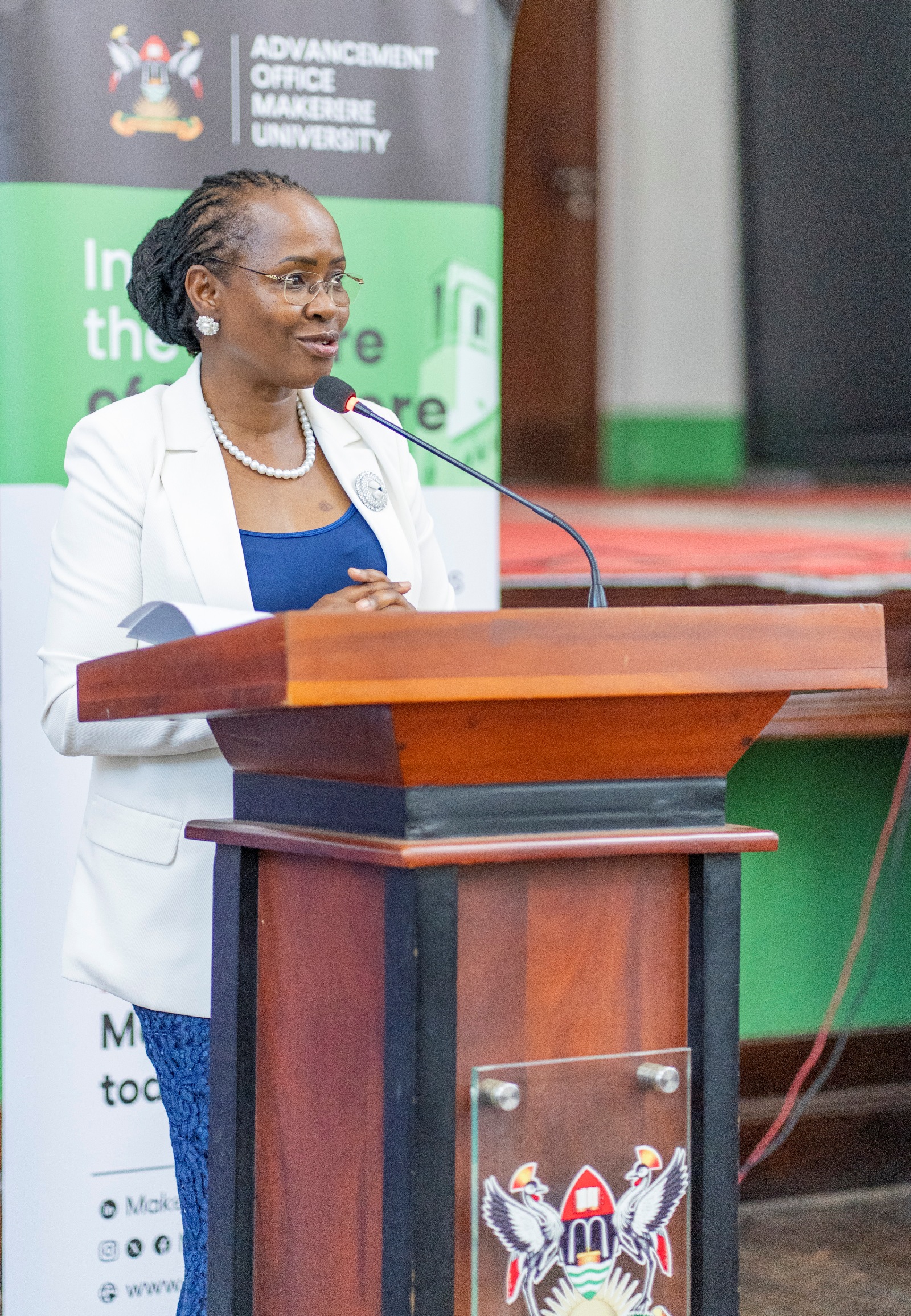
In her remarks, the Deputy Vice Chancellor in charge of Academic Affairs, Prof. Sarah Ssali, commended the growing contribution of RECs in advancing Makerere University’s research agenda and acknowledged the concerns raised by Prof. Wamala and committee members.
“There were not very many RECs,” Prof. Ssali said. “So now that we are 10, it is really impressive because it speaks to our cause for a research-led university.” She admitted that despite their importance, many RECs still operate outside the formal university establishment, making staffing and operational support difficult.
Prof. Sarah Ssali.
“The only challenge that I see is that they are not fully institutionalized. So it is upon units to start them or not to start them,” she explained. Prof. Ssali added that because RECs are not fully integrated into the public service structure of the university, recruiting and remunerating staff through conventional university systems remains complicated. “Hiring for them staff will be a little bit cumbersome because the university will say they are not part of our structure,” she said.
She nevertheless emphasized that university management recognizes the strategic importance of RECs in strengthening ethical research oversight and supporting Makerere’s position as a research-led institution. “RECs are doing a great job of furthering our strategic agenda of being a research-led university,” she noted.
Prof. Ssali explained that the growing reliance on institutional RECs by the Uganda National Council for Science and Technology demonstrates the trust placed in Makerere University’s ethical review systems.
Addressing concerns about the cost and frequency of mandatory training, Prof. Ssali acknowledged the financial burden on RECs but explained that many of the requirements are set by national regulators. “Many of the things you have raised are with National Council, they are not with us,” she said. “We can only pledge to lobby.”
To address logistical challenges associated with training senior academics, she proposed more flexible scheduling arrangements. “For a professor to give you a whole day is going to be a challenge,” she said. “Maybe you can do half days throughout the week.”
Prof. Ssali also encouraged colleges and schools to allocate part of their enhanced research budgets toward supporting REC activities, including staffing, training, and operational facilitation.
The High-Level Meeting in session.
She suggested that colleges and schools hosting RECs should directly take responsibility for sustaining them. “For me, that’s the way out — to ensure that the colleges and schools that have RECs take them as their responsibility,” she noted.
The DVC-AA also addressed concerns related to intellectual property rights, Material Transfer Agreements (MTA), and the need for researchers to formally communicate scientific discoveries and innovations to the university to ensure institutional protection and benefit-sharing. “All you are saying is true, but it depends on you as researchers informing the institution that we have made this discovery,” she said.
Prof. Ssali reiterated Makerere University’s commitment to strengthening research governance systems and pledged continued engagement with both university management and national regulatory bodies to address the concerns raised by REC members. “Where they are, they enable research, publication and growth,” she said of the RECs. “Most importantly, they enable us to be ethical with the way we do our things.”
The meeting was attended by chairpersons of the various Research Ethics Committees across Makerere University and affiliated institutions. These included Dr. Ponsiano Ochama from the School of Medicine Research Ethics Committee (SOM-REC), Dr. Moses Ocan from the School of Biomedical Sciences Research Ethics Committee (SBS-REC), Dr. Paul Kutyabami from the School of Health Sciences Research Ethics Committee, Dr. David Kyaddondo from the Uganda Cancer Institute Research Ethics Committee, Dr. Stella Neema from the School of Social Sciences Research Ethics Committee (MAKSS-REC), Dr. Joseph Kagayi from the School of Public Health Research Ethics Committee, Dr. Joseph Kateete from the Infectious Diseases Institute Research Ethics Committee, Dr. Fred Okuku from the Uganda Heart Institute Research Ethics Committee, Dr. Kassim Sadik from the College of Agricultural and Environmental Sciences Research Ethics Committee, and Dr. Eddy Walakira from the College of Business and Management Sciences Research Ethics Committee.
The discussions reflected Makerere University’s broader ambition to consolidate its position as a leading research-intensive institution while ensuring that ethical standards, accountability, and innovation protection remain central to its academic mission.
On May 29, 2026, the Mastercard Foundation Scholars Community learned of the passing of Sylas Ruhweza Atwooki, a remarkable Scholar of the Mastercard Foundation Scholars Program at Makerere University. At just 32 years old, Sylas had already made an indelible mark. He served as the representative of Makerere University on the Mastercard Foundation Advisory Board, contributing to vital decisions that shape the future. Additionally, he held the prestigious role of Minister of Information for Tooro Kingdom, an extraordinary achievement that set a powerful example for his peers and illuminated the potential for leadership and impact within the community.
Sylas was born on 19 July 1994 to the late Tinkasimire Paul Adyeeri and Ms. Ategeka Margret Abwooli in what is now Bunyangabu District. As the ninth of eleven children, he recognised early the power of education and the doors it can open. His academic journey commenced at Kaboyo Primary School, followed by Fort Portal Secondary School for his O-levels. With the backing of the Mastercard Foundation Scholarship, he confidently pursued his A-levels at Hannah International School and later enrolled at Makerere University, where he successfully earned a Bachelor of Science in Petroleum Geoscience and Production in 2022, once again bolstered by the Mastercard Foundation Scholars Program.
Sylas actively contributed to the Scholars community as the 3rd President of the Scholars Association Makerere University (SAMAK) and as the first Team Lead of the AlumNet Foundation, established in 2018, an umbrella organisation that unites all the alumni of the Mastercard Foundation at Makerere University. This organisation serves as a community of practice for Makerere University alumni, promoting agency and voice, peer mentorship, and community-impact initiatives. He demonstrated transformative leadership as Chairperson of the Mastercard Foundation Alumni Network at BRAC from 2020 to 2022. At the time of his death, Sylas served as the Minister of Information in the Tooro Kingdom and as the Strategy and Engagement Lead for the Mastercard Foundation Alumni Network’s Uganda Chapter, where he continued to advocate for collaboration and social responsibility. He was a Programme Associate at Africa Climate Collaborative, one of the Mastercard Foundation Initiatives at Makerere University, and was also pursuing his Master’s degree at Victoria University. May his soul find eternal peace.
Bernard Buteera is the Principal Communications and Public Relations Officer of the Mastercard Foundation Scholars Programme at Makerere University.
President Yoweri Kaguta Museveni has appointed Makerere University Chancellor Dr. Crispus Walter Kiyonga as Uganda’s Second Deputy Prime Minister and Deputy Leader of Government Business in Parliament.
The appointment was announced on May 26, 2026, as part of the cabinet reshuffle for the 2026–2031 government term. Dr. Kiyonga now assumes one of the senior leadership positions in government while continuing to serve as Chancellor of Makerere University.
Dr. Kiyonga is both Chancellor and alumnus of Makerere University. He studied at Makerere University School of Medicine from 1973 to 1978, graduating with a Bachelor of Medicine and Bachelor of Surgery (MBChB). He later obtained a Master of Health Science in Population Dynamics from the Johns Hopkins School of Public Health in 2004.
Born on September 19, 1952, in Kasese District, Dr. Kiyonga attended Bwera Primary School, Nyakasura School, and Kings College Budo before joining Makerere University.
He was appointed Chancellor of Makerere University in August 2024 and formally installed in October 2024, succeeding Professor Ezra Suruma.
Political and Public Service Career
Dr. Kiyonga entered national politics during Uganda’s 1980 elections, where he won a parliamentary seat on the Uganda Patriotic Movement (UPM) ticket. He later joined the National Resistance Movement during the liberation struggle and subsequently served in several senior government positions after 1986.
He represented Bukonjo County West in Parliament from 1980 to 2016 and was also a member of the Constituent Assembly that drafted the 1995 Constitution.
Over the years, Dr. Kiyonga has held several ministerial portfolios, including:
Minister for Cooperatives and Marketing
Minister of Finance
Minister of Internal Affairs
Minister of Health
Minister without Portfolio
Minister of Defence
During his tenure as Minister of Health, he played a key role in Uganda’s response to the Ebola outbreak in Gulu in 2000.
From 2016, he served as Uganda’s Ambassador to China, where he represented Uganda during a significant period of Uganda-China relations.
Dr. Kiyonga’s appointment marks a return to frontline government leadership after several years in diplomatic service and university leadership.
Significance for Makerere
As Chancellor, Dr. Kiyonga serves as the titular head of Makerere University and presides over major ceremonial functions, including graduation ceremonies.
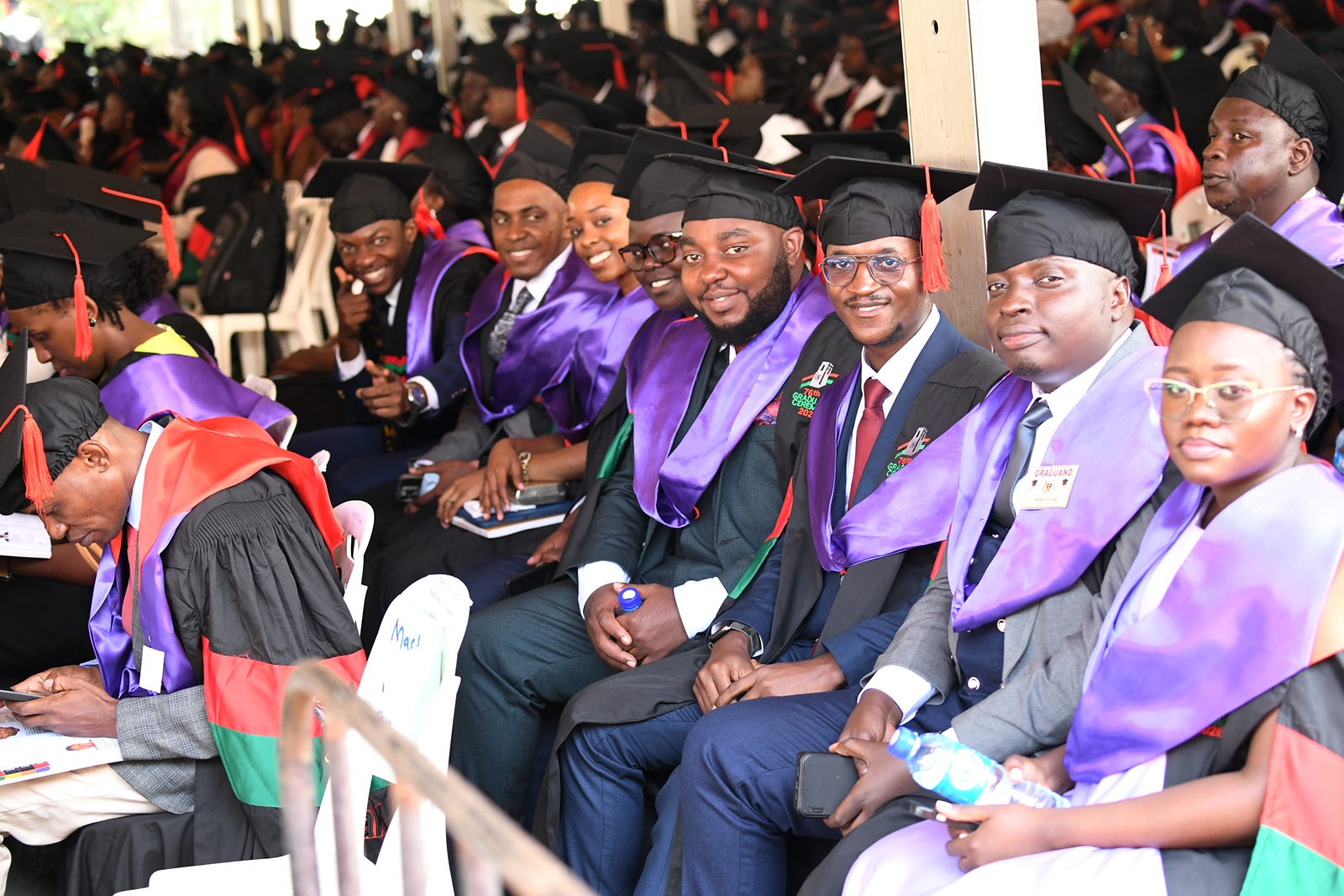
University Chancellor Dr. Crispus Kiyonga confers a Doctorate Degree upon one of the graduands during the 76th Graduation Ceremony.
His appointment reflects the longstanding contribution of Makerere University alumni to public service and national leadership in Uganda and across the region.
Speaking during his installation as Chancellor in 2024, the First Lady and Minister of Education and Sports, Hon. Janet K. Museveni, noted that Dr. Kiyonga’s experience and networks would support the advancement of the university.
Makerere University congratulates Chancellor Dr. Crispus Walter Kiyonga upon his appointment and wishes him success in his new role.
The Writer is a Volunteer in the Public Relations Office, Makerere University and the Mak Sharks PRO | Est. 2014