
General
Mak-MAAIF Partnership to Boost Extension Services Delivery


Makerere University on 22nd November 2017 hosted the closing ceremony for the recently concluded refresher training in Extension Management for 300 technical staff from 122 District Local Governments in Uganda. The ceremony, held in the Main Hall was presided over by the Permanent Secretary, Ministry of Agriculture, Animal Industry and Fisheries (MAAIF)-Mr. Pius Wakabi Kasajja, who represented the Minister Hon. Vincent Ssempijja.
In his remarks, the Hon. Ssempijja noted that the refresher training held under the Agricultural Technology and Agribusiness Advisory Services (ATAAS) project and is in line with MAAIF’s support to the National Development Plan (NDP).
“Through ATAAS, my ministry therefore seeks to strengthen the weak link between agricultural research and advisory services. Makerere is constantly churning out research and researchers and our staff from the District Local Governments are constantly interfacing with farmers. Refresher trainings of this nature are therefore the ideal vehicle through which technology service delivery can be strengthened and scaled up, and the integration of smallholder farmers in value chains can be promoted,” read Hon. Ssempijja’s speech.
In his personal remarks Mr. Kasajja outlined; Production and Productivity, Value Addition and Competitiveness – farmers’ produce satisfying market standards as three broad challenges that affect the agriculture sector in Uganda today. He made an impassioned appeal to the extension workers; as the MAAIF frontline, to take their jobs seriously in order to make agriculture work as it ought.

“Extension services are the answer to transforming the agriculture sector and if you are unserious about your duties, I urge you to engage in something else,” warned Mr. Kasajja, before adding “Mindset change is going to be key if we are going to be the critical change agents and we shall at the opportune time organise a training for extension workers at the National Farmers’ Leadership Centre, Kampiringisa.”
He reassured the extension workers that it was no longer business as usual and as the country adopts agricultural zoning, each district’s extension services would be monitored by their contribution to growth in production and exports. Mr. Kasajja also urged the extension officers to encourage all farmers and households in their respective areas to each plant at least one tree per month in order to mitigate the effects of climate change.
Reaffirming Mr. Kasajja’s remarks, the Director Agriculture Extension Services, MAAIF-Mrs. Beatrice Byarugaba said, “We have asked the District Local Governments to submit at least two value chains to develop. For example, Kayunga has submitted Coffee and Dairy while Apac has submitted Maize and Cassava.”
Through agro-zoning, the District Local Governments are being urged to specialise in strategic, profitable and viable enterprises and value addition in the twelve priority commodities of; bananas, beans, maize, rice, cassava, Irish potatoes, tea, coffee, fruits and vegetables, dairy, fish, livestock (meat), and four strategic commodities of; cocoa, cotton, oil seeds, and oil palm. Mrs. Byaruhanga noted that through extension services, farmers will be given capacity to produce for factories in these priority and strategic commodities.

“Through this refresher training, we have been able to reach 2,920 participants and our target is to train every extension worker in the system by June 2018. Participants have been trained at various Agricultural Institutes and at Makerere University with the College of Agricultural and Environmental Sciences (CAES) and the College of Veterinary Medicine, Animal Resources and Biosecurity (CoVAB),” added Mrs. Byaruhanga.
Representing the Vice Chancellor-Prof. Barnabas Nawangwe the Principal CAES-Prof. Bernard Bashaasha thanked MAAIF for entrusting his college with this task of training District Production and Marketing Officers, District Agricultural Officers, District Veterinary Officers and District Fisheries Officers.
“This training was conducted in the three core areas: Agribusiness development; Agrochemicals and fertilizer optimization in modern crop husbandry; and Postharvest handling technology. I thank our staff from the Department of Agribusiness and Natural Resource Economics, the School of Food Technology, Nutrition and Bioengineering, and the Department of Agricultural Production for conducting these three courses respectively,” said Prof. Bashaasha.
The Vice Chancellor in his remarks noted that the refresher training was in line with Makerere’s core function of knowledge transfer partnerships and networking.
“Through this training, Makerere has been able to address the capacity gaps in extension management among extension workers within the current context of pluralistic extension,” read Prof. Nawangwe’s remarks.

At CoVAB, participants have been able to learn about dry season feeding for ruminants, modern management techniques for ticks, as well as Dairy Value Chain and Meat Value Chain management.
Speaking on behalf of fellow participants, the District Production Officer (DPO) Masaka-Dr. Lawrence Mayega Nyombi expressed his gratitude to the ministry for organizing the refresher training. “Today is a great day because I don’t remember a single day throughout my 23year career when the Ministry of Agriculture, Animal Industry and Fisheries assembled the cream of Uganda’s extension services for refresher training,” he said.
He observed that at a strategic level, extension services had become so fragmented especially with the addition of three to five new Local Governments every financial year, a trend that affected mobilisation and resource allocation.
He further expressed the need for MAAIF to come out with clear guidelines accompanying disbursement of extension grants, so as to prevent these funds from being diverted to other activities such as vaccination. “The Director Extension Services and her team should regularly brief the District Executives, to further emphasise the proper implementation of extension grants,” he added.
Dr. Mayega nevertheless lauded MAAIF through the Director Extension Services for constantly advocating for extension services and workers but requested the officials to further enhance their contribution to population of the Extension Information System by retooling the staff and providing facilitation in the form of gadgets such as laptops, smartphones and transportation.

On an inspiring note, Mr. David Balironda Mukasa, the District Production and Marketing Officer (DPMO) Kalangala shared their Oil Palm Growers Trust (KOPGT) model which he boasted had enabled extension farmers to profit enough from the crop to employ their own extension workers.
“We have implemented the People-Public-Private-Partnership (PPPP) in oil palm growing which has brought an agrarian revolution to Kalangala District. Farmers now have a SACCO to enable them to buy fertilisers and any inputs required. This model can be implemented in any value chain and I urge you to visit Kalangala like other visitors we have received from Austria, London, Canada and learn from us” said Mr. Mukasa.
Article by Public Relations Office



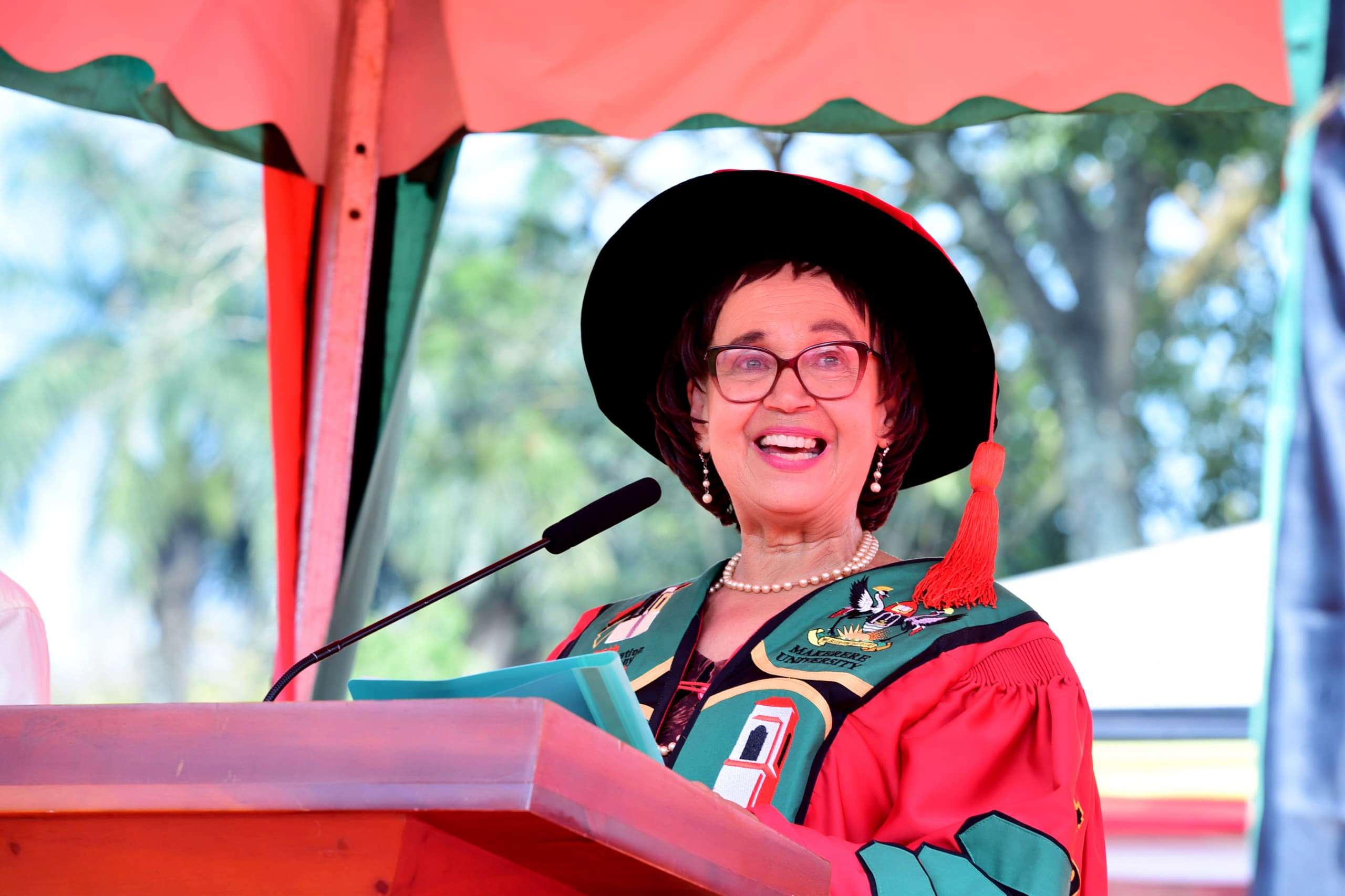
The Board Chairperson of the Makerere University Endowment Fund (MakEF), Dr. Margaret Blick Kigozi, has urged graduands in Health and Life Sciences to uphold professional ethics and serve humanity with diligence and compassion.
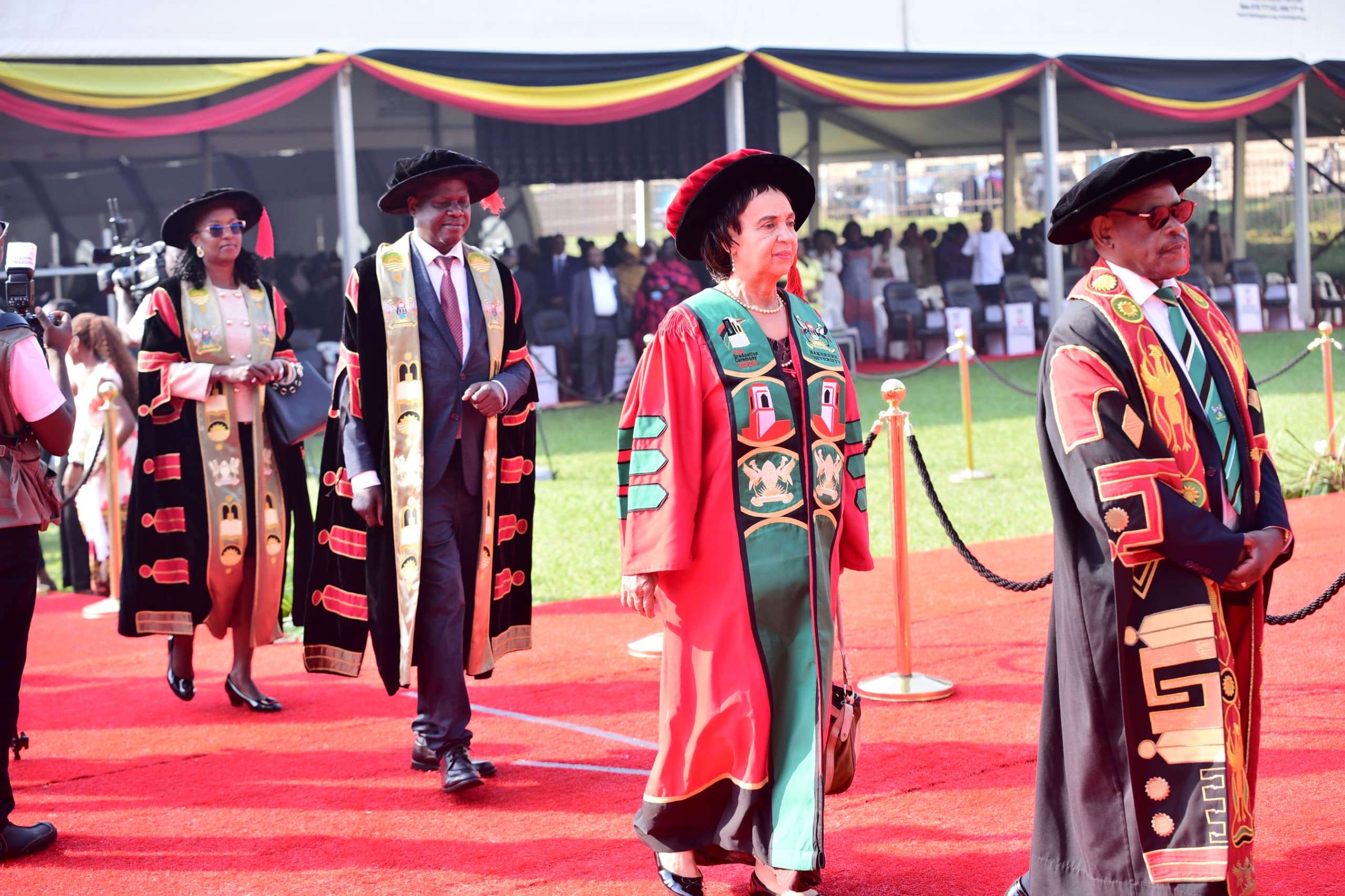
Her appeal came during the passing out of graduates from the College of Natural Sciences (CoNAS), the College of Veterinary Medicine, Animal Resources and Bio-Security (CoVAB), the College of Health Sciences (CHS) and the School of Public Health (SPH) on Day Two of the 76th Graduation Ceremony of Makerere University.
“Class of 2026, you are now part of the Makerere legacy. Wherever you go clinics, laboratories, farms, boardrooms, or classrooms, you carry this institution with you. Serve your patients with skill and compassion. Care for animals and communities responsibly. Question boldly and keep learning,” Dr Kigozi, said.
Delivering the commencement address, Dr. Kigozi lauded the graduates for their dedication to careers that directly impact lives and communities. She encouraged them to use their knowledge generously and exercise their power gently.
“Your education has trained you to ask better questions. Your humanity must guide the answers. Never forget that behind every chart, every case, every animal, every experiment, there is life. And life deserves care, patience, and dignity. Give every person you come in contact with care, patience and dignity,” Dr Kigozi, noted.
As the graduates embark on their professional journeys, Dr. Kigozi emphasized the importance of cultivating basic business acumen and financial literacy to ensure sustainability in their work.
“You do not need to become accountants but you must be able to read the essentials: understand simple financial statements, budgets and key metrics so you can judge whether a clinic, lab, or program is sustainable. You are encouraged to start your business. There are numerous investment opportunities in your areas of training. You can provide services to our people and create jobs,” Dr Kigozi, said.
She shared candidly how, when she first stepped into leadership, she realised she did not understand balance sheets or budgets well enough. So, she returned to Makerere for short courses to strengthen herself.
“A well-run Hospital, clinic or lab delivers better outcomes, attracts staff, and secures funding. Business savvy is not only about profit, it’s about sustainability and the freedom to serve ethically and effectively. Carry clinical skill with business sense so your work endures and grows,” Dr. Kigozi, noted.
Quoting renowned writer and producer Shonda Rhimes, creator of Grey’s Anatomy, who once reflected that succeeding in one area of life can sometimes mean falling short in another, Dr. Kigozi encouraged women graduates to intentionally balance professional ambition with family responsibilities.
“When one area thrives, another is often under strain. When Navio was graduating from school I had to manage the Presidential Investor Round Table on the same day as Executive Director Uganda Investment Authority. I chose my job and delegated his siblings to attend Navios graduation. I learnt from this. I choose family always after that thing you achieve once and keep forever,” Dr Kigozi, said.
In his speech, the Prof Barnabas Nawangwe, the Vice Chancellor, informed the congregation that Makerere’s ranking on all university ranking platforms has remained stable, placing Makerere among the top 10 African universities and within the top 4.5% globally.
“In the Times Higher Education global ranking, Makerere University made a formidable jump from the 1200-1500 bracket to the 800-1000 bracket. This was no mean achievement and I congratulate all members of the Makerere Community on this stellar performance,” Prof Nawangwe, said.
-

 Humanities & Social Sciences5 days ago
Meet Najjuka Whitney, The Girl Who Missed Law and Found Her Voice
-

 Health1 week ago
Uganda has until 2030 to end Open Defecation as Ntaro’s PhD Examines Kabale’s Progress
-
 Agriculture & Environment1 week ago
Uganda Martyrs Namugongo Students Turn Organic Waste into Soap in an Innovative School Project on Sustainable Waste Management
-
 General4 days ago
76th Graduation Highlights
-

 General1 week ago
Mastercard Foundation Scholars embrace and honour their rich cultural diversity