
General
New Makerere University Vice Chancellor Professor Barnabas Nawangwe Installed

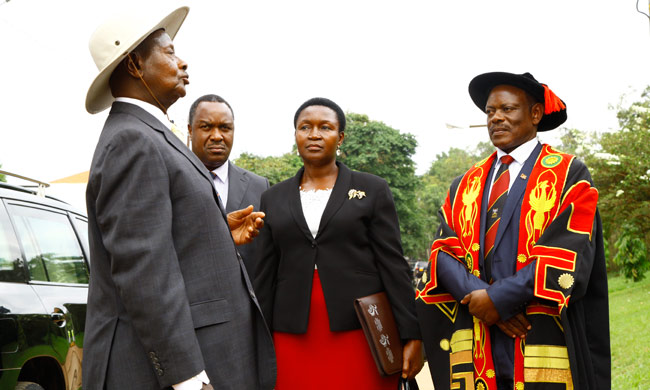
The newly appointed Vice Chancellor Makerere University, Prof. Barnabas Nawangwe has been installed.
Prof. Nawangwe becomes the 11th Vice Chancellor of Makerere University since the University was established as an autonomous institution in 1970.
Nawangwe replaces Prof. John Ddumba-Ssentamu after expiry of his five year term of service from 1st September, 2012-31st August, 2017.
Makerere University Chancellor Prof. Ezra Suruma performed the Installation ceremony.
The Chairman University Council Eng. Dr. Wana Etyem presented tokens to the outgoing Vice Chancellor Prof. John-Ddumba-Ssentamu in recognition of his dedicated service to Makerere University and having risen through ranks to that important position.
The tokens included the Certificate of Service, University Memorable Art piece, and three plaques from the University Senate, MUASA and MASA staff associations.
H.E the President of the Republic of Uganda and Visitor to Makerere University Gen. Yoweri Kaguta Museveni graced the occasion as Chief Guest. 
The Minister of Education, Sports, Science and Technology, Hon. Janet Kataha Museveni was represented by the State Minister in charge of Primary Education and Woman MP Wakiso district Hon. Rosemary Sseninde.
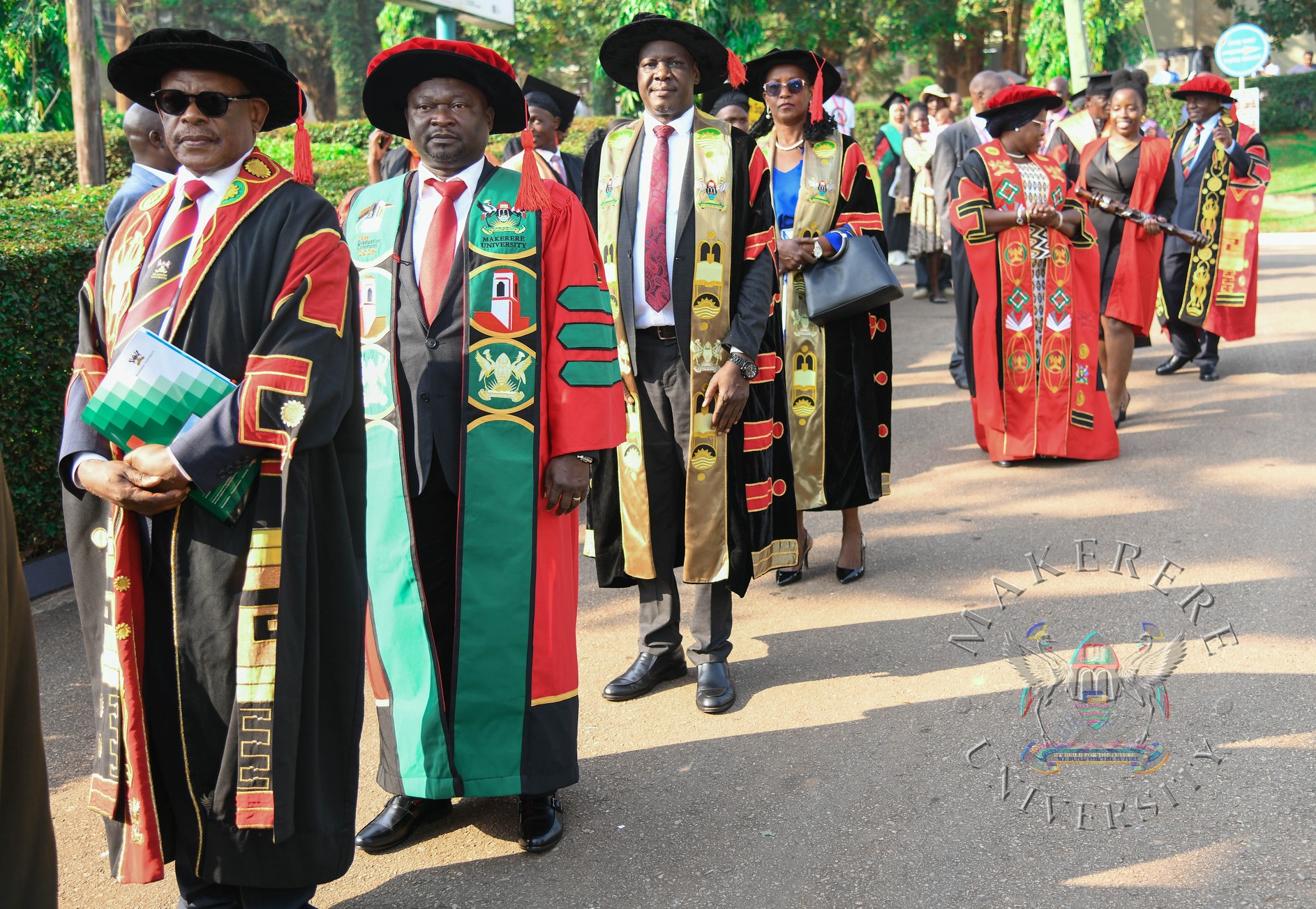
The colorful Installation Ceremony was held in Makerere University Main Hall on 14th September, 2017 and attended by high level dignitaries including representatives from government ministries and departments, Members of Parliament, the diplomatic Corps and Judges of the Judicature and religious leaders.
Also present were Chancellors and former Chancellors, Chairperson and members of the University Council, former Vice Chancellors, Vice Chancellors, Rectors and Principals of other universities and institutions.
The function was also attended by members of the University Senate, staff from Makerere University, distinguished visitors, the student’s guild and media.
In his speech, President Museveni congratulated the new Vice Chancellor upon his election and installation and saluted the outgoing Vice Chancellor Prof. John Ddumba-Ssentamu for the work well done during his five year term.
President Museveni observed that the University Main Hall with a sitting capacity of 500 people could no longer accommodate the numerous internal and external stakeholders invited to attend University functions. He pledged Government support to reconstruct a spacious Conference hall that matches the current trend and accommodate bigger numbers.
The President said Makerere and other universities must play their role by offering programs that offer knowledge and skills for job and wealth creation.
“In my opinion, Universities in Africa must be centres of three things; ideology, technology and intellectuality.
Education in Africa is not mere passing of knowledge, we are learning in order to catch up,” Museveni said.
The President told participants that Africa was the origin of all human beings, earliest civilization and modern religion but in the last 500 years, the continent has been marred by problems of slave trade, colonialism, neo-colonialism, marginalization, bad governance, disease and genocide among others.
“We can’t have educated people with no direction. We don’t want scholars who are not contributing to society wellbeing. Academic independence does not mean academic abstinence and not being part of the struggle to liberate people,” he said.
The Visitor commended the science based colleges for carrying out research, mentoring many people and generating innovations in very difficult conditions.
“Faculties of Sciences are already doing their part and I must congratulate them. Dr. Muranga, Kyamuhangire, Banadda, Togboa, Musasizi and others have patents on their nails that is why I was happy to bring the Presidential initiative for Science and Technology and I will bring more money to support research, patenting and to commercialize patents,” the Fountain of Honor pledged.
The President advised the new Vice chancellor to embark on the curriculum review especially in the social sciences and economics to ensure that graduates take courses that are market oriented for employability and job creation.
“The problem of Makerere University is these courses that are not market oriented. One of the biggest tasks is to reform these courses and concentrate on disciplines which have demand on the market.
Makerere must sit down and see how we can link up with the department of political science and economics and analyze where the country is heading with graduates who are spending time on streets looking for jobs,” President Museveni said.
He enumerated five sectors where jobs and wealth can be found including commercial agriculture, industry, service , ICT and public service.
Speaking on financing, President Museveni applauded the incoming Vice Chancellor’s strategy to use University land to construct facilities to generate income. He said government was now sending 150 billion shillings annually to Makerere University and will be supporting the University if it focuses on commercial reforms.
He also advised management to build facilities through partnerships and shares in addition to generating money from investments.
On the issue of land grabbing, the President said that the Ministry of Lands will cancel all titles built on University land so that those in the habit of grabbing public land lose.
Museveni also pledged to solve the issue of salaries once the University finalises with the issue of curriculum reforms. This, he said, will be handled by the Salary Review Commission in the Ministry of Public Service.
In a speech read by the State Minister for Primary Education Hon. Rosemary Sseninde, the First Lady and Minister of Education and Sports Hon. Janet Museveni described the installation ceremony as an important day in the history of Makerere University.
Mrs. Museveni commended Makerere University for making great strides in ensuring the maintenance of standards, quality and staying relevant in all aspects of University education, training and research.
“I personally believe that a tradition such as today’s installation ceremony creates a link between the past and present. It reminds us of what Makerere University was in the times past as well as where we are heading,” she said.
She said Government recognizes University education as an important cornerstone in the achievement of Vision 2020 and have a responsibility to produce relevant human resources that will drive the country towards a knowledge based economy.
The Minister said she was cognizant of the challenges facing Makerere University including inadequate funding, inadequate and poor infrastructure, inadequate quality control and assurance structures among others.
The Minister reported that government had already instituted a committee headed by the Ministry of Public Service to harmonize salaries in all public Universities.
“The pledge by H.E the President to enhance salaries for staff in public universities still stands and is being done in a phased manner.
Government is committed to this course and will continue implementing the President’s pledge until it is fulfilled,” she promised.
 The Hon. Minister expressed happiness that the University Management and the student leadership had come to a mutual agreement regarding many strikes arising from the university fees policy. She appealed to the students ‘community to learn to constructively engage in dialogue to resolve burning issues.
“As Government we are waiting for the Visitation Committee report which will guide us on addressing the issue of the unit cost”.
Hon. Janet Kataha Museveni appreciated the role played by Makerere University in areas of research and training saying government would like to enhance the role played by universities in implementation of government programmes in driving the country to vision 2020.
The Minister also expressed happiness that the new leadership of Makerere was planning to attract partners that can develop the University land around Kampala and other parts of the country as a means of increasing revenue for the university.
She however warned that it had come to her attention that some individuals have tried to grab some pieces of Makerere University land.
“This is unacceptable and will not be tolerated. I appeal to the University to use Justice Bamugereire’s Land Inquiry Commission to expose these individuals and if you need help please do not hesitate to let me know,” The First Lady stated.
Mrs. Museveni commended the University for acquiring two centralized teaching facilities from the government secured loan from the World Bank worth 29 million USD adding that that the ministry was committed to working with University Management led by Prof. Nawangwe to make a better work place for staff and students.
She welcomed and appreciated all partnerships that Makerere University has initiated with international institutions already impacting on Uganda positively. She pointed out the Israel Agro-studies program which she said Government was optimistic that it will improve the agricultural sector.
To the outgoing Vice Chancellor-Prof. John Ddumba-Ssentamu, the Honourable Minister wished him success in his future endeavors and continued contribution to the country as Professor of Economics.
To the new Vice Chancellor, Mrs. Janet Museveni was optimistic that with his experience as leader and manager at various levels, Prof. Nawangwe will take the University to another level.
The Chancellor Makerere University Prof. Ezra Suruma welcomed all to the installation ceremony and specifically the President for sparing time from his tight schedule to attend.
 Prof. Suruma also thanked the Outgoing Vice Chancellor Prof. John Ddumba-Ssentamu upon his successful completion of his term of office and for the achievements recorded in the past five years.
“I congratulate him for his commitment to Makerere University, for staying on and eventually rising to head this prestigious institution. Thank you Professor for your endurance and persistence in this tough position as Chief Administrator Makerere University,” The Chancellor said.
Prof. Suruma welcomed Prof. Barnabas Nawangwe upon his appointment and installation as Vice Chancellor.
“ As we have all heard, Prof. Nawangwe is a man of vast knowledge, experience and wisdom. He has distinguished himself in teaching, in college leadership and in administration. He has competed and won a free and fair race to become the Chief Executive Officer of this great institution,” The Professor noted.
As Chancellor, Prof. Suruma advised Prof. Nawangwe to encourage both faculty and students to commit themselves more than ever before to intellectual and moral discipline.
“We must be committed to the pursuit of knowledge and discovery in a continuous changing and complex world. But we must be equally committed to use that knowledge morally and patriotically,” he said.
Prof. Suruma expressed hope that under the new leadership of Prof. Nawangwe, Makerere University will be renowned as bastion of moral conduct and academic integrity. He pledged to do everything possible to support the Nawangwe administration and promote the good name of Makerere University.
Prof. Suruma recognized the contribution made by Government of Uganda to Makerere University, the development partners, Members of University Management, Unit heads, the Senate, University Council, staff associations and the students’ leadership.
The Chairperson Makerere University Council Eng. Dr. Wana Etyem reported that Prof. John Ddumba-Ssentamu assumed office at a time when the University was not totally settled and there were many issues that required both immediate and long-term solutions.
He explained that while the many challenges Prof. Ddumba-Ssentamu faced on assumption of office have not been fully addressed, a number of improvements have been recorded. Some of the improvements include, forging collaborations with many universities and development partners, creation of good rapport with Government, Construction of new facilities, facelift of the main gate, and establishment of the Makerere University Holdings Company and maintaining single digit position among African Universities.
“Today I pay tribute to Professor Ddumba-SSentamu for the service he has rendered to Makerere and the country in the last five years.
Council wishes to thank him for his cooperation even during the most trying times that we have lived through during his tenure,” Etyemu said.
Eng. Dr. Etyem also noted that Prof. Nawangwe was coming in at a time when Makerere is facing many internal and external challenges just as his predecessor faced.
This he enumerated include endemic causes of staff strikes that result to university closure, large student numbers putting pressure on space, crisis of confidence with staff and students involved in unethical behavior among others.
Eng. Etyem was hopeful that since the incoming Vice Chancellor Prof. Nawangwe had been in Makerere University since 1983 at various academic and administrative levels, he understood fairly well the challenges of the University.
“While the UOTIA Act as amended states that your responsibility as Vice Chancellor is responsible for academic, administrative and financial affairs of the university, it is incumbent upon you to unbundle your role so that you are not bogged down with mundane daily administrative issues.”
 You must focus on key strategic issues that benefit Makerere University and the nation. You are the focal point for Makerere. You are the Chief Public Relations Officer. You are the ambassador Extra ordinary and Plenipotentiary for Makerere University.
We would like to see firm action on curbing malpractices in the academic arena that erode trust in Makerere’s degrees,” Etyem advised the new Vice Chancellor.
The Council Chair re-emphasized that as Chief Executive Officer, the new Vice Chancellor must lead by example, show a spirit of statesmanship and put behind petty differences, real or perceived.
To the staff, Etyem requested all to cooperate with the new Vice Chancellor. “The three staff associations have pending issues that are not resolved by the University and Government. I would like to use this occasion to appeal to members of MUASA, MASA and NUEI to allow the new Vice Chancellor find his bearing while dialogue continues.
“The students who are here to get knowledge will be looking to your fatherly stewardship of the University. Pay attention to their concerns quickly. You have your immediate subordinates to support you; use them,” Council Chair advised.
He appreciated the Chancellor and Government of Uganda for the support and guidance they continue to render in managing University affairs.
Outgoing Vice Chancellor Prof. John Ddumba -Ssentamu was thankful to God for the provision of the necessary support systems that enabled him to succeed in all circumstances.
Prof. Ddumba-Ssentamu said, it had been a great honor and privilege to have served Makerere University, first as a special Assistant in 1977 and rising through the ranks to the position of Professor of Economics and Chief Executive of the University as Vice Chancellor.
In his hand over report, Professor Ddumba-Ssentamu highlighted responsibilities of Vice Chancellor, issues in the Human Resource Directorate, Student numbers and affairs, Financial standing of the University; challenges facing the university, work in progress and pending activities and achievements during his term of office.
Among key milestone, Prof Ddumba highlighted included infrastructure development, salary enhancement, establishment of the Makerere Holdings Company and Endownment fund and staff development and training.
He reported that the number of staff trained at PhD level increased from 420-732 while a total of 67,256 students graduated in the same period.
He said the total number of PhD during this period was 316. Of these 71.5%were male and 28.5 % were female.
“I am happy to note, I am leaving at a time when Makerere University is ranked 4th on the African continent according to the latest edition of the Times Higher Education World University Rankings of universities in Africa 2017.
Consistently Makerere University has been among the top 10 universities in Africa. At this juncture, I would like to thank the entire academic staff and the top 10 recognized researchers in the region, Prof. Moses Kamya, Prof. Fred Wabwire, Dr. Sewankambo, Prof. Noble Banadda, Prof. Fred Wabwire Mangeni, Dr. James Tumwine, Prof. Phillipa Musoke, Prof. Rhoda Wanyenze, Prof. Nazarius Tumwesigye Mbona and Prof. Peter Waiswa,” Prof. Ddumba acknowledged.
Despite the achievements Prof. Ddumba-Ssentamu enumerated some of the pending activities and work in progress. These included drafting the 10 year University Strategic plan, review of the collegiate system, approval of School of Law to collegiate status and putting in place a staff medical insurance scheme.
Other pending tasks he said are, construction of the students center and perimeter wall, follow up on works under Phase II of the MoU and KCCA, launching the African Centres of Excellence, follow up the Presidential pledge for the conference Hall and perimeter wall, completion of the projects under the AfDB HEST Program and takeover of Makerere University Hospital by College of Health Sciences among others.
In the same report Prof. Ddumba-Ssentamu tabled six recommendations to University Council and University Management for consideration.
They included the continuous review of academic programs, streamlining human resources directorate, increasing the budget for ICT Infrastructure and innovation and stronger monitoring and evaluation of university core function of teaching and learning, research and innovations as well as knowledge transfer partnerships and networking.
Other recommendations were strengthening the Department of Planning and Development and strengthening the international office.
He recognized and appreciated all university stake holders for the support received during his term including H.E the president, development partners, individual ministries and organs, office of the Vice Chancellor, the University Council and management, college principals, Senate, staff associations, Convocation, Uganda Police, Heads of missions, Makerere entire staff and students community .
“I am happy to pass on the mantle to Professor Barnabas Nawangwe who has been part of my management as Deputy Vice Chancellor Finance and Administration.
Professor Barnabas Nawangwe, you are aware of the challenges of this university and I have no doubt that you have the solutions. I call upon members of Makerere University to give you support for the good of our institution.![[L-R] The Chaplain St Augustine Chapel Rev. Fr. Josephat Ddungu (led the opening prayer), The Chaplain St Francis Chapel Rev Canon Amos Turyahabwe, Vice Chancellor Muni University Prof. Christine Dranzoa and Professor Mary Jossy Nakandha Okwakol](http://news2.mak.ac.ug/wp-content/uploads/2017/09/inlineImages_josephat-ddungu.jpg)
“Prof. Nawangwe, I wish you a very fruitful term of office as Vice Chancellor and may God continue to guide you in your service to Makerere University to its desired position- To be a leading institution for academic excellence and innovations in Africa,” Out going Vice Chancellor Prof. Ddumba-Ssenatmu said.
In his acceptance speech, the New Vice Chancellor Prof. Barnabas Nawangwe thanked God for his grace and benevolence in giving Ugandans a great country, a great university and for enabling him to witness his own dream of becoming Vice Chancellor of the great Makerere University.
He thanked H.E the President for gracing the occasion and all dignitaries, staff and students, former administrators and managers of Makerere University for their presence, contribution to Makerere University and for the trust placed in him by appointing him as Vice Chancellor.
Prof. Nawangwe noted that for the past two decades the university has experienced a number of challenges mostly due to inadequate funding adversely affecting staff welfare.
This he said include, several incidences of unrest,, loosing land to grabbers, dropping Non –Tax revenues, heavy debt burden and lack of an integrated information management system affecting university core functions.
Nawangwe however, recognized Government for the timely intervention in enhancing staff salaries giving much needed breathing space to the university.
He urged Government to take the pledge of enhancing the salary of a professor up to shs. 15million and taking over the entire wage bill to its conclusive end in the shortest time possible.
In his strategy Prof. Nawangwe said Makerere University must be repositioned decisively to contribute to Uganda’s development goals.
He said his management strategy was embedded in four strategic directions including: Rebranding and quality of service delivery, Academic reforms, Administrative and Financial Restructuring and Sustainability and, Institutional and Human Resource development.
Under rebranding, Nawangwe said all staff will re-train in customer care and put mechanisms that will improve all processes that enable students to have a holistic experience of university life.
“The intervention will include introduction of central examination marking to minimize delays in release of students’ results and also be able to issue testimonials and transcripts to students in timely manner, institute a monitoring and evaluation tool to track teaching and learning, strengthen committees that deal with sexual harassment,” He said.
Nawangwe said, efforts will be made to redevelop the sports facilities to positively impact on students minds rather than engaging in riots, by redeveloping the main sports ground into a multipurpose stadium.
Under Academic reforms, Prof. Nawangwe said, they will restructure all courses and programmes to make them more practical and relevant to the needs of society, operationalize e-learning and distance education and aggressively move towards increasing the proportion of graduate students.
“We will gradually manage undergraduate student numbers and aggressively increase the graduate student numbers to enhance research capacity and output leading to increased innovation.
We will engage Government with a view that Government re-instates sponsorship of graduate programs and operationalize the university press to enable researchers publish locally.
Additionally, we shall establish a technology transfer office to help commercialize the many innovations by students and staff,” he said.![[L-R] Vice Chancellor Busitema University - Professor Mary Jossy Nakandha Okwakol, Minister of Science, Technology and Innovation and Sheema County North MP Hon. Dr. Elioda Tumwesigye, Vice-chancellor Mbarara University of Science and Technology- Prof. Celestino Obua, Gity Behravan- First Secretary Research Cooperation Swedish Embassy, Dr Ernest Okello Ogwang, First Deputy Vice Chancellor(Academic Affairs), Makerere University](http://news2.mak.ac.ug/wp-content/uploads/2017/09/inlineImages_vcs-minister.jpg)
Under Administrative and Financial Restructuring and Sustainability, Prof. Nawangwe said they will embark on an ambitious program to invest on the university prime land by putting up a teaching hospital, five star hotel, upper and middle income apartments and modern students hostels.
Other strategies included engaging the private sector with a plan to secure buy-in and investment in the projects and lobbying government to take over the entire wage bill.
In addition, Prof. Nawangwe said, they will establish research grants offices in all colleges, to increase research revenue, involve students in the management of some functions to reduce expenditure and streamline management at the center and colleges by making management more inclusive.
Under institutional and Human Resource Development, the new Vice Chancellor said they will continue with staff development plans using own resources and with support from development partners, continue lobbying government to fully implement the pledge to enhance salaries.
“We will operationalize the health insurance scheme effective 2018. We will establish housing support schemes in collaboration with other stakeholders and operationalize the management information system developed by the college of health sciences.
Prof. Nawangwe in his concluding remarks stated that Makerere is a great university by all standards and can and will become even greater and more relevant to the country.
He said in order to achieve that, staff must uphold professional integrity while students must exercise maximum discipline.
“Uganda has made enormous sacrifices and invested in us, we must give back to our dear motherland in double measure.
I wish to make this solemn promise; That I will endeavor to execute the authority entrusted to me with maximum transparency and absolute humility, in order to provide much needed leadership to my large team of more than 5000 employees, so that TOGETHER, we can lift Makerere to the epitome of academic excellence and make Uganda proud, God being my guide,” he pledged.
The Chairperson Vice Chancellor Search Committee Hon. Irene Ovonji-Odida on behalf of the committee reiterated pleasure in witnessing the successful conclusion of the Vice Chancellor Search process that kicked off in March 2017.
I am deeply appreciative of the commitment, integrity and professionalism of the 2017 Search Committee comprising Mr. Bruce Balaba Kabaasa, Dr. Betty Ezati, Dr. Frank Mwine and Prof. Joseph Y T Mugisha.
In execution of this task, we always maintained that the search committee was designed to be fair, transparent and competitive in order to produce the best possible outcome.
We understood the significance of the role of the Vice Chancellor as CEO of the University as a leader, strategic thinker, team builder and champion, who puts the entire university community at the centre of Makerere but also connects it to the wider community beyond,” Ovonji said.
Hon Ovonji -Odida reported that when the Search Committee Report was presented to the University Senate on 28th June, 2017, the report was endorsed in its entirety and the three candidates recommended in their order of performance.
“Prof. Barnabas Nawangwe, Prof. Edward Kirumira and Prof. Venansius Baryamureeba were forwarded to the University Council. When Council voted, Prof. Barnabas Nawangwe again emerged the best.
We heartily congratulate you Barnabas and look forward to collaborating, supporting and holding you to account in your five year tenure as Vice Chancellor Makerere University.
It is my hope that you will use your power wisely to build, to nurture, to grow Makerere and its role in shaping the education sector and beyond that, its footprint in public policy and build a Uganda that is inclusive, and that respects excellence, intellectual rigour, merit, diversity, social justice and honest,” The Chair Search Committee advised.
Hon. Irene Ovonji-Odida also congratulated the outgoing Vice Chancellor Prof. John Ddumba SSentamu, an alumnus of Makerere University who rose through the ranks up to the level of professor, on completing his tenure successfully.
The University Secretary Mr. Charles Barugahare thanked the Search Committee members for the commitment and dedication in searching for a suitable Vice Chancellor.
Barugahare appreciated the University Council, Senate and Chancellor for handling the phases up to the appointment of Prof. Barnabas Nawangwe.
As Chairperson Organising Committee, Barugahare thanked the University Council for entrusting the committee with the responsibility of organizing the installation ceremony.
In a special way, the University Secretary thanked the President for honoring the university invitation and all invited guests for attending.
“Your Excellency, allow me congratulate Prof. Barnabas Nawangwe for the appointment and to wish him a successful five year term. I have the great honor to appreciate the outgoing Vice Chancellor Prof. John Ddumba-Ssentamu for great five year service and to wish him the best in his future endeavors,” he said.
Article by: Ms Jane Anyango, Communication Officer and Ms Ritah Namisango, SPRO
Downloads
Professor-John-Ddumba-Ssentamu-Final-Handover-Report-13-Sept-2017.pdf


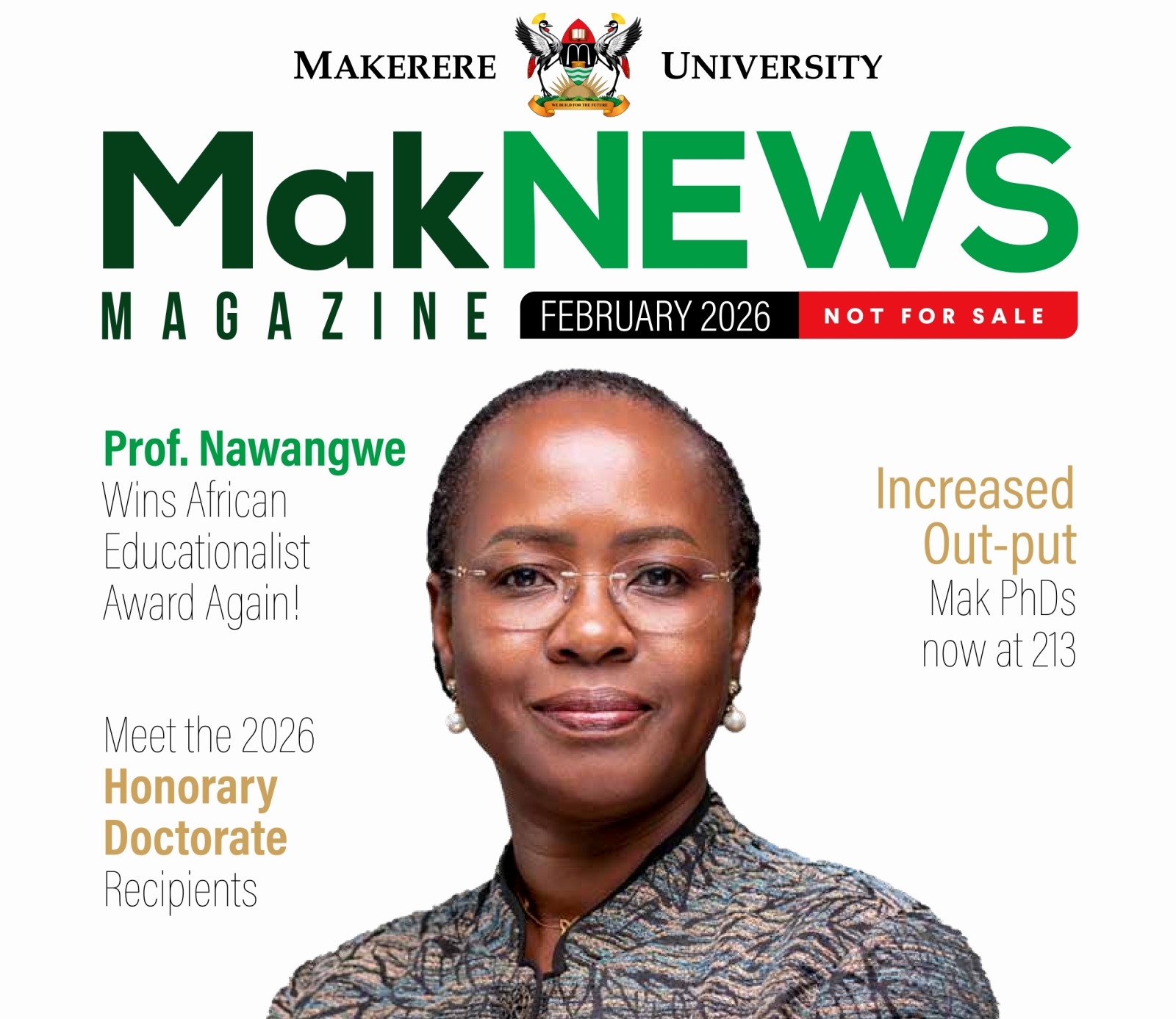

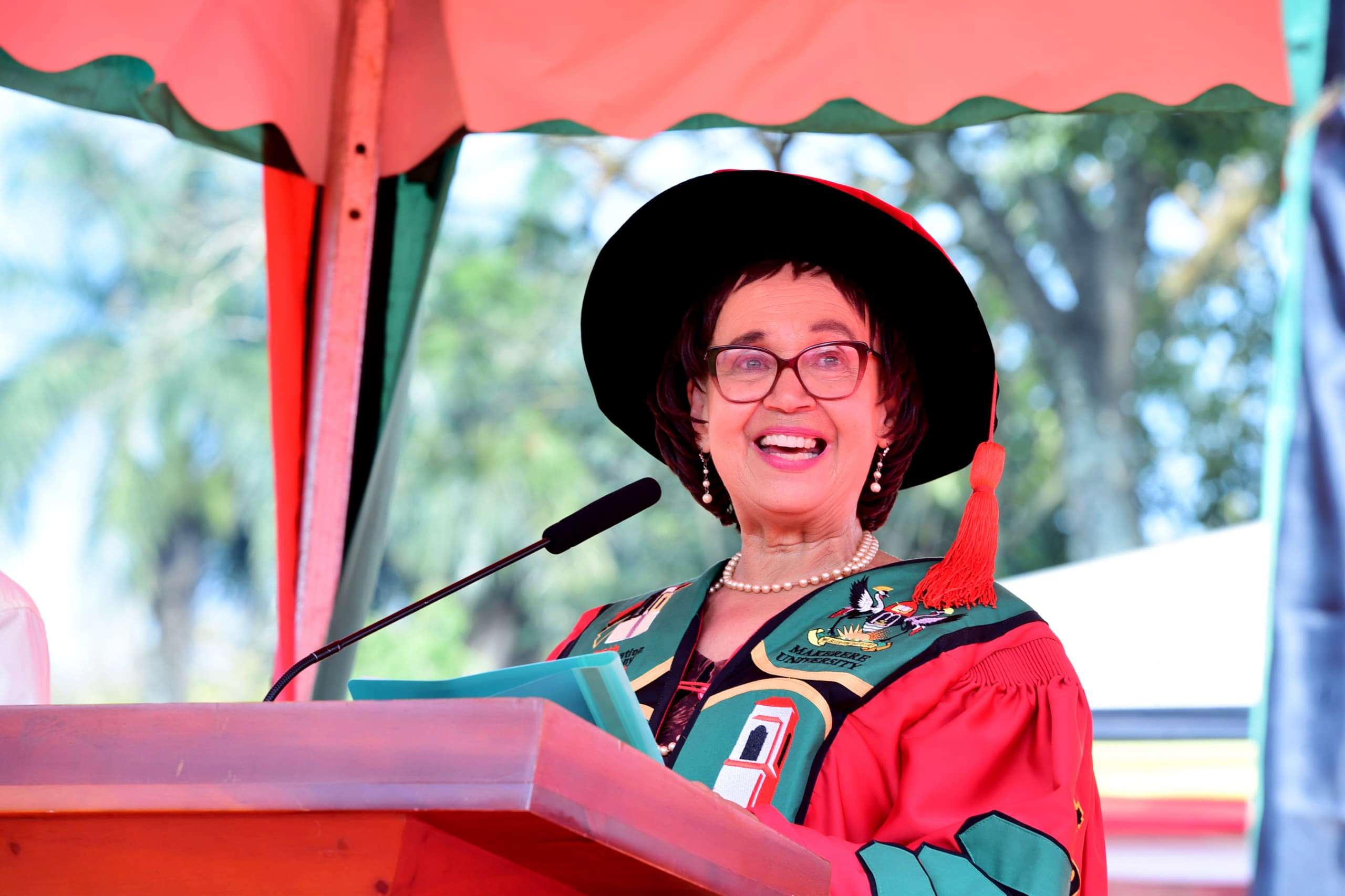
The Board Chairperson of the Makerere University Endowment Fund (MakEF), Dr. Margaret Blick Kigozi, has urged graduands in Health and Life Sciences to uphold professional ethics and serve humanity with diligence and compassion.
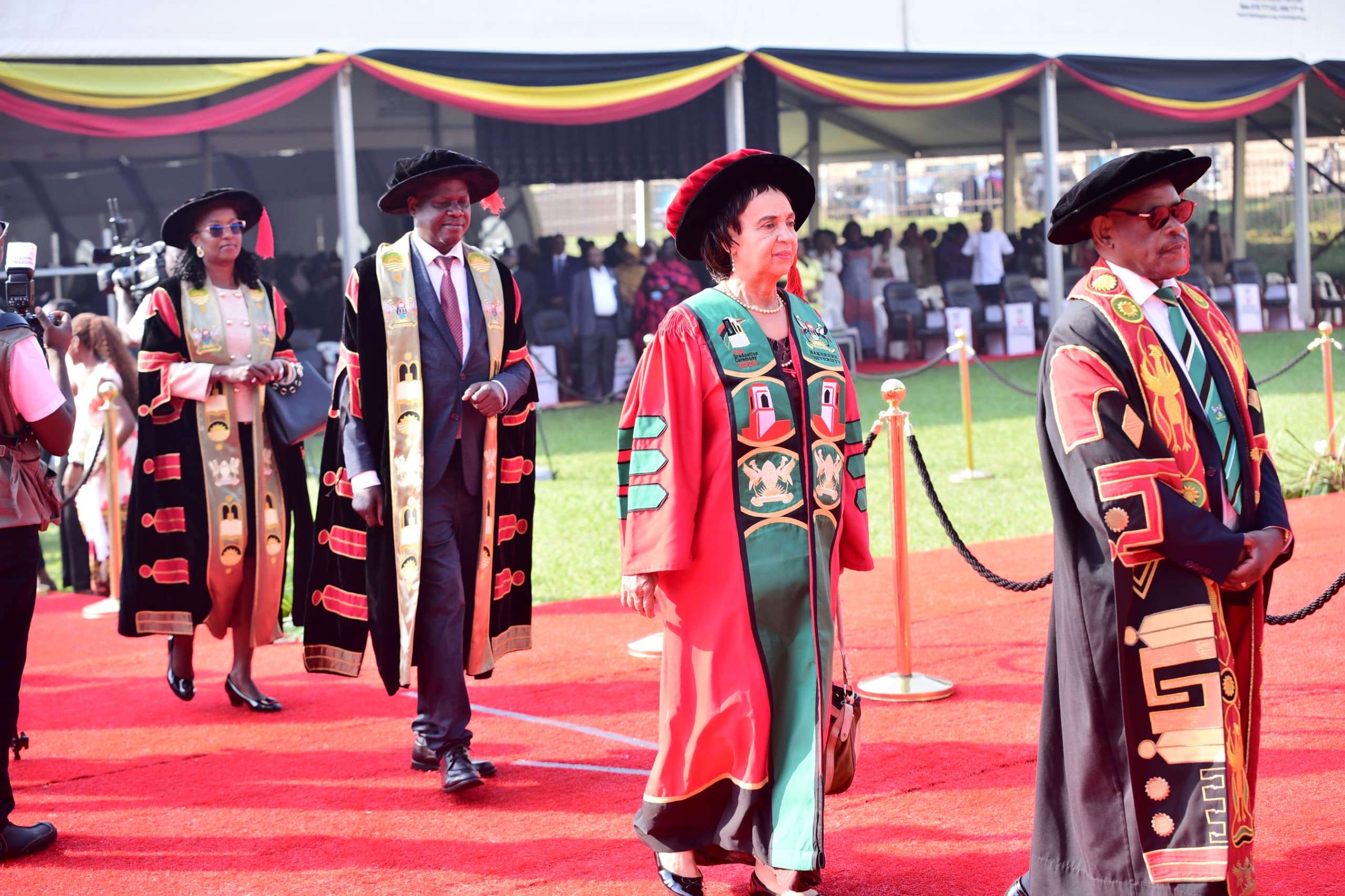
Her appeal came during the passing out of graduates from the College of Natural Sciences (CoNAS), the College of Veterinary Medicine, Animal Resources and Bio-Security (CoVAB), the College of Health Sciences (CHS) and the School of Public Health (SPH) on Day Two of the 76th Graduation Ceremony of Makerere University.
“Class of 2026, you are now part of the Makerere legacy. Wherever you go clinics, laboratories, farms, boardrooms, or classrooms, you carry this institution with you. Serve your patients with skill and compassion. Care for animals and communities responsibly. Question boldly and keep learning,” Dr Kigozi, said.
Delivering the commencement address, Dr. Kigozi lauded the graduates for their dedication to careers that directly impact lives and communities. She encouraged them to use their knowledge generously and exercise their power gently.
“Your education has trained you to ask better questions. Your humanity must guide the answers. Never forget that behind every chart, every case, every animal, every experiment, there is life. And life deserves care, patience, and dignity. Give every person you come in contact with care, patience and dignity,” Dr Kigozi, noted.
As the graduates embark on their professional journeys, Dr. Kigozi emphasized the importance of cultivating basic business acumen and financial literacy to ensure sustainability in their work.
“You do not need to become accountants but you must be able to read the essentials: understand simple financial statements, budgets and key metrics so you can judge whether a clinic, lab, or program is sustainable. You are encouraged to start your business. There are numerous investment opportunities in your areas of training. You can provide services to our people and create jobs,” Dr Kigozi, said.
She shared candidly how, when she first stepped into leadership, she realised she did not understand balance sheets or budgets well enough. So, she returned to Makerere for short courses to strengthen herself.
“A well-run Hospital, clinic or lab delivers better outcomes, attracts staff, and secures funding. Business savvy is not only about profit, it’s about sustainability and the freedom to serve ethically and effectively. Carry clinical skill with business sense so your work endures and grows,” Dr. Kigozi, noted.
Quoting renowned writer and producer Shonda Rhimes, creator of Grey’s Anatomy, who once reflected that succeeding in one area of life can sometimes mean falling short in another, Dr. Kigozi encouraged women graduates to intentionally balance professional ambition with family responsibilities.
“When one area thrives, another is often under strain. When Navio was graduating from school I had to manage the Presidential Investor Round Table on the same day as Executive Director Uganda Investment Authority. I chose my job and delegated his siblings to attend Navios graduation. I learnt from this. I choose family always after that thing you achieve once and keep forever,” Dr Kigozi, said.
In his speech, the Prof Barnabas Nawangwe, the Vice Chancellor, informed the congregation that Makerere’s ranking on all university ranking platforms has remained stable, placing Makerere among the top 10 African universities and within the top 4.5% globally.
“In the Times Higher Education global ranking, Makerere University made a formidable jump from the 1200-1500 bracket to the 800-1000 bracket. This was no mean achievement and I congratulate all members of the Makerere Community on this stellar performance,” Prof Nawangwe, said.
-
 Humanities & Social Sciences5 days ago
Meet Najjuka Whitney, The Girl Who Missed Law and Found Her Voice
-
 Health1 week ago
Uganda has until 2030 to end Open Defecation as Ntaro’s PhD Examines Kabale’s Progress
-
 Agriculture & Environment1 week ago
Uganda Martyrs Namugongo Students Turn Organic Waste into Soap in an Innovative School Project on Sustainable Waste Management
-
 General4 days ago
76th Graduation Highlights
-
 General1 week ago
Mastercard Foundation Scholars embrace and honour their rich cultural diversity