
General
Prof. Maria Musoke a solid bridge between Health and Information Sciences

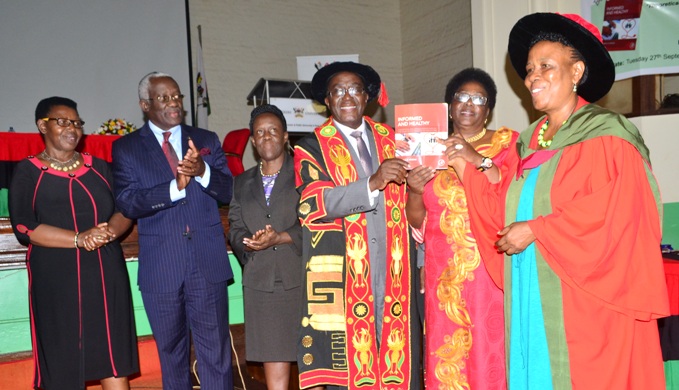
On 27th September 2016, the Prime Minister of the Republic of Uganda Rt. Hon. Dr. Ruhakana Rugunda hailed Prof. Maria Musoke for her tremendous work in bridging the gap between health and information. This was at a high profile launch of Prof. Maria Musoke’s book Informed and Healthy: Theoretical and Applied Perspectives on the Value of Information to Health Care attended by renowned dignitaries, scholars, and academicians who convened in the Makerere University Main Hall. The launch was indeed a befitting celebration of their own; a renowned researcher, academician and mentor.
In a speech read by the Cabinet Minister in Charge of General Duties in the Office of the Prime Minister Hon. Mary Karooro Okurut, the Rt. Hon. Prime Minister congratulated Prof. Maria Musoke for adding to a body of knowledge by authoring a book that clearly articulates the great power that is embedded in information.
“This book is very relevant and timely, it is written in the language that does not need deciphering. It highlights the value of information and confirms that indeed information is power,” he said.
The Prime Minister expressed gratitude for being selected by the author to write a foreword to the book when he said, “I am happy to write the Foreword to Dr. Musoke’s book and I pledge to be the one of the key marketers not only in Uganda but in the global village.”
In her own words, Hon. Karooro Okurut observed that whoever has worked with Prof. Maria Musoke can testify to her “Perennial hard work, dedication to duty, and focused and committed leadership,” further adding “she is endowed with a tickling brain which she has put to good use.”
 In the same spirit, the Makerere University Vice Chancellor Prof. John Ddumba-Ssentamu applauded Prof. Maria Musoke’s scholarly achievement in coming up with the book; a must-read for students and information professionals, Librarians and Professors of Information Science.
“Prof. Maria Musoke is an information authority in her own right, who made the most of her sabbatical leave to produce this important resource. Her work encourages us to achieve value for time during periods of research and sabbatical,” he said.
Through her book the Informed and Healthy: Theoretical and Applied Perspectives on the Value of Information to Health Care, it is hard to underestimate the academic and scholarly efforts by Prof. Maria G N Musoke, to bridge the gap between health and information among people in the rural areas.
Informed and Healthy: Theoretical and Applied Perspectives on the Value of Information to Health Care is an asset focusing on the value attributed to information by users and its effect on health care. The book also provides a new model of information behavior in which the value of information drives various information activities. According to the author, the book also demonstrates the value of having an informed audience when it comes to health issues.
 “The book confirms that when people are informed they are healthy and when the health workers apply the knowledge in their work, there are many benefits to health care. It is a valuable resource for health professionals, planners, and policy makers, as well as researchers interested in health information systems and their applicability in different environments,” said Prof. Musoke.
To the Author, the book uses a case study of the health information system in Uganda and expands the analysis by comparing it to other systems utilized by different countries in diverse levels of development. It demonstrates the fitness of the value model for the phenomenon of information access.
Informed and Healthy: Theoretical and Applied Perspectives on the Value of Information to Health Care was compiled and completed basing on research on women and health workers in four districts of Uganda which included Lira, Mukono, Masaka and Bushenyi. It focuses on the distribution of information pertaining to health among rural people.
"If we have an informed society, the health status must improve… If all Ugandans were informed that we should wash our hands after visiting the toilet, there would be minimum disease spread," she said.
The book is currently on market in the various bookshops in Uganda at UGX 100,000 and can be accessed online at US$ 56.95.
During the launch, two renowned Scholars; Prof. Grace Ndeezi from College of Health Sciences (CHS) and Dr. Joyce Bukirwa Muwanguzi from College of Computing and Information Sciences (CoCIS) added value to the day’s proceedings by authoritatively discussing Prof. Maria Musoke’s Book.
In her discussion Prof. Grace Ndeezi a Professor of Pediatrics and Child Health said that Informed and Healthy: Theoretical and Applied Perspectives on the Value of Information to Health Care is a vital book that addresses a big gap most of other scholars have reluctantly over looked. According to Prof. Ndeezi, the book is very instrumental to information delivery, access, and use of critical information for public health.
“So many diseases and other related health problems can be solved by information. I therefore state that the title of the book is befitting,” she remarked.
 In addition, Dr. Joyce Bukirwa Muwanguzi observed that Prof. Musoke’s book portrays a paradigm shift of information. Heralding the book as a great contribution to Information Science as a discipline, Dr. Bukirwa Muwanguzi noted that the publication also affirms Prof. Maria Musoke’s passion for information dissemination. She highlighted the need to translate the book into several languages so as to benefit all the different people in the country. “Since the country is multilingual in nature, there is need to translate such literature for the benefit of all citizens,” she said.
Citing the importance of authors in addressing the several challenges in this country and the world at large through scholarly writings and publications, Lady Justice Prof. Lillian Tibatemwa-Ekirikubinza said there is a need to improve the policies and laws governing authors and publishers in the country. This, she noted, would encourage more writers to come forth on the scene. She commended Prof. Musoke’s commitment in translating knowledge into practice and examining the value of information and its ability to affect the bottom line of better health.
 “I therefore say, if you want to author another book and another, you should focus on the joy and thrills that you meet on your journey as a writer,” she said. The Lady Justice further said that authorship is a mark of academic growth and shared with the audience the challenge to write her own book describing her experience as a female Member of the Makerere University Management.
Introducing the author, the Deputy Principal, College of Computing and Information Sciences (CoCIS), Dr. Agnes Semwanga Rwashana presented Professor Maria G N Musoke as a lady of many firsts. She is and will always be remembered as the first Ugandan woman to get a PhD in Information Science in 2001, which she obtained from the University of Sheffield, UK. She was the first Ugandan woman to become a Professor of Information Science in 2010, the first Librarian from the Sub-Saharan Africa to chair the Health and Bioscience Section on the International Federation of Library Association and Institutions (IFLA), and the first Ugandan woman to head Makerere University Library Services in 2004, a post she held for two terms until December 2014.

Prof. Musoke holds a Bachelor of Science degree and a concurrent Diploma in Education, a Postgraduate Diploma in Library and Information Science (LIS) from Makerere University, a Masters degree from University of Wales and a PhD in Information Science.
The guests were treated to a series of entertaining folk compositions by the Department of Performing Arts and Film (PAF), Makerere University, led by their beaming Head, Dr. Sylvia Nannyonga-Tamusuza.
Arrticle by: Mak-Public Relations Office


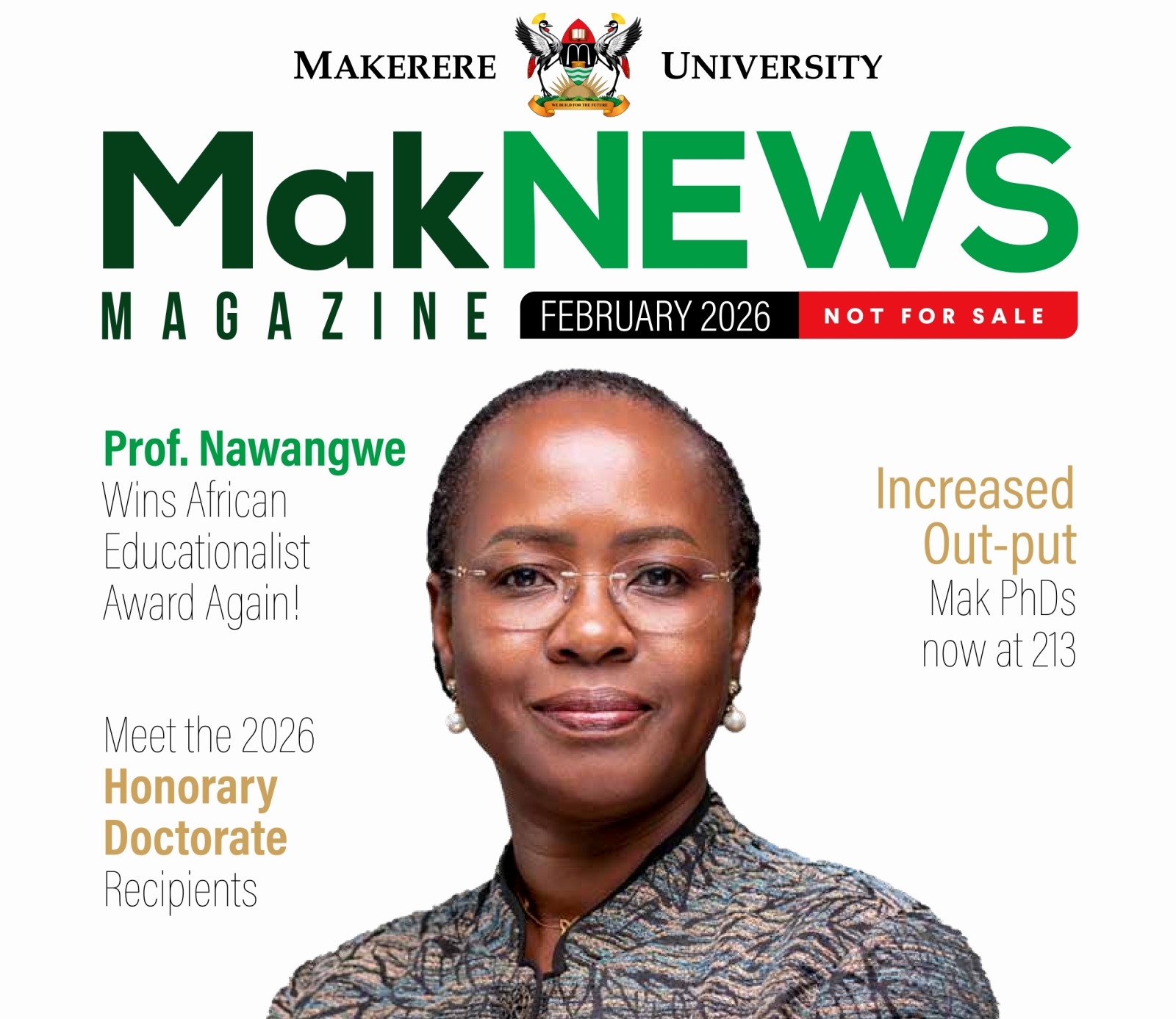

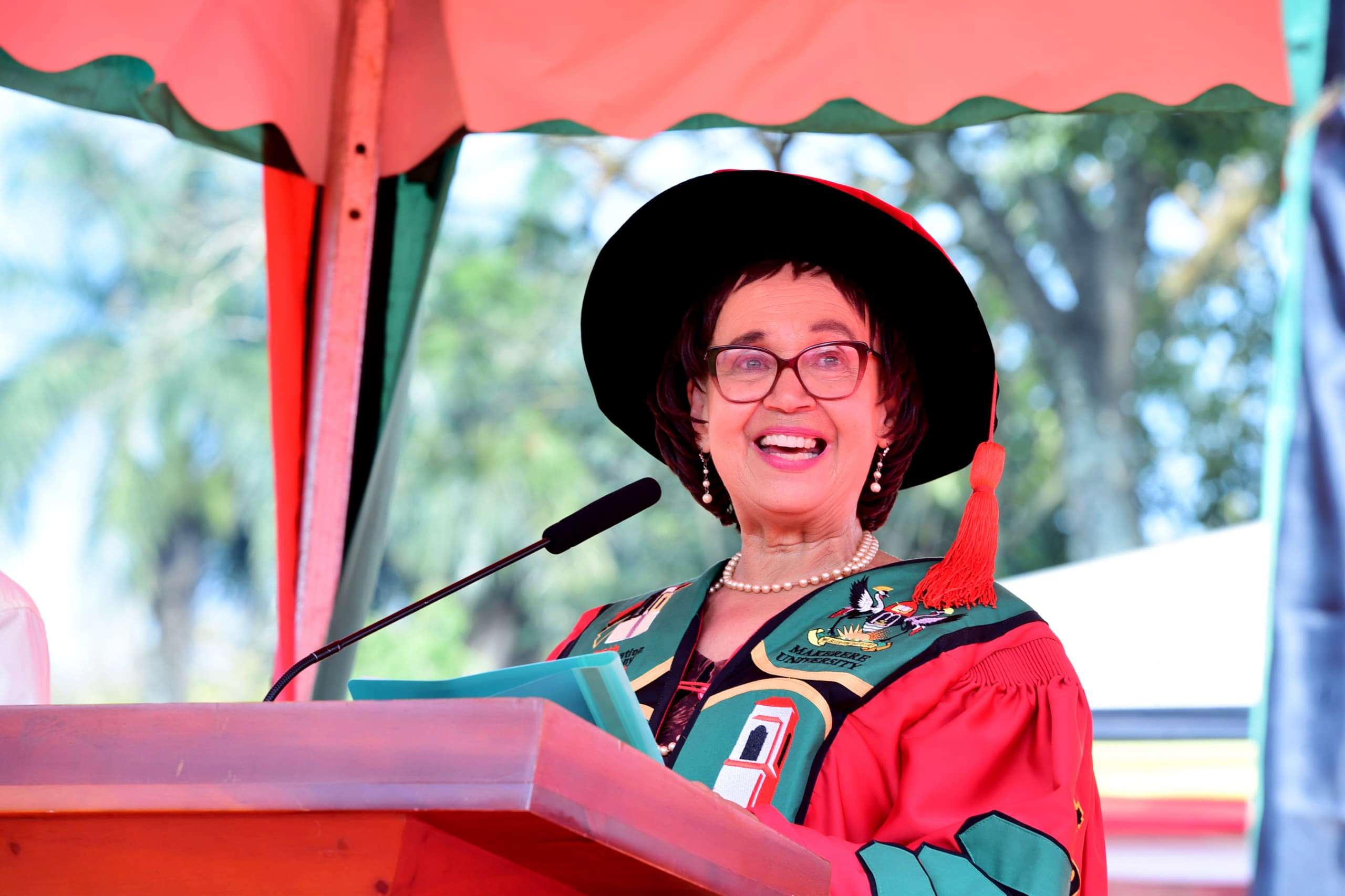
The Board Chairperson of the Makerere University Endowment Fund (MakEF), Dr. Margaret Blick Kigozi, has urged graduands in Health and Life Sciences to uphold professional ethics and serve humanity with diligence and compassion.
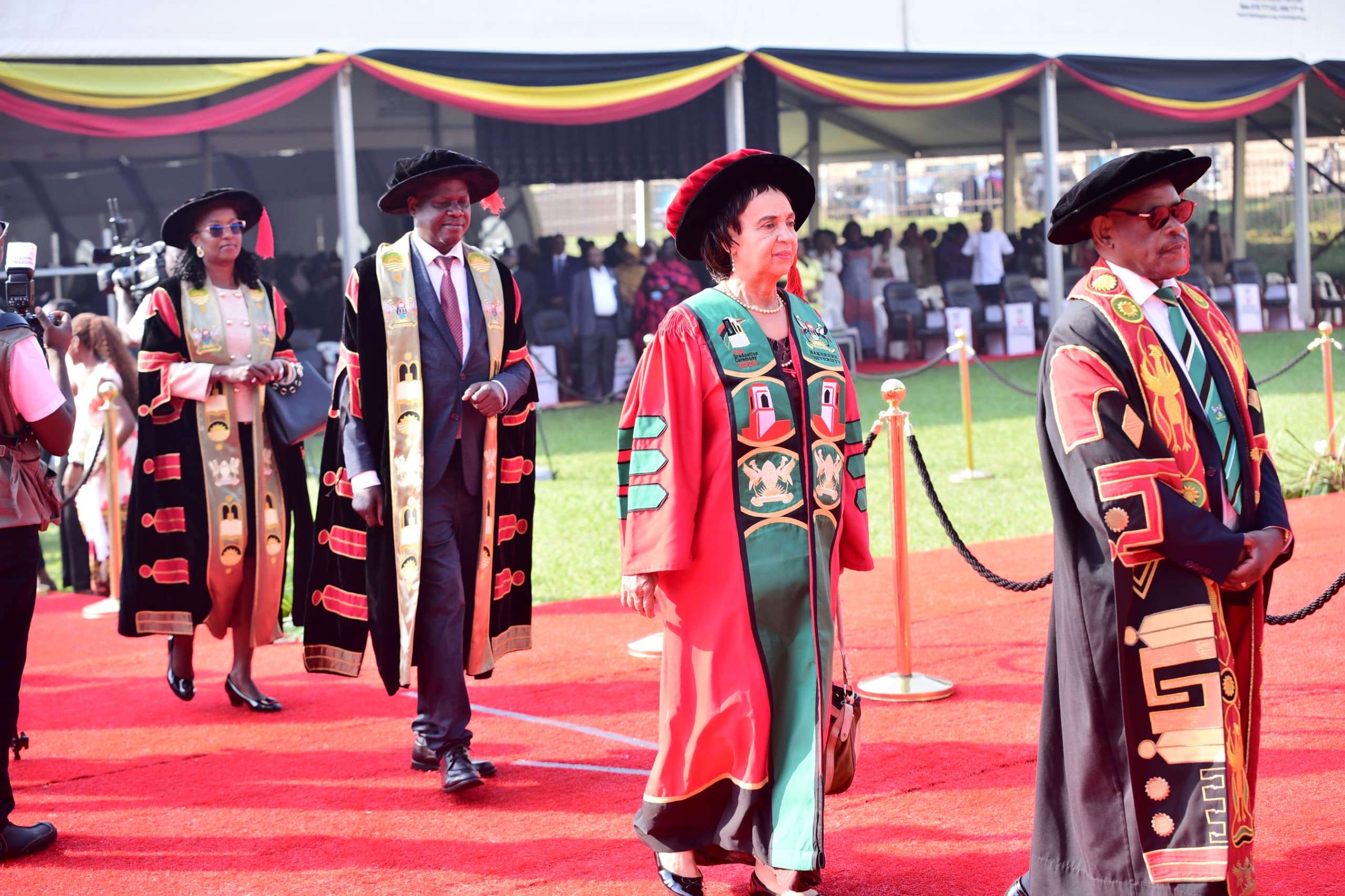
Her appeal came during the passing out of graduates from the College of Natural Sciences (CoNAS), the College of Veterinary Medicine, Animal Resources and Bio-Security (CoVAB), the College of Health Sciences (CHS) and the School of Public Health (SPH) on Day Two of the 76th Graduation Ceremony of Makerere University.
“Class of 2026, you are now part of the Makerere legacy. Wherever you go clinics, laboratories, farms, boardrooms, or classrooms, you carry this institution with you. Serve your patients with skill and compassion. Care for animals and communities responsibly. Question boldly and keep learning,” Dr Kigozi, said.
Delivering the commencement address, Dr. Kigozi lauded the graduates for their dedication to careers that directly impact lives and communities. She encouraged them to use their knowledge generously and exercise their power gently.
“Your education has trained you to ask better questions. Your humanity must guide the answers. Never forget that behind every chart, every case, every animal, every experiment, there is life. And life deserves care, patience, and dignity. Give every person you come in contact with care, patience and dignity,” Dr Kigozi, noted.
As the graduates embark on their professional journeys, Dr. Kigozi emphasized the importance of cultivating basic business acumen and financial literacy to ensure sustainability in their work.
“You do not need to become accountants but you must be able to read the essentials: understand simple financial statements, budgets and key metrics so you can judge whether a clinic, lab, or program is sustainable. You are encouraged to start your business. There are numerous investment opportunities in your areas of training. You can provide services to our people and create jobs,” Dr Kigozi, said.
She shared candidly how, when she first stepped into leadership, she realised she did not understand balance sheets or budgets well enough. So, she returned to Makerere for short courses to strengthen herself.
“A well-run Hospital, clinic or lab delivers better outcomes, attracts staff, and secures funding. Business savvy is not only about profit, it’s about sustainability and the freedom to serve ethically and effectively. Carry clinical skill with business sense so your work endures and grows,” Dr. Kigozi, noted.
Quoting renowned writer and producer Shonda Rhimes, creator of Grey’s Anatomy, who once reflected that succeeding in one area of life can sometimes mean falling short in another, Dr. Kigozi encouraged women graduates to intentionally balance professional ambition with family responsibilities.
“When one area thrives, another is often under strain. When Navio was graduating from school I had to manage the Presidential Investor Round Table on the same day as Executive Director Uganda Investment Authority. I chose my job and delegated his siblings to attend Navios graduation. I learnt from this. I choose family always after that thing you achieve once and keep forever,” Dr Kigozi, said.
In his speech, the Prof Barnabas Nawangwe, the Vice Chancellor, informed the congregation that Makerere’s ranking on all university ranking platforms has remained stable, placing Makerere among the top 10 African universities and within the top 4.5% globally.
“In the Times Higher Education global ranking, Makerere University made a formidable jump from the 1200-1500 bracket to the 800-1000 bracket. This was no mean achievement and I congratulate all members of the Makerere Community on this stellar performance,” Prof Nawangwe, said.

-
 Humanities & Social Sciences5 days ago
Meet Najjuka Whitney, The Girl Who Missed Law and Found Her Voice
-

 Health1 week ago
Uganda has until 2030 to end Open Defecation as Ntaro’s PhD Examines Kabale’s Progress
-

 General4 days ago
76th Graduation Highlights
-

 Agriculture & Environment1 week ago
Uganda Martyrs Namugongo Students Turn Organic Waste into Soap in an Innovative School Project on Sustainable Waste Management
-

 General1 week ago
Mastercard Foundation Scholars embrace and honour their rich cultural diversity