Connect with us

General

Inter-University Dialogue on Strikes calls for Calm

Published

on

The Inter University Conference for Peace in East Africa (IUCP – EA) held a half day dialogue on 28th Nov. 2013 at Makerere University to discuss University strikes. The dialogue attracted participants from a number of universities including Kyambogo, Uganda Martyrs University – Nkozi, Makerere University Business School, Kampala international University and Makerere University – the host.

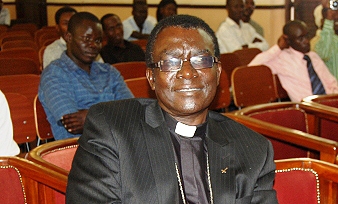
The Chairperson of IUCP – EA and St. Francis Chaplain Rev. Canon Dr. Johnson Ebong, decried the continued culture of strikes at Institutions of higher learning. “University strikes have almost become an integral part of our Dr. Simba Ssali Head, Department of Political Science and Public Administration, College of Humanities and Social Sciences (CHUSS), Makerere Univresity, Kampala Ugandacherished institutions, notwithstanding the gross costs they come with,” he said. “Preventing strikes and alleviating their negative effects require urgent action, calling for concerted efforts from all stakeholders,” he added.

The dialogue was opened by the Makerere University Vice Chancellor, Prof. John Ddumba – Ssentamu, who observed that, “This dialogue on University Strikes is very important to Makerere University as we have had a fair share of strikes both by students and members of staff. We need to understand the causes of the strikes and we in Management should make sure that these causes are well understood.”

In his presentation, Dr. Simba Kayumba Ssali the Head, Department of Political Science and Public Administration, College of Humanities and Social Sciences (CHUSS), noted that most of the world’s positive social transformations SSP Muleterwa Anatoli, Uganda Police Force (UPF) makes his remarks at the Inter-Univresity Dialogue, 28th Nov 2013, Makerere University, Kampala Ugandahave been as a result of strikes. He attributed the University strikes to State withdrawal. “The State significantly withdrew from funding public universities following a World Bank report in the 1990s. This resulted into cost-sharing, with universities continuously looking at students as a source of funding,” he argued. He advised that the state needs to increase funding in public universities and that the organizational structure of student leadership be revised to match that of Staff at Makerere University. Most Makerere University students stay outside halls of residences and yet issues affecting them, which are academic in nature as opposed to welfare, are not well represented in the current structure.

Hon. Beti Kamya Turwomwe, President, Uganda Federal Alliance attended the Inter-University Dialogue on Strikes, 28th November 2013, Makerere University, Kampala UgandaThe University Secretary, Mr. David Kahundha Muhwezi, attributed strikes to a communication gap highly portrayed by misinformation. “Someone will wake up and circulate an allegation. Before you know it, the allegation has caused a lot of tension and a strike is looming. It is best that students take time off to understand issues/policies before resorting to strikes. The University has ample mechanisms of resolving conflict,” he emphasized.

The dialogue was attended by Politicians including Hon. Beti Kamya – President of Uganda Federal Alliance, Deans of Students, University Religious Leaders, SSP Muleterwa Anatoli from the Uganda Police Force (UPF), Student Leaders and representatives from Civil Society Organisations (CSOs).

Article by Marion Alina, Public Relations Office

Mark Wamai

Continue Reading

General

Re-Advert for the Position of the Second Deputy Vice Chancellor

Published

on

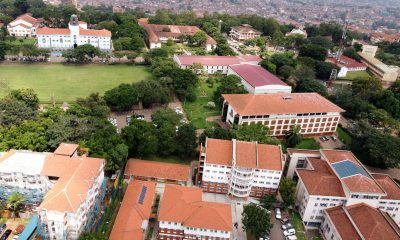
An aerial shot of the Main Building, as taken by a drone over the Freedom Square with Left to Right: CHUSS, St. Francis, St. Augustine and CAES Buildings and the Kikoni area (Background) in view. Makerere University, Kampala Uganda, East Africa.

Makerere University is governed by the Universities and Other Tertiary Institutions Act, Cap 262. The University is seeking applications from suitably qualified applicants for the position of Second Deputy Vice-Chancellor. The Second Deputy Vice Chancellor holds a pivotal role in financial governance, institutional planning, and administrative leadership.

1.        POSITION:  SECOND DEPUTY VICE-CHANCELLOR

2.        SALARY SCALE: PU2

3:        DUTY STATION: MAKERERE UNIVERSITY

  4.       ROLE

The Second Deputy Vice-Chancellor will report to the Vice–Chancellor and shall:

  1. Assist the Vice Chancellor in performance of his or her functions and in that regard shall oversee the finances and administration of the University;
  2. Be responsible for the Planning and Development of the University and,
  3. Perform such other functions that may be delegated to him or her by the Vice Chancellor or assigned by the University Council.

5.         PURPOSE OF THE JOB

To provide strategic leadership and ensure efficient and sound financial, human and fiscal resources management in the University.

6.         DUTIES AND RESPONSIBILITIES

  1. Provide leadership in Strategic planning and governance, leadership and administrative experience, Human resource and performance Management, Stakeholder engagement and collaboration.
  2. Provide leadership in preparation and implementation of the University’s recurrent and capital budgets.
  3. Monitor the development and implementation of the University’s accounting procedures, manuals and other documents relating to financial control and Management as per approved financial regulations.
  4. Oversee income and expenditure of all income generating units of the University.
  5. Coordinate the production of the University-wide Financial Reports by Colleges and Units.
  6. Management of human resources in the University.
  7. Oversee the management of University Estates and Assets.

7.  CANDIDATE SPECIFICATION

  1. Hold a PhD or any other academic doctorate.
  2. Be at the rank of associate or full professor level in an institution whose academic ranking is comparable with that of Makerere University as accepted by Senate.
  3. Be a Ugandan citizen within the age bracket of 40 to 65 years at the time of application.

7.1 Academic Qualifications

  1. Earned a Ph.D. or equivalent doctorate should be acceptable by Senate.
  2. At least five years of financial or administrative leadership experience at the level of school dean/director or higher in a higher education institution, public service, or corporate institutions.
  3. Supervised at least ten (10) postgraduate students (Master’s and Ph.D.) to completion. At least three of the students must be at the PhD level.

7.2 Strategic Planning and Governance

  1. Experience in leading large administrative teams at the level of dean or higher, demonstrating efficiency and productivity.
  2. Proven record in developing and executing strategic plans, aligning financial and administrative objectives with institutional goals.
  3. Evidence of developing and implementing financial policies that have improved financial efficiency, transparency, and risk management.
  4. Evidence of implementing organisational restructuring or process improvements to ensure operational efficiency.
  5. Ability to develop and implement institutional policies, ensuring compliance with national higher education and financial regulations.

7.3 Leadership & Administrative Experience

  1. Minimum 5 years of senior academic leadership in a recognized institution comparable with that of Makerere University, as accepted by Senate.
  2. Demonstrated experience in managing budgets exceeding UGX 500,000,000=, ensuring financial sustainability and accountability.
  3. Proven ability to mobilize resources, secure grants, and attract external funding to support institutional growth.
  4. Experience in conducting financial forecasting, cost control measures, and investment strategies to optimize institutional resources.
  5. Track record of leading financial audits and compliance assessments in alignment with national and international financial regulations.
  6. Experience in handling procurement, asset management, and infrastructure development, ensuring transparency and value for money.

7.4       Human Resource and Performance Management

  1. Track record of leading workforce planning, recruitment, and talent development strategies, ensuring a high-performance institutional culture.
  2. Experience in implementing performance-based appraisal systems, leading to improved staff efficiency and accountability.
  3. Proven ability to foster industrial harmony, resolving labour disputes and improving employer-employee relations.

7.5        Infrastructure Development and Resource Optimization

  1. Experience in overseeing capital development projects, ensuring timely delivery and cost efficiency.
  2. Track record of overseeing the maintenance and expansion of university facilities, enhancing institutional infrastructure.
  3. Proven ability to negotiate and manage contracts for outsourced services, ensuring cost-effectiveness and quality standards.

7.6          Digital Transformation and ICT Integration

  1. Experience in integrating ICT solutions in financial and administrative operations, improving service delivery and efficiency.
  2. Evidence steering the automation of financial, procurement, and HR systems, reducing paperwork and improving real-time decision making.
  3. Proven ability to implement cybersecurity measures that safeguard institutional financial and administrative data.

7.7          Stakeholder Engagement & Collaboration

  1. Demonstrated experience in building partnerships with government agencies, donors, private sector investors, and international organizations to enhance institutional funding.
  2. Proven ability to engage faculty, students, and staff in financial decision-making, ensuring transparency and inclusivity.
  3. Experience in negotiating contracts, partnerships, and collaborations that have led to financial and administrative growth.

7.8        Personal Attributes

  1. High level of integrity, transparency, and ethical leadership, with a record of financial prudence.
  2. Strong analytical, problem-solving, and decision-making skills, backed by evidence of successfully managing complex financial and administrative challenges.
  3. Excellent communication, negotiation, and interpersonal skills, ensuring effective stakeholder engagement.
  4. A visionary leader with the ability to drive financial sustainability. administrative efficiency, and institutional growth.

8.         REMUNERATION

An attractive remuneration package that is in accordance with Makerere University terms and conditions of service.

9.         TENURE

The Second Deputy Vice Chancellor shall hold office for a period of five years   and shall be eligible for re-appointment for one more term.  

10.       METHOD OF APPLICATION

Interested applicants are invited to submit their application letters. The following documents shall comprise a complete application:

  1. A signed letter of application;
  2. A vision statement;
  3. Curriculum Vitae with contact details signed and dated by the applicant;
  4. Copies of required minimum number of publications;
  5. Certified copies of academic transcripts and certificates;
  6. Three (3) letters of recommendation;
  7. Copies of letters of appointment to leadership positions at the level of Dean of a School in a national accredited university or other academic institution;
  8.  A copy of the applicant’s National Identity Card or passport;
  9. A copy of the last clearance from the Inspector General of Government or other equivalent national body;
  10. Referees should be advised to send confidential reference letters, addressed to the Chairperson Search Committee for the Position of Second Deputy Vice Chancellor and delivered directly to the address below by 5:00 pm on Friday 13th February, 2026;
  11. The references should cover the following areas: the applicant’s academic credential, experience, leadership, managerial and administrative skills and personal integrity.

Both Hardcopy and Electronic (Email) applications shall be accepted.

  1. Hardcopy applications: Both confidential letters and sealed applications marked “CONFIDENTIAL: POSITION OF SECOND DEPUTY VICE CHANCELLOR” should be addressed to:

SECRETARY SEARCH COMMITTEE

THE ACADEMIC REGISTRAR

MAKERERE UNIVERSITY

6TH Floor, ROOM 602, SENATE BUILDING

P.O.BOX 7062, KAMPALA, UGANDA

  1. Electronic media (e-mail) applications should have all the above documents scanned and emailed to search.dvcfa@mak.ac.ug by 5.00 pm East African Standard Time on Friday 13th February, 2026.

Please note that:

  1. Incomplete applications or applications received after the closing date and time will not be considered.
  2. Only shortlisted applicants shall be contacted.
  3. Applicants who responded to the advertisements published on 31st December 2025 (The New Vision) and 2nd January 2026 (The Daily Monitor) do not need to re-apply.

For more Information and inquiries: 

Visit our website https://mak.ac.ug/search-for-dvcs OR email us on search.dvcfa@mak.ac.ug OR Call Telephone number: +256-414-532634 during working hours (between 8:00 am to 5:00 pm Monday to Friday).

MAKERERE UNIVERSITY IS AN EQUAL OPPORTUNITY EMPLOYER

Prof. Mukadasi Buyinza

ACADEMIC REGISTRAR

Mak Editor

Continue Reading

General

Press Statement: Makerere University Congratulates Former Staff and Students on Successful Election to Public Office

Published

on

An aerial photo of Clockwise Top Left to Right: St. Francis Chapel, Main Building, CAES, JICA Building, Chemistry Building, Mathematics, School of Statistics, Main Library, Yusuf Lule Central Teaching Facility, CoBAMS, EPRC, IGDS and the Freedom Square. Makerere University, Kampala Uganda, East Africa.

Makerere University warmly congratulates its former staff and students who emerged victorious in the 2026 national elections. Their success is a source of immense pride to the University and a strong affirmation of Makerere’s efforts to not only nurture academic excellence but also free expression and leadership. It is evidence of Makerere’s enduring impact and contribution to leadership, public service, and national development.

We are particularly pleased to recognize the following distinguished members of the Makerere University community who emerged victorious:

  • Dr. Kiyonga Crispus Walter, Chancellor of Makerere University, on his election as MP for Bukonzo West.
  • Mr. Kabaasa Bruce Balaba, Chair, Finance, Planning, Administration, and Investment Committee of the University Council, on his election as MP for Rubanda County West.
  • Mr. Alionzi Lawrence, former Guild President of Makerere University, on his election as Lord Mayor of Arua City.
  • Mr. Maseruka Robert, former Guild President of Makerere University, on his election as MP for Mukono South.
  • Mr. Gyaviira Lubowa Ssebina, former Deputy Bursar of Makerere University, on his election as MP for Nyendo–Mukungwe.
  • Prof. Lubega George Willy, former Staff at College of Veterinary Medicine, Animal Resources and Biosecurity (COVAB), on his election as MP for Bugangaizi South.
  • Prof. Ahebwa Wilber Manyisa, former Staff at College of Agricultural and Environmental Sciences (CAES), on his election as MP for Nakaseke North.
  • Hon. Adeke Anna Ebaju, former Guild President, on her re-election as Woman MP for Soroti District.
  • Hon. Onekalit Denis Amere, former Guild President, on his re-election as MP for Kitgum Municipality.
  • Hon. Karuhanga Gerald, former Guild President, on his re-election as MP for Ntungamo Municipality.
  • Hon. Aber Lillian, former Vice Guild President, on her re-election as Woman MP for Kitgum District.
  • Hon. Nyamutoro Phiona, former Vice Guild President, on her election as Woman MP for Nebbi District.

Makerere values dialogue, democracy, and responsible citizenship, and continues to make deliberate and progressive efforts to enhance participation in leadership and governance. We are confident they will serve with dedication, wisdom, and integrity.

We Build for the Future.

Mak Editor

Continue Reading

General

Mak Hosts NCHE Competence-Based Education Standards Validation Meeting

Published

on

Prof. Mary Okwakol (Centre) with Prof. Sarah Ssali and other leaders of Higher Education Institutions after the CBE minimum standards validation meeting on 23rd January 2026. National Council for Higher Education (NCHE) validation meeting of the draft minimum standards for implementing Competence-Based Education (CBE) in Higher Education Institutions, Yusuf Lule Central Teaching Facility Auditorium, 23rd January 2026, Makerere University, Kampala Uganda, East Africa.

Makerere University on 23rd January 2026 hosted the National Council for Higher Education (NCHE) validation meeting of the draft minimum standards for implementing Competence-Based Education (CBE) in Higher Education Institutions. The meeting held in the Yusuf Lule Central Teaching Facility Auditorium brought together Vice Chancellors, Rectors, Principals and Academic Registrars from Higher Education Institutions in Uganda.

Prof. Sarah Ssali. National Council for Higher Education (NCHE) validation meeting of the draft minimum standards for implementing Competence-Based Education (CBE) in Higher Education Institutions, Yusuf Lule Central Teaching Facility Auditorium, 23rd January 2026, Makerere University, Kampala Uganda, East Africa.
Prof. Sarah Ssali.

Hosted by the Vice Chancellor, Prof. Barnabas Nawangwe represented by the Deputy Vice Chancellor (Academic Affairs), Prof. Sarah Ssali, the meeting followed institutional input into the draft minimum standards and was aimed at validating them prior to their formal adoption by the NCHE Council at their next meeting in February 2026. The minimum standards cover nine areas namely; 1) Curriculum Design, 2) Teaching and Learning Approaches, 3) Assessment, 4) Faculty Training and Support, 5) Student Support Services, 6) Quality Assurance Systems, 7) Industry and Community Linkages, 8) Monitoring and Evaluation, and 9) Gender and Equity Mainstreaming.

Prof. Mary Okwakol (Left) and Dr. Vincent Ssembatya listen to feedback from leaders. National Council for Higher Education (NCHE) validation meeting of the draft minimum standards for implementing Competence-Based Education (CBE) in Higher Education Institutions, Yusuf Lule Central Teaching Facility Auditorium, 23rd January 2026, Makerere University, Kampala Uganda, East Africa.
Prof. Mary Okwakol (Left) and Dr. Vincent Ssembatya listen to feedback from leaders.

Following feedback into presentations by the various leaders present, a motion to adopt the draft minimum standards, with institutional input incorporated, was moved by Bugema University, seconded by UMCAT School of Journalism and Mass Communication, and unanimously supported by institutions present.

Prof. Mary Okwakol. National Council for Higher Education (NCHE) validation meeting of the draft minimum standards for implementing Competence-Based Education (CBE) in Higher Education Institutions, Yusuf Lule Central Teaching Facility Auditorium, 23rd January 2026, Makerere University, Kampala Uganda, East Africa.
Prof. Mary Okwakol.

At the conclusion of the meeting, Prof. Sarah Ssali appreciated NCHE for choosing Makerere to host the landmark event, reiterating that the University greatly respects each and every Higher Education Institution and regards them as partners and collaborators in the quest to improve Uganda’s Higher Education sector.

Part of the audience that attended the validation meeting. National Council for Higher Education (NCHE) validation meeting of the draft minimum standards for implementing Competence-Based Education (CBE) in Higher Education Institutions, Yusuf Lule Central Teaching Facility Auditorium, 23rd January 2026, Makerere University, Kampala Uganda, East Africa.
Part of the audience that attended the validation meeting.

The Executive Director NCHE, Prof. Mary Okwakol reassured leaders present that all the pertinent issues raised for input into the draft minimum standards would be incorporated, and urged those with pressing issues to submit them before month’s end. She reiterated NCHE’s readiness to continue lobbying Government for the resources required by Higher Education Institutions, particularly Public Universities, to implement Competence-Based Education (CBE).

Mark Wamai

Continue Reading

Trending