
General
Makerere Honours President Kibaki, Officially Launches Colleges

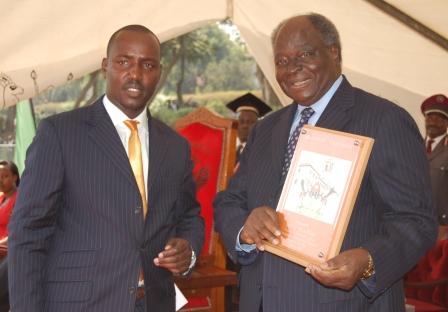
Makerere University on Tuesday 24th January 2012, concluded the 62nd Graduation Ceremony with the award of an Honorary Doctorate of Laws to President Mwai Kibaki of Kenya,
Makerere University on Tuesday 24th January 2012, concluded the 62nd Graduation Ceremony with the award of an Honorary Doctorate of Laws to President Mwai Kibaki of Kenya,
in recognition of his distinguished and outstanding contribution to public service at the national, regional and international levels – especially in the areas of Academic Excellence, Political, Social and Economic reforms. The highly colourful ceremony was attended by President Yoweri Museveni of Uganda, President Mwai Kibaki of Kenya, Ministers, Diplomats, Makerere University staff and students.
Described as one of Africa’s illustrious sons and an eminent Statesman, President Mwai Kibaki, was applauded for his exemplary leadership. Part of the citation revealed that H.E. Dr. Emilio Stanley Mwai Kibaki worked as a bus conductor for the now defunct Othaya Bus Service Company during his school days.
Raised in a humble family, President Kibaki worked hard in School and earned a scholarship to join the then Makerere College (now Makerere University) – where he pursued a Bachelor of Arts Degree in Economics, History and Political Science. He graduated in 1955 with a First Class Bachelor of Arts degree. President Kibaki also served as Vice Chairman of the Makerere Students Guild (1954-1955). In 1955, he enrolled at the London School of Economics for a Bachelor of Science in Public Finance, and graduated with distinction in 1958. He then served his alma mater-Makerere University as an Assistant Lecturer in the Department of Economics from 1958 to 1960. Joining Makerere was a turning point for the fresh Doctor as acknowledged in his acceptance speech:
 “This recognition is a great honour to me, my family and Country. I shall cherish it for the rest of my life. Being here has triggered a great sense of nostalgia for the many years I studied and lectured at this great institution. Many of my leadership skills were developed and nurtured here,’’ he stressed. “I sincerely thank Makerere University for the honour bestowed upon me. I look forward to working closely with you,’’ he added.
President Kibaki called upon the young generation to put their countries’ interest before self, adding that the current challenges facing Africa can be solved through a combination of homegrown and borrowed traditions. He applauded Makerere University for making the electric car, the KIIRA EV and called for mass production of such innovations.
 President Yoweri Museveni revealed that he has secured approval for funding towards Makerere University, especially in light of the Presidential Initiative that kick started a number of Projects in the College of Engineering, Design, Art and Technology – CEDAT; the School of Food Technology, Nutrition and Bio-Engineering; and the College of Veterinary medicine, Animal Resource and Bio Security, CoVAB.
“I applaud the young men and their professors for putting the little money we gave them to proper use. The NRM caucus has resolved to support me now. They will get for you the money you wanted,’’ he emphasized to the cheering crowd.
Before President Kibaki, Makerere University has awarded honorary doctorates of Laws to other Heads of State including H.E Benjamin Mkapa, H.E. Rashid Mfaume Kawawa, and H.E Yoweri Kaguta Museveni.
 The Vice Chancellor Prof. Venansius Baryamureeba said Makerere University was taking the recognitions a step further. “Makerere University is going a step further to recognise-in-perpetuity through erecting buildings in the name of Makerere University and in the names of eminent statesmen and stateswomen that shall serve as centres of academic excellence for the current and future generations. For those already honoured we shall wait for their consent before we begin the fundraising drive to raise funds to put up buildings in their names. These projects are very feasible in the sense that for each project a contribution of an average of US$1,000 per person from 10,000 persons would raise US$10 million. For President Kibaki, who is being honoured today, we would like to request you to accept to be the Chairperson of Makerere University Mwai Kibaki endowment fund that shall raise funds that shall be used among others to put up a building at Makerere University that shall be named after you,’’ he explained.
 The two Excellencies also officially launched the Constituent Colleges Makerere University. To symbolize this launch, they unveiled a beautiful relief sculpture designed by Assoc. Prof. George Kyeyune from the College of Engineering, Design, Art and Technology – CEDAT.
“This sculpture is a presentation of Makerere’s transition into a collegiate system. Its texture is similar to a rock to signify Makerere as a strong giant. It also shows that Makerere is striving for better,’’ explains Dr. George Kyeyune an Associate Professor at the Margaret Trowell School of Industrial and Fine Arts (MTSIFA), who sculpted the historical piece.
Inscribed on this sculpture are the names of the nine constituent Makerere University Colleges listed in alphabetical order. The sculpture will be put in the Main Building Hallway for all to see.
The 62nd graduation has come to a close. Special thanks to the various teams that have seen the event, which started on 16th January 2012, end successfully. It is worth noting that last week, students from the College of Business And Management Sciences, CoBAMS, exhibited a high level of discipline deserving of the Chancellor's mention.

Congratulations to all graduates and congratulations to Makerere University for officially turning Collegiate.
Downloads
Audio
Citation of Honour by Prof. Grace K. Bantebya: .wma(19.13MB)
H.E. Dr. Mwai Kibaki's Acceptance Speech: .wma(11.42MB)
Address by H.E. Dr. Gen. Yoweri K. Museveni: .wma(29.83MB)
Article by Marion Alina, Public Relations Office


After 14 years of dedicated service, Claire Nakayiza, a familiar face and trusted custodian at the School of Public Health (SPH), has retired, leaving behind a legacy of hard work, commitment, kindness and service to the School community.
For many people at the School of Public Health, the sight of Claire arriving early in the morning, opening up the building and ensuring that everything was in order was simply part of the daily rhythm of life at the School.
For 14 years, Claire has been a constant presence at SPH. She has witnessed generations of staff, students, researchers and visitors walk through the School’s doors. She has seen colleagues join, grow and eventually move on, while she remained a dependable presence, quietly carrying out her responsibilities and ensuring that the School was ready to welcome everyone each day.
Her retirement was therefore more than a routine farewell. It was an opportunity for colleagues to celebrate a woman whose contribution, though often carried out behind the scenes, touched many lives and contributed significantly to the smooth running of the School.
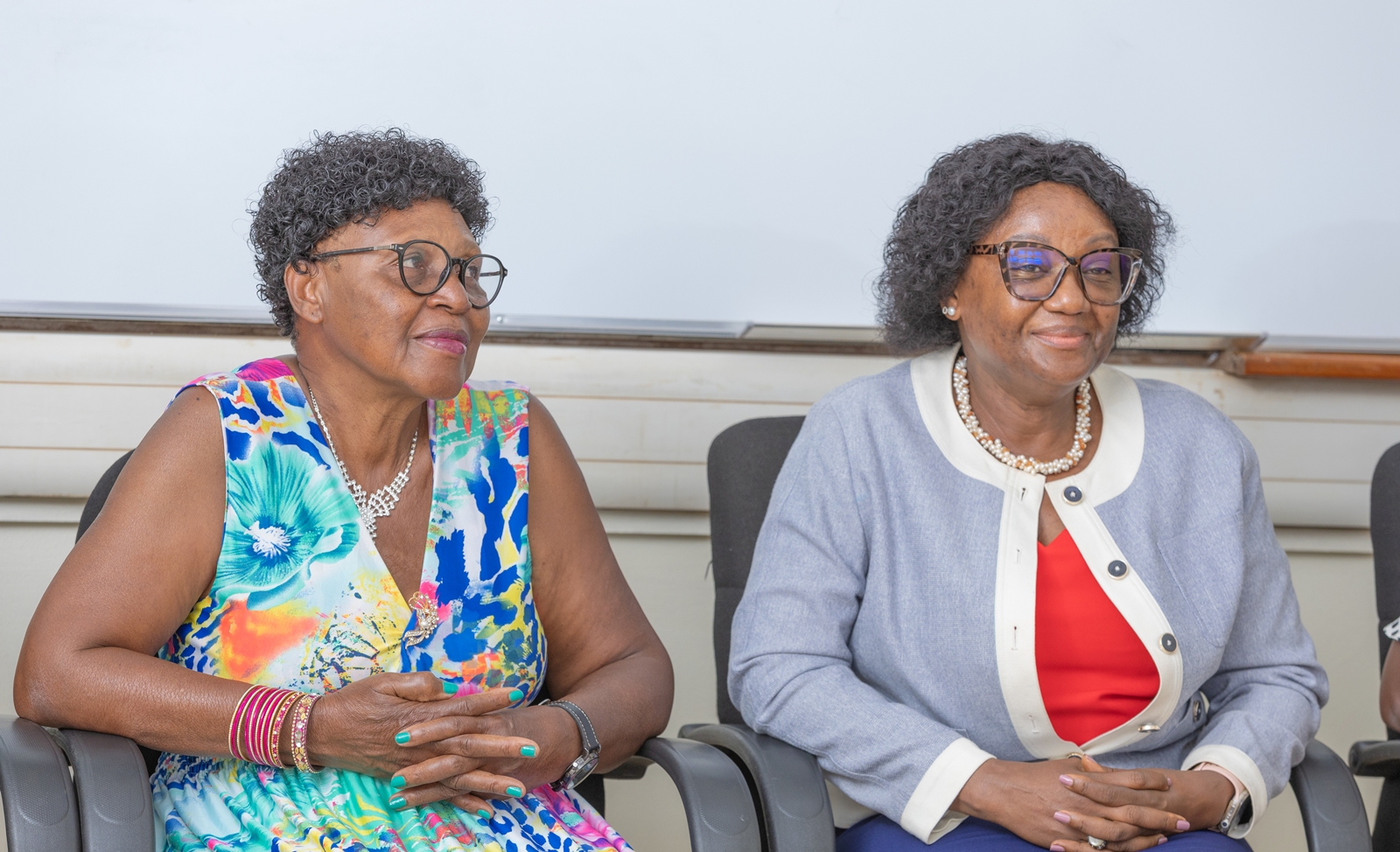
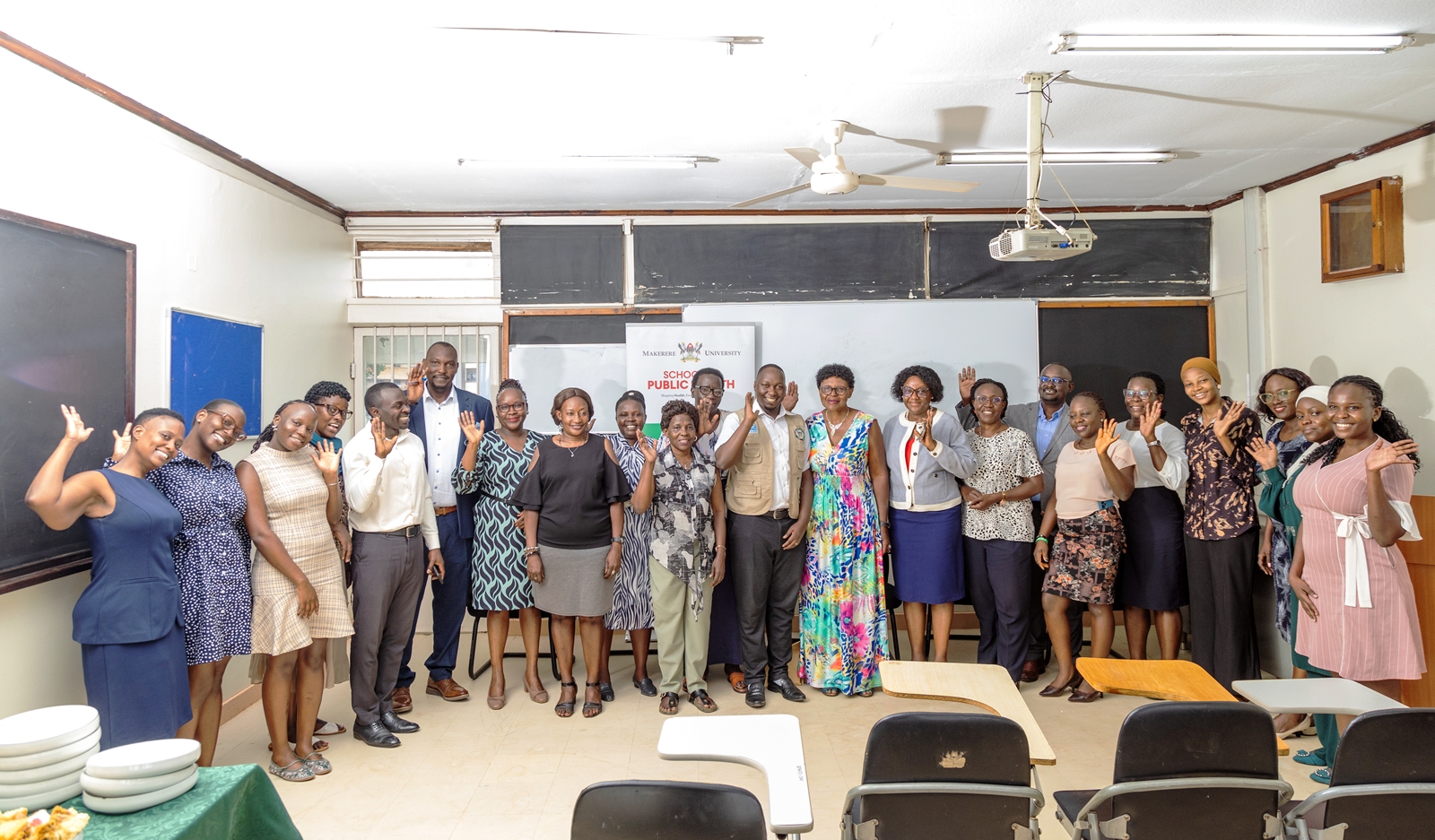
At a farewell brunch organised by the Dean, School of Public Health, Prof. Rhoda Wanyenze, colleagues and friends described Claire in glowing terms. Words such as hardworking, kind, patient, resilient, dependable and caring repeatedly featured in the tributes.
For many, Claire was much more than a custodian. She was described as a mother figure, a counsellor and someone people could approach whenever they needed a listening ear, encouragement or simply a warm smile.
A commitment that went beyond the call of duty
One of the strongest themes to emerge during the farewell was Claire’s extraordinary commitment to her work.
Colleagues recalled how she would routinely open the School building as early as 6:00 a.m., ensuring that staff and students arriving for the day found the premises ready. Her working day could stretch well into the evening, with some days requiring her to remain at the School until 8:00 p.m. or even 10:00 p.m.
Despite the long hours and demanding nature of her responsibilities, colleagues said Claire rarely complained. Instead, she approached her work with patience and resilience, always focused on ensuring that the School was secure and that its operations could continue smoothly.
Her dedication was particularly evident in her contribution to improving the security of the School building. Over the years, Claire became a trusted custodian of the premises, helping to ensure that the building was opened and closed responsibly and that the environment remained secure for those who worked and studied there.
Speaking at the farewell, Prof. Wanyenze described Claire as someone who consistently worked beyond the call of duty.
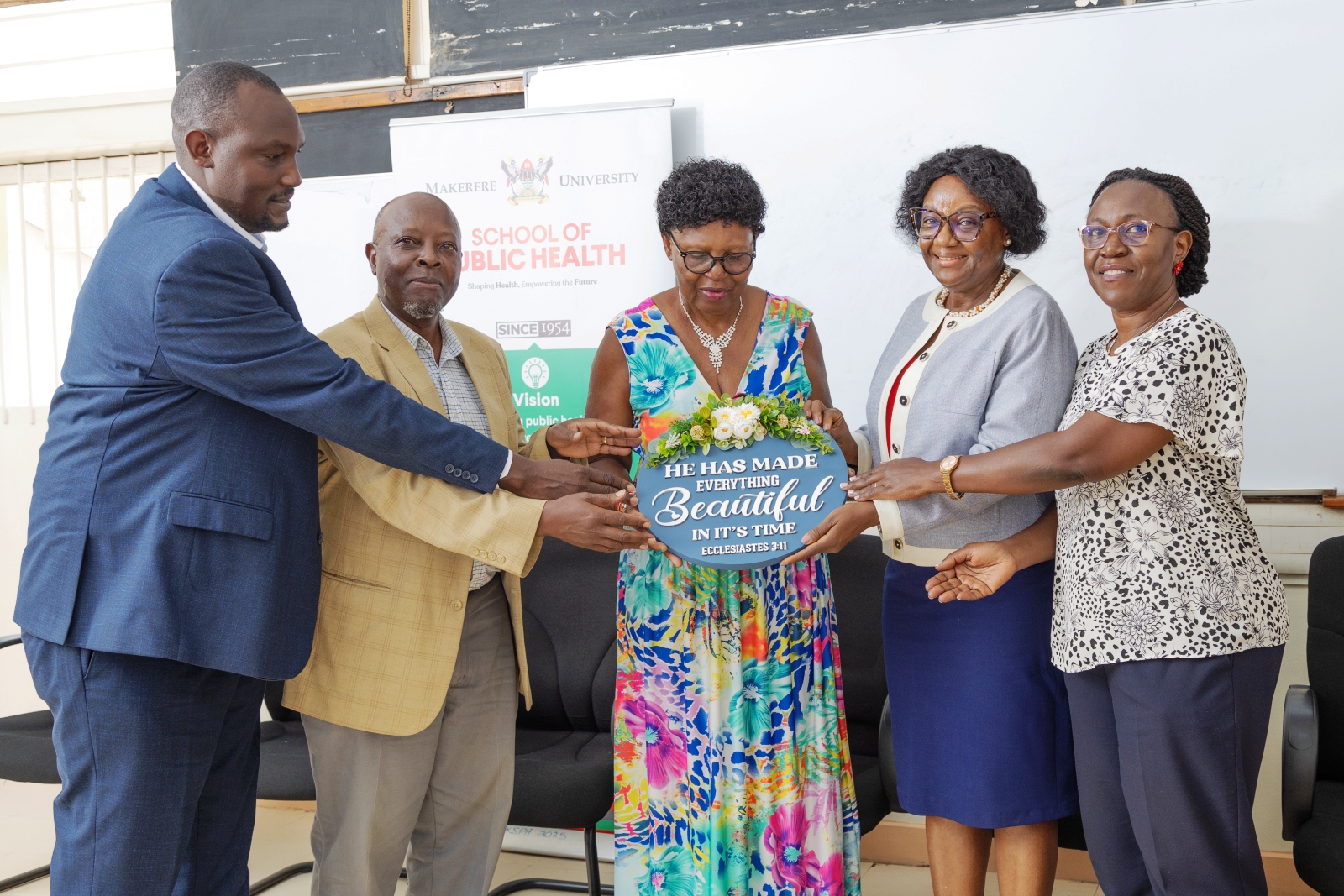
The Dean acknowledged that saying goodbye to Claire was an emotional moment, given the many years she had spent serving the School and the relationships she had built along the way.
However, Prof. Wanyenze said she had spoken to Claire and was assured that she was ready to embrace the next phase of her life.
She joined colleagues in wishing Claire good health, happiness and prosperity as she begins her retirement journey.
More than a custodian
Claire’s impact at SPH was not limited to the physical responsibilities associated with her job. To those who interacted with her regularly, her greatest contribution was perhaps the warmth and humanity she brought to the workplace.
Amos Ddembe, the Internal Auditor, described Claire as a joy to watch as she went about her work.
He particularly remembered her interactions with people when she was stationed at the reception area. Claire, he noted, was almost always smiling and welcoming to staff and visitors.
Her ability to make people feel comfortable, regardless of their position or role at the School, earned her the affection and respect of many colleagues.
Claire’s colleagues also remembered her as someone who was willing to listen and offer guidance. Her patience and calm demeanour meant that people could approach her with their concerns, knowing they would receive a sympathetic ear.
Over the years, these seemingly small interactions accumulated into meaningful relationships, helping to make Claire one of the most recognisable and trusted members of the SPH community.
A legacy of service
Fourteen years is a significant period in the life of any institution. During that time, Claire witnessed changes in leadership, staff, students, programmes and the physical environment of the School.
She remained a constant through these transitions.
Her service represents the important contribution made by members of the support staff whose work often happens quietly but is essential to the functioning of an institution.
From opening the building before sunrise to securing it late in the evening, welcoming people at reception, supporting the day-to-day operations of the School and contributing to the security of the premises, Claire’s work helped create an environment in which others could perform their own responsibilities.
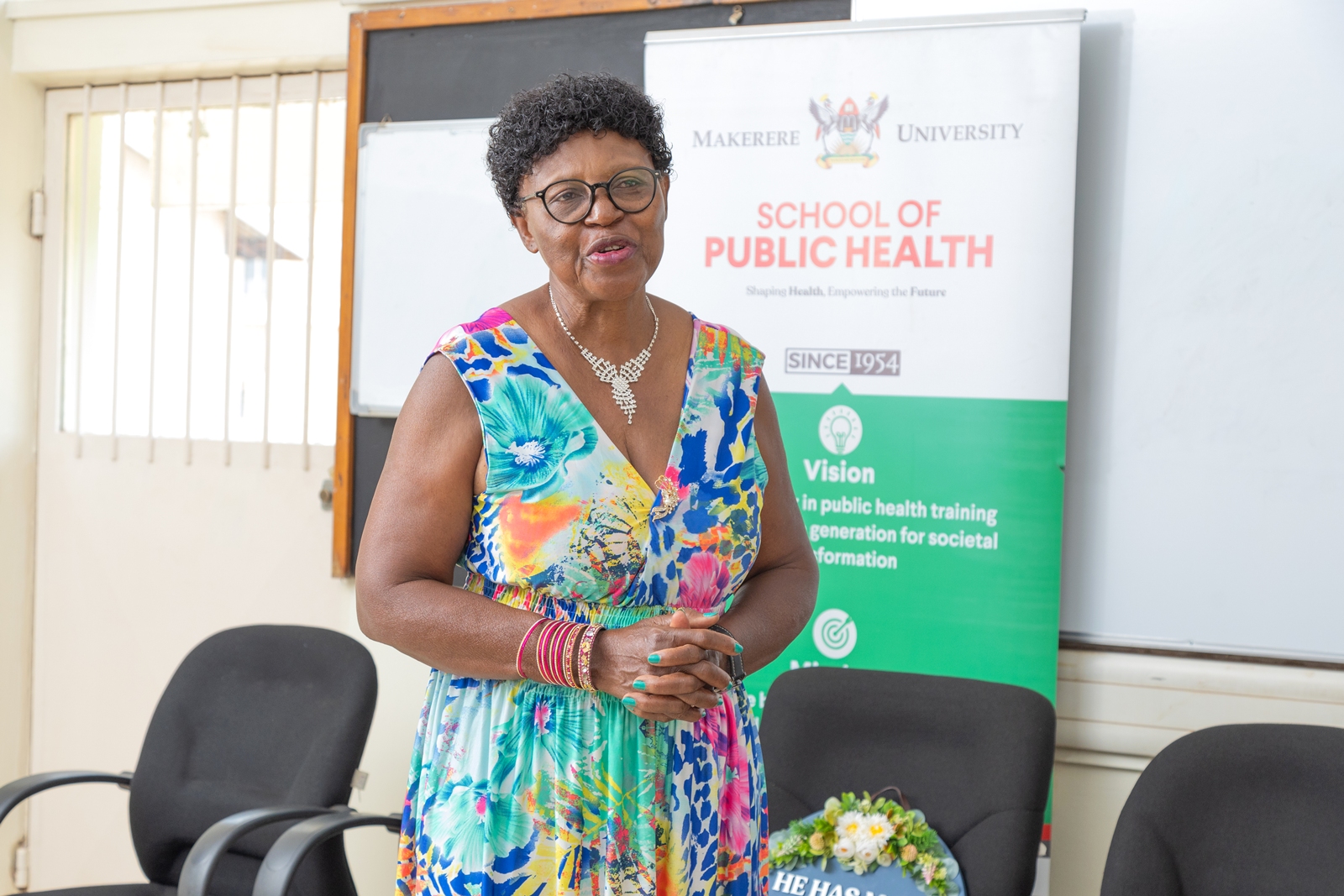
Her story is a reminder that the success of an institution is built not only through high-profile academic and research achievements, but also through the dedication of people who ensure that the institution functions every day.
A gesture of appreciation
As part of the farewell, the Department of Community Health and Behavioral Sciences also expressed its appreciation for Claire’s years of service.
Representing the Department, Dr. Christine Nalwadda presented Claire with a cash envelope on behalf of the staff as a token of appreciation for her commitment and contribution to the School.
A new chapter begins
As Claire leaves the School of Public Health, she takes with her the memories of 14 years of service and the goodwill of the many people she encountered along the way.
For the colleagues who gathered to celebrate her, the farewell was not simply about marking the end of employment. It was about celebrating a colleague who had become part of the fabric of the School.
As she begins this new chapter, the School of Public Health joins together in saying:
“Thank you, Claire, for 14 years of dedicated service. Thank you for the early mornings, the long evenings, the smiles, the patience and the unwavering commitment.
May retirement bring you the good health, peace, happiness and prosperity you so richly deserve.”
General
50 Master’s Students Awarded Scholarships Under the Africa Climate Collaborative at Makerere University

By Damali Mukhaye
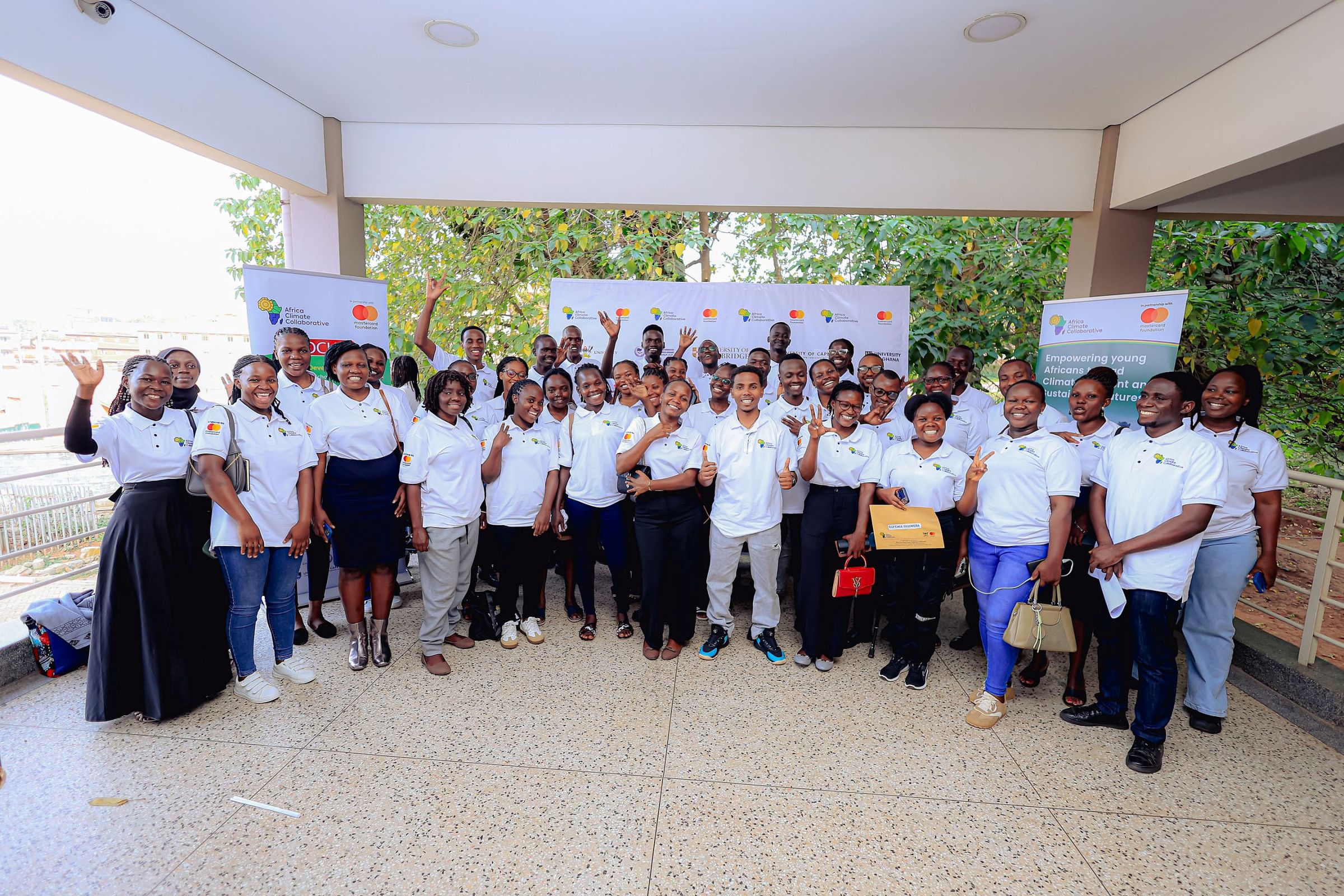
The Africa Climate Collaborative at Makerere University, an initiative supported by the Mastercard Foundation, has awarded scholarships to 50 young people to pursue master’s studies as part of its continued investment in developing the next generation of African climate leaders, researchers, and innovators.
After a competitive process that attracted 483 applications, 50 scholars who make up the second cohort of master’s scholars under the Africa Climate Collaborative were formally presented with their scholarship award letters by the Vice chancellor at a joint scholarships award ceremony for Mastercard Foundation initiatives at Makerere University held on 20th August, 2026, at the School of Public Health Auditorium.
Of the 483 applicants received, 182 were female and 301 were male, while 64 were international applicants.
Prof. Claire Mack Mugasa, the Chairperson of the Africa Climate Collaborative Selection Sub-Committee, said that the selection process was undertaken by an 11-member committee mandated to identify 50 master’s scholars and 12 PhD scholars for the academic year 2026/2027.
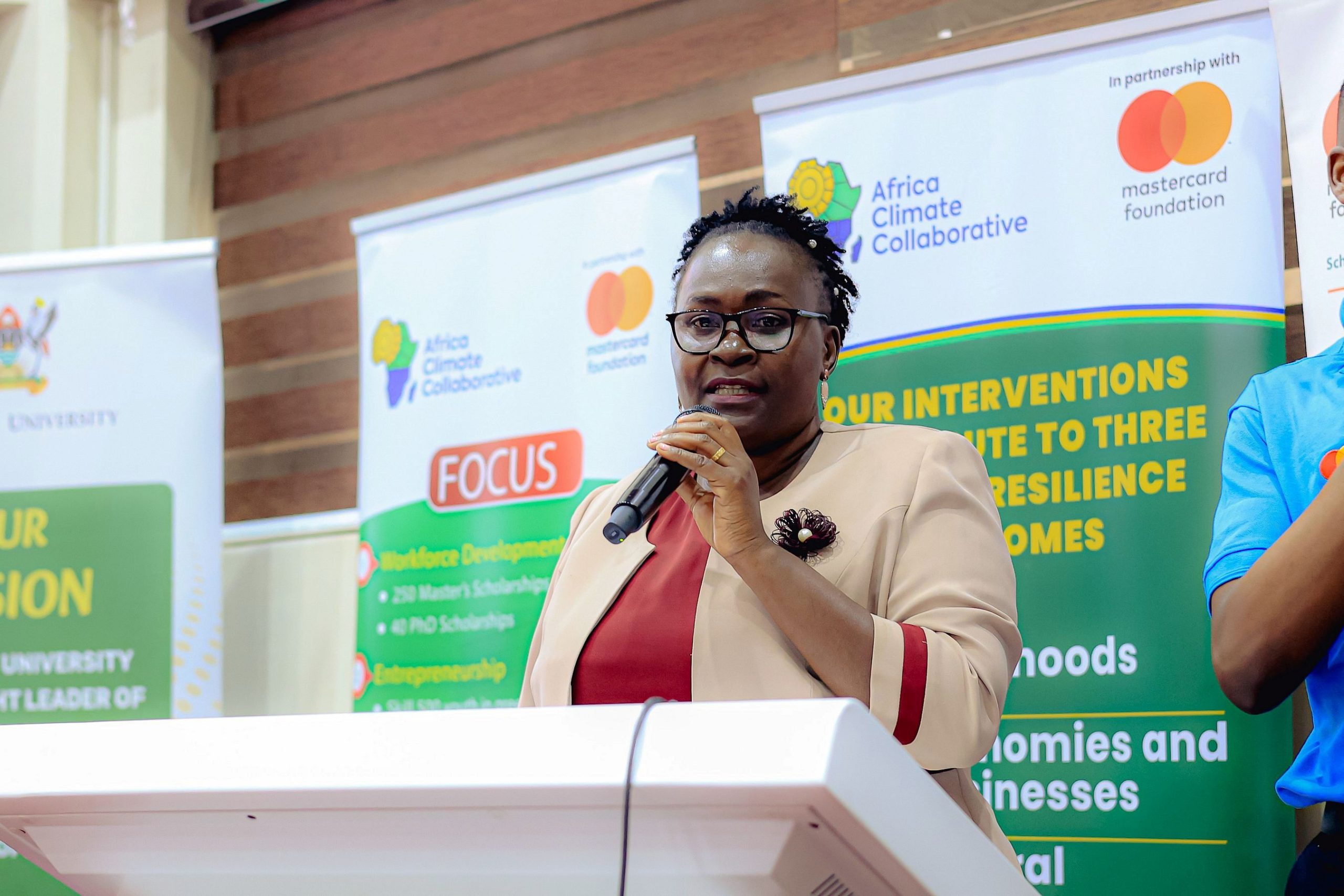
Following the initial assessment, 307 applicants were admitted to Makerere University, including 119 females, 188 males, and 14 of those admitted were international students. The selection process then proceeded to further shortlisting, with 150 candidates identified for interviews and 100 subjected to status validation before the final 50 scholars were selected.
Prof. Mugasa said the final selection reflected the program’s commitment to inclusion and equitable access to educational opportunities. She commended the Selection Sub-Committee for its commitment to ensuring a fair and transparent process.
“Today, I present to you the 50 scholars, Cohort Two of the Africa Climate Collaborative,” she said while presenting the scholars to Prof. Ibrahim Okumu, the Dean, School of Economics, who represented the Vice Chancellor.
Of the 50 successful scholars, 34, representing 68 per cent, are female and 16, representing 32 per cent, are male. The cohort also includes four international students, five persons with disabilities, four refugees and internally displaced persons, and four young people from refugee-hosting communities and minority tribes of Uganda, while the remaining 33 scholars are from other categories of Ugandan nationals.
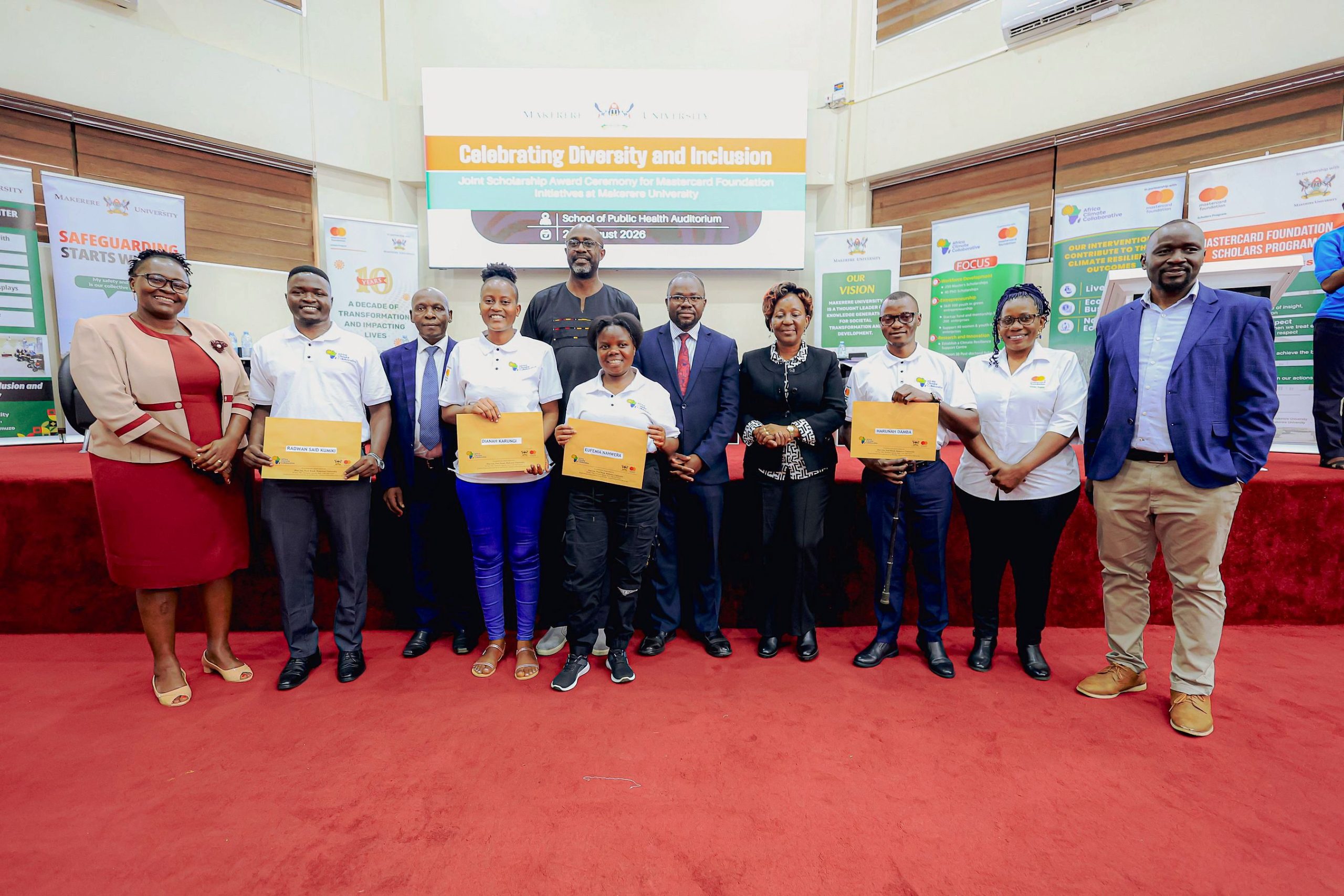
The new cohort brings the total number of Master’s scholars supported by the Africa Climate Collaborative to 85, out of the 250 Master’s scholarships planned over the eight-year implementation period.
The programme has also awarded scholarships to 18 PhD scholars, out of the 40 PhD scholarships expected to be awarded during the programme period.
Representing the Vice Chancellor, Prof. Ibrahim Okumu, Dean of the School of Economics, welcomed the new scholars to Makerere University and congratulated them upon receiving the scholarships.
He described the occasion as a celebration of diversity, inclusion, education, and the strong partnership between Makerere University and the Mastercard Foundation.
Prof. Okumu noted that the scholarships provide academically talented young people with opportunities to pursue their education regardless of their background or circumstances. He encouraged the scholars to view the scholarship not only as an award but also as a responsibility to lead, innovate, and serve their communities.
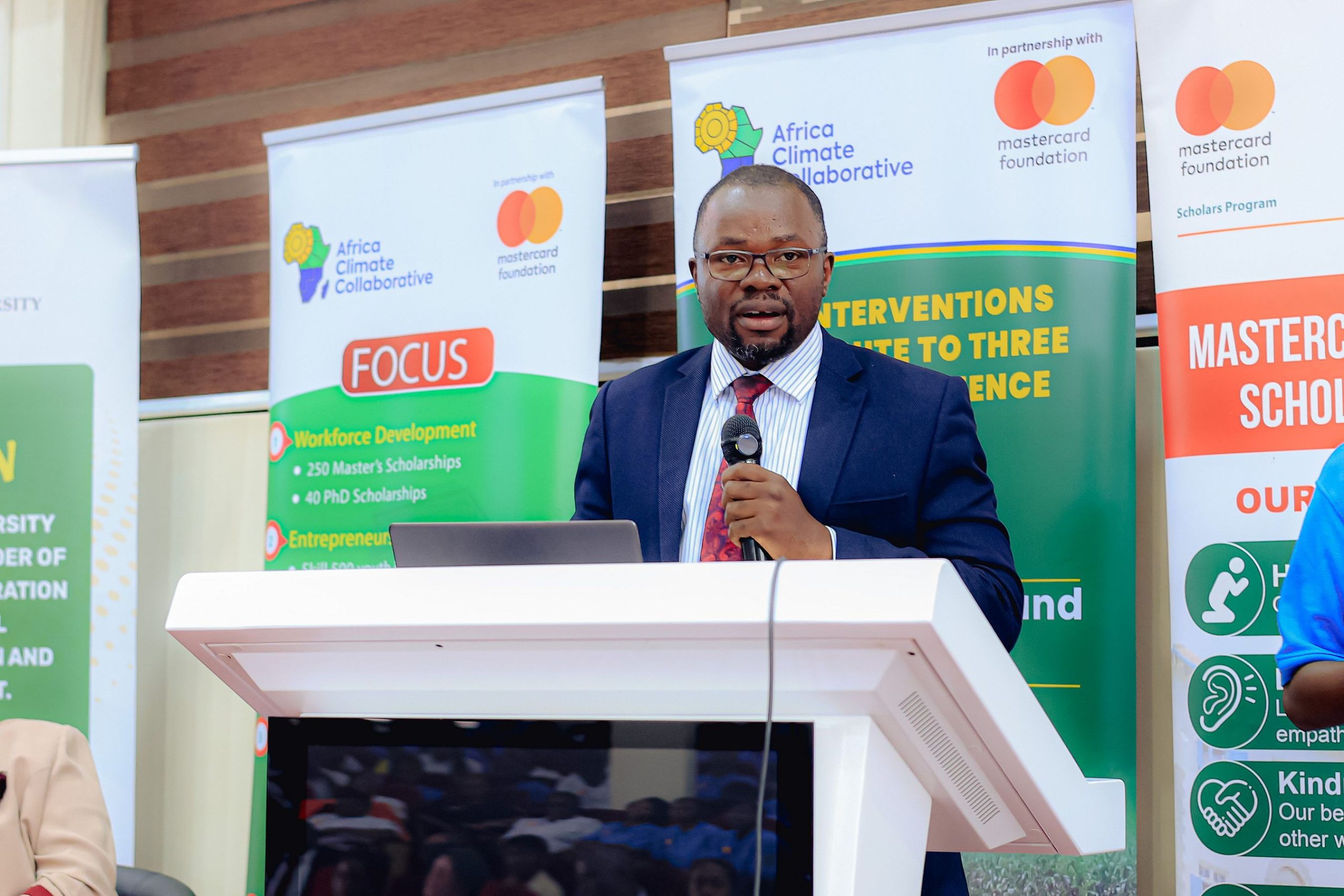
He urged them to make full use of Makerere’s academic resources, mentorship, and networks while maintaining discipline, integrity, and a clear vision for their future.
He also appreciated the Mastercard Foundation, programme teams, university leadership, and staff for supporting the initiatives and creating opportunities for young people to contribute to Uganda and Africa’s development.
Mr. Adrian Bukenya, Country Director of the Mastercard Foundation in Uganda, challenged scholars to view their opportunity not simply as an academic award but as a platform to become transformative leaders capable of creating solutions for their communities and Africa.
Bukenya encouraged the scholars to take full advantage of their experience at Makerere University, build meaningful relationships, and apply the knowledge and skills they acquire to address challenges around them. He emphasised that the responsibility of a scholar extends beyond personal success to creating positive change for families, communities and society.
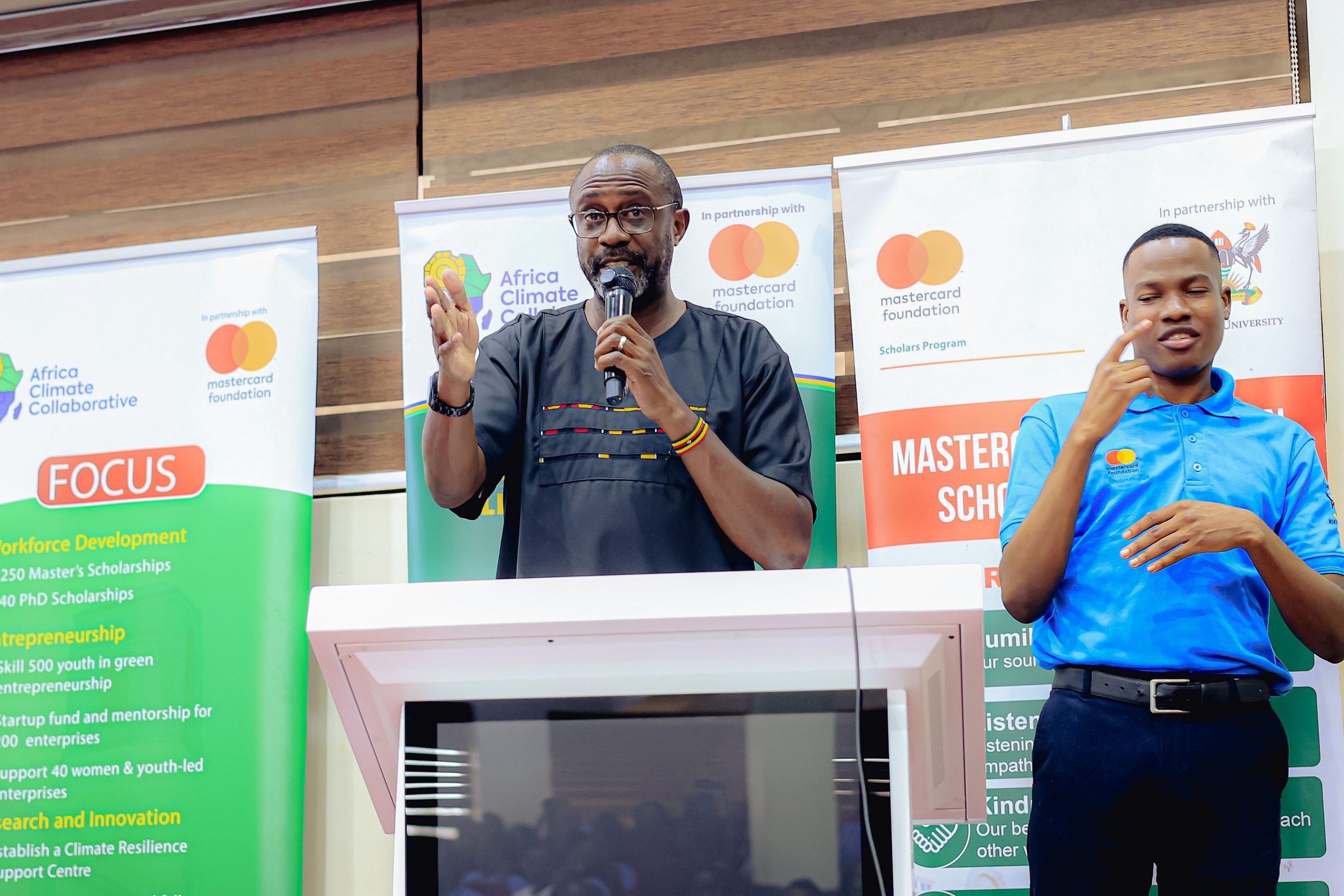
He urged the scholars, particularly those joining the Africa Climate Collaborative, to see themselves as part of a wider effort to address Africa’s development challenges through innovation, leadership, and practical solutions. Africa Climate Collaborative seeks to equip young Africans with knowledge, skills, and resources to respond to climate change while promoting sustainable solutions, innovation, entrepreneurship, and green jobs.
“You need to solve problems. Remember, you’re not here to be part of the problem,” Mr. Bukenya told scholars before reminding them that their success carries a responsibility to give back and contribute to transforming their communities and the continent.
The Africa Climate Collaborative Programme Director, Prof. Gorettie Nabanoga, described the scholarship award as more than an opportunity for young people to obtain university education. She said the scholarships represent a strategic investment in Africa’s human capital at a time when communities across the continent are increasingly experiencing the effects of climate change.
“Climate change is no longer a distant challenge. Communities are already experiencing changing rainfall patterns, prolonged droughts, floods, declining agricultural productivity, environmental degradation, and other challenges affecting livelihoods, economies, and ecosystems,” Prof. Nabanoga said.
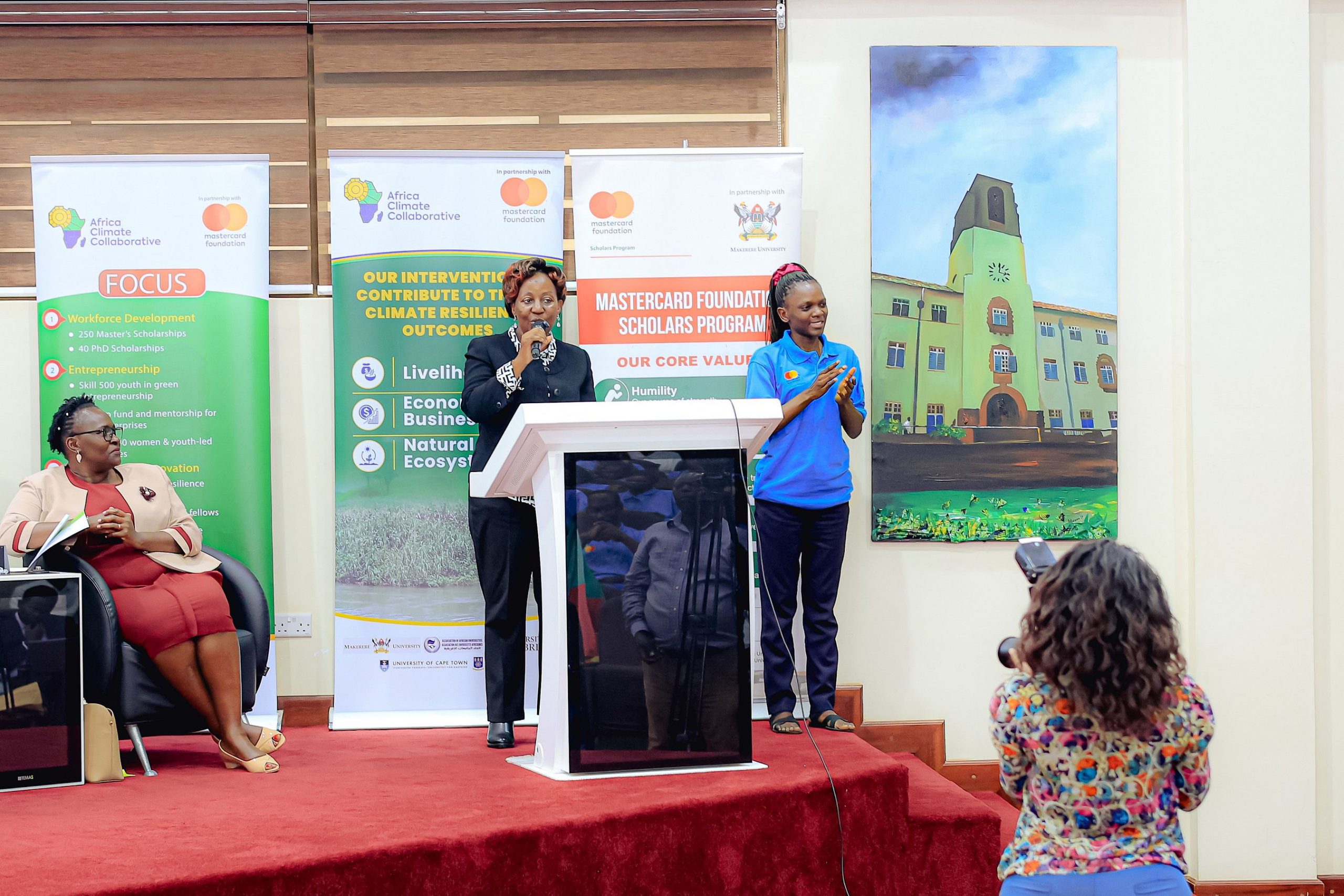
She encouraged the scholars to take full advantage of their time at Makerere University by engaging with lecturers and mentors, participating in research and innovation activities, collaborating across disciplines, and learning from communities before challenging them to go beyond obtaining academic qualifications and develop the ability to identify problems, ask relevant questions, and generate solutions that can contribute to a more resilient and sustainable Africa.
Mercy Malende, one of the scholarship beneficiaries pursuing a Master of Science in Agricultural Engineering, expressed excitement about being among the 50 young people selected for the Africa Climate Collaborative scholarship.
She said the scholarship has given her an opportunity to pursue her academic goals while gaining knowledge and skills that will enable her to contribute to addressing climate change challenges in Uganda. She appreciated the Africa Climate Collaborative and its partners for investing in young people and creating opportunities for them to advance their education. She said she looks forward to making the most of the opportunity and using her knowledge to contribute to sustainable agricultural development.
-
 General2 weeks ago
Undergraduate Admission Lists 2026/2027
-

 General2 weeks ago
72 Makerere University Students Admitted to 2026 Millennium Fellowship
-
 Business & Management2 weeks ago
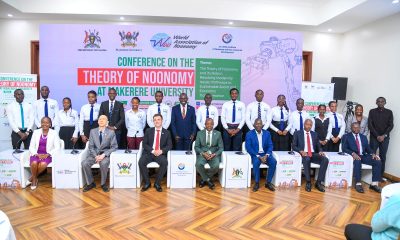
Makerere University Inaugural Conference on Noonomy Paves way for Centre of Excellence in Africa
-
 Law2 weeks ago
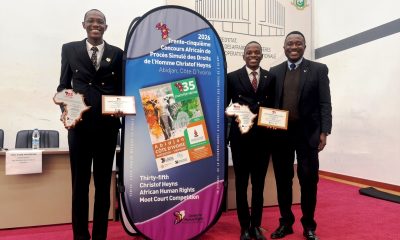
Makerere University School of Law Finishes Second at 35th Christof Heyns All Africa Human Rights Moot Competition
-
 General1 week ago
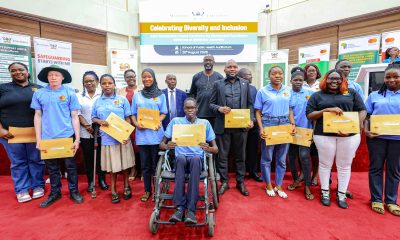
Makerere University Welcomes a New Cohort of 258 Mastercard Foundation Scholars