Connect with us

General

Mastercard Foundation Scholars at Makerere University encouraged to participate in philanthropy work

Published

on

By Carol Kasujja Adii and Bernard Buteera

Mastercard Foundation Scholars at Makerere University have been encouraged to embrace the spirit of philanthropy as a vital foundation for fostering stronger and more resilient communities. This inspiring call to action took place during the 2025 Community Open Day at the Freedom Square on Saturday, September 6, 2025, where hundreds of Mastercard Scholars, Scholar-alumni, and partners of the Scholars Program gathered to initiate a fundraising drive for the signature Annual Scholars Day of Service.

The Annual Scholars Day of Service stands as a hallmark event through which the Scholars give back to the community in impactful and sustainable ways. During a keynote address titled “How Philanthropy Shapes Resilient Communities,” Prof. Winston Tumps Ireeta, the Deputy Vice Chancellor of Finance and Administration, emphasised that while local philanthropy is not a new concept in Uganda, a more intentional mobilisation of this giving back power is necessary to address broader social challenges.

“Communities that mobilise their own resources—financial, human, and material—are empowered to take ownership of their development. Ownership naturally leads to sustainability, ensuring that solutions emerge from local knowledge, context, and values rather than being imposed from the outside. This approach is essential for effectively tackling our social challenges,” Prof. Ireeta stated.
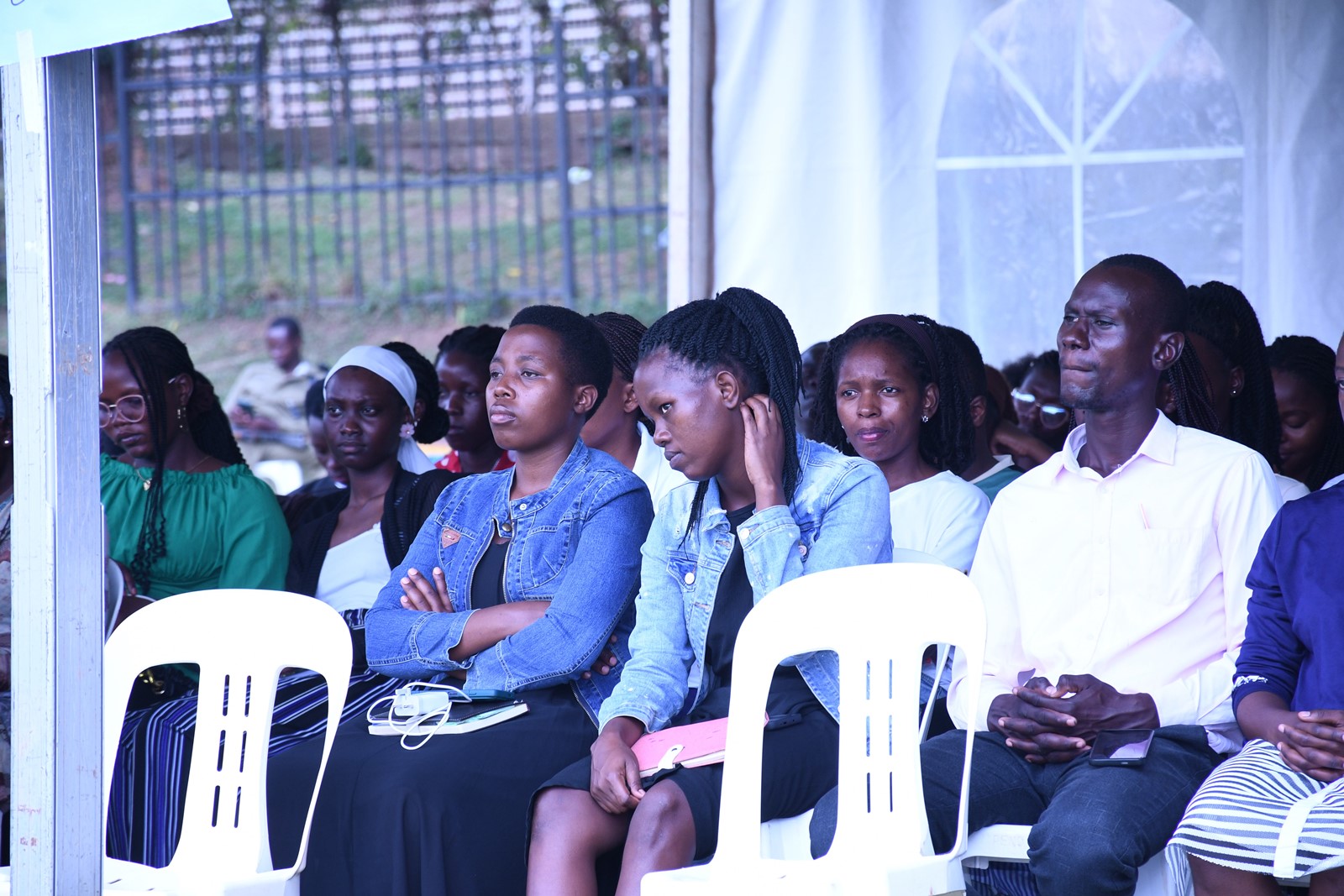
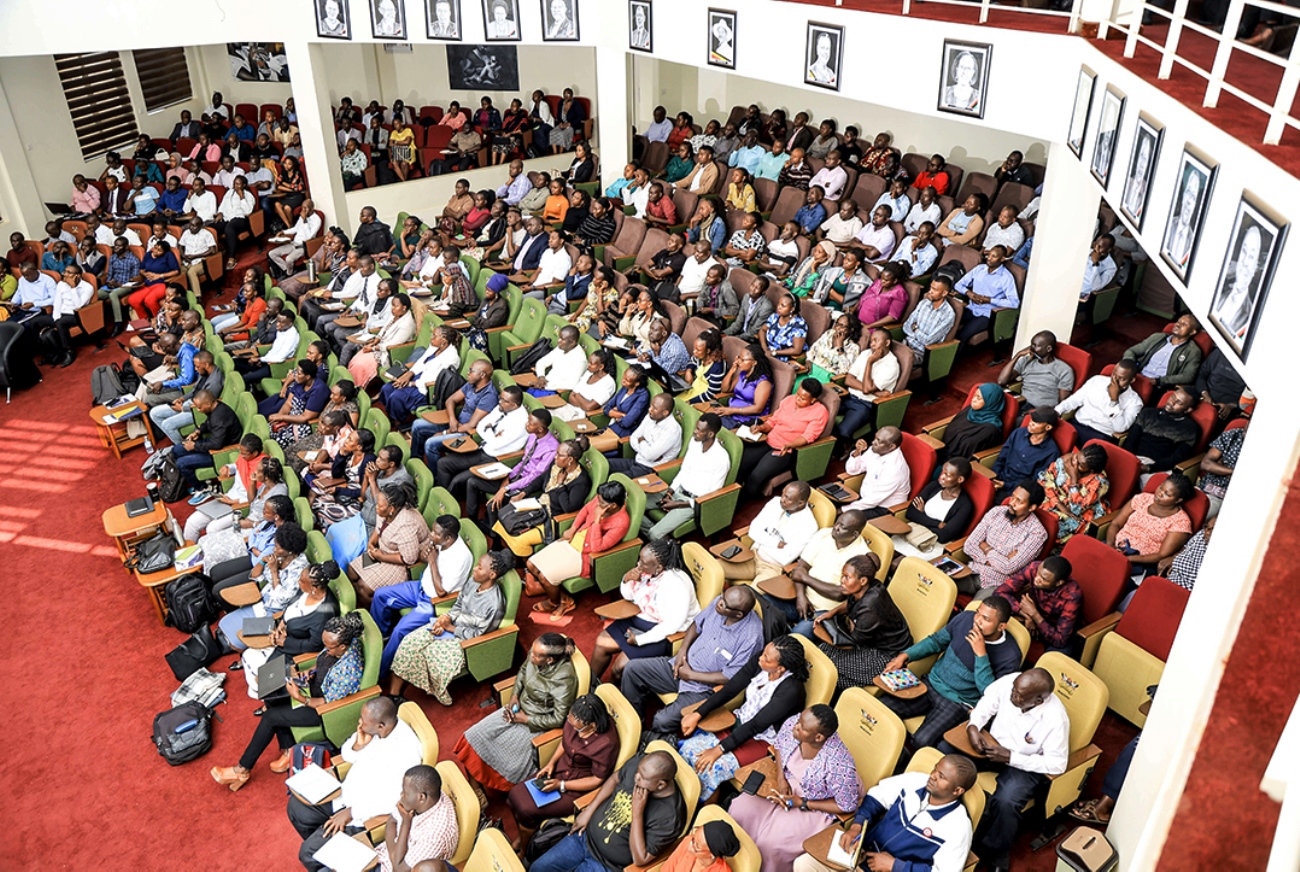
A cross-section of scholar-alumni, listening attentively during the event. Mastercard Foundation Scholars Community Open Day, September 6, 2025, Freedom Square, Makerere University, Kampala Uganda, East Africa.
A cross-section of scholar-alumni, listening attentively during the event.

In his remarks delivered by Prof. Helen Nambalirwa Nkabala, the Principal of the College of Humanities and Social Sciences, Prof. Ireeta highlighted the importance of nurturing the inherent power of local giving. He urged the celebration of current local philanthropic efforts, which can be initiated at the individual, religious, and community levels.

“To foster a culture of giving, we need to create platforms that promote structured, transparent, and impactful contributions,” he argued. “It’s crucial to strengthen our generosity, particularly among the youth, and cultivate a society where giving is valued as a core aspect of leadership and citizenship.”

Prof. Ireeta further noted, “The future of our Communities’ strength lies not in distant promises but in our own hands and collective actions. By fostering local philanthropy, we can build a society that is not only fairer but also more resilient and united.
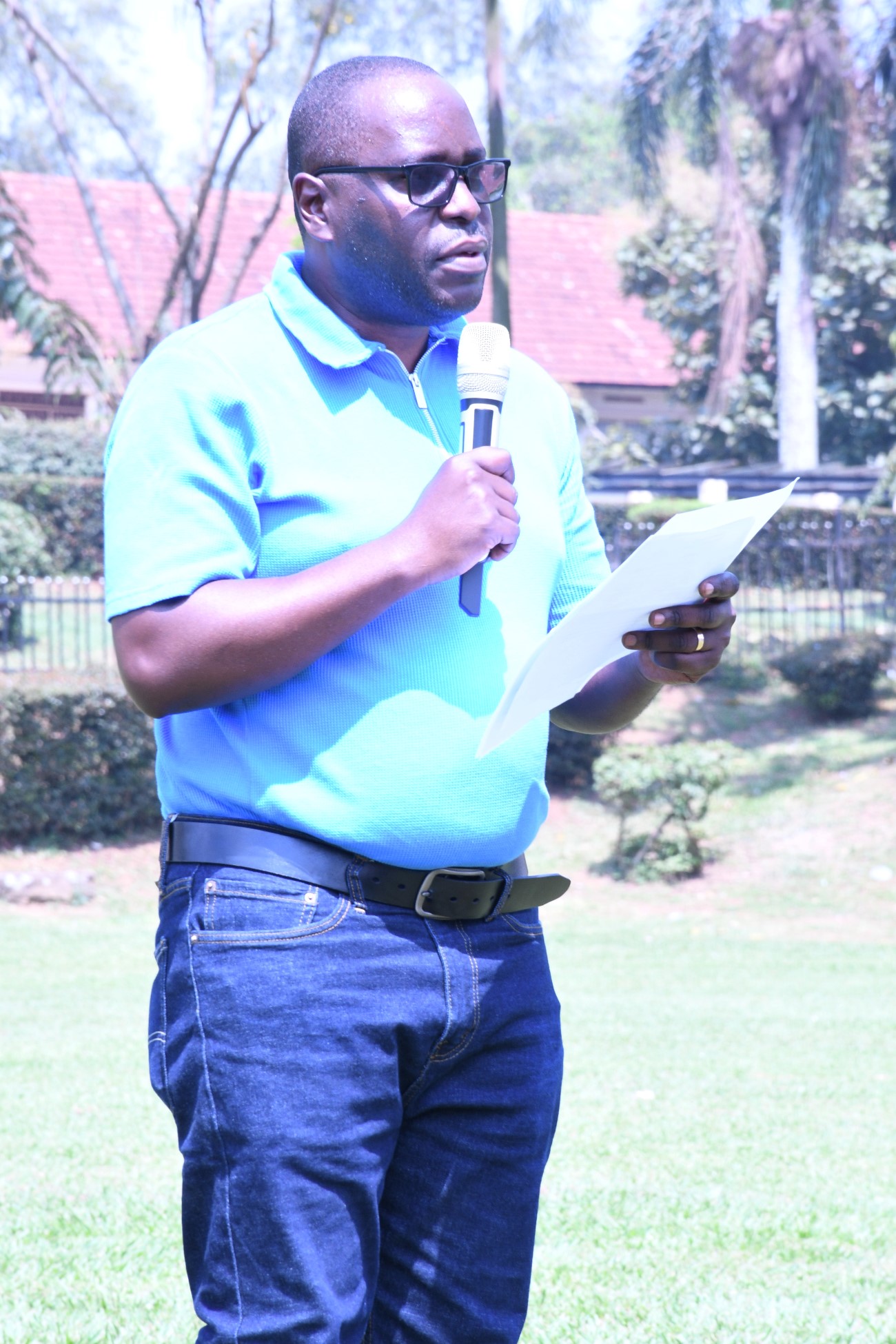
Mr. John Osuna, speaking on behalf of the Program Director, Prof. Justine Namaalwa, at the event. Mastercard Foundation Scholars Community Open Day, September 6, 2025, Freedom Square, Makerere University, Kampala Uganda, East Africa.
Mr. John Osuna, speaking on behalf of the Program Director, Prof. Justine Namaalwa, at the event.

In his welcoming remarks, Mr. John Osuna, Transition Lead for the Mastercard Foundation Scholars Program at Makerere University, who spoke on behalf of the Program Director, Prof. Justine Namaalwa, expressed gratitude to the Scholars for their collaborative efforts in turning the idea of giving back into reality.

“Let us embody humility, kindness, and compassion through actionable philanthropy. By doing so, we can create lasting impacts, enhancing our reputation as a community that genuinely cares,” Mr. Osuna stated.

The Community Open Day was organised under the inspiring theme: “Nurturing Philanthropy for Resilient Communities,” paving the way for future initiatives that strengthen community bonds through collective generosity.
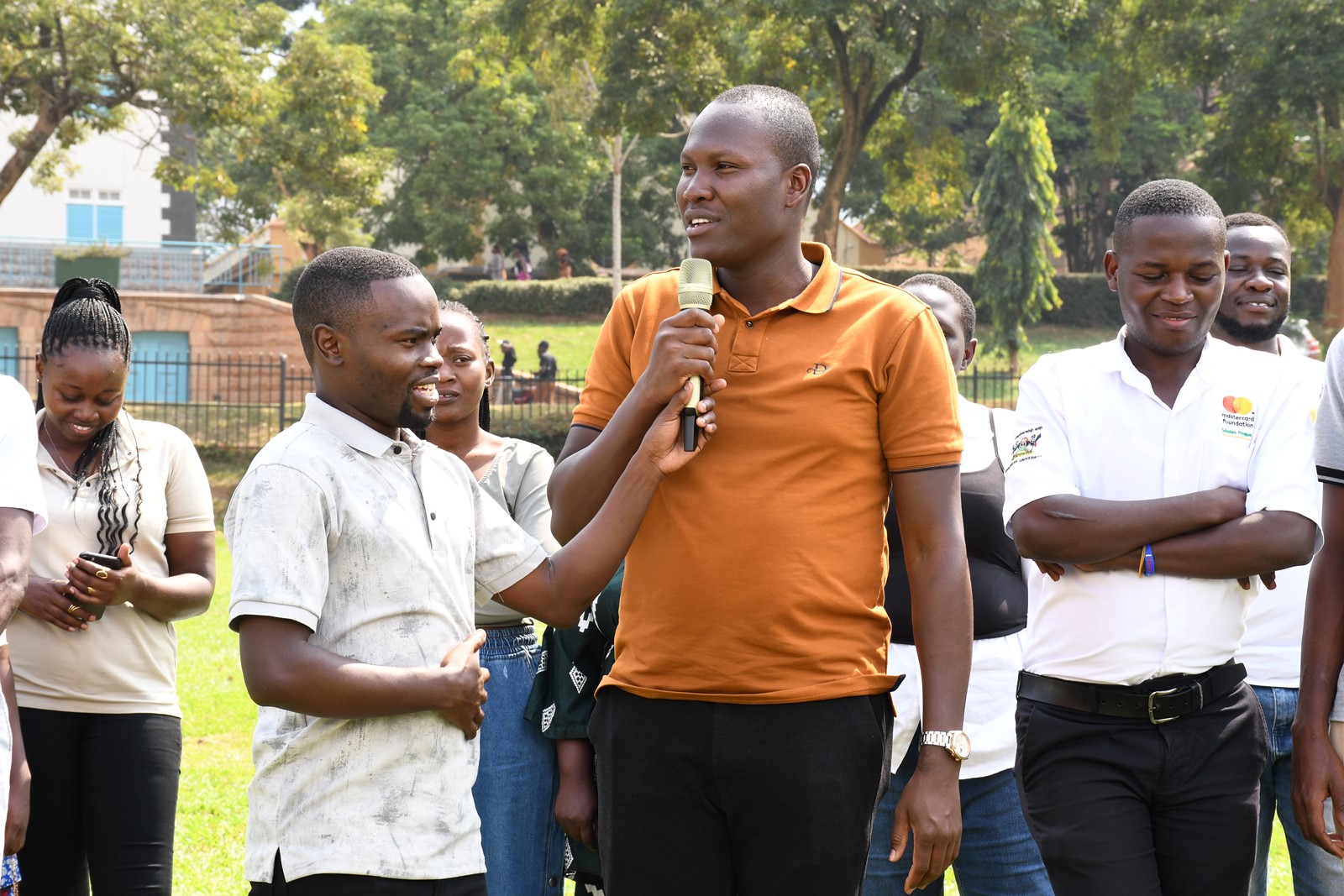
A cross-section of the alumni making their pledges towards the scholars give back project. Mastercard Foundation Scholars Community Open Day, September 6, 2025, Freedom Square, Makerere University, Kampala Uganda, East Africa.
A cross-section of the alumni making their pledges towards the scholars give back project.

“We believe that through nurturing philanthropy for resilient communities, our communities shall be able to organise themselves to build resilience beyond what we shall give back,” Mr. Osuna explained.

The vibrant event saw Scholars and Scholar-alumni actively participating by bringing items for auction and buying tickets for the raffle draw as a means of mobilising resources for the construction of a ventilated pit latrine, renovation of two classroom blocks and providing tanks for harvesting clean water for Bwera Primary School in Kabale District.

Speaking at the event, Mrs. Agnes Katumba, the Director of Katumba Estates, one of the long-standing partners of the Scholars Program at Makerere University, tasked the Scholars to embrace the heart of giving back without expecting something in return.
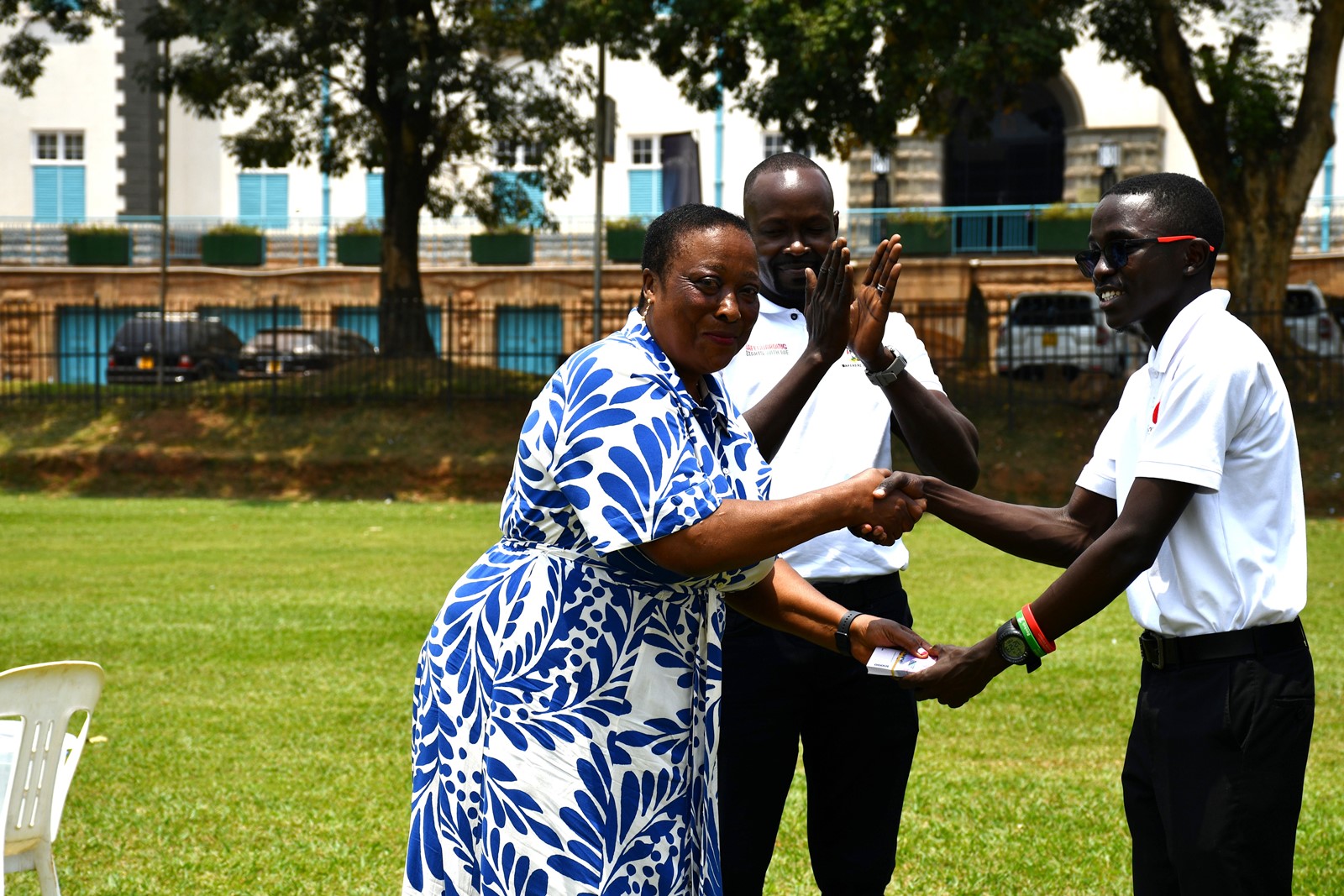
Ms. Agnes Katumba, the Director, Katumba Estates Ltd handing over part of her pledge towards the Scholars Giveback project. Mastercard Foundation Scholars Community Open Day, September 6, 2025, Freedom Square, Makerere University, Kampala Uganda, East Africa.
Ms. Agnes Katumba, the Director, Katumba Estates Ltd handing over part of her pledge towards the Scholars Giveback project.

“I thank the Mastercard Foundation; they not only provide scholarships but also give back to the community. I have been able to grow because of them. For scholars, you do not have to wait to be wealthy to give back; every coin counts,” Mrs. Katumba said.

Katumba Estates Ltd contributed three million shillings to the Scholars Give Back project. Another long-standing partner, DFCU Bank, pledged over sh10 million towards the Scholars’ building project.
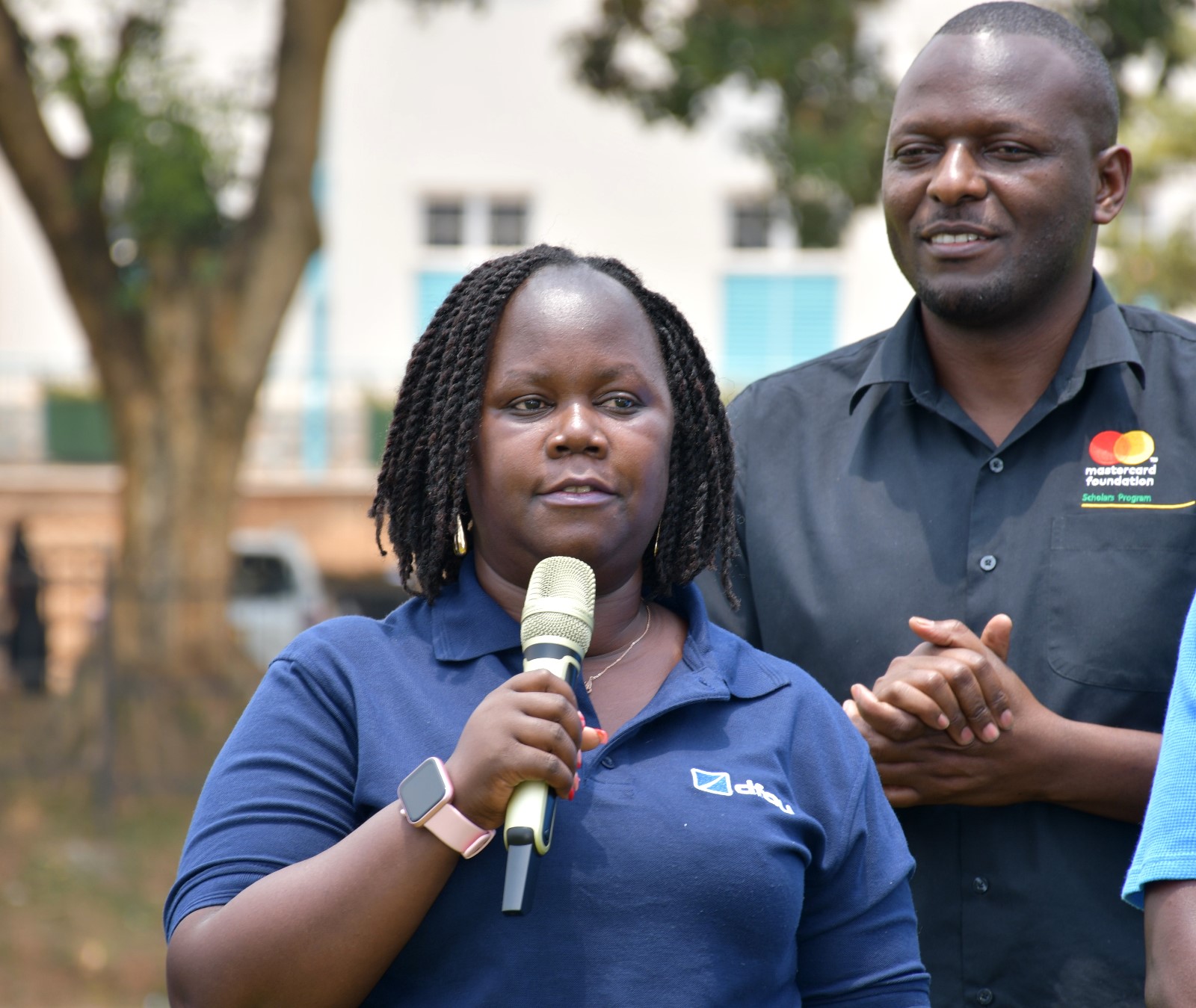
The Representative from DFCU making the pledge to support Scholars Giveback project on behalf of the Bank. Mastercard Foundation Scholars Community Open Day, September 6, 2025, Freedom Square, Makerere University, Kampala Uganda, East Africa.
The Representative from DFCU making the pledge to support Scholars Giveback project on behalf of the Bank.

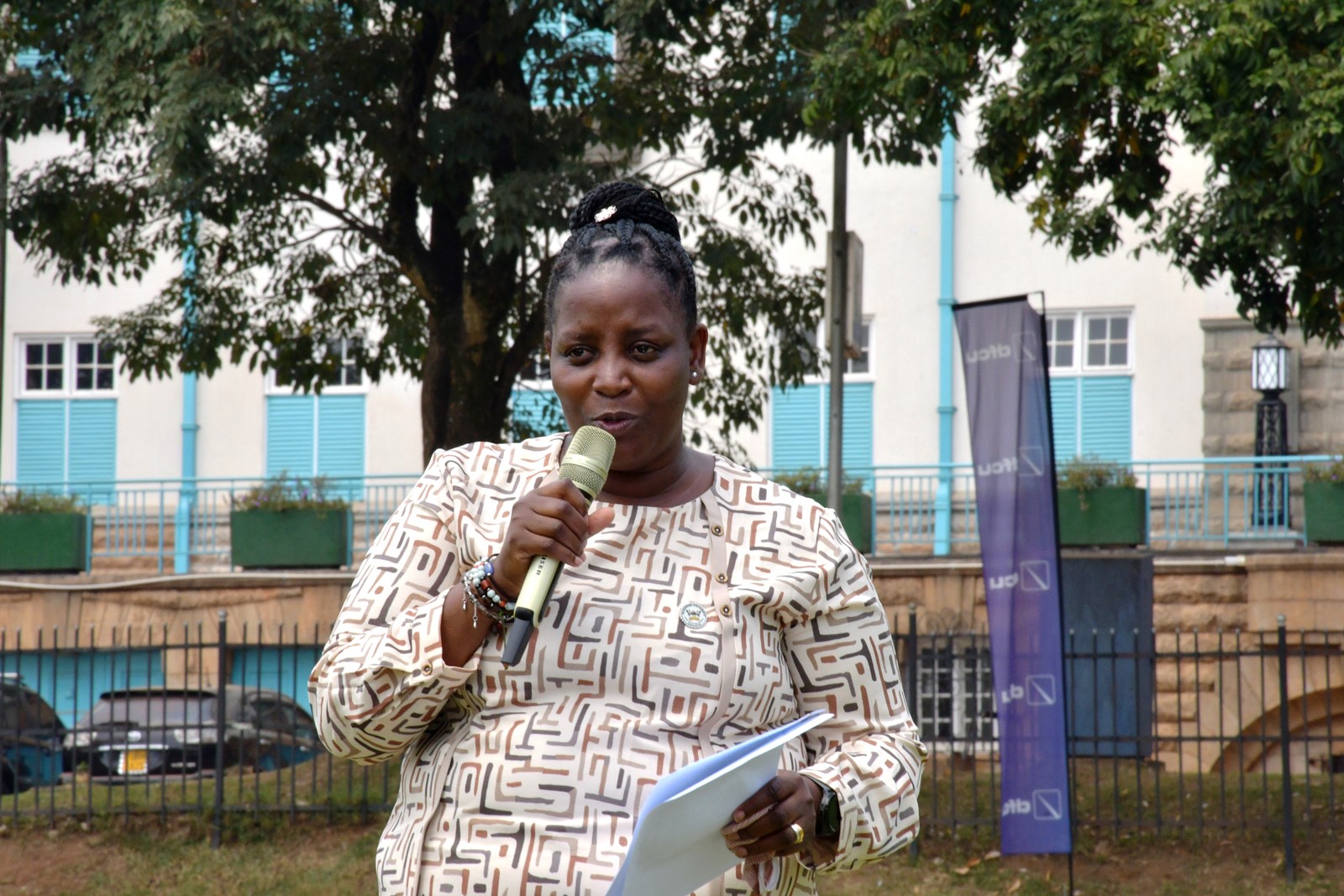
In her presentation, Ms. Malvin Akwara, a Mastercard Foundation Scholar-alumna, urged current Scholars to contribute to their communities in various ways, including mentorship and guiding young people.
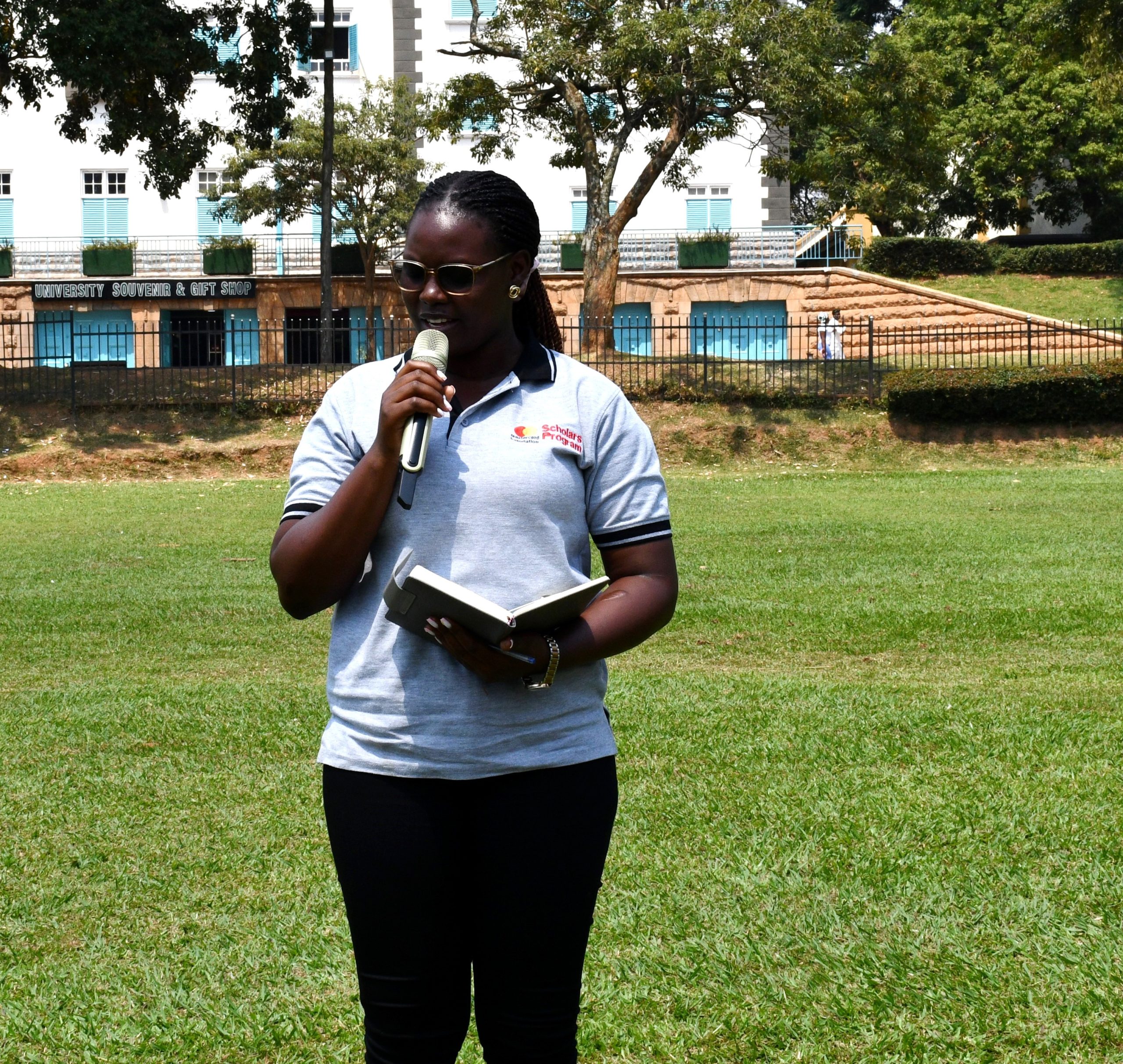
Ms. Malvin Akwara, a Scholar-alumna addressing fellow Scholars and alumni at the event. Mastercard Foundation Scholars Community Open Day, September 6, 2025, Freedom Square, Makerere University, Kampala Uganda, East Africa.
Ms. Malvin Akwara, a Scholar-alumna addressing fellow Scholars and alumni at the event.

“We are all here because someone chose to give. During my first year at Makerere, I contributed to some young man’s school fees back home in my community. The young man is now in his second year at Makerere. You don’t have to be wealthy to make an impact; be intentional in your giving, and you will witness the difference it makes. There is no greater fulfilment than helping someone in need,” Akwara stated.

Some of the Scholars praying for their raffle draw tickets to win. Mastercard Foundation Scholars Community Open Day, September 6, 2025, Freedom Square, Makerere University, Kampala Uganda, East Africa.
Some of the Scholars praying for their raffle draw tickets to win.

The event was punctuated with a number of activities that ranged from auctioning items, raffle draws, exhibitions, quizzes and a lot of games and fun.
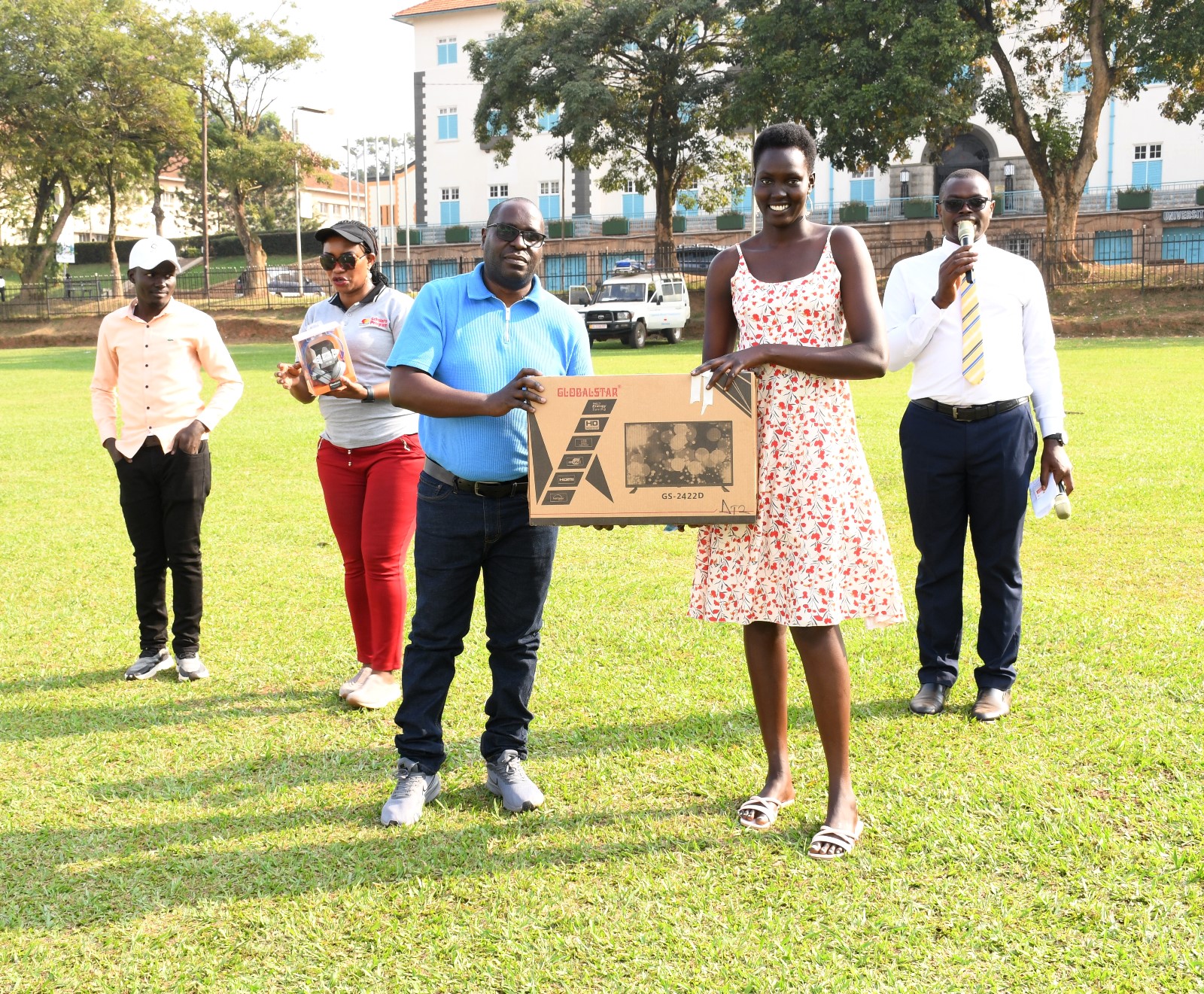
The winner of the grand draw walked away with a flat screen TV. Mastercard Foundation Scholars Community Open Day, September 6, 2025, Freedom Square, Makerere University, Kampala Uganda, East Africa.
The winner of the grand draw walked away with a flat screen TV.

Carol Kasujja and Bernard Buteera form the communications team for the Scholars Programme at Makerere University.

Mak Editor

General

Makerere University DVCFA Accomplishments will continue – Prof. Alinaitwe

Published

on

Prof. Helen Nambalirwa Nkabala (2nd R) receives a plaque on behalf Prof. Winston Tumps Ireeta from Prof. Sarah Ssali (2nd L) as Prof. Henry Alinaitwe (R) and CPA Agnes Khwaka (L) witness on 4th May 2026. Handover of Office of Deputy Vice Chancellor (Finance and Administration)-DVCFA from Prof. Winston Tumps Ireeta to Prof. Henry Alinaitwe, 4th May 2026, Council Room, Main Building, Makerere University, Kampala Uganda, East Africa.

The handover of Makerere University’s Office of Deputy Vice Chancellor (Finance and Administration)-DVCFA from Prof. Winston Tumps Ireeta to Prof. Henry Alinaitwe was marked by appreciation of accomplishments registered during the former’s term and reassurance of their continuation by the incoming office bearer. The ceremony, held during the Top Management meeting of 4th May 2026, was presided over by the Acting Vice Chancellor, Prof. Sarah Ssali and guided by the Deputy Chief Internal Auditor, CPA Agnes Khwaka as Members of Top Management witnessed.

Prof. Nambalirwa Nkabala (L) presents the handover report to Prof. Henry Alinaitwe. Handover of Office of Deputy Vice Chancellor (Finance and Administration)-DVCFA from Prof. Winston Tumps Ireeta to Prof. Henry Alinaitwe, 4th May 2026, Council Room, Main Building, Makerere University, Kampala Uganda, East Africa.
Prof. Nambalirwa Nkabala (L) presents the handover report to Prof. Henry Alinaitwe.

Presenting the handover report on behalf of Prof. Ireeta who is away on duties related to the Materials Research Society, Prof. Helen Nambalirwa Nkabala shared a number of accomplishments from 20th February 2025 to 30th April 2026. They included:

  • Increase in parking revenue from UGX6million to UGX100million per month
  • Increase in rental income from UGX 286.3million to UGX612.3million per annum
  • Implementation of Digitization and performance-based systems that improved accountability, staff engagement and service deliver
  • Enforcement of the Staff Housing Policy
  • Strengthening of the Financial Management System, Advancement of e-procurement and Integration of institutional systems that improved efficiency, transparency and decision making
  • Online processing of Staff Housing Applications and advancements in development of the Student Accommodation System
  • Improved Security and Campus Management through enhanced surveillance courtesy of improved CCTV systems, improved coordination and enforcement operations  
  • Improved Student Accommodation through renovation of Halls of Residence, introduction of Resident Tutors and removal of illegal occupants
  • Strengthened Grants Mobilisation and Management supported by strong grants portfolio and development of digital systems for improved structure and compliance in collaboration with the Directorate for ICT Support (DICTS)
  • Repositioning Makerere University Holdings Limited to strengthen asset management and revenue generation
Some of the Members of Top Management that witnessed the handover ceremony. Handover of Office of Deputy Vice Chancellor (Finance and Administration)-DVCFA from Prof. Winston Tumps Ireeta to Prof. Henry Alinaitwe, 4th May 2026, Council Room, Main Building, Makerere University, Kampala Uganda, East Africa.
Some of the Members of Top Management that witnessed the handover ceremony.

Prof. Alinaitwe who previously served as Acting (Ag.) DVCFA from 16th November 2021 to 19th February 2025 congratulated Prof. Ireeta upon the various accomplishments registered during his term. He equally pledged to work with colleagues who vied for the same position i.e. Prof. Ireeta and Prof. Eria Hisali to bring their ideas on board for the good of Makerere University. On behalf of the University Management, Prof. Sarah Ssali presented Prof. Ireeta (in absentia) with a plaque in appreciation of his dedicated and exemplary service as Ag. DVCFA.

Mark Wamai

Continue Reading

General

From Information to Innovation: ‘This Is a Marathon, Not a Sprint’—Academic Registrar and Director of Graduate Training Urge PhD Cohort 11

Published

on

A group photo of participants at the PhD Cohort 11 Orientation. Directorate of Graduate Training orientation of PhD Cohort 11 (2025/2026) presided over by Academic Registrar, Prof. Buyinza Mukadasi, April, 2026, School of Food Technology, Nutrition and Bioengineering Conference Hall, CAES, Makerere University, Kampala Uganda, East Africa.

By Moses Lutaaya

A strong message of transformation, resilience, and purpose defined the orientation of PhD Cohort 11 (2025/2026) held on Thursday, April 30, 2026 at the Makerere University School of Food Technology, Nutrition and Bioengineering Conference Hall, with academic leaders urging students to rethink what it means to pursue doctoral education in the 21st century.

Presiding over the function, the Academic Registrar, Prof. Buyinza Mukadasi, delivered an expansive and deeply reflective message, challenging the new doctoral candidates to embrace a fundamentally different academic journey.

Welcoming the students, he reminded them that their admission followed a highly competitive process, placing them among a select group entrusted with shaping the future through research.

“You have come from a competitive pool of deserving Ugandans to embark on a journey that may turn out to be the most challenging in your life, but also the most transformative and rewarding intellectual experience,” he said.

Drawing a clear distinction between earlier academic stages and doctoral study, Prof. Buyinza emphasized that PhD candidates must now take full ownership of their learning journey.“The first time you were here, someone was driving you. This time, you are going to sit in your own seat and drive it.”

Prof. Buyinza at the opening of the PhD orientation program. Directorate of Graduate Training orientation of PhD Cohort 11 (2025/2026) presided over by Academic Registrar, Prof. Buyinza Mukadasi, April, 2026, School of Food Technology, Nutrition and Bioengineering Conference Hall, CAES, Makerere University, Kampala Uganda, East Africa.
Prof. Buyinza at the opening of the PhD orientation program.

He stressed that doctoral study is not a quick academic exercise but a long-term intellectual commitment requiring discipline and endurance. A PhD is not a sprint, it is a marathon. Don’t burn out so fast. Build your stamina, be consistent, and be resilient.”

In a powerful reflection on global change, he noted that today’s complex challenges can no longer be solved within single disciplines. “No single discipline can solve the challenges of the day. You need multi-disciplinarily, inter-disciplinarily, and collaboration to address complex problems.”

He urged students to abandon disciplinary silos and embrace collaborative thinking. “Gone are the days when one discipline could despise another. The world has changed; we need all of these fields working together.”

Prof. Buyinza further emphasized the shift from the information age to the innovation age, challenging students to move beyond consuming knowledge to producing new ideas. “Artificial intelligence can tell us the known. For you, we want you to tell us the unknown.”

He dismantled the traditional image of isolated doctoral study, calling it outdated in the modern academic environment. “That mental image of being hidden away in a library for years is outdated. A PhD in 2026 is very different and the landscape has changed dramatically.”

Part of the audience. Directorate of Graduate Training orientation of PhD Cohort 11 (2025/2026) presided over by Academic Registrar, Prof. Buyinza Mukadasi, April, 2026, School of Food Technology, Nutrition and Bioengineering Conference Hall, CAES, Makerere University, Kampala Uganda, East Africa.
Part of the audience.

He emphasized that success in doctoral education depends heavily on collaboration and global academic engagement. “No scholar has ever flourished in isolation. Success today requires peer-to-peer collaboration, cross-cultural learning, and a global mindset.”

In a striking moment, he reframed failure as an essential part of the research process. “Ninety-nine percent of what you try may fail, but the PhD is about using that failure as data to improve your next step.”

He also cautioned against overdependence on artificial intelligence, stressing academic integrity and independent thinking. “Use AI to strengthen your thinking—not to replace it. There are no ghostwriters in scholarship. You must be the thinker.”

Addressing mental health, he urged students to build supportive academic communities. A PhD can be emotionally exhausting. Build communities around you. Take care of your mental health, we need you alive.”

He further called for structured planning and accountability in the doctoral journey. “Write your study plan from day one, how you will move from semester one to semester six. This must be well-structured, well-managed, and supervised.”

Warning against perfectionism, he added: “Perfection is the enemy of completion. If you want everything to be perfect, you may never finish. The world will judge you immediately as a PhD holder. It has no time for excuses. You must be ready.”

In his opening remarks, the Director of Graduate Training, Prof. Julius Kikooma, welcomed the cohort and reinforced the university’s structured approach to doctoral education.

He explained that the cohort system is designed to ensure students progress together and support one another throughout their studies. “You are coming in as a group, and we have put systems in place to ensure you move as a group. This reduces the feeling that you are alone.”

Prof. Kikooma at the function. Directorate of Graduate Training orientation of PhD Cohort 11 (2025/2026) presided over by Academic Registrar, Prof. Buyinza Mukadasi, April, 2026, School of Food Technology, Nutrition and Bioengineering Conference Hall, CAES, Makerere University, Kampala Uganda, East Africa.
Prof. Kikooma at the function.

He emphasized that doctoral research must be aligned with national and global priorities. “You are not here for research for its own sake. Your research must be fit for purpose and aligned to the challenges facing society.”

He reminded students of the structured three-year timeline for completion. “We have a contract with you for three years. It may look long, but it is also short. It requires commitment and responsibility on both sides.”

On technology, he cautioned against intellectual dependency on artificial intelligence. “AI is part of our reality, but it must not take over your thinking. Do not outsource the skills you are supposed to acquire.”

He concluded by reaffirming institutional support while stressing student responsibility. “We will do everything possible to ensure you complete in time, but you must also play your part.”

Speaking on behalf of the students, PhD outgoing President Habibu Malyamungu encouraged his colleagues to embrace practical habits and peer support systems.

The Outgoing PhD President. Directorate of Graduate Training orientation of PhD Cohort 11 (2025/2026) presided over by Academic Registrar, Prof. Buyinza Mukadasi, April, 2026, School of Food Technology, Nutrition and Bioengineering Conference Hall, CAES, Makerere University, Kampala Uganda, East Africa.
The Outgoing PhD President.

He urged students to celebrate their achievement but remain grounded in discipline. “You need to congratulate yourselves for joining this program, it is a very important step.”

He challenged the perception that PhD study must be unnecessarily long and difficult.“A PhD is not necessarily a long journey. Sometimes simple things, like writing a few paragraphs before checking your phone can make a big difference.”

He emphasized the importance of collaboration among students.“A colleague can give you a solution that helps you overcome a problem in seconds.”

He further announced psychosocial support initiatives aimed at improving student well-being. “We are planning sessions to help you relax, engage, and relieve stress. These moments are important and they help the brain reset.”

The event closed with a unified message: doctoral training at Makerere University is evolving into a journey of innovation, interdisciplinary, and real-world problem solving—anchored in collaboration and resilience.

Mak Editor

Continue Reading

General

Advanced Research Methods Training of Trainers Sparks Transformation in Doctoral Training at Makerere University

Published

on

Prof. Julius Kikooma and Dr. Robert Kakuru with facilitators and participants from SoL, CEDAT, CoNAS, CoVAB and CHUSS. Directorate of Graduate Training with support from iCARTA and NORHED Advanced Research Methods Training of Trainers (ToT) workshop for faculty from SoL, CEDAT, CoNAS, CoVAB, CHUSS, April 28 to 30, 2026, Senate Building Telepresence Hall, Makerere University, Kampala Uganda, East Africa.

By Moses Lutaaya

Makerere University has intensified efforts to strengthen graduate supervision and research excellence through a dynamic three-day Training of Trainers (ToT) workshop in Advanced Research Methods held from April 28 to 30, 2026 at the Senate Building Telepresence Hall.

The high-impact training, organized by the Directorate of Graduate Training with support from iCARTA and funding from the NORHED Project, brought together lecturers from across colleges including the School of Law, College of Engineering, Design, Art and Technology (CEDAT), College of Natural Sciences (CONAS), College of Veterinary Medicine, Animal Resources and Bio-security (COVAB), and the College of Humanities and Social Sciences (CHUSS).

The training aimed to build institutional capacity to enhance supervision of graduate students and improve doctoral completion rates, a long-standing challenge in many universities.

Opening the workshop, Prof. Julius Kikooma underscored the strategic importance of continuous staff development in responding to evolving academic demands.

“This particular training is one of the routine tools that we use as the Directorate of Graduate Training to continuously re-tool and re-engage with staff in response to the requirements of the new policy of teaching and learning,” he said.

Prof. Julius Kikooma. Directorate of Graduate Training with support from iCARTA and NORHED Advanced Research Methods Training of Trainers (ToT) workshop for faculty from SoL, CEDAT, CoNAS, CoVAB, CHUSS, April 28 to 30, 2026, Senate Building Telepresence Hall, Makerere University, Kampala Uganda, East Africa.
Prof. Julius Kikooma.

Prof. Kikooma highlighted that the training is anchored in the university’s shift toward competence-based education, a model increasingly being adopted globally and nationally.

“We are going to be engaging with very important issues on how to redesign and support learners in this new dispensation of competence-based teaching and learning,” he added.

He also pointed to recent reforms in doctoral training, including the introduction of a structured framework for PhD-by-research programmes aimed at addressing delays in completion.

“The expectation is that all staff should be aware of that framework and appreciate that it is designed such that the student picks up a range of skills and knowledge that gives them competence,” he explained.

The workshop also serves as preparation for lecturers who will facilitate upcoming cross-cutting PhD courses, with a long-term vision of decentralizing doctoral training to individual colleges.

Sharing his perspective, Dr. Robert Kakuru a Lecturer at the department of Philosophy described the training as both necessary and timely for strengthening the university’s academic core.

“By all standards, all academic staff are required to do research and supervise graduate students. Therefore, a ToT in Advanced Research Methods becomes important,” he said.

He noted that while the initiative is commendable, more staff still need to be reached.

“This is still a drop in an ocean we have more than 1,000 academic staff who all need these skills,” he observed.

Dr. Kakuru emphasized that improved understanding of research methods by both lecturers and students could significantly ease doctoral journeys. “Once the lecturers know the methods and the students know the methods, then the job is well cut out,” he said.

Dr. Robert Kakuru. Directorate of Graduate Training with support from iCARTA and NORHED Advanced Research Methods Training of Trainers (ToT) workshop for faculty from SoL, CEDAT, CoNAS, CoVAB, CHUSS, April 28 to 30, 2026, Senate Building Telepresence Hall, Makerere University, Kampala Uganda, East Africa.
Dr. Robert Kakuru.

He further linked the training to Uganda’s broader development agenda, noting that research plays a central role across sectors. “Research has a multiplier effect… every programme area requires research,” he added.

From the participants’ perspective, Dr. Sarah Nakijjoba, a lecturer and researcher in the Department of Linguistics, English Language Studies & Communication Skills described the training as transformative and aligned with global shifts in higher education.

“We are being encouraged to move away from the traditional knowledge-based methods of teaching and embrace competence-based pedagogy,” she said.

Dr. Nakijjoba explained that the training emphasized learner-centered and practical approaches such as peer review, simulations, case studies, and role play. “Research methods is a practical course and requires learners to go out and do as opposed to just knowing,” she noted.

 “This training is timely, it prepares us as instructors to deliver our content effectively,” she said, adding that the knowledge gained would be cascaded to other staff and students.

She also highlighted the wider implications for national development and employability. “If we have graduates who have the ability to problem-solve, they will devise practical solutions to real challenges,” she said, emphasizing the potential for evidence-based policymaking.

Dr. Nakijjoba further described research methods as central to the university’s agenda of being research led. “Research is the engine, the backbone and everything rotates around it,” she said, reinforcing Makerere’s ambition of being a research-led institution.

Participants were also equipped with skills in curriculum design, research ethics, academic writing, and the use of statistical tools, all within a competence-based framework. A key focus was on authentic assessment that measures what learners can do.

The training marks a significant step in Makerere University’s broader strategy to enhance graduate education, strengthen supervision, and produce competent researchers capable of addressing national and global challenges.

Mak Editor

Continue Reading

Trending