
General
Makerere Confucius Convenes Strategic Public Lecture on China-Africa Relations

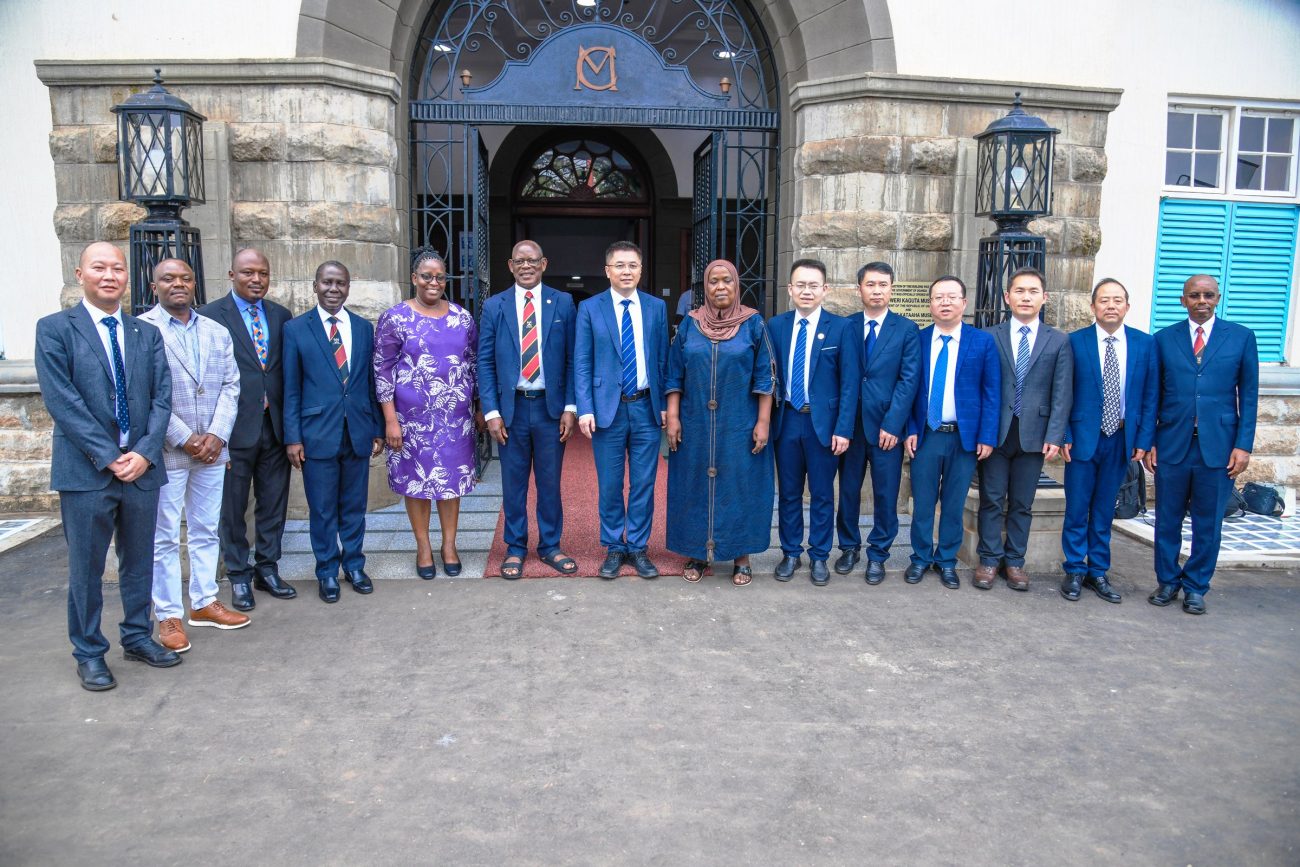
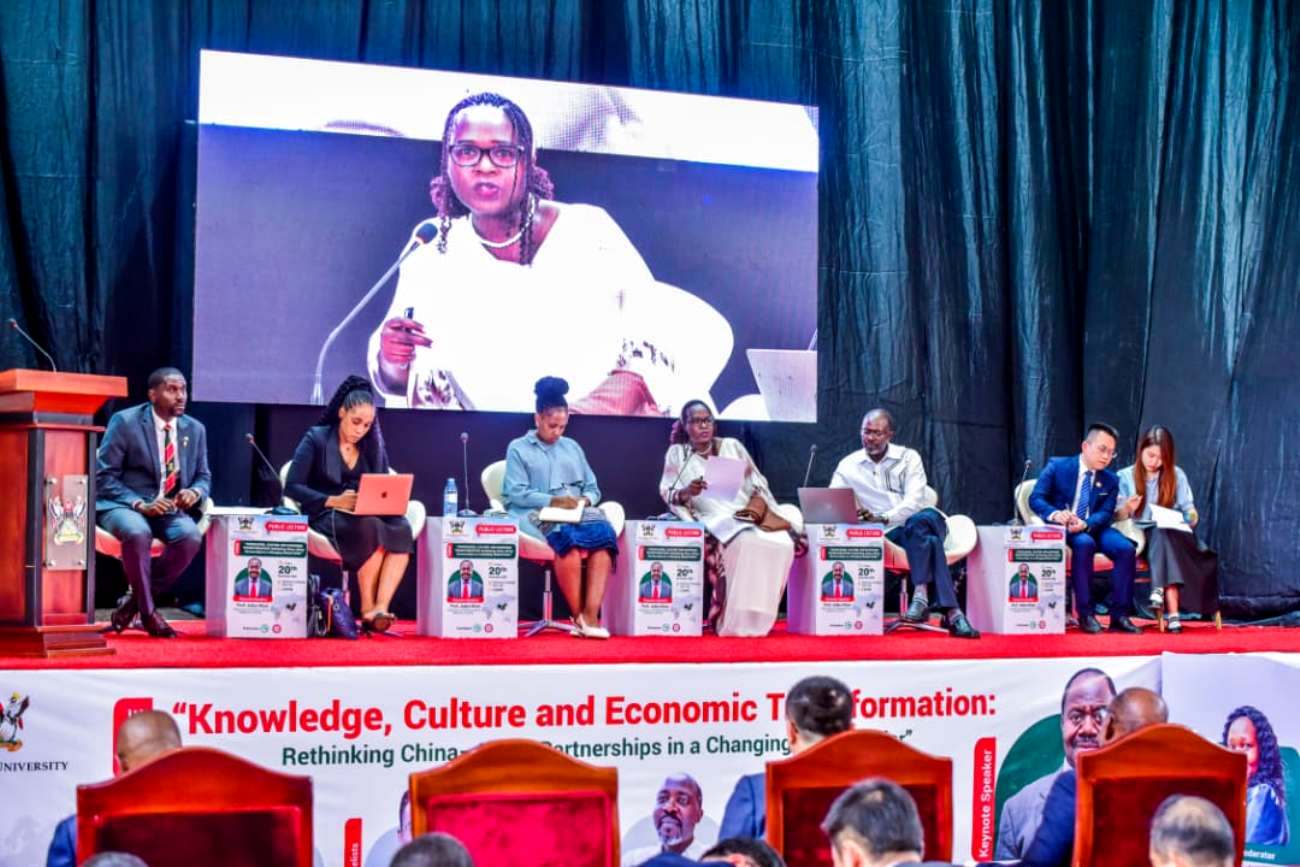
As a platform to discuss the China-Africa partnership, Makerere Confucius Institute convened a public lecture themed, “Knowledge, Culture and Economic Transformation: Rethinking China–Africa Partnerships in a Changing Global Order.” The session highlighted the role of education, economic, and cultural exchange in fostering sustainable international cooperation.
Dr Gilbert Gumoshabe, the Uganda Director of the Confucius Institute together with his co-lead Mr. Tang Fei, the Chinese Director, opened the Lecture. The former speaking and the latter translating, noted that as the global political and economic landscape continues to change, Africa must strategically position itself to benefit from emerging partnerships, technological advancements, educational opportunities, and new models of economic cooperation all of which China is performing well, hence a great benchmark.
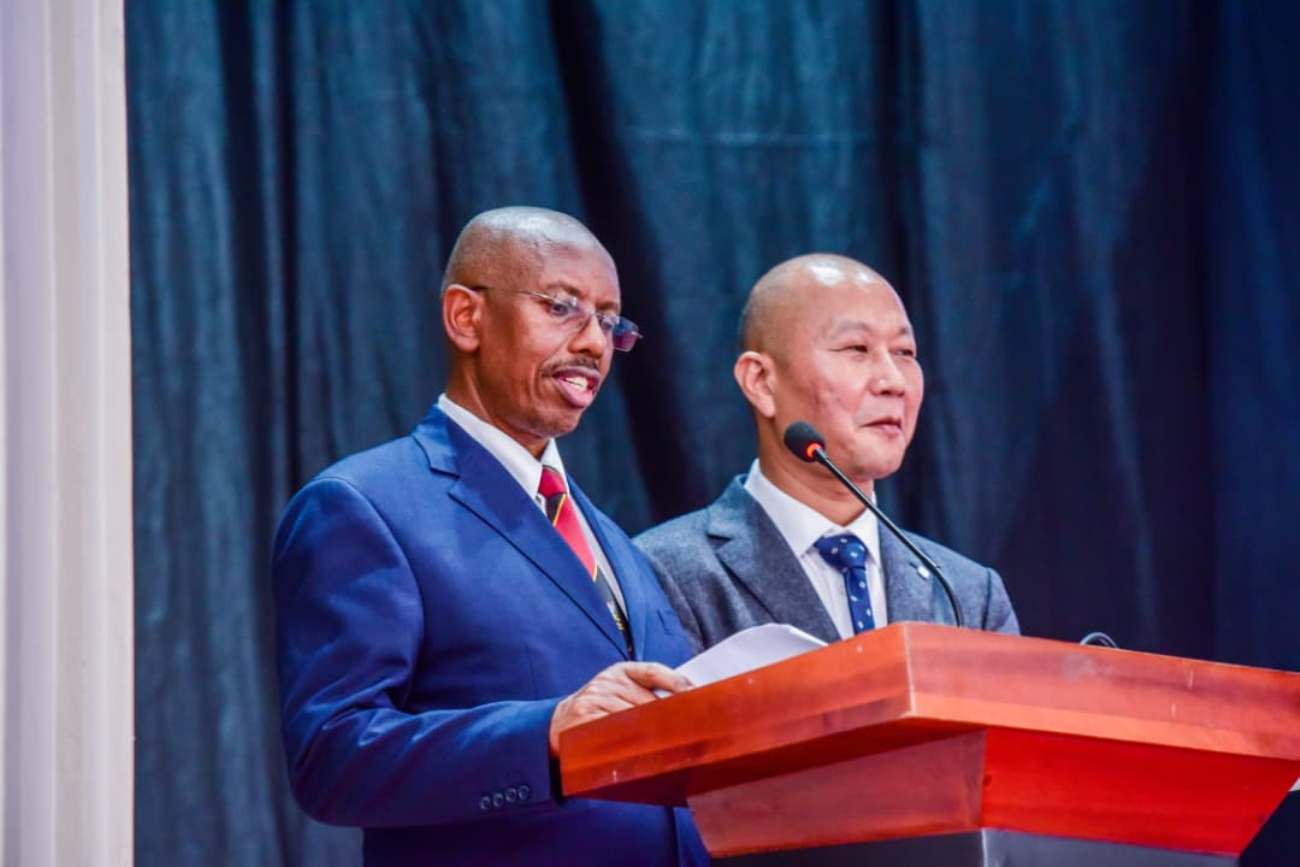
Recognising that the China-Africa relationship is not without questions, the Confucius Directors birthed this platform for critical, evidence-based conversations about the opportunities, challenges, and implications of the China-Africa partnership. They said, we should not only interrogate what Africa can learn from China, but also what Africa can contribute to this relationship.
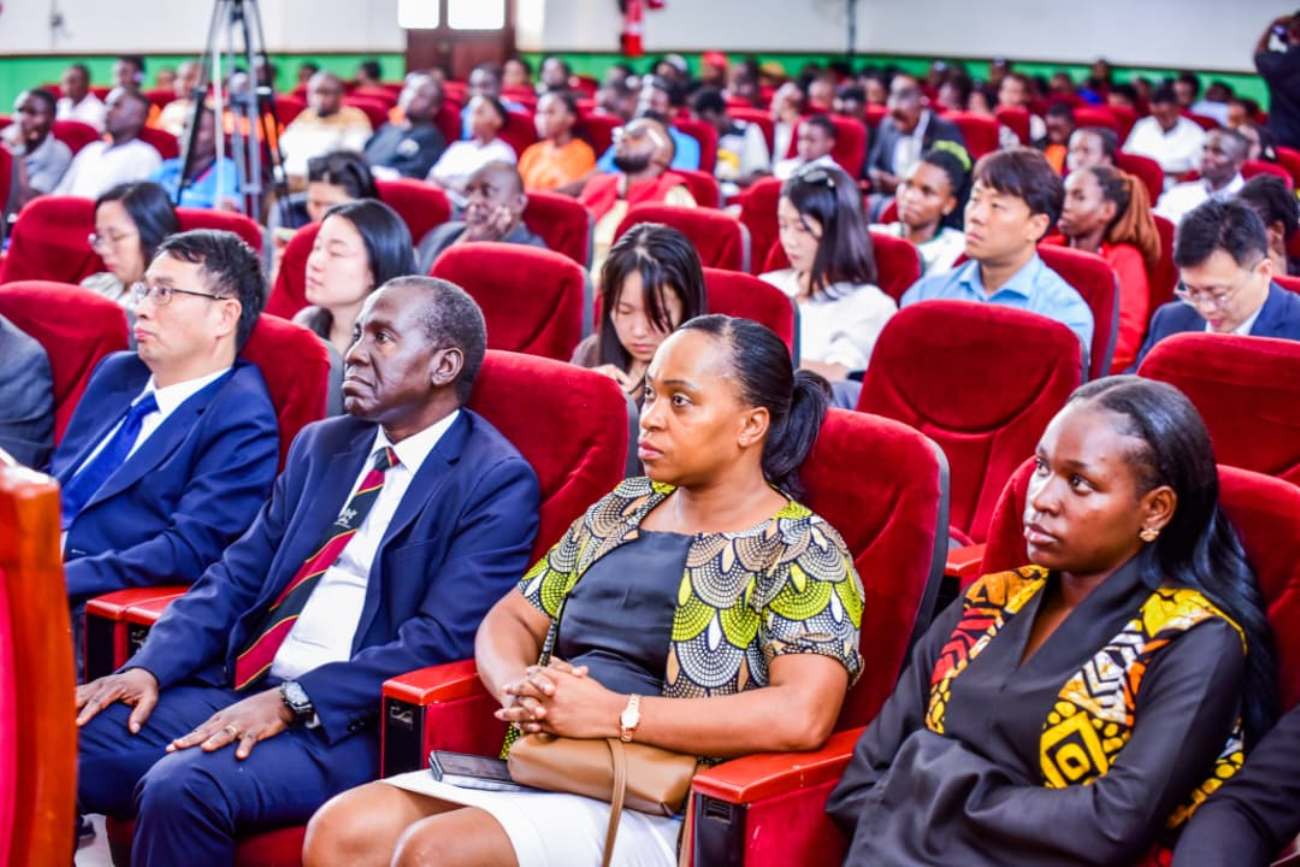
The event held on November 20, 2026 featured a keynote from Prof. Julius Kiiza critiquing the partnership and in attendance were academic leaders, students, and a visiting delegation from Xiangtan University, led by Prof. Liu Jingang, Deputy Secretary of the CPC, Xiangtan University Committee.
Makerere Vice Chancellor’s Vision: China-Africa Relations
Prof. Barnabas Nawangwe, the Vice Chancellor of Makerere University took the podium and welcomed the audience and contextualised the partnership within the university’s broader mission. He framed the relationship with China not just as a diplomatic gesture, but as a pragmatic necessity for Makerere and Uganda’s development.
He announced concrete steps Makerere University is taking to operationalise this partnership. Beyond the existing Confucius Institute, the university is expanding its academic footprint to better understand the Chinese economic model.
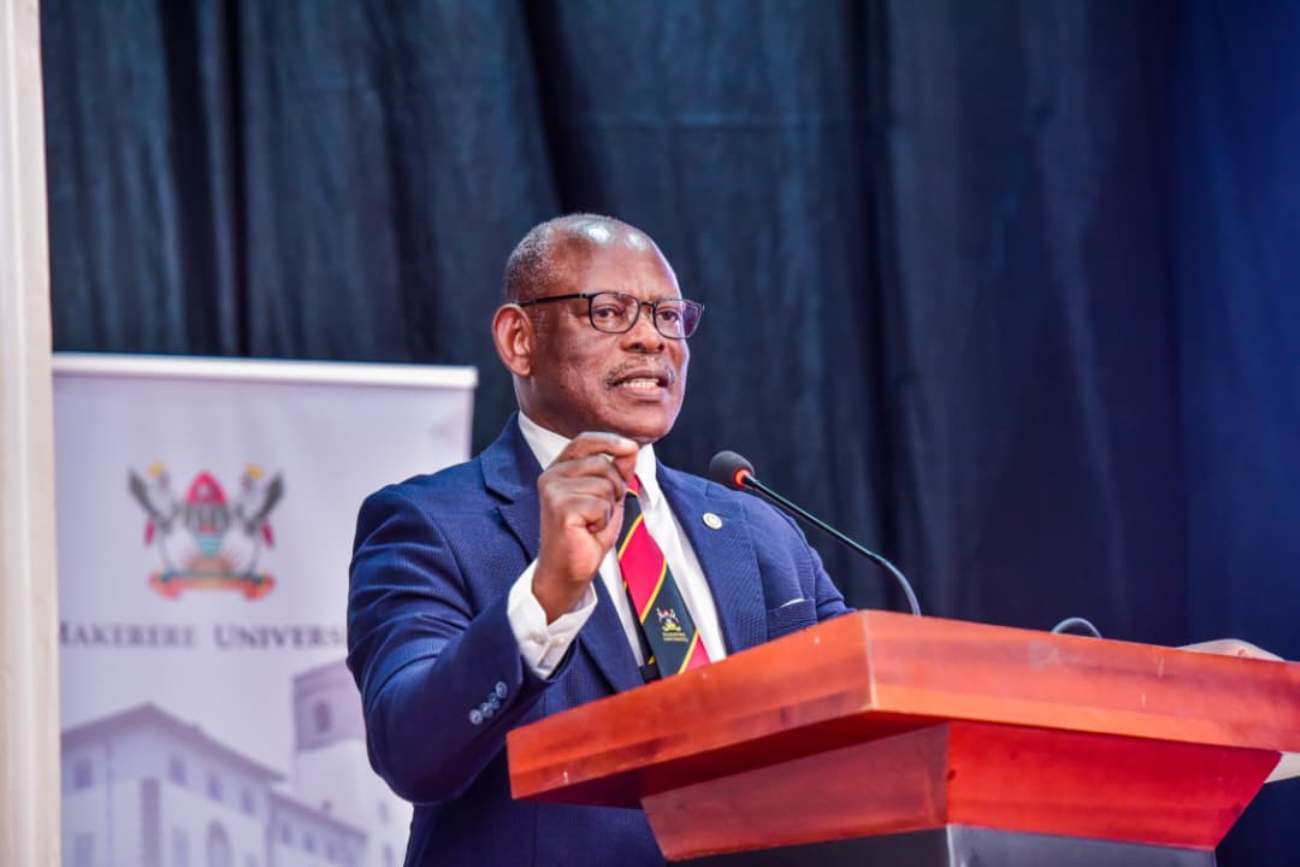
He said “apart from the teaching of the Chinese language, we have decided that we are going to establish a center for Chinese studies, considering, China currently controls almost 50% of the world economy.”
Prof. Nawangwe also highlighted a new, practical collaboration in the field of engineering where Makerere is yet to start a joint Masters program in Chemical Engineering. This is was marked as extremely important for Uganda as it sets up to begin producing oil, but with limited capacity to develop byproducts from that oil.
He ended his address with a direct charge to the young people, students, and all in the room to study China because it is leading the world in many things. It is only through this that we can beat poverty in Uganda and Africa.
Prof. Kiiza’s Keynote: A Call to Prioritise African Values as we partner with China
Prof. Julius Kiiza, a professor of Political Science at Makerere University, took the stage with a provocative opening, framing his address as an exercise in challenging the status quo. He immediately steered the conversation toward the power dynamics inherent in international relations, urging the audience to look past the surface-level rhetoric of partnership and dissect the wording in the title of the event that he considered an entry to measuring power. Starting with the word China already puts it ahead in the partnership.
He did not hold back in explaining the nature of foreign aid where he contrasted Western assistance with Chinese engagement, noting that while Western aid is often viewed as political or predatory, Chinese aid is presented as developmental.
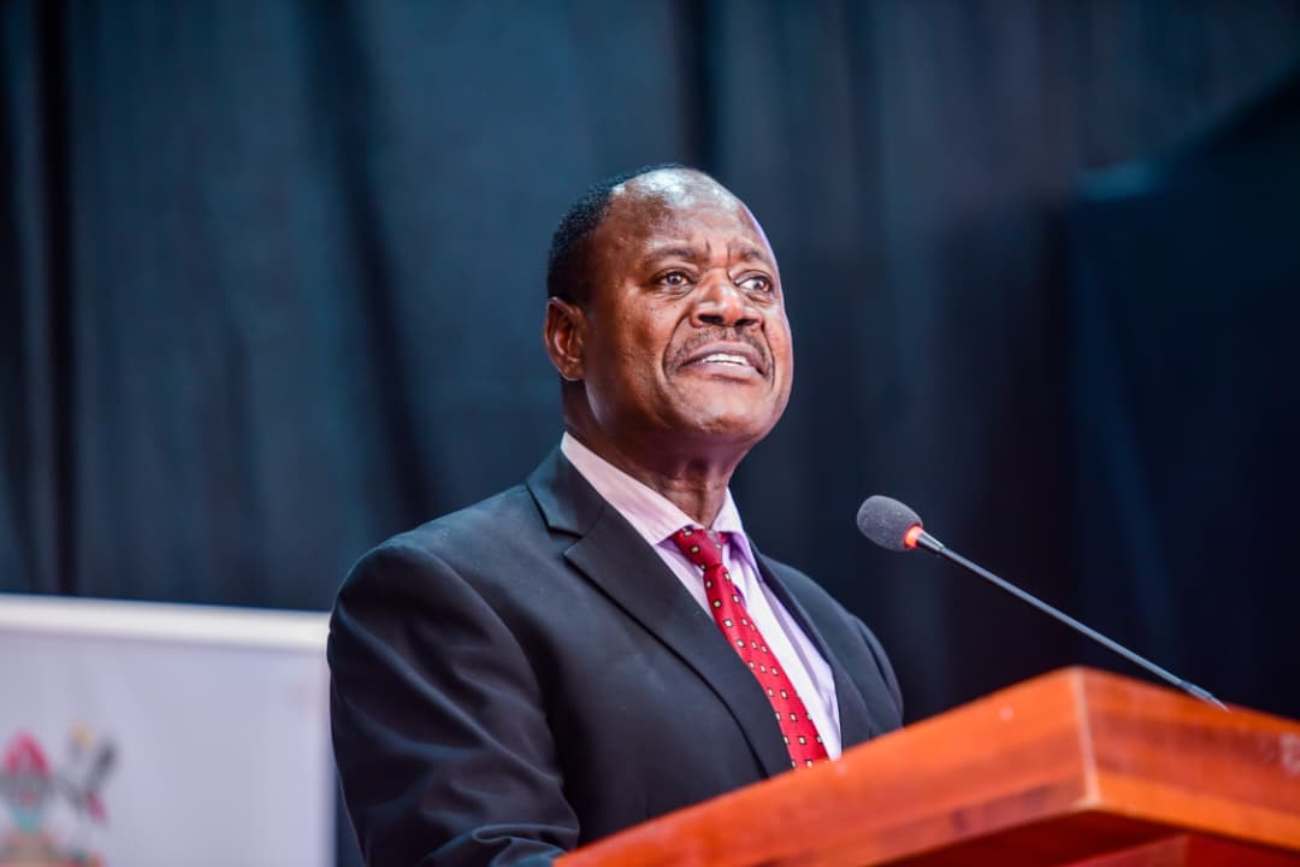
However, he woke the audience saying, “China is definitely Africa’s ally, with a strong history of partnership with Africa. But friends, China is a sovereign state, not a charity house. China is not an NGO.”.
“The key incentive driving China is to project Chinese power across the world, not just in Africa. In diplomacy, therefore, I will invite Ugandans and other Africans to appreciate that you get what you negotiate, not necessarily what you desire for,” Prof. Kiiza said.
The professor also argued that Africa’s current economic stagnation is not a result of a lack of potential, but a failure of strategy and statecraft. He pointed to the “infrastructure miracle” in China, bullet trains, smart cities, and advanced logistics as the blueprint that Africa must emulate.
He explained that if we partner with China to build bullet trains? Then we shall not need to live in Kampala to work in Kampala. Prof. Kiiza suggested that if we have a bullet train which travels 500 kilometres in an hour and ten minutes, you can live in Kabale or Gulu or Karamoja and work in Kampala. “That way, we can decongest Kampala.”
Prof. Kiiza challenged the reliance on Western development philosophies, arguing that African scholars should reclaim their own history and intellectual agency. He emphasised that China’s success was built on economic nationalism, meritocracy, and a developmental state, rather than just cultural adherence to Confucianism.
He concluded his keynote emphasising that “China attained modernity without modernisation. Transformation without being captured by Western capitalism. The lessons for China-Africa relations are clear. We must transcend the culturalised theoretical perspectives. We must therefore adopt African Confucianism. These are our own values. Resurrect them, respect them, but edit them so that we kick out the negative elements.”
Xiangtan University as a Bridge for these Relations
Prof. Liu Jingang, the head of the delegation from Xiangtan University, spoke on behalf of the visiting Chinese academics, emphasising the long-term nature of the cooperation between the two institutions. He reiterated the ideas of the Vice Chancellor, framing the university partnership as a vital bridge for cultural and economic exchange.
Reflecting on the shared history of the two universities and the role of the Confucius Institute as a flagship for people-to-people exchanges. He explained how the partnership has evolved from simple language instruction to a more robust academic collaboration.
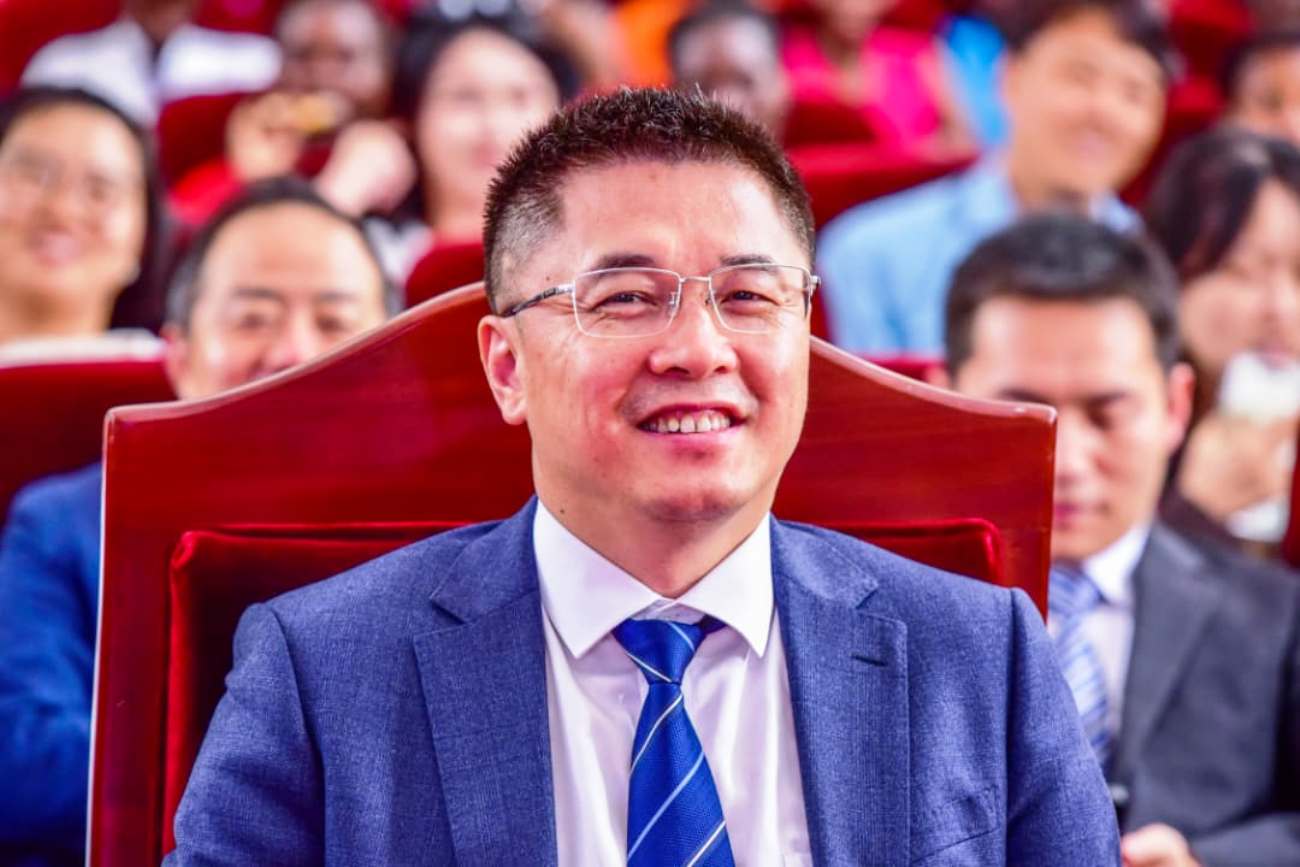
Prof. Jingang also addressed the economic transformation. He offered the Chinese perspective on what drove their own economic takeoff. He emphasised stability, international cooperation, and the integration of education, science, and technology.
Liu concluded by reaffirming Xiangtan University’s commitment to the partnership, focusing on the next generation of leaders.
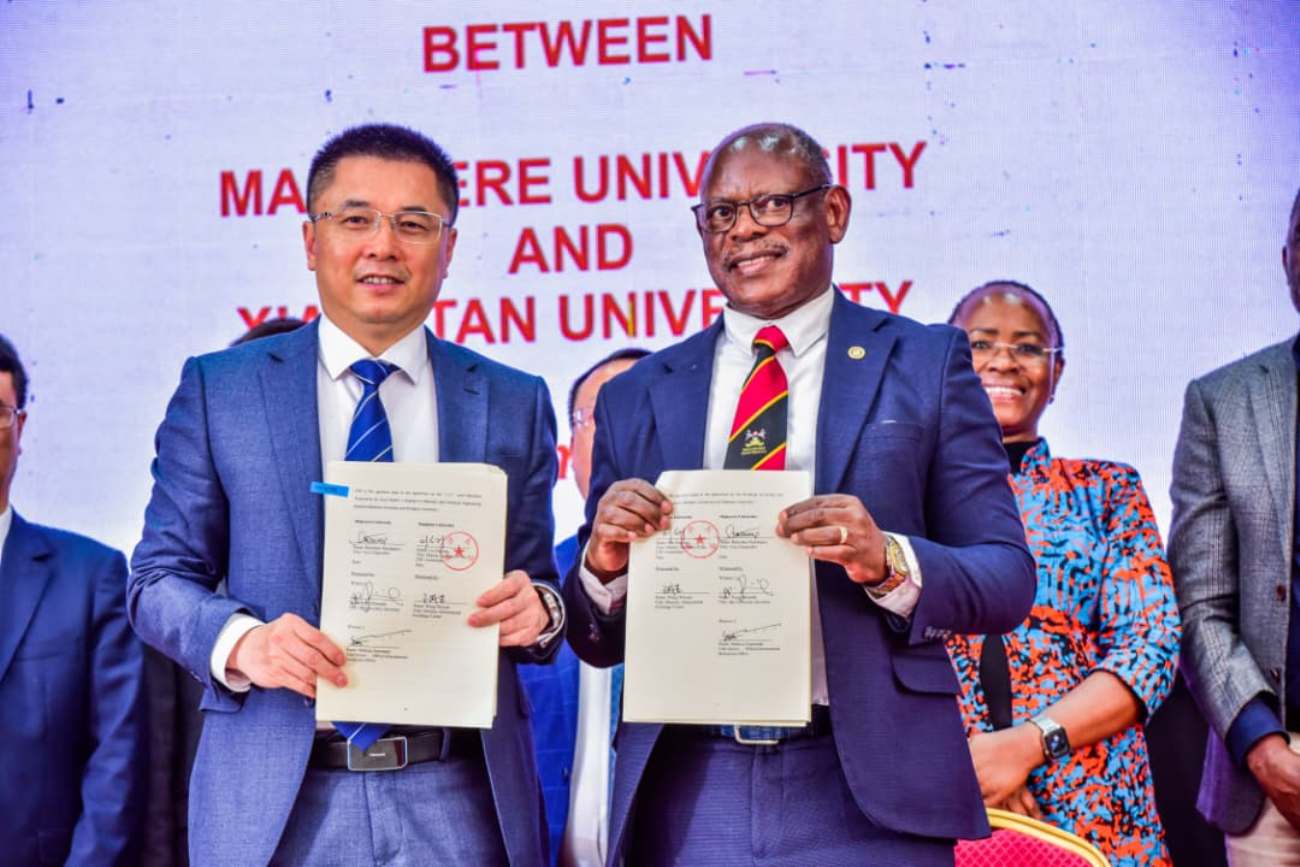
By facilitating these discussions, the Confucius Institute moves beyond surface-level interactions, to encouraging interrogation of what Africa can learn from China and, crucially, what Africa can contribute to the relationship. Towards the end, the two institutions; Makerere University and Xiangtan University signed an agreement on the “1+2” joint master’s degree in materials and chemical engineering.
The lecture concluded with a consensus among the speakers that the relationship between China and Africa is at a critical juncture that requires a deliberate, informed, and proactive approach to ensure that this partnership yields tangible benefits for the people of Africa.










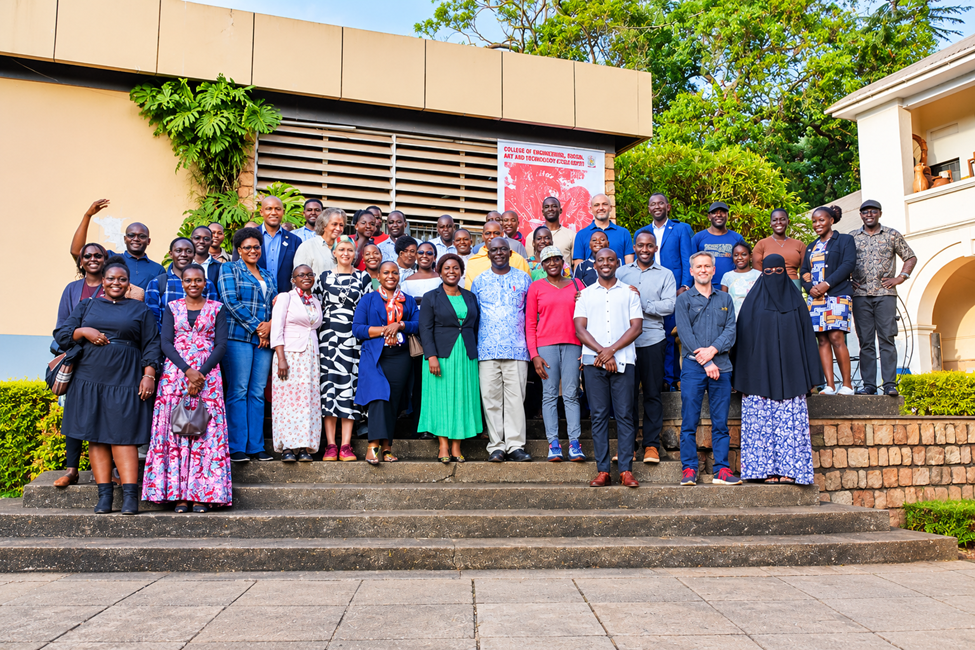

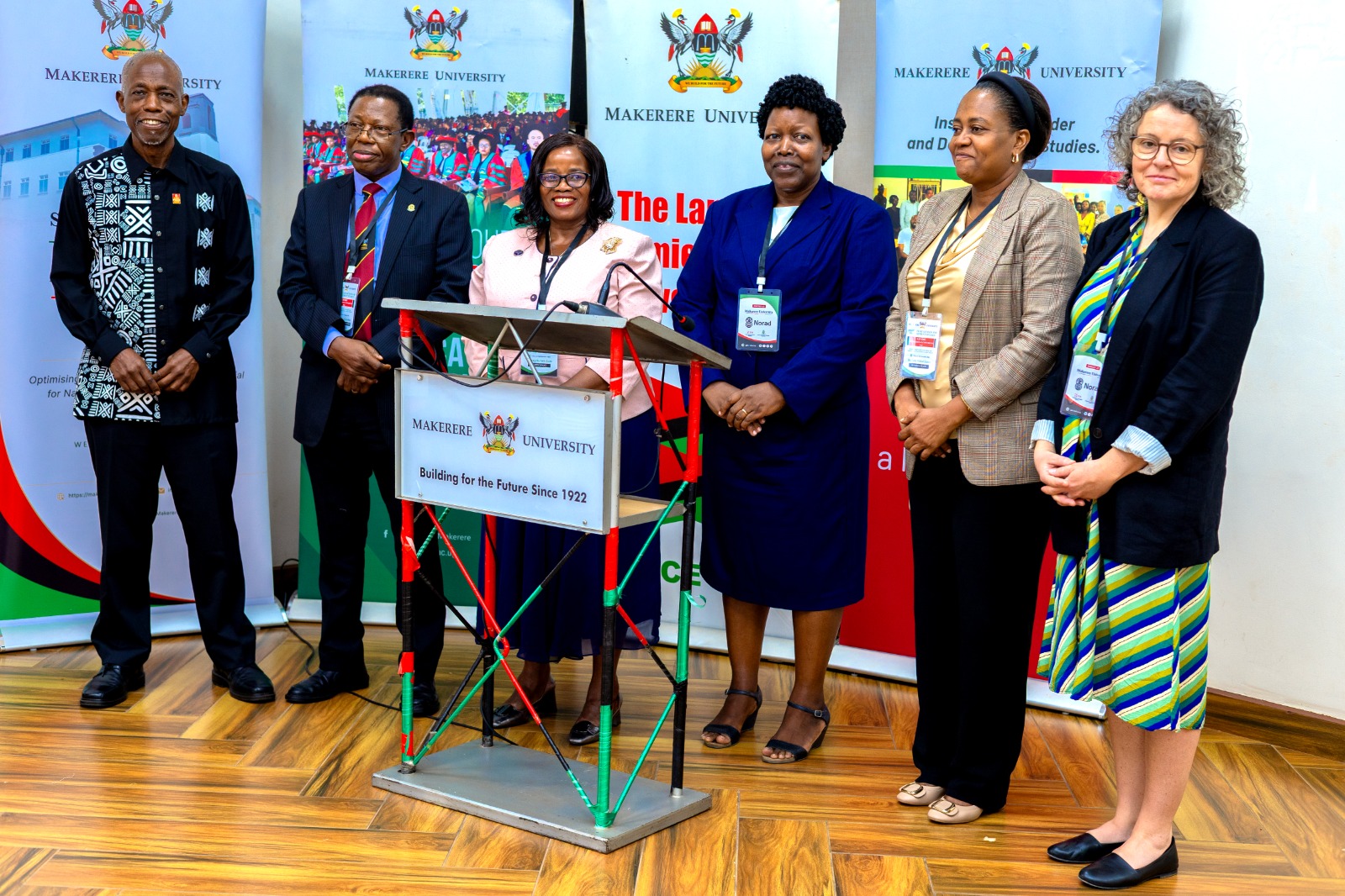
November 17, 2026: Makerere University has called for greater investment in digital infrastructure, artificial intelligence literacy and gender equality in higher education, as a six-year collaborative project involving universities in Uganda, Tanzania and Norway reported more than 30 research publications and improved graduate completion.
The call was made on Tuesday 17th November 2026 during the opening of the International Conference on Gender and Digitalisation in Higher Education at Makerere University. The November 17–18 conference, held under the theme “Reimagining Gender in the Digital Age: Opportunities and Transformations in Higher Education”, has brought together academics, researchers and policymakers from Uganda, Norway, Italy, Kenya, Nigeria, Ghana, South Sudan, Tanzania and Zambia.
Associate Professor Ruth Nsibirano, the conference convener and Principal Investigator of the Gender and Digitalisation (GENDIG) project at Makerere, said the initiative was established to ensure that women and other disadvantaged groups are not excluded from opportunities created by digital transformation.
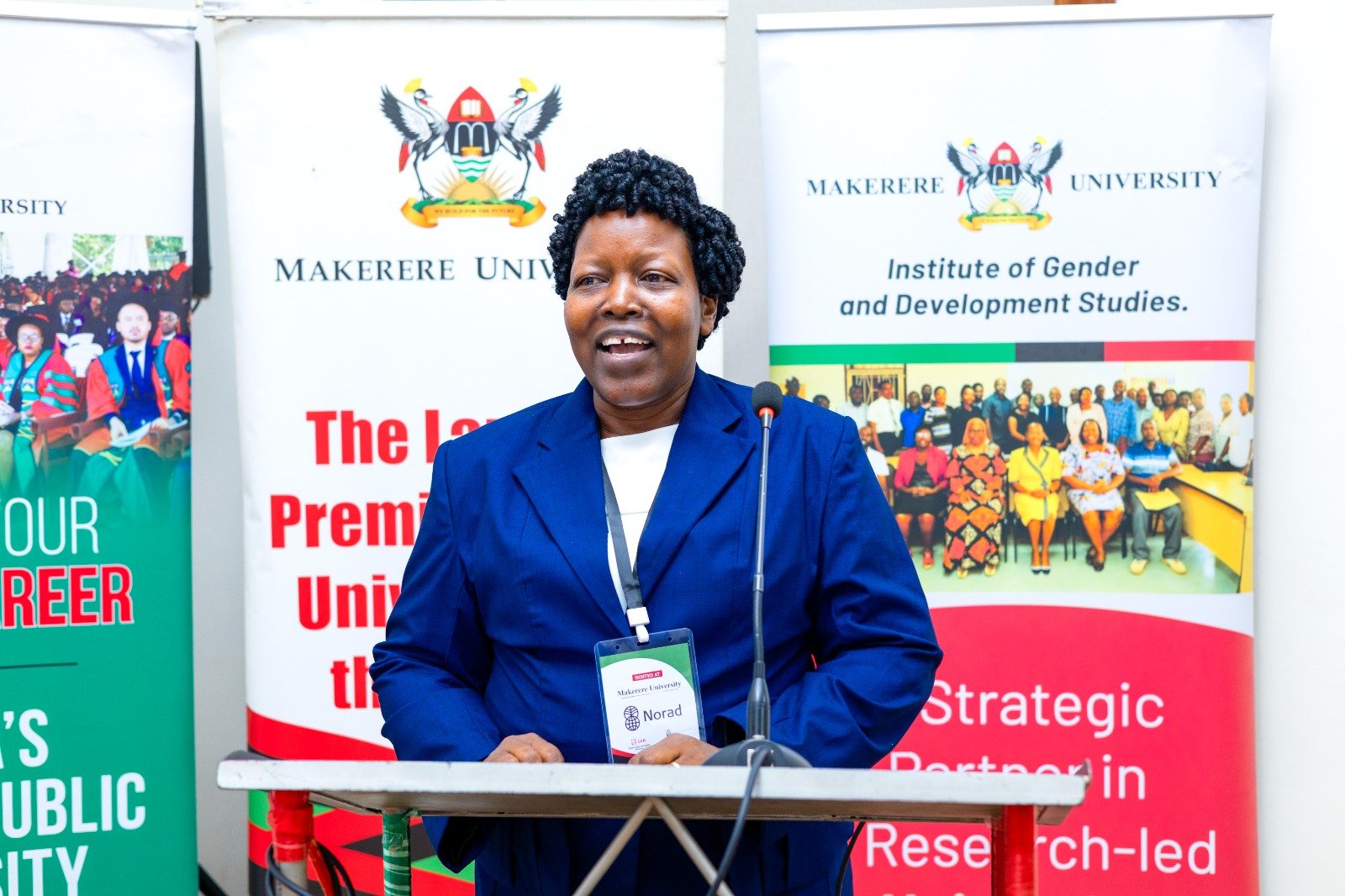
“Our central message is that no one should be left behind,” said Assoc. Prof. Nsibirano.
The project, which began in 2021, supported the digitisation of Makerere‘s Master’s in Gender Studies curriculum and Diploma in Gender and Local Economic Development. It also trained academic staff to develop digital learning materials.
Assoc. Prof. Nsibirano highlighted that the Makerere team had produced more than 30 publications from research conducted by students and staff.
“The Makerere GENDIG team is proud to have more than 30 publications arising from research conducted by students and staff,” she said.
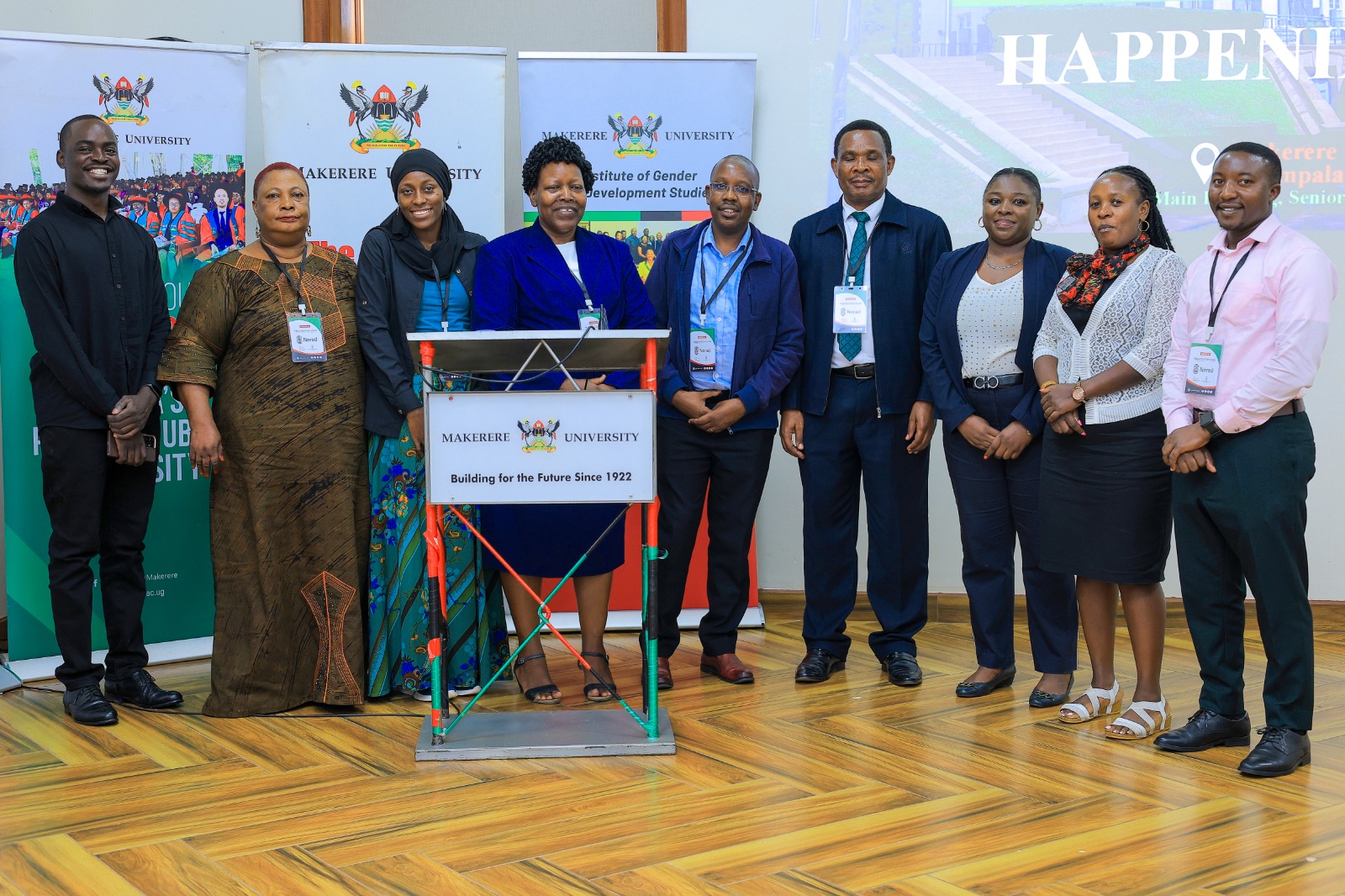
Reporting the improvements in graduate supervision, she noted that 43 graduate students from the Institute of Gender and Development Studies completed their studies and graduated during the most recent graduation ceremony.
“That did not happen by accident. It was not an isolated occurrence. It was the result of deliberate and sustained efforts to support graduate students,” she said.
The project introduced structured supervision, including weekly sessions where students could present their research, receive guidance and address challenges affecting their progress. It also supported partnerships with civil society organisations, student internships and academic exchanges involving Makerere, the University of Agder in Norway and the University of Dar es Salaam in Tanzania.
However, Assoc. Prof. Nsibirano said access to digital devices, reliable internet and other resources remained a challenge for some students.
Universities must prioritize the digital agenda
The Academic Registrar of Makerere University, Professor Buyinza Mukadasi said digital technologies were changing how universities generate, access, share and apply knowledge.
“The concept of reimagining challenges us to rethink our existing institutional structures, policies, systems, resources and available assets,” he said.
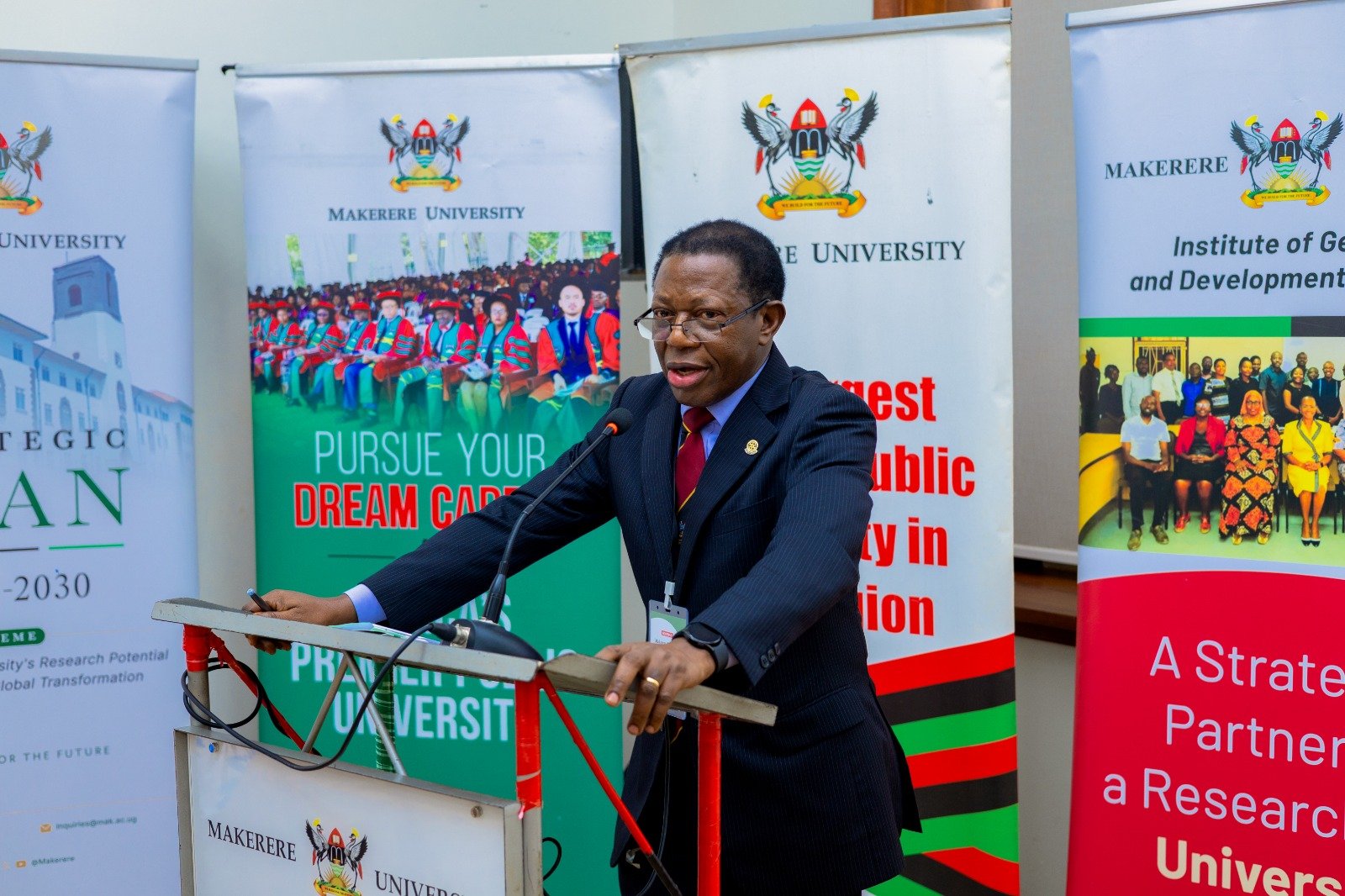
Prof. Buyinza Mukadasi, who is also Makerere‘s institutional coordinator for the NORHED programme, urged universities to invest in reliable digital infrastructure and ensure that technological progress advances gender equity and inclusion.
Prof. Buyinza Mukadasi aargued that digital learning could reduce the costs students incur on accommodation, transport and food by allowing universities to move beyond systems that depend entirely on physical attendance.
Government raises questions about ownership and access
Dr Angela Nakafeero, Commissioner for Gender and Women’s Affairs at the Ministry of Gender, Labour and Social Development, said digital transformation was raising questions about who controls technology, who benefits from it and whose values are represented.
“Who is building this digital world?” she asked. “Are we, as Ugandans, participating in its construction? Are we contributing to the technologies that are shaping the future?”
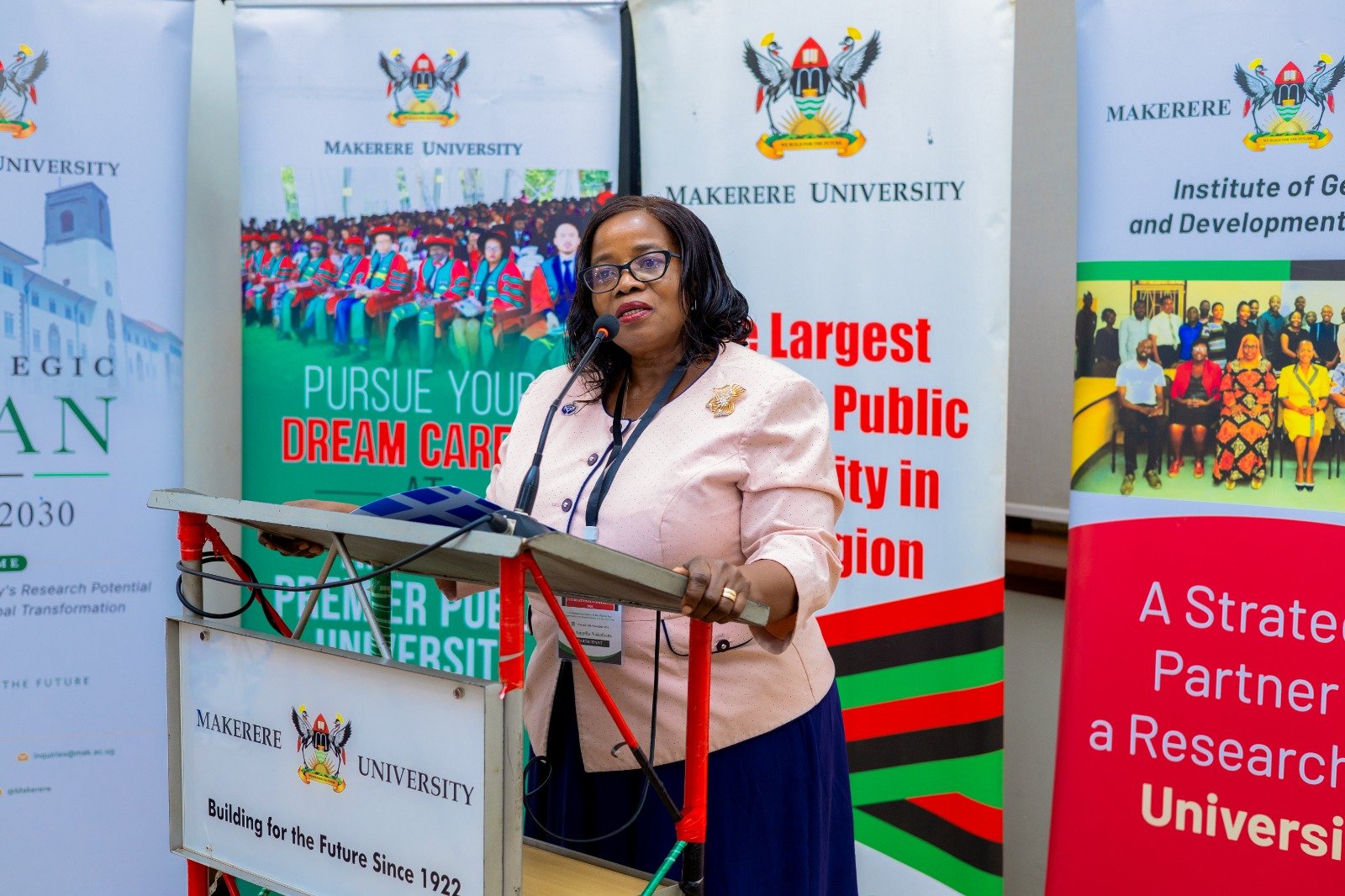
Dr Nakafeero, who was the Guest of Honour, warned that Uganda risked remaining a consumer of technologies developed elsewhere unless universities and institutions invested in the capacity to design, develop and own digital innovations.
She advocated for strategies that empower more girls and women to pursue science, technology, engineering and mathematics (STEM), while cautioning against overlooking the contribution of humanities and social sciences-related disciplines and soft skills.
Dr Nakafeero implored researchers to examine how technology could reduce women’s unpaid care work and remove barriers to their participation in productive activities.
She raised concerns about online safety, including technology-facilitated gender-based violence, and called for affordable digital solutions that protect women’s rights and improve access to justice.
Eng. Dr. Tusubira questions slow progress on gender equality
Delivering the keynote address, Eng. Dr. F. Francis Tusubira, Managing Partner of Knowledge Consult Ltd, challenged universities to confront institutional and cultural barriers limiting women’s participation in leadership and technology.
He said progress towards gender equality remained slow and fragile, with global estimates suggesting that achieving parity could take more than a century at the current rate.
“The culture eats strategy for breakfast,” Eng. Dr Tusubira said, invoking management thinker Peter Drucker to argue that institutional policies would achieve little without changes in the attitudes and practices shaping decision-making.
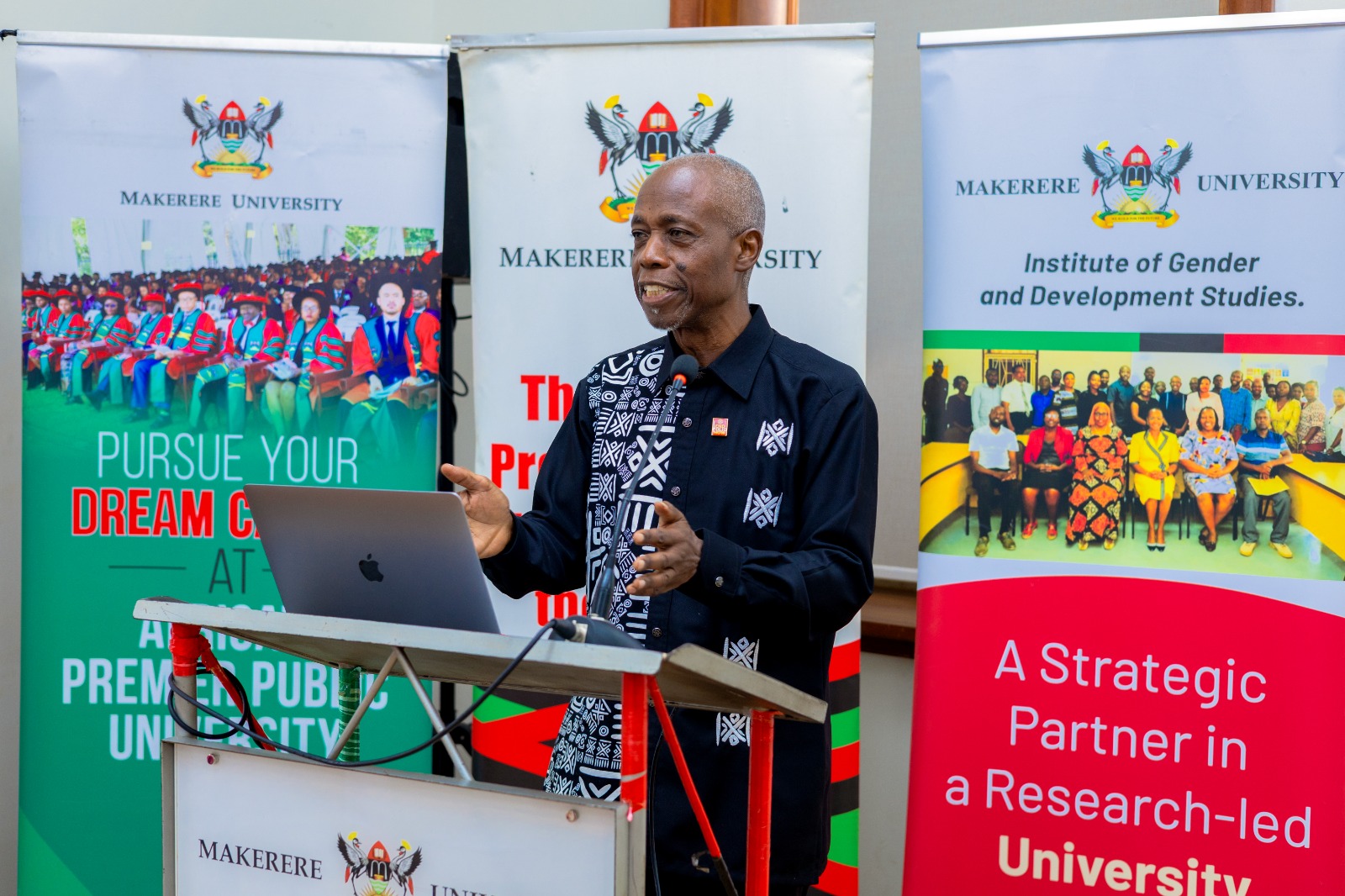
Using Makerere University as an example, he said the university’s Directorate of ICT Support (DICTS) is dominated by male staff members, with very few women.
Eng. Dr. Tusubira questioned how an institution with a long history of gender studies could have such limited female representation in its ICT department.
He argued that meaningful progress required organised women’s activism, political leadership and enforceable legal and institutional structures.
“Is this research simply for the sake of research? Or does it produce actionable findings that can accelerate progress in a revolutionary way?” he asked.
AI literacy and adoption
On artificial intelligence, Eng. Dr. Tusubira proposed introducing a compulsory artificial intelligence utilisation course for all first-year students, regardless of their academic disciplines. “AI literacy should become a foundational skill across all disciplines,” he said.
He stressed that AI is a key research tool that should be put to use, advising that “resisting AI is suicidal.”
He nevertheless called for caution as AI tools are trained by humans and if they (trainers) reflect women in bad light, the AI will do the same. He therefore urged all the participants to portray women and girls in a positive light.
Eng. Dr. Tusubira warned that systems trained on historical records that marginalise women could reproduce those biases. He cited African historical figures, including Queen Nzinga of Matamba, Queen Nandi of the Zulu Kingdom and Queen Ranavalona of Madagascar, whose contributions he said had often been excluded from historical accounts.
“Otherwise, we risk automating historical prejudice,” he said, calling for women’s contributions to be better represented in the information used to develop AI systems.
Tanzania highlights disability inclusion
During a panel discussion on the project’s achievements and future, Dr Lulu Simon Mahai, Director of Social Services and former Director of the Institute of Gender Studies at the University of Dar es Salaam, said the project had supported the development of an undergraduate course in Gender and Community Development.
The university also supported five scholarship beneficiaries-three men and two women-deliberately including men because they were underrepresented in gender studies.
Dr. Mahai said the project had supported six women to strengthen their academic writing and helped 120 students with disabilities undertake ICT training using assistive technologies, including BrailleSense, NoteTouch+, computers and magnifiers.
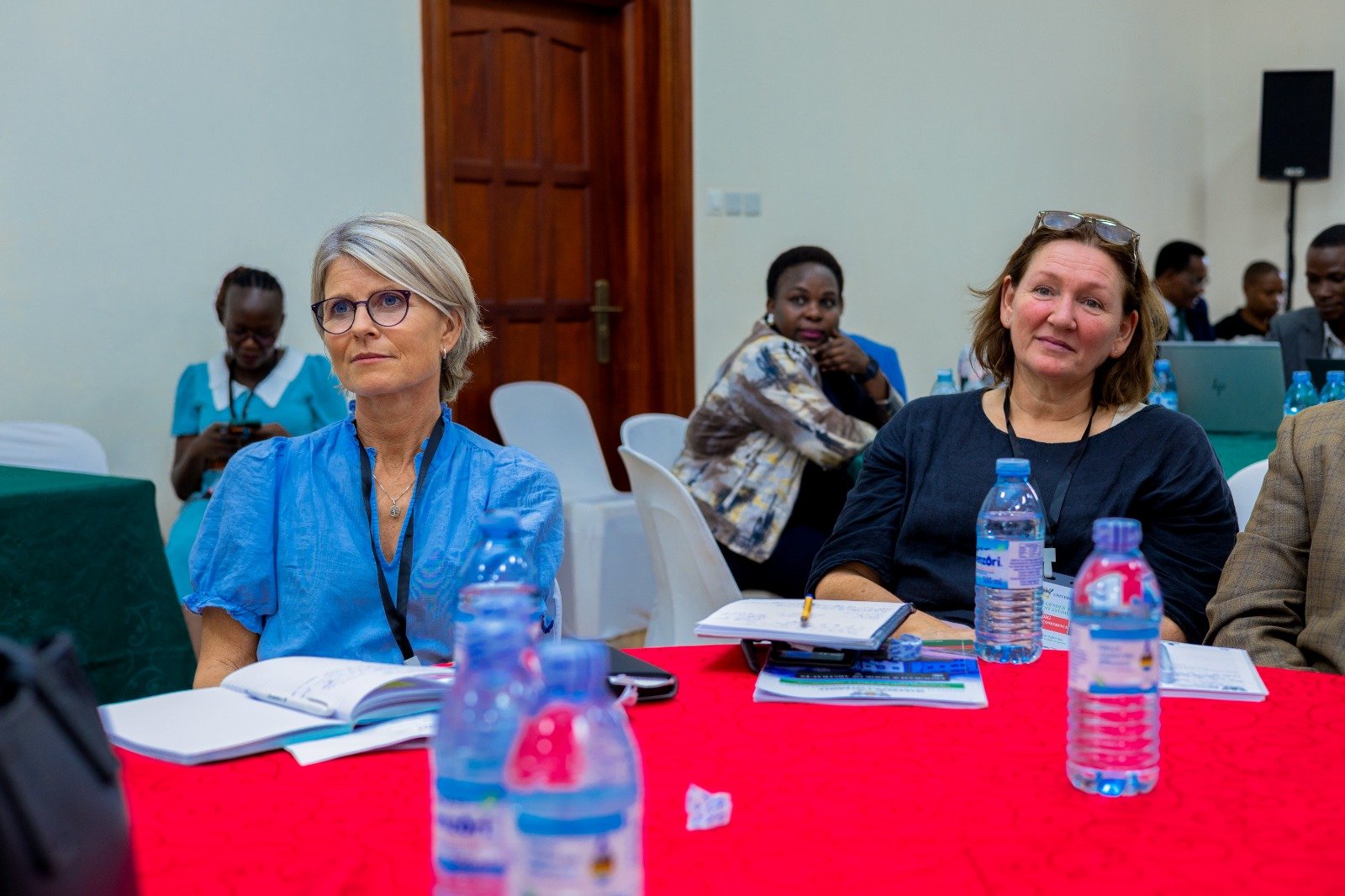
“Sometimes, when we support students with disabilities, we take these achievements for granted. However, we are planting a seed for future generations,” she said.
She added that the university’s experience showed that students had differing preferences for digital learning.
“Half of the students supported digitalisation, while the other half preferred physical classroom interaction,” Dr. Mahai said.
Some students faced difficulties accessing devices and internet services, while others preferred the social interaction of physical classrooms.
Digital access and funding remain challenges
Assoc. Prof. Arnhild Leer-Helgesen, Head of the Department of Global Development and Planning at the University of Agder and a GENDIG Principal Investigator, said the project was conceived during the COVID-19 pandemic, when universities had to move teaching and collaboration online.
“Digitalisation of higher education and teaching was what saved us as teachers and students. We would not have been able to continue higher education if we had not managed to move online,” she said.
However, she cautioned that digital learning could also reduce physical interaction and contribute to isolation.
“The combination of digitalisation and individualism is not necessarily good for teaching and learning,” Leer-Helgesen said.
Dr. Nsibirano said some Makerere students still lacked smartphones and reliable internet access, with others were relying on phones that limited their participation in online learning.
She questioned how lecturers could establish whether students logging into online classes were actually participating and learning.
“In the next project, we want to investigate whether online teaching is effective in the African context. Are we delivering? Are students actually learning?” she said.
The panellists also cited funding constraints, inflation, exchange-rate fluctuations and differences in financial accountability procedures among the partner universities and NORAD as challenges during implementation.
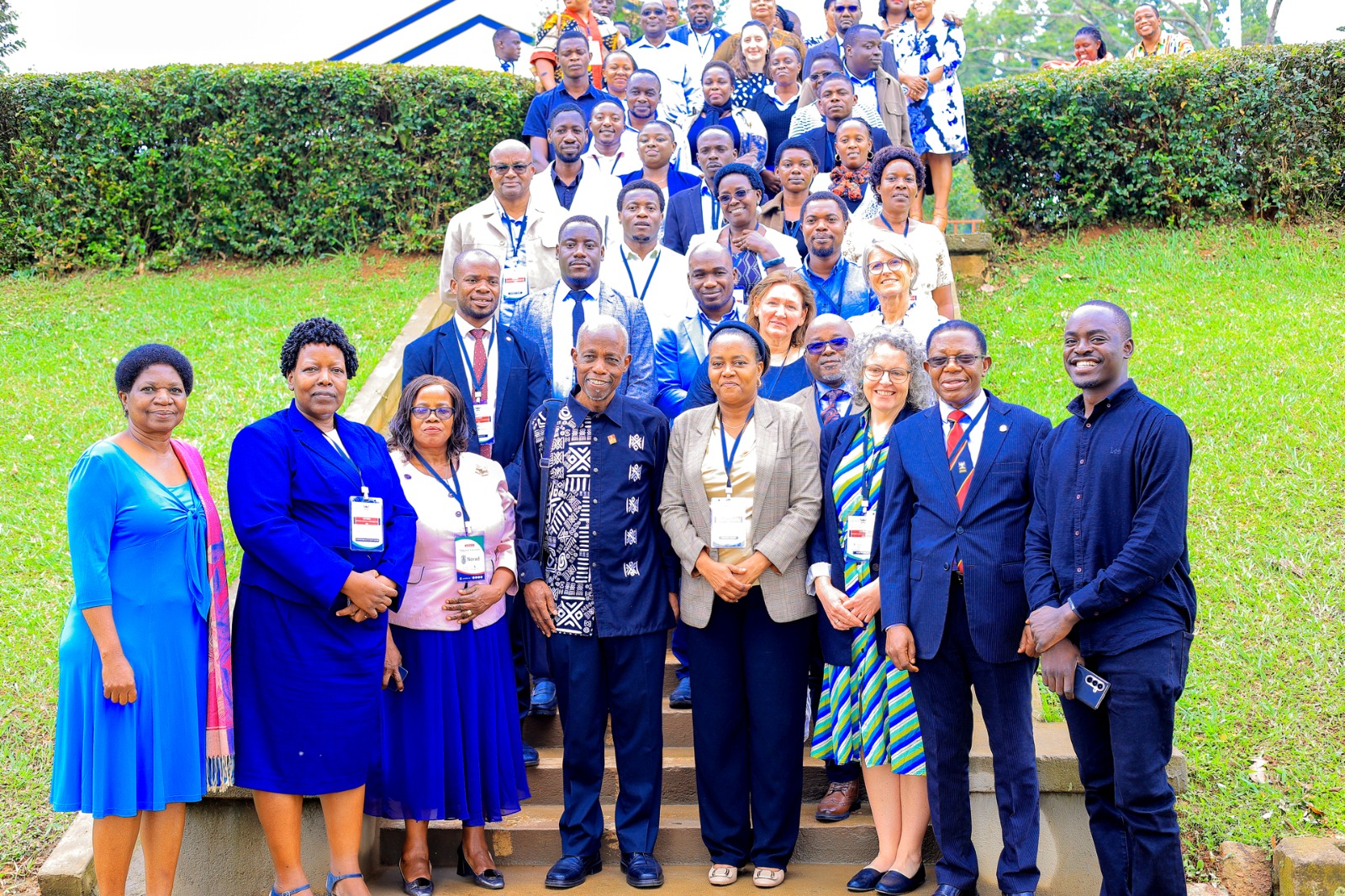
Dr. Mahai said limited funding had prevented consistent follow-up visits to rural women who received digital skills training, forcing the project to rely on telephone calls and remote monitoring.
Partners call for another phase
The partners called for continued investment in graduate scholarships, doctoral training, disability inclusion and collaboration with civil society organisations.
Leer-Helgesen said the next NORAD programme was expected to be managed by a university in the Global South, giving African institutions greater responsibility for setting priorities and determining its direction.
Dr. Mahai called for more doctoral scholarships to develop a stronger pool of gender experts, alongside continued support for students with disabilities.
The panel moderator, Dr Ritah Nakanjako, urged the partners to find ways of extending the collaboration beyond the current project.
“I want you to become creative and find ways of ensuring that we have GENDIG 3, GENDIG 4 and GENDIG 5,” she said.
The conference continues with research presentations and discussions on gender and digitalisation in higher education, inequality and inclusion, gender and digital technology in civil society, contemporary issues in gender studies, and gender and artificial intelligence.
The project is supported by the Norwegian Agency for Development Cooperation (NORAD) under the Norwegian Programme for Capacity Development in Higher Education and Research for Development (NORHED).
Education
Makerere Celebrates Prof. Mbazira’s Law Scholarship at His Inaugural Professorial Lecture and Book Launch
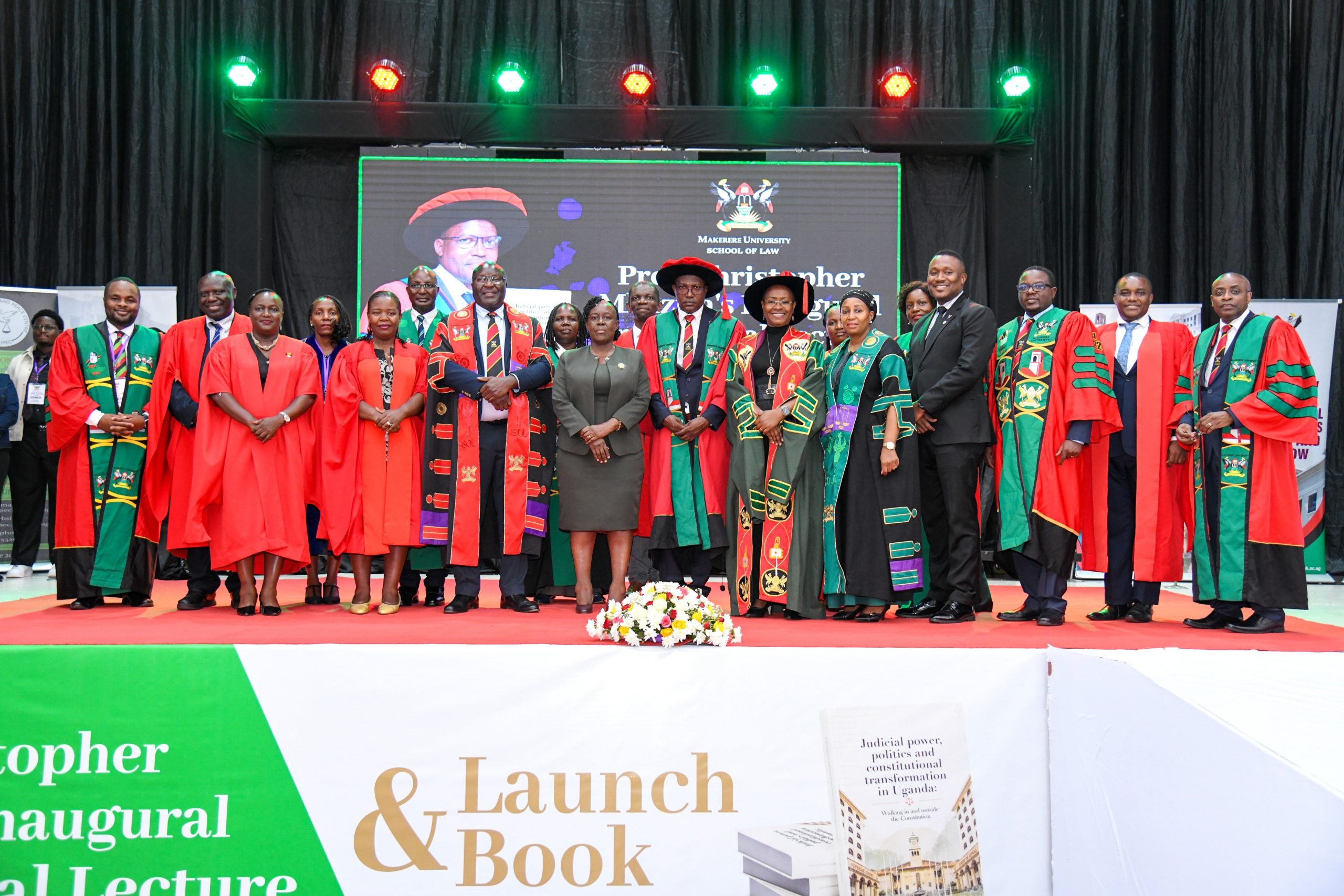
Makerere University lauded Professor Christopher Mbazira’s excellent contribution to the legal practice and academia during his inaugural professorial lecture and book launch organised through the School of Law. The celebration provided an opportunity to introspect on the topic of the day; exercise of judicial power for constitutional transformation in Uganda.
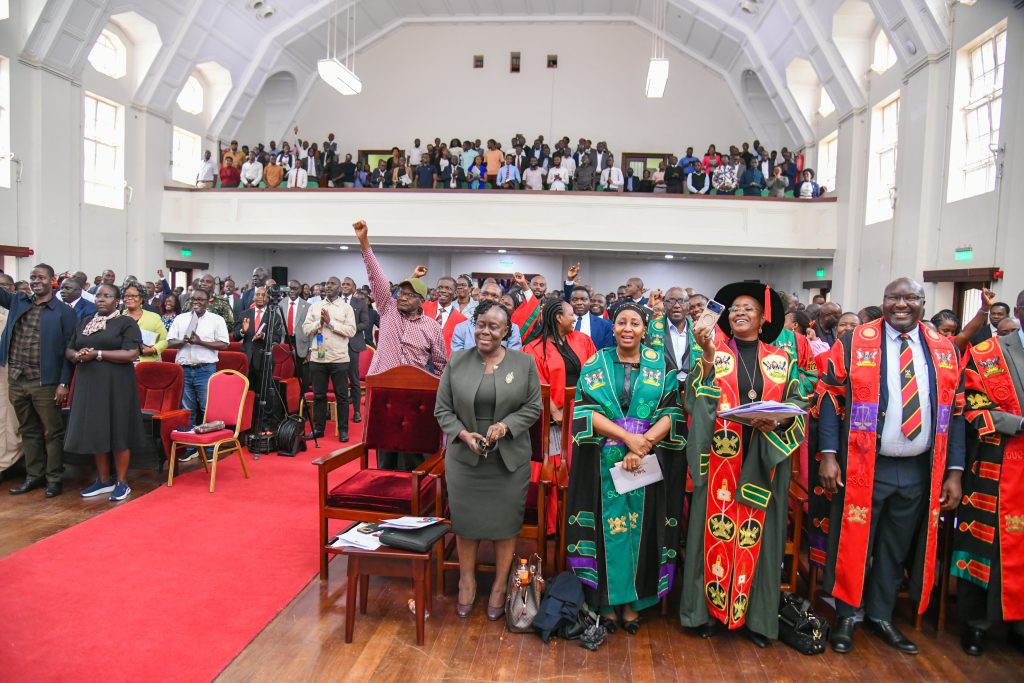
The lecture held on November 12, 2026 at Makerere Main Hall began on a lively note as Prof. Mbazira called out the traditional Makerere chant, “Emakerere Oye!” drawing an enthusiastic “Oye!” from the audience. It was a fitting start to a presentation he described as both a privilege and an honour.
Central Message of Prof. Mbazira’s Inaugural Lecture
In his presentation, Prof. Mbazira framed his central message to highlight that Judicial power remains one of the most important instruments for constitutional transformation, but its effectiveness depends on how it is exercised and whether its outcomes are respected.
Empahsising this, he drew on international scholarship to define judicial role. He referenced South African academic Prof. Bertus de Villiers, who guides that “the Judiciary can be an essential agent in the transformative process of a country. This is because the Judiciary can breathe life into the dry text of the constitution.”
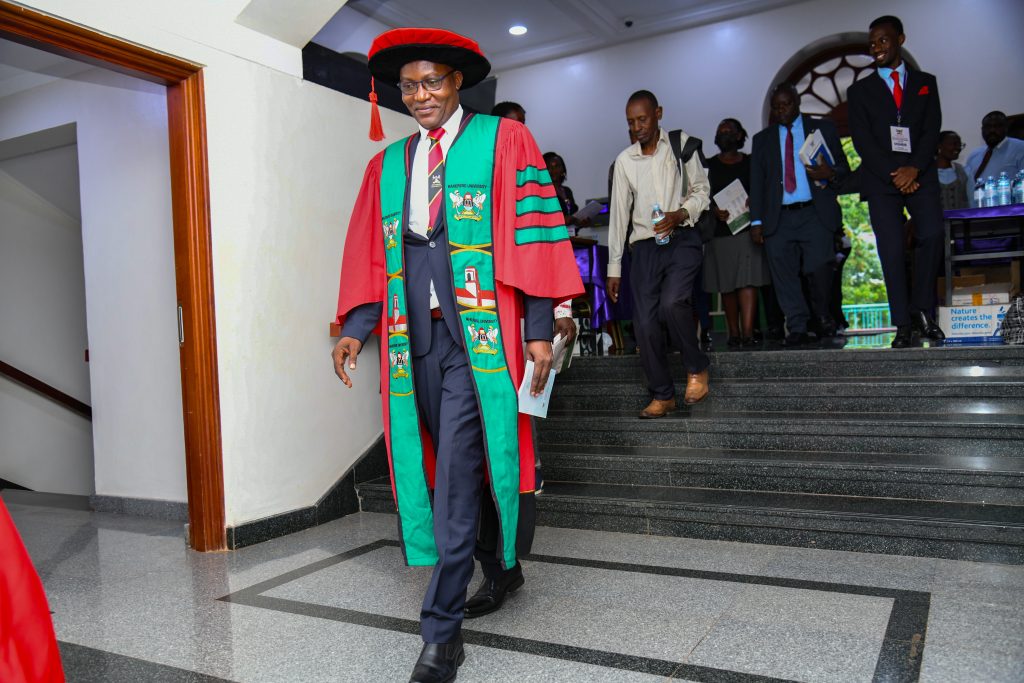
Acknowledging that courts do not automatically become transformative simply because a constitution gives them extensive powers, Prof. Mbazira drew a sobering reality check regarding the limitations of the courts.
He warned that the Judiciary can of course be an instrument of oppression, and a defender of the status quo. Therefore, for the better, he recommended that the Judiciary be independent, courageous, principled, and responsive to the constitutional aspirations of the people. To the Executive and Legislature, he encouraged they recognise that constitutional limitations are not obstacles to governance but rather foundations to legitimate governance. He mobilised legal professionals, academicians, civil society to remain engaged in defending constitutionalism.
Professor’s inaugural lecture themed, “Uganda@64 and the Exercise of Judicial Power for Constitutional Transformation: Examining the Gains and the Lost Opportunities,” typically challenged the audience to rethink the role of the Judiciary.
Beyond his academic achievements, Prof. Mbazira made room to celebrate his family that has accompanied him on his journey. He invited his daughter, Ms. Christabella Mbazira, an aspiring lawyer, to address the gathering.

In her remarks, Christabella described her father as a role model, expressing admiration for his legal intellect and, with a touch of humour, the financial rewards of his profession.
A Tribute to Prof. Mbazira from Makerere University
Acting Vice Chancellor, Professor Sarah Ssali, congratulated Prof. Mbazira on this achievement, describing it as not merely personal but institutional; a source of pride and a reflection of the scholarship and intellectual excellence that Makerere University continues to nurture.
Contextualising the Lecture, Prof. Ssali noted that it is always an opportunity to reflect on the academic journey of research, teaching, service, and contribution to society. She expressed confidence that this lecture on the role of courts in promoting constitutional transformation offers solutions to Uganda’s constitutional development and democratic future.
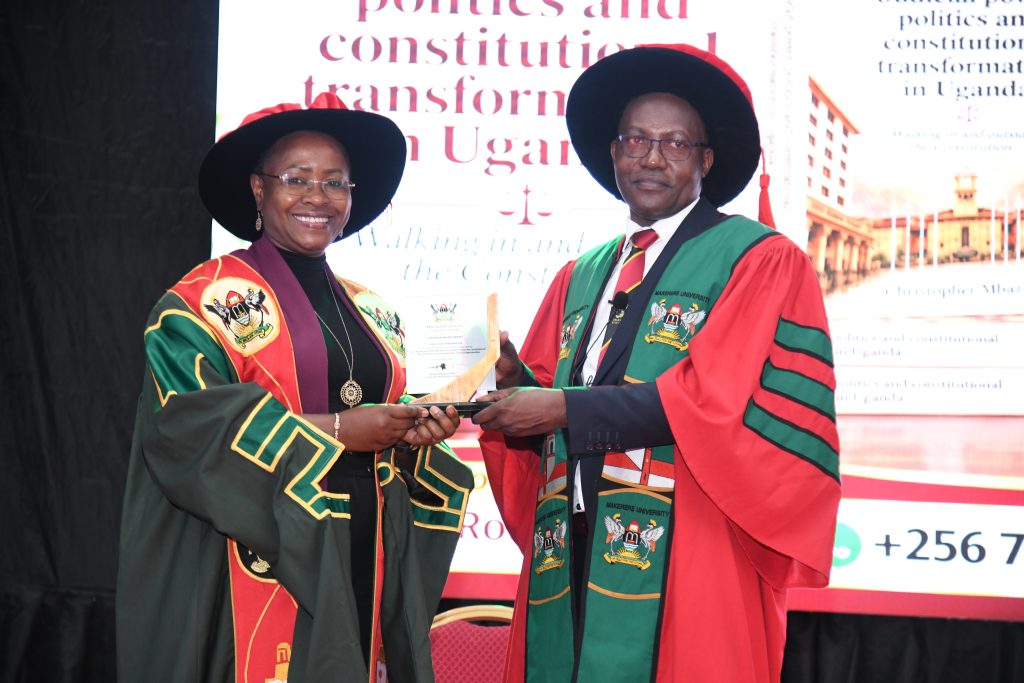
Prof Ssali, praised Prof. Mbazira for his mentorship contribution, noting that through his role at Makerere School of Law, he has groomed lawyers and legal scholars capable of critically using the law as an instrument of justice and social transformation.
The Acting Dean School of Law, Dr Zahara Nampewo described the inaugural professorial lecture as “one of the most significant academic traditions of any university,” noting it allows professors to “share the intellectual journey that has shaped their scholarship, to reflect on the contribution of their work to society, and to engage the wider public on issues of national importance.”
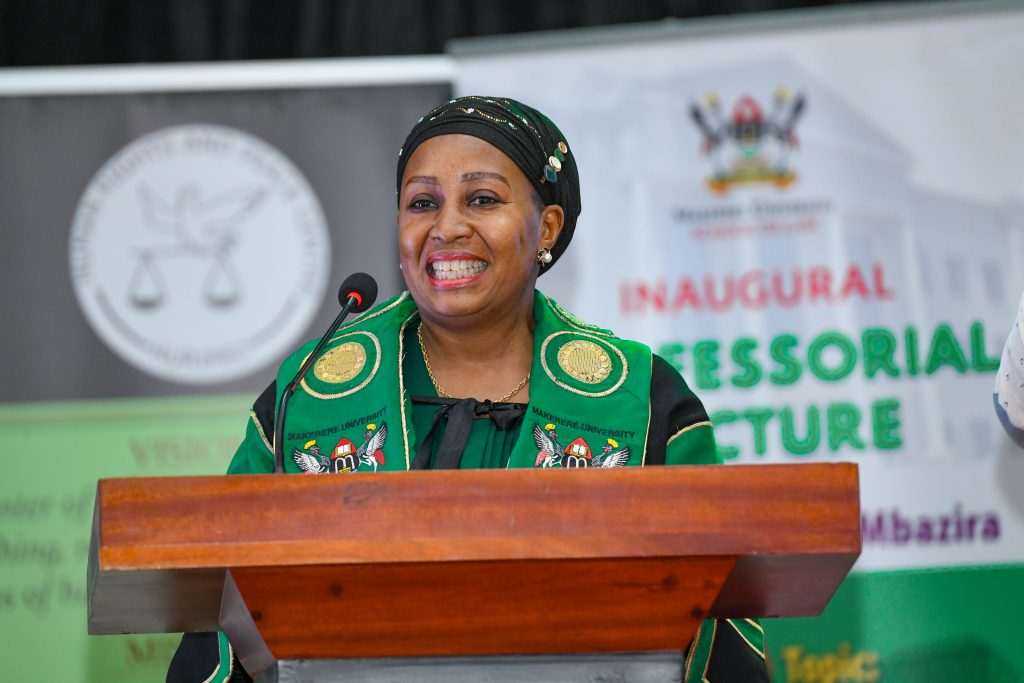
She emphasised that at the School of Law, constitutionalism is not an abstract academic concern. It is rather central to their mission as the leading institution of legal education, research and public engagement in Uganda. Exemplifying this, she referenced the 2016 amicus curiae brief submitted by nine law lecturers, including Professor Mbazira, which “established a progressive precedent for admission of amici curiae.”
Amici curiae are non-parties to a lawsuit such as experts, advocacy groups, organisations, or government officials who have a strong interest or specialised knowledge in the subject of the case.
Official Launch of Prof. Mbazira’s Book
Launching the book titled “Judicial Power, Politics and Constitutional Transformation in Uganda: Walking in and outside the Constitution”, Hon. Lady Justice Prof. Lillian Tibatemwa-Ekirikubinza, Justice of the Supreme Court of Uganda and former Deputy Vice Chancellor Academic Affairs and faculty at School of Law highlighted her long-standing relationship with Prof. Christopher Mbazira.
She acknowledged first encountering Mbazira as a student with “Law Intellect” and later as a colleague. She therefore expressed joy addressing him as Professor of Law now.
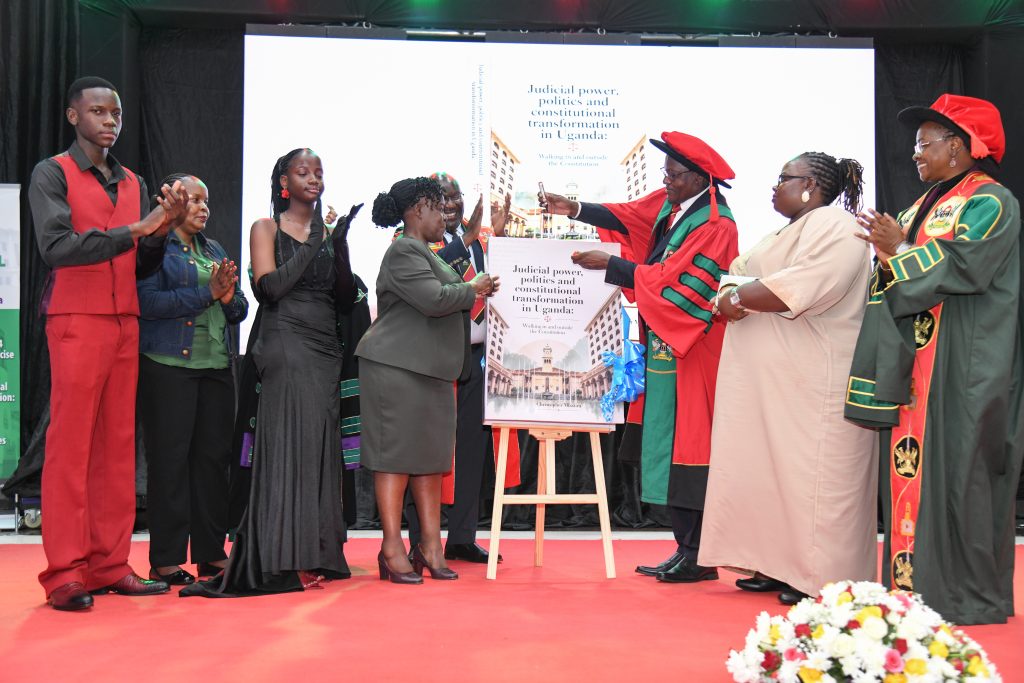
As the foreword author, she appreciated his book for its ability to help the Judiciary “reflect on their work, introspect and think, how we can do better.”
Further commending his role in critiquing the Judiciary, she emphasised the importance of authorship, referencing Albert Schweitzer to describe how authors “light the flame within” others.
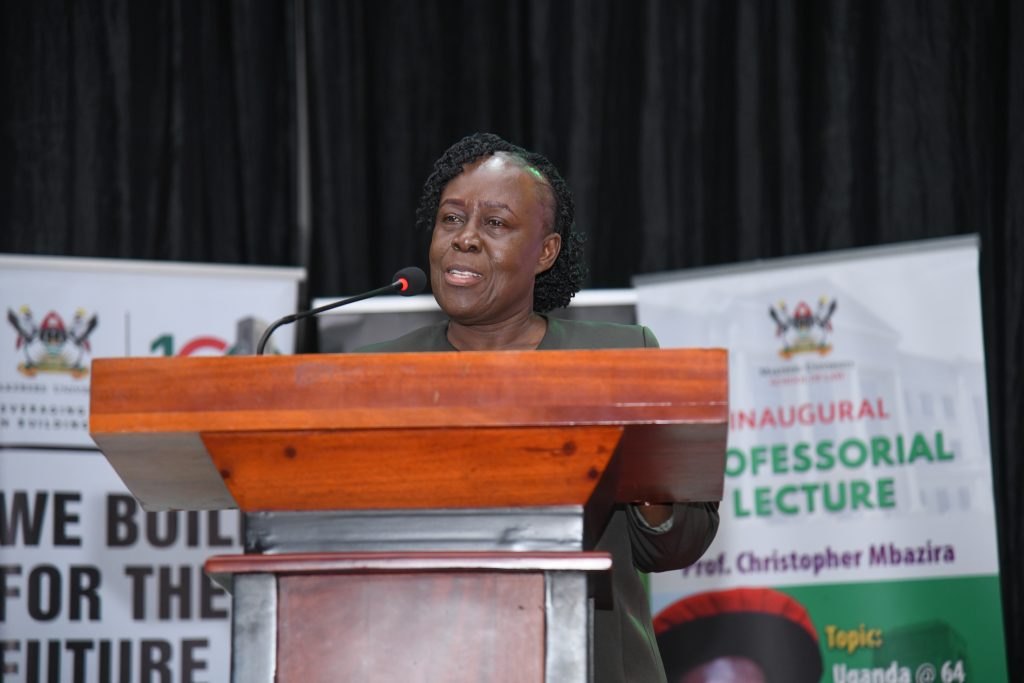
On behalf of the University, Prof. Ssali said the book demonstrates how scholarship can interrogate institutions, challenge established thinking, and contribute to national and international debates.
Professor Mbazira’s Journey – Academic and Professional
Born in Jinja in the 1970s, at a time when the town was a thriving industrial centre, Prof. Mbazira would later build a distinguished career in legal academia. His journey into teaching was not initially planned. After graduating from the Law Development Centre in 2001, he had hoped to establish himself in commercial legal practice.
However, his career took a different turn when he was appointed a teaching assistant at Makerere University‘s then Faculty of Law where he serves to date and has grown to a senior position.
His journey has since brought him into contact with generations of lawyers, judges, academics, students and policymakers, most of whom were present for his inaugural lecture.
The citation presented by Dr Zahara Nampewo, the Deputy Dean at School of Law detailed Professor Mbazira’s academic and professional journey as follows:
Education and Early Work
Born in 1975, he earned his LLB from Makerere in 1999, an LLM from the University of Pretoria in 2003, and a PhD from the University of the Western Cape in 2007. His doctoral thesis “set the course for a substantial body of scholarship on how constitutional and international human rights guarantees can be translated into effective remedies for people whose rights have been violated.”
Career at Makerere
He joined the faculty in 2001 and became a full professor in July 2020. He has served in various leadership roles, including Head of Department and Acting Principal.
Scholarship
His work centers on “economic, social, and cultural rights, constitutionalism, and democratic governance.” His publications include “Litigating Economic and Social Rights in South Africa” and “Budding Democracy or Judicialisation.”
Public Interest Law Clinic (PILAC)
Since 2012, he has coordinated PILAC, which “helps advance a model of legal education that combines academic instruction with practical engagement in the justice needs of the communities.”
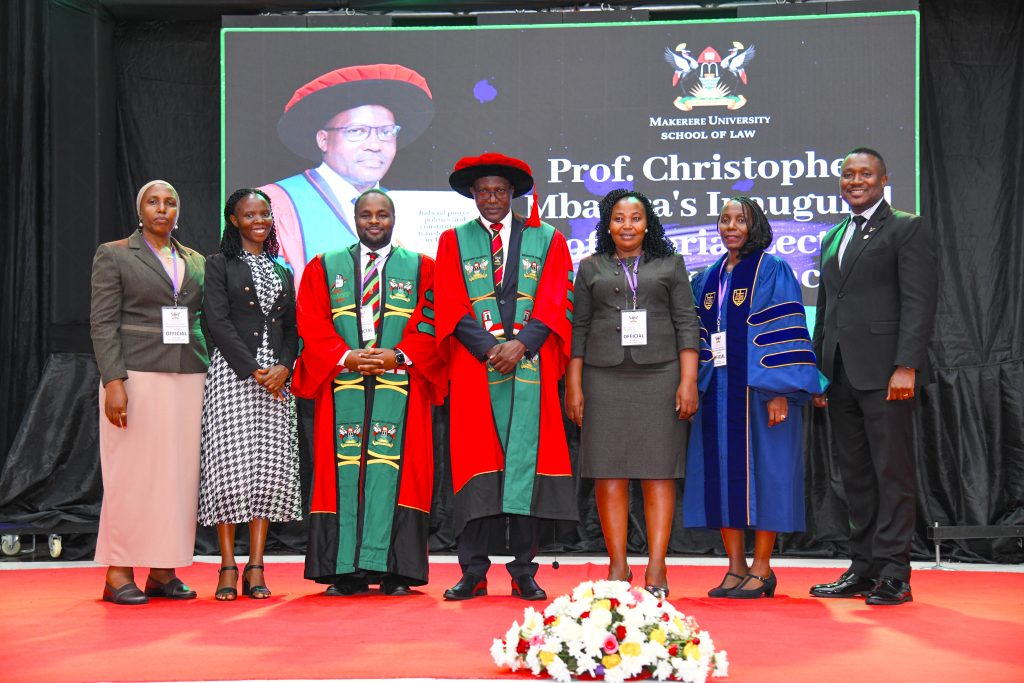
It was indeed a great day that honored not just the individual, but the ongoing struggle for a more just and accountable society in Uganda.
-

 General2 weeks ago
NOTICE: Online Applications for Government Sponsorship for Programmes Offered at Public Universities & Other Tertiary Institutions 2027/2028 AY
-
 Agriculture & Environment2 weeks ago
Zambia readies to host the 22nd RUFORUM AGM in the Capital Lusaka
-
 General1 week ago
Makerere-Rotary Launch Student Food for Peace Initiative
-
 Research2 weeks ago
Your Research, Your Identity, Your Impact. Makerere Empowers Graduate Students to Go Global Through ORCID
-
 General1 week ago
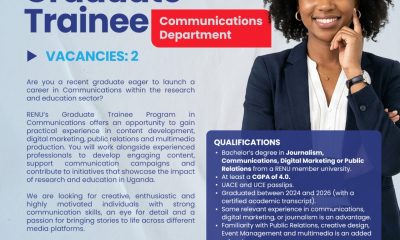
RENU Communications Department Graduate Trainee Program: Two (2) Vacancies