
Humanities & Social Sciences
Makerere Probes Climate Change–Migration Links: Calls for Protective Policies for Vulnerable Communities

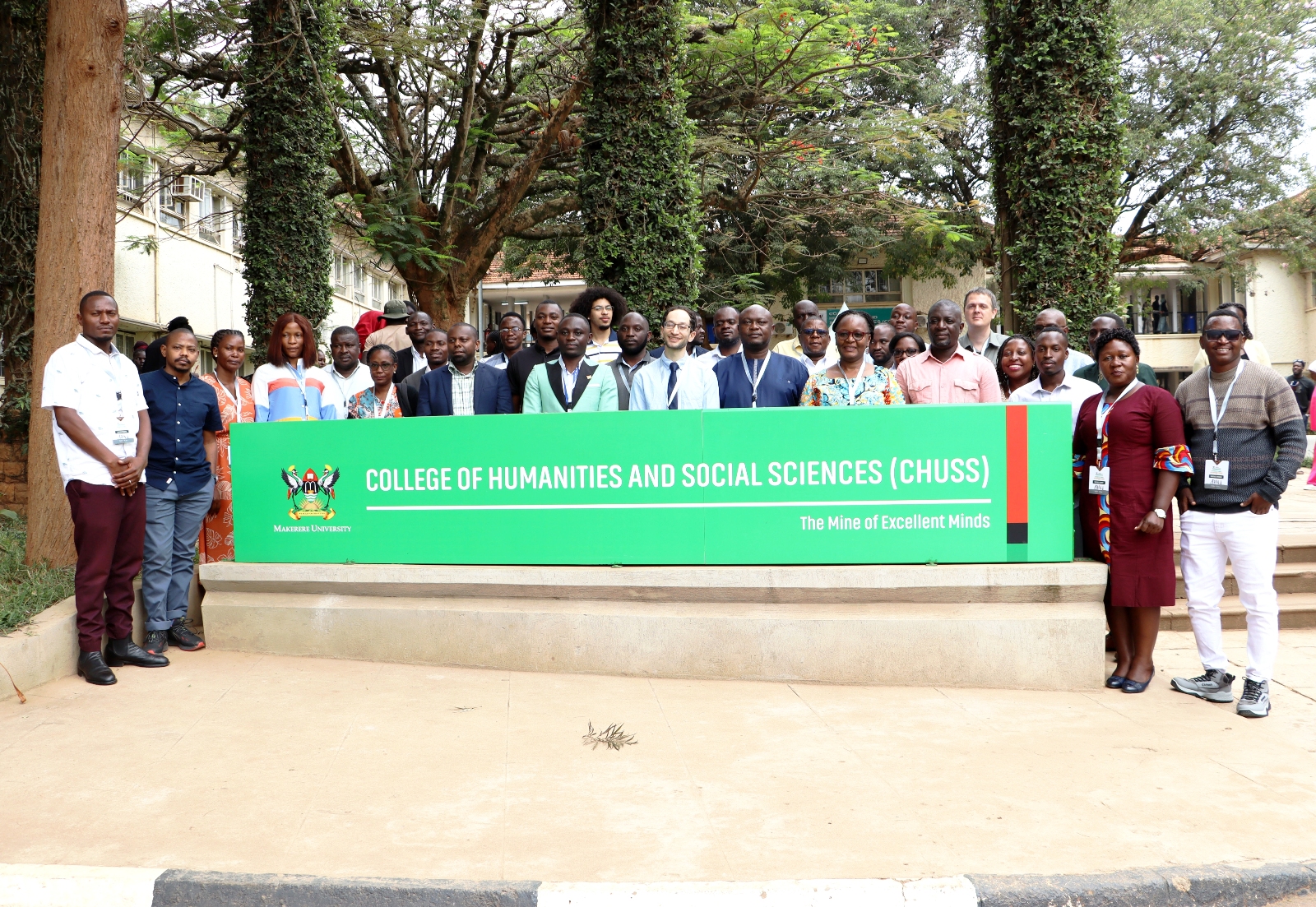
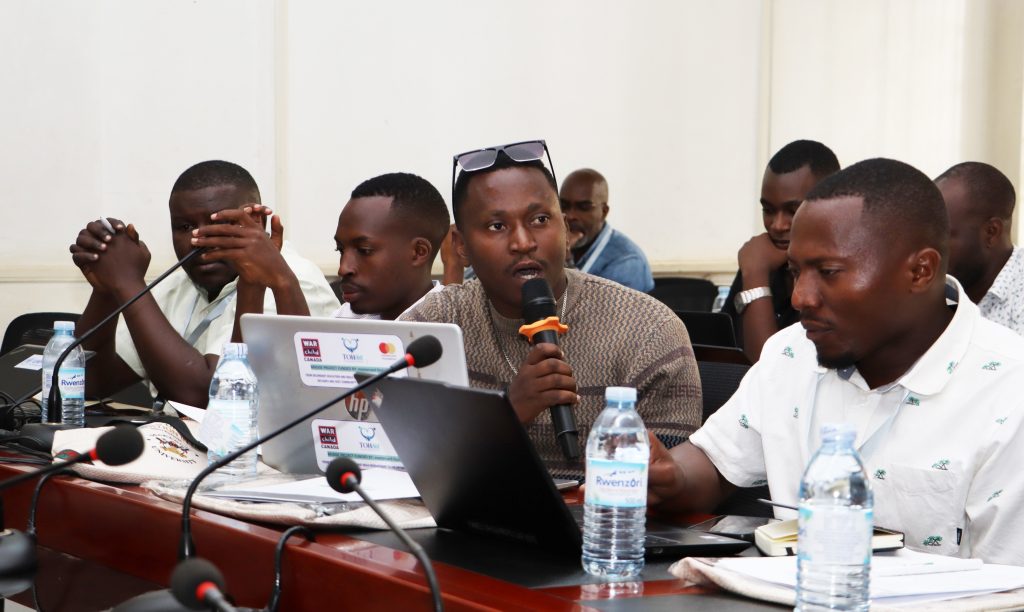
A three-day workshop examining the historical relationship between climate change and migration in Uganda has opened at Makerere University, bringing together academics, government officials, refugee-community representatives and postgraduate students to examine how environmental and climate factors have shaped population movements across the country’s history.
The workshop, running from September 8 to 10, 2026, is hosted by the Department of History, Archaeology and Heritage Studies in the School of Liberal and Performing Arts under the College of Humanities and Social Sciences (CHUSS).
The event is being held under a joint project between Makerere University and the University of Cambridge on the Histories of Climate and Migration in Uganda.
The project is funded by the Mastercard Foundation’s Climate Resilience and Sustainability Research Fund in partnership with the Cambridge Africa Programme at the University of Cambridge. It has received a grant of £49,800 and seeks to expand knowledge on how environmental and climate factors have influenced Uganda’s long history of migration, both in recent times and in the deeper historical past.
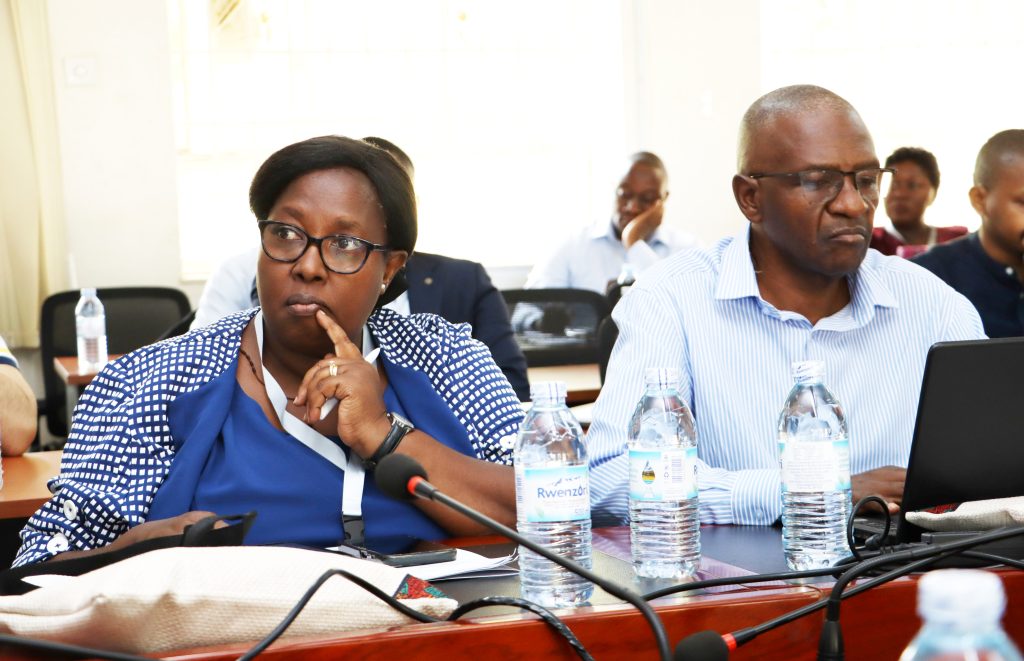
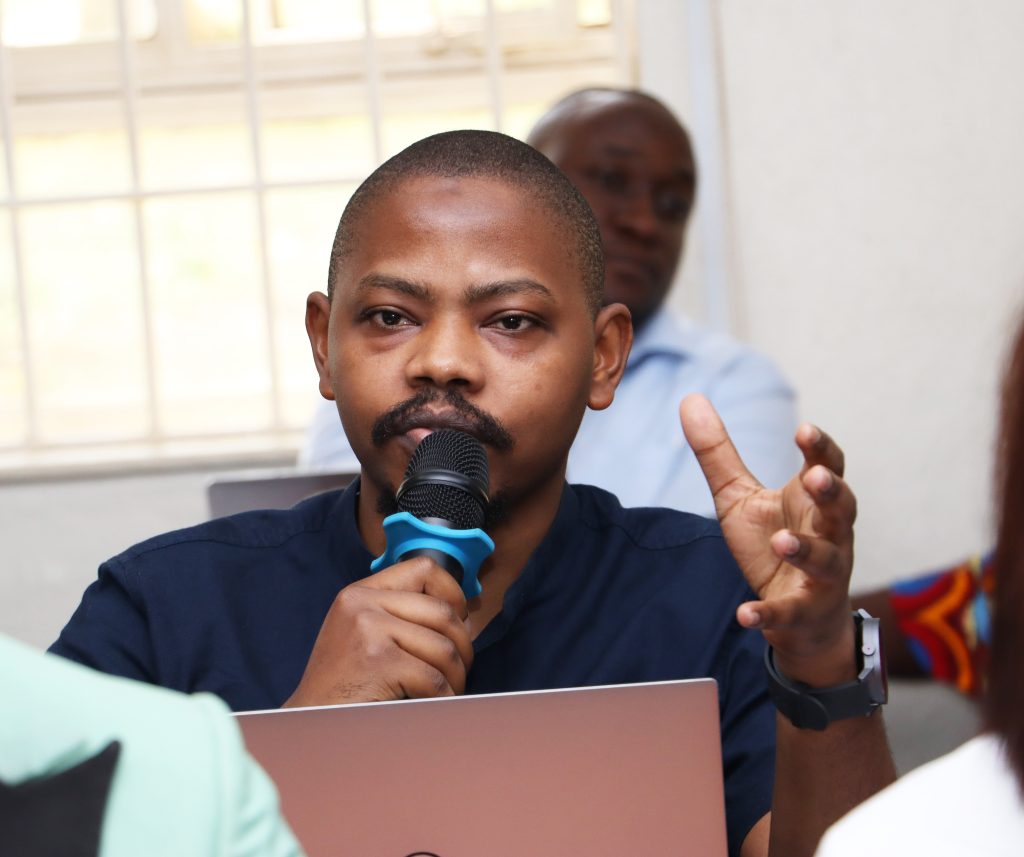
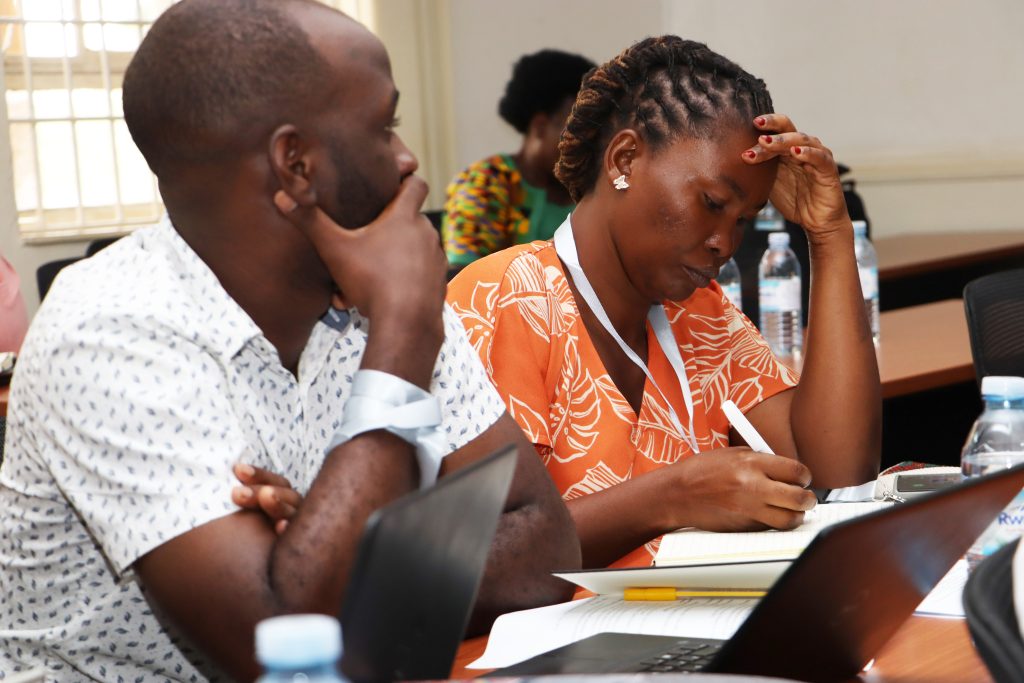
The workshop has attracted officials from government ministries and agencies, principal and co-principal investigators, heads of departments from CHUSS and other colleges, senior academics and professors, organisations working with refugees, refugee-community members serving as change agents and CHUSS graduate students.
Over the three days, participants are expected to consider 32 research papers and three keynote addresses, alongside roundtable discussions and a field visit to the Uganda National Archives.
Keynote speaker Anthony Mugeere calls for climate-migration policies that protect vulnerable communities
Uganda needs to rethink its policies on migration by recognising climate change as a growing factor influencing where, when and why people move, Dr. Anthony Mugeere, a sociologist and climate policy researcher, has said.
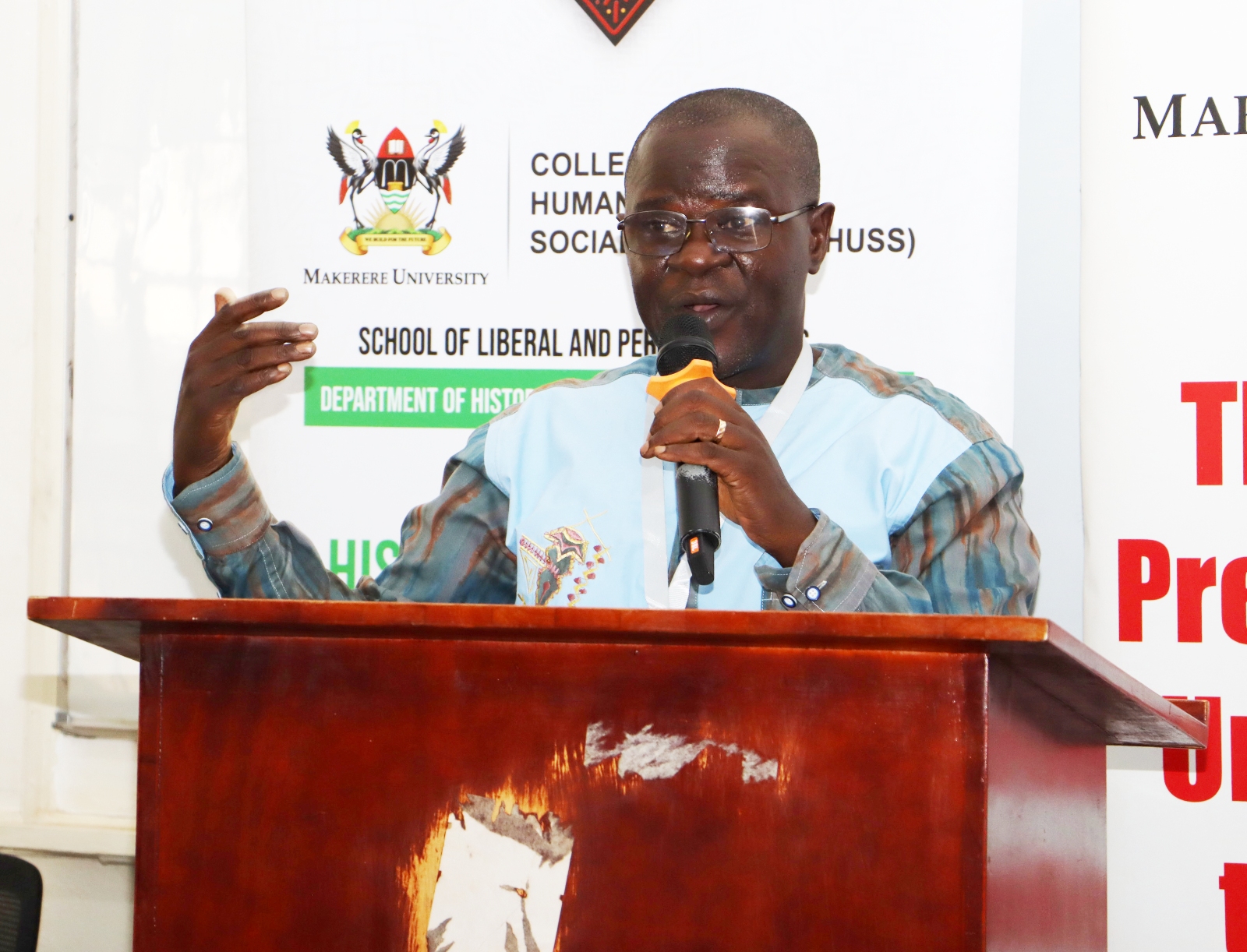
Mugeere made the call while delivering a keynote address on Climate and Migration in Uganda .
Mugeere argued that migration should not automatically be interpreted as a crisis or solely as a consequence of climate change because movement has historically been one of the ways communities respond and adapt to changing environmental and economic circumstances.
He challenged researchers to examine whether people who leave their homes because of failed rains, floods, disappearing crops or scarcity of pasture are necessarily being displaced, or whether their movement can also constitute an adaptation strategy.
“Migration is not simply a consequence of climate change,” Mugeere said, arguing that mobility can also be a way through which households respond to climate stress.
Mugeere said climate has always influenced where and how communities live and move, although the environmental dimension was not always explicitly recognised in earlier explanations of migration.
He said traditional explanations of historical migration often focused on wars, tribal conflicts, the search for land, cattle, women, slaves and other social or political factors, without adequately considering environmental pressures.
According to Mugeere, a historical examination of migration reveals that movement was often connected to access to water, pasture, fertile land and other environmental resources.
He cited pastoral communities that moved in search of water and pasture and agricultural communities that moved in response to land and environmental conditions.
Fishing communities, he added, have historically developed around lakes, while trade routes and settlements have also been influenced by patterns of human mobility.
He said factors such as epidemics, famine, environmental changes and the availability of resources have long contributed to population movements.
Mugeere argued that contemporary research therefore needs to connect historical migration patterns with the changing climate rather than treating climate-induced migration as an entirely new phenomenon.
Mugeere cited landslides and flooding in Bududa as examples of how climate and environmental conditions are altering the circumstances under which people move.
He also pointed to rising water levels in Lake Victoria and other water bodies as factors that have displaced communities and changed settlement patterns.
Drought, livestock losses, flooding, landslides and rising water levels, he said, are among the environmental pressures that can force people to leave places they have traditionally occupied.
He warned that some forms of movement may easily be overlooked because they do not fit conventional definitions of migration.
These include temporary movement, rural-to-urban migration and movement by communities seeking alternative livelihoods when agricultural production becomes increasingly difficult.
Mugeere said the increasing movement of Ugandans to cities and abroad, including to the Gulf region, should also be examined against a broader range of economic, social and environmental factors.
The sociologist said migration can provide important benefits to households affected by climate stress.
People who move can diversify household income, reduce exposure to climate-related risks, access employment and send remittances back to their families.
Migration can also help households recover from shocks and strengthen their resilience, particularly when migrants find employment and are able to support relatives who remain behind.
However, Mugeere cautioned that migration can also create serious social and economic challenges.
He identified social disruption, vulnerability, difficulties with integration, exploitation, overcrowding and pressure on host communities among the potential consequences of climate-induced movement.
He particularly highlighted the pressure placed on resources in areas hosting refugees, noting that receiving communities can experience additional demands on land, firewood and other natural resources.
This, he said, creates a need for better planning to ensure that both displaced populations and host communities can access essential services and resources.
Mugeere called for climate change, mitigation and adaptation to be incorporated into government programmes and policies dealing with livelihoods and migration.
He said programmes such as the Parish Development Model would struggle to achieve their intended objectives if they do not take climate-related risks into account.
He also urged policymakers to consider migration as part of Uganda’s adaptation strategies rather than treating every movement as a failure or emergency.
The researcher said Uganda must prepare both people who move and communities that receive them.
He noted that Uganda has a strong record of hosting refugees from neighbouring countries but questioned whether the country is sufficiently prepared to provide services and support to growing populations in receiving communities.
He also called for policies that protect people who may be unable to migrate, including persons with disabilities, women and young people.
According to Mugeere, these groups must be incorporated into planning for climate-related migration because not everyone has the ability or resources to move when environmental conditions deteriorate.
Mugeere further called for comprehensive planning when communities are relocated from areas exposed to disasters.
He cited communities affected by landslides and flooding, arguing that relocation should not simply involve moving people from dangerous locations to safer areas without planning for their long-term livelihoods and social needs.
He said policymakers should consider rehabilitation, awareness, settlement, access to services and livelihood opportunities as part of relocation programmes.
Mugeere argued that the contribution of social scientists extends beyond academic research because disciplines such as sociology, history and social work can provide evidence to guide policy and programme management.
In his concluding message, Mugeere said climate change should be understood as a force that is transforming the geography of opportunity, risk and human mobility.
“Climate change does not simply change Uganda’s climate. It changes the geography of opportunity, risk, and human mobility,” he said.
He urged researchers to adopt a human-centred approach that considers how individuals and communities perceive climate risks and how those perceptions influence decisions to remain, move or adapt.
He also stressed that Uganda’s history demonstrates that mobility is not new and has long been part of how communities respond to livelihood opportunities and changing circumstances.
However, he warned that climate change is intensifying these pressures and will increasingly affect poverty, land, infrastructure, urbanisation and governance.
Mugeere said Uganda’s preparedness for climate-related disasters must therefore be questioned despite the existence of government ministries, budgets, teams and equipment.
He observed that the country often discovers gaps in preparedness only when disasters occur, underscoring the need for proactive planning before climate-related displacement reaches crisis levels.
Historians must trace the roots of climate-related migration
Dr. Charlotte Mafumbo, Head of the Department of History, Archaeology and Heritage Studies, said the workshop provides an opportunity for historians and other scholars to critically examine two interconnected global challenges—climate change and migration—and understand how they have evolved over time.
Mafumbo said the scale of displacement globally makes historical research on migration increasingly important, noting that people have been forced to move for different reasons, including war, ethnicity, political and international complications and environmental pressures.
She referred to estimates that about 250 million people were displaced during and around the period of the Second World War, with some forced into settlements, deported, imprisoned or driven from their homes because of their ethnicity or other circumstances.
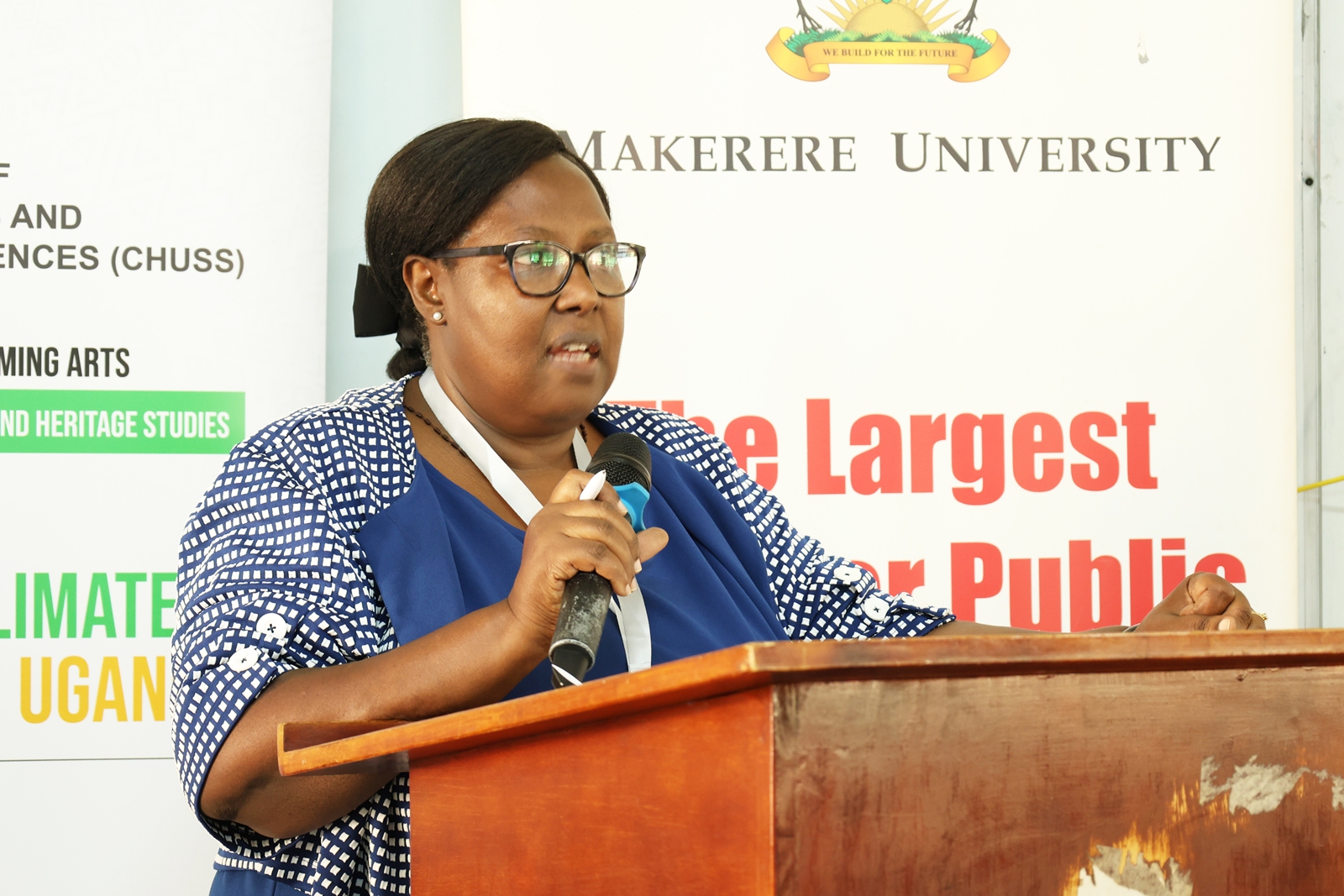
She said the world is now witnessing another major displacement challenge associated with climate change, with an estimated 112 million displaced people affected by climate-related pressures.
Mafumbo argued that the current situation requires historians to go back into the past and establish when and how climate-related migration emerged, how it has manifested itself and whether there are similarities or differences between historical and contemporary patterns.
“There is no better time than now for us to reflect on these issues,” Mafumbo said.
She said the workshop should go beyond presentations and academic debate by encouraging participants to establish partnerships that can continue after the event.
Mafumbo encouraged participants to exchange contacts and develop collaborations, particularly because the three-day programme may not provide enough time to exhaust the issues under discussion.
She also said the Department of History, Archaeology and Heritage Studies is committed to ensuring that the research and discussions produce practical outcomes for government and other stakeholders.
According to Mafumbo, the department hopes the workshop will generate key talking points that can be shared with relevant ministries and contribute to the development of policy briefs.
“We do hope that out of the workshop, we shall have some talking points we shall be sharing with the relevant ministries after here,” she said.
She welcomed keynote speakers, officials from the Ministry of Water and Environment and the Office of the Prime Minister, as well as other participants, to the Department of History, Archaeology and Heritage Studies, the School of Liberal and Performing Arts and CHUSS.
Research project links academics with refugee communities
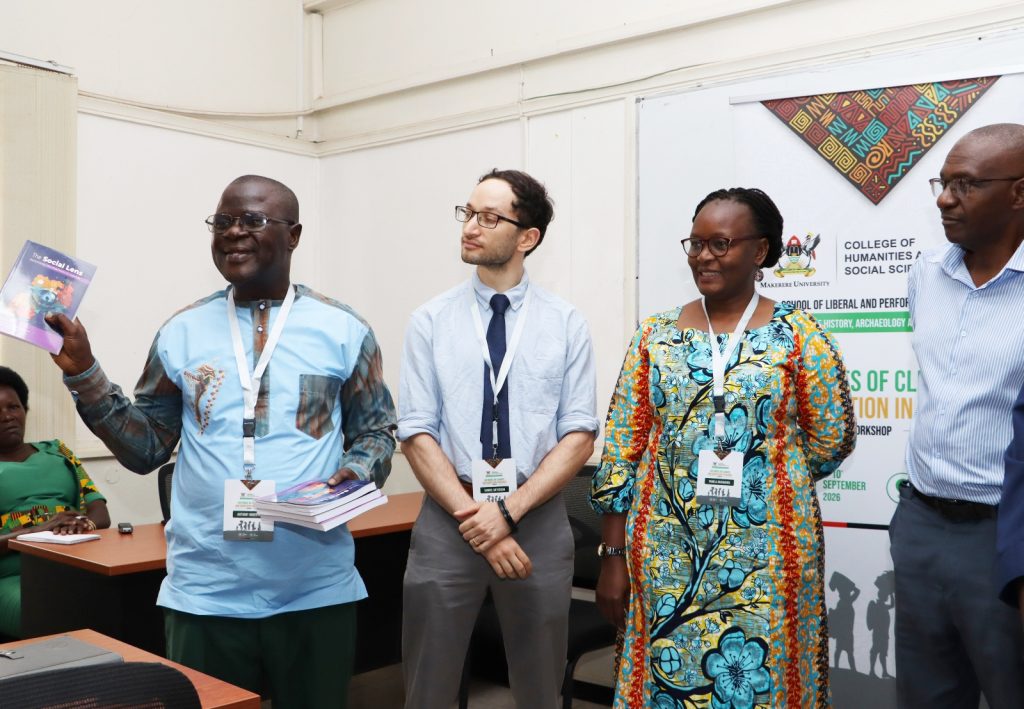
Dr. Pamela Khanakwa, Dean of the School of Liberal and Performing Arts and a Principal Investigator on the project, said the initiative was made possible through the support of Makerere University and Cambridge, with the project housed in the Department of History, Archaeology and Heritage Studies.
She thanked the department and CHUSS leadership, as well as the university’s Directorate of Legal Affairs and the Office of the Vice Chancellor, for their support in making the project possible.
Khanakwa also used her remarks to recognise Professor Asiimwe Godfrey, whom she described as an important figure in her intellectual development dating back to her undergraduate years.
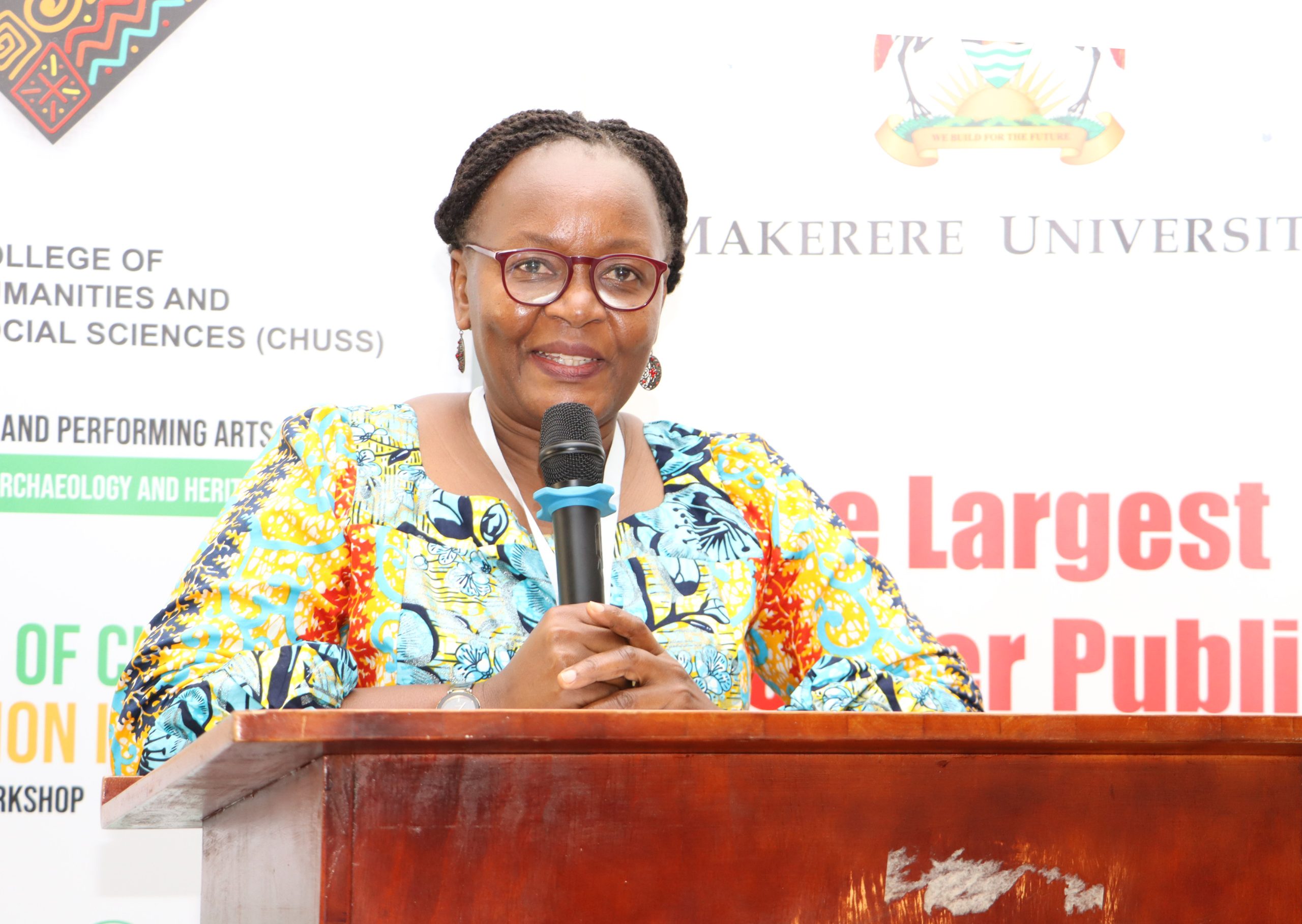
She recounted her longstanding academic relationship with Dr. Samuel Meyerson, the project’s Cambridge-based Principal Investigator, explaining that she first encountered him as one of the students she supervised at Makerere.
She said their relationship subsequently developed from a student-supervisor relationship into an academic collaboration, eventually leading to the current project.
Khanakwa recalled assisting Meyerson with applications for PhD study in the United States, including submitting one recommendation letter at the last minute while travelling through Atlanta.
She said Meyerson later continued his research on Karamoja, including through his master’s research, which she described as an extensive study.
Their collaboration continued when Meyerson participated in a 2022 Humanities International Conference at Makerere University, where he presented research in the same room in which the current workshop is being held.
Khanakwa said Meyerson eventually returned with the idea of developing a collaborative project, choosing to approach Makerere’s Department of History, Archaeology and Heritage Studies to develop the proposal.
“It started like a small conversation, small ideas, but we put our efforts together and we are able to be where we are today,” Khanakwa said.
She credited co-principal investigators Dr. Charlotte Mafumbo and Dr. Edgar Taylor for their contribution to shaping the project, while also praising administrative staff Duncan Muhanguzi and Esther Namitala for handling budgeting, communication and logistical preparations.
Khanakwa said the project is designed to bring together researchers from different disciplines and members of refugee communities in Uganda.
She explained that its focus is not limited to recent climate-related migration but also examines the deeper historical relationship between environmental conditions and migration.
The project is expected to run through March or April next year and contains several components, including the three-day workshop and a seed-funding programme.
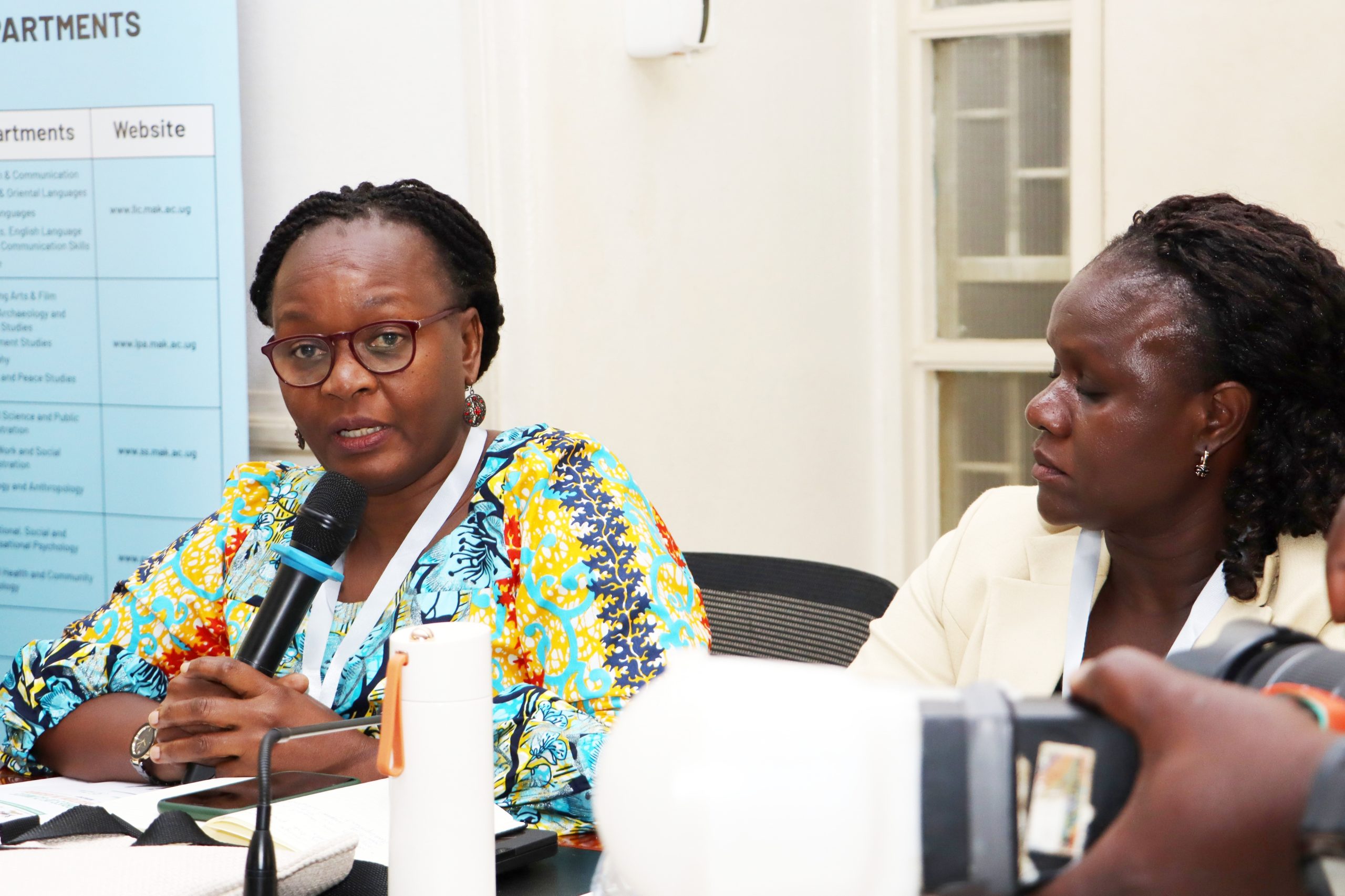
Under the seed-funding component, five graduate students have each received £2,000 to conduct empirical research with a historical orientation. Three additional grants have been awarded to researchers from refugee communities.
Khanakwa said the seed funding was intended to expand the range of voices and evidence informing research on climate and migration, while also giving graduate students and refugee researchers an opportunity to contribute directly to knowledge production.
She noted that securing research funding is highly competitive and said the £49,800 grant was an achievement that should be recognised, while clarifying that the entire amount would not be spent on the workshop.
Khanakwa said discussions during the workshop should contribute to intellectual debates while also producing ideas that could have practical value and inform policy.
“We hope that we can be able to come up with very meaningful discussions that can inform not only intellectual debates, but also ideas that can be of great value in practical terms and perhaps also in ways that they can inform policy,” she said.
She urged participants to make full use of the workshop to exchange ideas and develop collaborations that can continue beyond the three-day event.
Refugee voices central to understanding migration history
Dr. Samuel Meyerson, a Research Fellow in History at the University of Cambridge and Principal Investigator of the project, said the objectives of the initiative had already been clearly outlined by the other speakers, allowing him to focus on welcoming participants and acknowledging those who made the workshop possible.
Meyerson, who is a former student of Makerere University’s Department of History, said he was particularly pleased to return to the institution as a researcher and project leader.
He extended a special welcome to participants from Nakivale Refugee Settlement, saying their involvement was important because the project seeks to incorporate perspectives from refugee communities into discussions about migration.
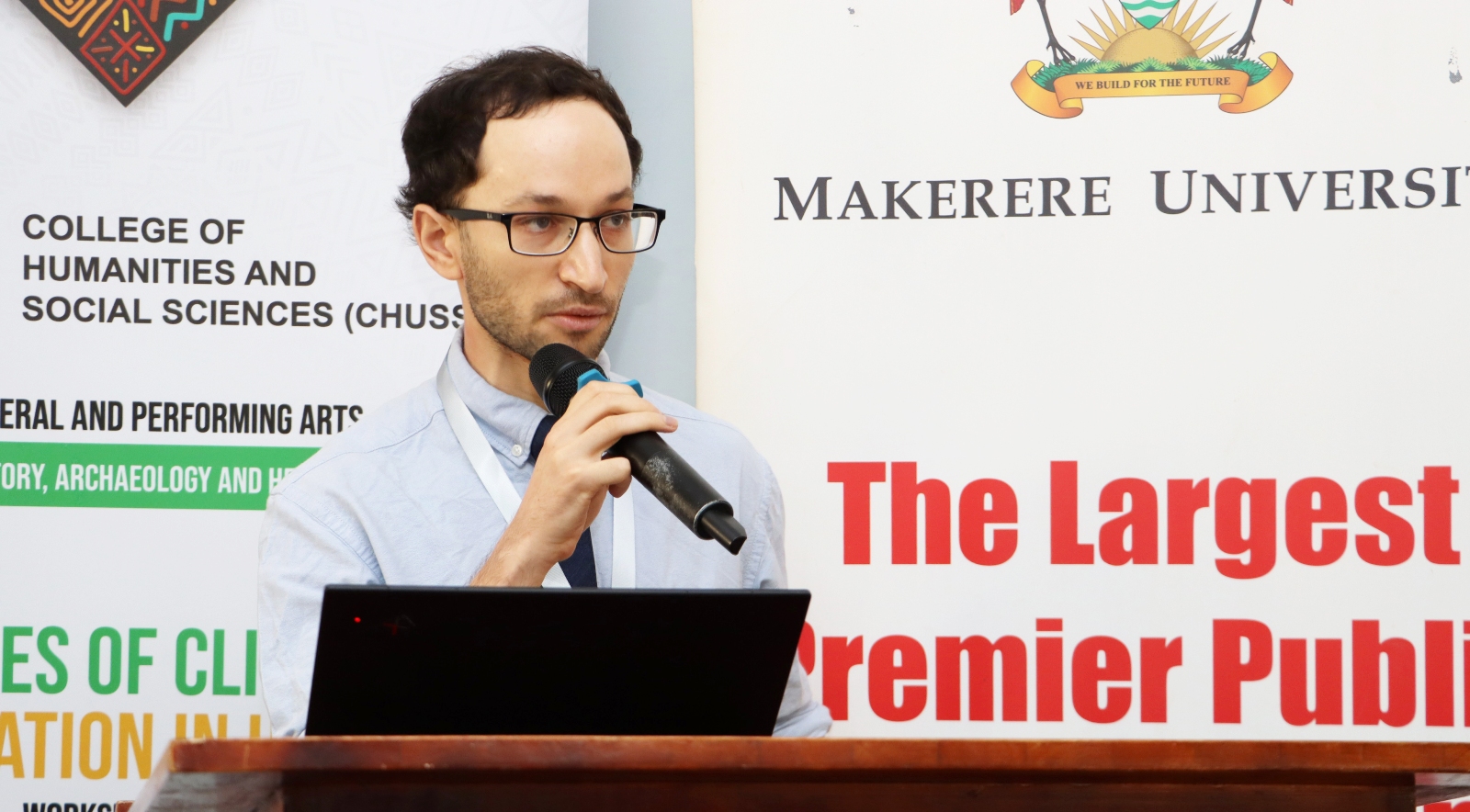
“We very much appreciate you coming all this way to contribute your perspectives to the workshop,” Meyerson said.
Meyerson acknowledged the support of the Climate Resilience and Sustainability Research Fund, managed jointly by the Mastercard Foundation and the University of Cambridge, which is financing the project.
He thanked his fellow Principal Investigator, Dr. Pamela Khanakwa, as well as co-principal investigators Dr. Charlotte Mafumbo and Dr. Edgar Taylor, for helping transform the initial idea for a collaborative project into the workshop.
According to Meyerson, the idea began as a relatively undeveloped concept that he brought to his Makerere colleagues in October last year before the partners worked together to develop it into the current research project.
He also praised the administrative team of Duncan Muhanguzi and Esther Namitala for their work in handling the numerous logistical details required to organise the workshop.
Meyerson further recognised administrative personnel at both Cambridge and Makerere universities whose time and expertise contributed to bringing the event together.
He also highlighted the role of the refugee researchers and Makerere postgraduate students who successfully applied for the project’s seed-funding grants.
Meyerson said members of the selection committee were impressed by the quality of the applications and expected the supported research to generate new evidence and perspectives on climate and migration.
“We, as the members of the selection committee, were deeply impressed by these applications and we all greatly look forward to the insights that your projects will yield,” he said.
The workshop is expected to provide a platform for sustained discussion between academics, policymakers, researchers and communities affected by migration.
Through presentations, keynote addresses, roundtable discussions, seed-funded research and engagement with archival materials at the Uganda National Archives, the organisers hope to deepen understanding of the historical forces behind migration and the role environmental and climate factors have played in shaping population movements in Uganda.
Climate-migration research strengthens Makerere’s global academic partnerships
CHUSS welcomed a new research project examining the historical links between climate change and migration, describing the initiative as an opportunity to strengthen interdisciplinary scholarship and connect academic research with the experiences of refugee communities.
Speaking on behalf of the CHUSS Principal, Associate Professor Eric Awich Ochen said climate change is an issue that increasingly affects everyday life and requires sustained research and collaboration.
Ochen said the Principal was unable to attend the workshop because of other commitments and had sent him to represent her and convey her greetings to participants.
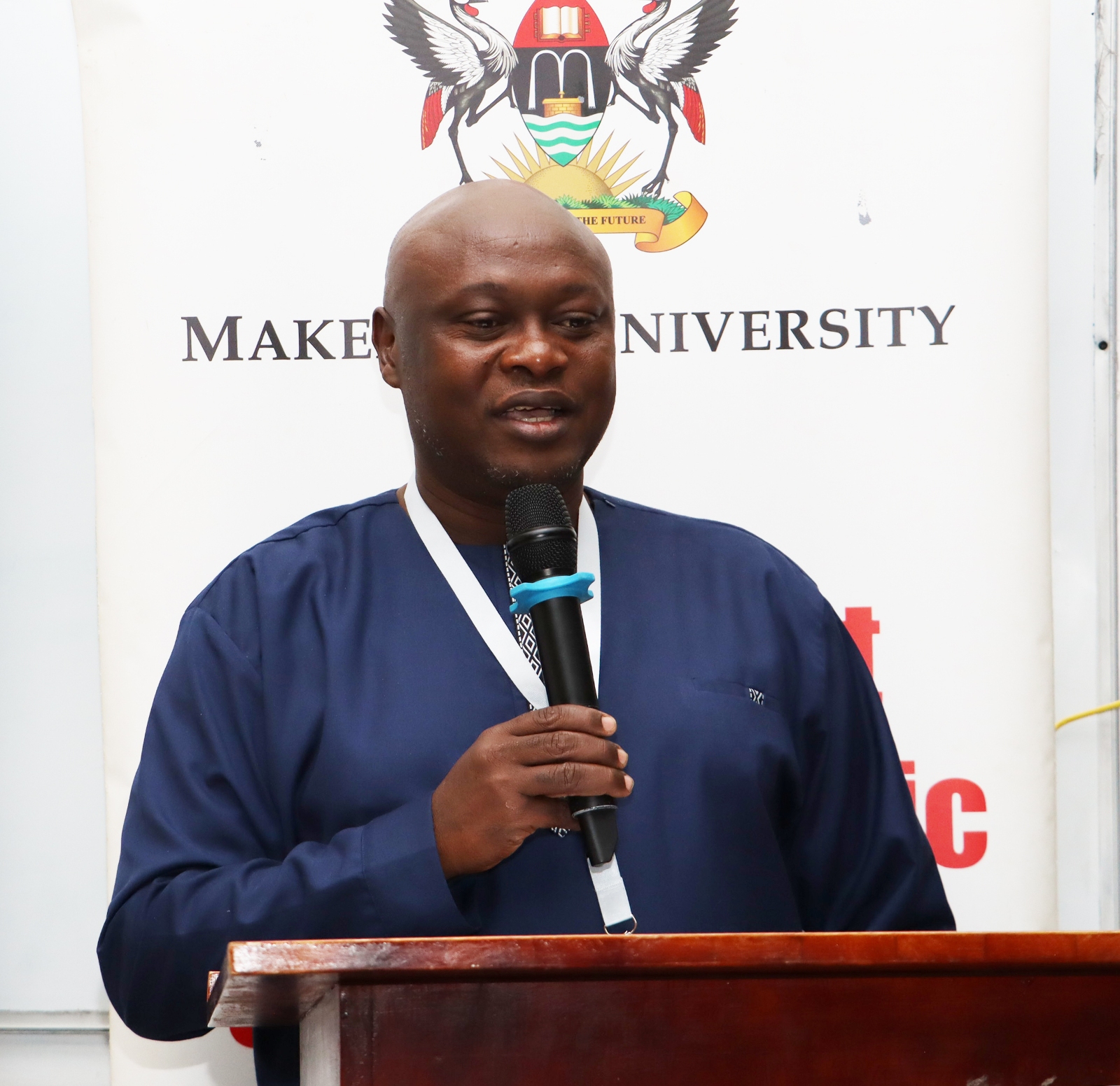
He described CHUSS as the largest college at Makerere University, with more than 225 full-time academic staff and close to 300 staff when support personnel are included.
He said the college makes a significant contribution to the university through its humanities, liberal arts, social sciences, performing arts and other academic programmes.
Ochen defended the importance of the humanities and social sciences in understanding complex social challenges, saying the disciplines are essential to understanding how human beings respond to changes in their environment and society.
He highlighted the College’s Department of Performing Arts and Film and the School of Liberal and Performing Arts, where history and other disciplines contribute to academic and cultural development.
He said Makerere-trained artists and scholars have contributed to Uganda and beyond, demonstrating the wider contribution of humanities and social sciences to society.
“The liberal arts, the humanities and social sciences are very important for us human beings,” Ochen said.
He praised the keynote speaker, Dr. Anthony Mugeere, describing him as a scholar with a distinctive sense of humour and resilience, while also welcoming participants to the workshop.
Ochen said the research project is important because it examines environmental and climate factors that have influenced Uganda’s long history of migration, both in recent times and in the deeper historical past.
He thanked Dr. Pamela Khanakwa and Dr. Samuel Meyerson for developing the project and noted that although the current project is relatively short, the researchers are already exploring ways of expanding it to create further learning around climate and migration.
The project brings together scholars from multiple disciplines as well as members of refugee communities in Uganda.Ochen said the inclusion of refugee communities was particularly significant because it allows research to incorporate experiences and perspectives from people directly affected by migration.
He also welcomed the project’s collaboration with the Mastercard Foundation’s Climate Resilience and Sustainability Research Fund and the Cambridge Africa Programme at the University of Cambridge.
Ochen outlined the longstanding relationship between Makerere University and the Mastercard Foundation, noting that the Foundation has supported several major initiatives at the university.He said one of the major programmes has provided scholarships to students from disadvantaged backgrounds and has increasingly extended opportunities to graduate students.
He noted that members of refugee communities have also benefited from the opportunities created through the partnership.
Ochen also highlighted the African Climate Collaborative, another Mastercard Foundation-supported initiative focused on climate change and advanced academic training.
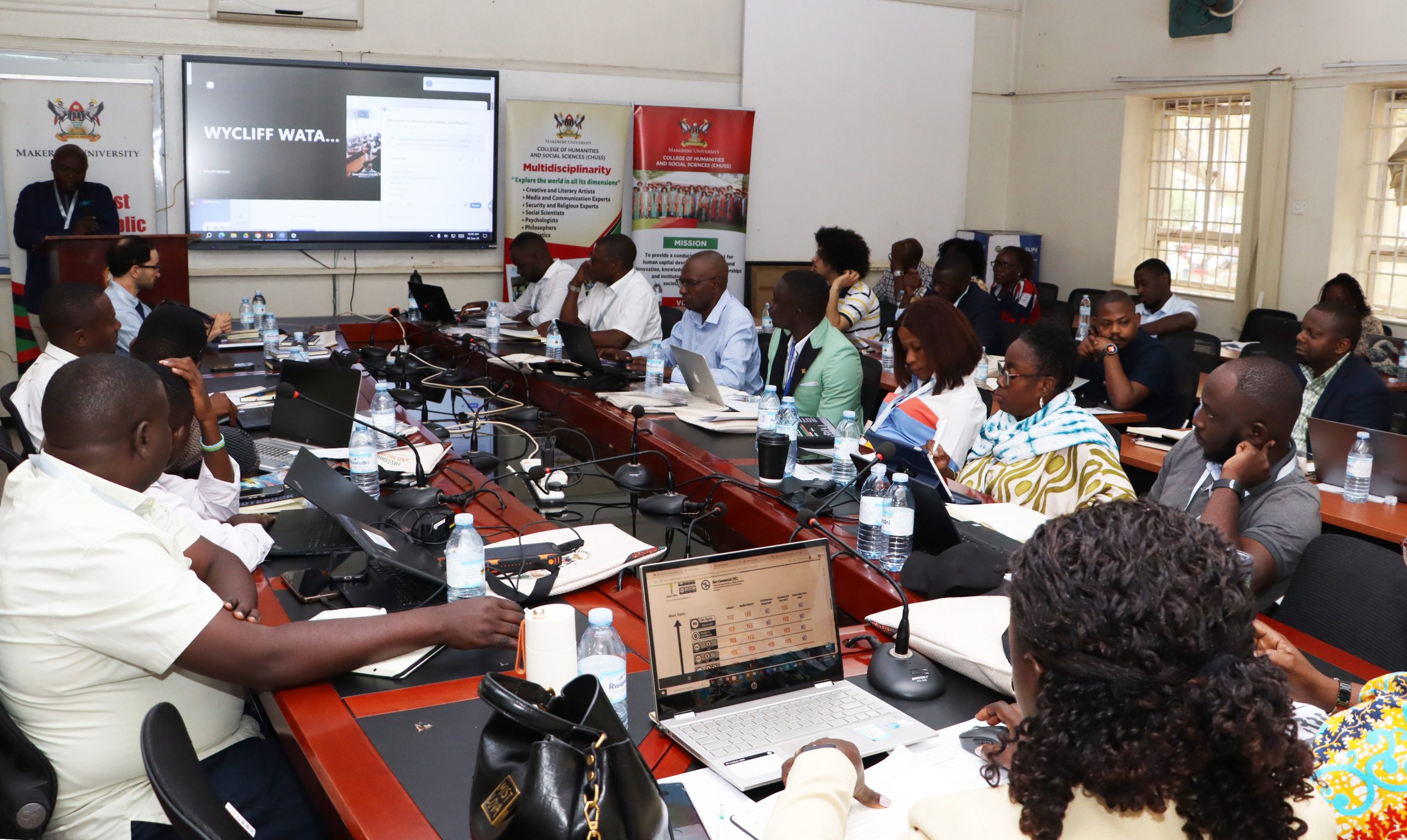
He said the programme is expected to support the training of up to 200 PhD researchers over a 10-year period through the College of Agricultural and Environmental Sciences.
He encouraged possible collaboration between the Histories of Climate and Migration project and other climate-focused initiatives supported by the Foundation.
Ochen said Mastercard Foundation had continued to demonstrate its commitment to supporting African universities and research.
Ochen also traced the long-standing relationship between Makerere University and the University of Cambridge, saying the partnership has involved both institutional cooperation and individual research collaborations.
He cited his own experience at Cambridge, where he spent time at the Centre of African Studies under the Cambridge Africa Programme. He said the experience enabled him and other Makerere academics to establish relationships with researchers at Cambridge and other institutions.
Ochen also mentioned his continued research collaboration with Professor Adam Branch, an academic at Cambridge who has an affiliation with Makerere University.He said the existing relationships provide a foundation for further cooperation between Makerere, Cambridge and other African universities.
Ochen said the climate and migration project demonstrates Makerere University’s position as a leader in interdisciplinary research in the humanities and social sciences. He said the research has the potential to generate knowledge that will be useful not only in Uganda but also to scholars and policymakers across East Africa and internationally.
The project, he noted, brings together Makerere University, the University of Cambridge and the Mastercard Foundation in a collaboration that links academic research with community experiences. He said the project’s focus on climate, migration and history was particularly relevant because environmental change is increasingly affecting communities and patterns of human mobility.
Ochen applauded the project’s seed-funding component, which provides research grants to Makerere postgraduate students and members of refugee communities. Under the programme, five postgraduate students and three members of refugee communities are expected to receive funding to undertake independent, historically oriented research.
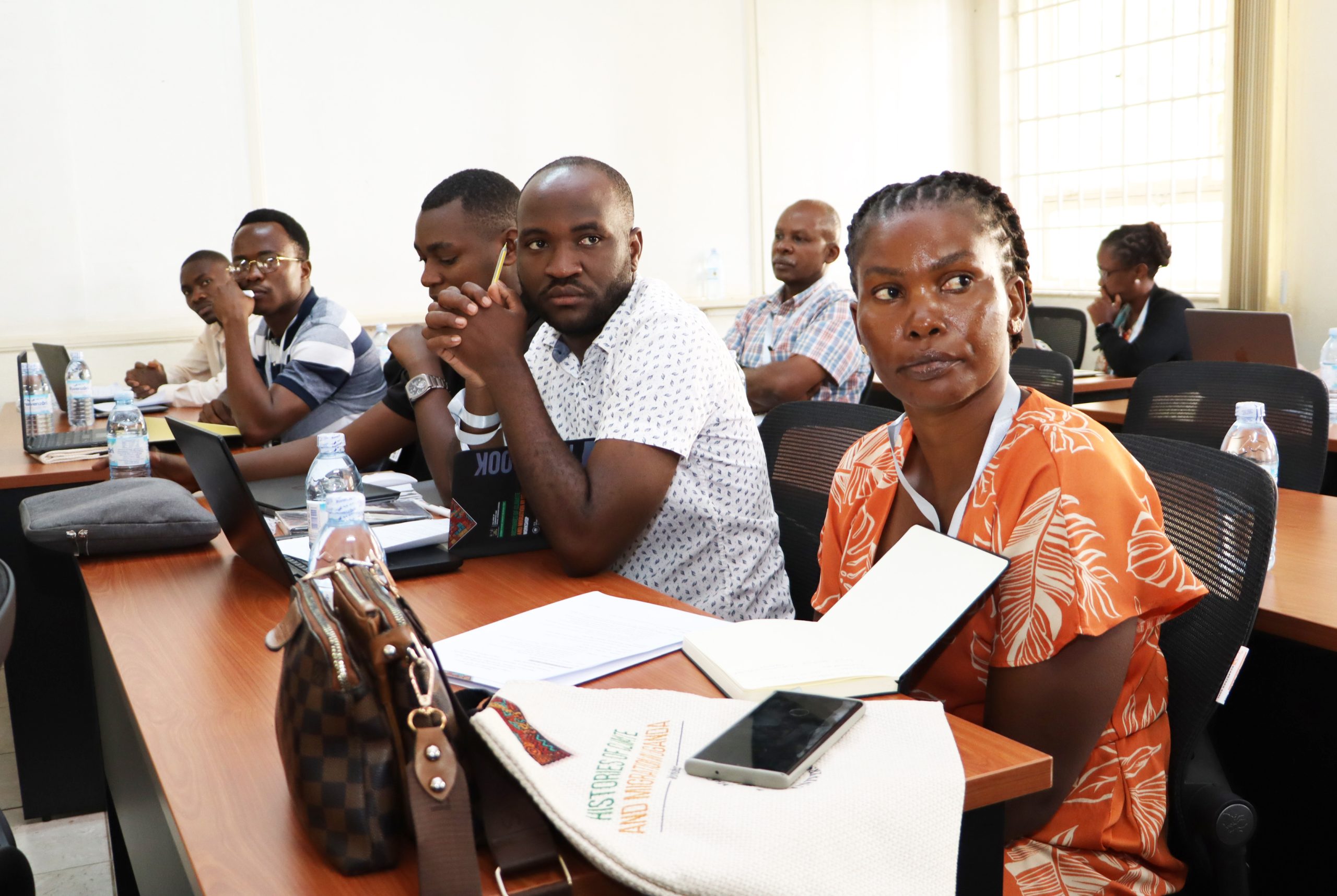
He said the initiative would help empower emerging researchers while ensuring that refugee communities participate in knowledge production rather than simply being subjects of research.
“By empowering both Makerere postgraduate students and refugees to conduct independent research and share their ideas, this project bridges the gaps between academic knowledge production and grassroots concerns,” Ochen said.
The funded researchers are expected to conduct their studies between the workshop and February 2027. Ochen said the findings are expected to contribute to a special issue of the Makerere Historical Journal, which he described as an increasingly vibrant platform for historical scholarship. He said publication of the research would provide an opportunity to preserve and share new knowledge emerging from the project while extending the impact of the workshop beyond its three-day programme.
Ochen concluded by thanking the organisers and encouraging continued collaboration among Makerere University, Cambridge, the Mastercard Foundation, researchers and refugee communities. He said partnerships of this nature are important for generating research that is academically rigorous while remaining relevant to communities and policymakers.
By Jane Anyango, Peninah Nalubega and Joseph Buwule
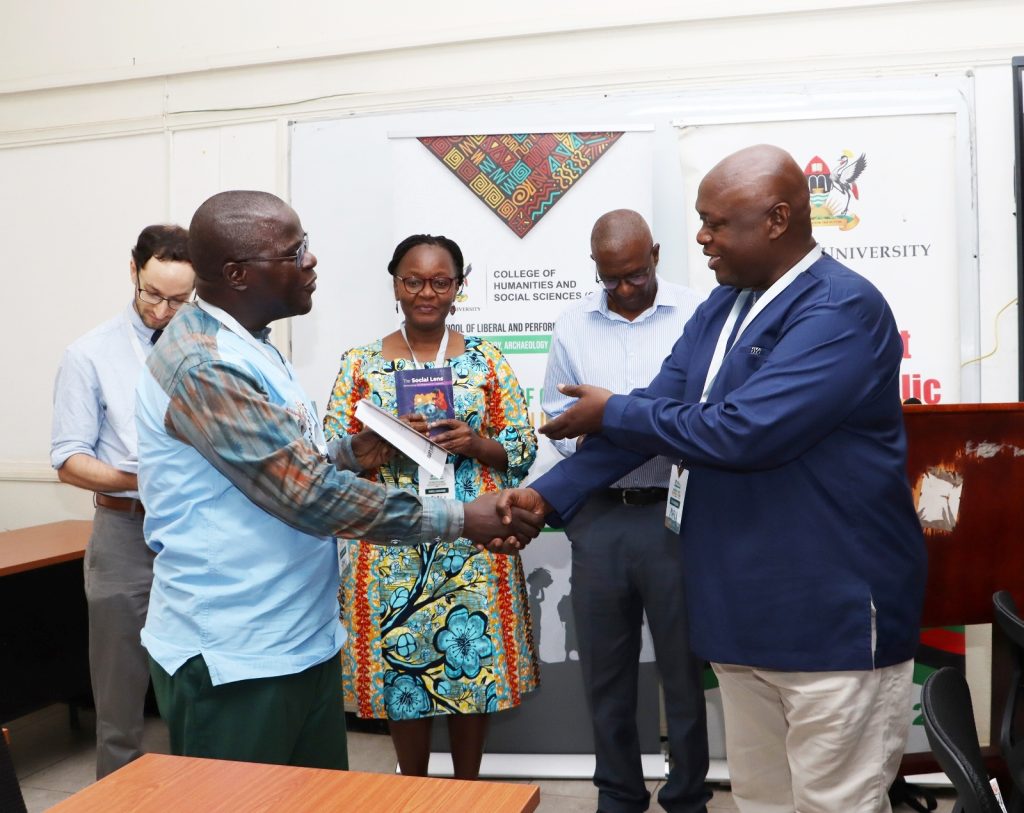





Humanities & Social Sciences
GENDIG conference calls for action on gender inequalities in digital transformation

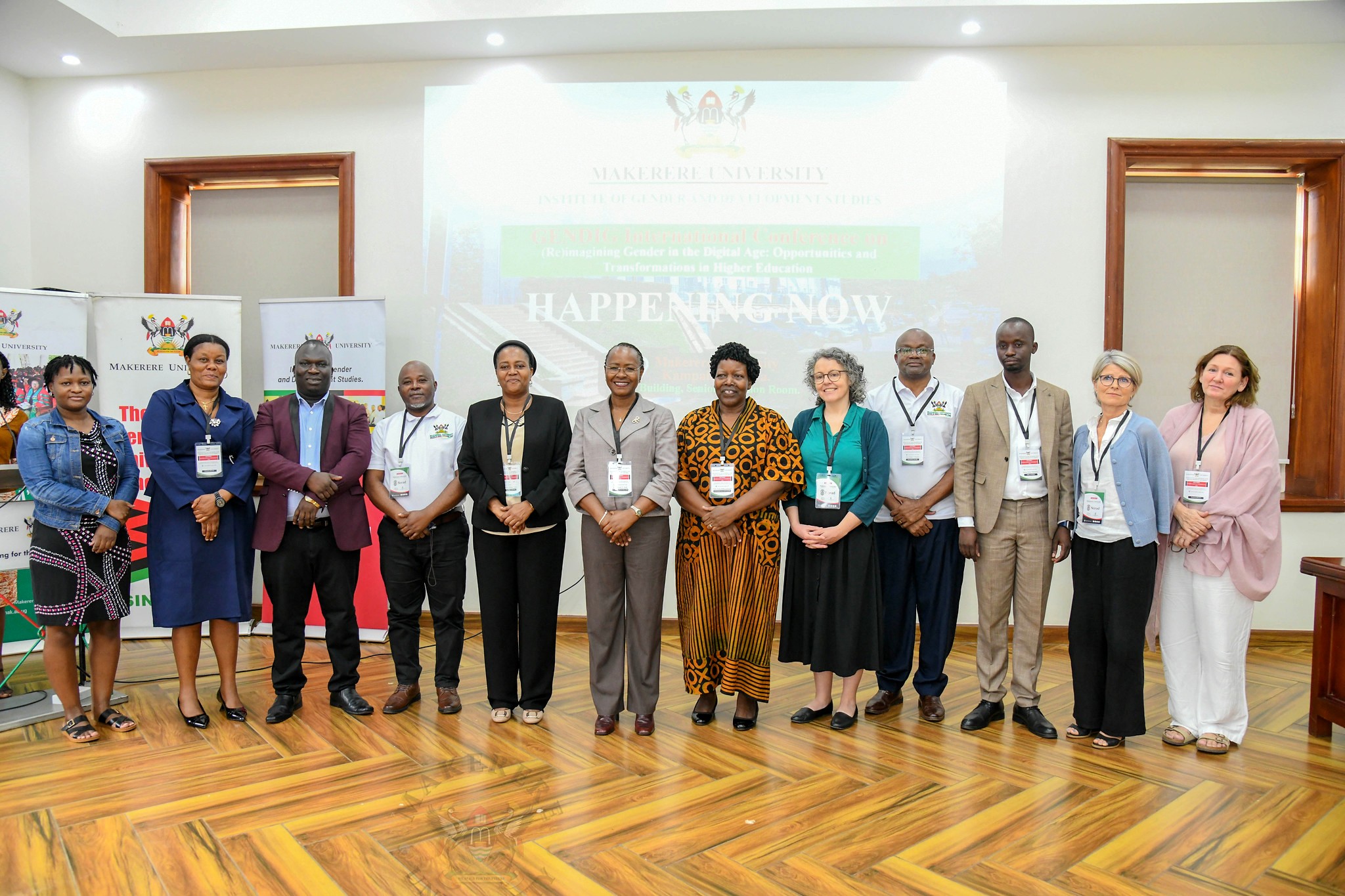
Universities need to address gender inequalities in access, participation and decision making if digital transformation is to create opportunities for all, participants at the International GENDIG Conference at Makerere University have said.
The participants called for attention beyond the provision of devices and internet connectivity, pointing to social norms, institutional practices and unequal access to training as factors that can determine who benefits from digital technologies in higher education.
The two-day conference, held from 17 to 18 November 2026 under the theme “(Re)imagining Gender in the Digital Age: Opportunities and Transformations in Higher Education,” brought together researchers, practitioners and other participants from Uganda, Norway, Italy, Kenya, Nigeria, Ghana, South Sudan, Tanzania and Zambia.
It provided a platform to reflect on the achievements and lessons of the GENDIG project, a collaboration involving Makerere University, the University of Agder and the University of Dar es Salaam, with financial support from Norad.
Making digital transformation work for all
Speaking on the second day on behalf of Vice Chancellor Prof. Barnabas Nawangwe, the Acting Vice Chancellor and Deputy Vice Chancellor (Academic Affairs), Prof. Sarah N. Ssali, said universities must consider how digital transformation can contribute to a more inclusive, equitable and gender-responsive higher education system.
She noted that technologies are changing how universities teach, conduct research, manage knowledge, engage communities and deliver services. Artificial intelligence, digital learning platforms, virtual laboratories, big data and online academic networks, she said, are creating new opportunities, but also present challenges that institutions must examine in relation to their local contexts.
Prof. Ssali cautioned that digital technologies are not neutral. Their design, development, financing, access and governance are influenced by social, economic, cultural and institutional realities. As a result, digital transformation can reproduce existing inequalities and create new forms of exclusion if gender disparities are not deliberately addressed.
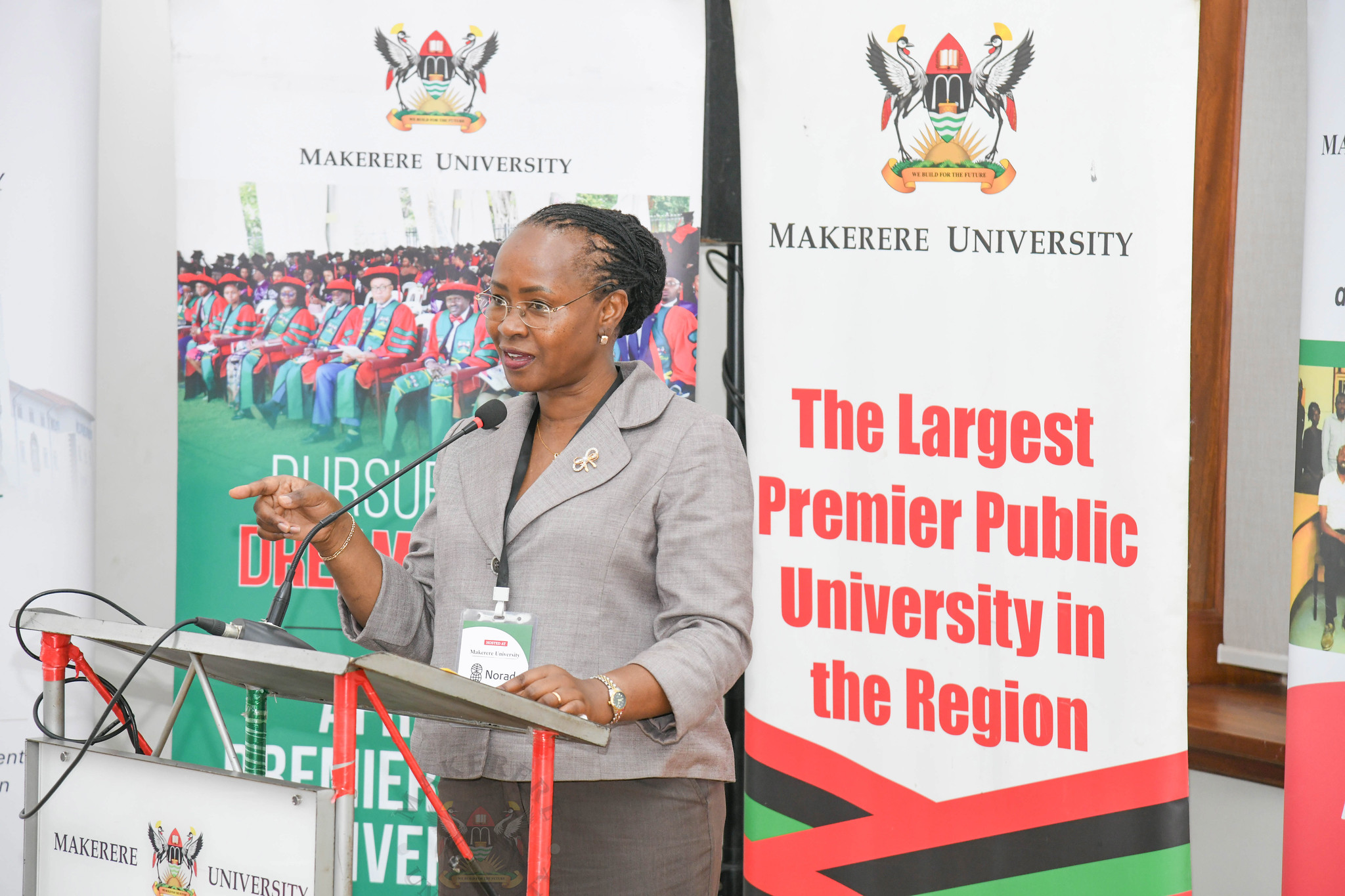
She highlighted differences in access to devices, internet connectivity, affordable data and digital skills among students and academic staff. She also called for attention to factors that increase the vulnerability and exclusion of women and other marginalised groups.
“Gender equality must not be treated as a separate or peripheral component of digital transformation,” she said in her remarks.
Prof. Ssali reaffirmed Makerere University’s commitment to supporting research and evidence generation to inform policy and practice on emerging digital technologies, and to promoting digital teaching and learning that gives students meaningful opportunities to participate and succeed.
“We must create institutions in which digital technologies expand opportunities rather than reinforce exclusion,” she said.
She commended the Makerere GENDIG Project team and its collaborating institutions for convening the conference, and recognised Norad’s support for the project and its activities.
Who governs the digital university?
In a virtual keynote address, Dr. Molly Ott of Arizona State University invited participants to examine not only who has access to digital technologies, but also who makes decisions about their adoption and use within universities.
Her presentation, titled “Who Governs the Digital University? Gender, AI, and Organizational Power in Global South Higher Education,” considered how university structures, routines and decision-making processes can create advantages or disadvantages for different groups, even when rules appear neutral.
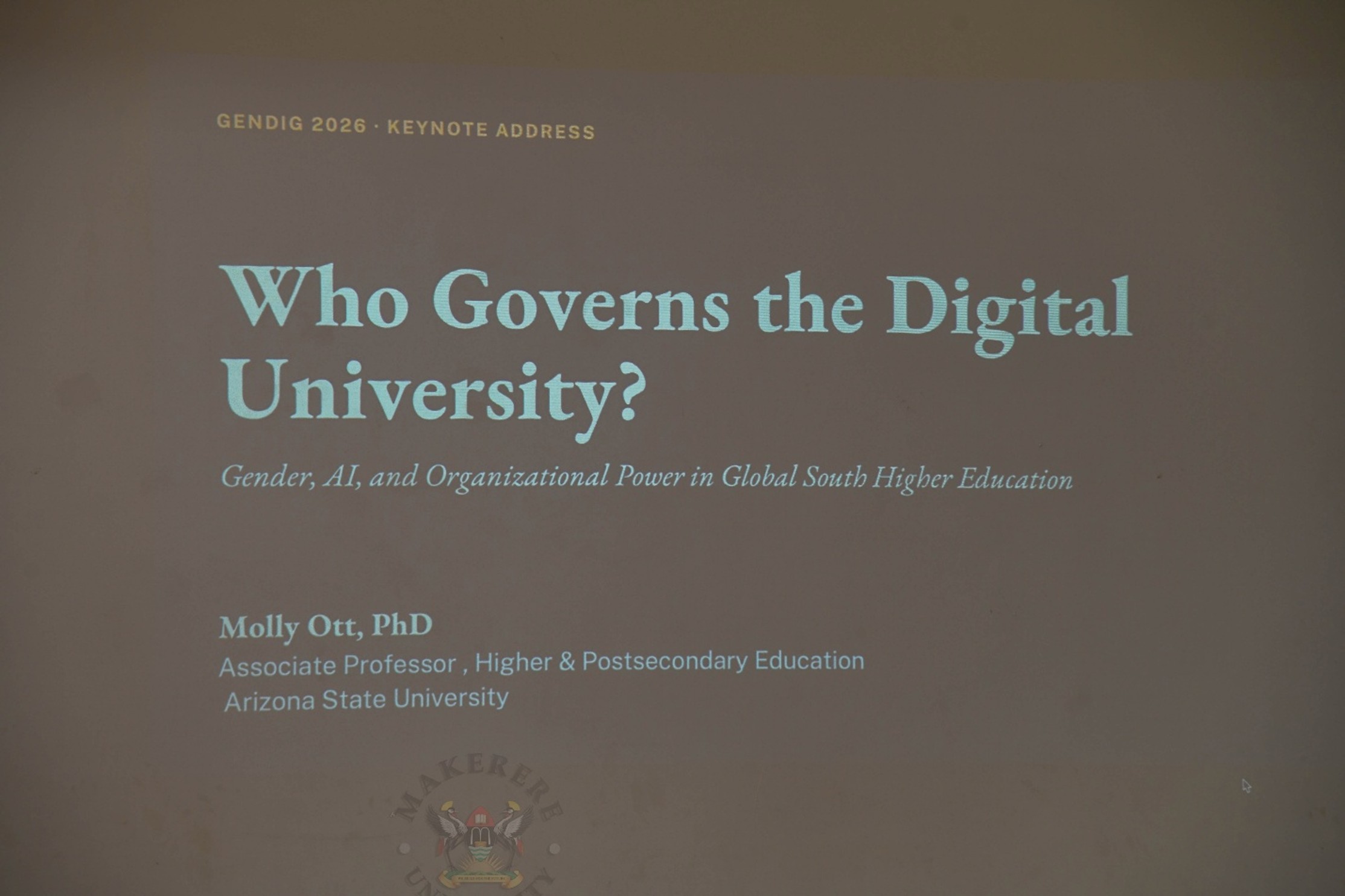
“Universities decide who gets trained. Universities decide who sits on committee, who signs contracts,” she said
Drawing on research at an Ethiopian university, Dr Ott discussed how institutional hierarchies and informal networks can influence access to information and professional development. She noted that training can provide both additional income and opportunities for career advancement, making it important to examine how participants are selected.
She encouraged universities to ask who is nominated for digital skills and AI training, who sits on digitalisation committees, and whether opportunities are being distributed equitably among academic staff.
Dr Ott also discussed the growing use of generative AI in higher education and its implications for teaching, learning and the production of knowledge. She called for institutions to be deliberate in deciding when and how to use AI, with attention to students’ different circumstances and learning needs.
Lessons from the GENDIG partnership
A panel discussion moderated by Dr David Mpiima reflected on lessons from implementing the GENDIG project and from the first day of the conference, and how these could inform future policy and practice on digital transformation in higher education.
Prof. Hanne Haaland emphasised the importance of institutional partnerships built on trust and an understanding of different contexts. She noted that collaboration begins with people willing to work together, including when differences between institutions make partnerships challenging.
Reflecting on gender and technology, she cautioned that digital tools could reinforce existing inequalities. She urged universities to consider who develops and controls technology, whose knowledge is embedded in it, and how institutional practices shape its use.
Prof. Haaland observed that gaps between policy and practice remain across different contexts. She called for research that does more than generate knowledge, encouraging work that supports action and helps institutions understand the implications of the technologies they adopt.
She also urged participants to consider how gender intersects with age, social class, race and ethnicity. Drawing on debates about digital learning in Norway and elsewhere, she encouraged institutions to think carefully about when, where and why digital tools are introduced in education.
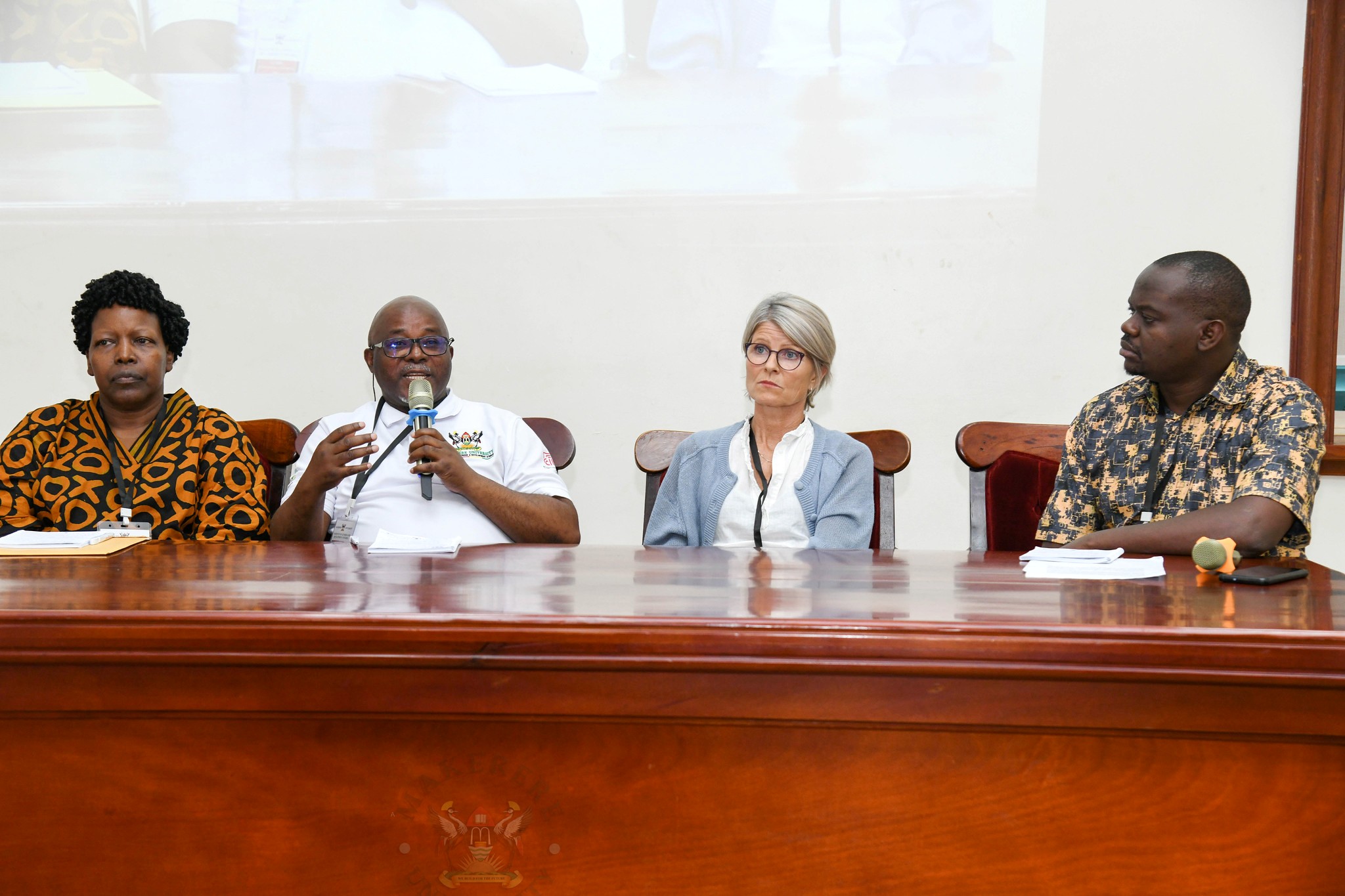
Dr Thomas Ndaluka highlighted collaboration across institutions and disciplines as an important lesson from the project. He noted the value of partners sharing their different strengths and experiences in addressing the relationship between gender and digitalisation.
The panel also discussed the need to engage decision makers beyond the research community, including policymakers, so that evidence on gender, digitalisation and artificial intelligence can inform policy and practice. The discussion pointed to the value of engaging with education beyond university level as well.
Assoc. Prof. Ruth Nsibirano called for research to establish who is using digital technologies in higher education, who is being left out and why. She highlighted gender, disability and geographical differences as important considerations when assessing access and use.
She urged universities to use evidence to develop policies and practices that respond to their different contexts. She also pointed to the resources and skills needed to support digital transformation, as well as the importance of addressing online risks and helping users protect themselves.
Parallel Sessions
On Day 2, the participants listened to several parallel sessions on the following themes: Gender Digitisation in Higher Education, Inequality and Inclusion in Higher Education, and Contemporary Issues in Gender Studies.
Elevating Student Voices and Grounding Debates
The conference dedicated space to emerging scholars through a Scholarship Student Beneficiaries Panel chaired by Dr. Victoria Namugala. Student researchers presented original fieldwork tackling pressing social vulnerabilities in Tanzania:
- Catherine James examined the lived experiences of male street-connected children in urban Dar es Salaam.
- Eva Samwel explored Unyago initiation practices, cultural teachings, and early marriage vulnerabilities among girls in Tanzania’s Masai district.
Disability Inclusion and Community Co-Creation
Dr. Lulu Simon Mahai, Principal Investigator from the University of Dar es Salaam, reminded delegates that heavy spending on hardware does not automatically translate into an inclusive campus.
“Universities can invest in digital infrastructure, but this may not translate into gender equality and inclusion. A lot needs to be done,” Dr. Mahai observed. She advocated for holistic investments in physical spaces, human resources, and specialized hard and soft assistive technologies to ensure students with disabilities-particularly those with visual impairments-can learn on equal footing.
Dr. Mahai also championed deeper co-creation between academia and civil society, urging researchers to partner directly with grassroots organizations so that academic knowledge translates into practical community empowerment.
Rethinking Higher Education’s Digital Mandate
Delivering the official closing remarks on behalf of the CHUSS Deputy Principal, Prof. Eddy Joshua Walakira, the Dean of the School of Liberal and Performing Arts, Dr. Pamela Khanakwa, emphasized that universities bear a profound moral obligation to ensure technology advances the common good.
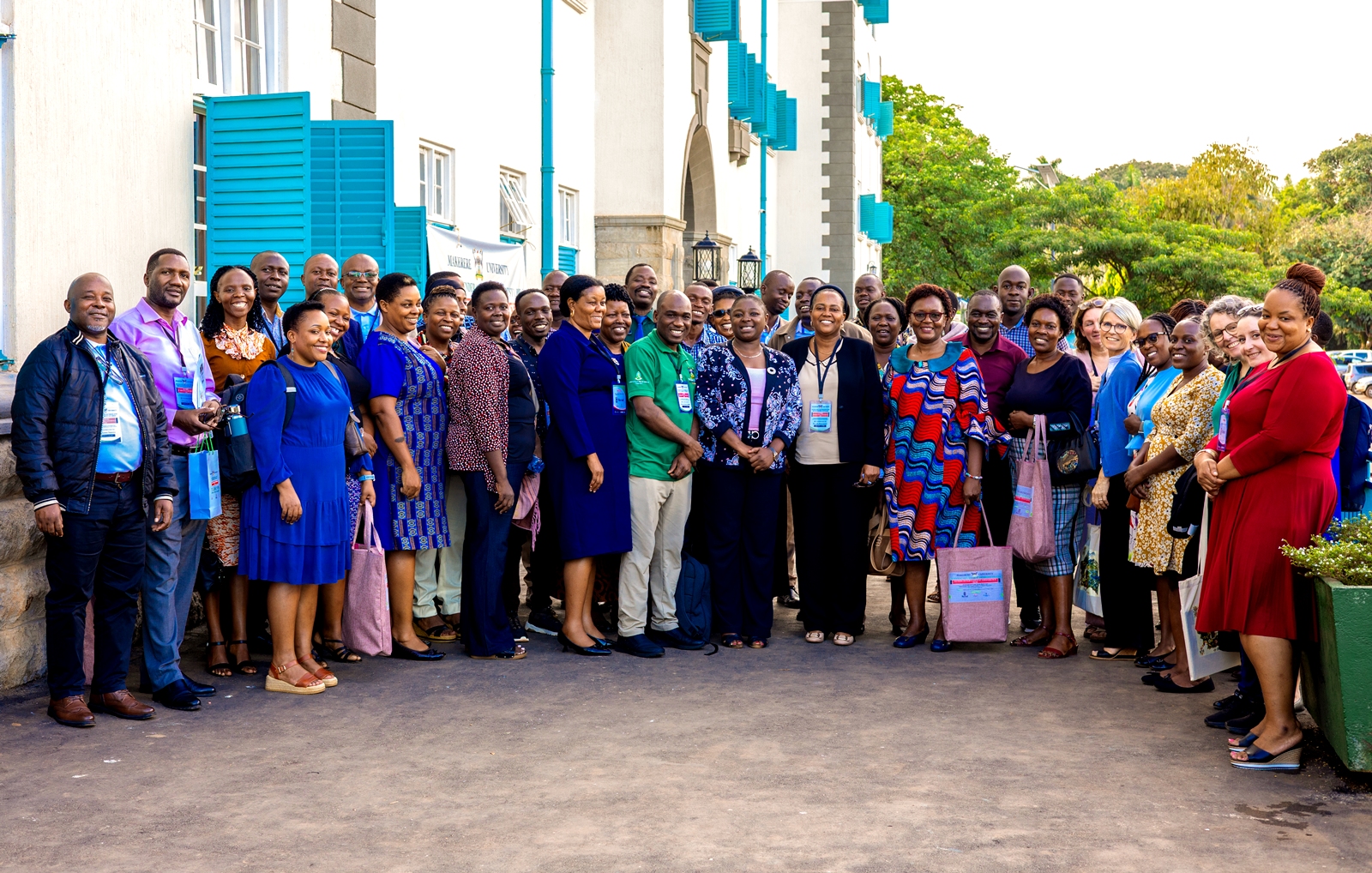
“Our task is not simply to adapt to the digital age,” Dr. Khanakwa stated. “It is to shape the digital age in ways that promote human dignity, equal opportunities, and sustainable development.”
To achieve an equitable digital future, Dr. Khanakwa outlined five urgent areas where universities must rethink their operations:
- Teaching and Learning: Leveraging technology to build flexible, accessible, and gender-responsive classrooms that accommodate diverse student needs.
- Research and Innovation: Advancing interdisciplinary, gender-responsive research agendas rooted in the real-world aspirations of local communities.
- Leadership and Governance: Ensuring balanced gender representation in institutional leadership, innovation hubs, and digital decision-making.
- Access and Participation: Actively closing the digital divide by addressing gaps in device ownership, affordable internet, and digital literacy.
- Policy and Practice: Moving beyond high-level declarations toward measurable, sustainable interventions that yield tangible equality outcomes.
Dr. Khanakwa noted that universities cannot achieve this alone, calling for sustained alliances across government, the private sector, development partners, and civil society.
Reflections from the first day
A recap of the first day’s discussions highlighted that barriers to women’s participation in digital spaces extend beyond access to devices and data. Participants reflected on social norms and perceptions about who belongs in those spaces, including in the development and use of AI.
The recap also drew attention to the role of institutional support, partnerships, research and activism in challenging gender inequalities. It recognised the contribution of the GENDIG collaboration to learning, research and opportunities for exchange, while noting that work remains to make digital transformation more inclusive.
The first day’s programme included a keynote address by Dr Eng. F. Francis Tusubira, Managing Partner of Knowledge Consult Ltd, on “Reimagining Gender in the Digital Age: Are We Chasing a Mirage?” It alsofeatured parallel sessions on gender and digitisation, inequality and inclusion, civil society, artificial intelligence and contemporary issues in gender studies.
The discussions across the two days pointed to a shared concern: expanding digital technology in higher education is not enough on its own. Universities must also examine the conditions under which students and staff access, use and shape those technologies.
Humanities & Social Sciences
CHUSS Graduate Symposium ends after three days of research and scholarly exchange
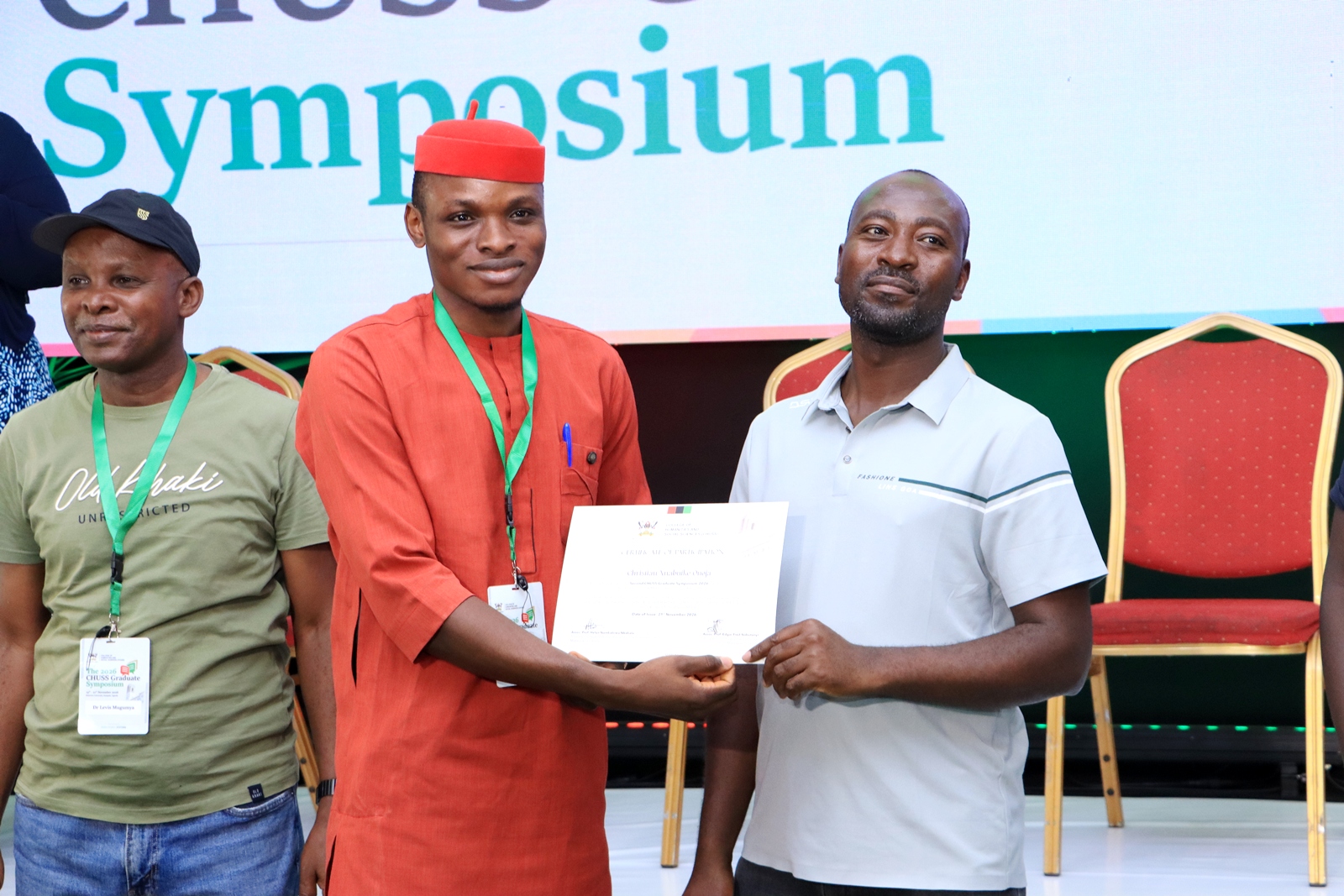
The 2026 Graduate Symposium organised by Makerere University’s College of Humanities and Social Sciences (CHUSS) has ended after three days of discussions on research, writing, publication and the contribution of the humanities and social sciences to understanding society.
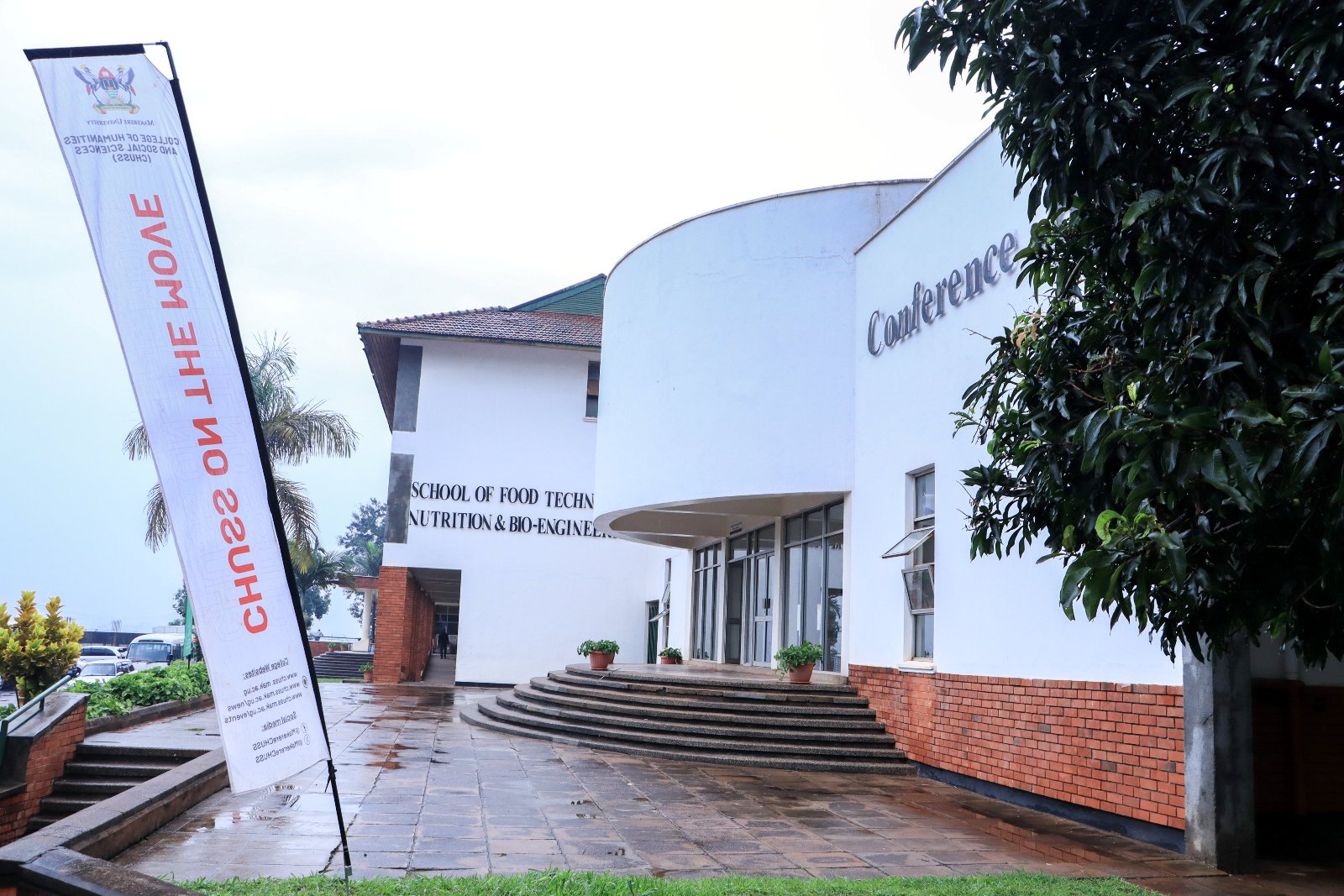
The symposium, held from 19 to 21 November at the School of Food Technology, Nutrition and Bio-Engineering Auditorium, brought together graduate students and scholars to share research, receive feedback and exchange ideas across disciplines.
It opened on 19 November with a virtual keynote by Prof. Divine Fuh on researching and writing Africa for and from Africa, followed by writing workshops and presentations by graduate students. On the second day, Prof. Elizabeth Kyazike examined archaeological research in Eastern Africa and the value of material evidence in understanding and safeguarding heritage.
The final day featured a keynote by Prof. Godwin Siundu on research methodology and knowledge production in the humanities and social sciences. Participants also reflected on the lessons they had gained from the symposium and how they would apply them in their research.
Closing the symposium on 21 November, Prof. Julius Kikooma urged students and organisers to build on the work presented by developing it into publications and maintaining the scholarly connections formed during the gathering.
Prof. Julius Kikooma: Taking the research forward
Prof. Kikooma challenged participants and organisers not to leave the papers presented at the symposium as work in progress. He proposed that they be developed into a special issue of a peer-reviewed journal, an edited volume or a series of working papers.
He said publication would give the conversations held during the symposium a longer life and make the research available to other scholars and wider audiences. He encouraged the organising team to engage journal editors and explore the publication outlets available within the University.
“Don’t do your PhD in a silo,” he told the students, explaining that although doctoral research requires depth and specialisation, the problems facing society are interconnected and should also be understood in a broader context.
Prof. Kikooma said presenting ideas to peers, receiving honest feedback on draft chapters and proposals, and learning how scholars from other countries approach similar questions can strengthen the quality of research.
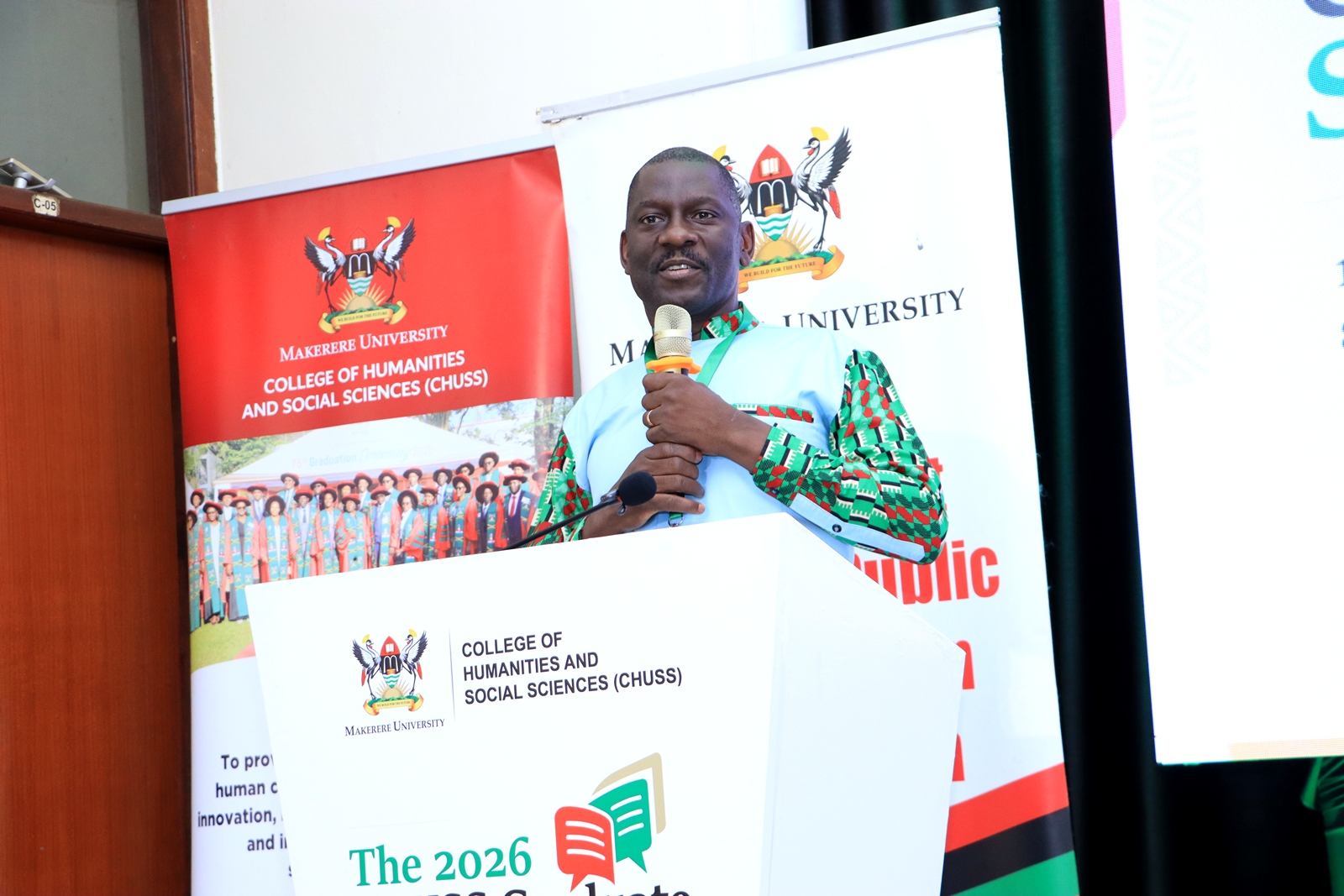
He welcomed participants from institutions beyond Makerere University and encouraged them to maintain the relationships established during the symposium. Some of the conversations started during the gathering, he said, could develop into future collaborations and jointly authored work.
Prof. Kikooma observed that the range of research discussed over the three days demonstrated the relevance of the humanities and social sciences to understanding society.
He pointed to presentations on generative artificial intelligence and collaborative learning among university students in Uganda, remote teaching for children with neurodevelopmental disorders, teacher development and early-grade literacy.
He also referred to research on the evolution of Indian built heritage in Busoga between 1906 and 1962, saying it drew attention to the history embedded in places that people encounter every day. Other discussions covered gender, governance, rights, media and lived experiences.
Reflecting on graduate training, Prof. Kikooma said CHUSS had been a leading producer of PhD graduates in the country over the past five years. He noted that the College’s staff with doctoral qualifications provide an important foundation for guiding students through their studies.
Prof. Kikooma, who described himself as a proud product of CHUSS, also reflected on the role of partnerships in supporting graduate training and research in the College.
He recalled discussions with the Gerda Henkel Foundation around 2015, at a time when many funding opportunities appeared to favour the natural sciences. Support for the humanities, he said, gave scholars opportunities to study their own societies, histories and heritage with greater confidence in the value of their work.
He thanked the organisers, keynote speakers, workshop facilitators, funders and support staff for their contribution to the symposium and to the development of graduate scholars. He particularly recognised the work of Prof. Edgar Nabutanyi and the organising team, as well as Dr Isaac Kiiza Tibasiima and Dr Amon Ashaba Mwiine, who facilitated writing workshops.
Prof. Godwin Siundu: Research and African knowledge
In his keynote address, Prof. Godwin Siundu invited graduate researchers to think critically about research methodology and the assumptions that shape knowledge production in the humanities and social sciences.
He said questions of method are connected to wider concerns about what is recognised as knowledge, who determines the research agenda and who benefits from the findings.
Prof. Siundu observed that the humanities and social sciences are sometimes treated as less important than science, technology, engineering and mathematics in funding and development priorities. Yet, he argued, research in these fields helps society understand human relationships, culture, identity and the ethical questions that shape people’s lives.
He explained that qualitative approaches are commonly associated with the humanities, while quantitative methods are often used in the social sciences. However, the fields also draw on approaches across disciplinary boundaries. Interviews, for example, can be useful to researchers in both areas.
Prof. Siundu noted that what scholars understand as a text has expanded beyond written literature. Spoken narratives, images, historical documents and cultural expressions can also provide material for understanding how people experience and represent the world.
The growth of digital technologies, he said, has further changed how people encounter, communicate and preserve their experiences, creating new possibilities for research.
He encouraged researchers to reflect on how their own positions influence the questions they ask and the way they interpret evidence. Factors such as gender, race, geography and political position can shape a researcher’s relationship to a subject.
Being aware of these influences, he explained, can help scholars account for their choices and engage more carefully with the people and contexts they study.
Prof. Siundu also urged researchers to represent communities, cultures and identities responsibly, particularly when studying people whose experiences differ from their own. Scholars should recognise the limits of an outsider’s perspective and avoid reproducing stereotypes or unsupported representations, he said.
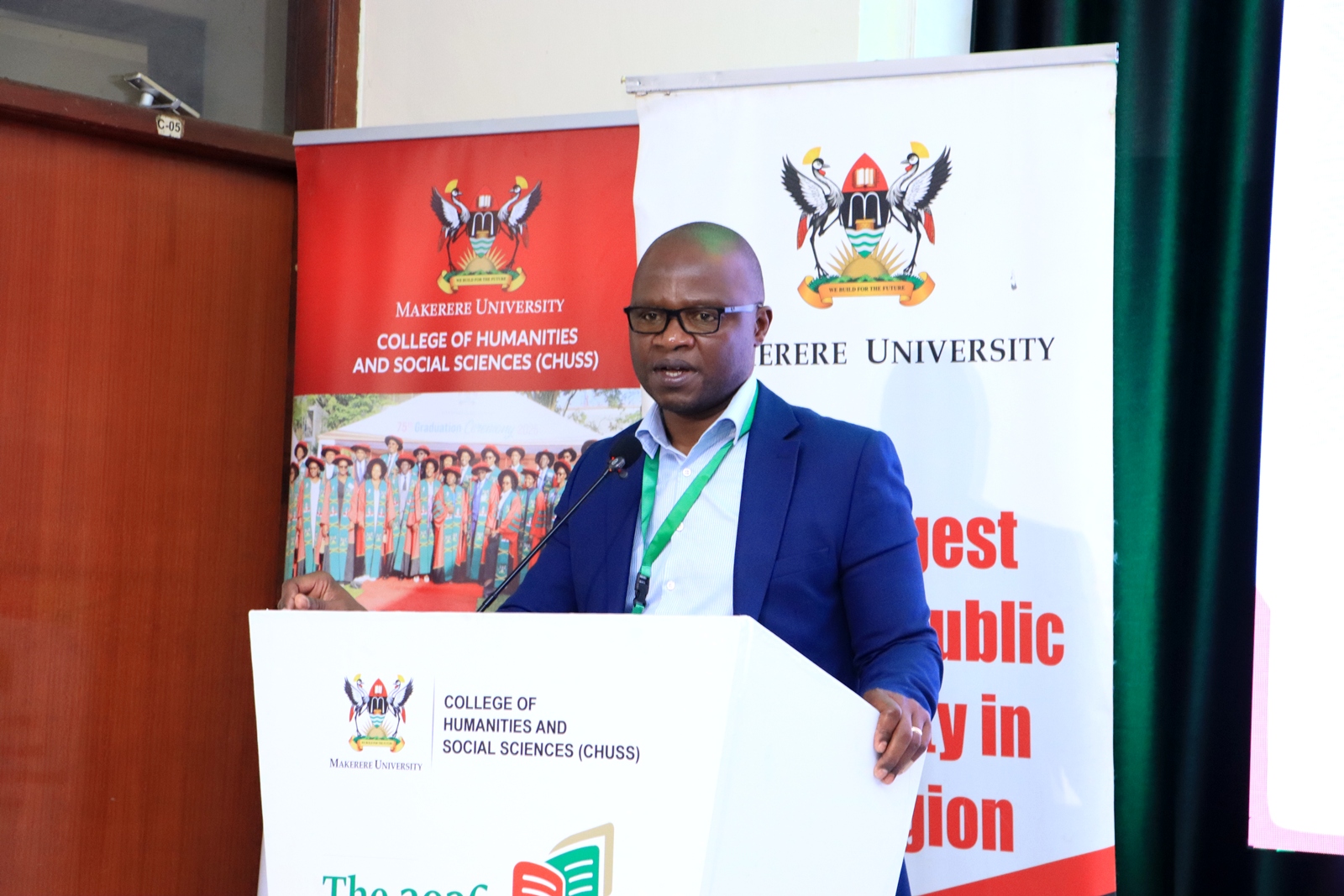
He called for critical examination of theories and methods developed in Western contexts before applying them to African societies. Discussions on decolonisation, he explained, have encouraged scholars to reconsider forms of knowledge and experience that have historically received limited attention in research.
Among the issues he raised was the need to consider experiences of spiritual significance as researchers reflect on sources of knowledge within the contexts they study.
Prof. Siundu also questioned how African research is measured and recognised. Claims about the continent’s contribution to global knowledge, he said, should prompt further questions about how knowledge is defined and whose work is counted.
His address examined how artificial intelligence is changing research. He said AI can support researchers in handling large amounts of data, analysing information and presenting findings. Such tools may also enable fewer people to produce more work within a shorter time, raising questions about the future of intellectual work.
At the same time, he cautioned that AI tools may not adequately capture the context, subjectivity and diversity of human experience. He expressed concern that African histories, languages, cultures and knowledge systems could be marginalised if the technology reinforces more dominant perspectives.
He asked participants to consider whether AI could deepen existing gaps in the representation of knowledge or be used to document and preserve African experiences. For scholars in the humanities and social sciences, he said, adopting the technology also requires attention to its methodological and ethical implications.
Prof. Siundu proposed stronger collaboration among scholars and institutions across Africa as one way of responding to research and funding challenges. He encouraged researchers to build on the work of earlier generations of African scholars who questioned colonial approaches and placed African experiences at the centre of their scholarship.
Reflecting on the contribution of universities and scholars in East Africa, he said their work in history, literature, politics and other fields helped establish intellectual traditions on which present and future researchers can build.
Prof. Edgar Nabutanyi: Graduate study as a process
Speaking before the keynote, symposium convenor Prof. Edgar Nabutanyi encouraged graduate students to approach their studies as a process rather than focus only on the final award.
He said a dissertation or thesis should demonstrate a contribution to new knowledge, but reaching that point involves several stages, including research, writing, presenting and responding to feedback.
Focusing only on the final outcome, he explained, can make the demands of graduate study more discouraging. Viewing the work as a process helps students appreciate the value of each stage and the progress they make along the way.
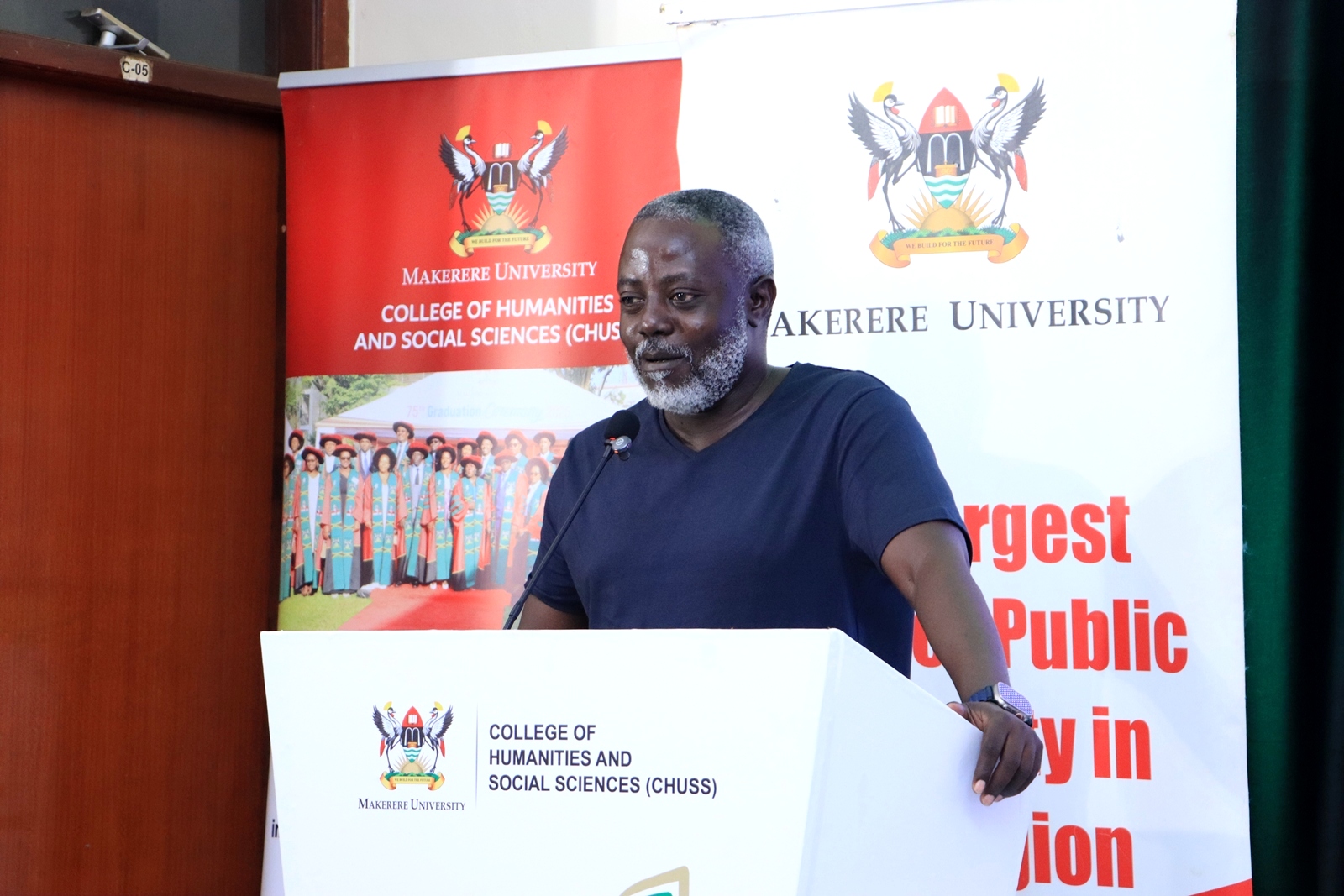
Prof. Nabutanyi compared graduate research to brewing, explaining that a researcher brings together background knowledge, ideas and skills that develop over time. Seminars, workshops and symposia provide opportunities to test and refine the work as it takes shape, he said.
He stressed the importance of communicating research clearly. What a researcher understands in their own mind may not always be communicated in a way that a supervisor, fellow scholar or wider audience can follow.
Writing and presenting research gives students an opportunity to see how others understand their ideas and use feedback to improve their arguments, he explained.
Prof. Nabutanyi also noted that examiners have repeatedly raised concerns about methodology in graduate research. He cautioned students against treating methodology as merely filling a chapter with sections on research design, data collection and ethical considerations, without thinking carefully about how the study will be conducted.
Gerald Mukisa Nsereko: Citing fellow scholars
For Gerald Mukisa Nsereko, a PhD student in the School of Psychology, one of the most useful lessons from the symposium was the need to recognise and cite relevant research produced by scholars within his own academic community.
He said researchers often cite scholars from Western contexts while overlooking the work of colleagues around them. He plans to be more intentional about citing relevant local scholarship in his PhD proposal and future publications.
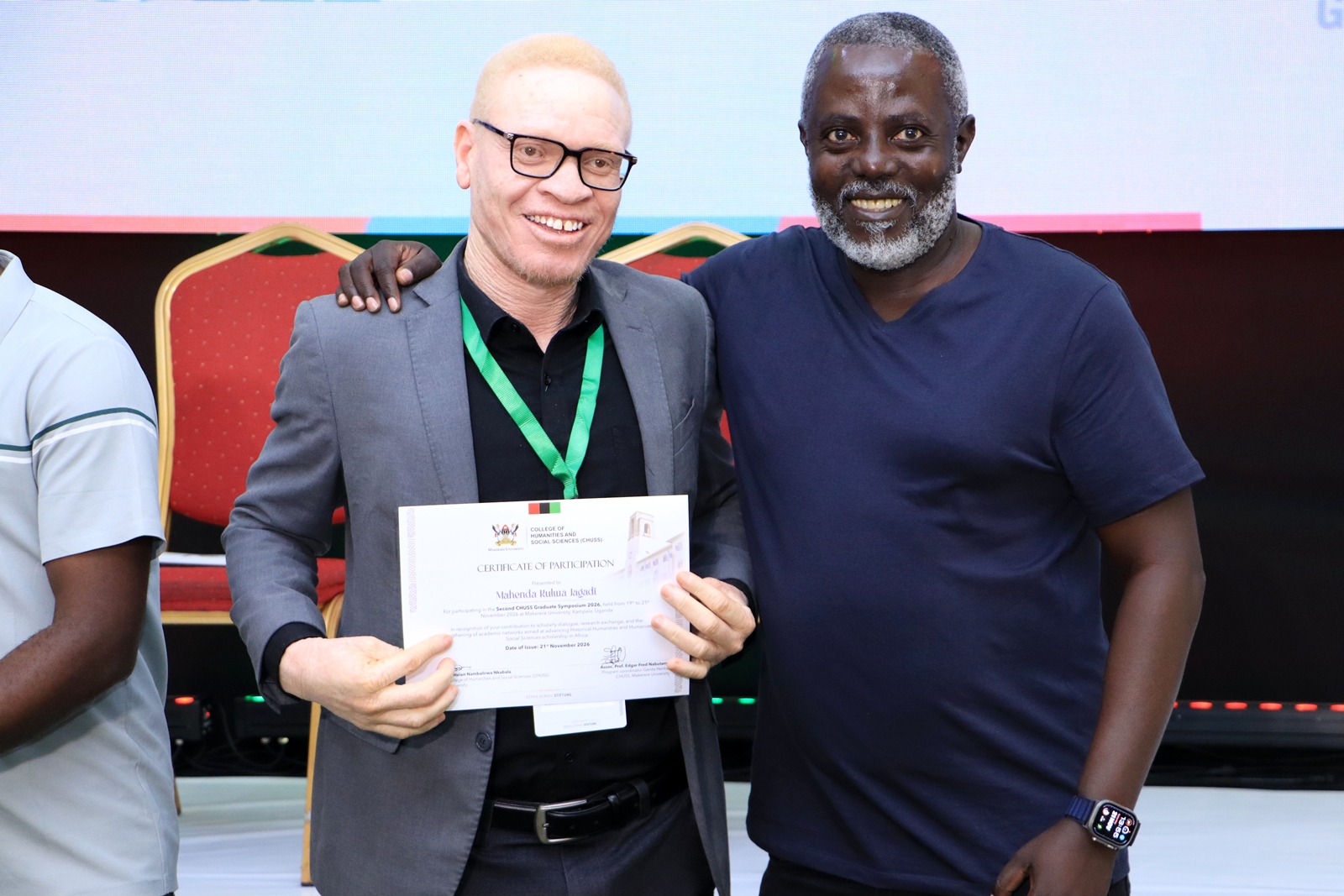
Gerald said he had already started paying attention to this in his proposal and intended to continue as he develops his research.
He also said the symposium reinforced his understanding that research should reach the people who can learn from and use it, rather than remain with the writer.
Having shared his work with scholars from different schools during the symposium, he plans to seek more opportunities to communicate his progress and findings beyond the event.
Noyombi Marc Francois: Applying feedback
Noyombi Marc Francois, a first-year PhD student in Linguistics from Cameroon, said the symposium had been a valuable learning experience across all three days.
A student in the Department of Linguistics, English Language Studies and Communication Skills, he said the keynote addresses and conversations on writing, editing and publishing helped him understand the demands of scholarly work.
He also valued the opportunity to present his research proposal, which is still under development, and receive feedback. Listening to comments given to other scholars presenting proposals, draft chapters and papers was useful to his own work, he said.
For Noyombi, a key lesson was the importance of rigour in research methodology. As he continues his PhD, he plans to pay close attention to the methods and standards required for his study, recognising that good research demands care rather than shortcuts.
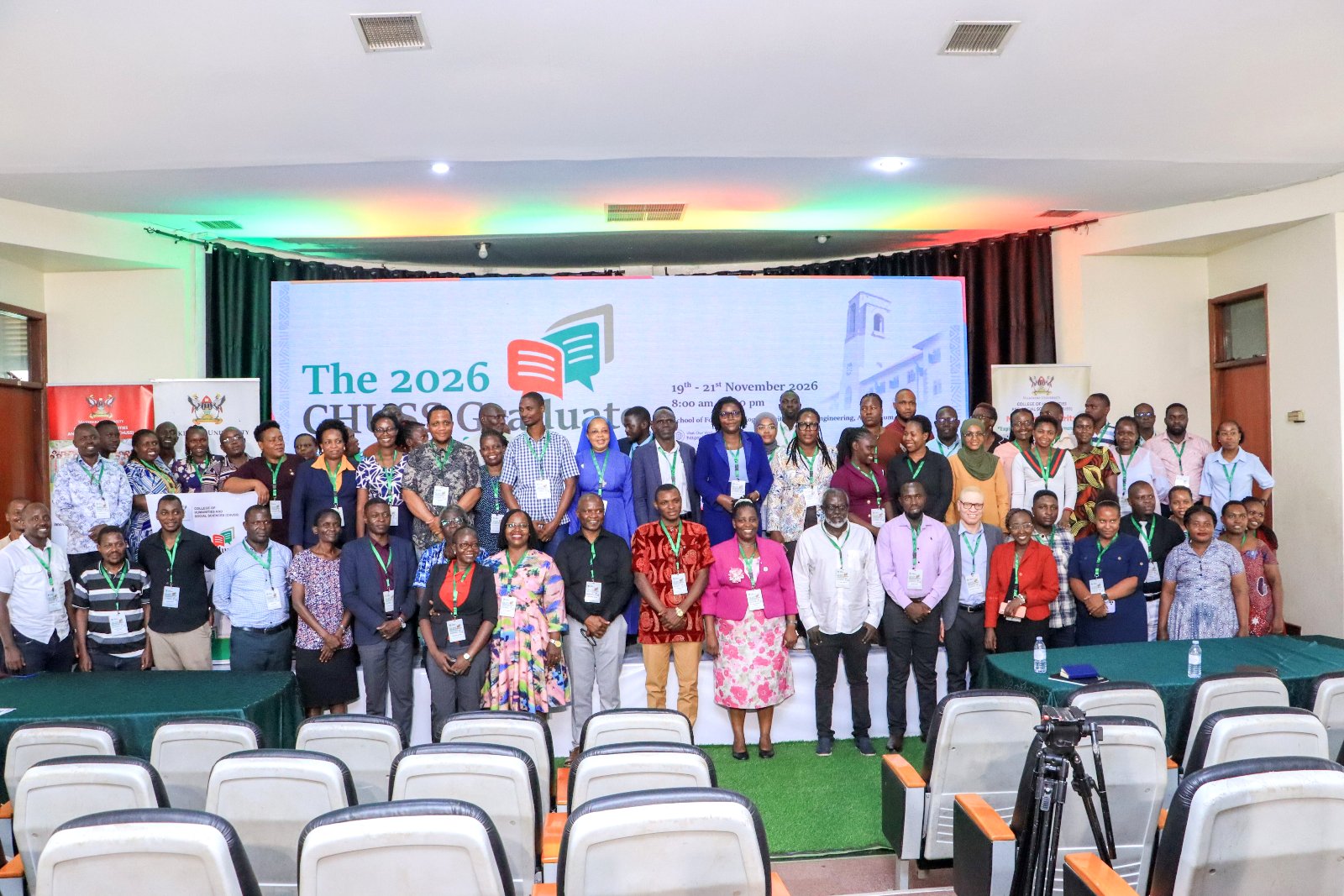
The symposium concluded with Prof. Kikooma thanking the participants, organisers, speakers and partners before formally declaring it closed. He encouraged the graduate students to build on the feedback they had received, stay connected with their fellow researchers and develop their work for publication, so that the conversations started during the three days can reach wider audiences.
Humanities & Social Sciences
CHUSS Graduate Symposium opens with focus on African research, scholarly writing and publication
Researching African realities, communicating academic work to wider audiences and preparing research for publication took centre stage as Makerere University’s College of Humanities and Social Sciences (CHUSS) opened its 2026 Graduate Symposium.
The symposium brings together graduate students and scholars to present research, exchange ideas and discuss how scholarship in the humanities and social sciences can contribute to knowledge and respond to issues affecting society.
The three-day event opened on 19 November 2026 and continues until 21 November at the School of Food Technology, Nutrition and Bio-Engineering Auditorium. The first day featured a writing workshop and a keynote lecture that explored how researchers develop questions, engage with existing knowledge and communicate their findings.
Researching and writing Africa
Delivering the keynote virtually, Prof. Divine Fuh called on graduate students to develop research that responds to African realities while paying attention to the continent’s diversity and maintaining rigorous methods.
His lecture titled: Research and Writing Africa for and from Africa, examined how scholars frame questions, choose methods and engage with the histories, institutions and communities that shape knowledge production.
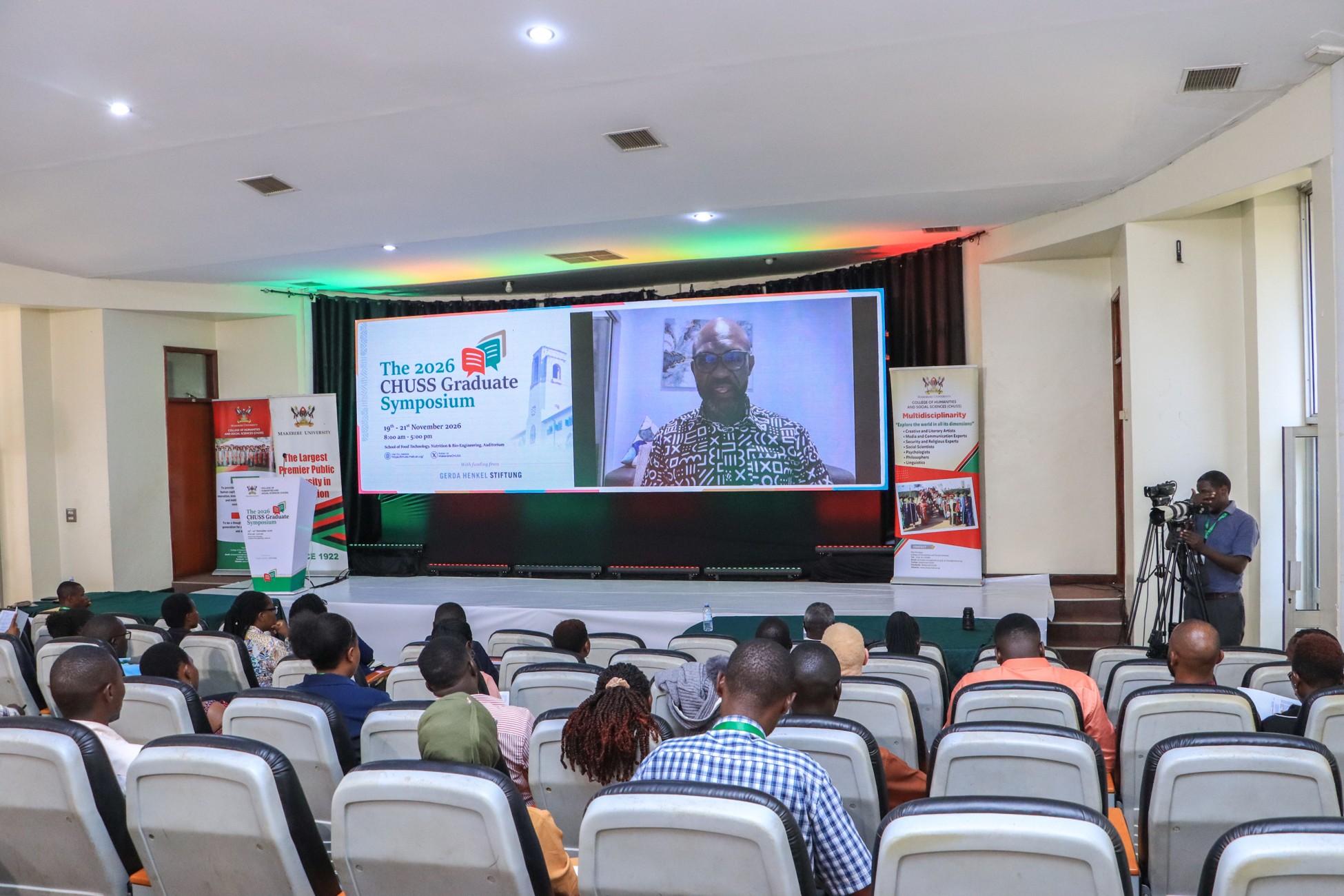
Prof. Fuh, an Associate Professor of Social Anthropology at the University of Cape Town, said research begins with curiosity and the willingness to ask questions. He encouraged students to take time to develop their questions rather than rushing to provide answers.
“Your thesis, your article, your book, whatever you write, involves so many people,” he said.
An experience or problem encountered in everyday life, he explained, can be a starting point. The researcher’s task is to turn that concern into a question that can be investigated systematically, while considering what other scholars have already written about it.
He stressed the relationship between the question a researcher asks, the concepts used to understand it, the methods chosen to collect information and the conclusions drawn from the findings. Researchers, he said, should be able to explain these choices so that others can examine how they arrived at their arguments.
Prof. Fuh also asked students to reflect on their own position in the research process. Their experiences, relationships and assumptions can influence the questions they ask and how they interpret what they find.
Ethical reflection, he said, should extend beyond completing a checklist. It should inform the language and concepts researchers use, the places in which they work, how they engage participants and how they interpret and present findings.
Decolonising knowledge
Prof. Fuh also addressed the question of decolonising knowledge, encouraging scholars to examine how particular ideas and ways of knowing came to be recognised as authoritative and whose knowledge has been excluded.
He argued that researchers need to understand existing knowledge and its history in order to assess its limitations. Decolonisation, in this context, involves questioning inherited assumptions and recognising other sources and approaches that can deepen understanding.
He connected the discussion to the history of African universities, including the colonial period, the demands of nation-building after independence and later expectations that universities respond to development challenges. These histories, he noted, have shaped the institutions and research practices that scholars inherit.
At the same time, Prof. Fuh stressed that introducing alternative sources of knowledge does not mean abandoning rigorous assessment. Researchers must still consider the credibility and coherence of their evidence and make their methods and arguments open to scrutiny.
He cautioned against treating Africa as a single, uniform place. Researchers, he said, should pay attention to the differences and connections between communities, and comparative work can help illuminate how similar issues take shape in different settings.
He also encouraged scholars to take seriously the experiences of people whose voices are often absent from research and public discussion. Universities, he noted, exist within society and have a responsibility to create space for questions, evidence and arguments to be examined.
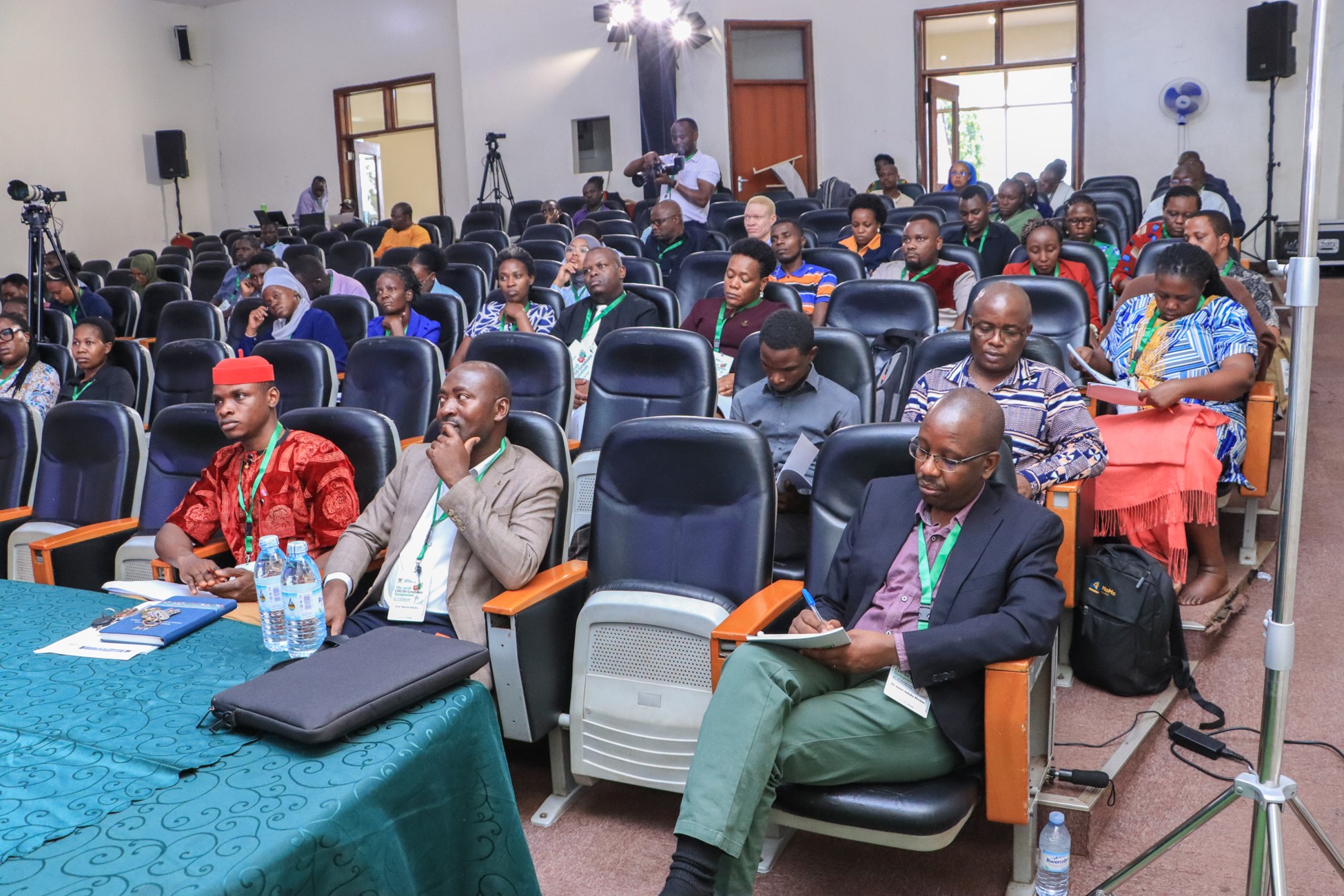
Prof. Fuh described scholarship as a collective process. Even when a thesis or article carries one author’s name, its development may involve research participants, supervisors, colleagues, editors and reviewers. He encouraged students to share their work, engage with criticism and see disagreement as an opportunity to examine and strengthen ideas.
An opportunity to publish and grow
CHUSS Principal Prof. Helen Nambalirwa Nkabala encouraged participants to use the symposium to strengthen their research and prepare it for publication, saying the gathering is also an opportunity for scholars to develop.
“It is an opportunity for you to publish. It is an opportunity for us to grow,” she said.
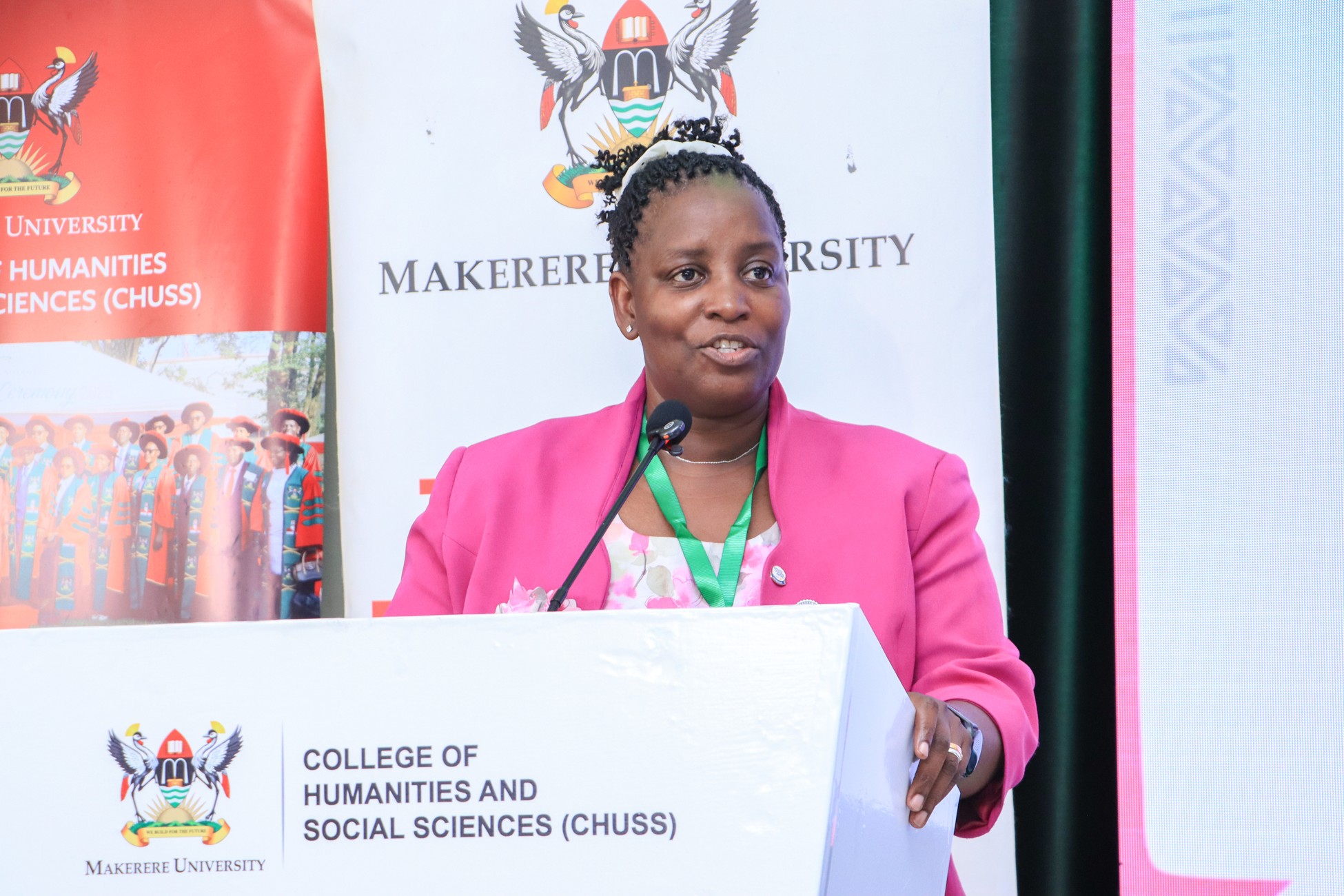
Prof. Nkabala urged participants to engage seriously with the discussions and feedback they receive. She encouraged them to identify weaknesses in their work and address them before submitting it, rather than leaving the symposium with their research unchanged.
Her remarks connected publication to the wider process of growth as a researcher. Presenting work to others, listening to questions and revisiting an argument can help students improve both an individual paper and their approach to future research.
The Principal also spoke about the contribution of the humanities and social sciences to societal change. Alongside other fields, she said, these disciplines have a role in understanding the challenges communities face and generating ideas that can contribute to addressing them.
She encouraged graduate students to think about the relevance of their work beyond their academic programmes and consider how the knowledge they produce can contribute to society.
Prof. Nkabala recognised the role of supervisors and graduate-support teams in helping students develop their research. She also acknowledged the support of the Gerda Henkel Stiftung for the College’s graduate work.
A dedicated platform for graduate students
Symposium convenor Prof. Edgar Nabutanyi explained that the graduate symposium grew out of earlier College symposia and a recognition that graduate students needed a dedicated space to present and discuss their work.
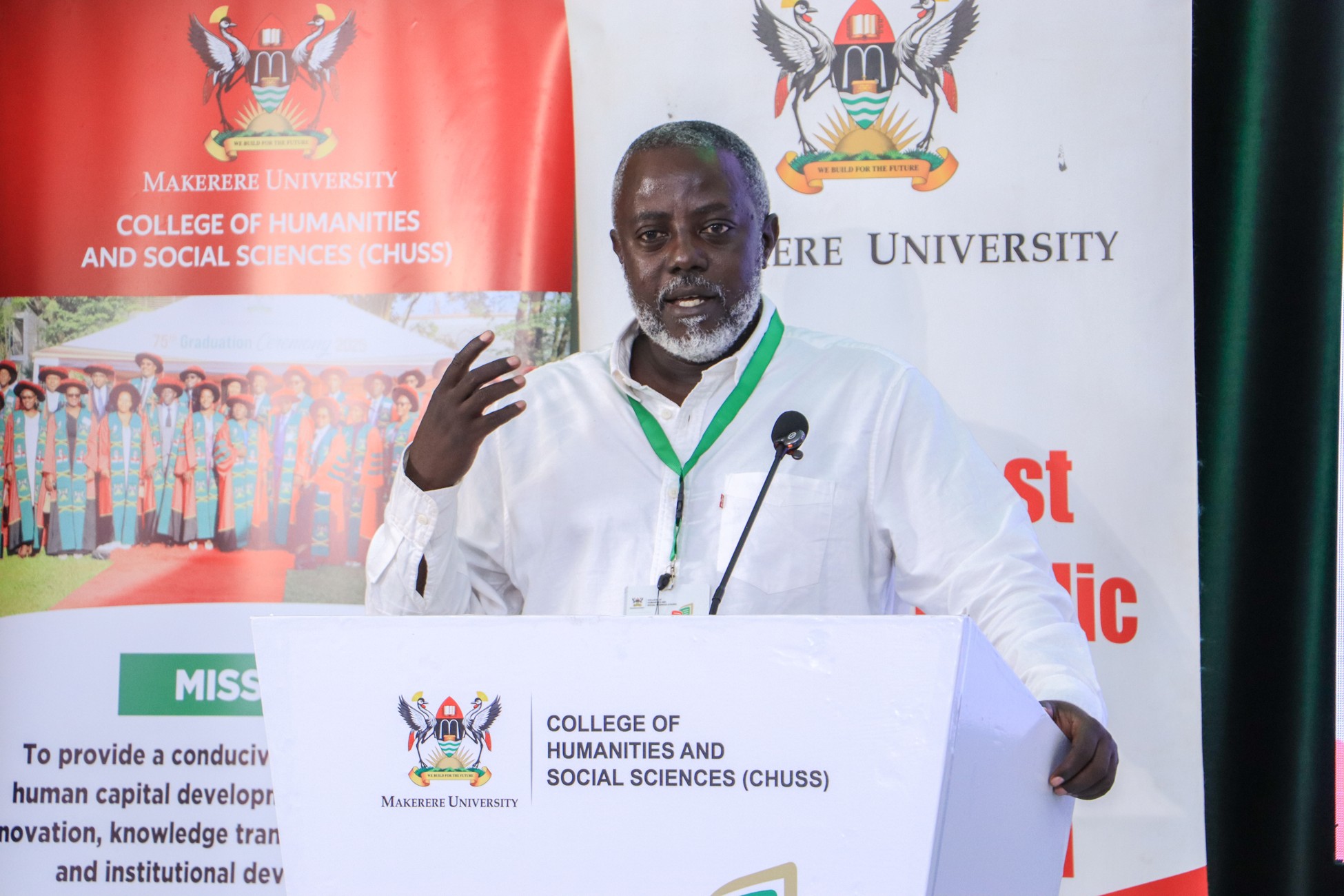
He said the intention was to create an avenue for students to share their ideas and receive support. “We wanted to create a platform for graduate students to present their work, exchange ideas and receive feedback that can help them grow as scholars,” he said.
Rather than simply presenting completed work, participants have an opportunity to expose developing arguments to questions and scrutiny. This allows them to hear how others understand their research, identify areas that need further thought and consider how to strengthen their work.
Prof. Nabutanyi described the symposium as an interactive setting for scholarly exchange. Its value, he suggested, lies not only in delivering a paper but also in listening and responding to the people engaging with it.
The gathering also contributes to the development of a new generation of humanities and social sciences scholars by bringing graduate students into conversation with one another and with more experienced researchers.
Through the symposium, students can practise explaining their work, engage with different approaches and take feedback into the next stages of their research and writing.
Research beyond graduation
Dr Martin Baluku urged graduate students to look beyond completing their degrees and consider what their research contributes to society.
Speaking at the writing workshop, he asked participants to reflect on the purpose of graduate study and the responsibility that comes with producing knowledge. He encouraged them to think about how their research could respond to issues affecting communities rather than ending with the award of a qualification.
“Graduate study should not end with obtaining a degree. We must also ask ourselves what our research contributes to the communities and institutions that can benefit from it,” he said.
Dr Baluku also asked researchers to consider the audiences that could benefit from their work, including government, practitioners and people outside the university. Engaging with these audiences, he suggested, can help scholars understand how their findings relate to challenges beyond academia.
He stressed the importance of communicating research in a way that allows others to understand and use it. Findings and recommendations need to be written and shared clearly if they are to reach people who can apply them.
His remarks connected the work of graduate researchers to a wider question: what difference can the knowledge they produce make to the people and institutions it concerns?
Writing for readers across disciplines
Dr Isaac Kiiza Tibasiima urged graduate students to make their academic work understandable to readers beyond their disciplines while remaining grounded in their own fields.
He said researchers should consider who might read their work and how people from different backgrounds could interpret it. He noted that a study may attract readers from other disciplines, particularly when it addresses an issue that cuts across several fields.
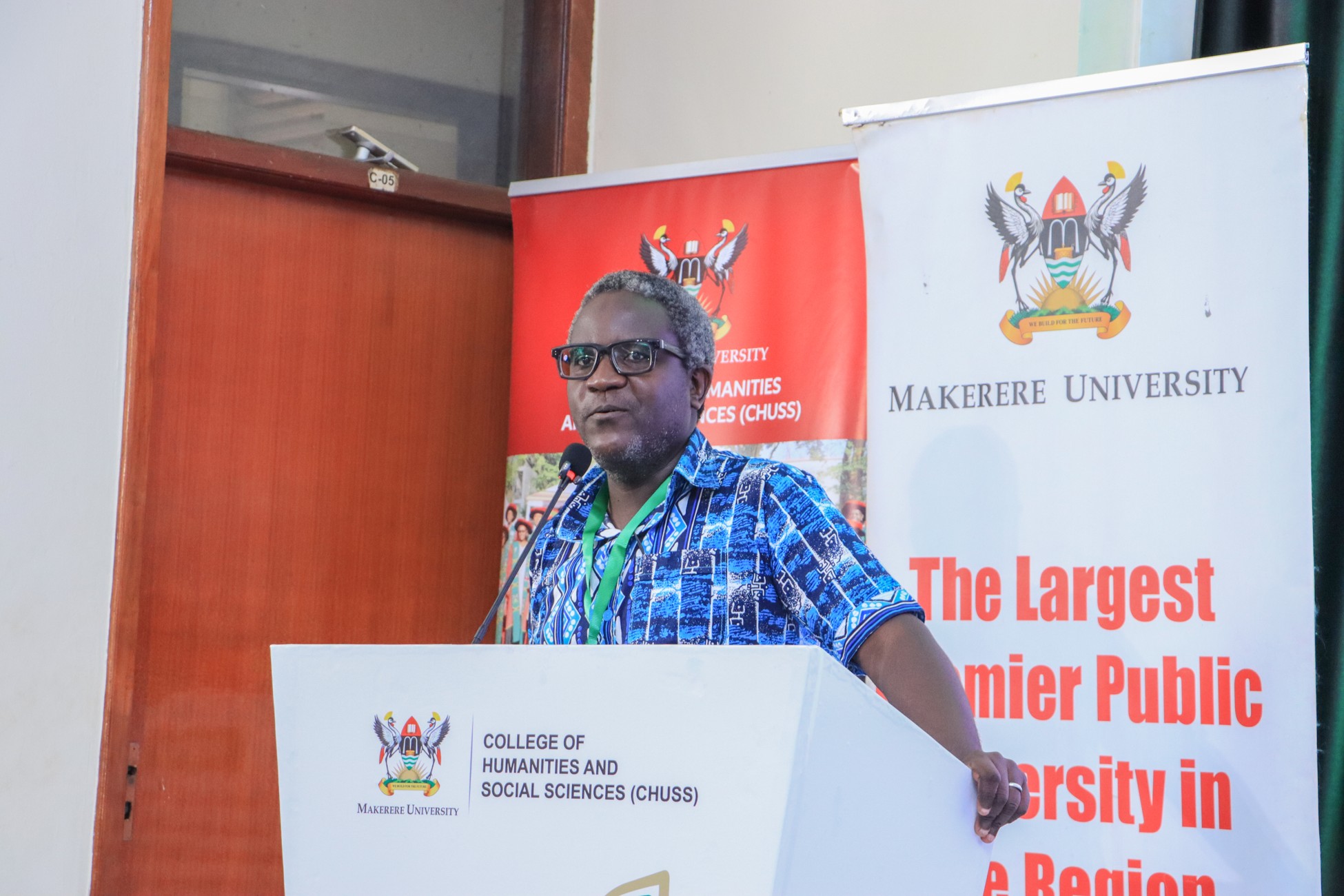
Drawing on examples from students’ research, Dr Tibasiima explained that a subject such as trauma can be understood differently across disciplines. Researchers therefore need to make their own approach clear while recognising that other readers may engage with the subject from a different perspective.
He said readability involves more than choosing words. It also depends on how researchers organise ideas, structure sentences and guide readers through an argument. Long sentences, unexplained specialised terms and weak connections between ideas can make it difficult for readers to follow the work.
Dr Tibasiima emphasised the importance of an introduction that tells readers what a paper or thesis is about and gives them a reason to continue reading.
“I want to know right from the start, what your paper is about or what your thesis is about,” he said.
He encouraged students to think of a thesis as a story whose chapters and arguments connect. Readers should be able to follow the movement from one point to the next and understand how the different parts of the work relate to one another.
He also pointed to the need for consistency between research methods and findings. If a researcher says interviews were used, for example, the presentation of findings should show how the interview data informed the study.
On the use of existing scholarship, Dr Tibasiima urged participants to do more than list authors and citations. Their work, he added, should explain what other scholars have said and how that work relates to their own argument.
He encouraged students to offer readers something new to think about, including by questioning established ideas. “Challenge the knowledge that I have about what you’re writing. Because I think that is what scholarship is about,” he said.
What journal editors look for
Prof. Godwin Siundu of the University of Nairobi discussed the expectations journal editors bring to scholarly work, highlighting the importance of a clear argument, academic rigour and a contribution to existing knowledge.
He encouraged researchers to consider what their paper adds to a conversation that other scholars are already having. Referring to published work is important, he emphasized that writers must also show how their own research relates to it and what it contributes.
His presentation placed emphasis on the argument running through a paper. Editors and readers need to understand what the author is saying, the evidence supporting that position and why the contribution matters.
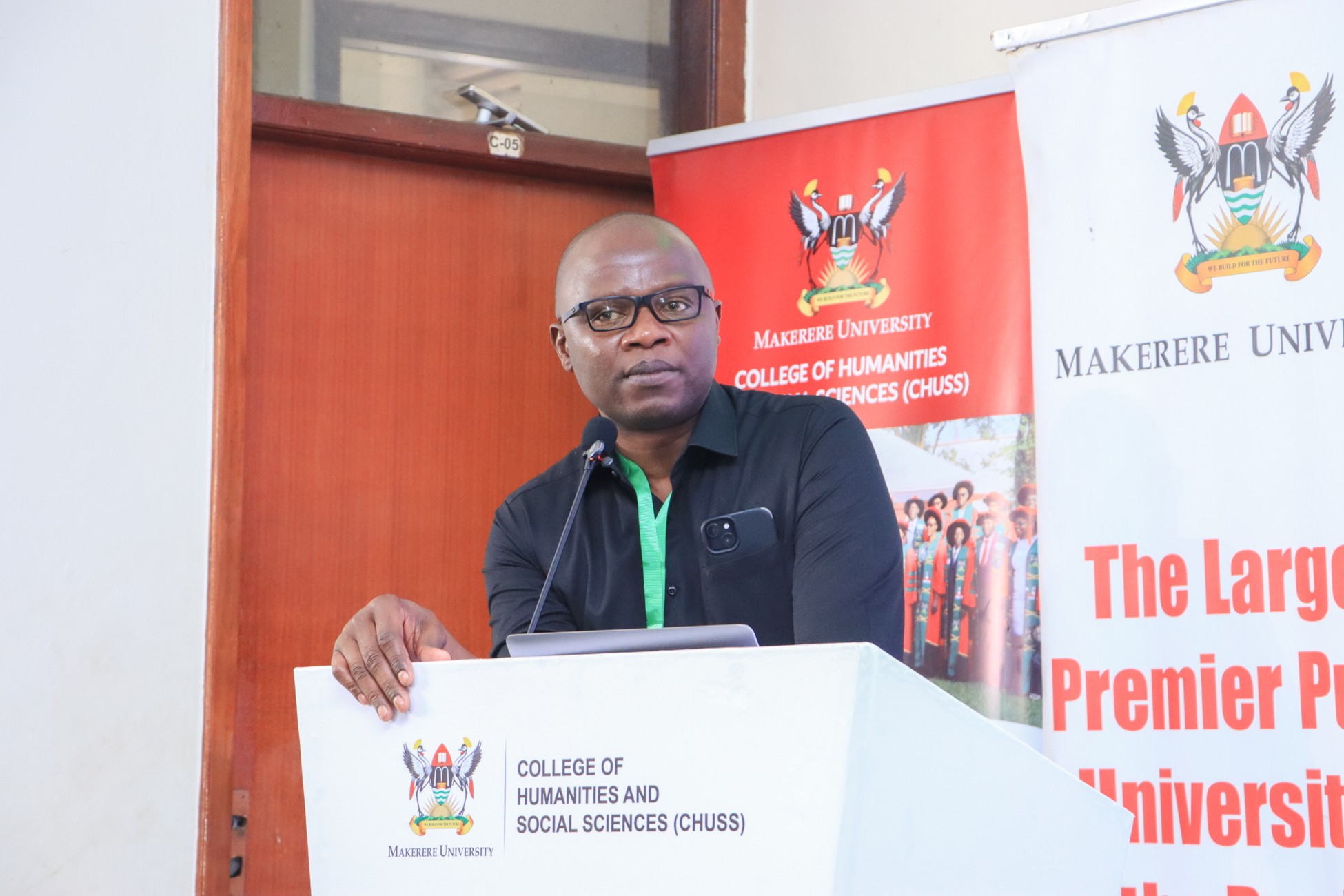
Prof. Siundu’s discussion also drew attention to the relationship between research and its presentation. A writer may have valuable material, but the article must organise it in a way that allows readers to follow the argument and assess its contribution.
The questions he raised encouraged participants to look at their work from an editor’s perspective: whether the purpose is clear, whether the evidence supports the claims and whether the paper offers readers a meaningful contribution.
Engaging with reviewers’ comments
Dr Amon Ashaba Mwiine discussed how researchers can respond to feedback from reviewers when preparing work for publication.
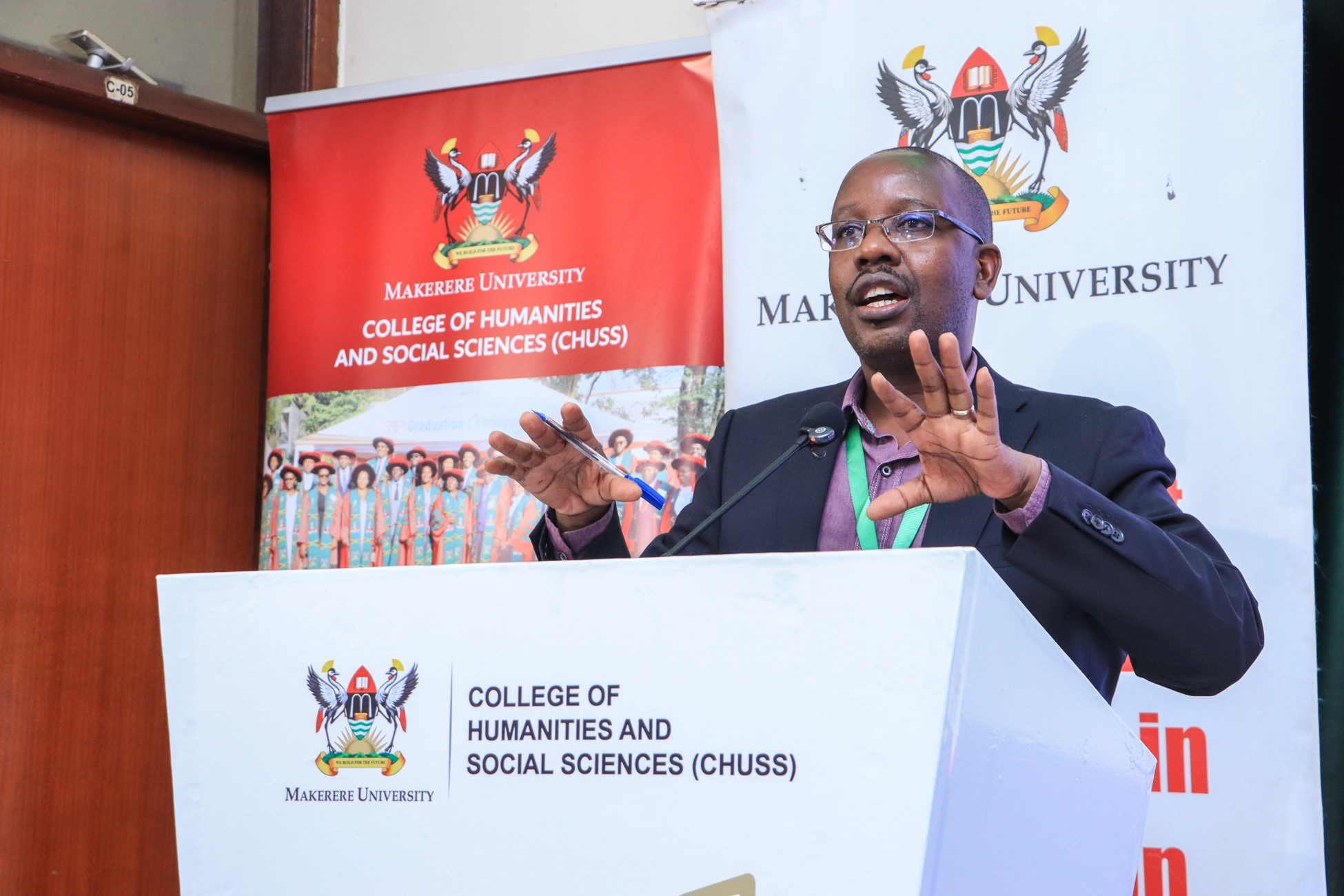
He encouraged participants to treat reviewer comments as part of the process of learning and improving a paper. Feedback can reveal gaps in an argument, areas that need clarification or issues that require further attention before publication.
He advised researchers to explain how they have addressed the comments they receive. Where they make changes, they should show what has been revised; where they disagree with a suggestion, they should explain their reasons rather than leaving the concern unanswered.
The discussion highlighted revision as an important part of scholarly writing, linking the clarity of an article’s argument to the author’s willingness to engage with questions raised by others.
The symposium continues until 21 November, with graduate students and scholars sharing their work and engaging in further discussions on research and scholarship in the humanities and social sciences.
-
 Agriculture & Environment1 week ago
Why RUFORUM’s 22nd AGM in Zambia matters for Africa’s next generation
-
 General2 weeks ago
Makerere Celebrates Prof. Mbazira’s Law Scholarship at His Inaugural Professorial Lecture and Book Launch
-
 Agriculture & Environment1 week ago
Makerere Launches Programme to Strengthen Resilience of Vulnerable Communities to Climate Change
-
 General1 week ago
Makerere GENDIG International Conference Calls for Gender-Inclusive Digital Transformation
-
 Health1 week ago
From Store to Patient: Keeping Uganda’s Medicines Within Reach as Funding Shifts