Connect with us

Health

TB in Prisons Eight Times Higher Risk than General Population in Uganda, Study

Published

on

Nearly half of Uganda’s prison population has latent tuberculosis (TB), according to the latest Uganda National Prevalence Survey on Tuberculosis, HIV, and COVID-19. The survey, released on May 15, 2025, found that active TB cases in prisons stand at 1,900 per 100,000—eight times higher than in the general population.

The survey was conducted by Makerere University School of Public Health (MakSPH) in conjunction with the Uganda Prisons Services (UPS) and the Ministry of Health—with funding from the U.S. President’s Emergency Plan for AIDS Relief (PEPFAR) and technical support from the U.S. Centers for Disease Control and prevention (CDC)—and purposed to have a more profound understanding of TB to help inform public health programs for this high-risk population.

Dr. Simon Kasasa, a Senior Lecturer at MakSPH and Principal Investigator of this study, stressed that “staying for a longer duration, three years and above, posed a greater risk to TB infection in prison.” He also noted TB infection was much higher among male prisoners (48%) compared to female prisoners (38%) and among those of older age, 65 years and above. Meanwhile, the report noted concerns about excessive numbers in prisons as a key risk factor for TB transmission.
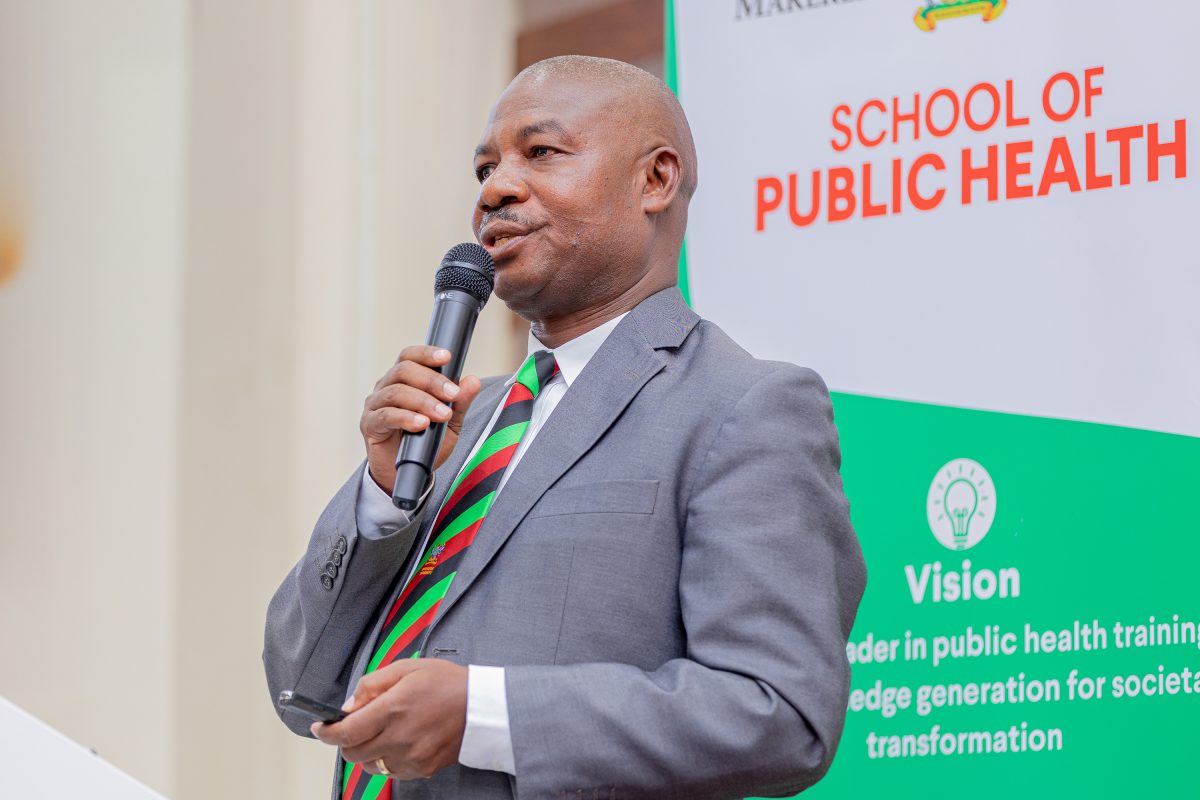
Dr. Simon Kasasa, a Senior Lecturer at MakSPH and Principal Investigator of this study presenting the findings. Release of findings of Uganda National Prevalence Survey on Tuberculosis, HIV, and COVID-19 conducted by Makerere University School of Public Health (MakSPH) in conjunction with the Uganda Prisons Services (UPS) and the Ministry of Health—with funding from the U.S. President’s Emergency Plan for AIDS Relief (PEPFAR) and technical support from the U.S. Centers for Disease Control and prevention (CDC), 15th May 2025, MakSPH Auditorium, Makerere University, Kampala Uganda, East Africa.
Dr. Simon Kasasa, a Senior Lecturer at MakSPH and Principal Investigator of this study presenting the findings.

UPS consists of 257 prisons spread over 16 administrative regions with an average prisoner population of 56,400 (95% male), accommodation capacity of 16,612 (340%), and 9,904 staff (29% female).

HIV prevalence among prisoners was also alarmingly high at 11%, twice that of the general population. Notably, female persons in prison (PIP) had the highest HIV rates at 21%, compared to 11% for male PIP and just 2% among prison staff. However, the data also showed a significant drop in overall HIV prevalence within prisons, falling from 15% in 2013 to 11% in 2023, with the most dramatic decline among staff, from 12% to 2%.

A section of officers keenly follows proceedings. Release of findings of Uganda National Prevalence Survey on Tuberculosis, HIV, and COVID-19 conducted by Makerere University School of Public Health (MakSPH) in conjunction with the Uganda Prisons Services (UPS) and the Ministry of Health—with funding from the U.S. President’s Emergency Plan for AIDS Relief (PEPFAR) and technical support from the U.S. Centers for Disease Control and prevention (CDC), 15th May 2025, MakSPH Auditorium, Makerere University, Kampala Uganda, East Africa.
A section of officers keenly follows proceedings.

Dr. George Tumusinze, a Program Manager and Research Associate, pointed out that although 92% of people with HIV in prisons know their status and 99% are receiving antiretroviral therapy (ART), only 70% have successfully reduced the virus in their bodies, highlighting important issues with how well the treatment is working.
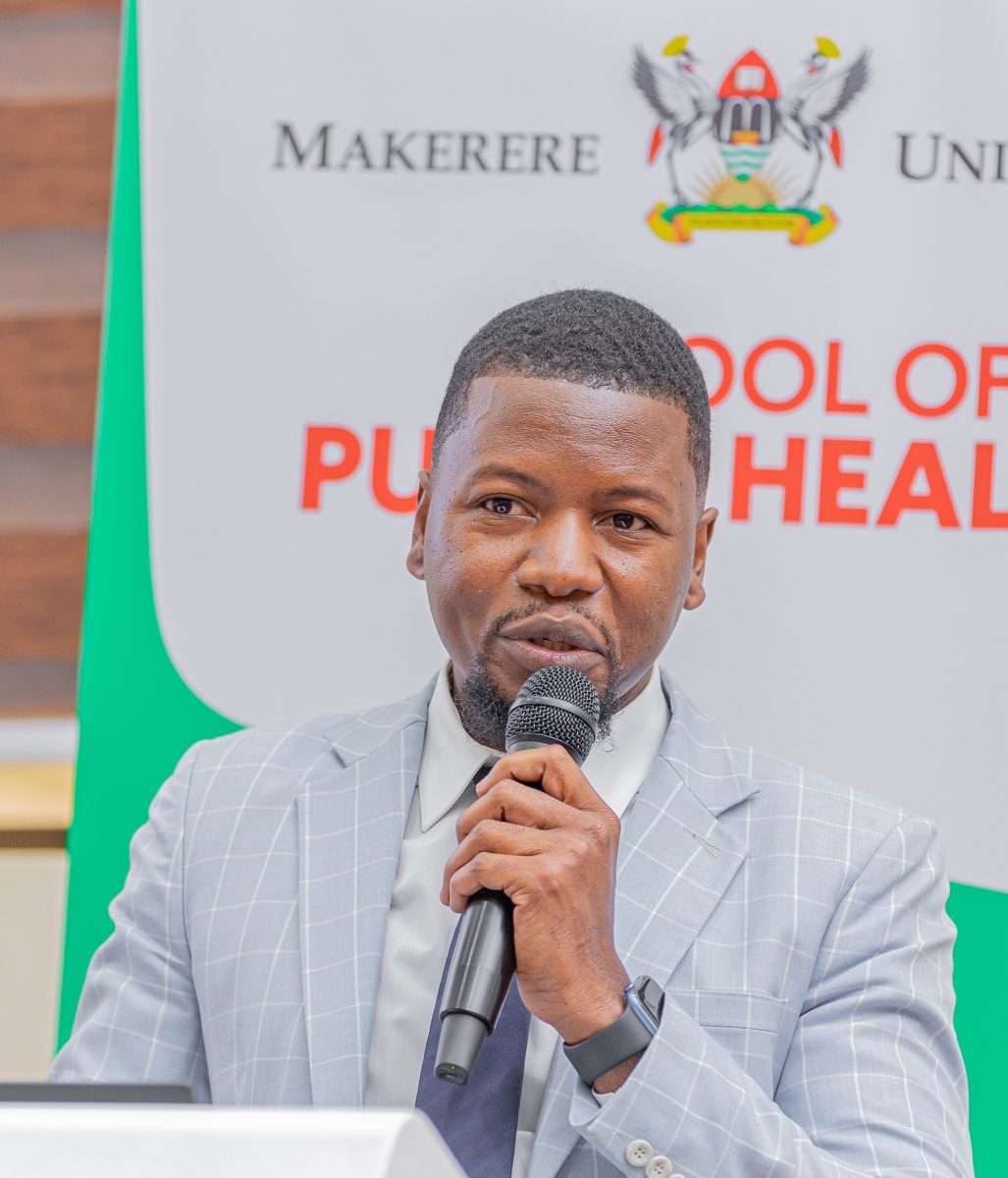
Dr. George Tumusinze, a Program Manager and Research Associate presenting results of HIV prevalence and burden in Uganda Prisons. Release of findings of Uganda National Prevalence Survey on Tuberculosis, HIV, and COVID-19 conducted by Makerere University School of Public Health (MakSPH) in conjunction with the Uganda Prisons Services (UPS) and the Ministry of Health—with funding from the U.S. President’s Emergency Plan for AIDS Relief (PEPFAR) and technical support from the U.S. Centers for Disease Control and prevention (CDC), 15th May 2025, MakSPH Auditorium, Makerere University, Kampala Uganda, East Africa.
Dr. George Tumusinze, a Program Manager and Research Associate presenting results of HIV prevalence and burden in Uganda Prisons.

Mr. Samuel Akena, the Deputy Commissioner General of Prisons, echoed these concerns by stating that the survey represents a significant milestone for the Prisons, not only in terms of data collection but also in Uganda’s journey towards achieving equity, justice, and the right to health for all. “This survey is historic. It represents one of the most comprehensive efforts to understand the health status of people in prisons in Uganda.” He emphasized the necessity of a collective and bold response, urging that “the time for piecemeal responses is over.”

Dr. Charles Olaro, Director General of Health Services at the Ministry of Health, emphasized the urgency of the situation, stating, “As we gather today to reflect on the findings of this important survey, we must recognize the urgent need for action in our fight against tuberculosis (TB) in Uganda. Despite our efforts, we are still grappling with the burden of this disease, and our progress toward eliminating it by 2030 has not been as swift as we had hoped.” He pointed out that the survey serves as a critical baseline that will shape future responses and guide resource allocation.

Dr. Charles Olaro, Director General of Health Services at the Ministry of Health interacts with officers of the Uganda Prisons Service, at the MakSPH Auditorium on Thursday. Release of findings of Uganda National Prevalence Survey on Tuberculosis, HIV, and COVID-19 conducted by Makerere University School of Public Health (MakSPH) in conjunction with the Uganda Prisons Services (UPS) and the Ministry of Health—with funding from the U.S. President’s Emergency Plan for AIDS Relief (PEPFAR) and technical support from the U.S. Centers for Disease Control and prevention (CDC), 15th May 2025, MakSPH Auditorium, Makerere University, Kampala Uganda, East Africa.
Dr. Charles Olaro, Director General of Health Services at the Ministry of Health interacts with officers of the Uganda Prisons Service, at the MakSPH Auditorium on Thursday.

HIV prevalence among prison staff members was the lowest, at just 2%, reflecting a significant achievement in workplace health. Dr. Daniel Byamukama, Head of HIV Prevention at the Uganda AIDS Commission, praised prison authorities for their efforts, noting the remarkable progress over the past decade. In the first survey in 2013, only 34% of HIV-positive staff on treatment had achieved viral load suppression. Today, that figure has reached an impressive 100%, underscoring the impact of sustained prevention and care efforts.

While the prison HIV program has shown effectiveness—evidenced by a drop in prevalence from 15% to 11% among the prisoners over the past decade—Mr. Akena stressed the importance of prioritizing gender-responsive strategies in health interventions.

“Diseases do not recognize bars or borders. They thrive in environments where conditions are poor and resources are scarce. Women in prison face disproportionately higher risks, yet often remain invisible in program planning. This is not acceptable. If we are serious about health equity, we must prioritize gender-responsive strategies — within prison health systems and beyond,” Mr. Akena.
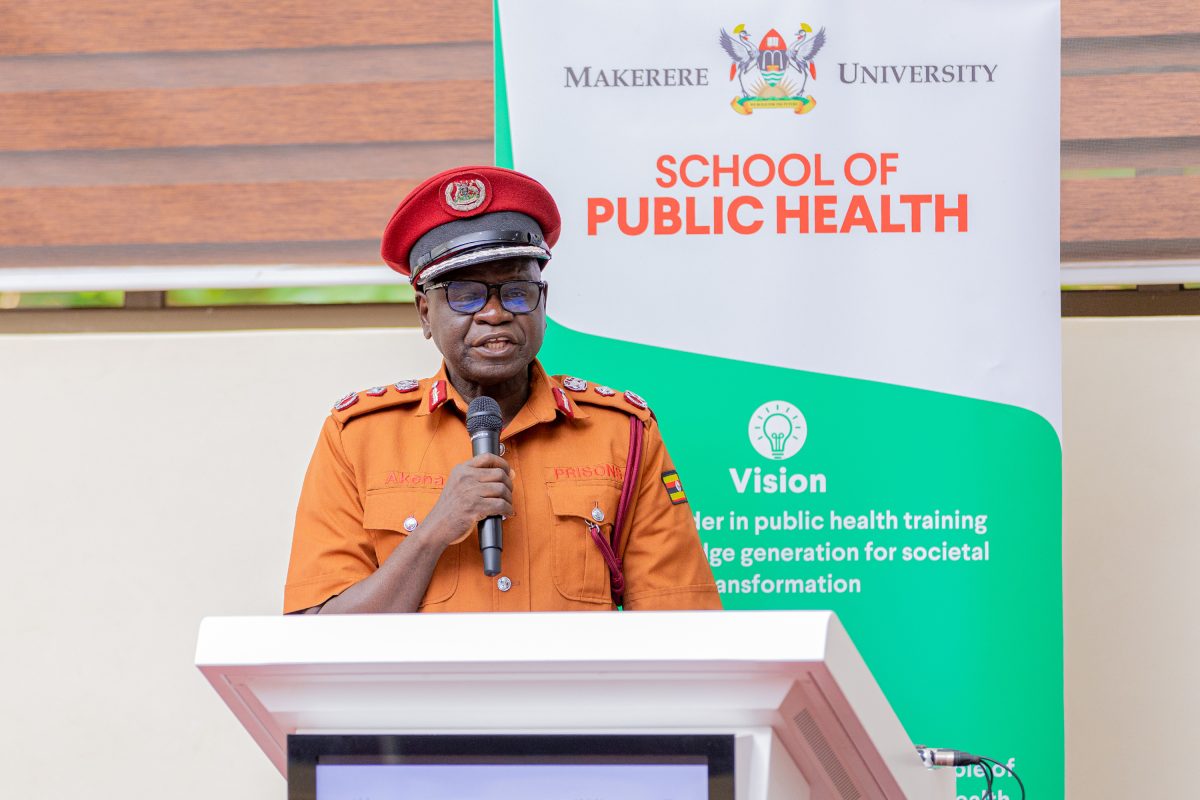
Mr. Samuel Akena, the Deputy Commissioner General of Prisons speaking at the release of results of the survey. Release of findings of Uganda National Prevalence Survey on Tuberculosis, HIV, and COVID-19 conducted by Makerere University School of Public Health (MakSPH) in conjunction with the Uganda Prisons Services (UPS) and the Ministry of Health—with funding from the U.S. President’s Emergency Plan for AIDS Relief (PEPFAR) and technical support from the U.S. Centers for Disease Control and prevention (CDC), 15th May 2025, MakSPH Auditorium, Makerere University, Kampala Uganda, East Africa.
Mr. Samuel Akena, the Deputy Commissioner General of Prisons speaking at the release of results of the survey.

CDC Uganda Director Dr. Adetinuke (Mary) Boyd reinforced the significance of the survey in addressing public health risks. “In Uganda, CDC partners are helping to ensure inmates stay healthy during custody. This work facilitates safe reintegration into their communities, mitigates disease transmission to the general population, and reduces public health risks like untreated TB,” she stated. Dr. Boyd highlighted the role of PEPFAR in tackling critical global health threats, asserting that the survey offers helpful data for enhancing health collaboration within this vulnerable population.

The U.S. CDC has been supporting Uganda Prisons Services to provide comprehensive HIV/AIDS, STI, and TB prevention, care, and treatment services for the last 15 years (2010–2025), totaling over $18,046,263 in investment—including $550,000 to this study alone, through the Makerere University School of Public Health. The program supports capacity building, scale-up, and health system strengthening efforts in HIV/TB testing, care, and support for prisoners and prison staff, plus surrounding communities.

Part of the audience follows proceedings during dissemination. Release of findings of Uganda National Prevalence Survey on Tuberculosis, HIV, and COVID-19 conducted by Makerere University School of Public Health (MakSPH) in conjunction with the Uganda Prisons Services (UPS) and the Ministry of Health—with funding from the U.S. President’s Emergency Plan for AIDS Relief (PEPFAR) and technical support from the U.S. Centers for Disease Control and prevention (CDC), 15th May 2025, MakSPH Auditorium, Makerere University, Kampala Uganda, East Africa.
Part of the audience follows proceedings during dissemination.

With 80% of prison wards overcrowded and 95% lacking adequate natural ventilation, the conditions in which these individuals live exacerbate the spread of infectious diseases, public health specialists have warned. This survey underlines the urgent need for systemic changes within the prison health system, as well as a commitment to uphold the rights and health of all individuals, regardless of their circumstances.

As Uganda grapples with these alarming statistics, the call to action is clear. Stakeholders must come together to implement effective health interventions, improve screening and treatment protocols, and ensure that the rights of incarcerated individuals are respected. The health of the general population is inextricably linked to the health of those within prison walls, and addressing these challenges is not just a moral imperative but a public health necessity.

Professor Rhoda Wanyenze compares notes with Mr. Samuel Akena during the event. Release of findings of Uganda National Prevalence Survey on Tuberculosis, HIV, and COVID-19 conducted by Makerere University School of Public Health (MakSPH) in conjunction with the Uganda Prisons Services (UPS) and the Ministry of Health—with funding from the U.S. President’s Emergency Plan for AIDS Relief (PEPFAR) and technical support from the U.S. Centers for Disease Control and prevention (CDC), 15th May 2025, MakSPH Auditorium, Makerere University, Kampala Uganda, East Africa.
Professor Rhoda Wanyenze compares notes with Mr. Samuel Akena during the event.

Professor Rhoda Wanyenze, one of the investigators and Dean of the School of Public Health, asserts that the Survey findings are a wake-up call for stakeholders to prioritize health equity and justice for society’s most vulnerable members.

Prof. Wanyenze advocated for improved TB screening methods and institutionalization of regular mass TB screening using the WHO-recommended advanced diagnostic tools like digital chest X-rays with Computer-Aided Detection (CAD), as well as molecular diagnostics like GeneXpert and TB LAM, noting that traditional symptom-based screening missed nearly half of TB cases. “The use of molecular diagnostics like GeneXpert significantly improved case detection in our study,” she added, emphasizing the importance of timely diagnosis and treatment.
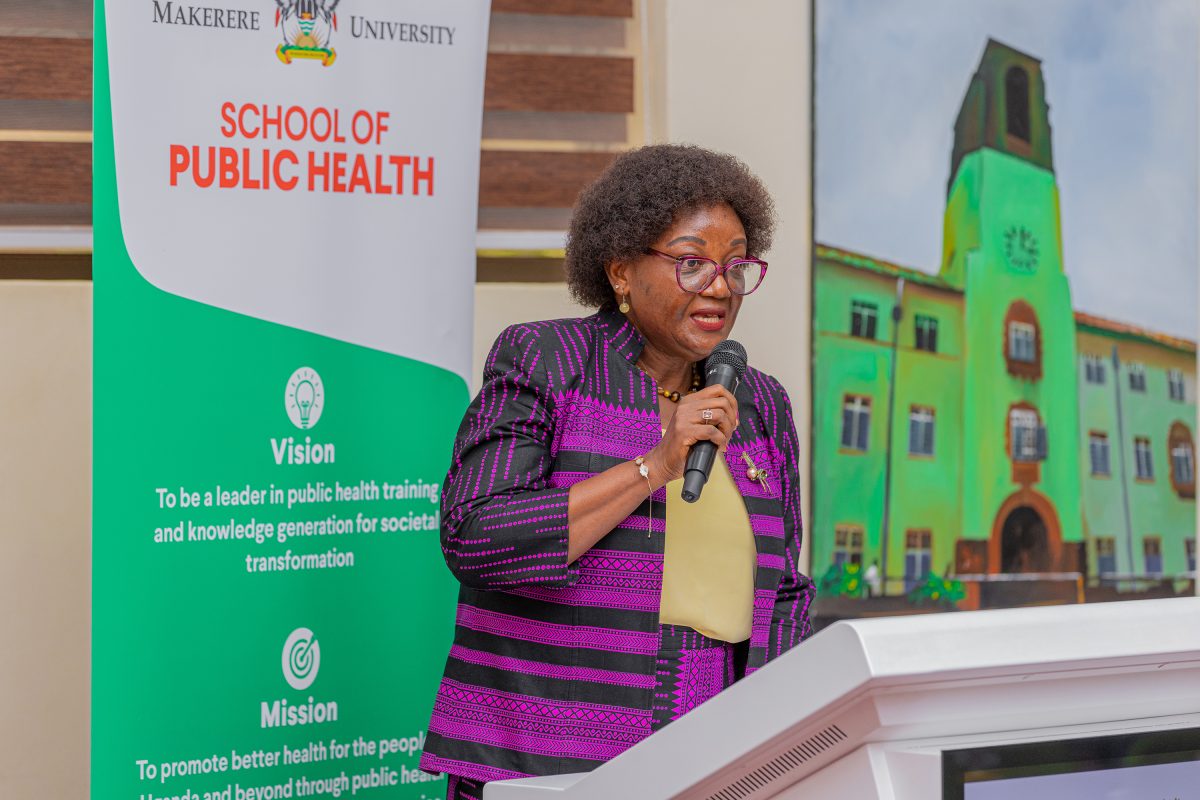
Professor Rhoda Wanyenze, one of the investigators and Dean of the School of Public Health delivering her remarks. Release of findings of Uganda National Prevalence Survey on Tuberculosis, HIV, and COVID-19 conducted by Makerere University School of Public Health (MakSPH) in conjunction with the Uganda Prisons Services (UPS) and the Ministry of Health—with funding from the U.S. President’s Emergency Plan for AIDS Relief (PEPFAR) and technical support from the U.S. Centers for Disease Control and prevention (CDC), 15th May 2025, MakSPH Auditorium, Makerere University, Kampala Uganda, East Africa.
Professor Rhoda Wanyenze, one of the investigators and Dean of the School of Public Health delivering her remarks.

Uganda Prisons Service, in partnership with the Ministry of Health, has so far installed 14 GeneXpert machines in medium- to high-volume prison health facilities.

While some, including Members of Parliament, have raised concerns about the potential infringement on individual rights through mandatory TB testing in prisons, Dr. James Kisambu, the Commissioner for Prison Health Services, noted that it is now apparent, with these findings, for everyone to appreciate that in such confined settings, the risk of transmission is extraordinarily high. TB testing in these settings is not just a medical practice but also a crucial public health precaution that protects both prisoners and the wider community.

“Prisons are high-risk, high-transmission environments where one undetected case can rapidly escalate into an outbreak. In such settings, the right to refuse testing must be weighed against the right of others to be protected from infection. Mandatory TB screening, when done with dignity and linked to prompt treatment, is not a violation of rights — it is an essential public health measure to protect both people in prison and the communities they return to,” said Dr. James Kisambu.
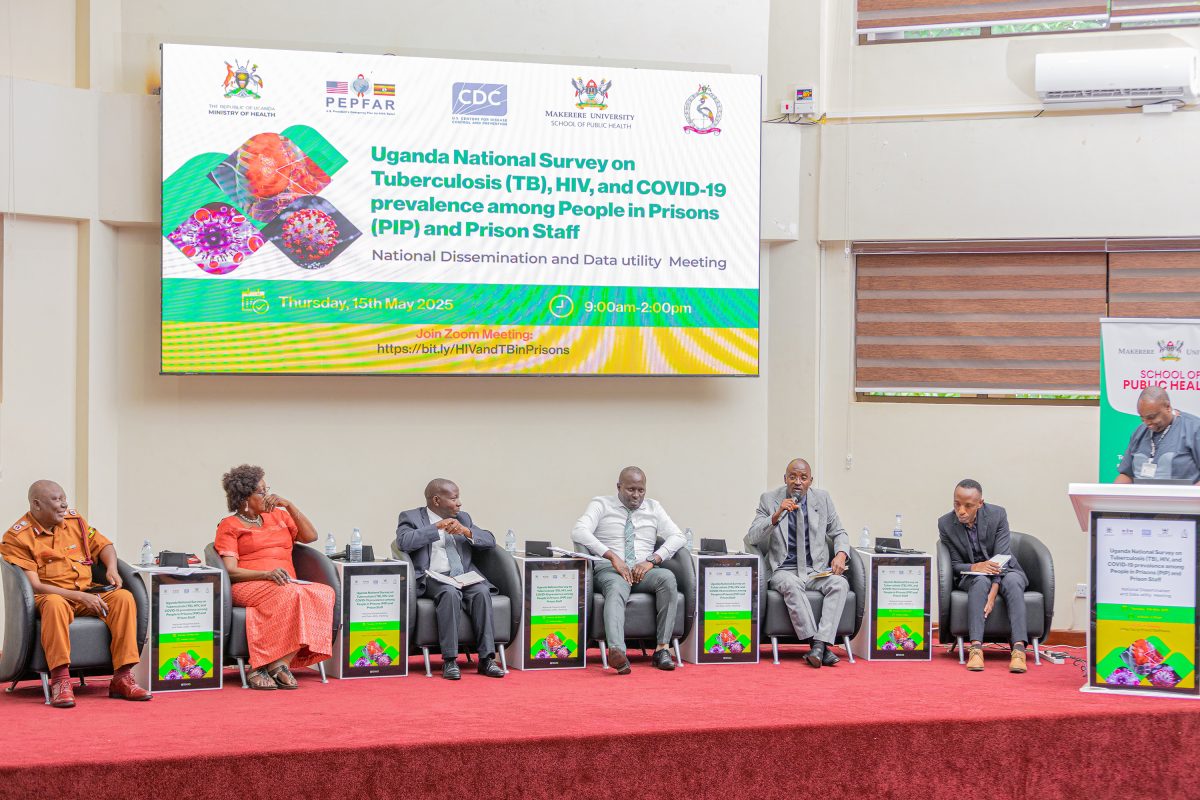
Dr. James Kisambu, the Commissioner for Prison Health Services speaking during a panel discussion at the dissemination and data utility meeting at the MakSPH Auditorium. Release of findings of Uganda National Prevalence Survey on Tuberculosis, HIV, and COVID-19 conducted by Makerere University School of Public Health (MakSPH) in conjunction with the Uganda Prisons Services (UPS) and the Ministry of Health—with funding from the U.S. President’s Emergency Plan for AIDS Relief (PEPFAR) and technical support from the U.S. Centers for Disease Control and prevention (CDC), 15th May 2025, MakSPH Auditorium, Makerere University, Kampala Uganda, East Africa.
Dr. James Kisambu, the Commissioner for Prison Health Services speaking during a panel discussion at the dissemination and data utility meeting at the MakSPH Auditorium.

The researchers from MakSPH were; Dr. Simon Kasasa, Associate Professor Esther Buregyeya, Dr. George Tumusinze, Dr. Simon Walusimbi, Dr. Dick Kasozi, Dr. Ronald Senyonga, John Baptist Bwanika, Prossy Nabaterega and Professor Rhoda Wanyenze.

Additionally, the study team from the Uganda Prisons Service comprised of Dr. Leonard Marungu, Charles Butagasa, Dr. James Kisambu and Dr. Johnson Byabashaiza, the Commissioner General of Prisons.

Finally, Dr. Deus Lukoye, Dr. Julius Ssempiira, Charles Kavuma, Rise Nakityo, Samuel Sendagala, Grace Nantege, Lisa Mills, Dr. Lisa Nelson, Kenneth Mwambi from U.S. CDC Uganda/Atlanta and PEPFAR USG agencies, and George William Kasule, Didas Tugumisirize, Dr. Simon Muchuro, Professor Moses Joloba, Dr. Turyahabwe Stavia from the Uganda Ministry of Health National TB and Leprosy Program (NTLP) completed the team.

View on MakSPH

Davidson Ndyabahika

Health

Course Announcement: Certificate in Water, Sanitation and Hygiene (CWASH) – 2026

Published

on

Graduands of the 2025 Certificate Course in Water, Sanitation and Hygiene (CWASH) pose for a group photo at the Makerere University School of Public Health, following the successful completion of the short course in July 2025. Makerere University School of Public Health, Mulago Hospital Complex, Kampala Uganda, East Africa.

Update: Application deadline extended to 30th April 2026

Makerere University School of Public Health (MakSPH) is pleased to announce the Certificate Course in Water, Sanitation and Hygiene (CWASH) – 2026.

This intensive and practical short course is designed to strengthen the knowledge, skills, and attitudes of professionals involved in the planning, implementation, and management of Water, Sanitation and Hygiene (WASH) services. The programme responds to the growing demand for competent WASH practitioners in local government, non-governmental organisations, and the private sector.

Course Highlights

  • Duration: 8 weeks (01 June – 24 July 2026)
  • Mode: Day programme (classroom-based learning and field attachment)
  • Fees:
    • UGX 900,000 (Ugandans / East African Community)
    • USD 500 (International participants)
  • Application deadline: Thursday, 30 April 2026

Who Should Apply?

  • Practising officers in the WASH sector
  • Environmental Health workers seeking Continuous Professional Development (CPD)
  • Applicants with at least UACE (or equivalent) and one year of WASH-related work experience

More Information

Additional details on course structure, modules, and delivery are available at: https://sph.mak.ac.ug/academics/water-sanitation-and-hygiene-wash

Important Note for Applicants

Attached to this announcement, interested persons will find:

  1. The course flier, providing comprehensive programme details, and
  2. The application form, which should be completed and returned to MakSPH together with the required supporting documents.

For full course details, application procedures, and contact information, please carefully review the attached documents. Eligible and interested applicants are strongly encouraged to apply before the deadline and take advantage of this opportunity to build practical competence in WASH service delivery.

View on MakSPH

Mak Editor

Continue Reading

Health

Makerere’s Quiet Case for Investment in Public Health Infrastructure

Published

on

Side elevation of the Makerere University School of Public Health (MakSPH) Phase II complex under construction on the Main Campus. Construction of Phase II of the Makerere University School of Public Health (MakSPH) Complex, Eastern Gate, Main Campus, Kampala Uganda, East Africa.

Makerere’s School of Public Health (MakSPH) is expanding faster than it can house itself. It now hosts more than 1,000 students, runs programmes across multiple countries, and anchors a large share of the University’s research output. Yet parts of its operation still spill into rented space, costing over $113,000 a year, because the infrastructure has not kept pace with its growth.

That constraint sits uneasily with the School’s economic weight. Health research accounts for more than half of Makerere University’s academic output, making it one of the University’s most productive engines. As Vice Chancellor Barnabas Nawangwe put it, “An educated population is a healthy population, and an educated and healthy population is a prosperous population.”

Beyond the university, health is not just a social outcome but a driver of economic performance. Healthier populations are more productive, more resilient, and less costly to sustain. Investments in public health, whether in prevention, systems, or infrastructure, raise an economy’s productive capacity, not just improve outcomes.

A construction worker undertakes metal fabrication works at the Makerere University School of Public Health (MakSPH) building site. Construction of Phase II of the Makerere University School of Public Health (MakSPH) Complex, Eastern Gate, Main Campus, Kampala Uganda, East Africa.
A construction worker undertakes metal fabrication works at the Makerere University School of Public Health (MakSPH) building site.

Institutions that generate public health knowledge and train professionals are not peripheral to growth; they are part of its foundation.

It is this logic that is shaping how Makerere’s School of Public Health is positioning itself. At its centre is a new, unfinished complex on the University’s main campus, intended to anchor the School’s next phase as a regional hub for research, training, and policy support. But like much of the system it supports, it is being built gradually, in a “build-as-you-go” approach constrained as much by funding realities as by design.


Construction of Phase II of the Makerere University School of Public Health (MakSPH) Complex, Eastern Gate, Main Campus, Kampala Uganda, East Africa.

Construction of Phase II of the MakSPH complex is now at an advanced stage, with progress recorded across all sections of the site. As of March 2026, Phase 2B is nearing completion at 98%, while Phase 2A stands at 89%, and Phase 2C at 69%, each tracking close to or slightly ahead of planned targets. Current works are concentrated on interior finishes—including tiling, terrazzo installation, and external rendering—as well as preparations for lift installation, signaling a transition from structural works to final detailing. The project team is working toward a practical completion date of August 31, 2026, with timelines calibrated to align with broader resource flows and implementation considerations.

Construction of Phase II of the Makerere University School of Public Health (MakSPH) Complex, Eastern Gate, Main Campus, Kampala Uganda, East Africa.

Six years ago, in February 2020, construction began on what will be the new home of the School of Public Health. The building, a permanent, purpose-built public health facility on Makerere’s main campus, will accommodate a growing student body, provide space for doctoral and postdoctoral fellows, and strengthen the University’s ability to respond to Africa’s most pressing public health challenges.

Professor David Serwadda, Professor Emeritus at Makerere University and Chair of the MakSPH Infrastructure Fundraising Committee, said the construction journey reflects the School’s “ambition, intent, and courage”—a bold step despite limited resources. He was speaking at a public lecture on health financing held at Makerere University on April 9, 2026.

But the ambition behind the project is not modest. “We are not building for today—we are building for the future,” said Professor David Serwadda, reflecting on a decision that shaped the entire construction effort. “We need to build for the next 100 years.”

Professor David Serwadda, Professor Emeritus at Makerere University and Chair of the MakSPH Infrastructure Fundraising Committee, speaks at a public lecture on health financing for Uganda’s future, held on April 9, 2026. Construction of Phase II of the Makerere University School of Public Health (MakSPH) Complex, Eastern Gate, Main Campus, Kampala Uganda, East Africa.
Professor David Serwadda, Professor Emeritus at Makerere University and Chair of the MakSPH Infrastructure Fundraising Committee, speaks at a public lecture on health financing for Uganda’s future, held on April 9, 2026.

That long view helps explain both the scale of the project and the risks taken to start it. When construction began, the School did not have the full funding. “We started with about a third of the required budget,” Serwadda said.

The approach was not without setbacks. A major grant from USAID, worth over a million dollars, was later withdrawn, midway through the construction, due to the closure of USAID. “We received what is called a ‘Dear John letter,’” he recalled. “At that moment, we felt the situation was a major blow, almost terminal for the project.”

But the project did not stop. It adjusted. “We said, let us continue, piecemeal,’” he said. “Finish the auditorium first, use it, and keep building the rest.”

“We have come a long way as the School of Public Health,” said Professor Rhoda Wanyenze, the Dean. “We are proud of that history, but we also recognize that it comes with responsibility.”

Professor Rhoda Wanyenze, Dean of the Makerere University School of Public Health, speaks at a public lecture on health financing for Uganda’s future, held on April 9, 2026. Construction of Phase II of the Makerere University School of Public Health (MakSPH) Complex, Eastern Gate, Main Campus, Kampala Uganda, East Africa.
Professor Rhoda Wanyenze, Dean of the Makerere University School of Public Health, speaks at a public lecture on health financing for Uganda’s future, held on April 9, 2026.

She argued that responsibility is no longer confined to Uganda. With ongoing collaborative work in more than 25 African countries currently, the Dean says this is “a responsibility to provide leadership in public health not only in Uganda but across the continent.”

The scale of that growth has been visible from what was once a small training unit in the Faculty of Medicine in the 1950s, which has expanded into 12 academic programmes and more than 1,000 students.

“When I came back for my public health training, we were about 40 students,” she said. “Now, we have more than 1,000.” “Public health is growing and evolving,” Wanyenze said. “And we are doing our best to develop the skills needed for this changing landscape.”

That includes new areas such as health informatics and data science, driven by the digitisation of health systems and the growing role of data in decision-making and AI. The School is already coordinating regional platforms on digital health, linking multiple countries in shared learning and practice.

But this growth has outpaced the physical systems needed to sustain it. For the University leadership, the implications extend beyond infrastructure.

“One of the most effective ways to invest in health in Uganda is to invest properly in Makerere University,” said Vice Chancellor Barnabas Nawangwe. “We must recognize Makerere as a research-led university with a special national role—not fund it like any other institution or department. Makerere is one of the government’s greatest assets. Invest in her, and the returns will exceed expectations.”

Professor Nawangwe hailed Dr. Ramathan Ggoobi, the Permanent Secretary to the Treasury, who delivered a keynote on investing in health for Uganda’s future in view of Vision 2040. “I wish to thank Dr. Ramathan Ggoobi and his team for their personal intervention in allocating resources in next year’s budget to complete the new School of Public Health building. That support is deeply appreciated,” he said.

Vice Chancellor Professor Barnabas Nawangwe speaks at a public lecture on health financing for Uganda’s future on April 9, 2026. Construction of Phase II of the Makerere University School of Public Health (MakSPH) Complex, Eastern Gate, Main Campus, Kampala Uganda, East Africa.
Vice Chancellor Professor Barnabas Nawangwe speaks at a public lecture on health financing for Uganda’s future on April 9, 2026.

Uganda’s progress in health outcomes is evident, but uneven. Life expectancy has risen significantly from about 50 years in 2000 to roughly 68.8 years in 2024, according to the Permanent Secretary to the Treasury, Ramathan Ggoobi. Yet the gains sit alongside persistent financial strain on households. About 4% of Ugandans still spend more than a quarter of their consumption on healthcare, pushing many into poverty as a result of illness.

For Ggoobi, this points to a structural gap that recurrent government spending alone cannot close. “We must mobilise long-term domestic capital without adding fiscal risk,” he argued, pointing to the need for more sustainable financing mechanisms. Central to this is the gradual design and rollout of a national health insurance scheme. Evidence from countries such as Rwanda, Kenya, and Ghana suggests that well-structured contributory models can expand coverage while reducing catastrophic out-of-pocket spending.

Dr. Ramathan Ggoobi with Professors Serwadda, Wanyenze and Nawangwe. Construction of Phase II of the Makerere University School of Public Health (MakSPH) Complex, Eastern Gate, Main Campus, Kampala Uganda, East Africa.

“My Ministry and the School of Public Health must be partners. … Evidence framed in fiscal terms drives policy,” said Ggoobi, stressing the need for locally grounded solutions. “What works in Ghana might not work here. We need a model that fits Uganda.”

Uganda’s current macroeconomic conditions, relatively low inflation, currency stability, and expanding private credit may provide a window to move in that direction.

View on MakSPH

Davidson Ndyabahika

Continue Reading

Health

Health Is Not Charity: Inside Uganda’s Treasury Rethink on Financing

Published

on

The Chancellor-Hon. Dr. Crispus Kiyonga presents Makerere's Century Publication to Dr. Ramathan Ggoobi on 9th April 2026. Public lecture and high-level dialogue on health financing organised by Makerere University School of Public Health (MakSPH) in collaboration with the Ministry of Health and the Ministry of Finance, Planning, and Economic Development, Keynote: Dr. Ramathan Ggoobi, PSST, Theme “Investing in Health for Uganda’s Future: Delivering Vision 2040 through Smart and Sustainable Health Financing”, 9th April 2026, MakSPH Auditorium, Main Campus, Kampala Uganda, East Africa.

Uganda’s health system is entering a new phase—one where the biggest challenge is no longer building it, but sustaining it. External funding is tightening. Domestic resources are under pressure. Demand for care is rising faster than both.

In this new reality, health is no longer just a social priority but a financing problem and a test of economic strategy.

For years, the system expanded on government investment, backed by strong external support.  Infrastructure grew. Services followed. But that model is now under strain. Expectations are rising. Citizens want better care, closer to where they live, and without the financial shock that so often comes with illness.

Uganda is already investing in health. The real question is whether that investment is sustainable and whether it is delivering value.

It was against this backdrop that policymakers, academics, and practitioners gathered at Makerere University on April 9 for a public lecture and high-level dialogue on health financing. At the centre of the discussion was a keynote by Dr. Ramathan Ggoobi, the Permanent Secretary to the Treasury under the theme “Investing in Health for Uganda’s Future: Delivering Vision 2040 through Smart and Sustainable Health Financing.”

The event was organised by Makerere University School of Public Health (MakSPH) in collaboration with the Ministry of Health and the Ministry of Finance, Planning, and Economic Development.

Dr. Ggoobi does not think about health the way most people in government do. He is not persuaded by the language of welfare. When he speaks about health, he reaches for the language of growth, productivity, and national wealth. In his view, the sector is not a cost centre. It is an economic engine.

Dr. Ramathan Ggoobi, Permanent Secretary and Secretary to the Treasury, delivers his keynote address on health financing at Makerere University on Thursday. Public lecture and high-level dialogue on health financing organised by Makerere University School of Public Health (MakSPH) in collaboration with the Ministry of Health and the Ministry of Finance, Planning, and Economic Development, Keynote: Dr. Ramathan Ggoobi, PSST, Theme “Investing in Health for Uganda’s Future: Delivering Vision 2040 through Smart and Sustainable Health Financing”, 9th April 2026, MakSPH Auditorium, Main Campus, Kampala Uganda, East Africa.
Dr. Ramathan Ggoobi, Permanent Secretary and Secretary to the Treasury, delivers his keynote address on health financing at Makerere University on Thursday.

Health is not merely a social sector issue. It is an economic transformation issue, a productivity issue, and a national competitiveness issue,” he said, arguing that no country has achieved sustained growth without investing in human capital. Globally, human capital accounts for nearly 70% of national wealth. The World Health Organization (2021) estimates that every dollar invested in health can return four to nine dollars in productivity gains.

Investment in health is not charity. It is growth finance. So, my first message is to treat health spending as an investment, not as consumption. Every shilling must buy measurable economic and social returns,” he emphases.

His views reveal a shift in how Uganda’s Treasury thinks about health financing. Spending must justify itself. Investments must deliver returns. And inefficiency is no longer just a technical issue but a fiscal problem.

Ggoobi’s worldview is shaped by the idea that Uganda’s long-term growth ambitions under Vision 2040, which is 13 years away, to achieve what he describes as a tenfold expansion to a $500 billion economy, will be decided not just by infrastructure or industry but by the quality of its human capital.

Globally, he notes, human capital accounts for the bulk of national wealth. Health, therefore, is not peripheral to development. It is central to it.

If health is an investment, then it must generate returns. If it does not, then something in the system is not working. “Every shilling must buy measurable economic and social returns,” he said.

Dr. Ramathan Ggoobi, PSST (C), was received by MakSPH Dean Prof. Rhoda Wanyenze and Prof. Emeritus David Serwadda ahead of his keynote address and visit to the new School of Public Health facilities. Public lecture and high-level dialogue on health financing organised by Makerere University School of Public Health (MakSPH) in collaboration with the Ministry of Health and the Ministry of Finance, Planning, and Economic Development, Keynote: Dr. Ramathan Ggoobi, PSST, Theme “Investing in Health for Uganda’s Future: Delivering Vision 2040 through Smart and Sustainable Health Financing”, 9th April 2026, MakSPH Auditorium, Main Campus, Kampala Uganda, East Africa.
Dr. Ramathan Ggoobi, PSST (C), was received by MakSPH Dean Prof. Rhoda Wanyenze and Prof. Emeritus David Serwadda ahead of his keynote address and visit to the new School of Public Health facilities.

This is where the optimism gives way to unease. Countries that have achieved and sustained middle-income status did so through deliberate, sustained, evidence-driven investments in human capital.

Uganda is working within tight fiscal limits. The national budget for 2025/26 stands at Shs 72.38 trillion, with about Shs 5.87 trillion going to health.

Government spending on health has increased over time, rising from about Shs 2.8 trillion a few years ago to Shs 4.4 trillion today. But even with this growth, spending per person is still low, around $50 a year, less than half of what is often needed to provide basic health services.

Not all the money is used efficiently. Global estimates suggest that weak systems, poor coordination, and procurement challenges can cause up to a third of health spending to be lost.


According to Dr. Ggoobi, Uganda has made notable progress in strengthening its health system, driven by sustained public investment. Life expectancy has risen from about 50 years in 2000 to approximately 68.8 years in 2024, an increase of over 18 years. Access to services has also improved significantly, with about 91 percent of Ugandans now living within five kilometres of a health facility, while income poverty has declined from 24.5 percent in 2010 to 16 percent.

On the service delivery side, the government has introduced the malaria vaccine for children under five and rolled out electronic medical records across national and regional referral hospitals. Strategic investments have also been made, including 16 high-capacity oxygen plants, three regional blood banks, CT scan equipment in 14 of 16 regional referral hospitals, and 20 digital X-ray machines in general hospitals, with remaining gaps expected to be closed in the next budget. Together, he noted, these efforts demonstrate that sustained investment in health is yielding tangible results.

Beneath that progress, Dr. Ggoobi sees a health financing structure that is fundamentally unstable, noting that external partners still finance as much as 40–45 percent of health expenditure. Government contributes about 22 percent, household’s 31 percent, and insurance remains marginal at less than five percent. This balance, Ggoobi argues, is dangerous. It leaves the system exposed to shocks from outside while pushing risk onto those least able to bear it.

But the issue that troubles him most is government inefficiency. His priorities are to increase and protect domestic health financing, mobilise long-term capital, and improve efficiency.

We are wasteful even with the little we have. Procurement is a major problem—many fights in government are not about mandate but about procurement. That is why we are moving all entities onto an electronic procurement system to improve transparency, reduce leakage, and ensure accountability,” said Dr. Ggoobi.

The government has enrolled 38 entities on the electronic procurement system. Full adoption is expected by mid-2026.

If you have good audits and we implement their recommendations, then we can expect positive outcomes. Number two is e-government, reducing human contact where it is not necessary. Unless you’re a doctor, you have to examine someone. Why do you have to sit in a hotel to discuss procurement? Humans must get out of discussing procurement. That’s why we are building the eGP and reviewing the procurement law. We are going back to the cabinet; we are going to remove human beings who are not necessary in the chain of procurement,” said Ggoobi.

Across the discussion, one issue drew near-unanimous agreement that prevention remains underfunded.

John Kauta, the Commissioner in charge of Health Information, Statistics, Monitoring, and Evaluation gives MoH reflections at the public lecture. Public lecture and high-level dialogue on health financing organised by Makerere University School of Public Health (MakSPH) in collaboration with the Ministry of Health and the Ministry of Finance, Planning, and Economic Development, Keynote: Dr. Ramathan Ggoobi, PSST, Theme “Investing in Health for Uganda’s Future: Delivering Vision 2040 through Smart and Sustainable Health Financing”, 9th April 2026, MakSPH Auditorium, Main Campus, Kampala Uganda, East Africa.
John Kauta, the Commissioner in charge of Health Information, Statistics, Monitoring, and Evaluation gives MoH reflections at the public lecture.

The Ministry of Health’s position, delivered through John Kauta, the Commissioner in charge of Health Information, Statistics, Monitoring, and Evaluation, is unequivocal that “the cheapest disease to treat is the one we prevent.”

Yet Uganda still spends more on treating illness than preventing it. Freddie Ssengooba, a Professor of Health Economics and Health Systems Management, MakSPH, highlighted malaria as a case study, both costly and preventable, while others pointed to rising non-communicable diseases driven by lifestyle factors.

This imbalance has fiscal consequences. Preventable diseases generate recurrent costs, crowding out other investments and reinforcing the cycle of inefficiency.

Freddie Ssengooba, a Professor of Health Economics and Health Systems Management, MakSPH. Public lecture and high-level dialogue on health financing organised by Makerere University School of Public Health (MakSPH) in collaboration with the Ministry of Health and the Ministry of Finance, Planning, and Economic Development, Keynote: Dr. Ramathan Ggoobi, PSST, Theme “Investing in Health for Uganda’s Future: Delivering Vision 2040 through Smart and Sustainable Health Financing”, 9th April 2026, MakSPH Auditorium, Main Campus, Kampala Uganda, East Africa.
Freddie Ssengooba, a Professor of Health Economics and Health Systems Management, MakSPH.

Mak Chancellor Hon. Dr. Crispus Kiyonga pushed the debate toward geography and access, citing that while Uganda’s health system was originally designed to follow administrative structures, the ambition to reach every village was never fully realised.

We must plan based on what we can sustainably afford. We cannot import another country’s system. But where shall we save the majority of our people? It is in the villages. That is where children miss school due to illness. Where young girls drop out due to a lack of basic support, like pads. So, we must choose: given limited resources, what system gives the greatest impact? When the Minister of Health asks for a CT scan—something people travel to Nairobi for—that is important. But in the village, a child needs an antimalarial. The choice is between a CT scan and basic treatment. These are tough decisions,” says Dr. Kiyonga.

Mak Chancellor Hon. Dr. Crispus Kiyonga speaks during the public lecture on health financing for Uganda. Public lecture and high-level dialogue on health financing organised by Makerere University School of Public Health (MakSPH) in collaboration with the Ministry of Health and the Ministry of Finance, Planning, and Economic Development, Keynote: Dr. Ramathan Ggoobi, PSST, Theme “Investing in Health for Uganda’s Future: Delivering Vision 2040 through Smart and Sustainable Health Financing”, 9th April 2026, MakSPH Auditorium, Main Campus, Kampala Uganda, East Africa.
Mak Chancellor Hon. Dr. Crispus Kiyonga speaks during the public lecture on health financing for Uganda.

While the country is “highly indebted” and resources are limited, the level of care that Uganda can realistically provide to its citizens should borrow from China’s early pragmatic reforms of universal access first and quality later, according to the Chancellor.

You cannot deliver health from a distance,” he said, arguing for a renewed focus on community-level access.

The Chancellor also strongly supported a shift from tertiary care to primary care. From Mulago National Referral and reducing its congestion to the village by investing in lower health facilities.

He urged the government ministries of Finance and Health to strongly collaborate with academic institutions to improve their work. “This dialogue should not be a one-off. It must be continuous. Makerere must engage the government with well-costed, risk-weighted proposals. We should build structured collaboration between universities and government so that research informs policy, and we reduce reliance on expensive foreign consultants. There is valuable research here,” said Dr. Kiyonga.

Taken together, the dialogue revealed a country’s health system in transition, from scarcity to expansion but not yet to performance.

As Ms. Jane Kyarisiima Mwesiga, Deputy Head of Public Service (Service Delivery), Office of the Prime Minister, framed it, the next phase must move “from expansion to performance, from inputs to outcomes, from financing to public value.”

Ms. Jane Kyarisiima Mwesiga, Deputy Head of Public Service (Service Delivery), Office of the Prime Minister, delivers her opening remarks on public health financing in Uganda, emphasizing government commitment to improved service delivery, governance, and increased staffing. Public lecture and high-level dialogue on health financing organised by Makerere University School of Public Health (MakSPH) in collaboration with the Ministry of Health and the Ministry of Finance, Planning, and Economic Development, Keynote: Dr. Ramathan Ggoobi, PSST, Theme “Investing in Health for Uganda’s Future: Delivering Vision 2040 through Smart and Sustainable Health Financing”, 9th April 2026, MakSPH Auditorium, Main Campus, Kampala Uganda, East Africa.
Ms. Jane Kyarisiima Mwesiga, Deputy Head of Public Service (Service Delivery), Office of the Prime Minister, delivers her opening remarks on public health financing in Uganda, emphasizing government commitment to improved service delivery, governance, and increased staffing.

But the path forward remains contested. Should Uganda prioritise insurance or direct public provision? Prevention or specialised care? Infrastructure or functionality?

The answers lie not in choosing but in sequencing, something Uganda has historically struggled to do.

Dr. Ian Clarke, a Physician, philanthropist, entrepreneur, and Chairman of Clarke Group Companies, speaking while representing the Private Sector during the dialogue, spoke emotionally on national health insurance, whose discussion has been ongoing for close to 20 years, but with minimal progress.

Dr. Ian Clarke, speaks during the panel discussion. Public lecture and high-level dialogue on health financing organised by Makerere University School of Public Health (MakSPH) in collaboration with the Ministry of Health and the Ministry of Finance, Planning, and Economic Development, Keynote: Dr. Ramathan Ggoobi, PSST, Theme “Investing in Health for Uganda’s Future: Delivering Vision 2040 through Smart and Sustainable Health Financing”, 9th April 2026, MakSPH Auditorium, Main Campus, Kampala Uganda, East Africa.
Dr. Ian Clarke, speaks during the panel discussion.

We have had studies and proposals, but many were rightly rejected because they were not practical. You cannot design a National Health Insurance scheme that looks like private insurance. There is simply not enough money in Uganda—or anywhere—to sustain that. We still think in silos: public sector and private sector. Then we ask, how do we support the private sector? There are many ways—but as has been emphasized, we must focus on prevention and equity, especially in rural areas.”

For Ssengooba, while insurance is important and long-term, its implementation needs to be phased. He called for more investments in the health sector as the first line of insurance for citizens. He also called on the government to partner with institutions such as the National Social Security Fund (NSSF), which already have systems, capacity, and reach in place to support health investments. “If we leverage institutions like NSSF—for collection, for pooling resources—we can make progress. During COVID, they demonstrated that they can support national priorities. So, we should think about how to leverage what already exists,” he says.

Freddie Ssengooba, a Professor of Health Economics and Health Systems Management, MakSPH, (Left) speaks during the dialogue. Listening in, Dr. Ian Clarke, NSSF’s Omojong, and the Moderator, Prof. Elizabeth Ekirapa. Public lecture and high-level dialogue on health financing organised by Makerere University School of Public Health (MakSPH) in collaboration with the Ministry of Health and the Ministry of Finance, Planning, and Economic Development, Keynote: Dr. Ramathan Ggoobi, PSST, Theme “Investing in Health for Uganda’s Future: Delivering Vision 2040 through Smart and Sustainable Health Financing”, 9th April 2026, MakSPH Auditorium, Main Campus, Kampala Uganda, East Africa.
Freddie Ssengooba, a Professor of Health Economics and Health Systems Management, MakSPH, (Left) speaks during the dialogue. Listening in, Dr. Ian Clarke, NSSF’s Omojong, and the Moderator, Prof. Elizabeth Ekirapa.

Stephen Omojong of the National Social Security Fund highlighted an untapped opportunity. The Fund currently manages about Shs 30 trillion in assets, with millions of contributors.

This pool, he argued, could support health financing either through insurance-linked products or long-term investment vehicles. His example of a voluntary savings scheme now has 68,000 participants and Shs. 114 billion mobilised in a year, suggesting that behavioural barriers may be less rigid than often assumed.

Stephen Omojong, Research & Product Development Manager, National Social Security Fund (NSSF) Uganda. Public lecture and high-level dialogue on health financing organised by Makerere University School of Public Health (MakSPH) in collaboration with the Ministry of Health and the Ministry of Finance, Planning, and Economic Development, Keynote: Dr. Ramathan Ggoobi, PSST, Theme “Investing in Health for Uganda’s Future: Delivering Vision 2040 through Smart and Sustainable Health Financing”, 9th April 2026, MakSPH Auditorium, Main Campus, Kampala Uganda, East Africa.
Stephen Omojong, Research & Product Development Manager, National Social Security Fund (NSSF) Uganda.

Makerere University Vice Chancellor, Professor Barnabas Nawangwe, framed the dialogue as more than an academic exercise, describing it as a call to action. He urged the government to tap into the University’s research capacity to inform strategic investments, noting that “health research constitutes more than 50% of all research at Makerere University,” with institutions like the School of Public Health and the Infectious Diseases Institute playing a central role.

Makerere University Vice Chancellor, Professor Barnabas Nawangwe, speaking at the Public Lecture. Public lecture and high-level dialogue on health financing organised by Makerere University School of Public Health (MakSPH) in collaboration with the Ministry of Health and the Ministry of Finance, Planning, and Economic Development, Keynote: Dr. Ramathan Ggoobi, PSST, Theme “Investing in Health for Uganda’s Future: Delivering Vision 2040 through Smart and Sustainable Health Financing”, 9th April 2026, MakSPH Auditorium, Main Campus, Kampala Uganda, East Africa.
Makerere University Vice Chancellor, Professor Barnabas Nawangwe, speaking at the Public Lecture.

He referred to their national impact—from supporting over 20% of Uganda’s HIV patients to operating in more than 90 districts—and emphasised that Makerere brings in over one trillion shillings annually in research income. “When you fund Makerere University,” he said, “you should understand that we are not a net consumer—we are a net producer for the country.

Taken together, the dialogue revealed a system in transition from expansion to performance, from spending to results. Uganda is no longer short of ideas, nor entirely short of resources. The real test is execution.

Whether the country can turn health spending into measurable outcomes will determine not just the future of its health system but the credibility of its economic ambitions.

Public lecture and high-level dialogue on health financing organised by Makerere University School of Public Health (MakSPH) in collaboration with the Ministry of Health and the Ministry of Finance, Planning, and Economic Development, Keynote: Dr. Ramathan Ggoobi, PSST, Theme “Investing in Health for Uganda’s Future: Delivering Vision 2040 through Smart and Sustainable Health Financing”, 9th April 2026, MakSPH Auditorium, Main Campus, Kampala Uganda, East Africa.

View on MakSPH

Davidson Ndyabahika

Continue Reading

Trending