
Education
Celebrating Prof. Livingstone Walusimbi’s Legacy: A Call for Linguistic Innovation and Digital Transformation

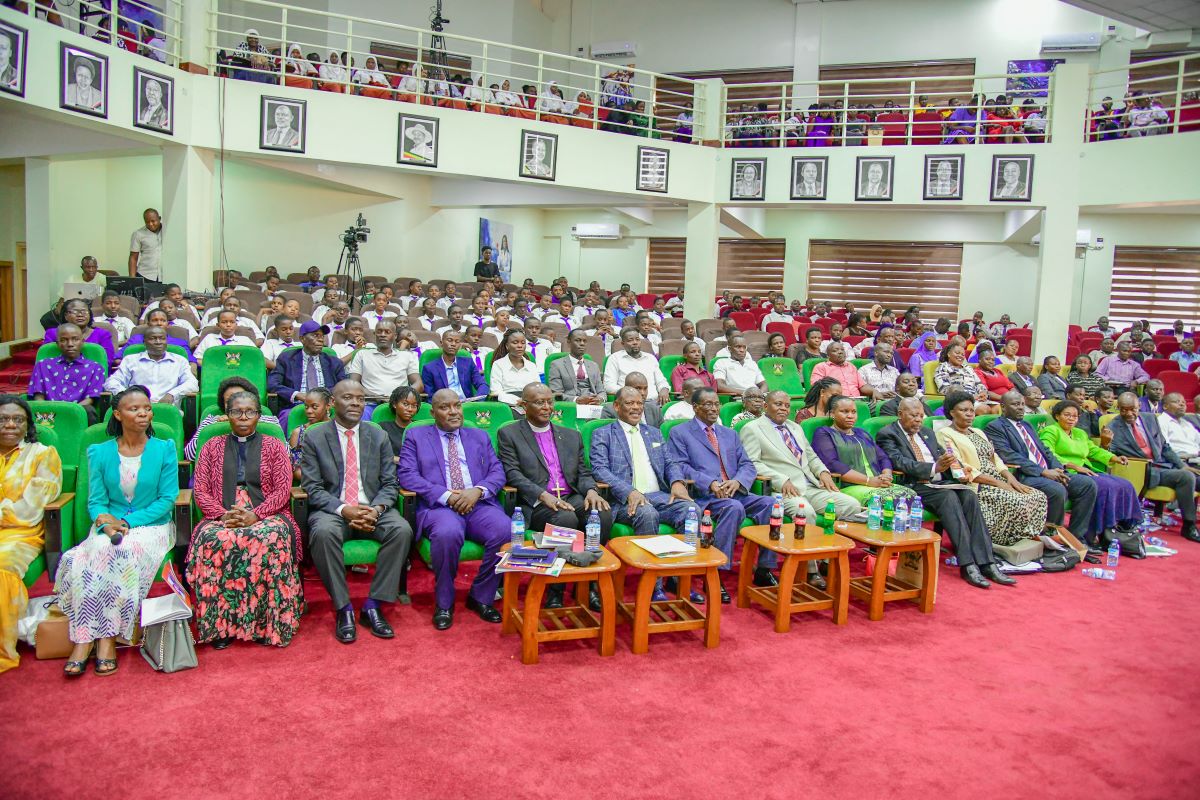
Makerere University College of Education and External Studies in partnership with the Buganda Kingdom Ministry of Heritage and Palaces hosted an inaugural memorial lecture to honour the late Professor Livingstone Walusimbi, whose ground breaking contributions to African languages have left an indelible mark on the field. Themed “Building Sustainable Futures: Bridging Prof. Walusimbi’s Linguistic Legacy with Digital Transformation,“ the event provided a profound moment of reflection on the transformative power of language and its pivotal role in shaping societies.
Held on February 27, 2025 at Makerere University School of Public Health Auditorium, the memorial lecture provided a befitting platform to celebrate Prof. Walusimbi’s legacy and selfless service in advocating for and advancing the recognition of Luganda and African languages at Makerere University and other academic institutions. The month of February is dedicated to mother tongues and African languages. It was therefore a perfect decision to hold the inaugural memorial lecture during the month of February. According to Wikipedia, the International Mother Language Day is a worldwide annual observance held on 21st February to promote awareness of linguistic and cultural diversity and to promote multilingualism.
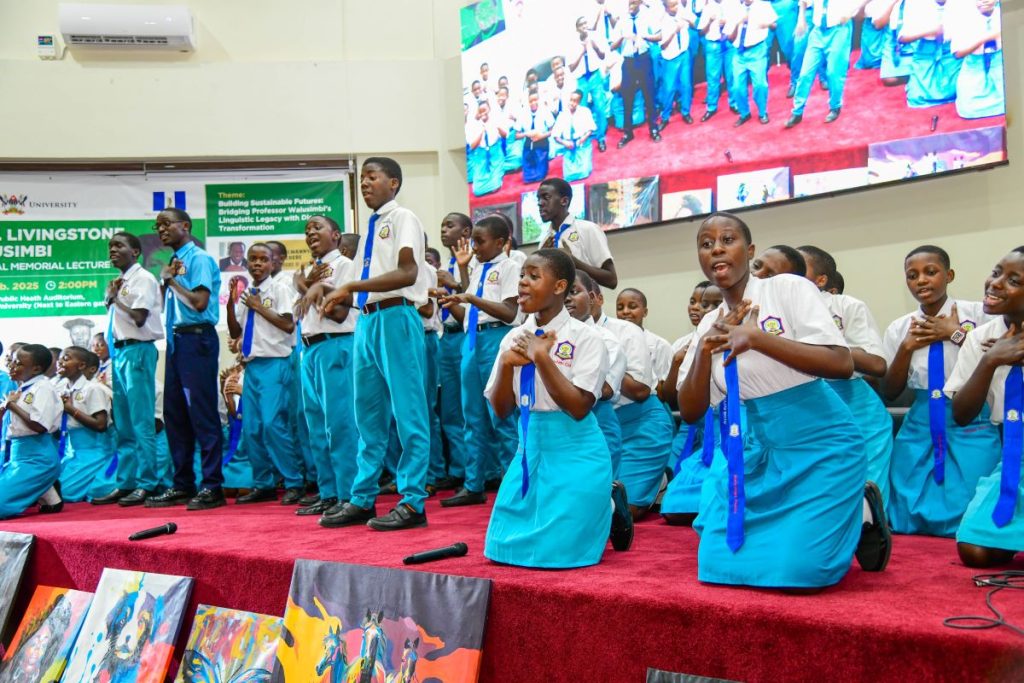
The hybrid lecture featured Anthems led by Buddo Senior Secondary School, a prayer led by Rev. Juliet Ssekamate from Wampeewo Church of Uganda, and a powerful poem with words that symbolized the good works of Prof. Walusimbi and a pledge by those he mentored and the future generations to keep his legacy alive, recited with love and emotion by Mr. Aloysius Matovu Joy (a former student of Professor Walusimbi), speeches, a keynote speech and a panel discussion.
The lecture brought on board dignitaries from Buganda Kingdom and other cultural institutions, the family of Prof. Walusimbi, the academia, scholars, educators, learners from primary schools, students and teachers from various secondary schools, institutes and universities, Bakayimbira Dramactors, the media, individuals mentored by Prof. Walusimbi, alongside leading experts in linguistics. The lecture presented a golden opportunity to honor his legacy while exploring the continued relevance of his work in the context of today’s rapidly advancing digital age.
Prof. Livingstone Walusimbi’s academic journey was marked by an unwavering dedication to linguistic excellence and education. Born on 23rd March 1935, his early experiences in the Ugandan school system during the 1940s and 1950s laid the ground work for what would become a lifelong vocation in education. Beginning his career as a Grade III teacher at the National Teachers’ College in Kyambogo in 1958, he demonstrated from the outset a deep-seated passion for teaching and learning-an attachment that would drive him to pursue advanced studies abroad, ultimately earning him a certificate from Leicester University in 1962, a diploma from the University of California, Los Angeles in 1969, and culminating in a master’s degree in Linguistics in 1971 followed by a PhD in 1976.
Through these rigorous academic pursuits, Prof. Walusimbi not only solidified his place as a distinguished scholar, but also laid the foundation for his lifelong contributions to linguistics and language education.
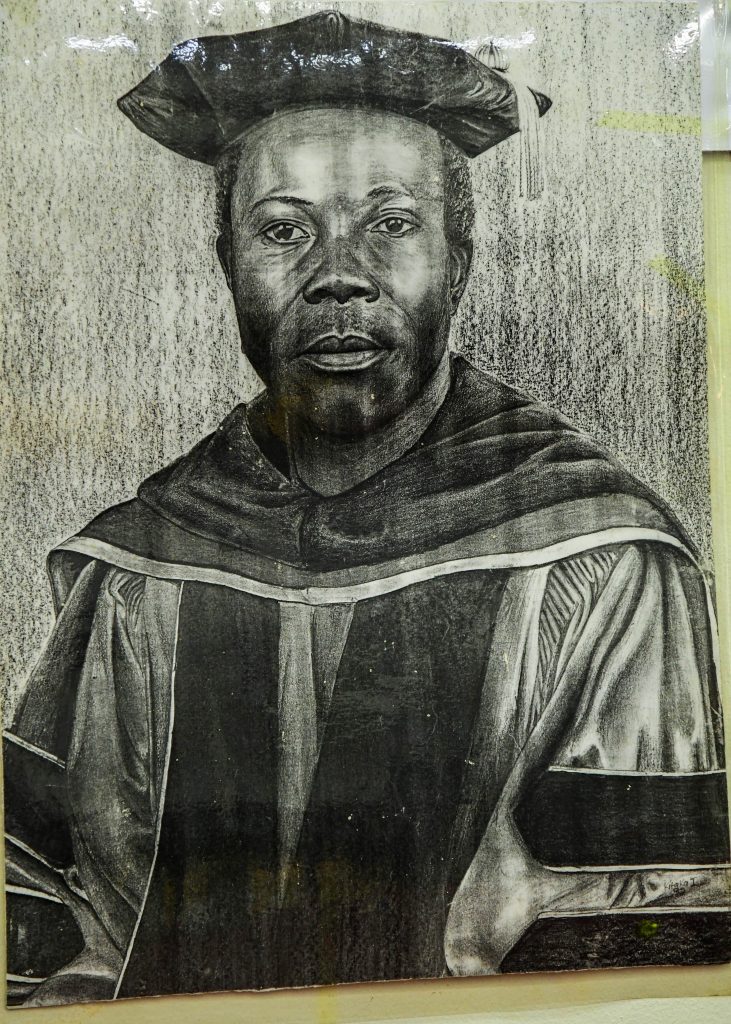
Beyond his academic achievements, Prof. Walusimbi played a pivotal role in integrating Uganda’s indigenous languages into the university’s curriculum. Understanding the crucial need to preserve and promote the nation’s linguistic heritage, he spearheaded the introduction of courses in Luganda, Runyakitara, Ateso, and Luo. His efforts not only enriched the academic landscape at Makerere University, but also made a significant contribution to the cultural vibrancy of Uganda’s higher education system.
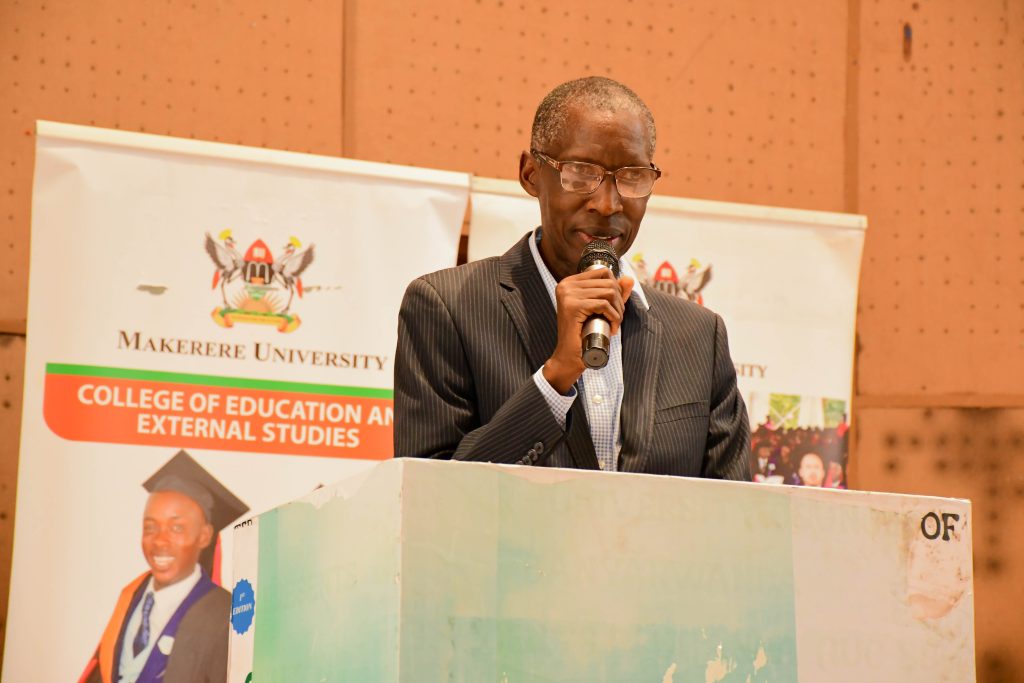
The Chief Guest, Owek. Joseph Mulwanyammuli Ssemwogerere, former Katikkiro of Buganda Kingdom, lauded Prof. Walusimbi for his tireless efforts in promoting African languages, particularly Luganda, which continue to shape Uganda’s linguistic landscape. Speaking on behalf of the Katikkiro of Buganda Kingdom, Charles Peter Mayiga, Owek. Mulwanyammuli offered profound reflections on the pivotal role of language in preserving culture and driving socio-economic development.
At the core of his address was the critical role of language in defining identity and fostering unity in the community. “A community without language and culture is a lost group,” Owek. Mulwanyammuli stated, emphasizing the necessity of nurturing indigenous languages as vital to the socio-economic transformation of societies. African languages, he argued, are not only markers of identity, but also powerful tools for development, promoting community cohesion and progress.
The former premier celebrated Prof. Walusimbi’s remarkable contributions, noting that he was a steadfast advocate for the academic recognition and preservation of African languages, particularly at a time when many dismissed them as unworthy of scholarly attention. Prof. Walusimbi’s groundbreaking work to have Luganda and other indigenous languages taught at universities has created a lasting impact, resulting in a generation of experts in these fields. His unwavering commitment has shaped the academic landscape, leaving behind a legacy of linguistic scholars continuing his mission.
Owek. Mulwanyammuli also addressed a contemporary challenge—the misconception that native speakers of a language are automatically experts. He stressed the importance of formal education in indigenous languages, particularly to guide the youth who are increasingly influenced by social media and globalization. “We need people like Professor Walusimbi to guide us, especially the youth,” he remarked, underscoring the need for academic support in teaching indigenous languages and culture.
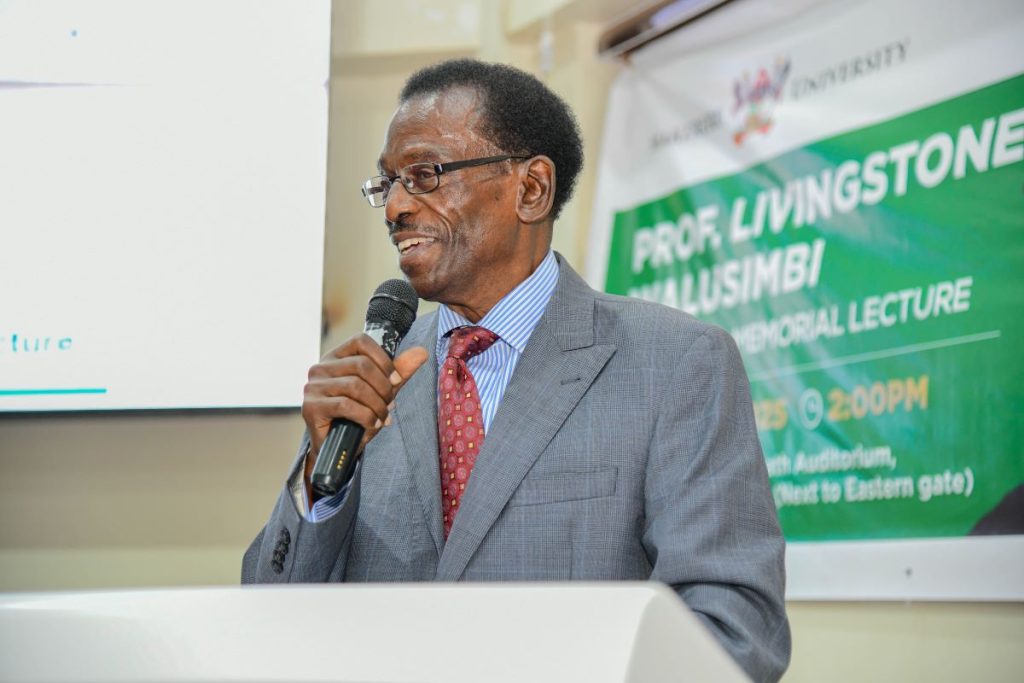
Owek. Mulwanyammuli thus called for continued research into the relationship between indigenous languages, culture, and development. “We need to move with the times,” he urged, highlighting the potential of integrating indigenous languages into the evolving digital landscape. By doing so, he believes African languages can play a pivotal role in the continent’s economic and political transformation, serving as bridges to new technologies and innovations.
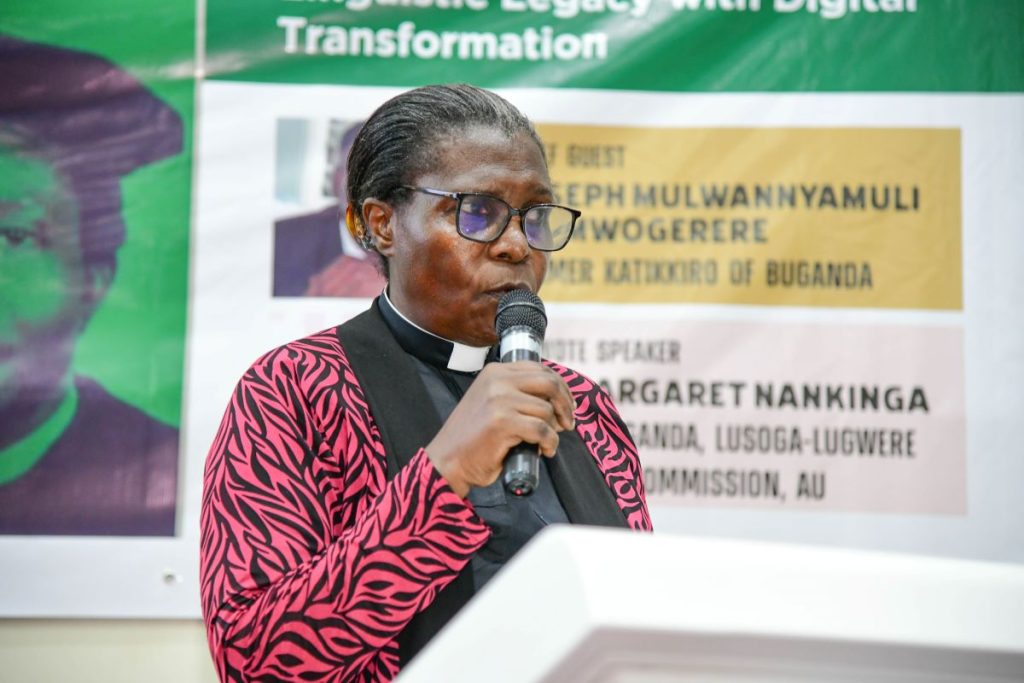
In her keynote address, Ms. Margret Nankinga, Coordinator of Luganda, Lusoga, and Lugwere Languages at the Language Commission of the African Union, emphasized the contributions of Prof. Walusimbi to the teaching of Luganda and African languages at Makerere University and other Universities as well as key issues of cultural identity, education and technological advancement.
She highlighted the impact of colonial-era policies that sought to diminish the role of mother tongues in education, labeling them as hindrances to academic success. These attitudes, which punished children for speaking their native languages, still re-occur today, inhibiting the growth of linguistic diversity. She stressed that Prof. Walusimbi defied these odds, dedicating his career to proving that African languages—specifically Luganda—could be vehicles for higher education and intellectual discourse.
She portrayed the significance of linguistic literacy, urging a revitalization of indigenous languages in both educational and technological contexts. Ms. Nankinga highlighted how, despite the historic stigmatization of mother tongues, languages such as Luganda have demonstrated adaptability. Prof. Walusimbi’s pioneering work in introducing Luganda at the university level exemplifies the potential of African languages to carry complex and high-level knowledge.
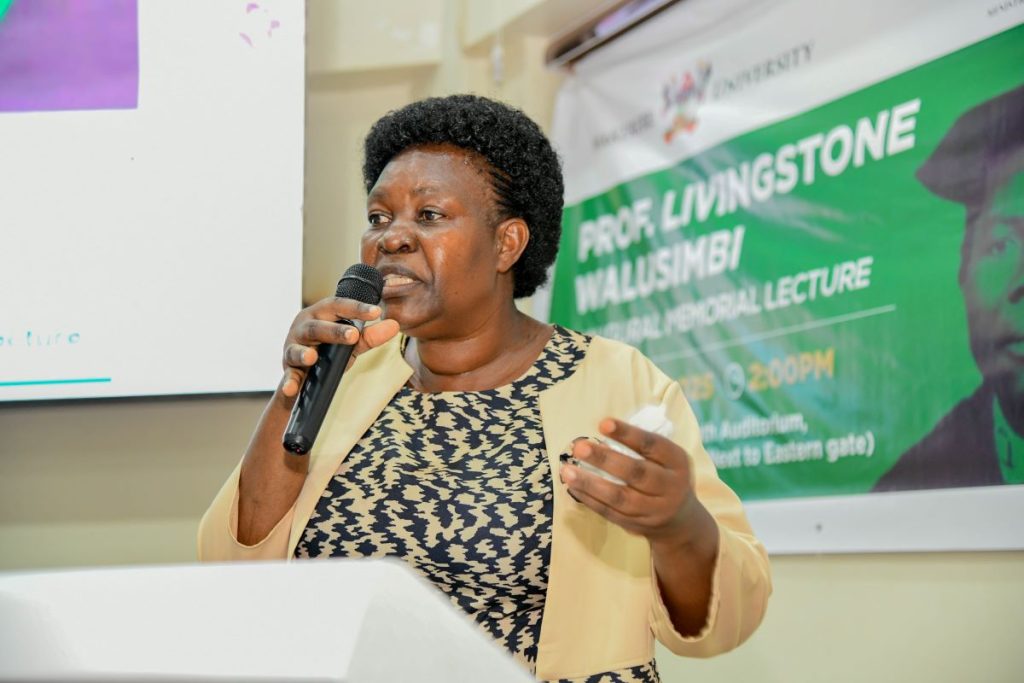
Drawing attention to the challenges of the 21st century, she warned of the digital divide, where African languages are at risk of being excluded from the digital revolution. “Are we capable of migrating our languages into the digital sphere?” Ms. Nankinga asked. She emphasized that in an age where social media, artificial intelligence, and ICT dominate global communication, it is crucial that African languages are not left behind. To preserve their cultural heritage and ensure their relevance in the future, African languages must evolve alongside technology.
“In this migration, someone may be sitting right next to you, yet they’re not truly present. They are in another world—the world of social media. Their attention is consumed by social media. Their body may be here, but their spirit and everything else have already migrated—that’s the term they use. So, how do we ensure that as they migrate, they carry our language with them? How do we ensure they carry our cultures? How do we ensure that our indigenous knowledge also migrates to the digital world, to social media, and the Internet?” she questioned.
Ms. Nankinga also underscored the importance of policy reform, calling for a shift in attitudes toward language education. She advocated for policies that provide economic value to indigenous languages and support their integration into the digital landscape. The example of the Bible being translated into 22 Ugandan languages was a powerful illustration of the richness of these languages and their capacity to convey complex ideas. Yet, much more needs to be done, she argued, particularly in the realms of scientific research and technological innovation.
She advocated for collaborative efforts among universities, researchers, and policymakers to bridge the gap between traditional knowledge and modern innovation. “If we are to evolve, let us start with our languages,” Ms. Nankinga guided. She also pointed out the need for researchers to present their findings in African languages, making academic knowledge more accessible and relevant to local communities.
Prof. Barnabas Nawangwe, the Vice Chancellor of Makerere University, emphasized the significant impact of Prof. Walusimbi’s work on both the academic and cultural realms. He remarked that when Prof. Walusimbi joined Makerere University as a tutorial fellow in 1972, he entered an academic environment that had not yet fully recognized the intrinsic value of Ugandan and African languages. Prof. Walusimbi advocated for the inclusion of indigenous languages in the university curriculum, beginning with the introduction of Luganda as a formal subject in 1976.
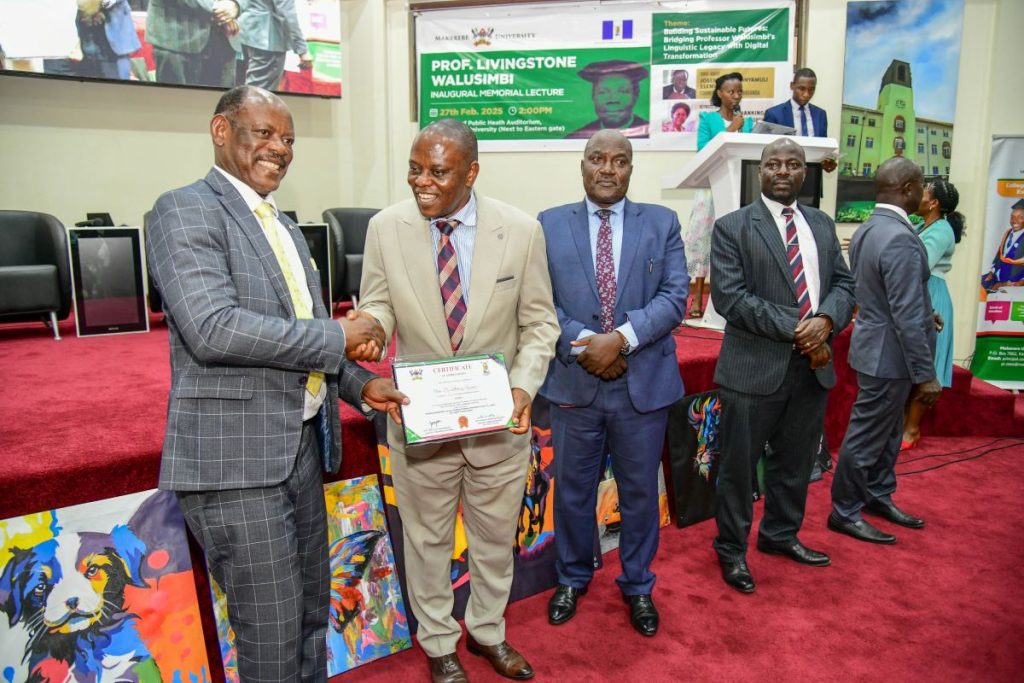
The Vice Chancellor stated that Prof. Walusimbi’s academic journey at Makerere University exemplified both scholarly excellence and an unwavering commitment to the advancement of indigenous languages. His rapid progression from tutorial fellow to lecturer in 1975, senior lecturer, and ultimately, the first Ugandan to attain a professorship in linguistics in 1992, stands as a testament to his dedication and intellectual rigor. He explained that Prof. Walusimbi’s contribution to Makerere University extended far beyond his exemplary academic achievements.
“Recognizing the importance of community engagement, he established platforms such as the Baganda Nkobazambogo Students Association and co-founded the Luganda Language Society (Ekibiina ky’olulimi oluganda). These initiatives not only nurtured linguistic scholarship, but also promoted cultural pride and heritage among generations of Ugandans. His persistent outreach has indelibly changed the cultural and educational landscape of our nation,” Prof. Nawangwe said.
Prof. Nawangwe announced the University’s exciting new initiative that is aligned to integrating technology with language preservation. He highlighted a research project by researchers at Makerere University at the College of Education and External Studies who were developing an application to transcribe the Luganda language in real-time. This tool was designed to enable those with hearing impairments to read spoken Luganda on their screens. Prof. Nawangwe stated that this project was a true reflection of the kind of research-driven innovation that Prof. Walusimbi had championed throughout his life.
Prof. Anthony Muwagga Mugagga, the Principal of the College of Education and External Studies represented by Prof. Paul Muyinda Birevu, acknowledged Prof. Walusimbi’s instrumental role in establishing the Department of Humanities and Language Education at the College. He stated that Prof. Walusimbi’s visionary leadership played a pivotal role in integrating rigorous linguistic scholarship with progressive pedagogical practices, creating a strong foundation for the study of languages. He added that by championing interdisciplinary research, Prof. Walusimbi set a benchmark for academic excellence in language education.
“His foresight and leadership were critical in leading these language studies in our curriculum. Through incorporating rigorous traditional linguistic scholarship in progressive pedagogical practices, he not only established a robust academic foundation for the study of languages, but also set a standard for interdisciplinary research. His commitment to multi-term education has reshaped education practices in Uganda,” Prof. Anthony Mugagga stated.
The Principal noted that Prof. Walusimbi was at the forefront of advocating for policies that promoted language instruction in local dialects, ensuring that Ugandan and other indigenous languages were integrated into formal education. This advocacy helped position language as more than just an academic discipline but as a fundamental tool for cultural preservation and social cohesion.
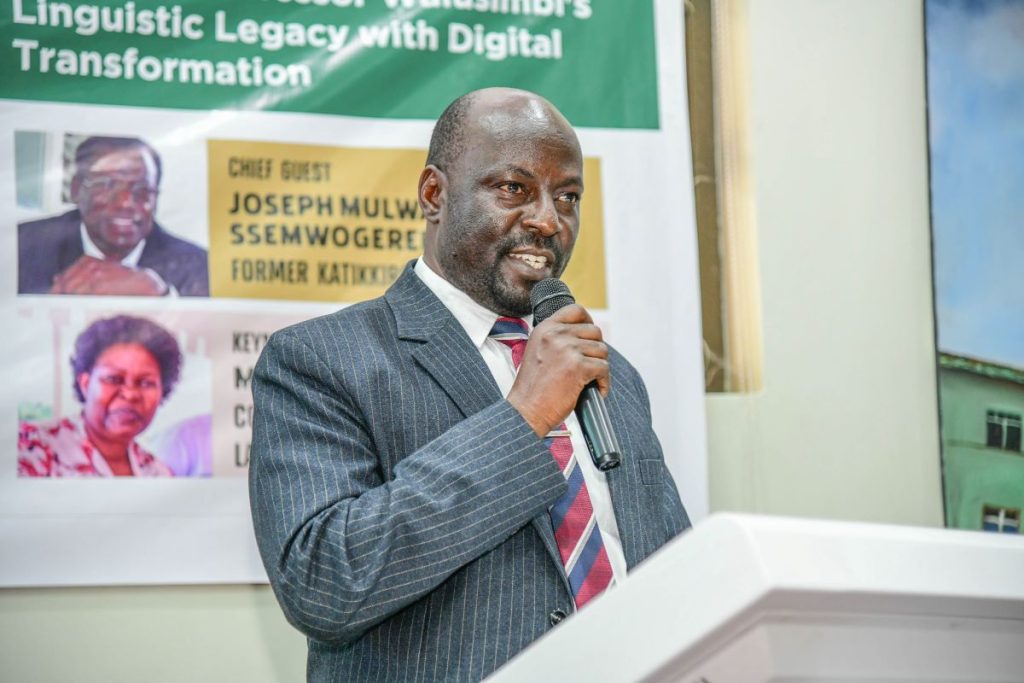
On a personal note, Prof. Mugagga shared that Prof. Walusimbi was not just an outstanding academic but also a compassionate mentor whose guidance left a profound impact on many scholars, including himself. He credited the late professor for instilling in him the belief that education transcends textbooks and lecture halls. According to him, Professor Walusimbi’s mentorship emphasized the importance of curiosity, identity, and ethical responsibility in academia. He noted that the late professor’s dedication to blending traditional values with innovative educational practices made him a model educator who fostered equity, intellectual rigor, and mutual respect among students and colleagues alike.
The Minister for Heritage and Palaces in the Buganda Kingdom, Dr. Anthony Wamala acknowledged the lasting contribution of Prof. Livingstone Walusimbi to the development of his mother tongue, to be specific Luganda.
The Minister described Prof. Walusimbi as the “father of modern Luganda language,” underscoring his pivotal role in ensuring that the study and teaching of Luganda received the academic recognition it deserved. “Through his effort in advocacy and mentorship, the teaching of our own language gained recognition at this great centre of academic excellence,” the Minister said.
The Minister emphasized that Prof. Walusimbi’s contributions went far beyond academic scholarship. His work laid a critical foundation for the continuity of Uganda’s heritage and cultural identity. “It is therefore incumbent upon us, the living, to protect and extend the vision and leadership of Professor Walusimbi,” the Minister urged, stressing the need for continued efforts in supporting the teaching and further development of Luganda.
Taking note of the modern technological advancements today, the Minister highlighted the potential to use these tools to further the transmission of Luganda. “We are blessed to live in a world with numerous technologies that we can exploit to pass on our language,” he remarked, pointing to mobile applications as one example of how technology could be harnessed to make learning and teaching Luganda more accessible, especially for younger generations and those from outside the region wishing to learn.
The Minister called on everyone, to not only celebrate Prof. Walusimbi’s achievements, but also to commit to embodying the values he championed. “Let us strive for excellence in our pursuits, serve our communities with proportion, and use our knowledge to build a more just and equitable world,” he stated. By doing so, the Minister affirmed that Prof. Walusimbi’s legacy would continue to inspire and guide future generations in the preservation and growth of Uganda’s linguistic and cultural heritage.
As the first recipient of a PhD in Luganda from Makerere University and the only professor specializing in the subject, Prof. Fred Masagazi Masaazi, the Chairperson of the Organizing Committee for the inaugural lecture and a former student of Prof. Walusimbi praised his unwavering commitment to the development of Luganda and other African languages. He underscored the significance of Prof. Walusimbi’s work in advancing linguistic scholarship. He expressed the collective aspiration to see other Ugandan and African languages develop to the level of Luganda, highlighting how the late Professor’s efforts extended beyond Makerere University to impact the broader linguistic and educational landscape.
He said, “It is our wish to see Uganda and other African languages develop the way Luganda has developed. We are here to instruct on work that has been done by Prof. Livingstone Walusimbi.”
Prof. Masagazi Masaazi applauded the invaluable contributions of Uganda’s language teachers, recognizing their role in sustaining and expanding linguistic education through research, teaching, and publication. He further reflected on Professor Walusimbi’s groundbreaking achievements, explaining that his mentor did not merely study languages for academic interest, but worked tirelessly to develop structured programs in Luganda. Prof. Walusimbi, initially trained in English language and linguistics, conducted extensive research and pioneered the creation of Luganda language programs.
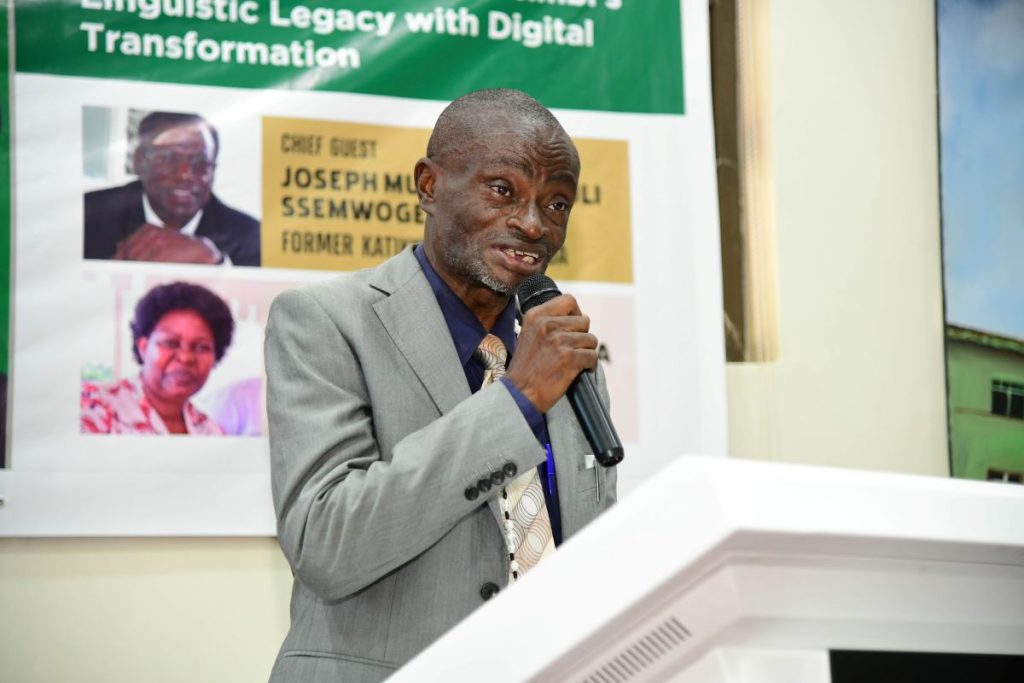
Mr. Aloysius Matovu Joy, a multifaceted Ugandan artist, one of the directors of Bakayimbira Dramactors and a former student of Prof. Walusimbi, in a poignant poetic tone called the populace to preserve and nurture the Luganda language, the mother tongue of many Ugandans. He re-echoed the importance of passing the language on to future generations, encouraging parents to teach their children not just to speak it, but to gain expertise and qualifications in it. He called for a broader recognition of the language, urging for books and knowledge in Luganda to multiply, thus safeguarding its future.
He recounted the invaluable role Professor Walusimbi played in his life, describing him as a nurturing figure who never let his students wither but instead helped them flourish. “He watered us, and we blossomed,” said Mr. Matovu, highlighting how the professor instilled in his students a profound love and respect for Luganda. According to Mr. Matovu, it was Professor Walusimbi who helped elevate the language, allowing it to surpass others, especially those that historically sought to suppress it.
Mr. Matovu praised Professor Walusimbi for being a fountain of wisdom, comparing him to a stone that, once ordinary, transformed into a mighty rock that stood out among others. “You became a father, mother, and grandparent to us, shaping us into the people we are today,” he said, conveying deep respect and admiration. He also underscored how Prof. Walusimbi not only made his students experts in the Luganda language, but also helped them become teachers and leaders in their own right.
Dr. Alice Joy Nabalamba, daughter of the late Prof. Walusimbi, on behalf of the family, expressed deep gratitude for the recognition of her father’s legacy. She emphasized that Makerere University was more than just a workplace for her father—it was his second home for over four decades. She extended special thanks to the organizing committee for their unwavering commitment to ensuring that Professor Walusimbi’s work is celebrated and remembered.
Reflecting on his career, Dr. Nabalamba described her father as more than an educator; he was a mentor and a guardian of language and culture. His belief that language is deeply intertwined with identity and heritage fueled his relentless efforts to preserve indigenous languages. As an advocate for linguistic preservation, his work extended beyond academia to global platforms such as UNESCO, where he collaborated with experts to safeguard endangered languages. Dr. Nabalamba noted that he was acutely aware that the disappearance of a language equated to the loss of history, wisdom, and the very essence of a people.
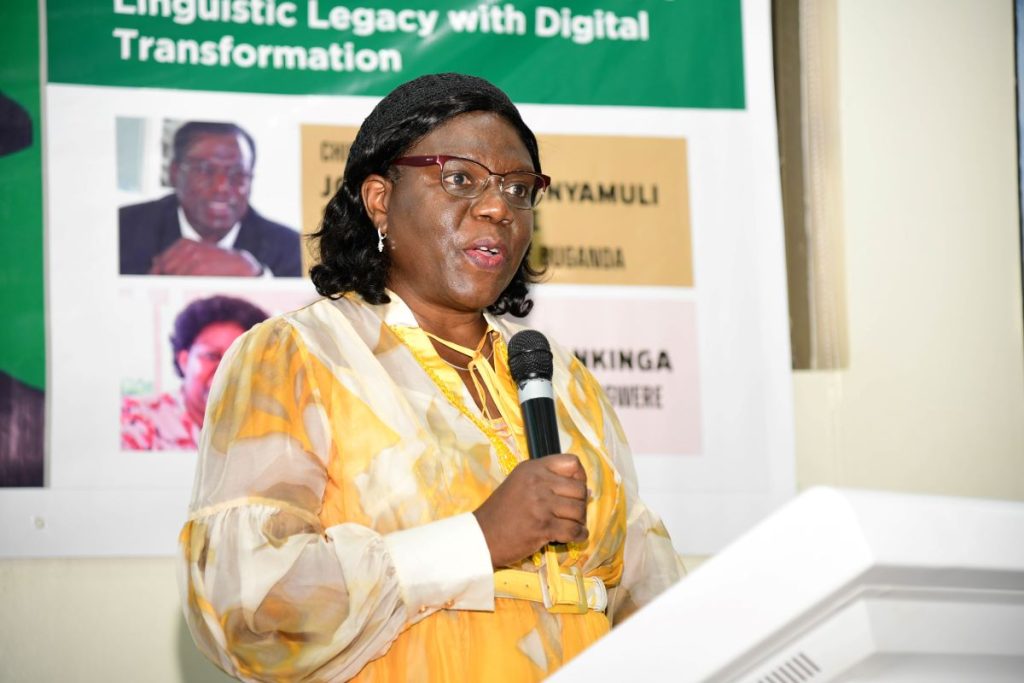
Dr. Nabalamba called upon the multitude to carry forward her father’s vision. She urged scholars, educators, and language enthusiasts to continue his work by promoting indigenous languages, fostering education, and embracing kindness. In her words, “Today, as we honor him, I know he would not want us to dwell in sorrow. Instead, he would want us to continue with his work—to teach, to preserve, to serve, and most of all, to be kind to one another.”
In a panel discussion moderated by Dr. David Kabugo, the panelists namely Dr. Prosperous Nankindu, Dr. Ronald Kizito, and Prof. Abasi Kiyimba shared insights into the linguistic legacies of Professor Walusimbi and how to continue his work in preserving and promoting African languages in the digital era.
Dr. Ronald Kizito pointed out Prof. Walusimbi’s role in introducing Luganda at Makerere University, which later spread to other institutions. He noted that Prof. Walusimbi’s 1976 PhD dissertation from UCLA continues to be a valuable resource for their work, especially in training computers to recognize the syntax, grammar, and structure of Luganda. He emphasized how this laid the foundation for teaching computers to understand and process Luganda, making it accessible on a global scale. He also shared ongoing efforts at Makerere University College of Engineering, Design, Art and Technology, where they are working on teaching machines to read, translate, and speak Luganda, ensuring that the younger generation can interact with technology in their native language.
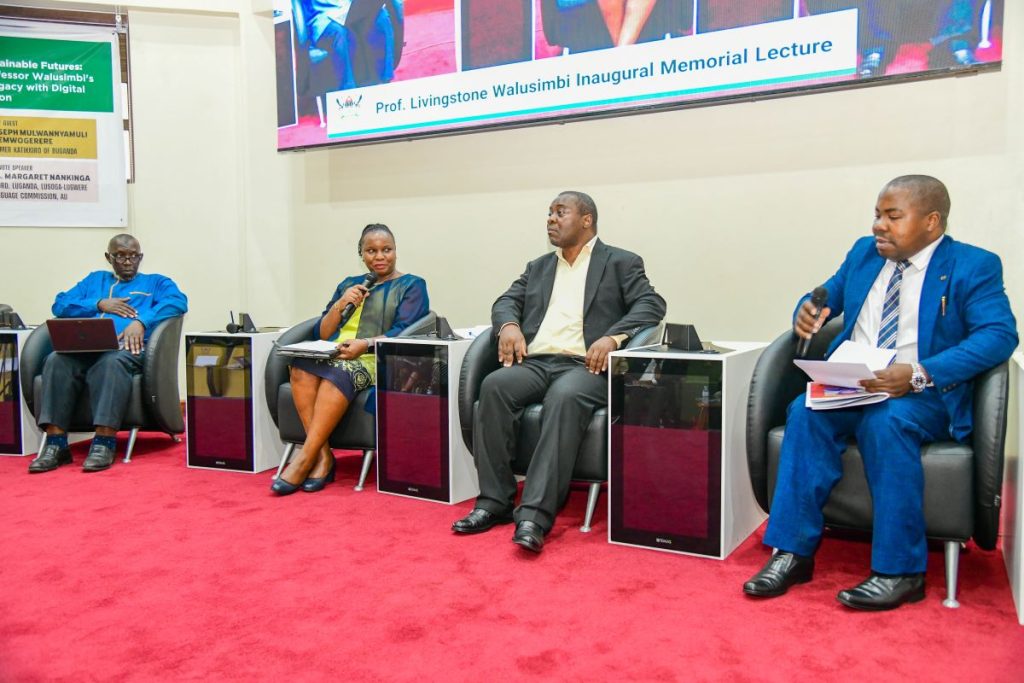
Dr. Prosperous Nankindu mentioned the importance of preserving and promoting Luganda, highlighting the foundational work of Prof. Walusimbi in developing Luganda studies. She acknowledged his efforts in standardizing Luganda grammar and literature, which have greatly influenced language education in Uganda. Dr. Nankindu stressed the need for continued research and technological advancements to ensure that Luganda remains relevant in the digital age. She called for more initiatives to integrate Luganda into modern communication, education, and artificial intelligence, ensuring its sustainability for future generations.
Prof. Abasi Kiyimba focused on Prof. Walusimbi’s great work in developing the Luganda language and its literature. He explained how Prof. Walusimbi helped set rules on how Luganda should be written and spoken correctly. He also worked on creating dictionaries and improving the language for teaching and learning. Prof. Kiyimba called upon the audience to continue researching and using modern technology to keep Luganda strong and relevant in schools and everyday life.
The well-attended lecture moderated by Ms Ritah Namisango and Dr. Muhammad Kiggundu Musoke from the College of Education and External Studies, ended with a prayer led by Bishop Hannington Mutebi, a member of Prof. Livingstone Walusimbi’s family.

Education
CEES 2026 Students Orientation: Newly Admitted Students tipped on Integrity, Academic Excellence, Safety and Responsible AI usage
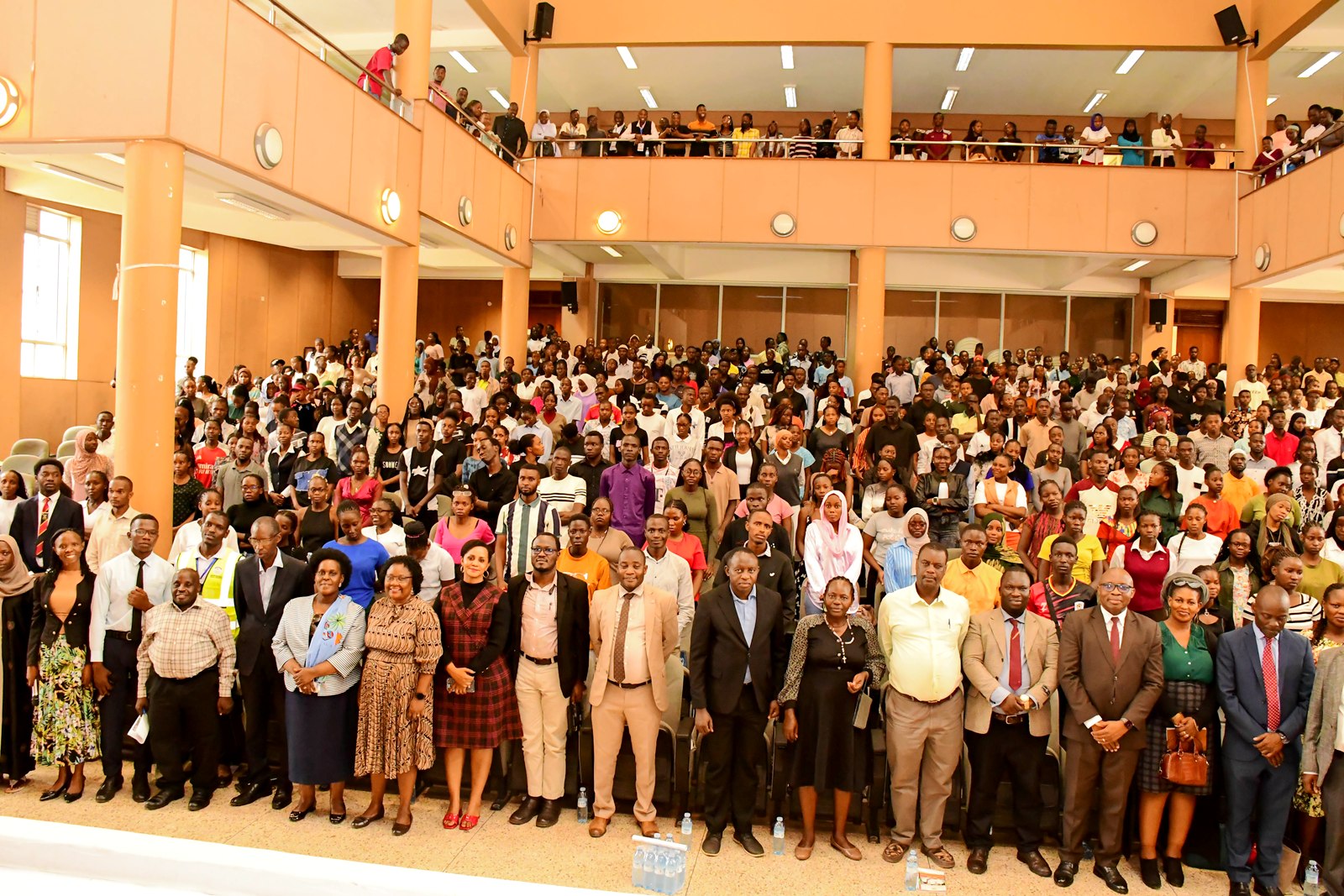
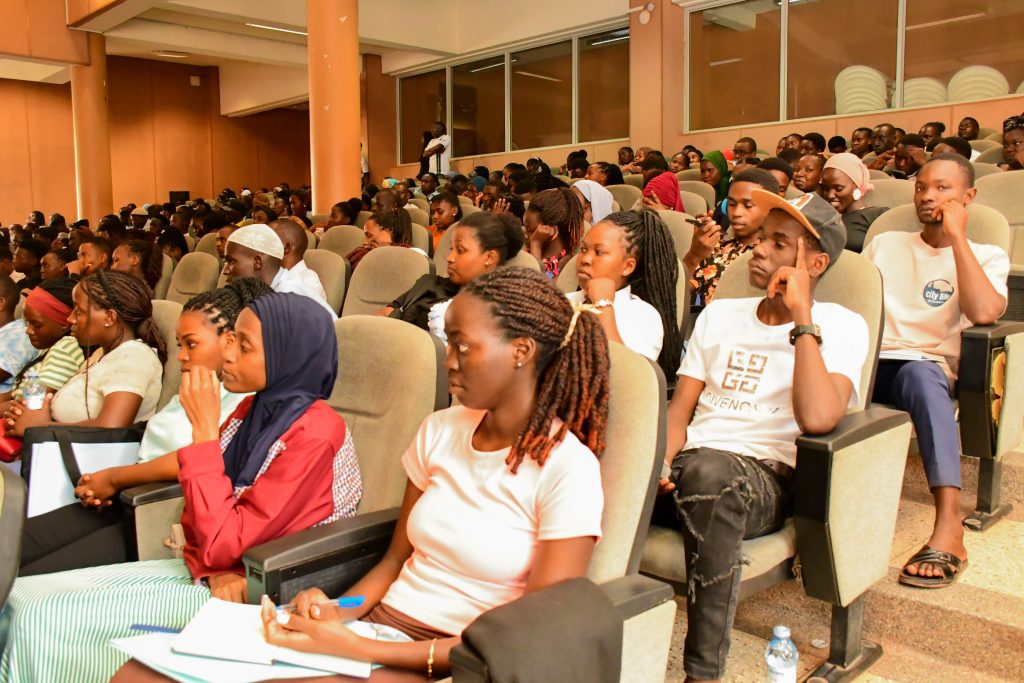
On 6th August 2026, the first year students admitted to the various undergraduate academic programmes at the College of Education and External Studies (CEES) convened at the Makerere University Yusuf Lule Central Teaching Facility Auditorium for a specialized orientation session with the College leadership, selected University Officials, staff and student leaders.
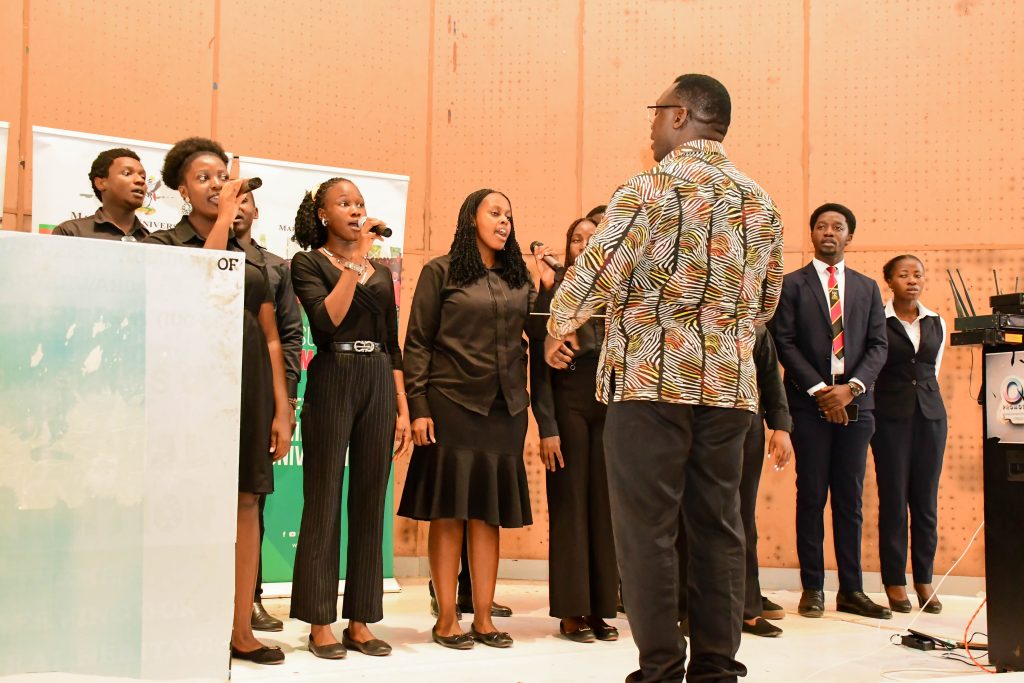
Bringing together over 900 first year students, the colourful orientation session organized by the Office of the Principal, in collaboration with the College Registrar, College Communication Office, and the Student leaders, kicked off with the singing of the Anthems. The first year students were impressed by the vocals courtesy of the College of Education and External Studies Choir.
The interactive orientation session, which involved interludes of respecting the Makerere University Culture (with the entire audience speaking with energy, Eeh, Makerere Oyee!) was aimed at equipping the newly admitted students with the essential knowledge to transition into University life, guidance to successfully navigate their academic journey, and developing a deeper sense of belonging and love for the College of Education and External Studies (CEES).
The orientation focused on promoting academic excellence, responsible conduct, personal well-being, financial management, digital learning, safeguarding, and effective utilization of university resources to support students’ growth and development.

The orientation programme featured presentations from university administrators, academic leaders, student representatives, and support service providers including the College Principal-Prof. Anthony Muwagga Mugagga, Deputy Principal-Prof. Ronald Bisaso, Dean-School of Distance and Lifelong Learning- Dr. Harriet Nabushawo, Dean-School of Education- Assoc. Prof. Mathias Mulumba, the Director of IODeL-Dr. Godfrey Mayende, the Manager-Makerere University Counselling and Guidance Centre Dr. Henry Nsubuga, the College Chairperson-Mr. Anthony Bakashaba, and among other members of staff and student leaders.
Commitment to Academic Excellence and Responsible Conduct
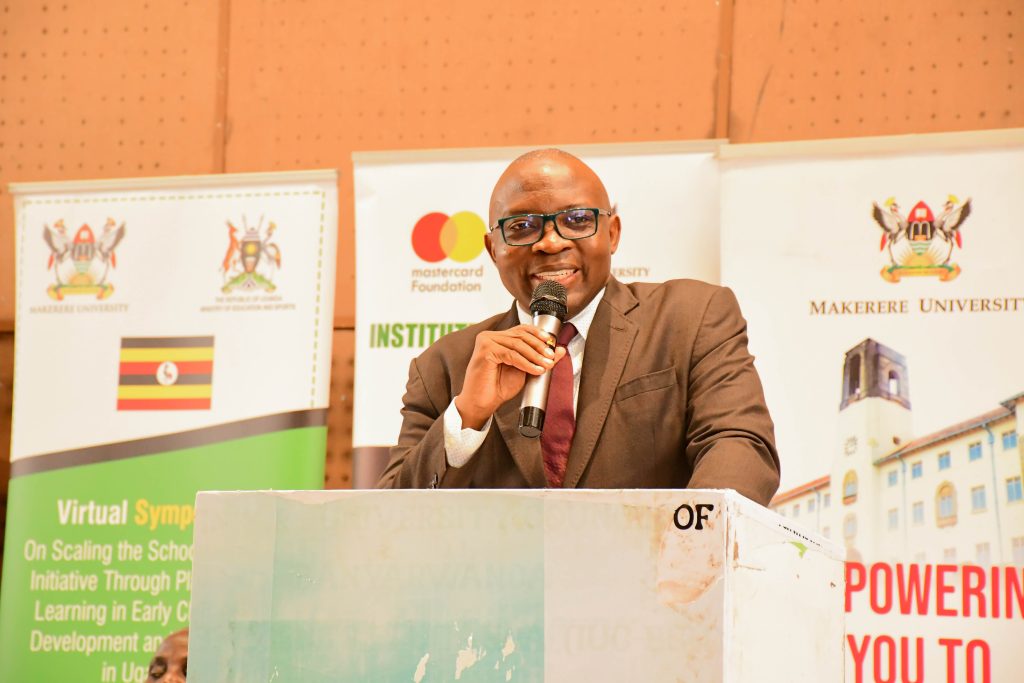
Opening the engagement, the Principal, College Principal, Prof. Anthony Muwagga Mugagga, congratulated the first-year students upon being admitted to Makerere University, and specifically to the College of Education and External Studies. He highlighted that the College consists of three (3) Schools namely: The School of Education, the School of Distance and Lifelong Learning, and the East African School of Higher Education Studies and Development.
Recalling the lived experiences from his youthful days as a student, and his various attempts in different academic disciplines such as religious studies, economics, philosophy, education, he informed the students that they had made the right choice to study education.
“I am a professor of education. I have served as a teacher, education policy specialist, and rose up to the rank of Professor. I am the College Principal. I am here to re-assure you that you have made the right decision to study education,” he said.
The Principal encouraged the first-year students to embrace their academic journey with determination and utilize their stay to effectively tap into the opportunities available at Makerere University.
“Prioritize your studies, maintain healthy relationships, and avoid behaviours that could compromise your safety, well-being, and academic progress,” Prof. Muwagga Mugagga guided.
He advised the students to attend lectures consistently, actively participate in class, establish professional relationships with lecturers, and familiarize themselves with university policies and support services.
He called upon the students to manage their finances responsibly by prioritizing essential needs, such as tuition and academic requirements, and exploring available work-study opportunities when faced with financial challenges.
Prof. Muwagga Mugagga reminded students to understand their rights and responsibilities as members of the university community and to uphold the values and standards that guide life at Makerere University.
Striving for Excellence and Time Management
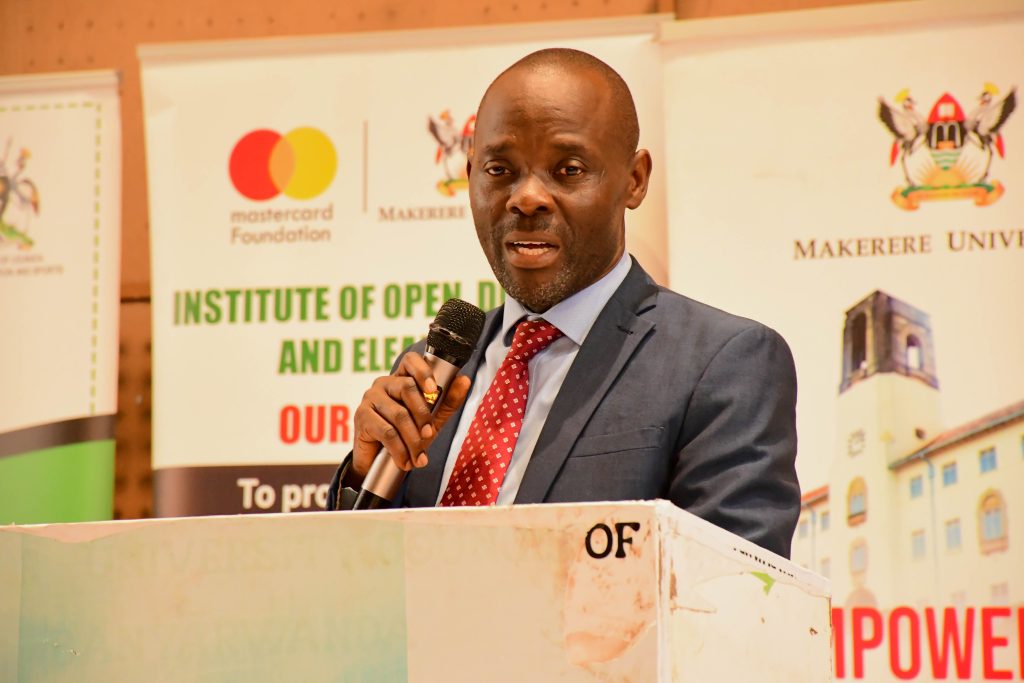
The Deputy Principal, Prof. Ronald Bisaso implored the students to remain focused on their academic goals, adhere to university policies, and to use their freedom wisely throughout their university journey.
Prof. Bisaso also tipped the students on professionalism, the standards and right set of values that society expects from prospective teachers and educators. He encouraged the students to dress appropriately and make reference to authentic online platforms that describe the dress code for official, business, and casual engagements.
“Students’ conduct and appearance contribute significantly to the professional image they project within the university and the wider community,” he noted.
Academic Success and Professional Conduct
The Dean of the School of Education, Associate Professor Mathias Mulumba Bwanika articulated that the transition to the Competency-Based Education, which implies that the student/learner takes responsibility for his or her studies.
“Schools and institutions in Uganda shifted from a content-based curriculum to the competency-based one. The teacher guides, but the student takes full responsibility for his or her learning,” he remarked.
To excel under the competency-based mode of delivery, Associate Professor Mulumba Bwanika urged the students to value time, plan their schedules, form discussion groups, and tap into the benefits of group learning, including innovation, creativity, and reading ahead of their lecturers.
Associate Professor Mulumba Bwanika reminded the students to uphold high standards of professionalism by following the professional code of conduct for teachers. He tipped the students on personal hygiene, respectful behaviour, character and development.
The Dean of the School of Education, emphasized the importance of cultivating habits that promote academic success. “If you want to succeed in a university setting, you need to consult the student leaders and staff, embrace group learning, and read consistently.”
Embracing Learning Opportunities Beyond the Classroom
The Dean, School of Distance and Lifelong Learning, Dr Harriet Nabushawo reaffirmed Makerere University’s commitment to producing knowledgeable, skilled, and socially responsible graduates.
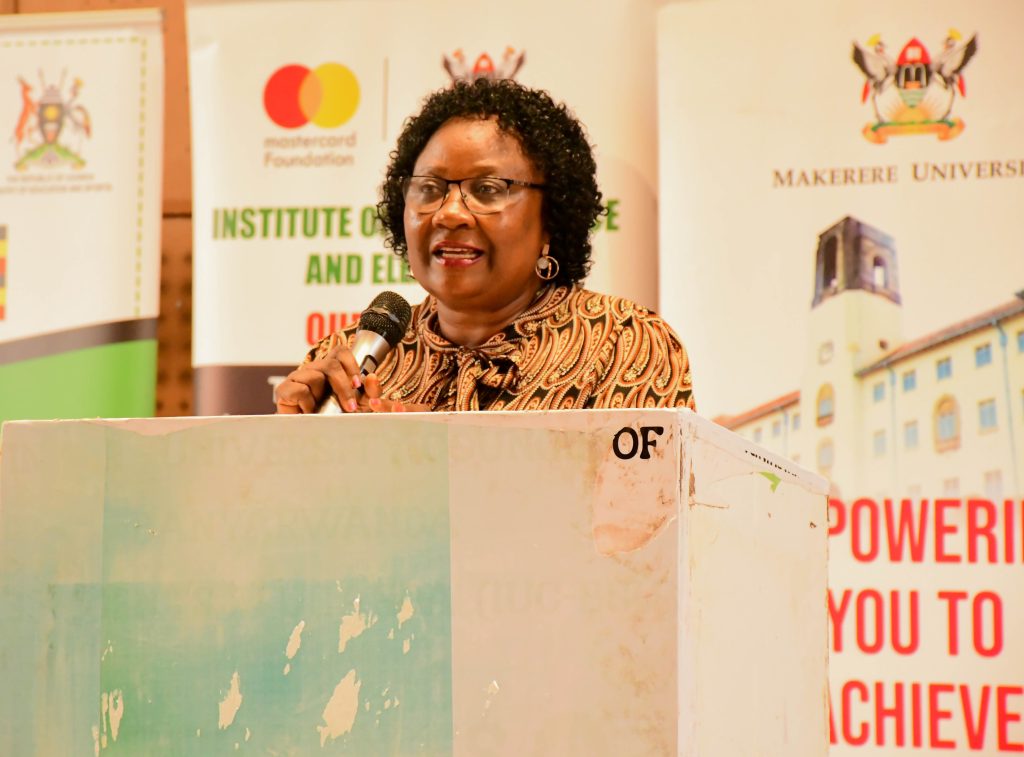
She implored the students to take ownership of their learning, remain organized and disciplined, and develop habits that promote academic excellence and lifelong growth.
Dr Nabushawo highlighted opportunities beyond classroom learning, including research, innovation, leadership, teamwork, and community engagement, noting that these experiences help students develop professional competencies, problem-solving abilities, communication skills, and teamwork.
She rallied students to actively participate in university programmes and collaborative learning experiences to broaden their perspectives and prepare themselves for meaningful contributions to society.
Effective Digital Learning and Responsible Use of Artificial Intelligence (AI)
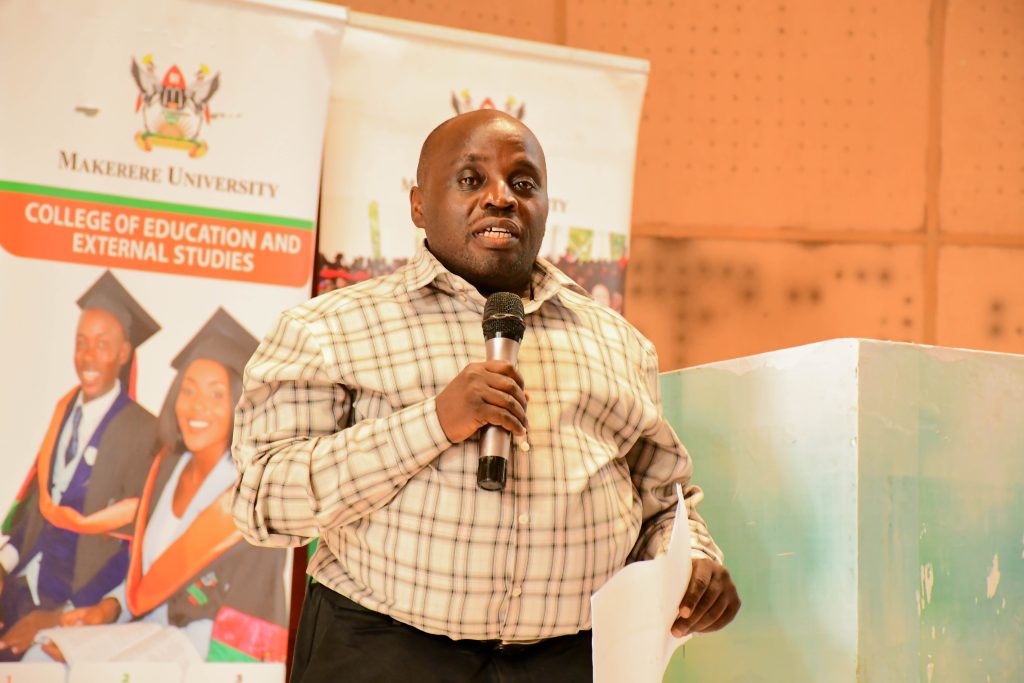
Dr Godfrey Mayende, the Deputy Director of the Institute of Open, Distance and eLearning (IODeL), advised students to embrace digital learning as an important component of their academic journey.
He urged students to regularly access the Makerere University E-Learning Environment (MUELE), participate in online discussions, check university communication platforms, and seek support when they encounter academic challenges.
Highlighting the growing role of Artificial Intelligence (AI) in higher education, Dr Mayende encouraged students to use AI responsibly as a learning companion for understanding concepts, generating ideas, improving writing, summarizing notes, and practising academic tasks.
He emphasized the importance of ethical use of technology, independent thinking, and academic integrity in preparing students for future professional environments.
“Use artificial intelligence wisely. AI should not corrupt your personal knowledge. AI should not replace human thinking,” he guided.
Prioritize Mental Health and Seek Support Early
In his remarks, the Manager-Makerere University Counselling and Guidance Centre, Mr. Henry Nsubuga called upon the students to prioritize their wellbeing, utilize their time as an opportunity for personal growth, resilience building, and professional development.
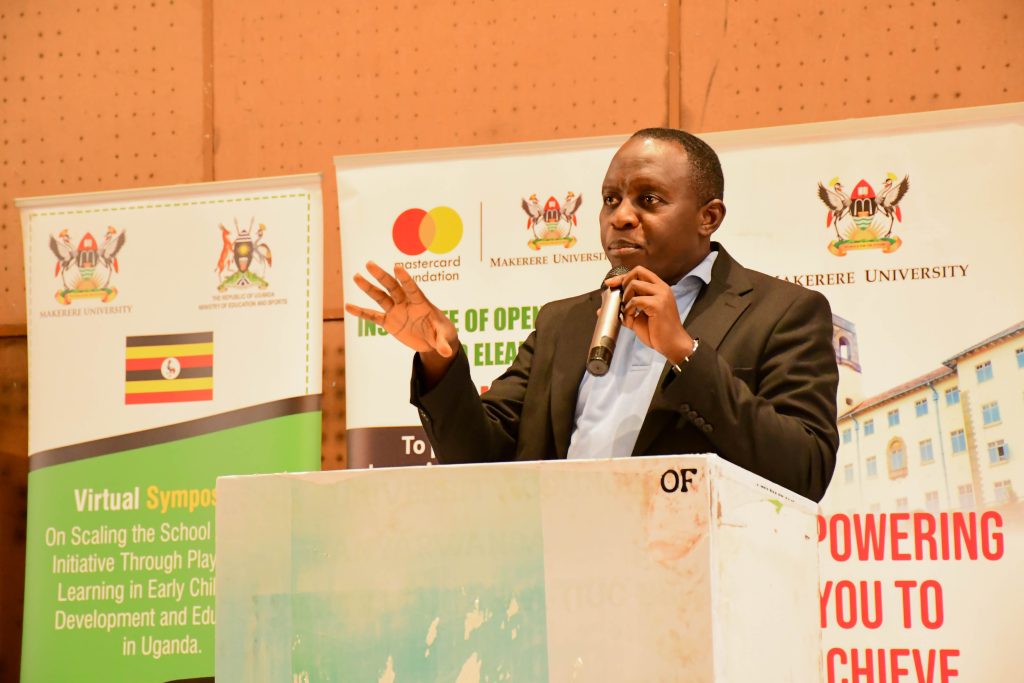
Mr. Nsubuga disclosed that Mental Health is one of the biggest challenges affecting the wellbeing of humans. He therefore advised students experiencing mental health issues to always seek professional counselling and guidance services, stressing that early access to support contributes to a successful, healthy, and a fulfilling university experience.
He appealed to students to support members within the University community who could be dealing with mental health issues due to pressures from home, workload, retakes, hunger, financial difficulties, painful relationships, poor performance in class, anxiety, drug and substance abuse, loss of loved ones, neglect and discrimination, by referring them to the Makerere University Counselling and Guidance Centre.
Ensuring a Safe University Environment
Dr Michael Walimbwa, a Staff Safeguarding Champion at CEES accompanied by Ms. Agnes Nambuya and the Student Safeguarding Champions at CEES presented some of the safeguarding tips and principles.
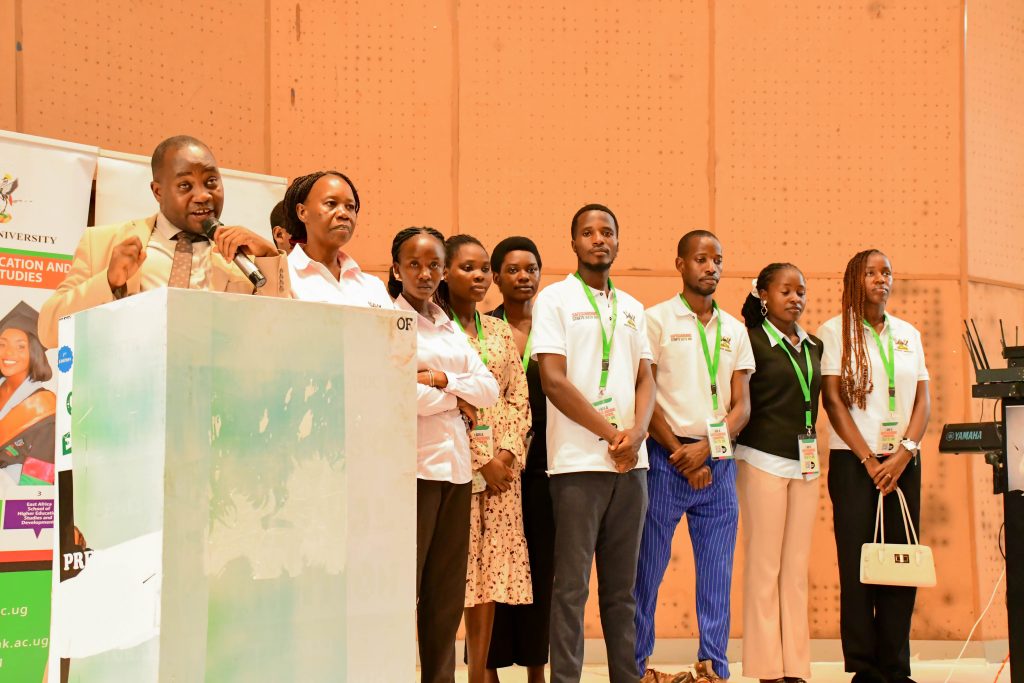
The Staff Safeguarding Champions at CEES namely Dr Michael Walimba and Ms Agnes Nambuya accompanied by the CEES Student Safeguarding Champions sensitized the first year students on the concept of safeguarding.
“Safeguarding is about protecting members of Makerere University from harassment, neglect, and any behavior that threatens safety,” explained Dr Walimbwa.
Dr Walimbwa reminded the students that creating a safe university environment is a collective responsibility. He challenged students to report any cases of harassment, misconduct, or situations affecting their well-being through established university safeguarding channels, including safeguarding champions, academic leaders, and reporting platforms.
Academic Procedures and Policies
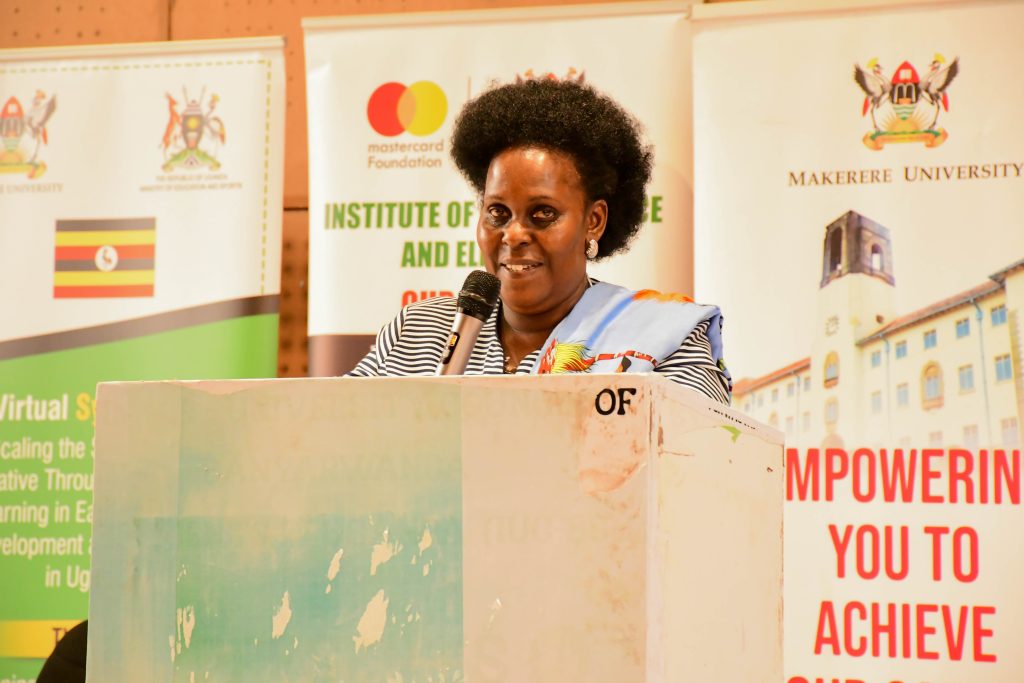
During the CEES Orientation, the Office of the College Registrar was effectively represented by Mrs. Joanna Kayaga Kiwana-College Registrar, Ms. Molly Nantongo-School of Education Registrar, and Mr. Sanderson Acati-Registrar at the East African School of Higher Education Studies and Development.
Mrs Kayaga Kiwana outlined some of the key academic policies and regulations to guide the first year students during the course of study. She advised the students to follow the respective timetables and ensure that they are in the right place at the right time. She equally emphasized the need to follow the registration procedures and guidelines, and stressed the need to provide authentic information during the documentation and registration process.
Mrs Kayaga Kiwana outlined some of the key academic policies and regulations to guide the first year students during the course of study. She advised the students to follow the respective timetables and ensure that they are in the right place at the right time. She equally emphasized the need to follow the registration procedures and guidelines, and stressed the need to provide authentic information during the documentation and registration process.
Financial Discipline and Timely Fees Payment
The College Bursar, Mr. Stephen Kayima and the Accountant-Mr. Godfrey Wasikye underscored the need to follow the University financial procedures and ensure timely payment of tuition and other University fees.
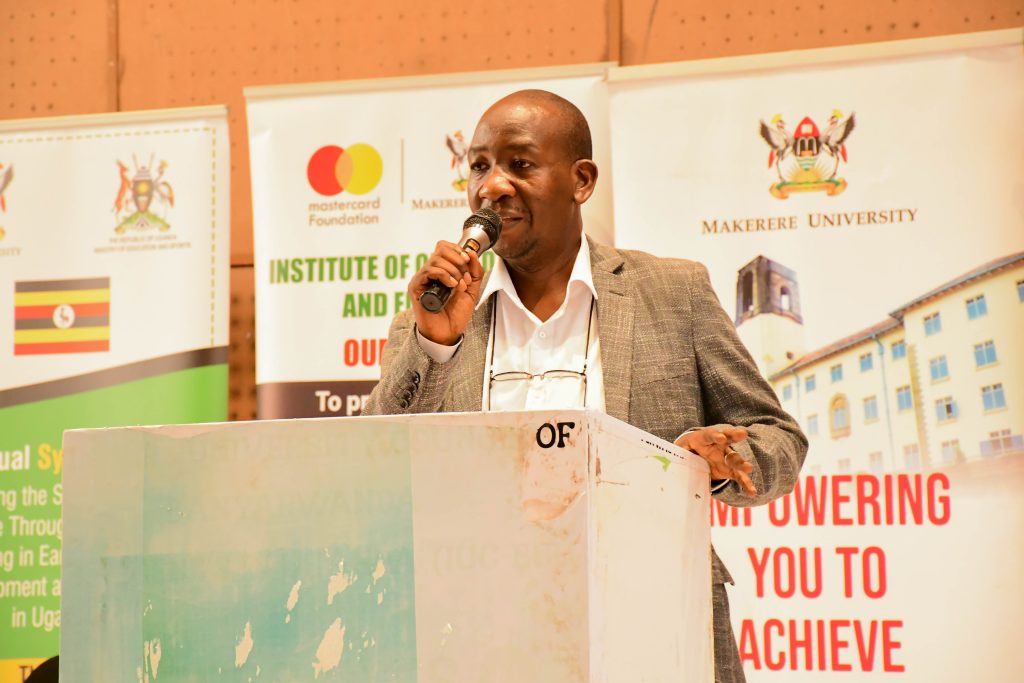
Mr. Kayima emphasized that all tuition and functional fees should be paid through the official university payment system using a Payment Registration Number (PRN), cautioning students against relying on unofficial payment channels.
Mr. Kayima urged students to prioritize tuition payments within the stipulated timelines to maintain uninterrupted access to university services and academic activities.
Library Support Services and Promoting a Reading Culture
Ms Frascesca Musimenta, from the CEES Library, encouraged students to develop a culture of reading, conduct research, and utilize library services throughout their academic journey.
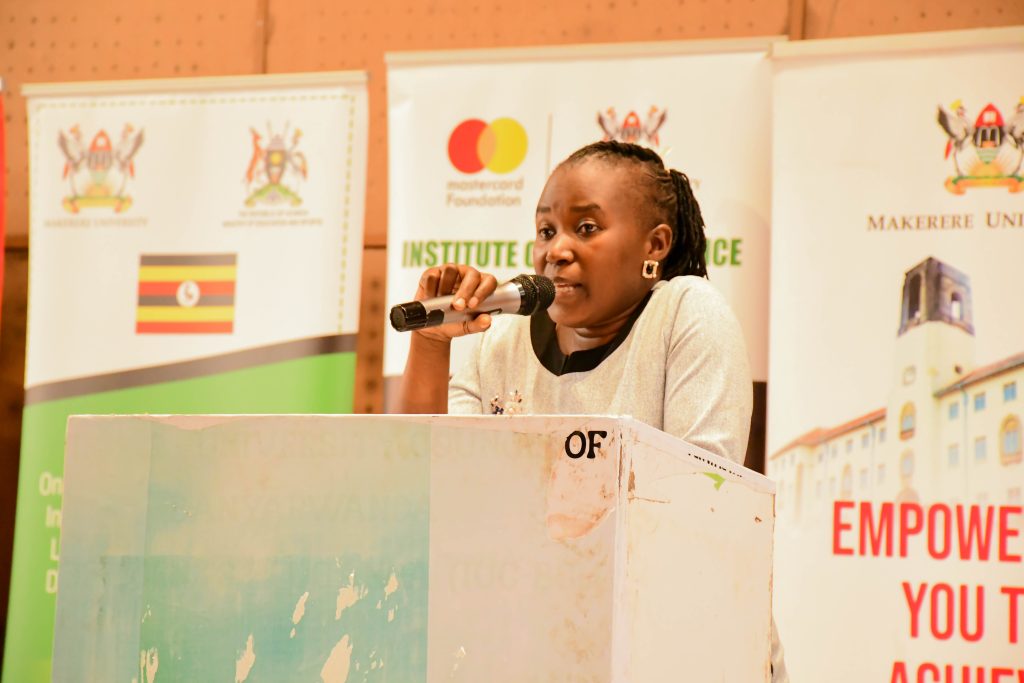
She highlighted the role of the university library in supporting learning through access to books, journals, research materials, and study spaces, encouraging students to take advantage of these resources.
Balancing Academics with Campus Engagement
The 92nd Guild Minister for Academic Affairs, Makerere University, Hon. Neena Elsie Kalazani, congratulated the first-year students upon their admission and advised them to approach their studies with commitment and discipline.
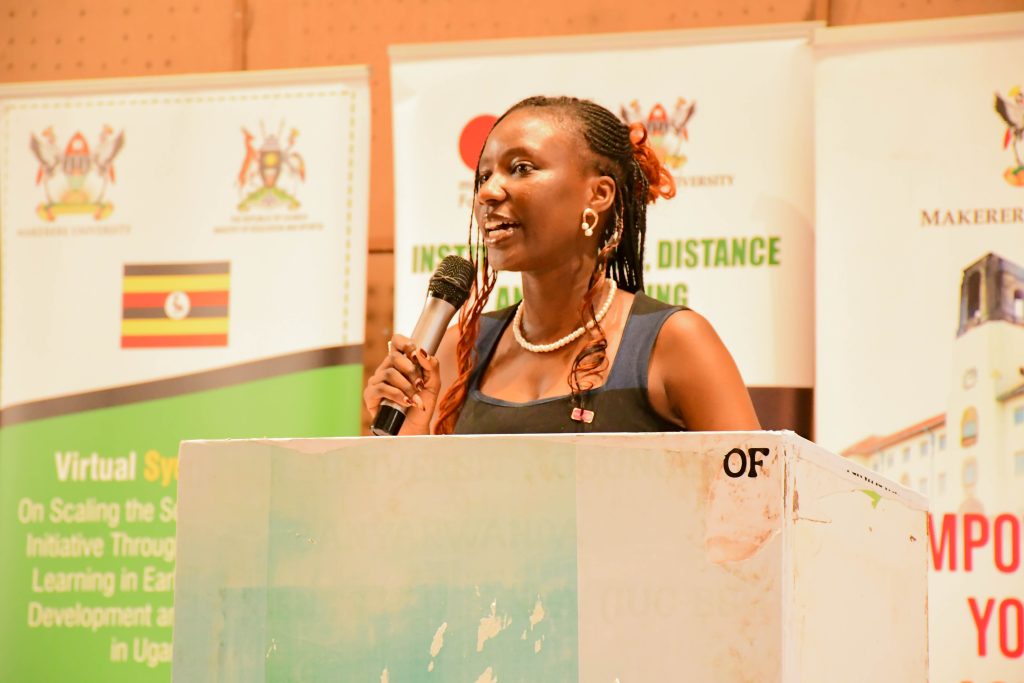
She urged students to attend lectures consistently, complete coursework on time, read beyond classroom requirements, and strive for academic excellence.
Beyond academics, Hon. Neena Kalazani encouraged students to participate in clubs, associations, and leadership opportunities, noting that such engagements help develop leadership skills, build networks, and create a more enriching university experience.
She called upon students to embrace the wider Makerere community and balance academic excellence with active participation in campus life.
The orientation program concluded with student leaders presenting the various clubs and associations within the College, encouraging first-year students to actively participate in co-curricular activities that promote leadership, teamwork, networking, and personal development.
The engagement provided students with essential guidance on navigating university life, emphasizing academic excellence, responsible conduct, personal well-being, and effective utilization of available university resources.
The Orientation session was moderated by Ms. Ritah Namisango, Principal Communication Officer at Makerere University, and Hon. Peter Kisakye, the Speaker, Makerere Education Students Association (MESA). Ms. Namisango acknowledged the College Chairperson, Mr. Anthony Bakashaba and his entire student leadership team for the selfless service exhibited during the orientation activities lined up at the College (Monday 3rd to Friday 7th August 2026). She also recognized the CEES Choir led by Dr Benon Kigozi for participating in the College Orientation.
Education
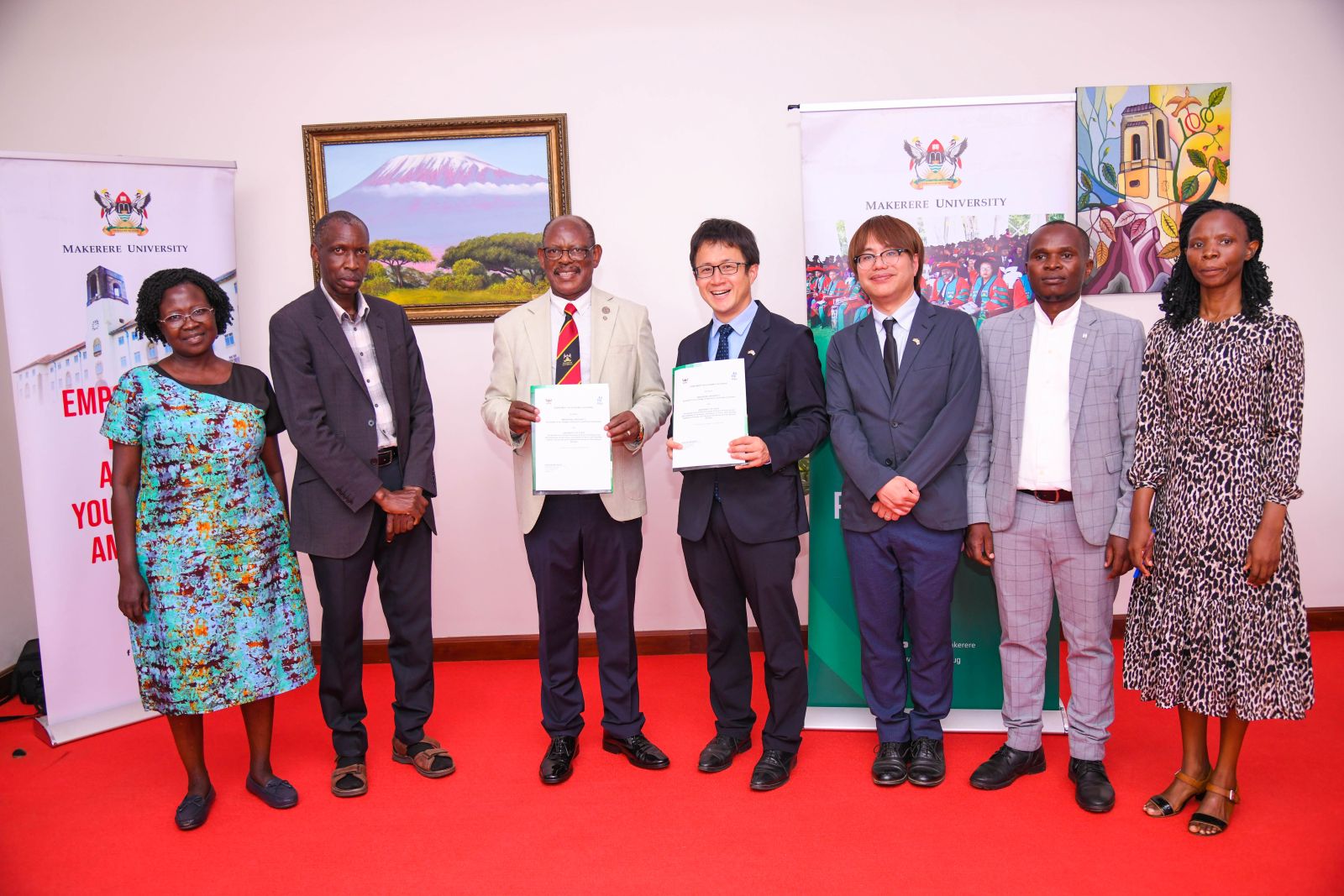
Makerere University Signs MoU with Fukui University to enhance Research, Teacher Development and STEM Education

-
 General1 week ago
Statement on Concerns Circulating Regarding a Member of Academic Staff
-
 General1 week ago
Press Statement: Incident Involving Death of a Student at Makerere University
-
 General2 weeks ago
Makerere Marathon 2026 – Running to Equip the Disability Support Center
-
 General1 week ago
Beyond Map Size: Africa’s Agency Should Not Be Funded by Other People
-
 General2 weeks ago
JNLC Leadership Symposium Equips Young Leaders for Responsible and Transformative Leadership