
General
Council Celebrates Prof. Suruma’s Two Terms as Chancellor


It was an evening of warm remarks and celebration as the University Council on Wednesday, 20th December took a moment during its last meeting of 2023 to celebrate the conclusion of Prof. Ezra Suruma’s two terms as Chancellor. Prof. Suruma who was installed as Chancellor on 18th January 2016 was at the expiry of his first term in December 2019 re-appointed by the President of the Republic of Uganda and Visitor of Makerere University, H.E. Yoweri Kaguta Museveni for a second eligible term.
Welcoming Members of Council, Management and other guests to the celebration, the University Secretary and evening’s moderator Mr. Yusuf Kiranda noted that the dinner was only one of the activities the University Council had lined up in honour of Prof. Suruma’s distinguished service.

Delivering the opening remarks, the Vice Chancellor, Prof. Barnabas Nawangwe expressed delight at welcoming Prof. Suruma and his wife Mrs. Specioza Suruma to the evening of celebration. He testified that he had enjoyed a very cordial working relationship with Prof. Suruma, whose advice has always been valuable.
Turning to the day’s host the Chairperson of Council, Prof. Nawangwe observed that Makerere has attained a lot during Mrs. Lorna Magara’s term, especially with regard to changes aimed at fostering the University’s research-intensive and research-led aspirations. “In the Soviet Union we used to say ‘thank you very much our very wise and visionary leader’”.
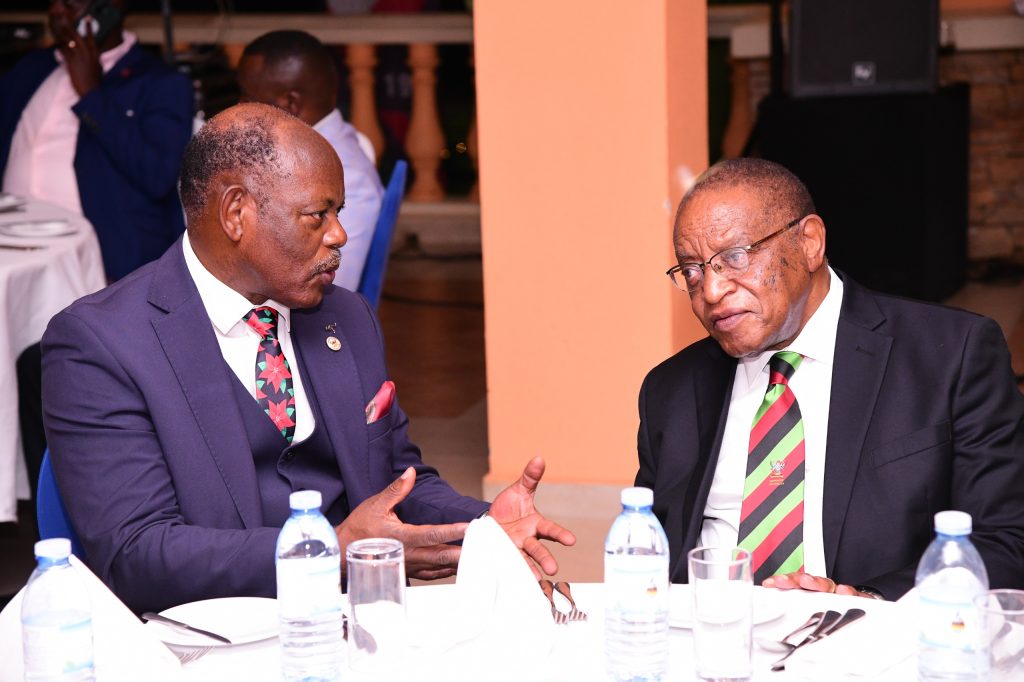
The Vice Chancellor equally thanked the Government for restoring confidence in the University as exhibited by designated funding for research and innovations (Mak-RIF), timely remuneration and able representation on Council. In the same breath he thanked the University Management as well as the Principals and their Deputies for the hard work that has kept Makerere shining and internationally recognized.
In her remarks prior to inviting Prof. Suruma to address the guests, Mrs. Lorna Magara acknowledged the Vice Chancellor’s appreciation of her leadership, relating it to a proverb often quoted by leadership gurus that says, “If you think you are leading and no one is following you, then you are only taking a walk.”
She too paid allegiance to Prof. Suruma, whom she admitted looking up to as “a strong leader, a leader of integrity, a man who leads by conviction”, and who has challenged all members of Council and Management to lead the same way. His distinguished service, Mrs. Magara added, has inspired both staff and students to lead more impactful and conscientious lives.
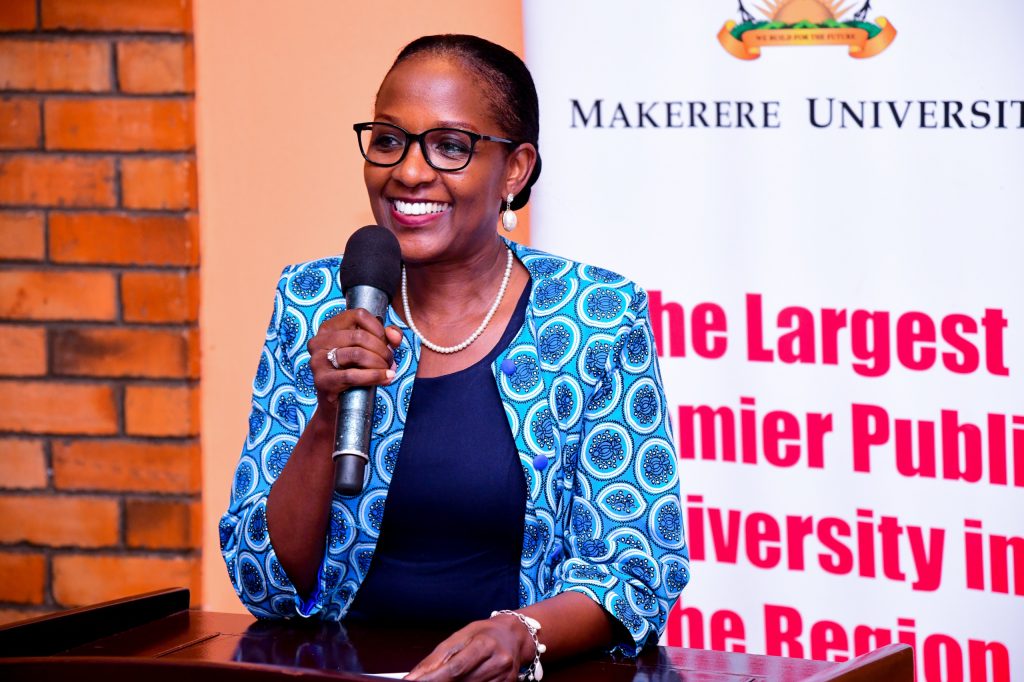
Quoting a public speaker who recently used the illustration of a pencil to describe human life, the Chairperson of Council shared that just as the important part of the pencil is the lead that writes, the important part of life is who we are on the inside. Similarly, just as sharpening makes the pencil usable, Mrs. Magara pointed out that it is the difficult experiences that sharpen us and prompt us to lead more impactful lives.
She therefore paid tribute to Prof. Suruma for being an exception leader, “you have fathered us, you have given us wisdom, you have guided us” praised Mrs. Magara, before adding “and we bless you together with your wife and your family that the next season will just take you further up in your purpose in life.”
She concluded by informing guests that the University Council would request Prof. Suruma to deliver a public lecture early in 2024, whereupon he would be presented with various items in appreciation of his distinguished leadership as Chancellor.
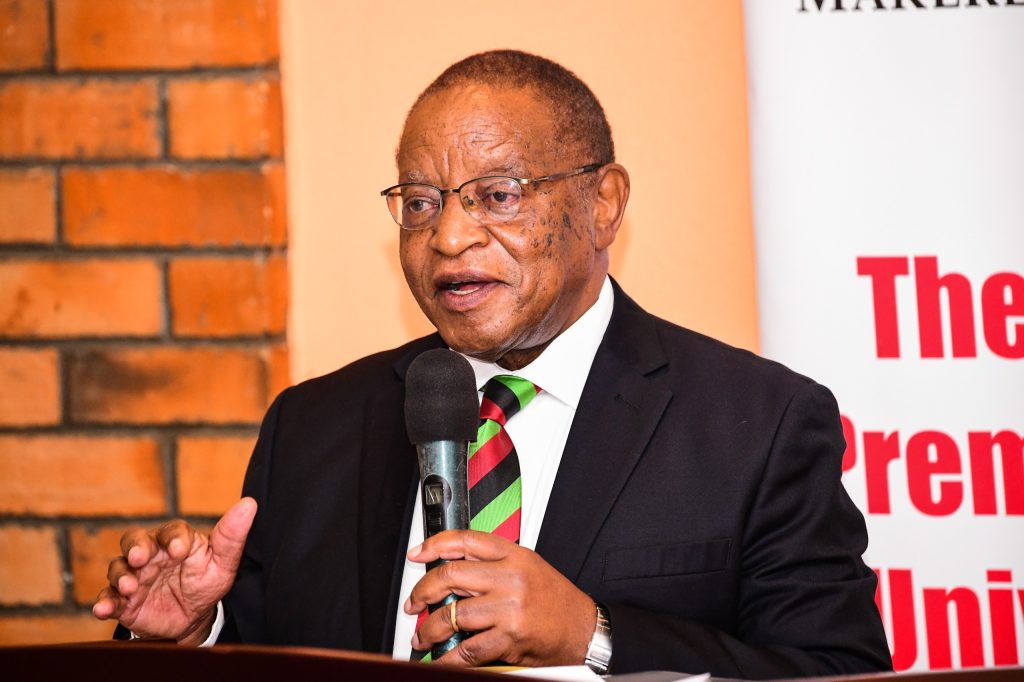
Prof. Suruma’s remarks of the evening were equally as warm, expressing great joy and satisfaction with the Makerere University Community for eight years of friendship, cooperation and leadership at Uganda’s greatest educational institution.
“In a very special way, permit me to thank the University Council Chairperson, Mrs. Lorna Magara and the entire Council for eight years of professional cooperation and leadership… Allow me also to say how delighted I am to recognize the excellence and distinction of the Vice Chancellor, Professor Barnabas Nawangwe. Thank you very much for serving humanity with such great love and sacrifice” extolled Prof. Suruma.
Turning to the Graduation Ceremonies, a highlight of his role as Chancellor, Prof. Suruma thanked the Deputy Vice Chancellors, Prof. Umar Kakumba and Prof. Henry Alinaitwe as well as the Academic Registrar and Principals of colleges for ensuring that the events were managed efficiently and effectively throughout his tenure. In the same breath, he acknowledged the special relationship nurtured with the Department of Performing Arts and Film, whose performances he said, “Often brought tears of joy to my eyes”.

Prof. Suruma described his fifty years of relationship with Makerere University where he started out as Lecturer in 1973 as “intermittent”. In 1975 he had to leave for the USA to complete his Ph.D, which he did in 1976, but had to wait until President Amin’s overthrow in 1979 to return. Unfortunately, he had to flee back into exile that same year because he had joined politics and the military was looking for him, only returning in 1985 when it was safer.
In 1987 he once again had to leave Makerere to take up the position of Director of Research at the Bank of Uganda, where he rose to the rank of Deputy Governor in 1990. He went on to serve in various capacities as Chairman and Managing Director of Uganda Commercial Bank (1993-1996), Minister of Finance, Planning and Economic Development (2005-2009), and as Head of the Prime Minister’s Delivery Unit (PDMU) during which term of service he was appointed Chancellor in 2016.

“When my late father, Sulumani Baliranwa prayed to be an intellectual as the Late John Bikangaga, probably the first graduate from Kigezi region, God told him that would not happen. But He promised that ‘one of your sons would teach Uganda’. That divine promise has been fulfilled in my presence here” remarked Prof. Suruma.
He therefore prayed that all present at the dinner would discover God’s purpose for their lives and pursue it diligently, and concluded by thanking the University Leadership for treating him and his wife to the wonderful evening of celebration. Upon Prof. Suruma’s request, the Department of Performing Arts and Film led by the Chair, Dr. Benon Kigozi sung the hymn Amazing Grace and in the Spirit of Christmas followed it up with Joy to the World.




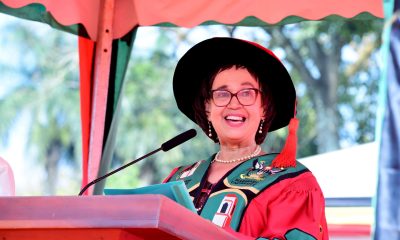






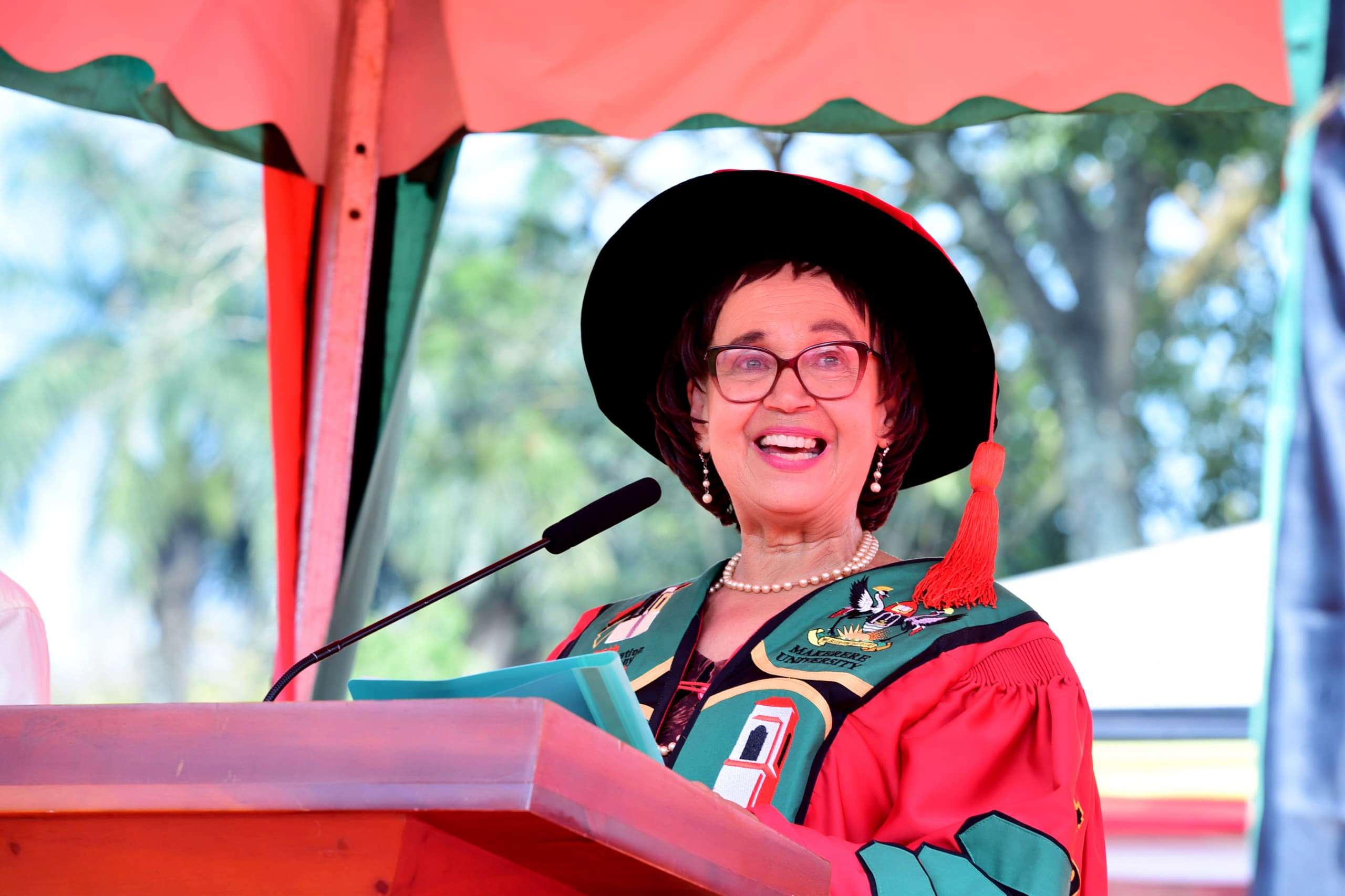
The Board Chairperson of the Makerere University Endowment Fund (MakEF), Dr. Margaret Blick Kigozi, has urged graduands in Health and Life Sciences to uphold professional ethics and serve humanity with diligence and compassion.
Her appeal came during the passing out of graduates from the College of Natural Sciences (CoNAS), the College of Veterinary Medicine, Animal Resources and Bio-Security (CoVAB), the College of Health Sciences (CHS) and the School of Public Health (SPH) on Day Two of the 76th Graduation Ceremony of Makerere University.
“Class of 2026, you are now part of the Makerere legacy. Wherever you go clinics, laboratories, farms, boardrooms, or classrooms, you carry this institution with you. Serve your patients with skill and compassion. Care for animals and communities responsibly. Question boldly and keep learning,” Dr Kigozi, said.
Delivering the commencement address, Dr. Kigozi lauded the graduates for their dedication to careers that directly impact lives and communities. She encouraged them to use their knowledge generously and exercise their power gently.
“Your education has trained you to ask better questions. Your humanity must guide the answers. Never forget that behind every chart, every case, every animal, every experiment, there is life. And life deserves care, patience, and dignity. Give every person you come in contact with care, patience and dignity,” Dr Kigozi, noted.
As the graduates embark on their professional journeys, Dr. Kigozi emphasized the importance of cultivating basic business acumen and financial literacy to ensure sustainability in their work.
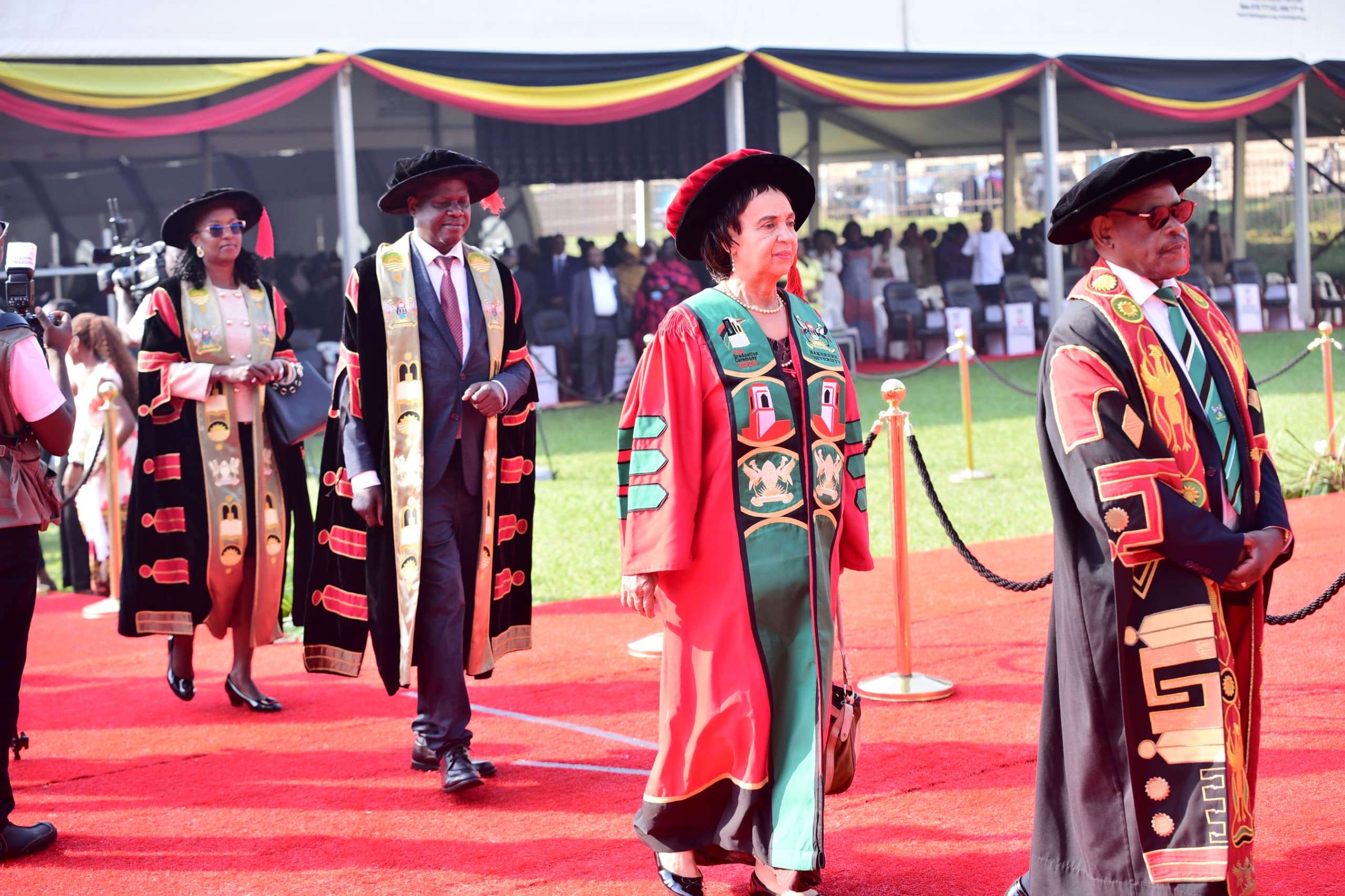
“You do not need to become accountants but you must be able to read the essentials: understand simple financial statements, budgets and key metrics so you can judge whether a clinic, lab, or program is sustainable. You are encouraged to start your business. There are numerous investment opportunities in your areas of training. You can provide services to our people and create jobs,” Dr Kigozi, said.
She shared candidly how, when she first stepped into leadership, she realised she did not understand balance sheets or budgets well enough. So, she returned to Makerere for short courses to strengthen herself.
“A well-run Hospital, clinic or lab delivers better outcomes, attracts staff, and secures funding. Business savvy is not only about profit, it’s about sustainability and the freedom to serve ethically and effectively. Carry clinical skill with business sense so your work endures and grows,” Dr. Kigozi, noted.
Quoting renowned writer and producer Shonda Rhimes, creator of Grey’s Anatomy, who once reflected that succeeding in one area of life can sometimes mean falling short in another, Dr. Kigozi encouraged women graduates to intentionally balance professional ambition with family responsibilities.
“When one area thrives, another is often under strain. When Navio was graduating from school I had to manage the Presidential Investor Round Table on the same day as Executive Director Uganda Investment Authority. I chose my job and delegated his siblings to attend Navios graduation. I learnt from this. I choose family always after that thing you achieve once and keep forever,” Dr Kigozi, said.
In his speech, the Prof Barnabas Nawangwe, the Vice Chancellor, informed the congregation that Makerere’s ranking on all university ranking platforms has remained stable, placing Makerere among the top 10 African universities and within the top 4.5% globally.
“In the Times Higher Education global ranking, Makerere University made a formidable jump from the 1200-1500 bracket to the 800-1000 bracket. This was no mean achievement and I congratulate all members of the Makerere Community on this stellar performance,” Prof Nawangwe, said.
-
 Humanities & Social Sciences5 days ago
Meet Najjuka Whitney, The Girl Who Missed Law and Found Her Voice
-
 Health1 week ago
Uganda has until 2030 to end Open Defecation as Ntaro’s PhD Examines Kabale’s Progress
-
 Agriculture & Environment1 week ago
Uganda Martyrs Namugongo Students Turn Organic Waste into Soap in an Innovative School Project on Sustainable Waste Management
-
 General4 days ago
76th Graduation Highlights
-

 General1 week ago
Mastercard Foundation Scholars embrace and honour their rich cultural diversity