
General
President Yoweri Kaguta Museveni launches Annual Nelson Mandela Commemorative Lecture

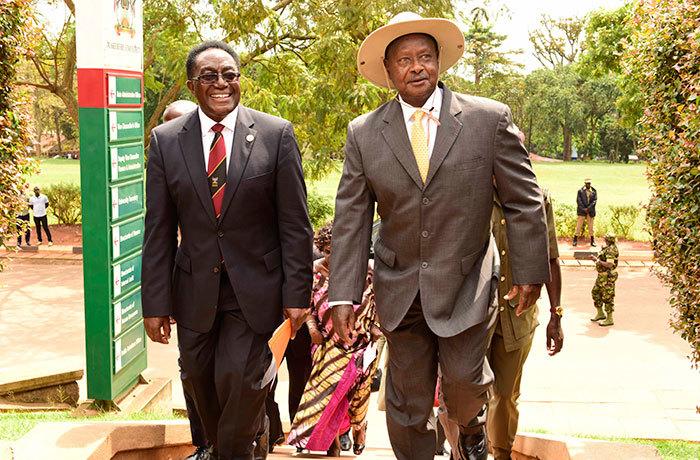
The President of the Republic of Uganda, H.E. Gen. Yoweri Kaguta Museveni last week launched the Makerere University Annual Nelson Mandela Commemorative Lecture. The launch followed a public lecture in honour of Nelson Mandela organized by the Department of Political Science and Public Administration in collaboration with the South African High Commission. Held under the theme; Mandela the Legend: A Message for the Youth, the lecture took place in the University Main Hall and was attended by among others, several dignitaries from the Governments of Uganda and South Africa, members of the University Council and Management as well as staff and students. At the public lecture, Mandela’s granddaughter, Ms Zoleka Mandela, delivered a keynote address in which she shared moving testimonies of her personal experience growing up under apartheid with absent parents involved in the liberation struggle, later on giving a message of hope to young people experiencing similar challenges.
 “My personal experiences growing up as a child were largely afflicted by the repercussions of growing up in an unconventional and unstable home environment that was mostly vulnerable. I had my first drink at the age of nine, followed by multiple encounters with sexual and physical abuse. The severity of my drinking and drug use at the age of thirteen had escalated to a seventeen-year addiction to alcohol and suicidal behavior that was accompanied by a decade of drug dependency. An unsheltered life, poorly protected from the demoralizing ills of society is a narrative commonly shared by many youth and those like me who are born in politically famous families. I however assure you that much as you may feel unimportant, uninvolved and unheard, there are seeds of greatness that exist within you, seeds that will inevitably blossom whatever way the winds of life may blow you,” Ms Zoleka explained. Despite her tragic life as a youth, Ms. Zoleka has grown into a responsible adult now managing the Zoleka Mandela Foundation. Established in 2013, the foundation aims to educate young people about breast cancer, road safety and social responsibilities. The foundation also seeks to assist young people with personal growth, volunteerism and accountability to become responsible citizens.
Like her grandfather, Ms Zoleka emphasized the importance of education in fostering personal development noting that the quality of education has great impact on the quality of someone’s life. “My grandfather was passionate about education and always thought of it as a formidable approach to changing the world. Young people must therefore take it upon themselves to receive the highest level of education to represent us well as future leaders,” she said.
Ms Zoleka further said her grandfather believed so much in the youth as determinants of society’s future and greatly emphasized the need for all children to have political, social and cultural protection.
The discussants who included Prof. Mahmood Mamdani, Hon. Robert Kyagulanyi Ssentamu, Dr Julius Kiiza, Hon. Anna Adeke Ebaju and Brig. Henry Masiko, applauded Nelson Mandela’s selfless contribution to the liberation struggle of South Africa saying he exhibited servant leadership skills and was indeed a true legend. They underscored the need to empower young people pointing to their critical role in the social, economic and political transformation of nation states across the globe.
In his remarks, President Museveni paid glowing tribute to Nelson Mandela for his selfless contribution to the liberation of South Africa in particular and the African Continent in general. He noted that Nelson Mandela played a crucial role in the liberation of South Africa by injecting a spirit of activism into the African National Congress as the first leader of the youth wing in 1944, which redefined the ANC’s struggle in the eyes of the apartheid regime.
He further noted that Mandela played a critical role in the launching of the freedom charter of 1955 that emphasized the fight for freedom for all South Africans no matter their color or race.
He said Mandela’s involvement in recruiting and fighting in the armed resistance, his refusal to collaborate with his oppressors even after a long jail period and preaching the message of reconciliation between South Africans without revenging against his former oppressors, made him a unique freedom fighter.
The President, however, said that the plight and suffering of the generation of the late Nelson Mandela, is closely related to the plight and history of the African continent. He noted that although the African continent derives pride in being the origin of humanity, a pioneer of civilization and also being blessed with abundant natural resources, on account of lack of a clear ideology and poor governance, the continent has suffered several setbacks in the last 500 years putting it and her people behind all other continents in terms of development.
The President said that because of being poorly governed under many fragmented kingdoms and chiefdoms, the African people became more vulnerable when they were confronted by foreign forces of domination especially from Europe that led Africa into suffering from slave trade, colonialism and neo-colonialism.
He said that to honour the late Nelson Mandela and other African freedom fighters for independence, the current leaders on the continent as well as the coming generations need to work to economically and politically unite the African continent to ensure economic prosperity and strategic security.
Speaking at the public lecture, the South African High Commissioner expressed gratitude to the Government of Uganda and Makerere University in particular for providing a platform to carry forward the legacy of Mandela through the Annual Nelson Mandela Commemorative Lectures.
The Vice Chancellor, Prof. John Ddumba-Ssentamu, thanked the Department of Political Science and Public Administration for spearheading the initiative to recognize the contribution of the Mandela family to the liberation of the African Continent. He extended appreciation to the South African High Commission for the support rendered to Makerere University in its effort to recognize the great works of the Mandela family.
The Principal of CHUSS, Prof. Edward K. Kirumira, explained the contribution of the humanities and social sciences to national development calling for the amendment of the policy that emphasizes the natural sciences over behavioral sciences. He appealed to the youth to emulate Mandela’s legacy by “working towards leaving a good name”.
The Dean, School of Social Sciences, Dr Andrew Elias State, called for the establishment of a Nelson Mandela Scholarship Fund to carry forward his legacy. He also called for the establishment of a Y.K Museveni Scholarship Fund to promote and strengthen the training of peace and security studies.
In her remarks, the Head Department of Political Science and Public Administration, Dr Suzie Nansozi Muwanga extended her sincere appreciation to the sponsors of the public lecture. The sponsors included Eskom, Toyota Uganda, Friedrich-Ebert-Stiftung, Stanbic Bank and Pinnacle Security Group.


General
Makerere University and Xiangtan University Advance Strategic Partnership in Chemical Engineering

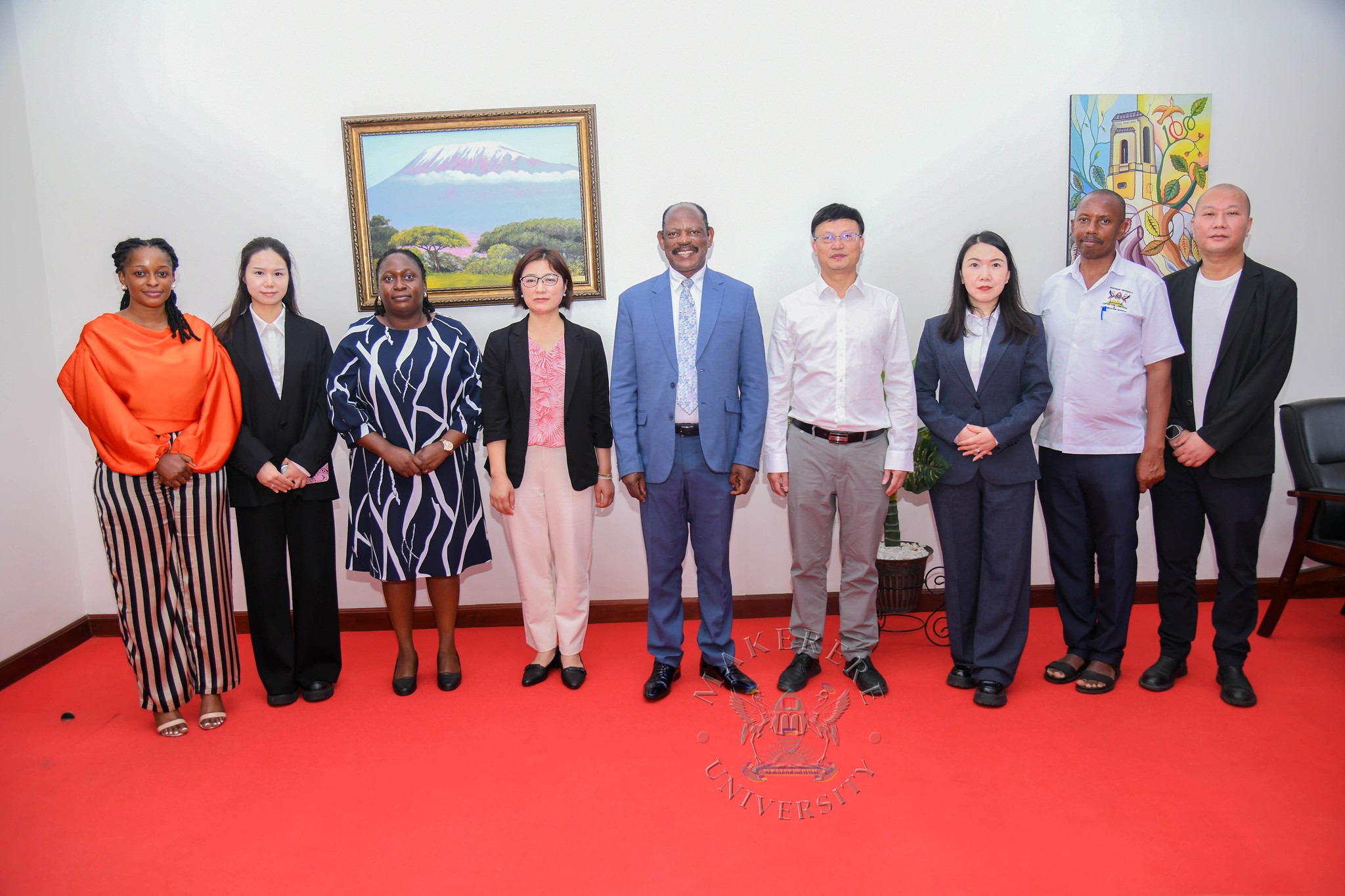
Makerere University and Xiangtan University are set to update their close to 20-year academic partnership, with a new focus on launching a joint Master’s degree program in Chemical Engineering and expanding student and staff exchange initiatives.
The commitment was reaffirmed during a recent visit by a delegation from Xiangtan University to Makerere University headed by Professor Dingyu Ou, in the company of Mr. Tang Fei and Professor Gilbert Gumshabe, the Chinese and Ugandan Directors of the Confucius Institute at Makerere University respectively.
While addressing the delegation, Professor Nawangwe highlighted that this initiative is part of a broader strategy to diversify academic offerings and contribute to national development through training in Chemical Engineering. Through this new initiative, the University will better prepare graduates for the petrochemical industry and support the country’s industrial growth.
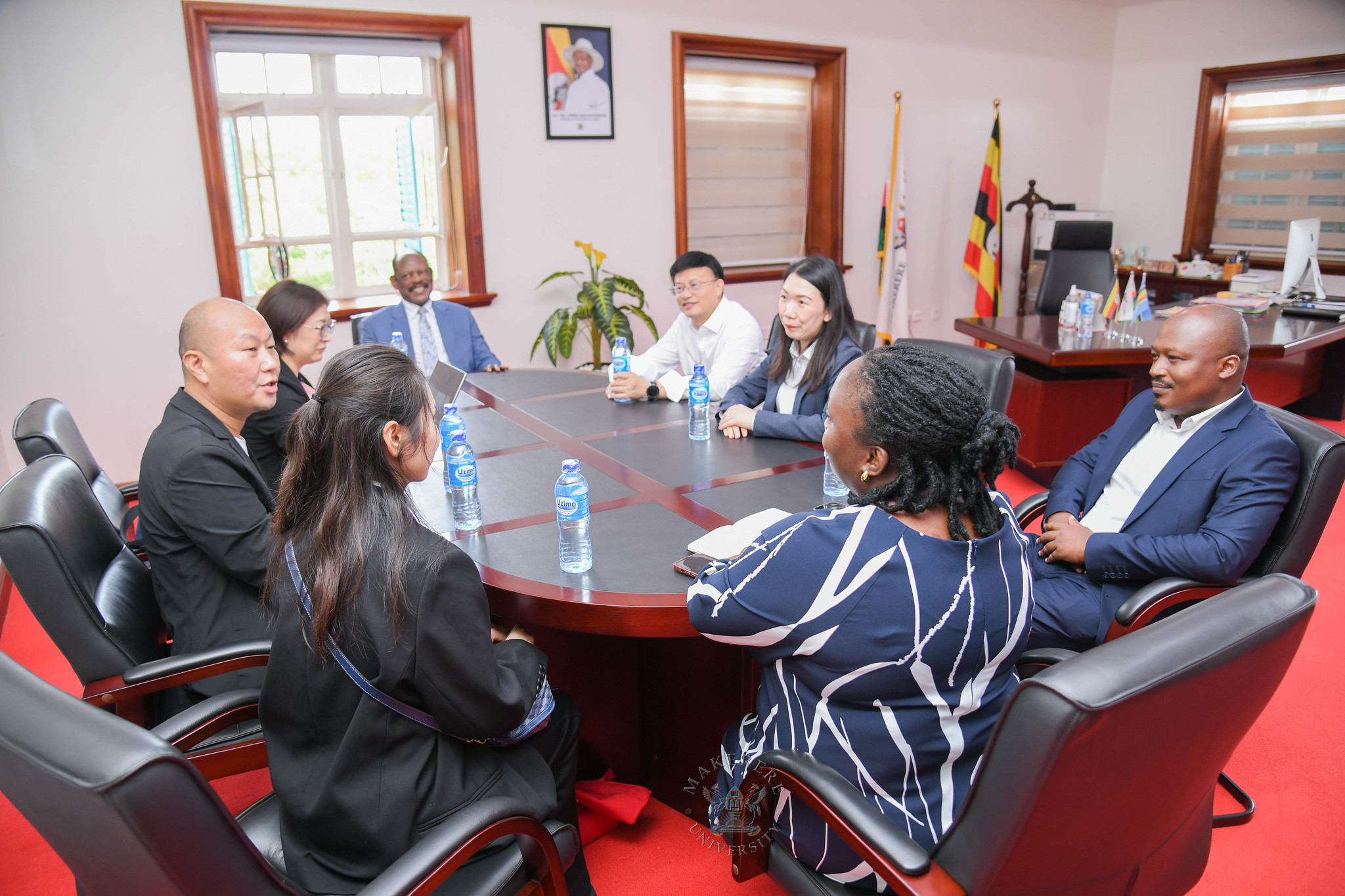
The Vice Chancellor appreciated that the proposed collaboration aims to address Uganda’s growing need for industrial expertise, particularly as the country develops its petroleum sector. The two universities here are working toward a 1+2 training model, which will enable Makerere students to gain practical experience and access advanced laboratory facilities at Xiangtan University.
Professor Nawangwe further reiterated that “our relationship with the people of China, not just for Makerere but also for a big part of Uganda, has been opened wider by the establishment of the Confucius Institute, considering that many other collaborations like one being discussed now have come through this collaboration.”
The head of the Xiangtan delegation, Professor Dingyu Ou, expressed appreciation for the meeting, and acknowledged the history between the institutions. “As mentioned, we have a very long relationship and a very stable friendship between our two universities.”
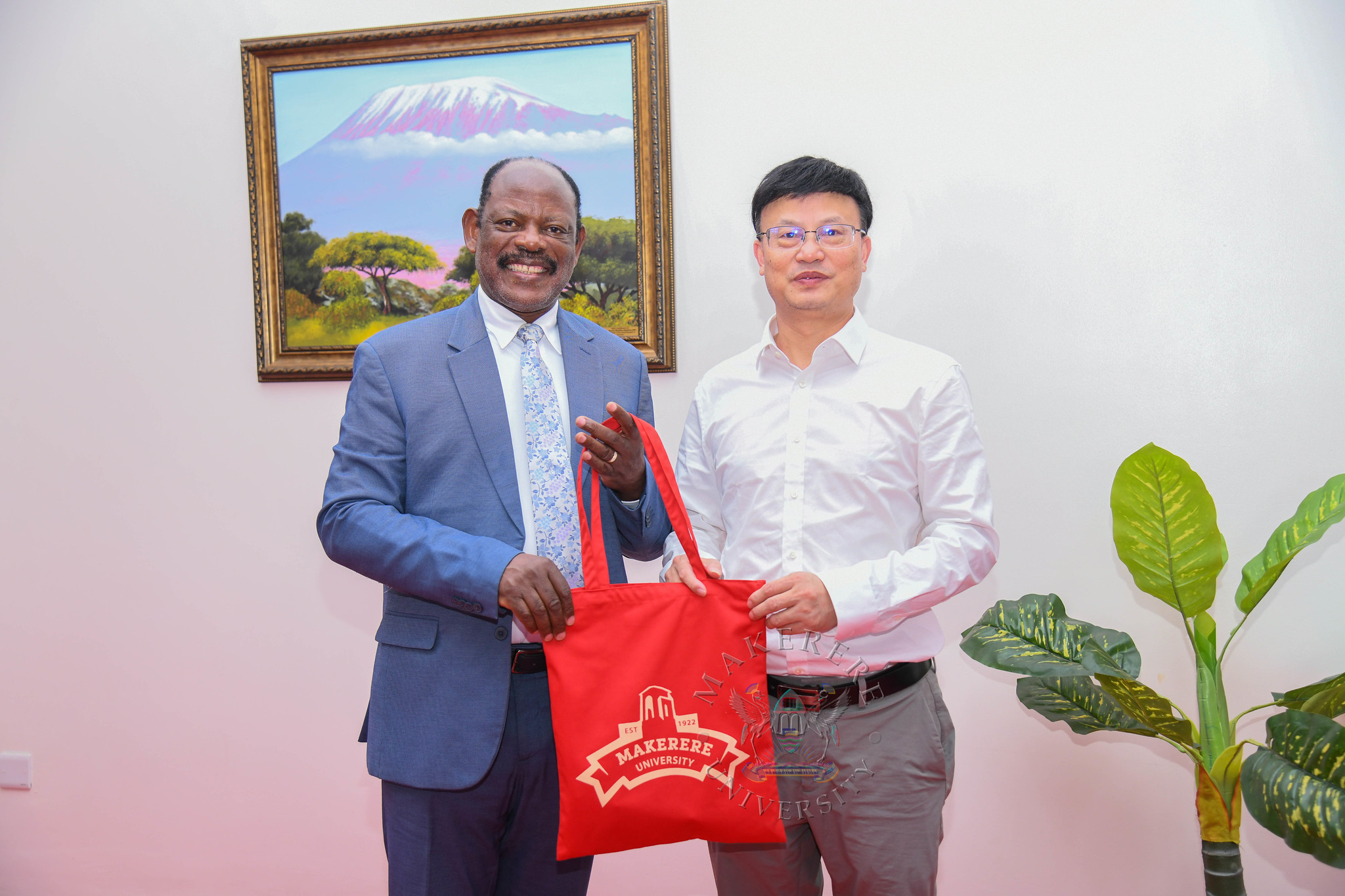
Professor Ou extended appreciation for the support provided to the Confucius Institute at Makerere, the care shown to his colleagues, and looked forward to the successful start of the Chemical Engineering collaboration.
Assuring the delegation of Makerere’s readiness for the collaboration, Ms. Hawa Ndagire Kajumba the Lead, Partnerships and Stakeholder Engagement, Makerere University Advancement Office, aligned with the Vice Chancellor’s emphasis of University goal to have both theory and practice imparted to the students.
She said “the curriculum of the university and Uganda as a whole is moving towards competence-based education training to ensure students are equipped to demonstrate those skills in the actual field, particularly regarding petroleum exploration.”
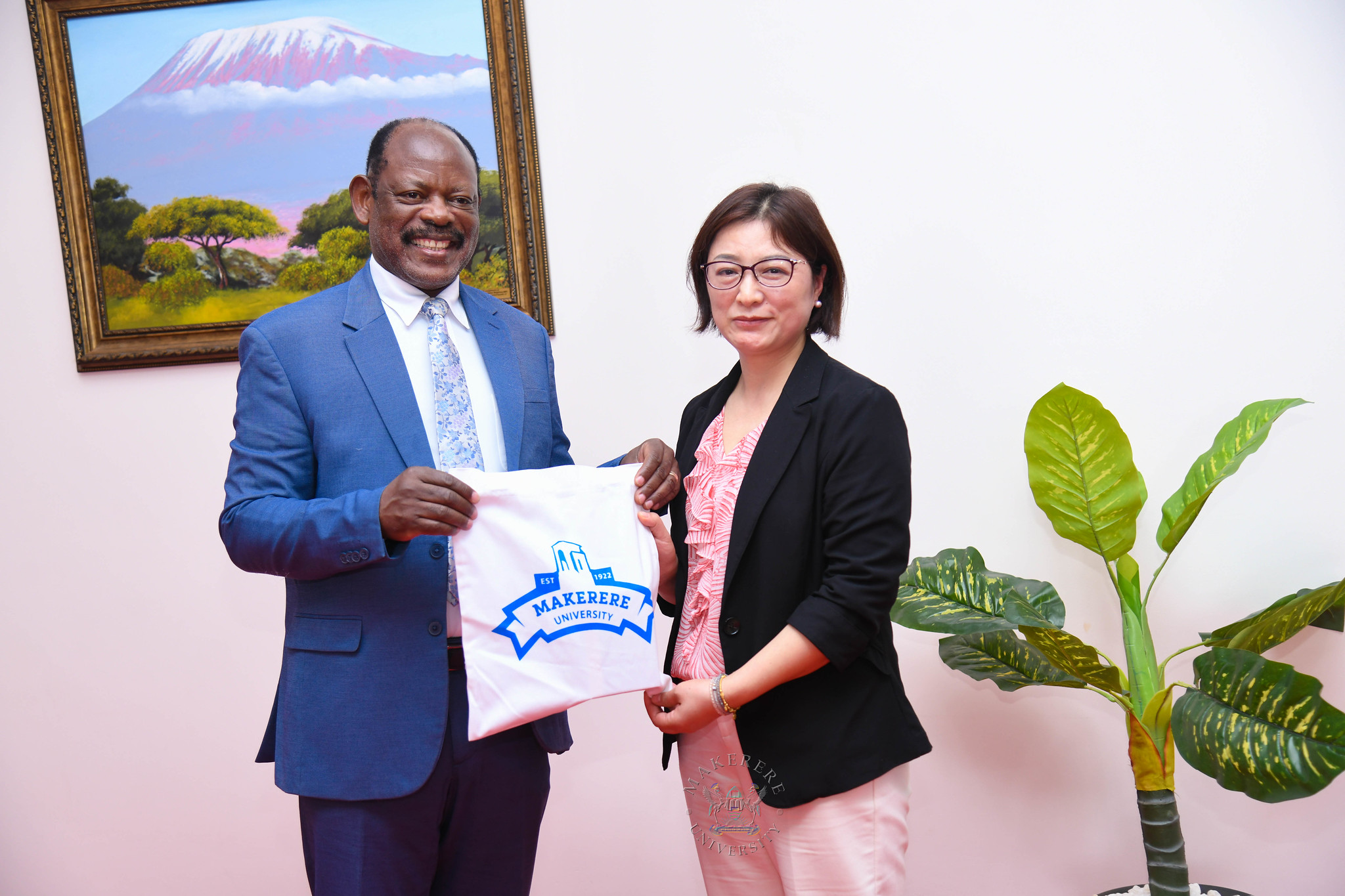
Ms. Ndagire Kajumba also emphasised a shift in strategy for the partnership office, saying, “we are moving away from just signing MOUs that collect dust, and moving towards those that are more collaborative to benefit our faculty and students, just like this one.”
Professor Gilbert Kumushabe aligned his remarks with those of the Vice Chancellor and Ms. Ndagire Kajumba, and described the method used at Xiangtan University as “actually competence-based teaching.”
Based on his recent visit, Prof. Gumoshabe shared that students in China are divided into groups with dedicated teachers to perform practical, hands-on work beyond the theoretical lecturers. He expressed gladness that the same was being adopted for the Ugandan context.
Both institutions are now working to finalise the specific agreements for the joint degree and exchange programs. Beyond academic training, the collaboration will advance cultural and professional exchange.

-
 General2 weeks ago
Statement on Concerns Circulating Regarding a Member of Academic Staff
-
 General1 week ago
Timothy Khabusi: From Barefoot Walks to shaping Uganda’s Eye health Future
-
 General2 weeks ago
Beyond Map Size: Africa’s Agency Should Not Be Funded by Other People
-
 Health1 week ago
Uganda’s HIV Treatment Gains Bring the Youth Gap into Focus
-
 Agriculture & Environment1 week ago
Makerere University Welcomes 50 Youth Skilling Program trainees under the Africa Climate Collaborative, Supported by Mastercard Foundation