
General
Mak Students Receive USD 90,000 from Saudi Arabia

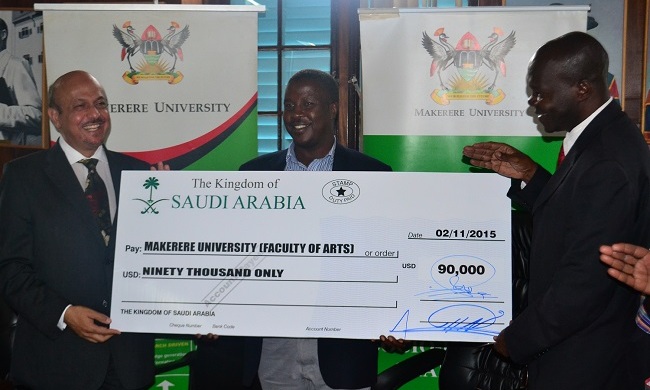
On 4th November 2015, Makerere University received a USD 90,000 grant from King Abdalla Bin Abdul Aziiz International Centre for Arabic Language- Royal Kingdom of Saudi Arabia; to enable 20 students to study Arabic language for a period of three years. The donation was handed over to the Acting Vice Chancellor and Deputy Vice Chancellor in charge of Academic Affairs, Dr. Ernest Okello Ogwang by the Ambassador of Saudi Arabia to Uganda H.E Dr. Jamal Rafah at a colourful ceremony held in the Makerere University Council Room.
According to the Head, Department of European and Oriental Languages, Dr. Edith Natukunda, the donation will help the institution to boost and promote the teaching of Arabic Language in the Colleges of Humanities and Social Sciences (CHUSS) and Education and External Studies (CEES).
The Mak-Arabic Scholarships will also enable students to learn and master the Arabic culture and norms as well as explore the historical background of Arab countries and the longstanding relations between Uganda and the Royal Kingdom of Saudi Arabia. Additionally, the sponsorship will facilitate the development and promotion of Arabic both nationally and internationally, so as to enhance communication and friendship between the people of Uganda and the Royal Kingdom of Saudi Arabia.
 As an incentive to encourage the learning and the usage of international languages in Uganda, Arabic language was introduced at Makerere University in 2011 under the Department of European and Oriental Languages. The Arabic language is taught at three stages of learning i.e. beginner, advanced and Postgraduate Diploma with education.
“We have beginners who start Arabic at the University; the advanced group, which studied Arabic at secondary level and those who are doing a Post Graduate Diploma in education. Most of the time, those who do Advanced Arabic are taking it with education, which explains our close collaboration with the College of Education and External Studies,” Dr. Natukunda stated.
She also explained that the Department of European and Oriental languages hosts four international languages, with French being the oldest, The Department also teaches German followed by Arabic which has been on students’ curriculum for approximately fifteen years.
“The younger daughter is Chinese and the very special daughter is Spanish, that we are set to teach as soon as approval from the University Management is granted. We are happy that today the Kingdom of Saudi Arabia has come out to support our Arabic students. I am glad that the USD 90,000 will fully cover all basic requirements of 20 students for the three years they are to spend learning Arabic,” she said.
She thanked the College of Education and External studies for the efforts they have rendered in co-teaching Arabic with the Department of European and Oriental Languages.
“I am grateful that through our strong collaboration, you have been able to equip our students with the Arabic methods as we teach them the content. Currently we have also partnered with the Department of Peace, Conflict and Religious Studies to help us teach our students the religious concept of Islamic culture and civilization. We also service the PhD Programs at Makerere Institute of Social Research,” she said.
On behalf of the Makerere University Community, the Acting Vice Chancellor Dr. Ernest Okello Ogwang extended his sincere gratitude to King Abdul Aziiz International Centre of Arabic Language for the generous support that aimed at supporting the University’s core functions of teaching and learning.
“We recognise the support that the Centre and the Royal Kingdom of Saudi Arabia have offered us to fulfil one of our core functions of teaching language. Language is a form of communication, a part that builds up culture and language is civilization. Therefore Arabic as a language has contributed a lot to Humanities and Sciences such as Architecture and Astronomy. It is of great importance that our children also get this knowledge so that this culture is extended and perpetuated to our community,” said the Acting Vice Chancellor.
Dr. Okello Ogwang further acknowledged the mutual relationship that Makerere University has with the Royal Kingdom of Saudi Arabia which is in line with the University core function of Knowledge Transfer Partnerships and Networking.
“Another core function of Makerere University is to foster partnerships and networking. We therefore greatly value the relationship we have built with the Royal Kingdom of Saudi Arabia. It is through our collaboration that we acquired linkages with King Abdalla Bin Abdul Aziiz International Centre for Arabic Language, which has eventual led to this USD 90,000 donation,” he added.
Speaking to the Makerere University Management and Staff present, H.E Dr. Jamal Rafah said, “One very important thing in life is a friend, I therefore feel and I have always considered myself as a true friend to the people of Uganda. I am happy that Makerere University Management is willing to support and extend Arabic language and culture among Ugandan Academic and Saudi Arabian institutions of education. With much respect, I would like to say that this institution deserves to be supported. As Ambassadors of the Royal Kingdom of Saudi Arabia, it is our obligation to develop and cement relationships with other nations as assigned by the Custodian of the two holy mosques. I therefore promise you by the will of Subhanahu Wa Ta'ala that we shall have more collaborations and understandings.”
The Ambassador encouraged people to embrace education as the only way to liberate the world from ignorance and economic backwardness. “Education is very important to all of us. And in Islam the first thing Allah ordered to Prophet Muhammad was ‘Iqra’ which means read. By reading we can know each other, and also know more about our culture. Nothing is more of an enemy to us than ignorance,” he said.
Remarking on the importance of language in communication, the Ambassador encouraged institutions to teach several languages so as to ease international communication. Reiterating the usefulness of multilingualism in international business as well as developing international relations, Dr. Jamal Rafah said that humans should also consider the language of love and peace to promote unity and stability among their societies.
 “Language is very important and those who don’t know, I will be delightful to tell you that the Arabic language is the language of people in paradise. It is also my pleasure to say that the two languages that are most important in our society are; peace and love. Language can help in creating understandings among people as well as extending relations,” he noted.
He requested the Makerere University Management to develop a vision upon which distant collaboration between Saudi Arabia and the people of Uganda can be developed, assuring members that the kingdom of Saudi Arabia is willing to support people of Uganda regardless of their faith.
Emphasizing the importance of international languages on the secondary school curriculum, the Principal of College of Education and External Studies Dr. Fred Masagazi Masaazi mentioned that the College is working hard to see to that Arabic as a language is included on the new secondary school curriculum to be introduced in 2017.
“When we talk about Arabic, it is hard to separate it from teaching. So as the College of Education and External Studies, we are trying to expand the teaching of the languages to many schools in Uganda. Per now we have gone as far as Kitgum. Today, the secondary curriculum is changing and we are getting a new curriculum which is starting in 2017 and one of the areas which are very important is the area of international language. During the interaction with the Ministry of Education, Science, Technology and Sports, we were able to discuss on how we can make Arabic a core language on the students curriculum due to the strong communication and interaction we have with the Arabic people,”
According to the Deputy Principal of College of Humanities and Social Sciences Prof. Abasi Kiyimba, teaching and promoting Arabic language at Makerere University marks the realization of the college’s mandate of overseeing the teaching of languages through its subordinate units.
“To this end, we have come a long way which has taught me that when we see successful projects, we have to know that so many people have contributed towards their achievement. The College of Humanities and Social Sciences has six in which the need for language teaching cannot be overlooked. We therefore look forward for a fruitful collaboration in this area with the Kingdom of Saudi Arabia,” he mentioned.
In his speech, the Chairperson of Makerere University Academic Staff Association Dr. Muhammad Kiggundu- Musoke thanked the Ambassador of Saudi Arabia to Uganda and the Royal Government of King Salman bin Abdulaziz Al Saud for the support they have given to Makerere, which has enabled the institution to explore a new academic area.
“We are so grateful that the Kingdom of Saudi Arabia has now opened up all the doors to support us in academics. This wouldn’t have been possible if it was not for your openness, the love you have for Uganda and the love you have for international diplomacy. Makerere University enjoys explorations in terms of academia. So when we interacted with you, we discovered that we have got a friend who is reliable. The academicians of Makerere University are very happy that we are opening up and very soon with your corporation we shall have Memorandum of Understandings between Ugandan universities and the Universities of Saudi Arabia,” he happily remarked.
Giving a brief background about the Arabic language in Makerere University, The Language Coordinator,-Department of European and Oriental Languages Mr. Ssali Ebraheem said that despite its being late at the institution, Arabic as a language has received an overwhelming support and attention from the Makerere University Community.
He therefore advised the members to look at Arabic as a language other a religion. “We should not look at Arabic from the religious perspective only, but rather as any other language that binds the world together internationally,” he remarked.
The ceremony was graced by Makerere University Management and Staff and these included; the Makerere University Deputy Vice Chancellor in charge Finance and Administration Prof. Barnabas Nawangwe, the Academic Registrar Mr. Alfred Namoah Masikye, the University Librarian Dr. Helen Byamugisha, Principals and Deputy Principals of various colleges and Heads of Department among others.
Article: Nabatte Proscovia and Iga Charles- Interns, Mak Public Relations Office.



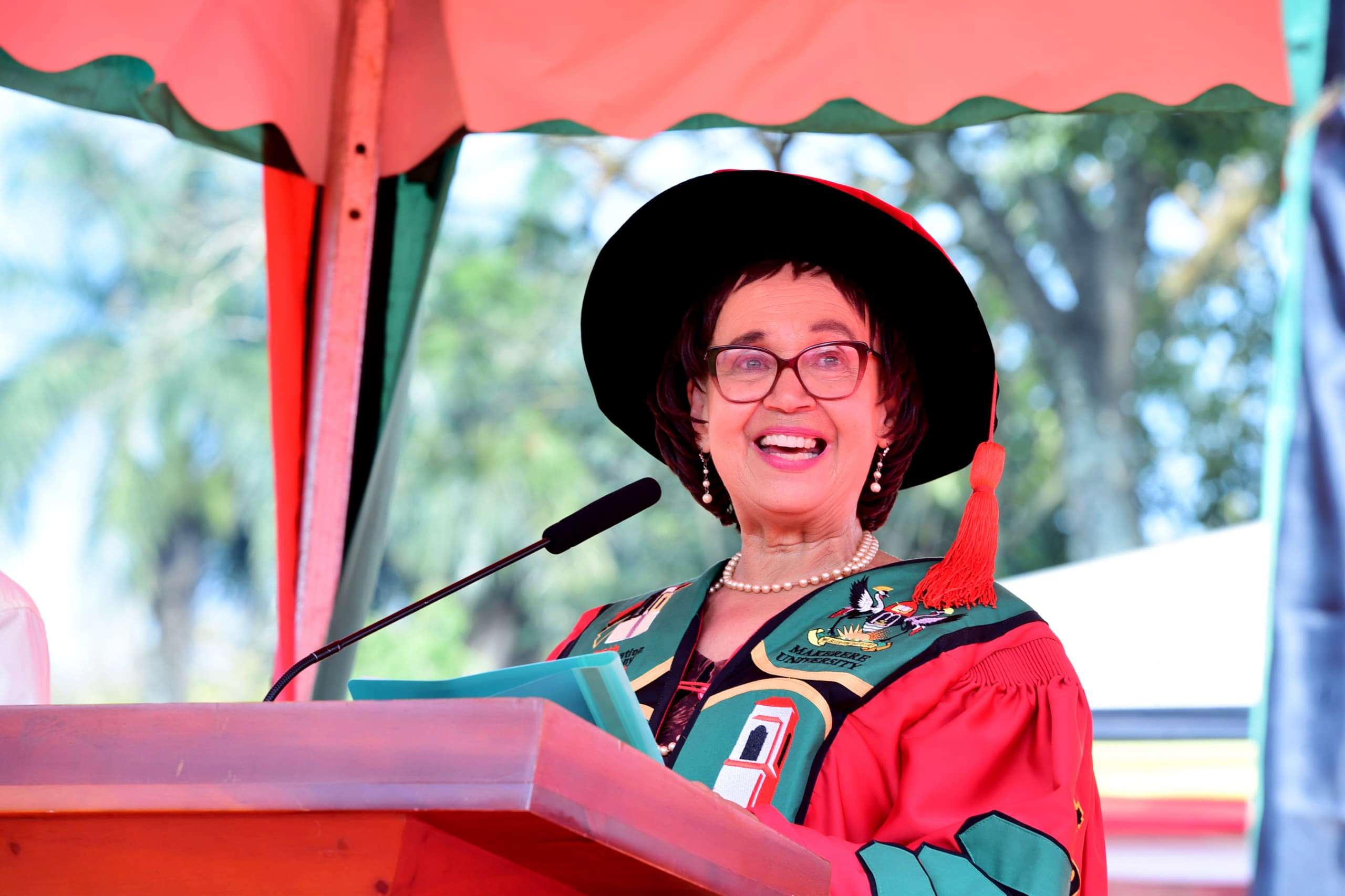
The Board Chairperson of the Makerere University Endowment Fund (MakEF), Dr. Margaret Blick Kigozi, has urged graduands in Health and Life Sciences to uphold professional ethics and serve humanity with diligence and compassion.
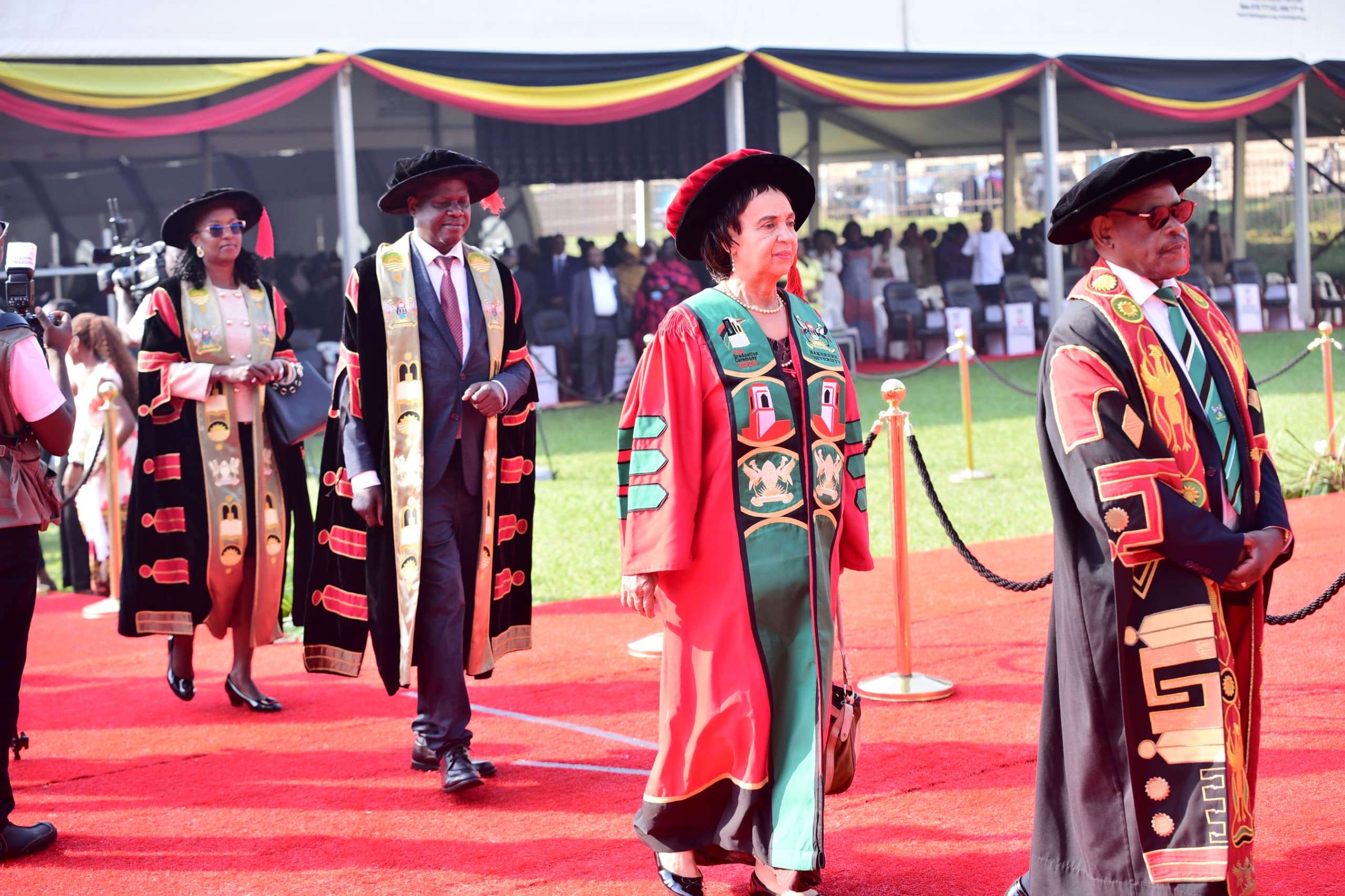
Her appeal came during the passing out of graduates from the College of Natural Sciences (CoNAS), the College of Veterinary Medicine, Animal Resources and Bio-Security (CoVAB), the College of Health Sciences (CHS) and the School of Public Health (SPH) on Day Two of the 76th Graduation Ceremony of Makerere University.
“Class of 2026, you are now part of the Makerere legacy. Wherever you go clinics, laboratories, farms, boardrooms, or classrooms, you carry this institution with you. Serve your patients with skill and compassion. Care for animals and communities responsibly. Question boldly and keep learning,” Dr Kigozi, said.
Delivering the commencement address, Dr. Kigozi lauded the graduates for their dedication to careers that directly impact lives and communities. She encouraged them to use their knowledge generously and exercise their power gently.
“Your education has trained you to ask better questions. Your humanity must guide the answers. Never forget that behind every chart, every case, every animal, every experiment, there is life. And life deserves care, patience, and dignity. Give every person you come in contact with care, patience and dignity,” Dr Kigozi, noted.
As the graduates embark on their professional journeys, Dr. Kigozi emphasized the importance of cultivating basic business acumen and financial literacy to ensure sustainability in their work.
“You do not need to become accountants but you must be able to read the essentials: understand simple financial statements, budgets and key metrics so you can judge whether a clinic, lab, or program is sustainable. You are encouraged to start your business. There are numerous investment opportunities in your areas of training. You can provide services to our people and create jobs,” Dr Kigozi, said.
She shared candidly how, when she first stepped into leadership, she realised she did not understand balance sheets or budgets well enough. So, she returned to Makerere for short courses to strengthen herself.
“A well-run Hospital, clinic or lab delivers better outcomes, attracts staff, and secures funding. Business savvy is not only about profit, it’s about sustainability and the freedom to serve ethically and effectively. Carry clinical skill with business sense so your work endures and grows,” Dr. Kigozi, noted.
Quoting renowned writer and producer Shonda Rhimes, creator of Grey’s Anatomy, who once reflected that succeeding in one area of life can sometimes mean falling short in another, Dr. Kigozi encouraged women graduates to intentionally balance professional ambition with family responsibilities.
“When one area thrives, another is often under strain. When Navio was graduating from school I had to manage the Presidential Investor Round Table on the same day as Executive Director Uganda Investment Authority. I chose my job and delegated his siblings to attend Navios graduation. I learnt from this. I choose family always after that thing you achieve once and keep forever,” Dr Kigozi, said.
In his speech, the Prof Barnabas Nawangwe, the Vice Chancellor, informed the congregation that Makerere’s ranking on all university ranking platforms has remained stable, placing Makerere among the top 10 African universities and within the top 4.5% globally.
“In the Times Higher Education global ranking, Makerere University made a formidable jump from the 1200-1500 bracket to the 800-1000 bracket. This was no mean achievement and I congratulate all members of the Makerere Community on this stellar performance,” Prof Nawangwe, said.
-
 Humanities & Social Sciences5 days ago
Meet Najjuka Whitney, The Girl Who Missed Law and Found Her Voice
-
 Health1 week ago
Uganda has until 2030 to end Open Defecation as Ntaro’s PhD Examines Kabale’s Progress
-
 Agriculture & Environment1 week ago
Uganda Martyrs Namugongo Students Turn Organic Waste into Soap in an Innovative School Project on Sustainable Waste Management
-
 General4 days ago
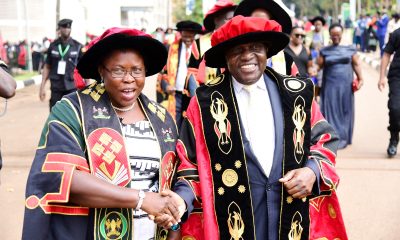
76th Graduation Highlights
-
 General1 week ago
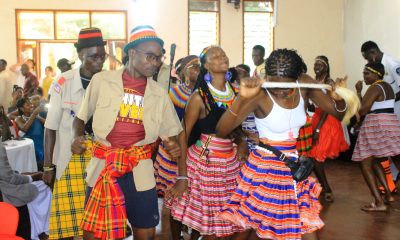
Mastercard Foundation Scholars embrace and honour their rich cultural diversity