Makerere University supports the Ministry of Public Service to develop and Roll Out Productivity Measurement Information System (Pro-MIS) to Boost Efficiency in Delivery
KAMPALA – The Productivity Measurement Information System (Pro-MIS), a digital platform designed to assess, monitor, and improve productivity across Ministries, Departments, Agencies (MDAs), and local governments, was developed by a multidisciplinary team of researchers led by Prof. Robert Wamala, the Director for Research, Innovations and Partnerships at Makerere University, with funding from the Makerere UniversityResearch and Innovations Fund (Mak-RIF).
The system is now being rolled out by the Government of Uganda in collaboration with Makerere University as part of broader reforms aimed at strengthening efficiency, accountability, and evidence-based decision-making in public service delivery.
Prof. Wamala said the development of the Productivity Measurement Framework and Pro-MIS system was motivated by the persistent challenge of measuring how effectively public institutions convert resources into tangible outputs.
He explained that while institutions routinely report activities and outputs, the missing link has been the ability to measure efficiency in the use of inputs to generate results.
“The big question has always been, how do we measure productivity? We are pumping resources into institutions, but how do we know that what is being produced is efficient and impactful?” Prof. Wamala said.
He noted that the framework introduces a structured approach to productivity measurement across government, focusing on inputs, processes, outputs, and outcomes, and enabling data-driven policy and management decisions.
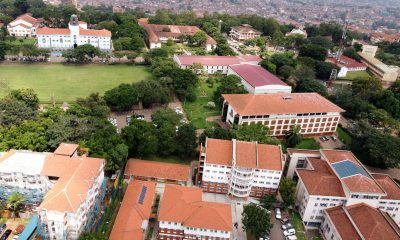
Participants at the rollout.
Prof. Wamala added that Makerere University remains committed to supporting government in strengthening innovation systems that improve public sector performance and service delivery.
In a special, Prof. Wamala extended his sincere gratitude to The Ministry of Public Service (MoPS) especially Permanent Secretary and Department of Management Services for the visionary partnership and leadership, Makerere University Vice Chancellor Prof. Barnabas Nawangwe for rallying scientists to support evidence-based policy, Makerere University Research and Innovation Fund (Mak-RIF), Chairperson Prof. Fred Musagazi Masaazi, and the GMC for the funding as well as The District Staff who volunteered to validate tools and gave us data for the development of the Framework.
The rollout engagement brought together representatives from several “champion institutions” selected to pioneer implementation of the system, including the Office of President, Office of Prime Minister, Ministry of Local Government, Ministry of Internal Affairs, Ministry of Gender, Labour and Social Development; Government Analytical Laboratory, Public Service Commission, Education Service Commission, Makerere University Business School, Ministry of Internal Affairs, among others.
The Acting Permanent Secretary, Ministry of Public Service,Mr. Rogers Kaija Irumba, said government is introducing champion institutions to lead the rollout of productivity measurement across the public sector.
He explained that the initiative is part of a broader reform agenda aimed at institutionalizing performance and productivity tracking in government operations.
Acting PS Mr. Rogers Kaija Irumba.
“We are trying to bring on board a number of champion institutions. This is a new concept. So we are trying to bring on board a number of institutions to champion the entire productivity concept,” Mr. Kaija said.
He noted that government is strengthening systems that will allow productivity to be measured systematically at all levels of the public service.
Mr. Kaija emphasized that the initiative aligns with the National Development Plan IV and the Public Sector Transformation Programme, which prioritize efficiency, accountability, and results-based management.
He further explained that productivity measurement is expected to support government efforts to demonstrate value for money and improve service delivery outcomes.
On her part, the Commissioner for Management Services at the Ministry of Public Service,Ms. Allen Kakama, said productivity measurement addresses a long-standing gap in public sector performance evaluation.
She explained that productivity differs from performance management in that it focuses on the relationship between inputs used and outputs produced.
Commissioner Allen Kakama.
“Productivity is looking at how much resources you have used to produce an output. It is different from performance appraisal, which looks at whether targets have been achieved,” she said.
Ms. Kakama noted that the Pro-MIS system will enable government to measure productivity at institutional, departmental, and individual levels, helping to identify efficiency gaps and improve service delivery.
She added that the system will help reduce wastage and improve the quality and speed of public service outputs.
“We want to reduce wastage and improve efficiency. If two institutions are given the same resources, but one produces better quality and faster outputs, then we must be able to measure and understand that difference,” she said.
She emphasized that the system will strengthen accountability, improve decision-making, and enhance overall public sector performance.
A participant contributes to the discussion.
The Government of Uganda said Pro-MIS will initially be piloted in selected institutions before being scaled up across all Ministries, Departments, Agencies, and Local Governments nationwide.
KAMPALA – Makerere University is set to develop a curriculum for a specialized Certificate Course in Supervision and Mentoring for Graduate Training and Higher Education Management, in a move aimed at professionalizing graduate supervision and strengthening the capacity of academic staff to deliver quality postgraduate education.
The proposed programme will equip academic staff with advanced competencies in graduate-level teaching, research supervision, mentorship, and higher education management, while supporting the University’s agenda of improving the quality and relevance of graduate training.
The curriculum development process was discussed during a Stakeholders’ Curriculum Development Consultation Workshop held on Thursday, 18th June 2026 at the Senate Building Telepresence Hall, Makerere University.
The workshop, organized by the Directorate of Graduate Training in collaboration with the Centre for Teaching and Learning Support (CTLS), brought together curriculum specialists, academic staff, and higher education stakeholders to review and enrich the proposed curriculum before it proceeds through the University approval processes.
Participants included 11 lecturers from the College of Engineering, Design, Art and Technology (CEDAT), 3 from the College of Agricultural and Environmental Sciences (CAES), 2 from the College of Veterinary Medicine, Animal Resources and Bio-security (CoVAB), 1 from the College of Humanities and Social Sciences (CHUSS), 4 from the College of Education and External Studies (CEES), among others.
The National Curriculum Development Centre (NCDC) was represented by Dr. Patrice Ssembirige, Deputy Executive Director in charge of Curriculum Review and Instructional Materials Development. The Centre for Teaching and Learning team was led by Dr. Dorothy Ssebowa, while Dr. Stephen Wandera coordinated the workshop.
Addressing participants, Prof. Julius Kikooma, Director Graduate Training at Makerere University, said the curriculum development initiative is central to strengthening graduate education and ensuring that academic staff are adequately prepared to support postgraduate learners.
Prof. Julius Kikooma.
Prof. Kikooma noted that Makerere University is targeting an increase in graduate student enrolment to 50 percent of the total student population, but emphasized that this ambition must be matched with investment in the capacity of academic staff who supervise and mentor students.
“We can get many graduate students, but if the people supporting them do not have the right tools and preparation, we will still have challenges,” Prof. Kikooma said.
He explained that the initiative responds to University policies requiring academic staff teaching graduate students to undergo pedagogical training, while those supervising graduate research must undergo specialized preparation in supervision and mentoring.
Prof. Kikooma said graduate supervision requires deliberate preparation because supervisors play a central role in shaping research quality, student success, and the overall effectiveness of postgraduate programmes.
He further emphasized Makerere University’s responsibility as a leading institution in the region.
“We have a double expectation. We must support the country to achieve its aspirations in national development, but we also have an expectation from other institutions to support them in building graduate training capacity. In that sense, we are a trainer of trainers,” he said.
Speaking on behalf of the National Curriculum Development Centre (NCDC), Dr. Patrice Ssembirige commended Makerere University for adopting a consultative and inclusive approach to curriculum development.
Dr. Patrice Ssembirige.
He noted that education systems globally are undergoing significant transformation, requiring continuous curriculum review and alignment with emerging needs.
“Education systems globally are undergoing significant transformation, and in Uganda, NCDC has been leading and spearheading the implementation of the competency-based curriculum,” Dr. Ssembirige said.
He explained that NCDC has developed competency-based curriculum frameworks at primary and lower secondary levels and is currently advancing reforms at upper secondary level, which feeds into higher education institutions.
Dr. Ssembirige said the new curriculum presents an opportunity to align graduate training with global trends, Sustainable Development Goals (SDGs), international best practices, and national development priorities.
“As we develop this curriculum, we need to align with global trends, SDGs and international best practices. We also need to undertake comparative analysis because curriculum reforms are taking place across East African Community states,” he noted.
He encouraged developers to ensure that the programme follows competency-based principles and equips participants with relevant 21st-century skills.
“Since we are talking about competency-based curriculum, we must be cognizant of the principles of competency-based education and ensure that we develop skills that fit the demands of the 21st century,” he added.
Dr. Dorothy Ssebowa, Director of the Centre for Teaching and Learning Support at Makerere University, said the initiative marks an important step in strengthening professional development for academic staff involved in graduate education.
Dr. Dorothy Ssebowa (front) with participants.
She noted that effective supervision requires more than disciplinary expertise, but also skills in mentorship, communication, research guidance, ethics, assessment, and student support.
“The quality of graduate education depends on the quality of mentorship and supervision we provide. This curriculum will strengthen the capacity of academic staff to guide graduate students effectively, improve research outcomes, and uphold the standards expected of a leading university,” Dr. Ssebowa said.
She added that the Centre for Teaching and Learning will continue working with the Directorate of Graduate Training, academic colleges, curriculum specialists, and regulators to ensure the programme remains relevant and impactful.
During the workshop, stakeholders reviewed the proposed curriculum structure, course content, competency areas, assessment strategies, quality assurance mechanisms, and alignment with national and international standards.
Once finalized, the programme is expected to strengthen graduate supervision at Makerere University and serve as a model for professional development across higher education institutions in Uganda and beyond.
Makerere University, Uganda’s premier institution of higher learning and one of Africa’s leading research universities, invites applications from suitably qualified and distinguished individuals for the positions of Principal and Deputy Principal in the Colleges listed below. The University seeks visionary leaders with demonstrated academic excellence, strategic leadership, and a commitment to institutional transformation. This advertisement is for the positions of:
Principal and Deputy Principal, College of Agricultural and Environmental Sciences (CAES)
Principal and Deputy Principal, College of Education and External Studies (CEES)
Principal and Deputy Principal, College of Natural Sciences (CoNAS)
Principal and Deputy Principal, College of Veterinary Medicine, Animal Resources and Biosecurity (CoVAB)
Principal, College of Computing and Information Sciences (CoCIS)
Deputy Principal, College of Humanities and Social Sciences (CHUSS).
Mode of application
Interested individuals for the positions of Principal and Deputy Principal should submit the following documents sealed in an envelope addressed to the University Secretary;
A signed letter of application;
Certified copies of academic certificates and transcripts;
The curriculum vitae of the candidate;
Three (3) letters of recommendation;
Copies of the required minimum number of publications;
Copies of letters of appointment to leadership positions at the level of Head of Department and/or its equivalent or higher in a recognised institution comparable to Makerere University;
A copy of the applicant’s national ID or passport; and
A copy of the last letter of clearance from the Inspectorate of Government or other equivalent national body.
The deadline for applications is 6th July 2026 at 5:00 p.m. East African Time.
Applications should be hand-delivered to:
The University Secretary Makerere University Main Administration Building, Level 2, University Secretary’s Office
Or submitted via email at search.principal@mak.ac.ug
Makerere is an equal opportunity employer and encourages applications from suitably qualified individuals regardless of gender, disability, or other legally protected status. The University is committed to promoting diversity, inclusion and excellence in all its activities.
THIS ADVERT CANCELS THE EARLIER ISSUED ADVERT DATED 17TH JUNE 2026