
General
Arbitrary borders are only artificial-EAC Secretariat

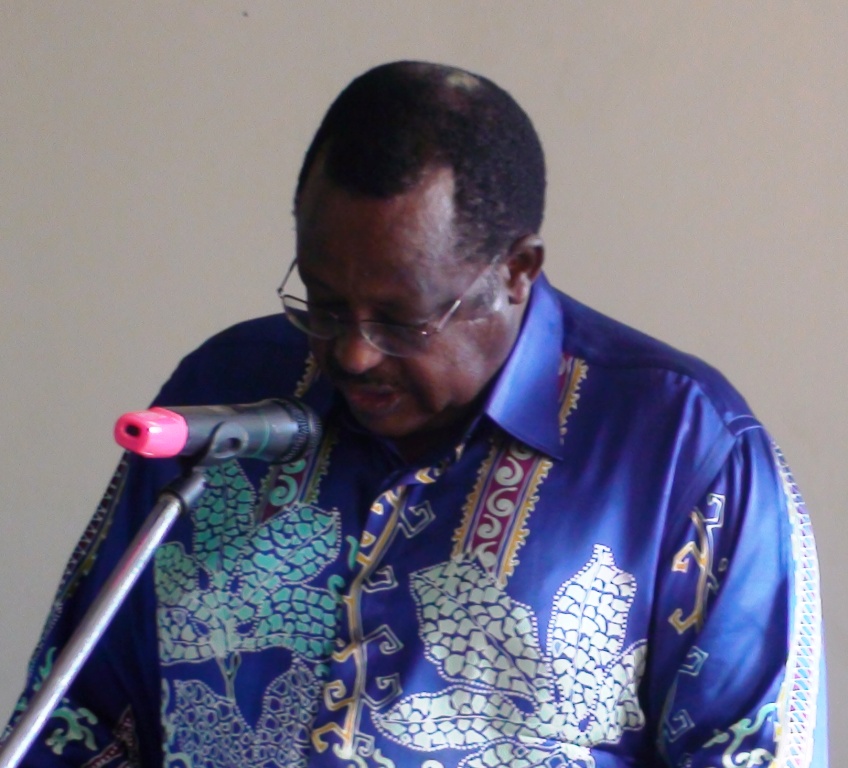
“The borders of the East African countries Uganda, Kenya, Tanzania, Rwanda and Burundi were a creation of European colonialism” remarked Rt. Hon. Eriya Kategaya amidst his opening remarks at the
“The borders of the East African countries Uganda, Kenya, Tanzania, Rwanda and Burundi were a creation of European colonialism” remarked Rt. Hon. Eriya Kategaya amidst his opening remarks at the
East African Community (EAC) Sensitization workshop held at Makerere University on 7th May 2010.
The EAC was consolidated after the signing of a treaty by the Heads of State in 1999 and inaugurated in 2000.
The workshop was geared towards helping students and academic members of staff understand exactly what the EAC was, what it was doing to attain its goal of formation of a community and also act as an invaluable source of feedback on what can be improved within this effort.
 As far back as 1897, the British tried to revive regional cooperation and integration for they had realized that they could not manage and administer effectively and efficiently small and unviable entities like Uganda Protectorate or Kenya Colony separately.
However, the integration declined and eventually collapsed due to problems such as inadequate involvement of the people in the decision-making process, and ideological differences among partner states.
However, on Friday, the First Deputy Prime Minster and Minister of East African Community Affairs Hon. Kategaya, reassured the congregation that this time around, there would be no such thing as a collapse. “The current East African Community is built on a firmer foundation and measures have been put in place to mitigate any collapse.” The minister highlighted.
In order to avoid another collapse, the current EAC secretariat is making the community more people-centered and market driven. Power has now been decentralized from the summit to the council of ministers; the civil societies, local government and private sector as the key stakeholders. Also, procedures for withdrawal from the community are more stringent and rigid.
 “African states continue to be marginal players in the global world. We produce what we do not largely consume. We are the producers of the western world’s raw materials that they sell back to us expensively as processed goods” Hon Beatrice Kiraso, EAC Deputy Secretary General said.
Hon. Kiraso challenged the gathering to stand up against arbitrary borders. These borders are only artificial and are separating Africans that speak the same language and have the same cultures. She also urged that all Ugandans should be in favor of EAC because with it, Uganda ceases to be land locked.
“Countries that are more developed than the African countries have integrated such as the European Union which consists of 27 countries. This justifies our efforts to move towards integration too” added Hon. Kiraso.
With this, it is evident that deeper regional integration has become necessary for sustainable economic survival the world over. Donor countries have found it necessary to integrate for survival- the bigger, the better, the stronger!
In all, it is hoped that with integration, there will be more attractive investment and trading blocks, drastic reduction in the cost of doing business and also free movement of people and goods, among others.
Downloads
Ministry of East African Community Affairs overview (powerpoint)
Brief Overview of the EAC (powerpoint)
Frequently Asked Questions on the EAC
mwamai@admin.mak.ac.ug, Public Relations Office



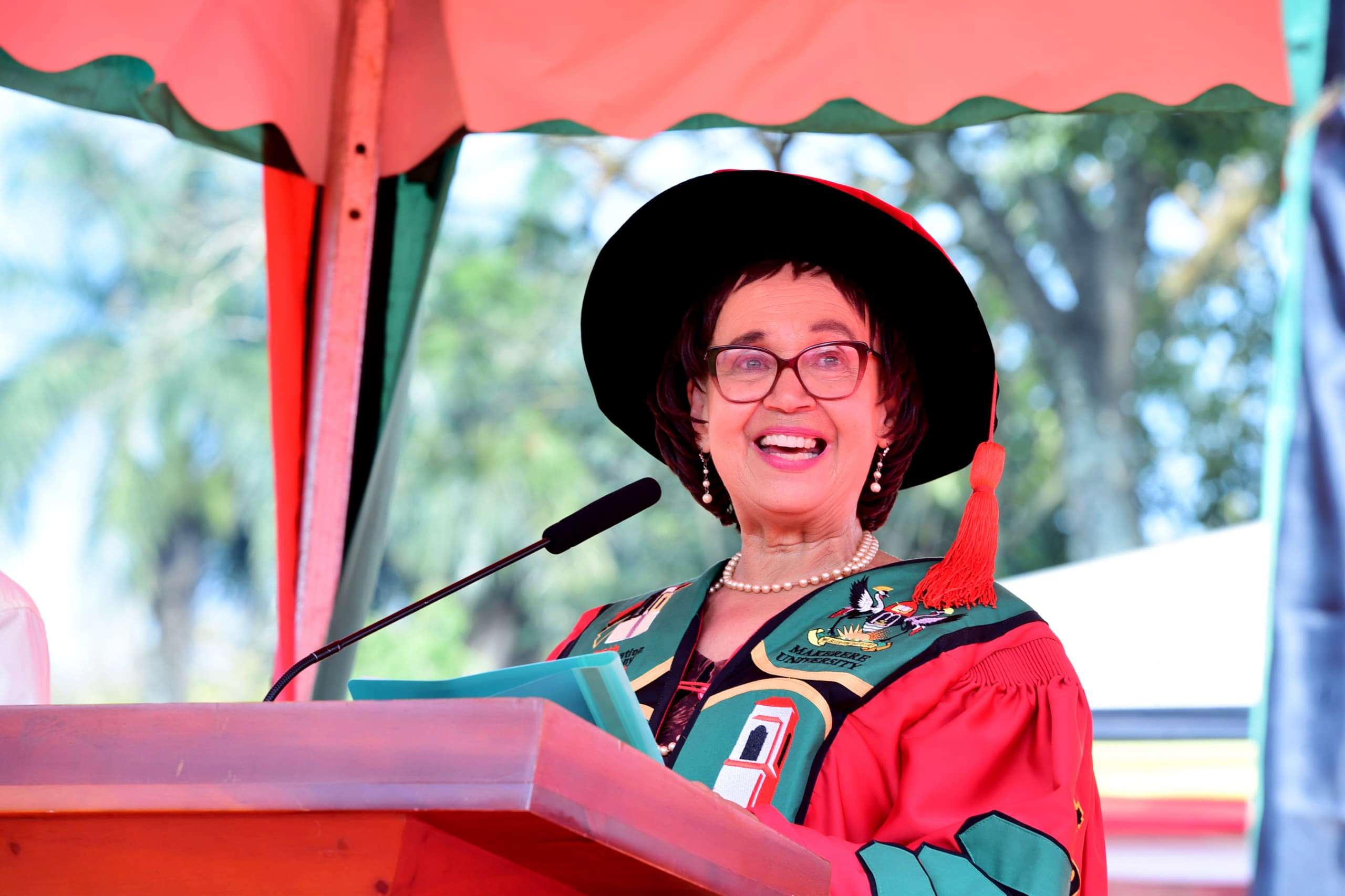
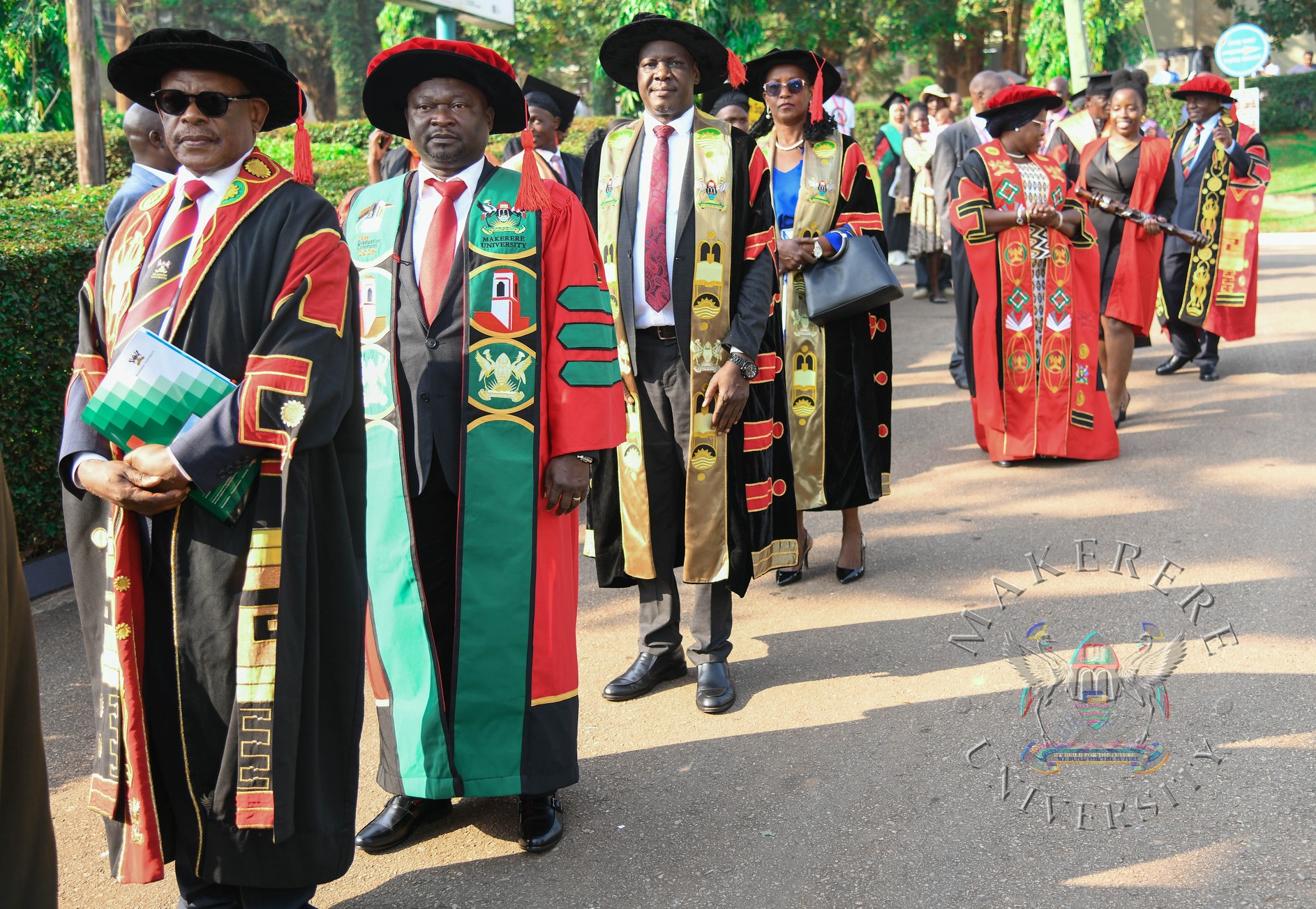
The Board Chairperson of the Makerere University Endowment Fund (MakEF), Dr. Margaret Blick Kigozi, has urged graduands in Health and Life Sciences to uphold professional ethics and serve humanity with diligence and compassion.
Her appeal came during the passing out of graduates from the College of Natural Sciences (CoNAS), the College of Veterinary Medicine, Animal Resources and Bio-Security (CoVAB), the College of Health Sciences (CHS) and the School of Public Health (SPH) on Day Two of the 76th Graduation Ceremony of Makerere University.
“Class of 2026, you are now part of the Makerere legacy. Wherever you go clinics, laboratories, farms, boardrooms, or classrooms, you carry this institution with you. Serve your patients with skill and compassion. Care for animals and communities responsibly. Question boldly and keep learning,” Dr Kigozi, said.
Delivering the commencement address, Dr. Kigozi lauded the graduates for their dedication to careers that directly impact lives and communities. She encouraged them to use their knowledge generously and exercise their power gently.
“Your education has trained you to ask better questions. Your humanity must guide the answers. Never forget that behind every chart, every case, every animal, every experiment, there is life. And life deserves care, patience, and dignity. Give every person you come in contact with care, patience and dignity,” Dr Kigozi, noted.
As the graduates embark on their professional journeys, Dr. Kigozi emphasized the importance of cultivating basic business acumen and financial literacy to ensure sustainability in their work.
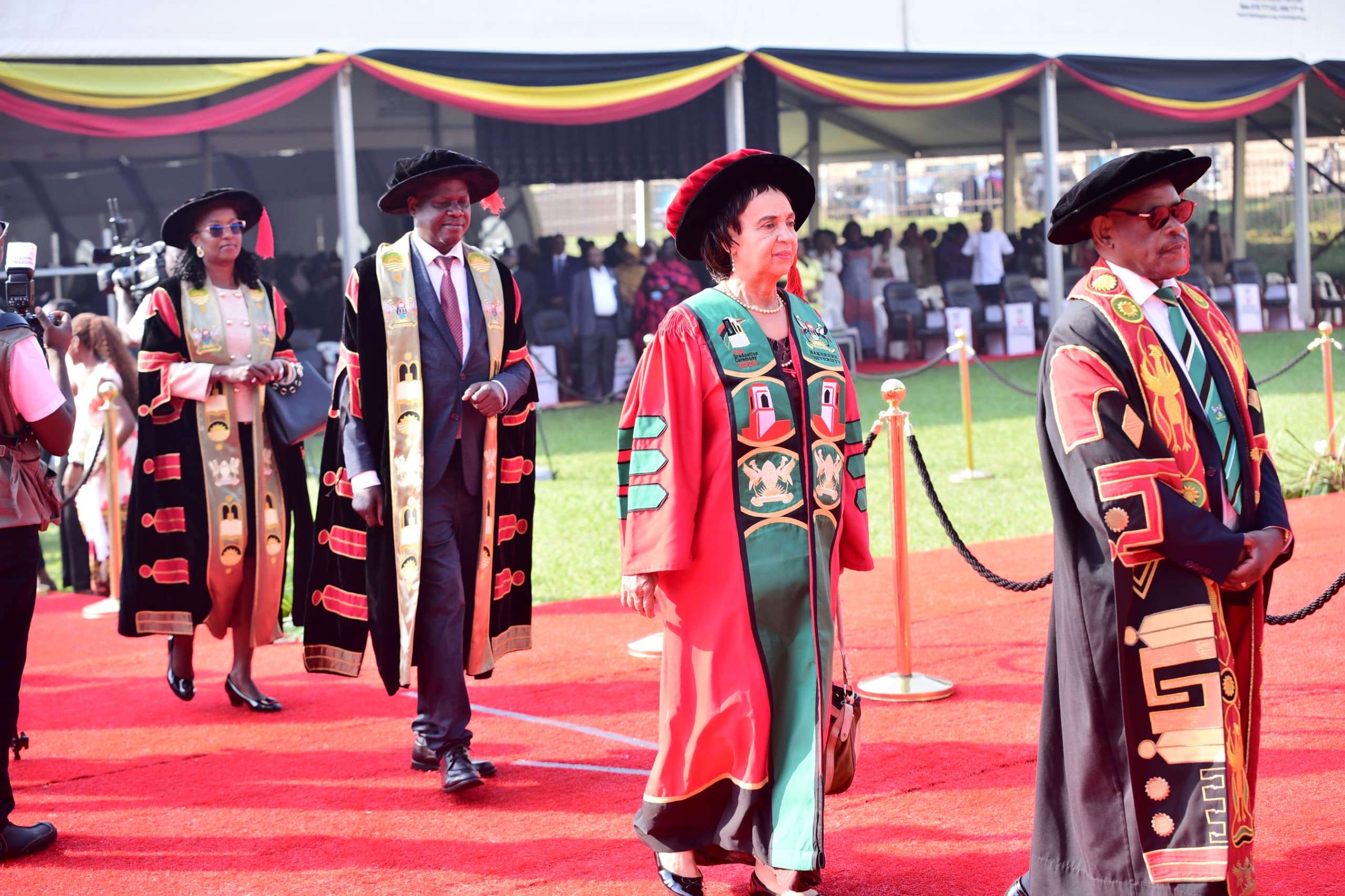
“You do not need to become accountants but you must be able to read the essentials: understand simple financial statements, budgets and key metrics so you can judge whether a clinic, lab, or program is sustainable. You are encouraged to start your business. There are numerous investment opportunities in your areas of training. You can provide services to our people and create jobs,” Dr Kigozi, said.
She shared candidly how, when she first stepped into leadership, she realised she did not understand balance sheets or budgets well enough. So, she returned to Makerere for short courses to strengthen herself.
“A well-run Hospital, clinic or lab delivers better outcomes, attracts staff, and secures funding. Business savvy is not only about profit, it’s about sustainability and the freedom to serve ethically and effectively. Carry clinical skill with business sense so your work endures and grows,” Dr. Kigozi, noted.
Quoting renowned writer and producer Shonda Rhimes, creator of Grey’s Anatomy, who once reflected that succeeding in one area of life can sometimes mean falling short in another, Dr. Kigozi encouraged women graduates to intentionally balance professional ambition with family responsibilities.
“When one area thrives, another is often under strain. When Navio was graduating from school I had to manage the Presidential Investor Round Table on the same day as Executive Director Uganda Investment Authority. I chose my job and delegated his siblings to attend Navios graduation. I learnt from this. I choose family always after that thing you achieve once and keep forever,” Dr Kigozi, said.
In his speech, the Prof Barnabas Nawangwe, the Vice Chancellor, informed the congregation that Makerere’s ranking on all university ranking platforms has remained stable, placing Makerere among the top 10 African universities and within the top 4.5% globally.
“In the Times Higher Education global ranking, Makerere University made a formidable jump from the 1200-1500 bracket to the 800-1000 bracket. This was no mean achievement and I congratulate all members of the Makerere Community on this stellar performance,” Prof Nawangwe, said.
-
 Humanities & Social Sciences5 days ago
Meet Najjuka Whitney, The Girl Who Missed Law and Found Her Voice
-
 Health1 week ago
Uganda has until 2030 to end Open Defecation as Ntaro’s PhD Examines Kabale’s Progress
-
 Agriculture & Environment1 week ago
Uganda Martyrs Namugongo Students Turn Organic Waste into Soap in an Innovative School Project on Sustainable Waste Management
-
 General4 days ago
76th Graduation Highlights
-

 General1 week ago
Mastercard Foundation Scholars embrace and honour their rich cultural diversity