
General
Sharing Water: Another collaborative effort from Makerere & Bergen

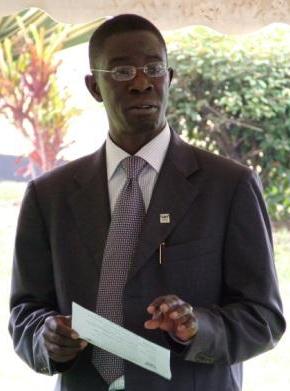
The Makerere University Guest house compound played host to yet another book launch on Tuesday 17th November 2009. The newly published book is titled Sharing Water: Problems, Conflicts and Possible Solutions – The case of Kampala (2009) and authored by P. Larsson , E. Kirumira , A. Steigen & A. Miyingo-Kezimbira.
The Makerere University Guest house compound played host to yet another book launch on Tuesday 17th November 2009. The newly published book is titled Sharing Water: Problems, Conflicts and Possible Solutions – The case of Kampala (2009) and authored by P. Larsson , E. Kirumira , A. Steigen & A. Miyingo-Kezimbira.
 In his remarks, Prof. E. Kirumira welcomed the gathering to the book launch and thanked all the contributing authors for their input into this book, which discusses how nature, people and society in Kampala handle water issues. This book is a result of a multidisciplinary research project on the theme Nature, Society and Water funded under the Norwegian Research councils’s programme “Development Paths in the South”.

Prof. Petter Larsson, Professor at the Department of Biology, University of Bergen, Norway and co-author of the book emphasized the importance of packaging such information into books that can be used as a Future reference.
 In giving an overview of the book Andreas L. Steigen, Associate Professor at the Department of Biology, University of Bergen, Norway thanked all the contributing authors for their efforts in making this book a diverse resource covering a wide range of societal issues from planning, conflict management to Ecology. He however challenged them to advance from contributing chapters to books to writing entire books that can be published.
 Dr. Robert Kabumbuli , Senior Lecturer, Department of Sociology in the Faculty of Social Sciences Makerere University remarked the challenges in Planning, conflicts and management as covered by the book. Citing the fluctuating population of Kampala, which more than doubles during the day, he noted that the unplanned nature of the city inevitably puts a strain on available resources like piped water. Some of the residents have to make do with protected springs, where conflicts are unavoidable due to growing numbers competing for the scarce resource. He concluded by challenging all stakeholders involved to use concept papers and research findings published in books such as these to manage conflicts that are bound to arise.
 Prof. Kirumira then invited Dr. Luyiga Susan from the Department of Zoology, Faculty of Science Makerere University to remark on the Ecosystem challenges as covered by the book. Focusing on the Nakivubo Channel, Dr. Luyiga revealed how city planning had led to the eventual widening, deepening and cementing of the channel, which though aimed at preventing floods in the city, led to the deposition of silt and sediment in wetlands downstream. This eventually leads to increase in suspended solids in the Murchison Bay, where NWSC collects water for treatment.
 Odong Robinson reviewed the Health Challenges addressed by the book noting that although colonial plans of the city had designated the hills for settlement and the wetlands uninhabitable, population growths had led to the eventual reclamation of wetlands for settlement. This inevitably increased the likelihood of human to vector interaction and easier spread of diseases like Malaria and Bilharzia.
The Guest of Honor and Acting Vice-Chancellor Prof. Venansius Baryamureeba thanked the University of Bergen representatives and Makerere University Staff for their collaborative efforts, which led to the publishing of a rich and diverse book covering pertinent issues like water. He then challenged the team to tackle other contentious issues like Land.
Furthermore, he thanked the media for covering the event and publicizing the launch of such books, which can act as guides for policy makers. He then challenged the Academic staff of Makerere to not only carry out research and write books but also launch them so as to disseminate information to the public. He then officially launched the book and received a copy signed by all the authors.



General
Makerere University and Xiangtan University Advance Strategic Partnership in Chemical Engineering

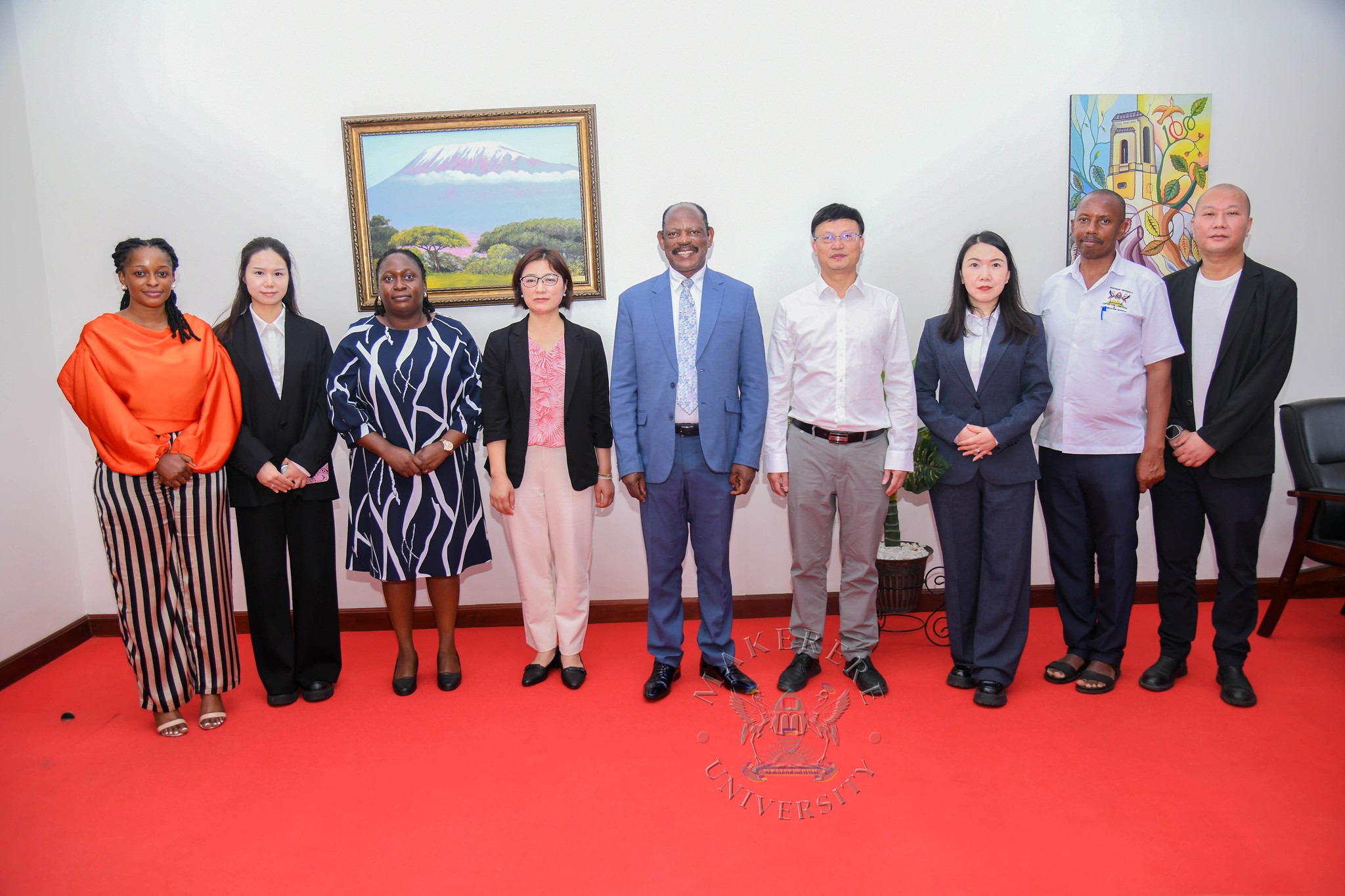
Makerere University and Xiangtan University are set to update their close to 20-year academic partnership, with a new focus on launching a joint Master’s degree program in Chemical Engineering and expanding student and staff exchange initiatives.
The commitment was reaffirmed during a recent visit by a delegation from Xiangtan University to Makerere University headed by Professor Dingyu Ou, in the company of Mr. Tang Fei and Professor Gilbert Gumshabe, the Chinese and Ugandan Directors of the Confucius Institute at Makerere University respectively.
While addressing the delegation, Professor Nawangwe highlighted that this initiative is part of a broader strategy to diversify academic offerings and contribute to national development through training in Chemical Engineering. Through this new initiative, the University will better prepare graduates for the petrochemical industry and support the country’s industrial growth.
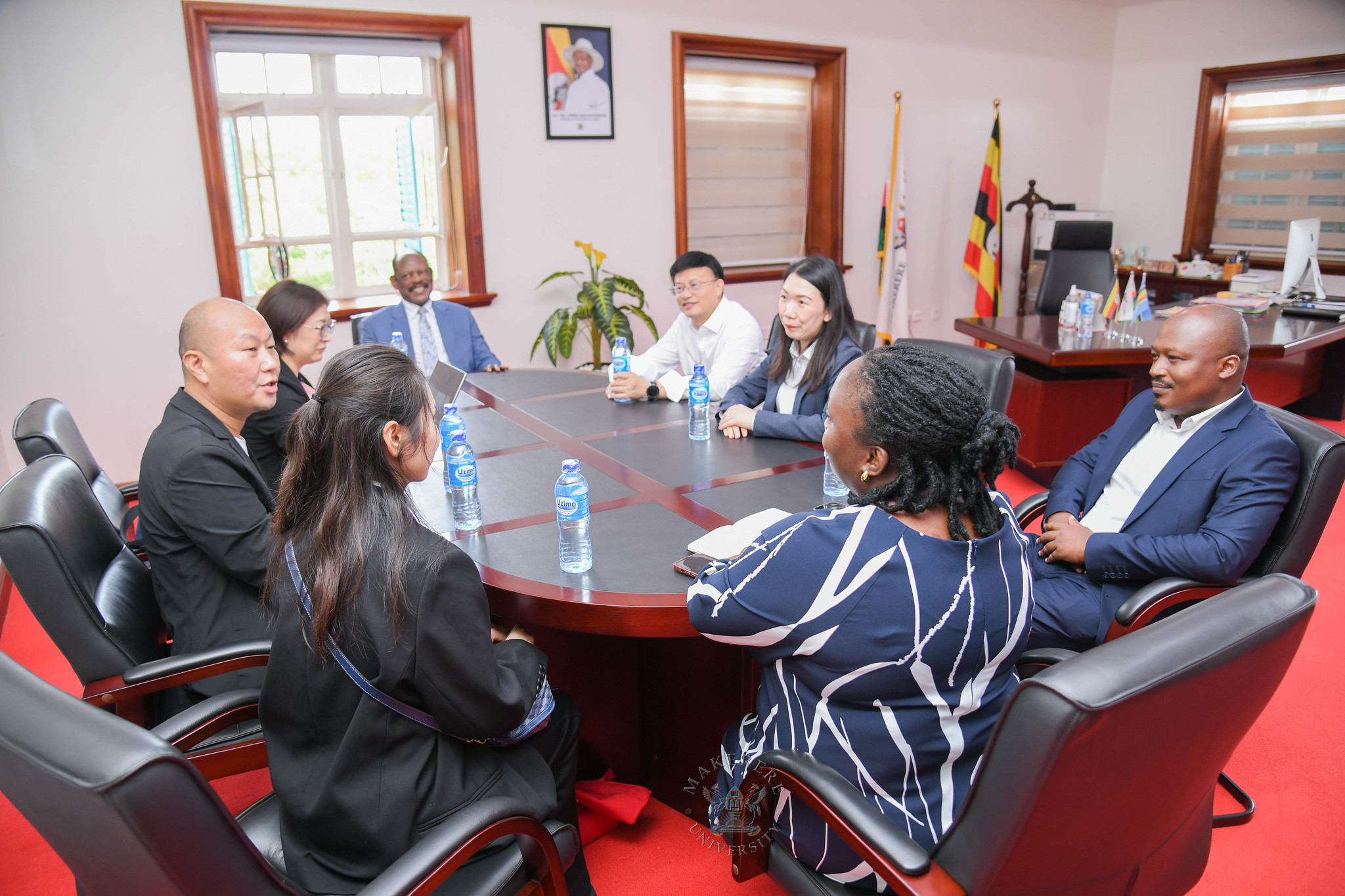
The Vice Chancellor appreciated that the proposed collaboration aims to address Uganda’s growing need for industrial expertise, particularly as the country develops its petroleum sector. The two universities here are working toward a 1+2 training model, which will enable Makerere students to gain practical experience and access advanced laboratory facilities at Xiangtan University.
Professor Nawangwe further reiterated that “our relationship with the people of China, not just for Makerere but also for a big part of Uganda, has been opened wider by the establishment of the Confucius Institute, considering that many other collaborations like one being discussed now have come through this collaboration.”
The head of the Xiangtan delegation, Professor Dingyu Ou, expressed appreciation for the meeting, and acknowledged the history between the institutions. “As mentioned, we have a very long relationship and a very stable friendship between our two universities.”
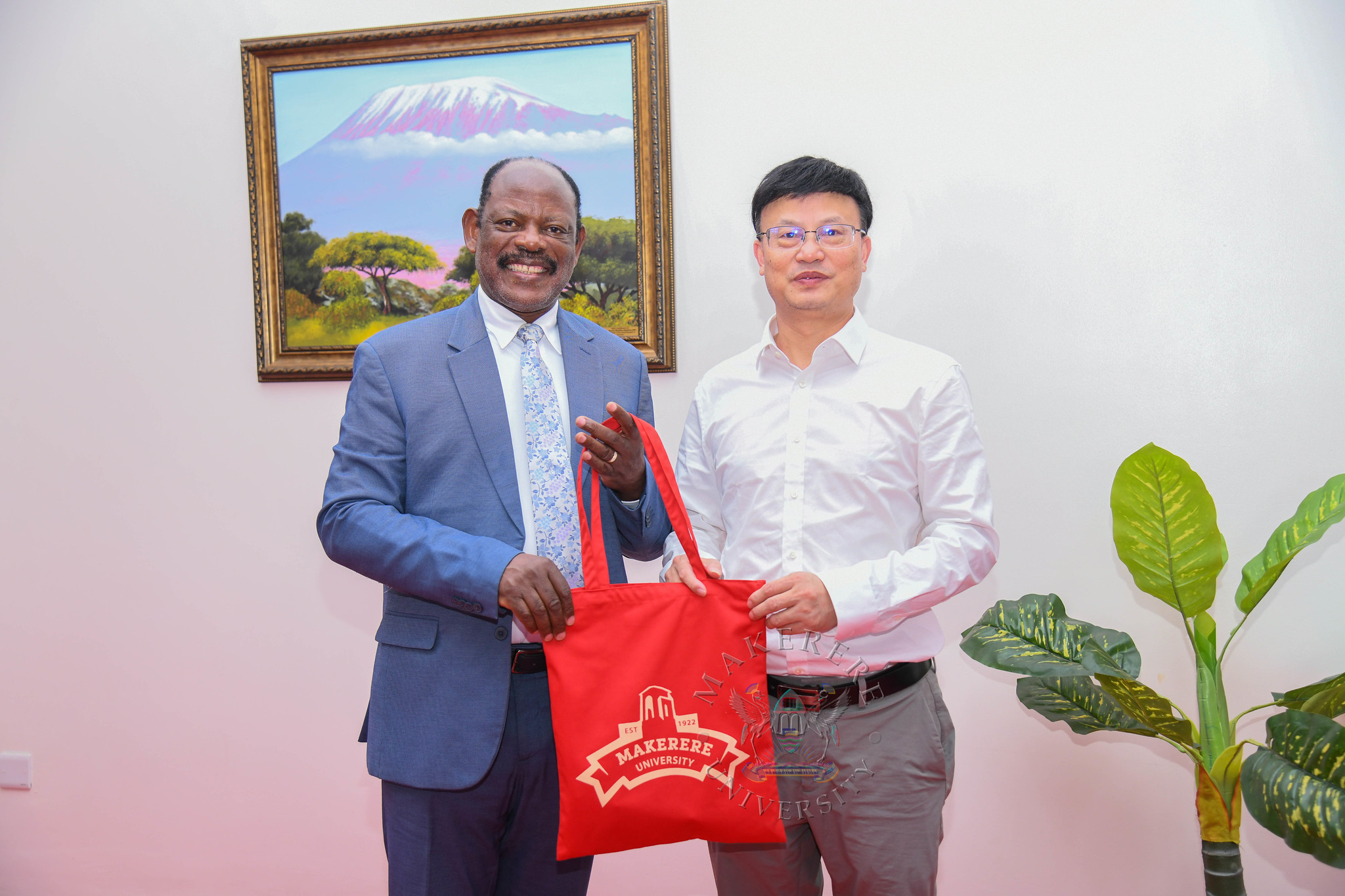
Professor Ou extended appreciation for the support provided to the Confucius Institute at Makerere, the care shown to his colleagues, and looked forward to the successful start of the Chemical Engineering collaboration.
Assuring the delegation of Makerere’s readiness for the collaboration, Ms. Hawa Ndagire Kajumba the Lead, Partnerships and Stakeholder Engagement, Makerere University Advancement Office, aligned with the Vice Chancellor’s emphasis of University goal to have both theory and practice imparted to the students.
She said “the curriculum of the university and Uganda as a whole is moving towards competence-based education training to ensure students are equipped to demonstrate those skills in the actual field, particularly regarding petroleum exploration.”
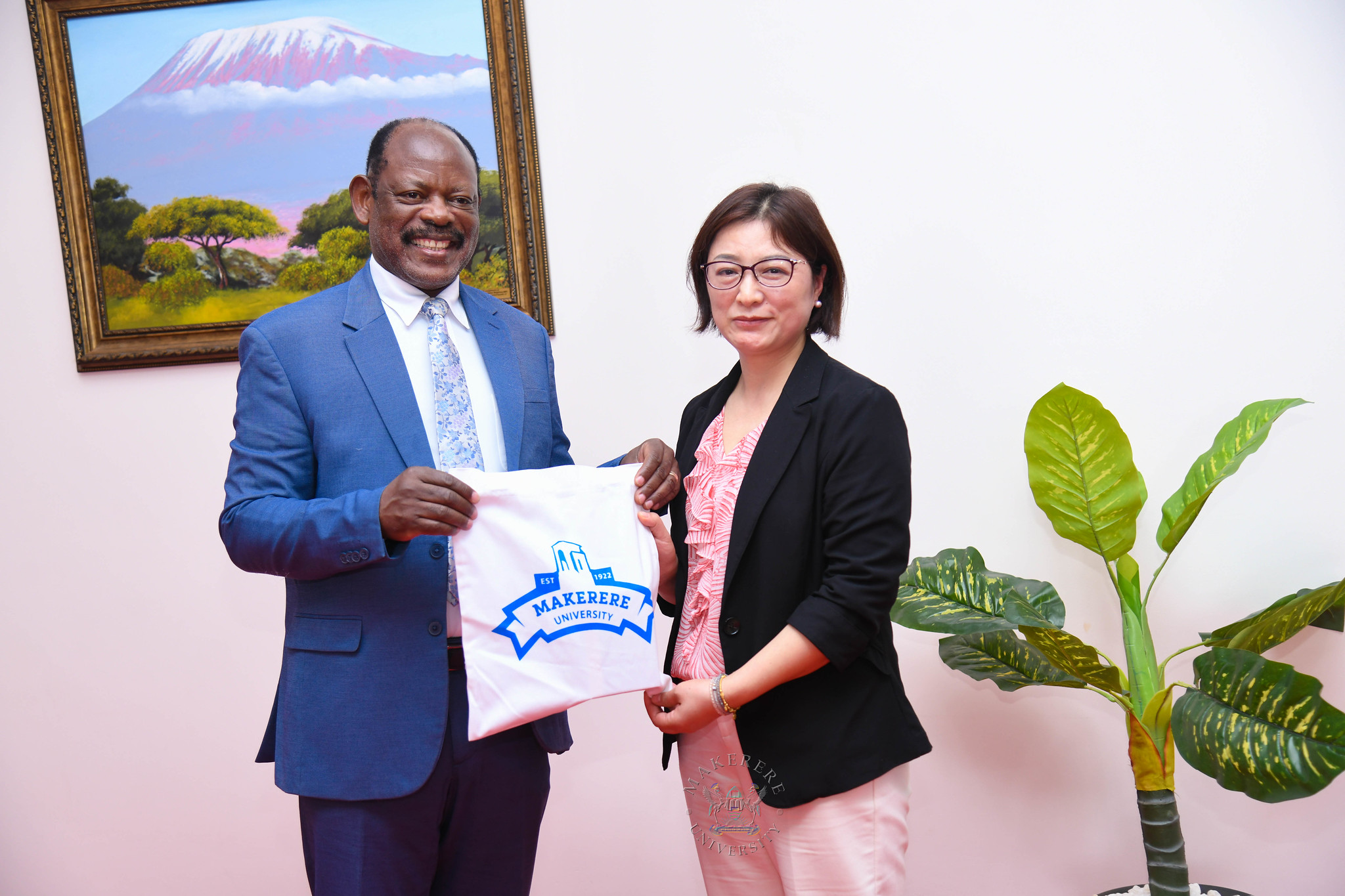
Ms. Ndagire Kajumba also emphasised a shift in strategy for the partnership office, saying, “we are moving away from just signing MOUs that collect dust, and moving towards those that are more collaborative to benefit our faculty and students, just like this one.”
Professor Gilbert Kumushabe aligned his remarks with those of the Vice Chancellor and Ms. Ndagire Kajumba, and described the method used at Xiangtan University as “actually competence-based teaching.”
Based on his recent visit, Prof. Gumoshabe shared that students in China are divided into groups with dedicated teachers to perform practical, hands-on work beyond the theoretical lecturers. He expressed gladness that the same was being adopted for the Ugandan context.
Both institutions are now working to finalise the specific agreements for the joint degree and exchange programs. Beyond academic training, the collaboration will advance cultural and professional exchange.

-

 General2 weeks ago
Statement on Concerns Circulating Regarding a Member of Academic Staff
-
 General1 week ago
Timothy Khabusi: From Barefoot Walks to shaping Uganda’s Eye health Future
-
 General2 weeks ago
Beyond Map Size: Africa’s Agency Should Not Be Funded by Other People
-
 Health1 week ago
Uganda’s HIV Treatment Gains Bring the Youth Gap into Focus
-
 Agriculture & Environment1 week ago
Makerere University Welcomes 50 Youth Skilling Program trainees under the Africa Climate Collaborative, Supported by Mastercard Foundation