
Humanities & Social Sciences
CHUSS Graduate Symposium ends after three days of research and scholarly exchange

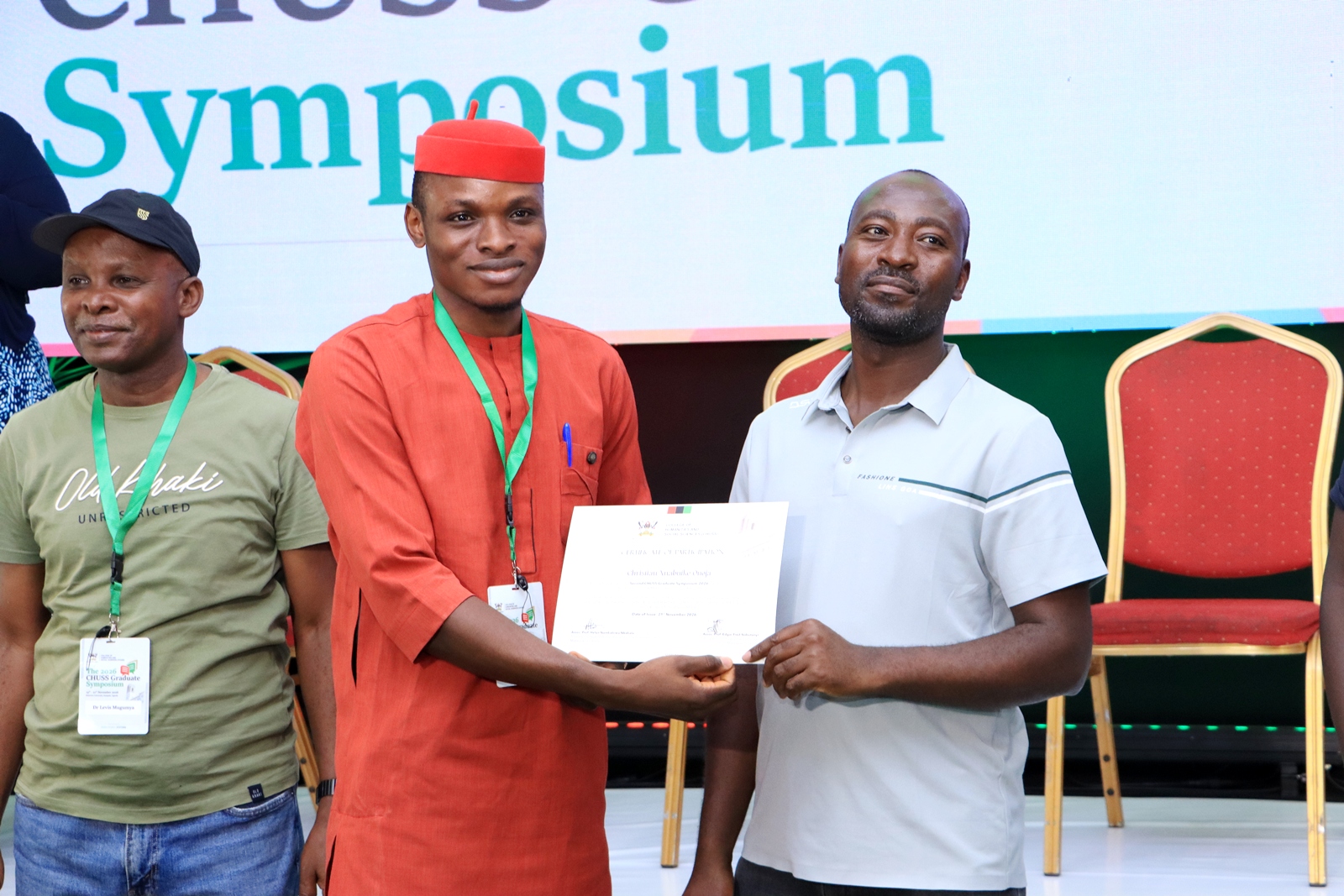
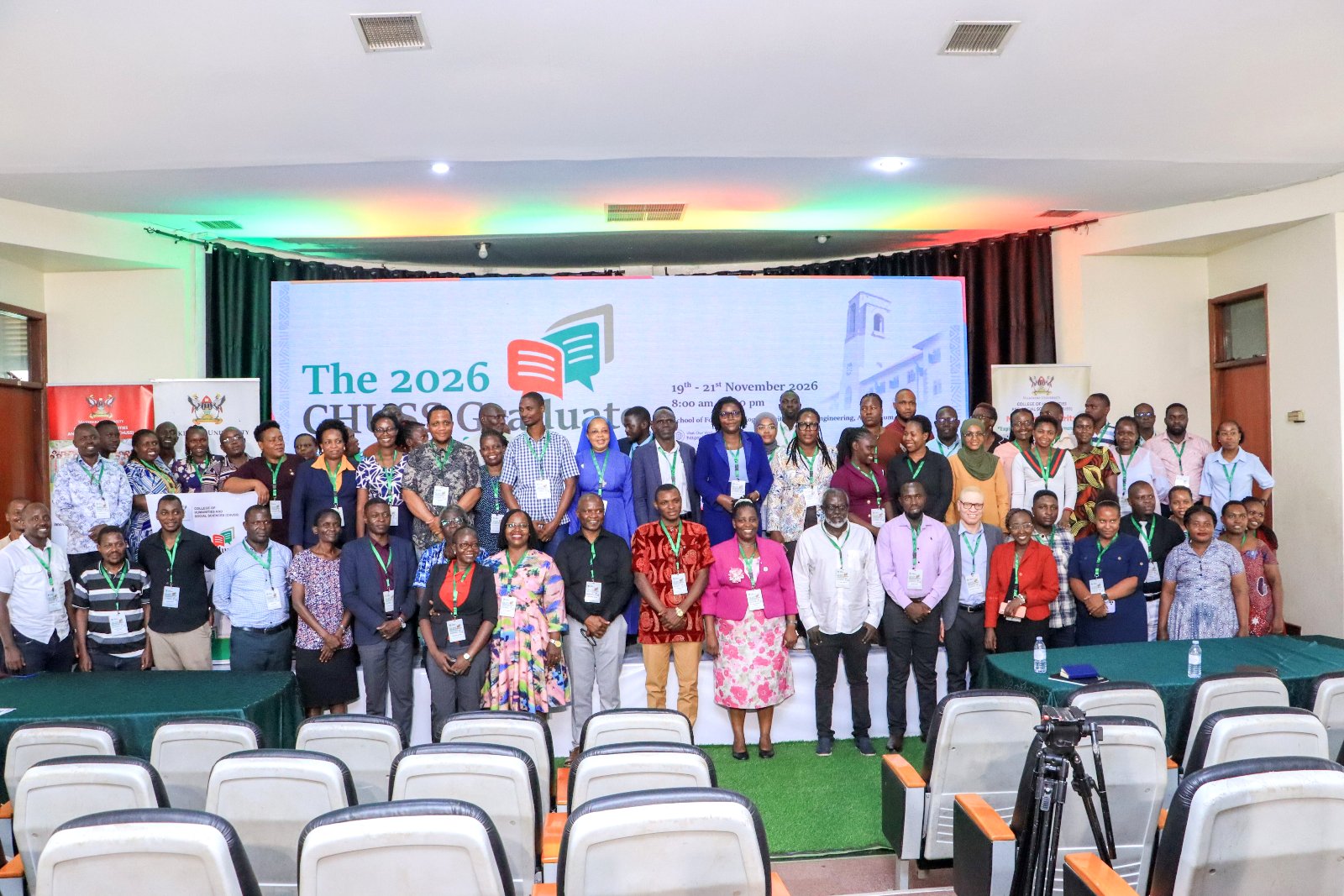
The 2026 Graduate Symposium organised by Makerere University’s College of Humanities and Social Sciences (CHUSS) has ended after three days of discussions on research, writing, publication and the contribution of the humanities and social sciences to understanding society.
The symposium, held from 19 to 21 November at the School of Food Technology, Nutrition and Bio-Engineering Auditorium, brought together graduate students and scholars to share research, receive feedback and exchange ideas across disciplines.
It opened on 19 November with a virtual keynote by Prof. Divine Fuh on researching and writing Africa for and from Africa, followed by writing workshops and presentations by graduate students. On the second day, Prof. Elizabeth Kyazike examined archaeological research in Eastern Africa and the value of material evidence in understanding and safeguarding heritage.
The final day featured a keynote by Prof. Godwin Siundu on research methodology and knowledge production in the humanities and social sciences. Participants also reflected on the lessons they had gained from the symposium and how they would apply them in their research.
Closing the symposium on 21 November, Prof. Julius Kikooma urged students and organisers to build on the work presented by developing it into publications and maintaining the scholarly connections formed during the gathering.
Prof. Julius Kikooma: Taking the research forward
Prof. Kikooma challenged participants and organisers not to leave the papers presented at the symposium as work in progress. He proposed that they be developed into a special issue of a peer-reviewed journal, an edited volume or a series of working papers.
He said publication would give the conversations held during the symposium a longer life and make the research available to other scholars and wider audiences. He encouraged the organising team to engage journal editors and explore the publication outlets available within the University.
“Don’t do your PhD in a silo,” he told the students, explaining that although doctoral research requires depth and specialisation, the problems facing society are interconnected and should also be understood in a broader context.
Prof. Kikooma said presenting ideas to peers, receiving honest feedback on draft chapters and proposals, and learning how scholars from other countries approach similar questions can strengthen the quality of research.
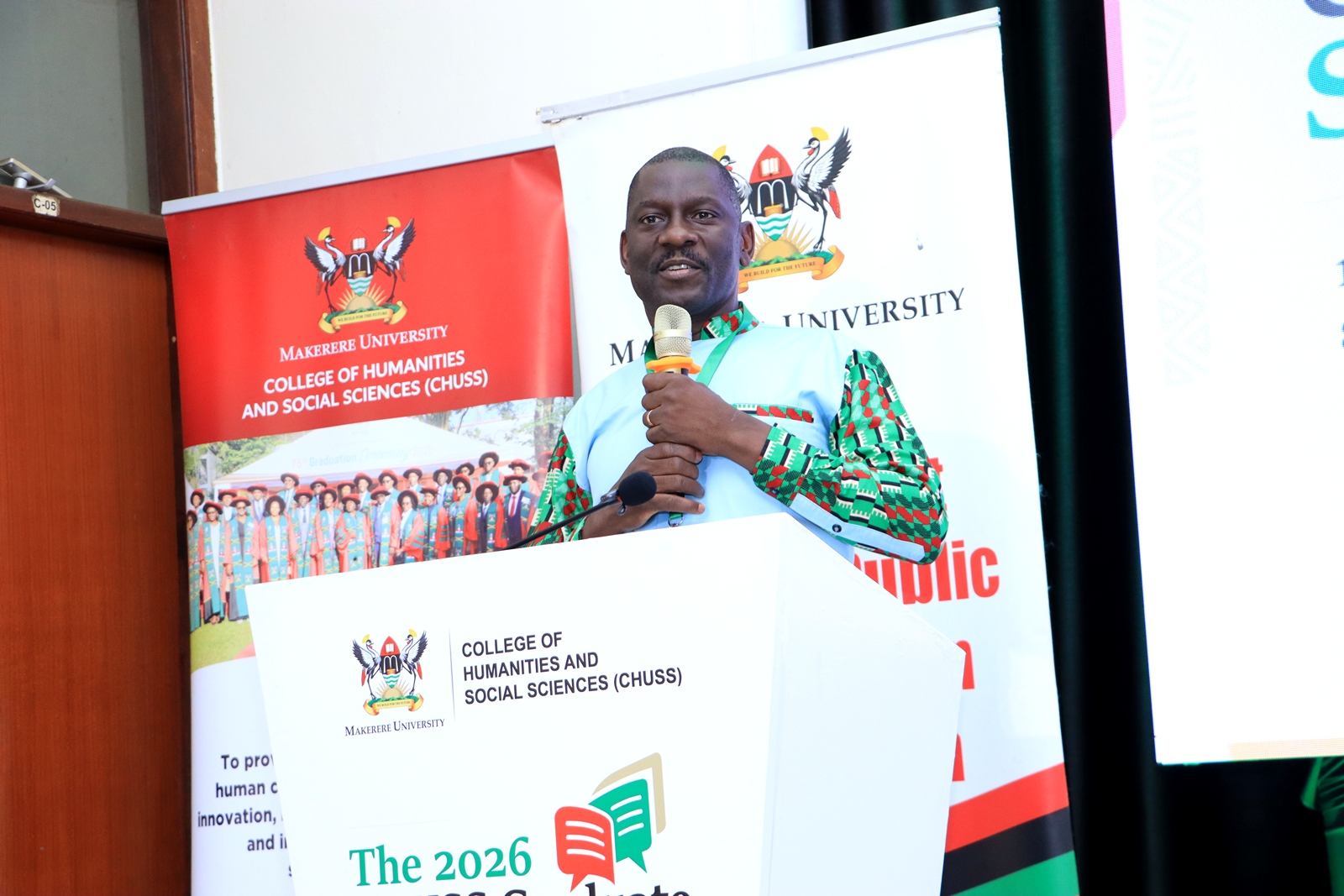
He welcomed participants from institutions beyond Makerere University and encouraged them to maintain the relationships established during the symposium. Some of the conversations started during the gathering, he said, could develop into future collaborations and jointly authored work.
Prof. Kikooma observed that the range of research discussed over the three days demonstrated the relevance of the humanities and social sciences to understanding society.
He pointed to presentations on generative artificial intelligence and collaborative learning among university students in Uganda, remote teaching for children with neurodevelopmental disorders, teacher development and early-grade literacy.
He also referred to research on the evolution of Indian built heritage in Busoga between 1906 and 1962, saying it drew attention to the history embedded in places that people encounter every day. Other discussions covered gender, governance, rights, media and lived experiences.
Reflecting on graduate training, Prof. Kikooma said CHUSS had been a leading producer of PhD graduates in the country over the past five years. He noted that the College’s staff with doctoral qualifications provide an important foundation for guiding students through their studies.
Prof. Kikooma, who described himself as a proud product of CHUSS, also reflected on the role of partnerships in supporting graduate training and research in the College.
He recalled discussions with the Gerda Henkel Foundation around 2015, at a time when many funding opportunities appeared to favour the natural sciences. Support for the humanities, he said, gave scholars opportunities to study their own societies, histories and heritage with greater confidence in the value of their work.
He thanked the organisers, keynote speakers, workshop facilitators, funders and support staff for their contribution to the symposium and to the development of graduate scholars. He particularly recognised the work of Prof. Edgar Nabutanyi and the organising team, as well as Dr Isaac Kiiza Tibasiima and Dr Amon Ashaba Mwiine, who facilitated writing workshops.
Prof. Godwin Siundu: Research and African knowledge
In his keynote address, Prof. Godwin Siundu invited graduate researchers to think critically about research methodology and the assumptions that shape knowledge production in the humanities and social sciences.
He said questions of method are connected to wider concerns about what is recognised as knowledge, who determines the research agenda and who benefits from the findings.
Prof. Siundu observed that the humanities and social sciences are sometimes treated as less important than science, technology, engineering and mathematics in funding and development priorities. Yet, he argued, research in these fields helps society understand human relationships, culture, identity and the ethical questions that shape people’s lives.
He explained that qualitative approaches are commonly associated with the humanities, while quantitative methods are often used in the social sciences. However, the fields also draw on approaches across disciplinary boundaries. Interviews, for example, can be useful to researchers in both areas.
Prof. Siundu noted that what scholars understand as a text has expanded beyond written literature. Spoken narratives, images, historical documents and cultural expressions can also provide material for understanding how people experience and represent the world.
The growth of digital technologies, he said, has further changed how people encounter, communicate and preserve their experiences, creating new possibilities for research.
He encouraged researchers to reflect on how their own positions influence the questions they ask and the way they interpret evidence. Factors such as gender, race, geography and political position can shape a researcher’s relationship to a subject.
Being aware of these influences, he explained, can help scholars account for their choices and engage more carefully with the people and contexts they study.
Prof. Siundu also urged researchers to represent communities, cultures and identities responsibly, particularly when studying people whose experiences differ from their own. Scholars should recognise the limits of an outsider’s perspective and avoid reproducing stereotypes or unsupported representations, he said.
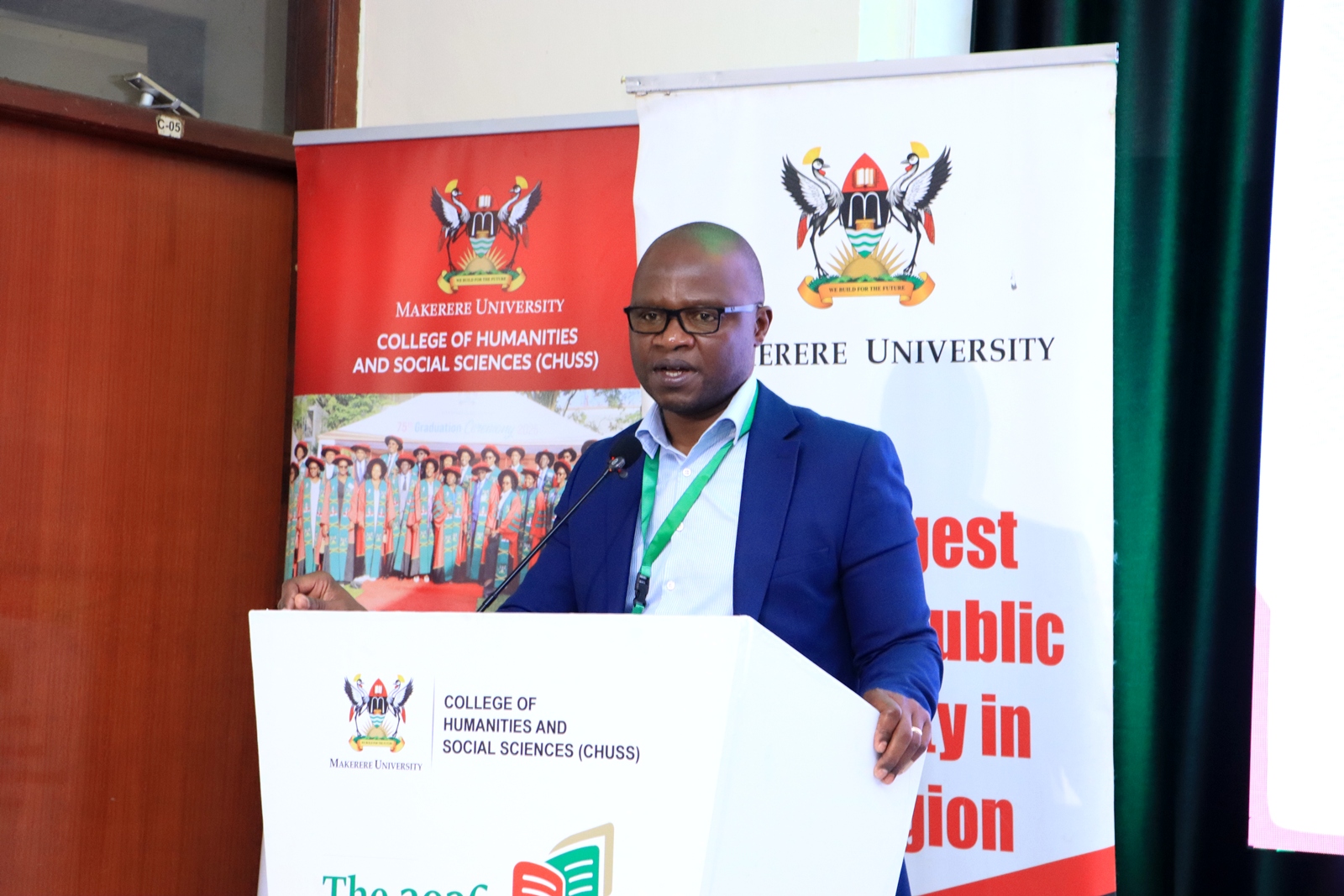
He called for critical examination of theories and methods developed in Western contexts before applying them to African societies. Discussions on decolonisation, he explained, have encouraged scholars to reconsider forms of knowledge and experience that have historically received limited attention in research.
Among the issues he raised was the need to consider experiences of spiritual significance as researchers reflect on sources of knowledge within the contexts they study.
Prof. Siundu also questioned how African research is measured and recognised. Claims about the continent’s contribution to global knowledge, he said, should prompt further questions about how knowledge is defined and whose work is counted.
His address examined how artificial intelligence is changing research. He said AI can support researchers in handling large amounts of data, analysing information and presenting findings. Such tools may also enable fewer people to produce more work within a shorter time, raising questions about the future of intellectual work.
At the same time, he cautioned that AI tools may not adequately capture the context, subjectivity and diversity of human experience. He expressed concern that African histories, languages, cultures and knowledge systems could be marginalised if the technology reinforces more dominant perspectives.
He asked participants to consider whether AI could deepen existing gaps in the representation of knowledge or be used to document and preserve African experiences. For scholars in the humanities and social sciences, he said, adopting the technology also requires attention to its methodological and ethical implications.
Prof. Siundu proposed stronger collaboration among scholars and institutions across Africa as one way of responding to research and funding challenges. He encouraged researchers to build on the work of earlier generations of African scholars who questioned colonial approaches and placed African experiences at the centre of their scholarship.
Reflecting on the contribution of universities and scholars in East Africa, he said their work in history, literature, politics and other fields helped establish intellectual traditions on which present and future researchers can build.
Prof. Edgar Nabutanyi: Graduate study as a process
Speaking before the keynote, symposium convenor Prof. Edgar Nabutanyi encouraged graduate students to approach their studies as a process rather than focus only on the final award.
He said a dissertation or thesis should demonstrate a contribution to new knowledge, but reaching that point involves several stages, including research, writing, presenting and responding to feedback.
Focusing only on the final outcome, he explained, can make the demands of graduate study more discouraging. Viewing the work as a process helps students appreciate the value of each stage and the progress they make along the way.
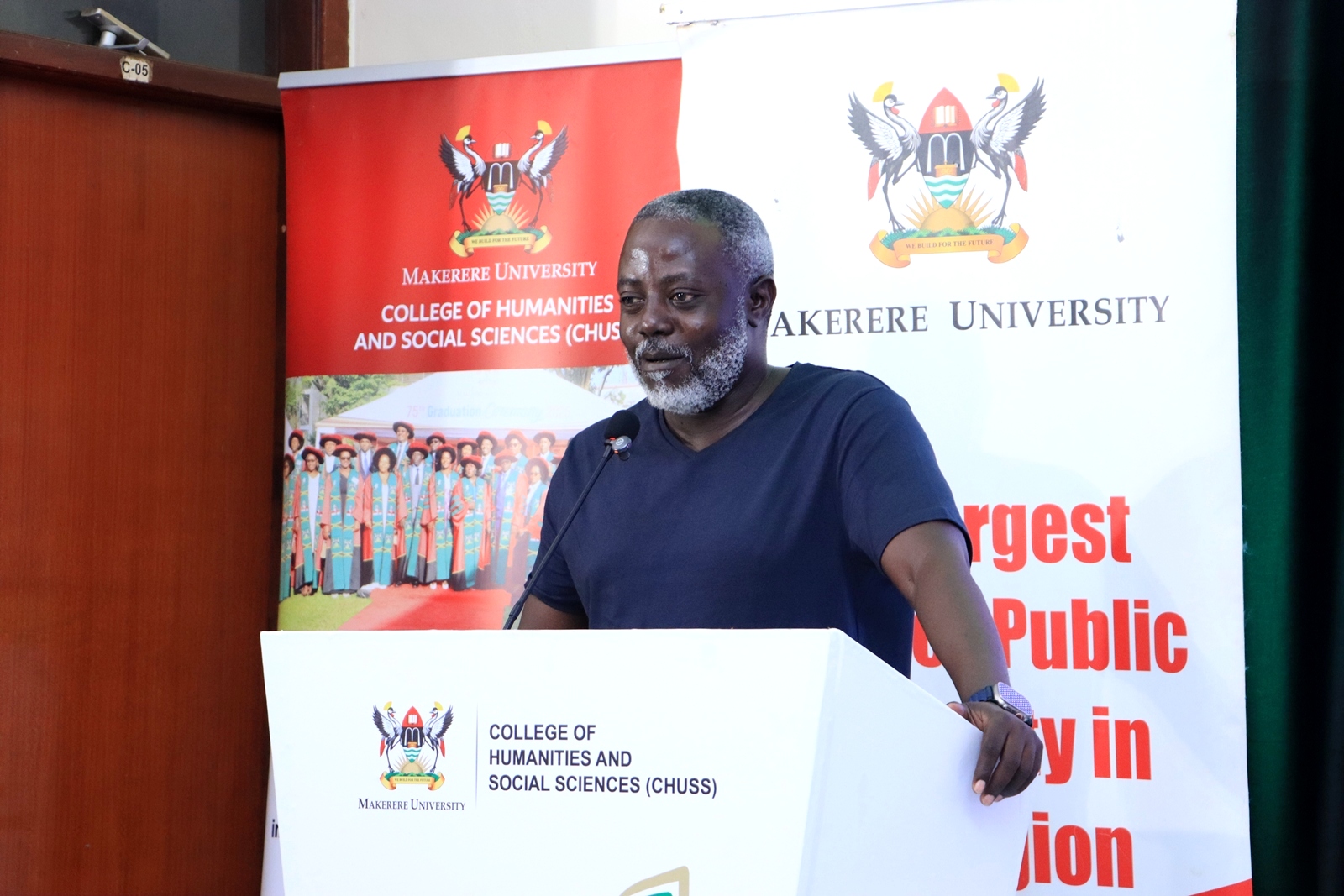
Prof. Nabutanyi compared graduate research to brewing, explaining that a researcher brings together background knowledge, ideas and skills that develop over time. Seminars, workshops and symposia provide opportunities to test and refine the work as it takes shape, he said.
He stressed the importance of communicating research clearly. What a researcher understands in their own mind may not always be communicated in a way that a supervisor, fellow scholar or wider audience can follow.
Writing and presenting research gives students an opportunity to see how others understand their ideas and use feedback to improve their arguments, he explained.
Prof. Nabutanyi also noted that examiners have repeatedly raised concerns about methodology in graduate research. He cautioned students against treating methodology as merely filling a chapter with sections on research design, data collection and ethical considerations, without thinking carefully about how the study will be conducted.
Gerald Mukisa Nsereko: Citing fellow scholars
For Gerald Mukisa Nsereko, a PhD student in the School of Psychology, one of the most useful lessons from the symposium was the need to recognise and cite relevant research produced by scholars within his own academic community.
He said researchers often cite scholars from Western contexts while overlooking the work of colleagues around them. He plans to be more intentional about citing relevant local scholarship in his PhD proposal and future publications.
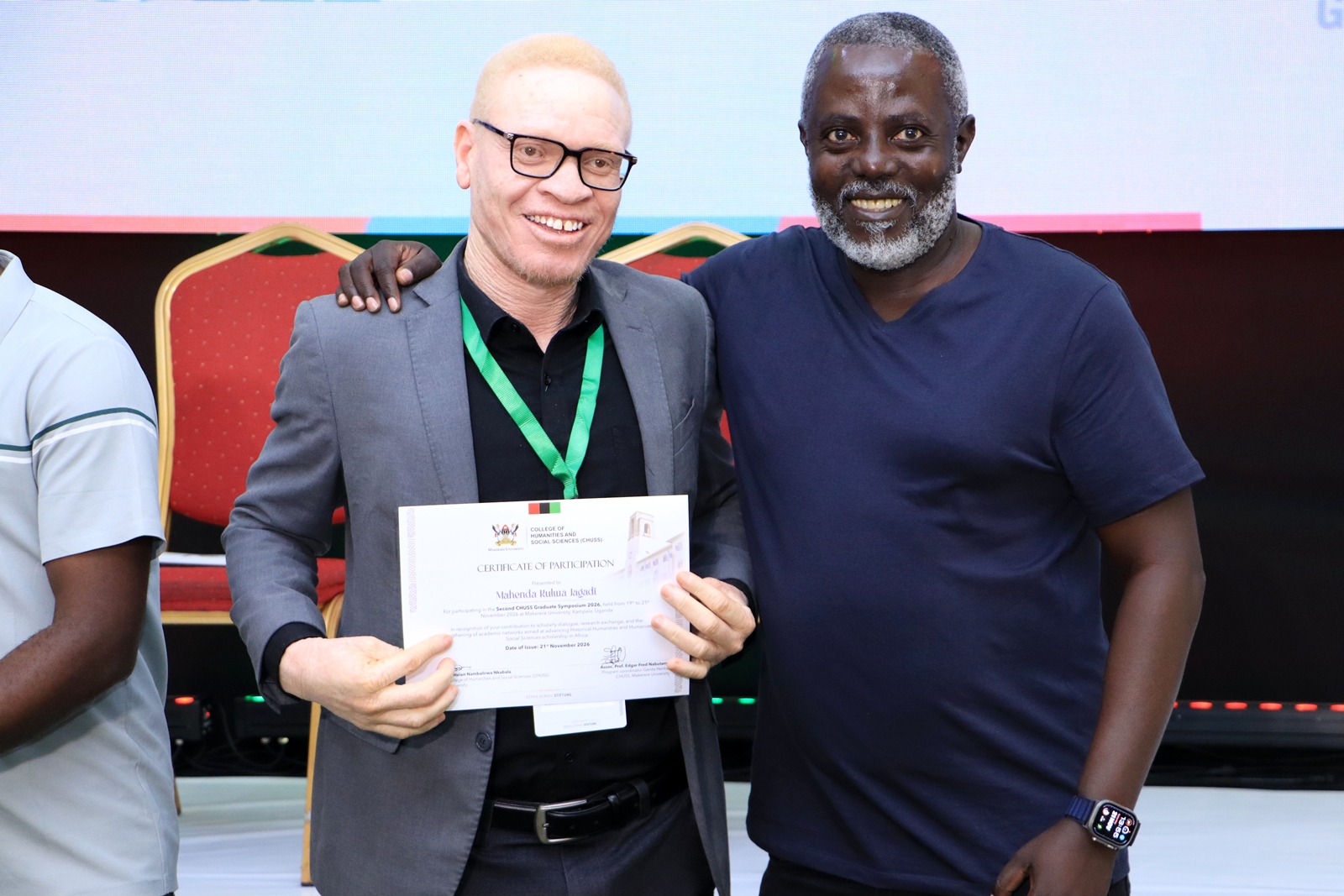
Gerald said he had already started paying attention to this in his proposal and intended to continue as he develops his research.
He also said the symposium reinforced his understanding that research should reach the people who can learn from and use it, rather than remain with the writer.
Having shared his work with scholars from different schools during the symposium, he plans to seek more opportunities to communicate his progress and findings beyond the event.
Noyombi Marc Francois: Applying feedback
Noyombi Marc Francois, a first-year PhD student in Linguistics from Cameroon, said the symposium had been a valuable learning experience across all three days.
A student in the Department of Linguistics, English Language Studies and Communication Skills, he said the keynote addresses and conversations on writing, editing and publishing helped him understand the demands of scholarly work.
He also valued the opportunity to present his research proposal, which is still under development, and receive feedback. Listening to comments given to other scholars presenting proposals, draft chapters and papers was useful to his own work, he said.
For Noyombi, a key lesson was the importance of rigour in research methodology. As he continues his PhD, he plans to pay close attention to the methods and standards required for his study, recognising that good research demands care rather than shortcuts.
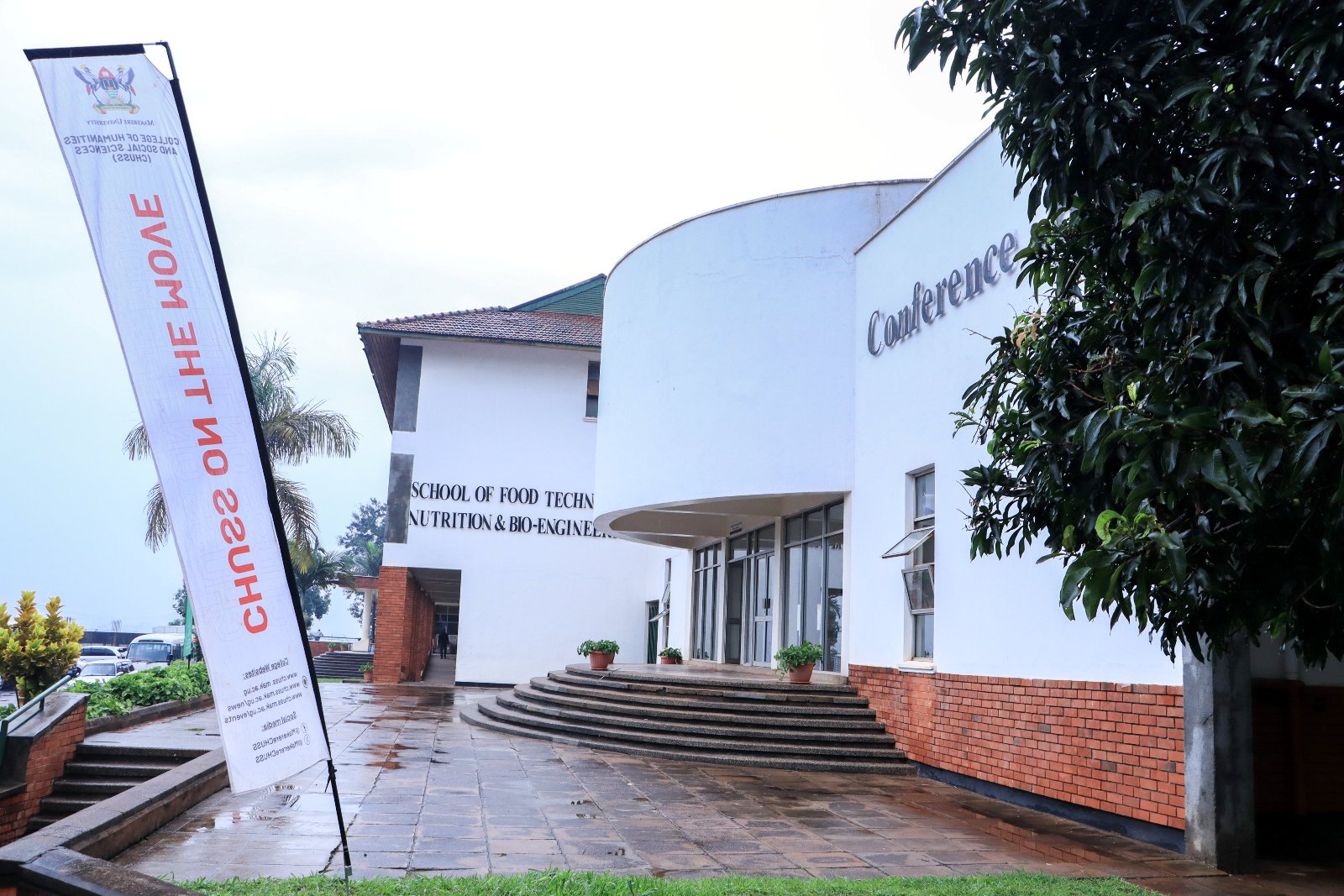
The symposium concluded with Prof. Kikooma thanking the participants, organisers, speakers and partners before formally declaring it closed. He encouraged the graduate students to build on the feedback they had received, stay connected with their fellow researchers and develop their work for publication, so that the conversations started during the three days can reach wider audiences.






Humanities & Social Sciences
CHUSS Graduate Symposium opens with focus on African research, scholarly writing and publication
Researching African realities, communicating academic work to wider audiences and preparing research for publication took centre stage as Makerere University’s College of Humanities and Social Sciences (CHUSS) opened its 2026 Graduate Symposium.
The symposium brings together graduate students and scholars to present research, exchange ideas and discuss how scholarship in the humanities and social sciences can contribute to knowledge and respond to issues affecting society.
The three-day event opened on 19 November 2026 and continues until 21 November at the School of Food Technology, Nutrition and Bio-Engineering Auditorium. The first day featured a writing workshop and a keynote lecture that explored how researchers develop questions, engage with existing knowledge and communicate their findings.
Researching and writing Africa
Delivering the keynote virtually, Prof. Divine Fuh called on graduate students to develop research that responds to African realities while paying attention to the continent’s diversity and maintaining rigorous methods.
His lecture titled: Research and Writing Africa for and from Africa, examined how scholars frame questions, choose methods and engage with the histories, institutions and communities that shape knowledge production.
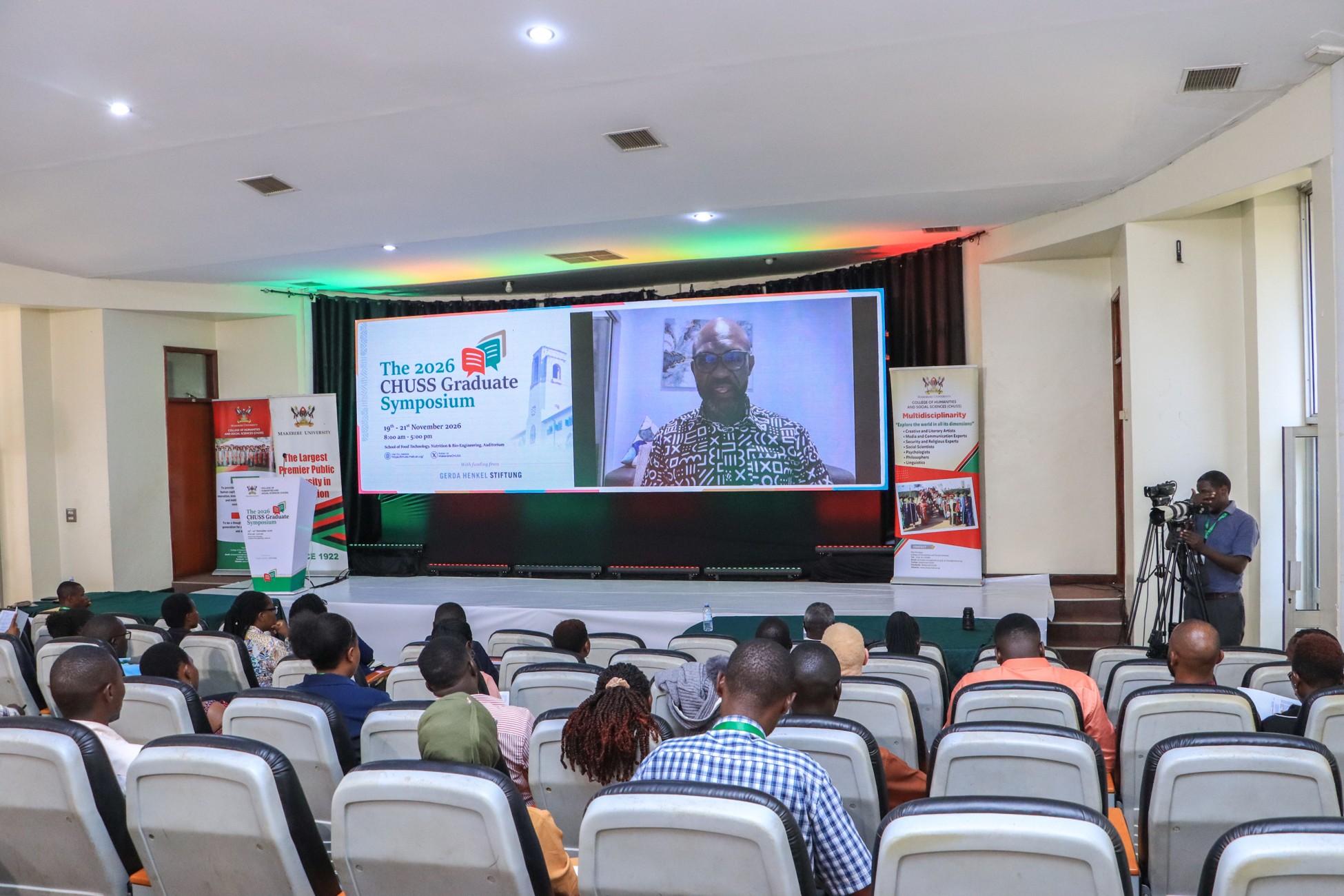
Prof. Fuh, an Associate Professor of Social Anthropology at the University of Cape Town, said research begins with curiosity and the willingness to ask questions. He encouraged students to take time to develop their questions rather than rushing to provide answers.
“Your thesis, your article, your book, whatever you write, involves so many people,” he said.
An experience or problem encountered in everyday life, he explained, can be a starting point. The researcher’s task is to turn that concern into a question that can be investigated systematically, while considering what other scholars have already written about it.
He stressed the relationship between the question a researcher asks, the concepts used to understand it, the methods chosen to collect information and the conclusions drawn from the findings. Researchers, he said, should be able to explain these choices so that others can examine how they arrived at their arguments.
Prof. Fuh also asked students to reflect on their own position in the research process. Their experiences, relationships and assumptions can influence the questions they ask and how they interpret what they find.
Ethical reflection, he said, should extend beyond completing a checklist. It should inform the language and concepts researchers use, the places in which they work, how they engage participants and how they interpret and present findings.
Decolonising knowledge
Prof. Fuh also addressed the question of decolonising knowledge, encouraging scholars to examine how particular ideas and ways of knowing came to be recognised as authoritative and whose knowledge has been excluded.
He argued that researchers need to understand existing knowledge and its history in order to assess its limitations. Decolonisation, in this context, involves questioning inherited assumptions and recognising other sources and approaches that can deepen understanding.
He connected the discussion to the history of African universities, including the colonial period, the demands of nation-building after independence and later expectations that universities respond to development challenges. These histories, he noted, have shaped the institutions and research practices that scholars inherit.
At the same time, Prof. Fuh stressed that introducing alternative sources of knowledge does not mean abandoning rigorous assessment. Researchers must still consider the credibility and coherence of their evidence and make their methods and arguments open to scrutiny.
He cautioned against treating Africa as a single, uniform place. Researchers, he said, should pay attention to the differences and connections between communities, and comparative work can help illuminate how similar issues take shape in different settings.
He also encouraged scholars to take seriously the experiences of people whose voices are often absent from research and public discussion. Universities, he noted, exist within society and have a responsibility to create space for questions, evidence and arguments to be examined.
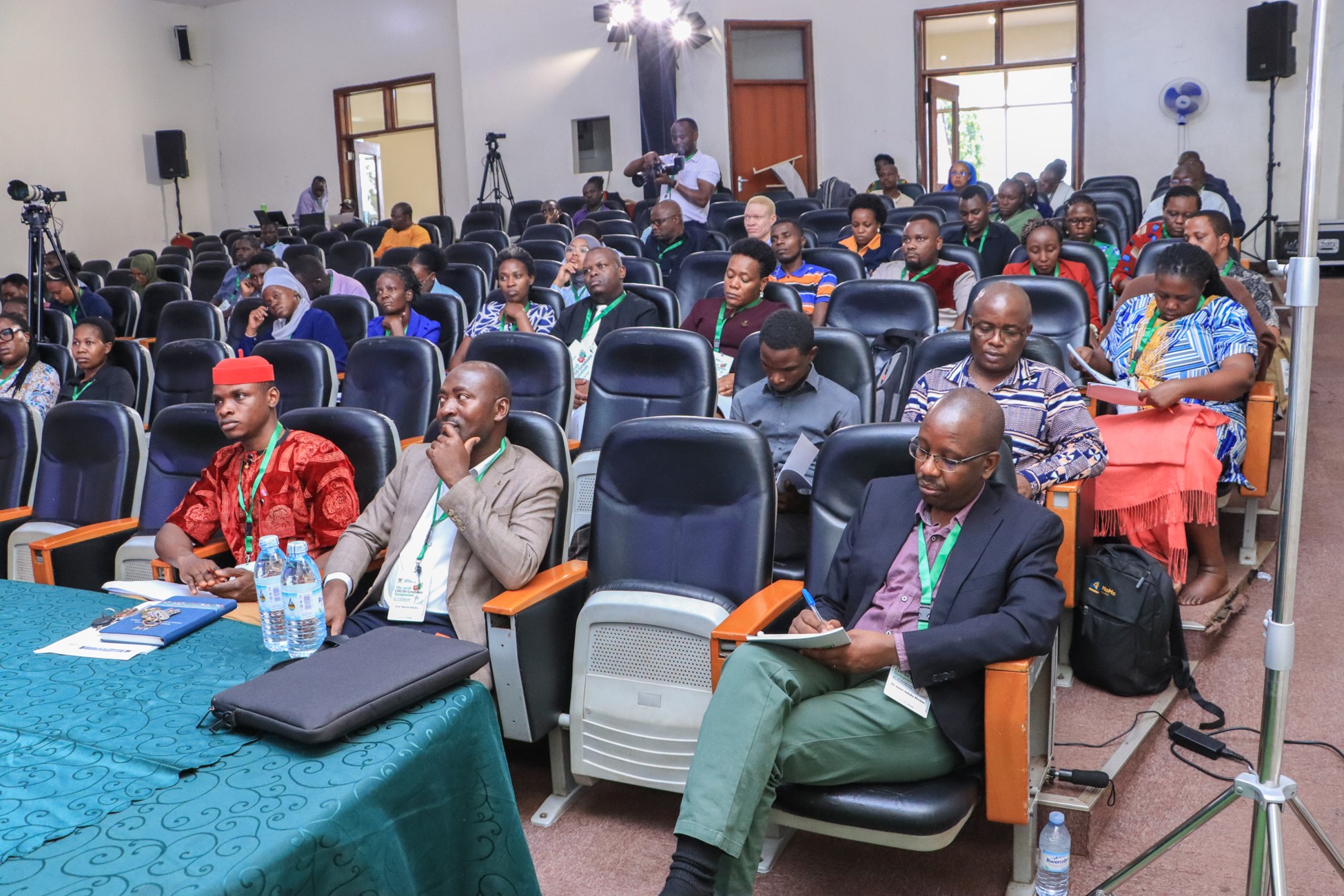
Prof. Fuh described scholarship as a collective process. Even when a thesis or article carries one author’s name, its development may involve research participants, supervisors, colleagues, editors and reviewers. He encouraged students to share their work, engage with criticism and see disagreement as an opportunity to examine and strengthen ideas.
An opportunity to publish and grow
CHUSS Principal Prof. Helen Nambalirwa Nkabala encouraged participants to use the symposium to strengthen their research and prepare it for publication, saying the gathering is also an opportunity for scholars to develop.
“It is an opportunity for you to publish. It is an opportunity for us to grow,” she said.
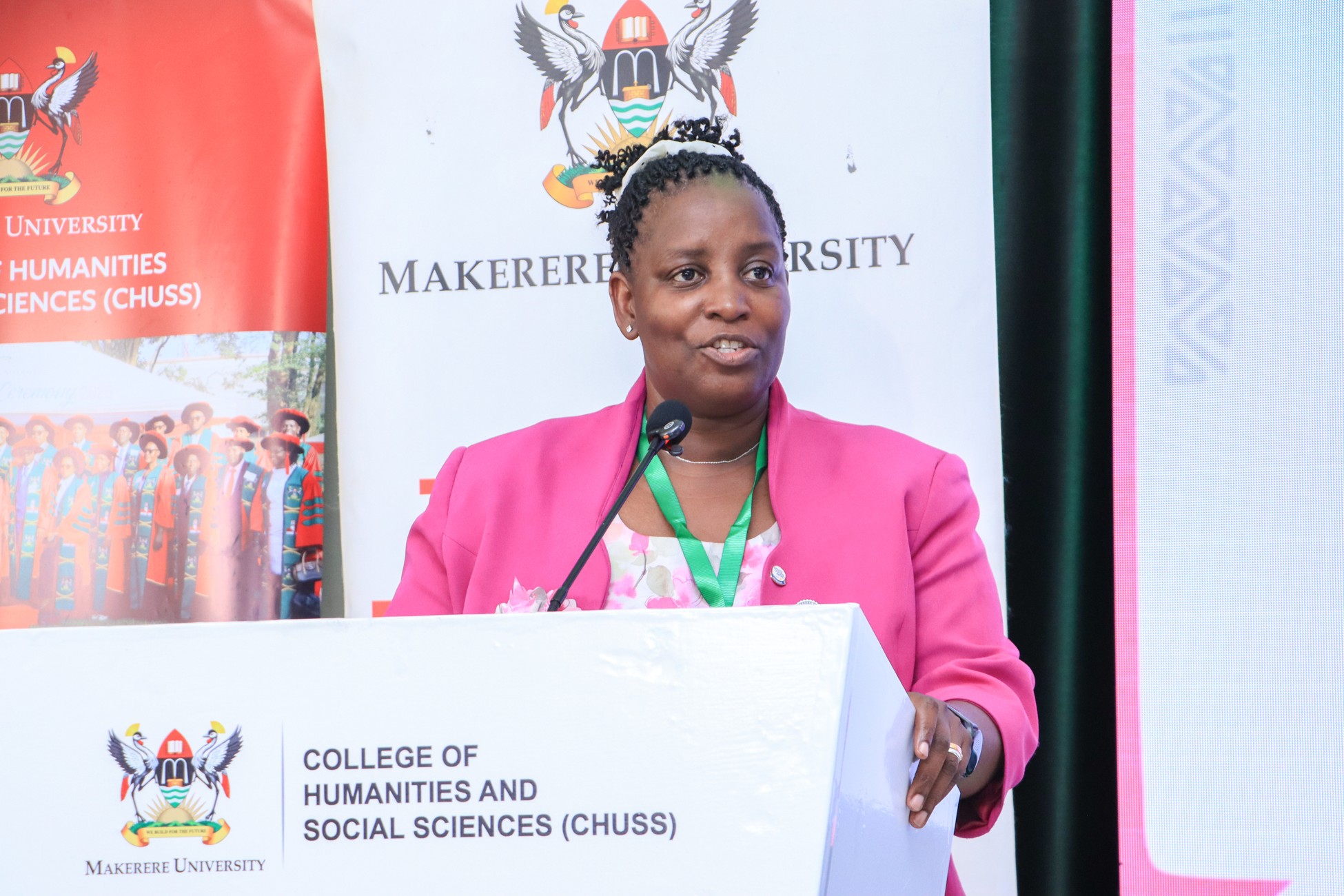
Prof. Nkabala urged participants to engage seriously with the discussions and feedback they receive. She encouraged them to identify weaknesses in their work and address them before submitting it, rather than leaving the symposium with their research unchanged.
Her remarks connected publication to the wider process of growth as a researcher. Presenting work to others, listening to questions and revisiting an argument can help students improve both an individual paper and their approach to future research.
The Principal also spoke about the contribution of the humanities and social sciences to societal change. Alongside other fields, she said, these disciplines have a role in understanding the challenges communities face and generating ideas that can contribute to addressing them.
She encouraged graduate students to think about the relevance of their work beyond their academic programmes and consider how the knowledge they produce can contribute to society.
Prof. Nkabala recognised the role of supervisors and graduate-support teams in helping students develop their research. She also acknowledged the support of the Gerda Henkel Stiftung for the College’s graduate work.
A dedicated platform for graduate students
Symposium convenor Prof. Edgar Nabutanyi explained that the graduate symposium grew out of earlier College symposia and a recognition that graduate students needed a dedicated space to present and discuss their work.
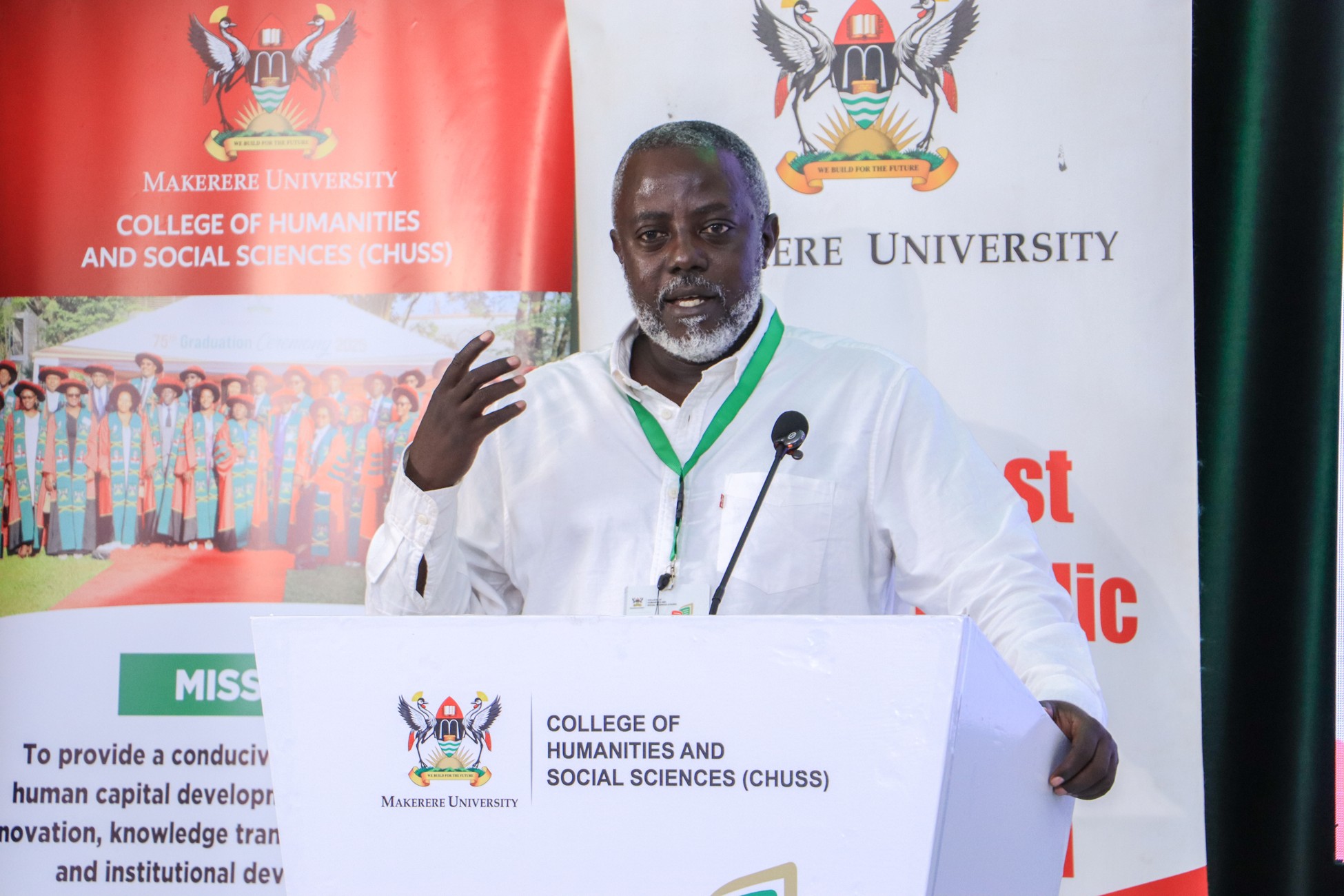
He said the intention was to create an avenue for students to share their ideas and receive support. “We wanted to create a platform for graduate students to present their work, exchange ideas and receive feedback that can help them grow as scholars,” he said.
Rather than simply presenting completed work, participants have an opportunity to expose developing arguments to questions and scrutiny. This allows them to hear how others understand their research, identify areas that need further thought and consider how to strengthen their work.
Prof. Nabutanyi described the symposium as an interactive setting for scholarly exchange. Its value, he suggested, lies not only in delivering a paper but also in listening and responding to the people engaging with it.
The gathering also contributes to the development of a new generation of humanities and social sciences scholars by bringing graduate students into conversation with one another and with more experienced researchers.
Through the symposium, students can practise explaining their work, engage with different approaches and take feedback into the next stages of their research and writing.
Research beyond graduation
Dr Martin Baluku urged graduate students to look beyond completing their degrees and consider what their research contributes to society.
Speaking at the writing workshop, he asked participants to reflect on the purpose of graduate study and the responsibility that comes with producing knowledge. He encouraged them to think about how their research could respond to issues affecting communities rather than ending with the award of a qualification.
“Graduate study should not end with obtaining a degree. We must also ask ourselves what our research contributes to the communities and institutions that can benefit from it,” he said.
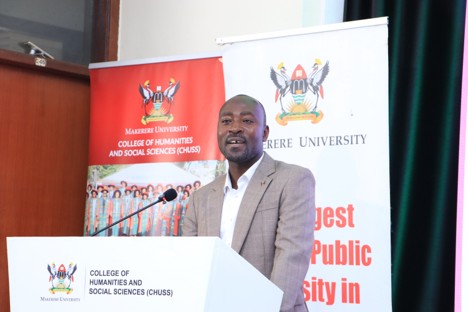
Dr Baluku also asked researchers to consider the audiences that could benefit from their work, including government, practitioners and people outside the university. Engaging with these audiences, he suggested, can help scholars understand how their findings relate to challenges beyond academia.
He stressed the importance of communicating research in a way that allows others to understand and use it. Findings and recommendations need to be written and shared clearly if they are to reach people who can apply them.
His remarks connected the work of graduate researchers to a wider question: what difference can the knowledge they produce make to the people and institutions it concerns?
Writing for readers across disciplines
Dr Isaac Kiiza Tibasiima urged graduate students to make their academic work understandable to readers beyond their disciplines while remaining grounded in their own fields.
He said researchers should consider who might read their work and how people from different backgrounds could interpret it. He noted that a study may attract readers from other disciplines, particularly when it addresses an issue that cuts across several fields.
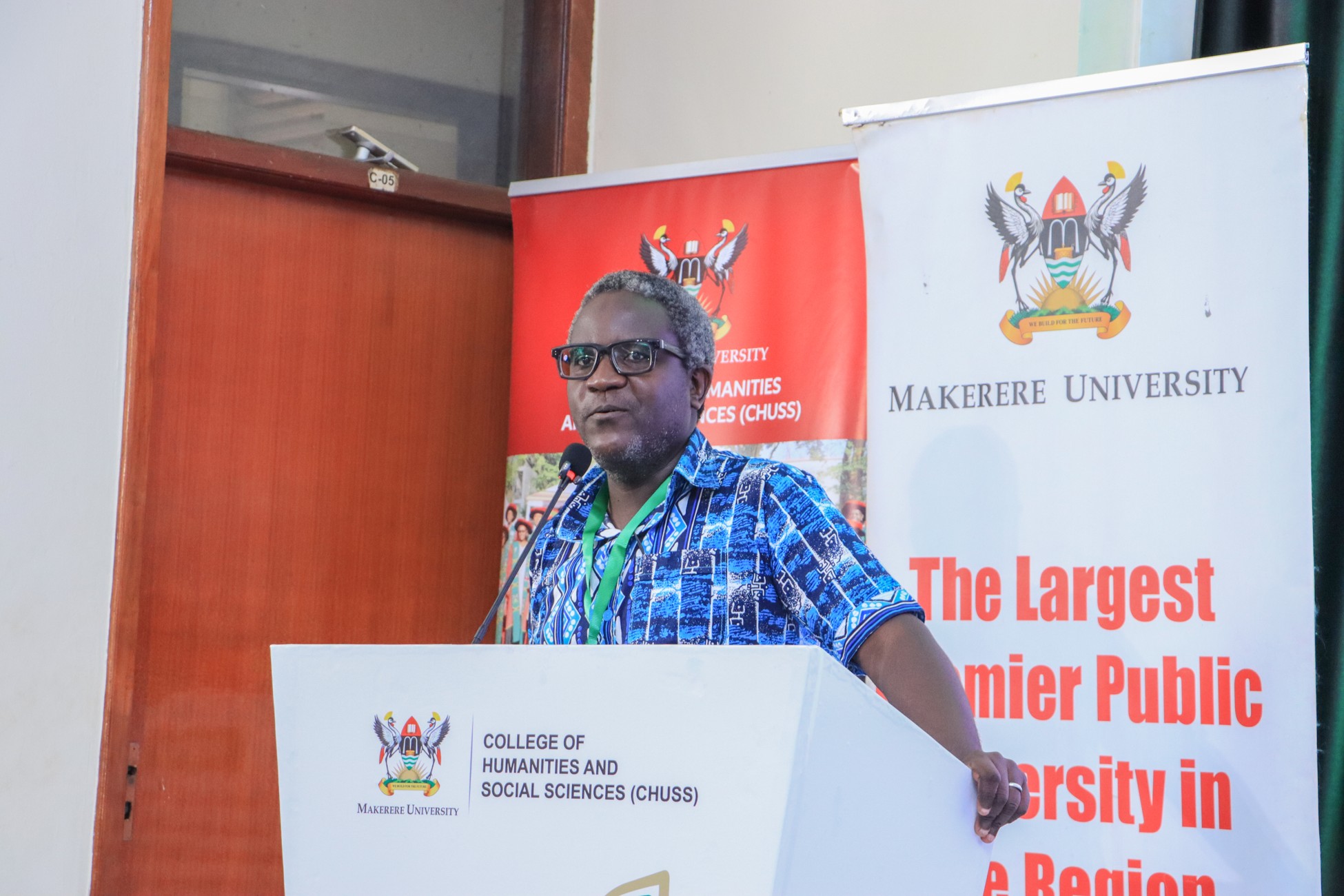
Drawing on examples from students’ research, Dr Tibasiima explained that a subject such as trauma can be understood differently across disciplines. Researchers therefore need to make their own approach clear while recognising that other readers may engage with the subject from a different perspective.
He said readability involves more than choosing words. It also depends on how researchers organise ideas, structure sentences and guide readers through an argument. Long sentences, unexplained specialised terms and weak connections between ideas can make it difficult for readers to follow the work.
Dr Tibasiima emphasised the importance of an introduction that tells readers what a paper or thesis is about and gives them a reason to continue reading.
“I want to know right from the start, what your paper is about or what your thesis is about,” he said.
He encouraged students to think of a thesis as a story whose chapters and arguments connect. Readers should be able to follow the movement from one point to the next and understand how the different parts of the work relate to one another.
He also pointed to the need for consistency between research methods and findings. If a researcher says interviews were used, for example, the presentation of findings should show how the interview data informed the study.
On the use of existing scholarship, Dr Tibasiima urged participants to do more than list authors and citations. Their work, he added, should explain what other scholars have said and how that work relates to their own argument.
He encouraged students to offer readers something new to think about, including by questioning established ideas. “Challenge the knowledge that I have about what you’re writing. Because I think that is what scholarship is about,” he said.
What journal editors look for
Prof. Godwin Siundu of the University of Nairobi discussed the expectations journal editors bring to scholarly work, highlighting the importance of a clear argument, academic rigour and a contribution to existing knowledge.
He encouraged researchers to consider what their paper adds to a conversation that other scholars are already having. Referring to published work is important, he emphasized that writers must also show how their own research relates to it and what it contributes.
His presentation placed emphasis on the argument running through a paper. Editors and readers need to understand what the author is saying, the evidence supporting that position and why the contribution matters.
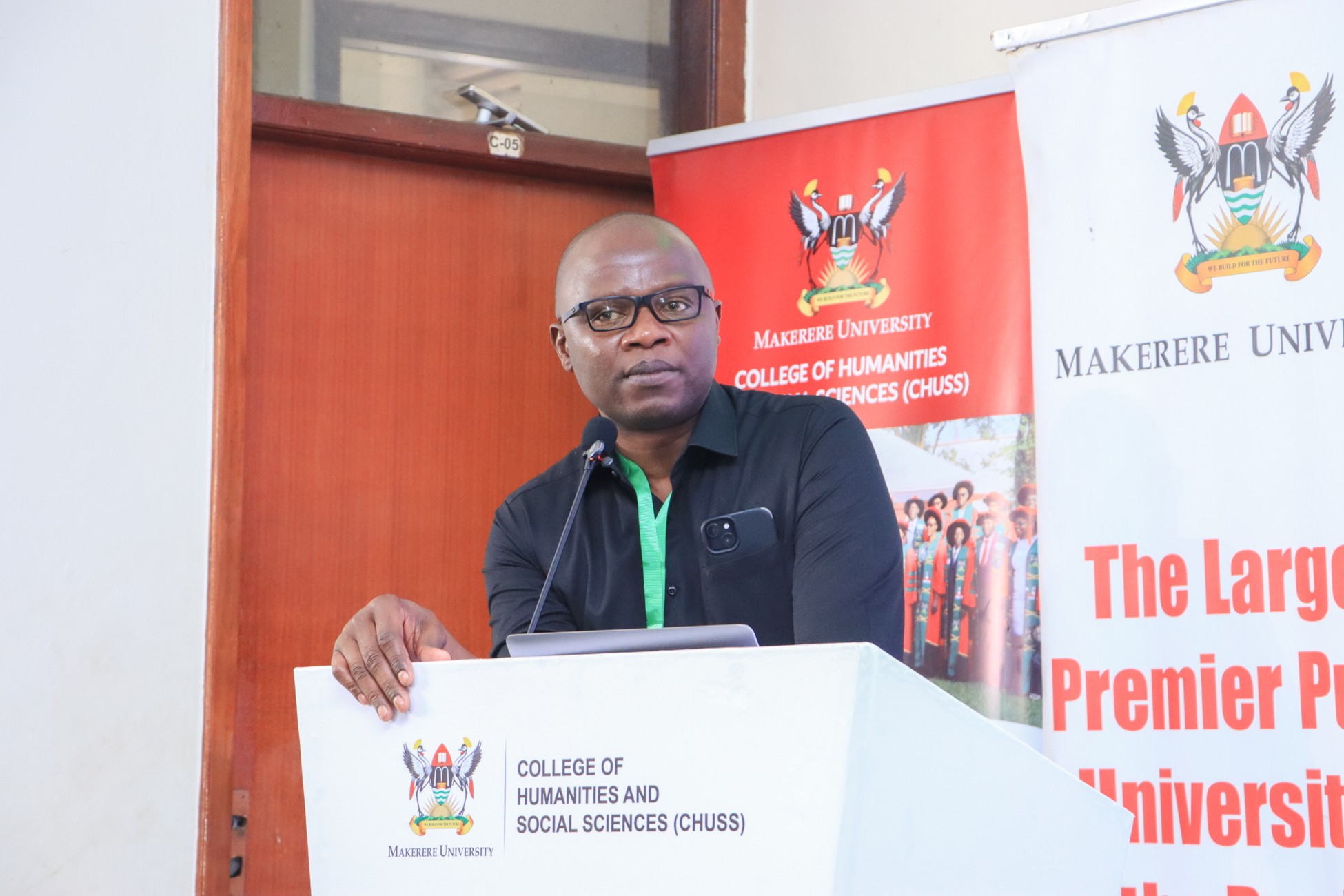
Prof. Siundu’s discussion also drew attention to the relationship between research and its presentation. A writer may have valuable material, but the article must organise it in a way that allows readers to follow the argument and assess its contribution.
The questions he raised encouraged participants to look at their work from an editor’s perspective: whether the purpose is clear, whether the evidence supports the claims and whether the paper offers readers a meaningful contribution.
Engaging with reviewers’ comments
Dr Amon Ashaba Mwiine discussed how researchers can respond to feedback from reviewers when preparing work for publication.
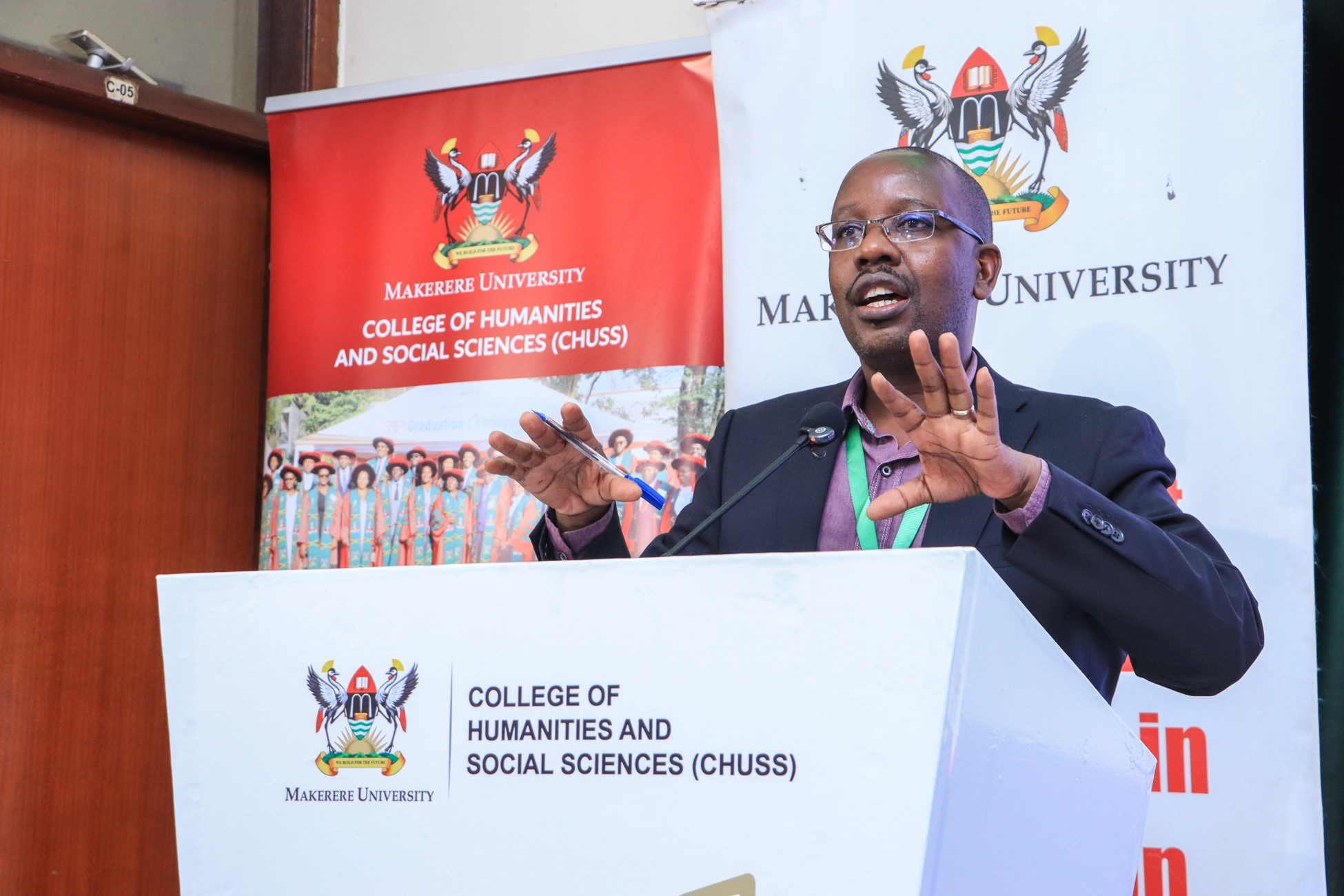
He encouraged participants to treat reviewer comments as part of the process of learning and improving a paper. Feedback can reveal gaps in an argument, areas that need clarification or issues that require further attention before publication.
He advised researchers to explain how they have addressed the comments they receive. Where they make changes, they should show what has been revised; where they disagree with a suggestion, they should explain their reasons rather than leaving the concern unanswered.
The discussion highlighted revision as an important part of scholarly writing, linking the clarity of an article’s argument to the author’s willingness to engage with questions raised by others.
The symposium continues until 21 November, with graduate students and scholars sharing their work and engaging in further discussions on research and scholarship in the humanities and social sciences.

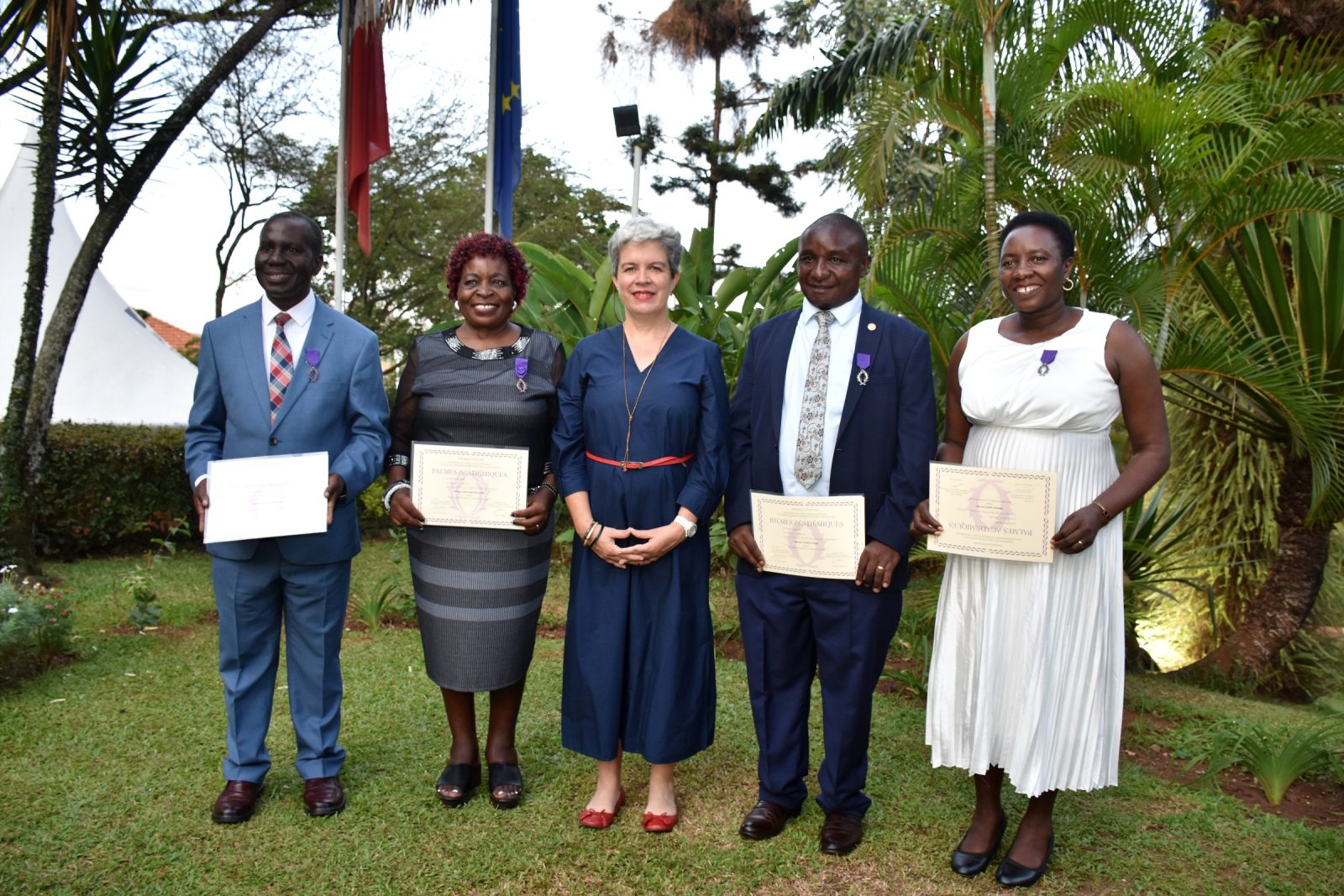
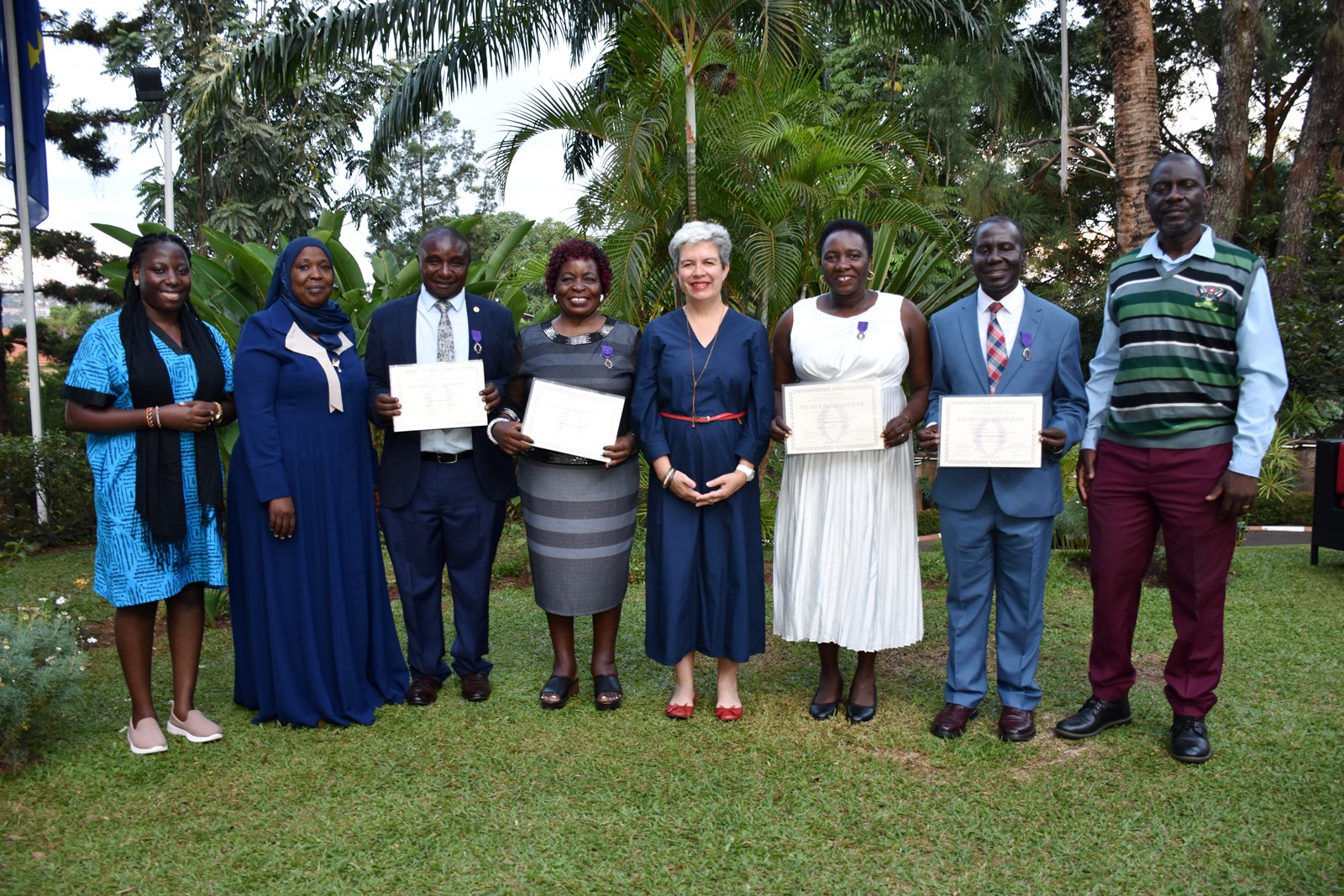
During a ceremony hosted by The French Embassy in Uganda on Wednesday, October 7 2026, four Makerere-affiliated academics were honoured with French Order of Academic Palms for their effort in strengthening working relations between France and Uganda.
The individuals recognised for their dedication to education, research, and the teaching of French include; Professor Edith Ruth Natukunda Togboa, Dr Agatha Tumwine, Professor Christian Kakuba, and Professor Enoch Sebuyungo.
During the ceremony, the French Ambassador H.E. Virginie Leroy highlighted that the partnership between France and Uganda partly thrives on the commitment of teachers and researchers who facilitate dissemination of knowledge and build lasting connections between the two nations.
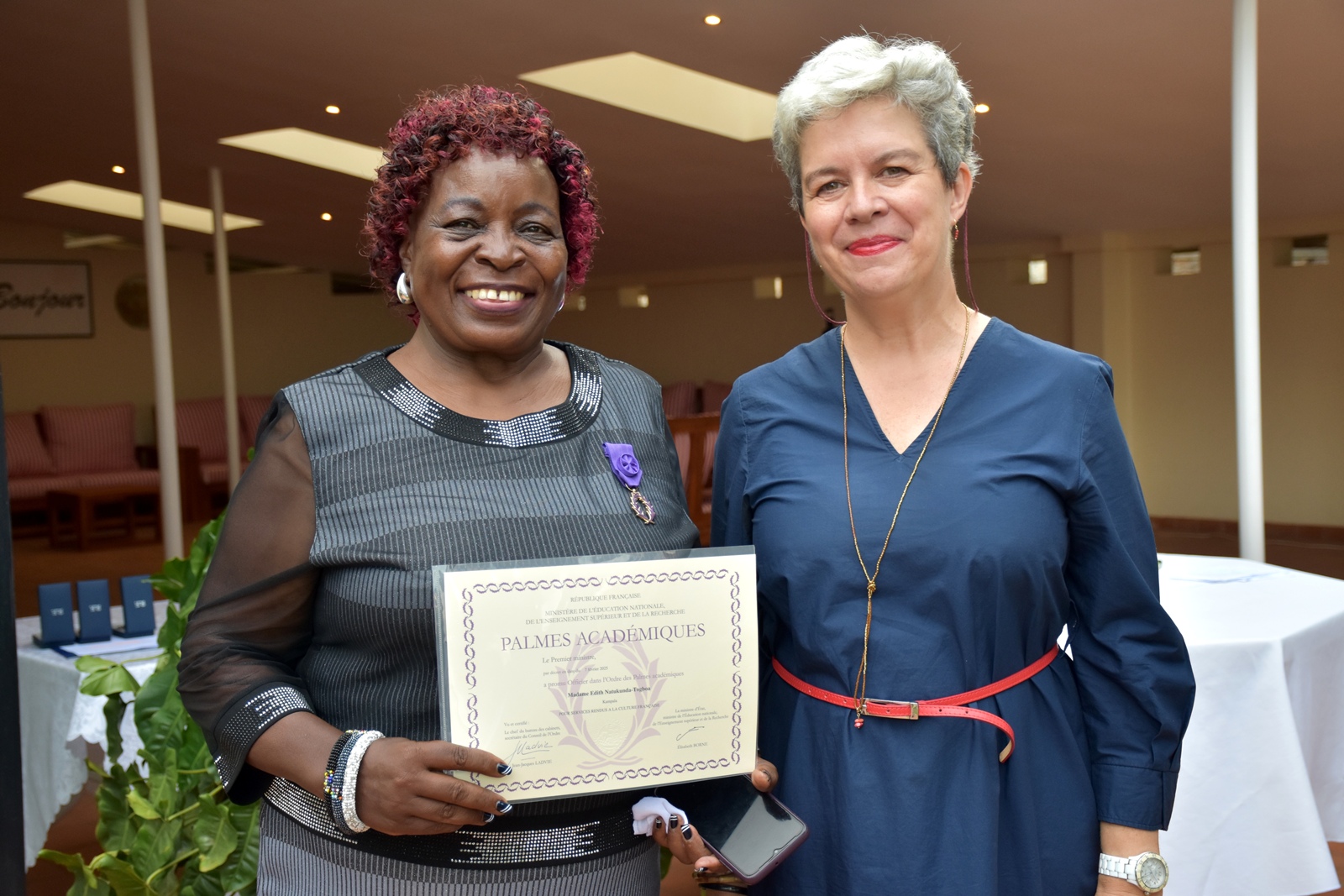
One of the recipients, Professor Edith Ruth Natukunda Togboa, who was promoted to the rank of Officer of the Academic Palms is a long-time French instructor at Makerere University.
Professor Natukunda Togboa focused her career on bilingualism, translation, and language policy since returning from her studies in France in the 1980s.
Dr Agatha Tumwine the other recipient was appointed Knight of the Academic Palms.
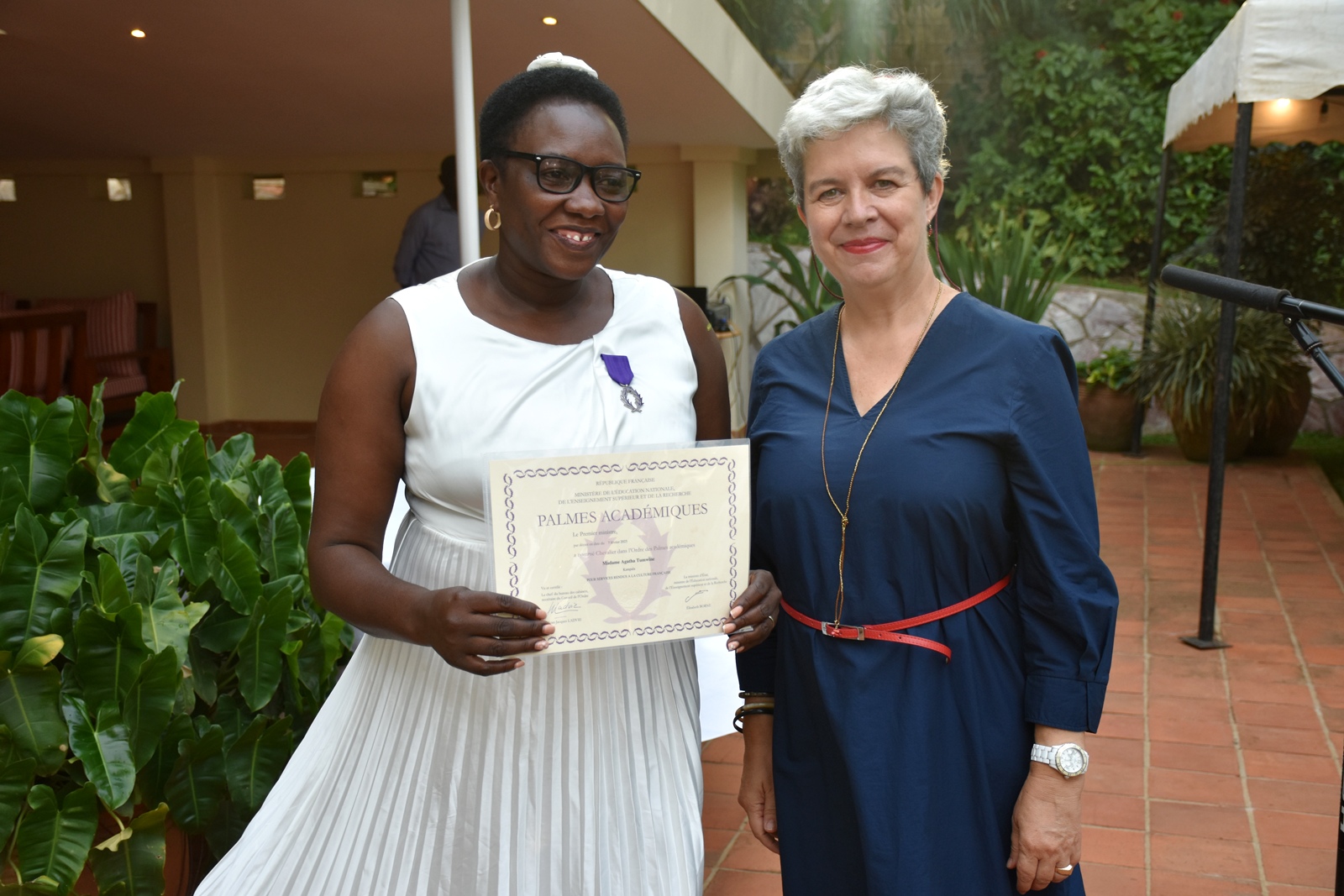
As a Lecturer at Makerere University and President of the Association of French Teachers in Uganda (APFO), Dr Tumwine is recognised as instrumental in strengthening the French-teaching community and facilitating cooperation with the French Embassy.
The third is Professor Christian Kakuba who also received the rank of Knight. With nearly 30 years of experience at Makerere University in socio-demography and applied statistics. He has been a key figure in training new researchers and maintaining ties with the French National Institute for Demographic Studies (INED).
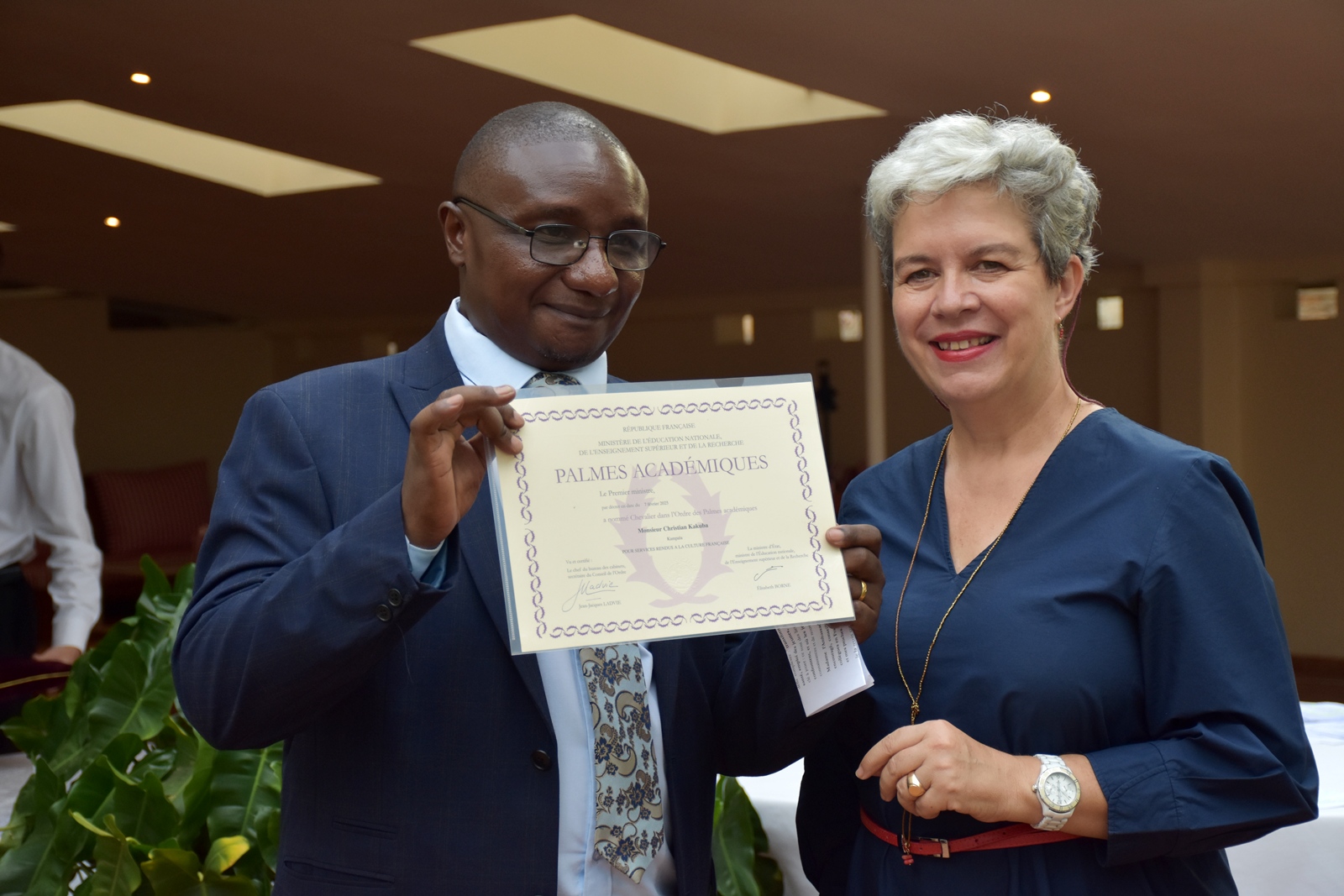
The fourth, Professor Enoch Sebuyungo, was equally appointed Knight of the Academic Palms.
Professor Sebuyungo is a linguist trained in France, and has worked to promote French as a tool for professional training and dialogue. He has also supported French-speaking refugees through translation services.
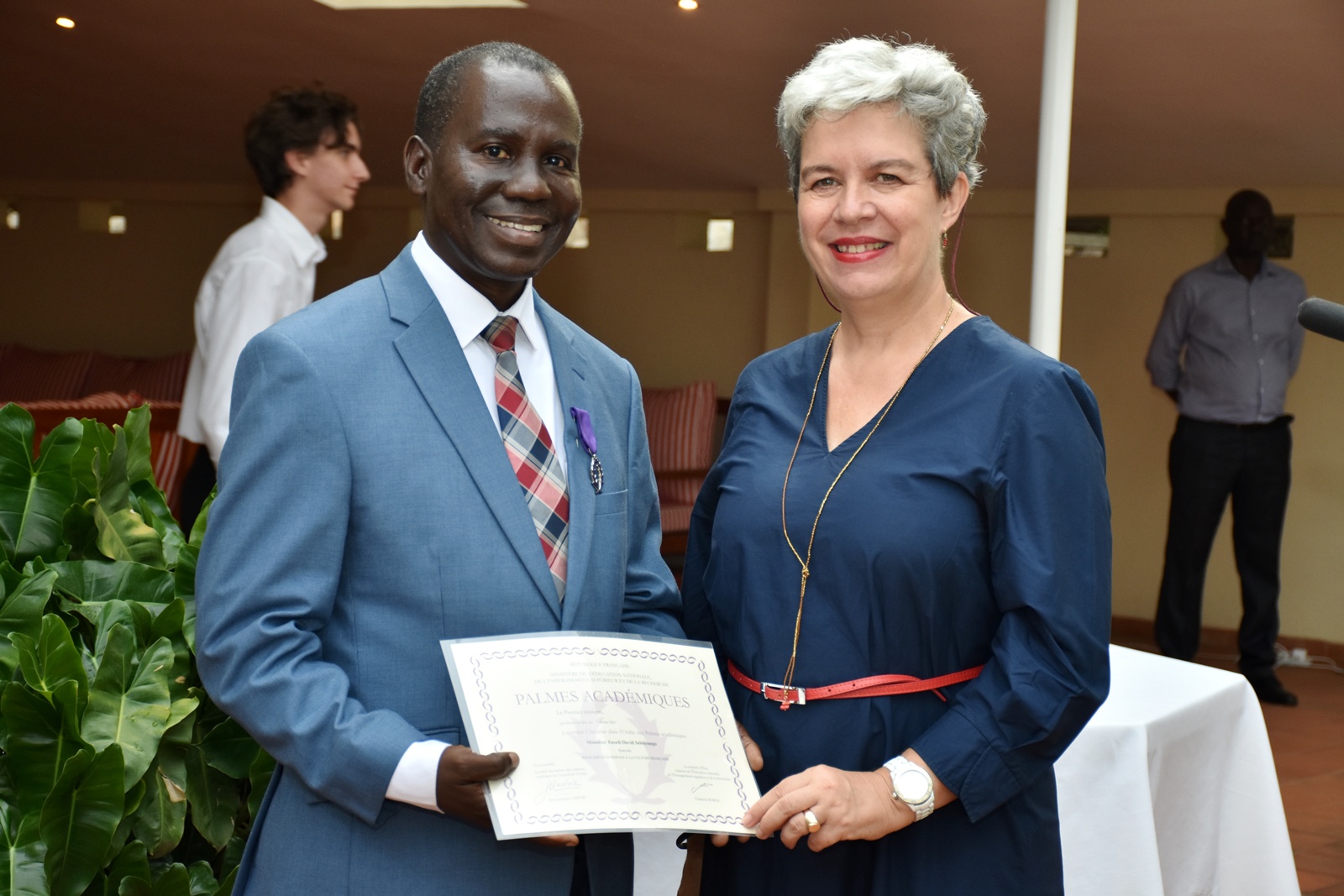
The Academic Palms (Ordre des Palmes Académiques) is an official National Order of Merit bestowed by the French Republic to honor distinguished academics, teachers, and individuals who have made valuable contributions to universities, education, science, and French culture.
Humanities & Social Sciences
MISR Director Assoc. Prof. Lyn Ossome Publishes New Book, Democracy’s Subjections

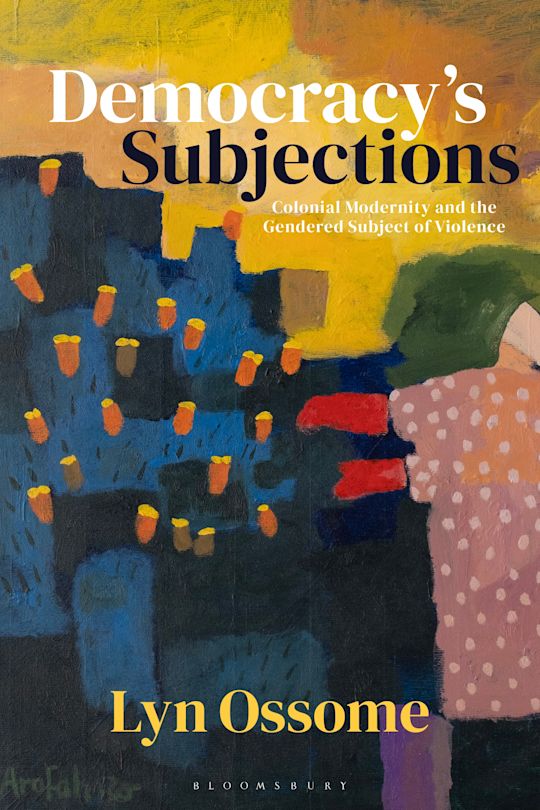
We are pleased to announce the publication of a new book by the Director, Makerere Institute of Social Research (MISR), Assoc. Prof. Lyn Ossome titled Democracy’s Subjections: Colonial Modernity and the Gendered Subject of Violence. It was published by Bloomsbury Academic.
In this ground-breaking study, Lyn Ossome offers an authoritative, interdisciplinary theory of how postcolonial capitalist democracies reproduce the gendered forms of violence essential to colonial rule.
Through an interdisciplinary methodology traversing political studies, feminist political economy, historical and literary studies, Ossome shows how postcolonial, capitalist democracies in Africa, like their colonial antecedents, use various identity-markers to determine whose rights and bodies are violable, to what extent, and whether and how the violated have a right to resist. The book critically reflects on the dilemmas and contradictions produced by the colonial encounter and its subjugative orders for the postcolonial democratizing state, interrogating why the failures of democratic institutions target gendered, labouring bodies. Through evidence gathered from colonial archives in Kenya, Zimbabwe, and South Africa, as well as through critical comparisons of two artistic responses to gender-based violence and rape in South Africa and India, Ossome offers a trenchant critique that, beyond the contexts analysed, is relevant across the postcolonial Global South.
The Makerere University community heartily congratulates Assoc. Prof. Lyn Ossome on this new milestone!
Book cover
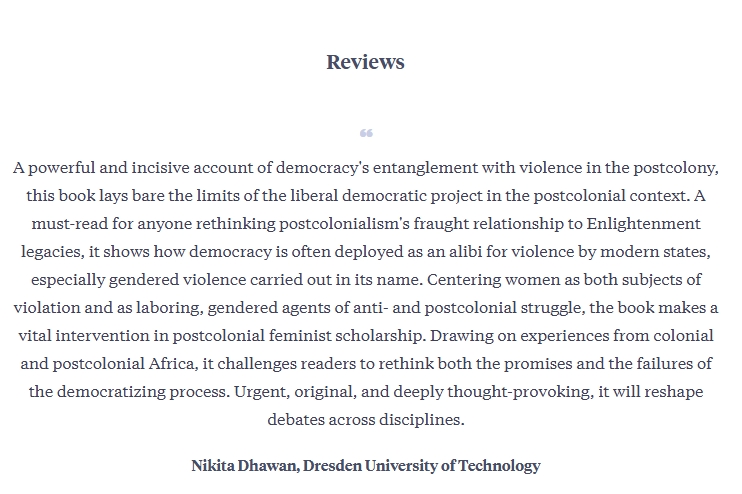
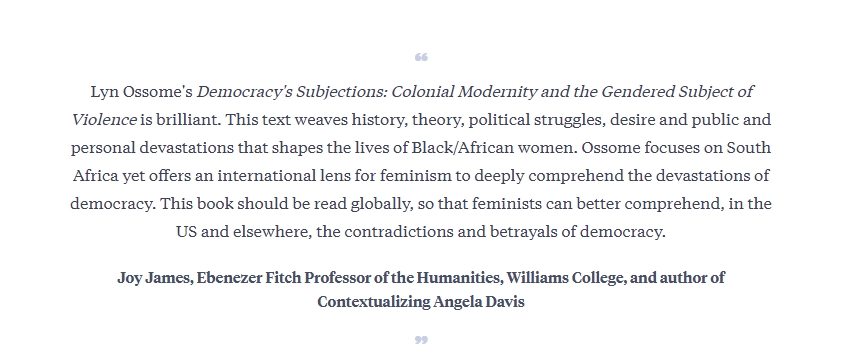
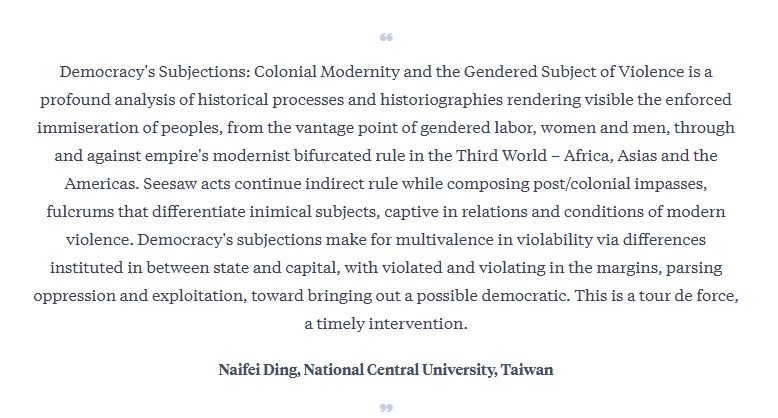
Reviews
-
 General2 weeks ago
Makerere-Rotary Launch Student Food for Peace Initiative
-
 Education2 weeks ago
Makerere Celebrates Prof. Mbazira’s Law Scholarship at His Inaugural Professorial Lecture and Book Launch
-
 Health2 weeks ago
The Road from Climate Promises to Care in Uganda
-
 Agriculture & Environment1 week ago
Why RUFORUM’s 22nd AGM in Zambia matters for Africa’s next generation
-
 General2 weeks ago
Advancing Makerere university’s Research Visibility and Impact: DRIP Spearheads Institutional ORCID Adoption