Connect with us

Health

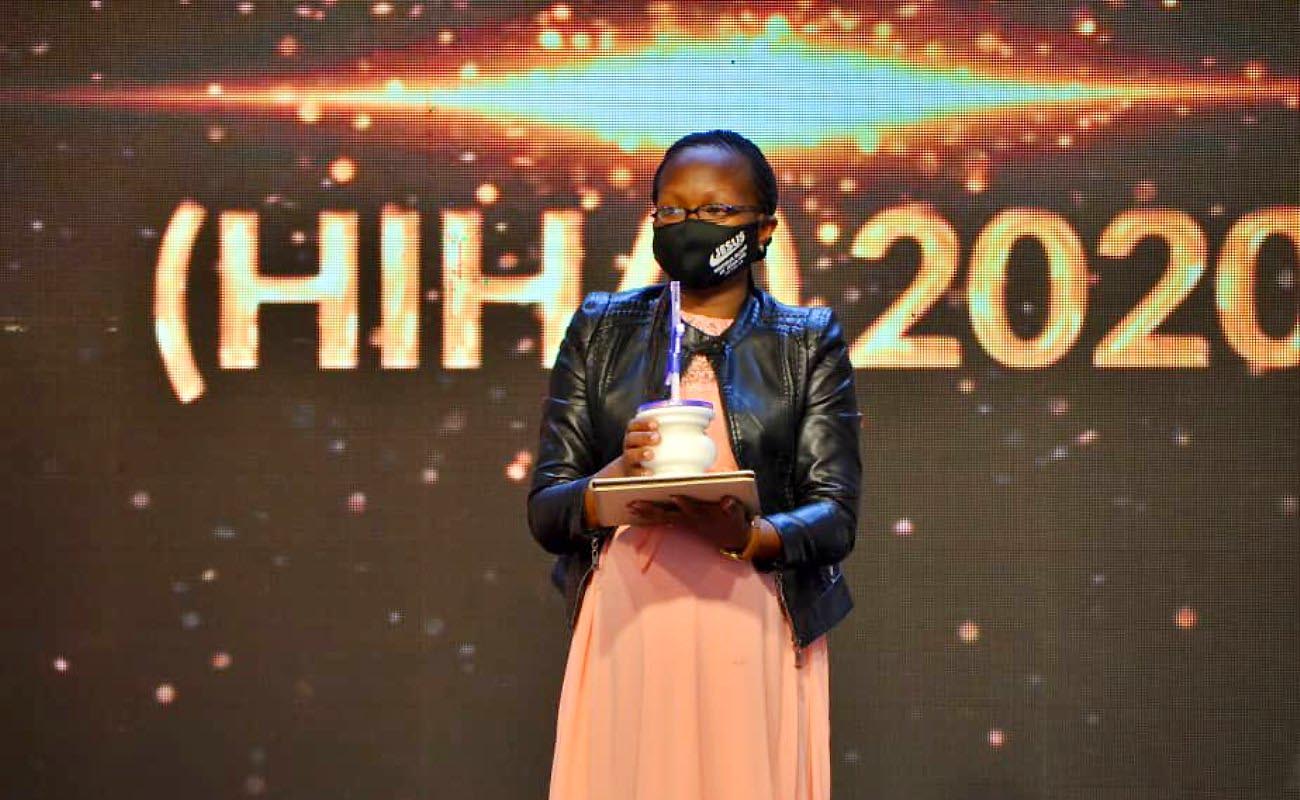
IDI’s Shamim Nakadde Scoops HIHA 2020 Pharmacist of the Year Award

Published

on

The Infectious Diseases Institute (IDI)’s Shamim Nakadde has won the Pharmacist of the year accolade at the Inaugural Heroes In Health Awards (HIHA) 2020. The awards held on Friday 6th November 2020 were organised by the Ministry of Health in partnership with the World Health Organisation (WHO) to recognise and motivate health workers and facilities for their service. The event was presided over by the Vice President H.E. Edward Kiwanuka Ssekandi.

The President of the Republic of Uganda, H.E. Yoweri Kaguta Museveni won the top Lifetime Achievement Award. Nominated for the same awards were two other IDI Pharmacists; Ms. Swalha Namanda and Mr. Peter Ahabwe Babigumira. Other winners of the day were; Kiruddu National Referral Hospital for the Public Health Facility of Choice Award and Mr. Habib Hussein for the Phamacovigilance Award. Nakito Barbra Mukasa took home the Nurse of the Year Award while Caroline Busingye won the Midwife of the Year Award.

Mark Wamai

Health

Makerere Researchers Find Psychological Therapy Effective in Improving Diabetes Care in Uganda

Published

on

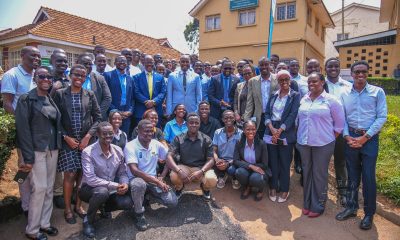
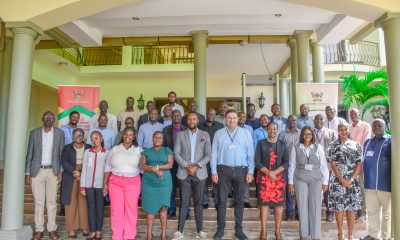
Study participants join Principal Investigator Professor Peter Baguma, members of the research team and officials from the Ministry of Health's Department of Mental Health and Control of Substance Abuse for a group photo after the dissemination workshop on 16th June 2026. Physiology Lecture Theatre at the College of Health Sciences, Mulago Hospital Complex, Makerere University, Kampala Uganda, East Africa.

By Nelson Bahati

Researchers from Makerere University‘s School of Psychology have found that psychotherapy intervention can improve the well-being of adults living with Type II diabetes mellitus, opening the door for integrating psychosocial support into diabetes care in Uganda.

The findings were disseminated on 16 June 2026 during a research dissemination workshop held at the Physiology Lecture Theatre at the College of Health Sciences, Mulago Hospital.

Led by Professor Peter Baguma, the study titled “The Effectiveness of Cognitive Behavioural Therapy for Diabetes Distress, Depression, Health Anxiety, Quality of Life and Treatment Adherence among Adult Patients with Type II Diabetes Mellitus” investigated whether Cognitive Behavioural Therapy (CBT), a psychological treatment that has proven effective in Western countries, could also work in the Ugandan context.

Presenting the findings, Professor Baguma said the study was motivated by the growing burden of diabetes and the psychological challenges that often accompany the disease but are rarely addressed in routine healthcare.

“Diabetes affects many people in Uganda and across the world. It kills, and those who live with it face many challenges. While psychological interventions have been developed and applied in the Western world, we did not know whether these approaches could work in Uganda. That is why we decided to undertake this study,” he said.

He explained that Cognitive Behavioural Therapy focuses on changing negative thoughts and behaviours that affect people’s wellbeing and ability to manage chronic illnesses.

The researchers sought to determine whether CBT could reduce psychological distress among diabetes patients and improve treatment outcomes.

The controlled study involved 200 adult participants with Type II diabetes mellitus. One hundred participants received the CBT intervention while another 100 formed the control group. Participants in the intervention arm attended eight counselling sessions over four months, with each session lasting between one and one-and-a-half hours.

The therapy covered several modules, including psychoeducation on diabetes, cognitive restructuring, medication adherence, problem-solving, coping strategies, physical exercise, relaxation techniques and strategies for maintaining treatment.

According to Professor Baguma, the findings showed that psychotherapy significantly improved participants’ wellbeing.

Professor Baguma Peter, the Principal Investigator presenting the study methodology and research design during the dissemination of findings. Physiology Lecture Theatre at the College of Health Sciences, Mulago Hospital Complex, Makerere University, Kampala Uganda, East Africa.
Professor Baguma Peter, the Principal Investigator presenting the study methodology and research design during the dissemination of findings.

“The group that received the intervention experienced reduced stress levels and lower blood sugar levels compared to those who did not receive the therapy. We conclude that CBT is effective and should be adopted as part of diabetes care,” he said.

The study also yielded another important discovery.

“We have discovered that CBT as practised in the Western world is somewhat narrow. Their manual contains only eight elements. In Africa, we found that three additional components are necessary: effective communication between patients and health workers, goal setting, and instilling hope among patients. We call this African CBT,” Professor Baguma explained.

He added that the findings had also revealed the need to incorporate psychosocial care into the management of chronic illnesses and to train healthcare workers to address the psychological dimensions of disease.

Professor Andrew Marcel Otim, one of the co-investigators and founder of the Uganda Diabetes Association, said the study had brought to the fore an aspect of diabetes care that has long been neglected.

“There have been many efforts to address the physiological effects of diabetes, but we have largely ignored the psychological part of the disease. Yet the psychological aspect is huge,” he said.

He added that, diabetes management should go beyond medication but rather intergrate other components of care.

“Education, nutrition, exercise and self-monitoring are extremely important. Even simply knowing what to do is a very powerful intervention. Psychological distress and depression can increase blood sugar levels, so we need to help patients remain calm and hopeful,” he said.

Drawing from his experience as a clinician and educator, Professor Otim encouraged people living with diabetes to embrace physical activity.

“I tell my students and my patients to put on some music, dance, sweat and enjoy themselves. Nutrition, education and exercise remain central to managing diabetes.”

Dr. Wilber Karugahe, a counselling psychologist at Makerere University‘s School of Psychology and one of the co-investigators, said the findings demonstrate the need to integrate psychological care into the management of chronic diseases.

“A lot of studies focus on physical illness and not the psychological conditions that accompany these illnesses. This study confirms that diabetes has a significant psychological aspect and that patients need psychological interventions as part of their care,” he said.

Explaining the essence of Cognitive Behavioural Therapy, Dr. Karugahe noted that the approach helps people restructure their thoughts and behaviours.

“Imagine putting a sticker on your fridge that reminds you that some foods are not good for you and that healthier options are better. That is CBT. It helps people change the way they think and behave, and it can be used to address many behavioural challenges.”

The dissemination workshop was also attended by officials from the Ministry of Health, including Mrs. Christine Ninsiima Ahimbisibwe, Senior Programme Officer for Mental Health and Substance Abuse Control, and Mrs. Patience Butesi from the Department of Mental Health and Drug and Substance Abuse.

Mrs. Ahimbisibwe welcomed the findings and emphasised the need to integrate the study’s recommendations into Uganda’s clinical guidelines to enable healthcare workers to provide psychosocial support to patients living with chronic illnesses such as diabetes.

The human impact of the intervention was perhaps best illustrated by testimonies from participants who underwent the psychosocial training.

Tebugulwa Josephine, a retired teacher and employee at Mulago National Referral Hospital, said the intervention restored hope in her life.

A study participant displays several diabetes medications as she narrates how the psychosocial intervention improved her ability to manage the condition. Physiology Lecture Theatre at the College of Health Sciences, Mulago Hospital Complex, Makerere University, Kampala Uganda, East Africa.
A study participant displays several diabetes medications as she narrates how the psychosocial intervention improved her ability to manage the condition.

“When we first joined the programme, we thought we were moving dead people. But now we have hope. I have hope of reaching 90 years. We were taught how to exercise and take care of ourselves. Even our families no longer treat us as sick people because we can now walk and participate in daily activities.”

Another participant, Bunje Joice, described the intervention as life-changing.

“People had already given up on me and were waiting for me to die. I could hardly walk, but now I can walk long distances and my diabetes levels have improved. Physical exercise has become my first medicine.”

Kyomuhendo Kate said the programme helped her manage stress and improve her health.

“I was so stressed and my legs were swelling, but after attending the treatment sessions, I am now much better.”

Sebuliba Bernard said the training transformed how he manages his condition.

“They taught us how to exercise, how to live and how to eat. If we follow what we were taught, we can change our lives.”

Based on the findings, the researchers recommended scaling up the intervention to district, regional and national referral hospitals, integrating psychosocial interventions into the training of health workers, and undertaking policy reforms to strengthen mental health support for people living with chronic illnesses.

The study was funded by the Makerere University Research and Innovations Fund (Mak-RIF) and brought together researchers from psychology and medicine, including co-investigators: Dr. Fredrick Nakwagala, Dr. Wilber Karugahe and Dr. Anne Ampaire.

Mak Editor

Continue Reading

Health

Call for Abstracts: USHS 25th Annual Scientific Conference 2026

Published

on

Call for Abstracts: Uganda Society for Health Scientists (USHS) 25th Annual Scientific Conference 2026. Organised by Makerere University, Kampala Uganda, East Africa.

The Uganda Society for Health Scientists (USHS) invites researchers, academics, health professionals, students, policymakers, and development partners to submit abstracts for presentation at the 25th Annual Scientific Conference of the Uganda Society for Health Scientists (USHS), scheduled to take place from 6th–7th August 2026.

Conference Theme

“Human-Centered Health Systems in Uganda: Leveraging Finance, Innovation, and Digital Technologies for Lasting Impact.”

Conference Sub-Themes

Abstracts are invited under, but not limited to, the following areas:

  1. Malaria
  2. Tuberculosis
  3. HIV
  4. Public Health and Policy
  5. Data Science and Health Informatics
  6. Mental Health and Well-being
  7. Health Education and Capacity Building
  8. Non-Communicable Diseases
  9. Neglected Tropical Diseases
  10. Emerging and Re-emerging Epidemics
  11. Surgical Interventions
  12. Biosafety and Biosecurity
  13. Ethics
  14. Laboratory Medicine
  15. Vaccines
  16. Health Financing

Abstract Submission Guidelines

Option A (Research Abstracts)

  • Background
  • Methods
  • Results
  • Conclusions

Option B (Programmatic/Implementation Abstracts)

  • Background/Context
  • Program Description
  • Lessons Learned
  • Recommendations

General Requirements

  • Abstracts must be submitted in English and in Microsoft Word format.
  • The abstract should not exceed 300 words.
  • Tables and graphs may be included where applicable.
  • Previously presented work at national or international meetings is eligible for submission.

Important Date

Abstract Submission Deadline: 23rd June 2026

Submission

Please submit your abstracts via email to:
ushsecretariat@gmail.com
ushsugsociety@gmail.com

For further inquiries, contact the USHS Secretariat:

USHS Office, Makerere University College of Health Sciences
Department of Anatomy, 2nd Floor, Room C14
Tel: +256 414 531820
Mobile: +256 772 629695

Mak Editor

Continue Reading

Health

College of Health Sciences Graduates First Cohort of Perinatal and Neonatal Medicine Fellows

Published

on

The first cohort of fellows that graduated from the Perinatal and Neonatal Medicine Fellowship Programme (seated) with dignitaries on 17th June 2026. College of Health Sciences graduated the first cohort of fellows from the Perinatal and Neonatal Medicine Fellowship Programme, 17th June 2026, Main Hall, Makerere University, Kampala Uganda, East Africa.

A major milestone in Uganda’s efforts to reduce newborn mortality was marked on June 17, 2026, when Makerere University College of Health Sciences graduated the first cohort of fellows from the Perinatal and Neonatal Medicine Fellowship Programme.

The pioneering cohort of five specialists completed the two-year sub-specialty fellowship designed to equip pediatricians with advanced competencies in newborn care, leadership, research, advocacy, and neonatal intensive care. The programme is accredited by the Uganda Medical and Dental Practitioners Council and is implemented through a partnership involving Makerere University, Mulago Specialised Women and Neonatal Hospital, Kawempe National Referral Hospital, St. Francis Hospital Nsambya, Seed Global Health and Elma Philanthropies.

Speaking at the graduation ceremony, the Principal of the College of Health Sciences, Prof. Bruce Kirenga, described the occasion as a significant achievement for Makerere University and Uganda’s health sector.

“Today is a very important occasion for the College of Health Sciences, and indeed the health sector in Uganda,” he said, noting that the fellowship was established to develop highly skilled specialists capable of responding to increasingly complex healthcare needs.

Prof. Kirenga emphasized that Uganda’s changing disease patterns, increasing life expectancy, and growing demand for specialized healthcare services have created an urgent need for super-specialized training programmes. He challenged the graduates to use their newly acquired knowledge and skills to improve newborn health outcomes and save lives.

L-R: Prof. Henry Alinaitwe, Prof. Bruce Kirenga, Dr. Richard Mugahi and an official at the graduation. College of Health Sciences graduated the first cohort of fellows from the Perinatal and Neonatal Medicine Fellowship Programme, 17th June 2026, Main Hall, Makerere University, Kampala Uganda, East Africa.
L-R: Prof. Henry Alinaitwe, Prof. Bruce Kirenga, Dr. Richard Mugahi and an official at the graduation.

Addressing Uganda’s Neonatal Health Burden

Presenting an overview of the fellowship programme, the Head of the Department of Paediatrics and Child Health, Prof. Victor Musiime, highlighted the urgent need for specialists in neonatal care.

He noted that neonatal deaths, those occurring within the first 28 days of life, remain one of the leading contributors to child mortality in Uganda. The country continues to face a shortage of professionals with advanced skills in neonatal care, research, leadership, and advocacy.

“The demand for neonatologists remains extremely high,” Prof. Musiime explained, adding that the Ministry of Health envisions deploying neonatologists to regional referral hospitals and other health facilities across the country.

The fellowship programme was established to build a critical mass of neonatologists, strengthen care for high-risk newborns, develop expertise in advanced neonatal procedures, and produce leaders and advocates for newborn health.

A unique feature of the programme is its strong clinical apprenticeship model, complemented by international placements at leading institutions, including Yashoda Hospital in India and Aga Khan University Hospital in Nairobi, Kenya.

Ministry Commits to Expanding Neonatal Services

Representing the Ministry of Health, Commissioner for Maternal and Child Health, Dr. Richard Mugahi, congratulated the graduates and commended Makerere University and its partners for establishing the fellowship programme.

Dr. Mugahi revealed that the five graduates join another five neonatologists already serving in Uganda, bringing the country’s total number of neonatologists to ten. He described the locally trained fellows as a critical addition to Uganda’s healthcare workforce.

“The Ministry’s vision is to have a neonatologist at every Regional Referral Hospital,” he said, adding that Uganda aims to have at least 14 neonatologists by 2030.

He further outlined government plans to strengthen newborn care through the establishment of specialized neonatal care units at different levels of the health system, ranging from Health Centre IVs to Regional Referral Hospitals and super-specialized facilities such as Mulago Specialised Women and Neonatal Hospital.

Dr. Mugahi assured the graduates that the Ministry of Health is investing in equipment and infrastructure to support advanced neonatal services and pledged to advocate for improved career progression pathways for super-specialized health professionals.

Makerere’s Commitment to Advanced Medical Training

Representing the Vice Chancellor, the Deputy Vice Chancellor (Finance and Administration), Prof. Henry Alinaitwe, congratulated the fellows and their families on the achievement.

Prof. Henry Alinaitwe. College of Health Sciences graduated the first cohort of fellows from the Perinatal and Neonatal Medicine Fellowship Programme, 17th June 2026, Main Hall, Makerere University, Kampala Uganda, East Africa.
Prof. Henry Alinaitwe.

He praised the College of Health Sciences for its contribution to national development and noted that programmes such as the Perinatal and Neonatal Medicine Fellowship enhance Makerere University‘s position as a leader in knowledge generation and societal transformation.

Prof. Alinaitwe paid tribute to the graduates’ families, particularly their spouses and children, for supporting them through the demanding years of specialist training.

“The work you do is truly priceless,” he told the fellows. “The contribution you make to humanity is immeasurable.”

Graduates Hailed as Future Leaders in Newborn Health

In attendance were the director of Mulago Specialized Women and Neonatal Hospital, Dr. Sam Ononge, Deputy Director Mulago Referral Hospital, Dr. John Sekabira, Dr. Mary Nyanzi from Kawempe Referral Hospital, Sr. Dr. Assumpta Nabawanuka, the Director of St. Francis Hospital Nsambya, Dr. Irene Atuhaire from Seed Global Health Uganda and Ms. Ritah Akankwasa from ELMA Philanthropies Services, who partnered with the college in training the fellows.

Dr. Irene Atuhaire. College of Health Sciences graduated the first cohort of fellows from the Perinatal and Neonatal Medicine Fellowship Programme, 17th June 2026, Main Hall, Makerere University, Kampala Uganda, East Africa.
Dr. Irene Atuhaire.

The training partners described the graduates as pioneers who had demonstrated exceptional resilience and commitment throughout the rigorous training programme.

They applauded their contributions to patient care, teaching, mentorship, and supportive supervision, noting that their work had already contributed to improvements in maternal and newborn health services in Kampala and other regions of Uganda.

“As Kawempe National Referral Hospital, we have been privileged to witness your growth, not only as clinicians but also as leaders and advocates for newborn health,” Dr. Nyanzi said.

The graduates

  1. Dr. Tumwebaze Anita Kiiza Muhumuza
  2. Dr. Ediamu Tom Didimus
  3. Dr. Kezia Kibedi
  4. Dr. Hellen Kyokutamba
  5. Dr. Gerald Ojambo


Betty Kyakuwa
Betty Kyakuwa

Continue Reading

Trending