
General
Complete Nyerere Historical Tasks of Uniting and Prospering Africa – President Museveni

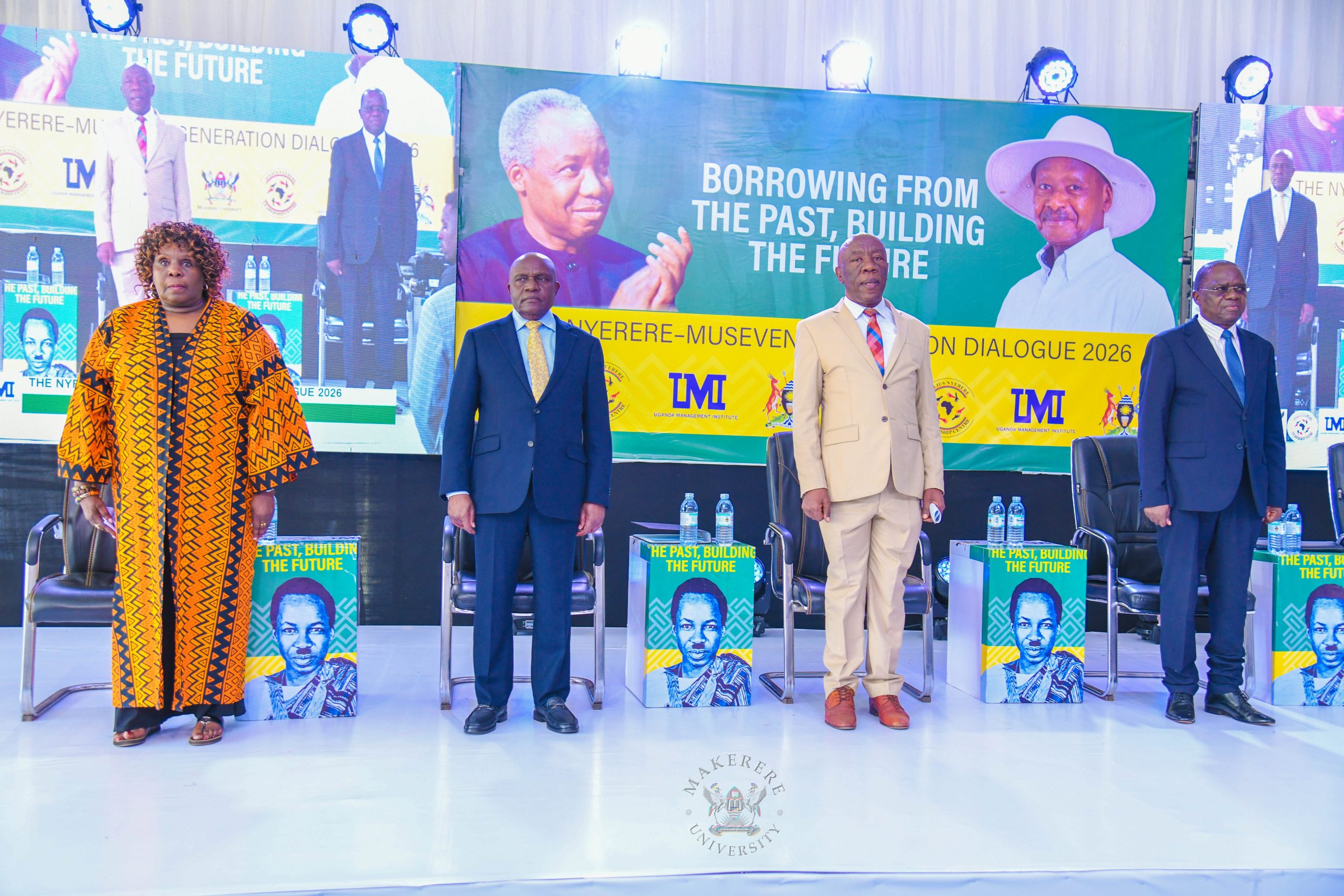
President Yoweri K. Museveni while officiating as Chief Guest at the Julius Nyerere Annual Symposium 2026: Nyerere-Museveni Dialogue at Makerere University called upon the audience not to merely hold Nyerere’s Legacy as a historical footprint but as a masterplan for the future that remains unfinished. Organised by the Julius Nyerere Leadership Centre (JNLC), the symposium was a two day event that started with “ekyooto” on 13th October at the JNLC gardens and climaxed on 14th October in Freedom Square. The second day hinged on the theme: Borrowing from the Past, Building the Future.
In the President’s message delivered by Rt. Hon. Dr. Crispus Walter Kiyonga the Second Deputy Prime Minister and Chancellor of Makerere University, the president spotlighted, “Mwalimu Nyerere as the greatest African that ever lived in terms of contribution to the African people’s efforts for freedom, human rights, and dignity.”
This greatness, he notes, spilled not just to political ideals but also to economics and security. The President agreed with him and warned that “freedom without economic transformation and economic prosperity, without a robust strategic security, remains incomplete.”
Reaching out to the younger generation of scholars and leaders, the President issued a strong warning to move beyond simply remembering Nyerere to action. He said, “you must carry forward the torch of pan-Africanism, reject sectarianism and tribalism, build our regional markets, and champion the total political integration of our motherland.”
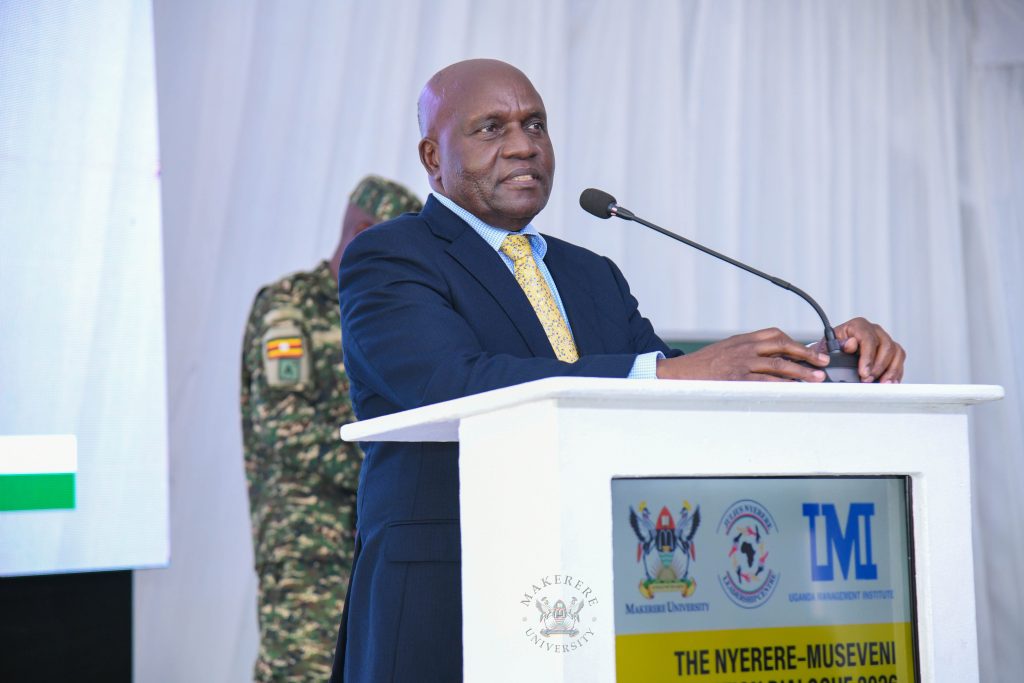
He appreciated Mwalimu for his; unwavering support for the struggle of the East African Federation, courageous backing of the armed anti-colonial struggles in the southern half of Africa, principled and decisive support for the anti-Idi Amin struggle, pro-people and pro-unity policies that kept Tanzania peaceful for decades, and ensuring that Tanzania remained a strategic rear base for the entire African resistance.
As a believer in Nyerere’s ideals, the President urged the audience to honor Mwalimu “not merely through commemorative speeches, but through completing the historical task of uniting, defending, and prospering our motherland,” for the motive is to ensure that the independence wars won by our predecessors were not in vain.
To this note, he reiterated the case for Uganda, saying “we shall never forget his profound contribution” to Africa.
Professor Nyamsenda’s Keynote Unparked Pan-Africanism
During the Nyerere-Museveni Dialogue symposium at Makerere University, Professor Sabatho Nyamsenda, a lecturer at the University of Dar es Salaam delivered the Keynote Address titled “The Unfinished African Project: From Liberation Legacies to a New Generation of Transformation” during the symposium”.
He started on a lighter noticing “Nyerere is being Ugandanised.” This he said looking at the annual Public Lectures dedicated to his name and felt like challenging his home institutions to follow suit.
At the calm of the room, he presented a critique of the current state of Pan-Africanism, arguing that it has been grabbed by the ruling elites, a challenge Professor Nyamsenda identifies to have started in the period of 1960 -1980.
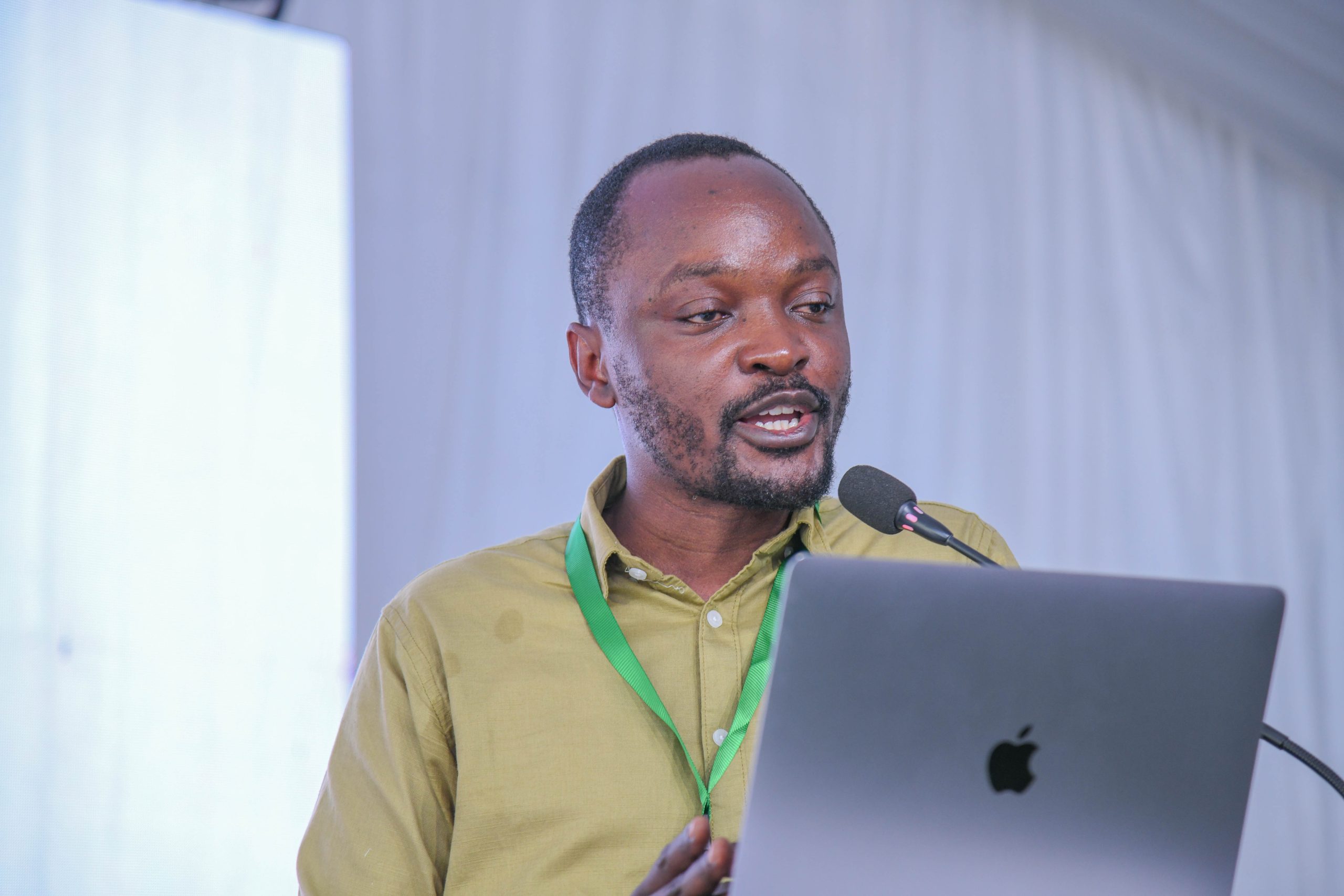
He explained that it was around this time period that Pan-Africanism was snatched away from the masses and it became a state project. Currently, he said the ideology exists in two forms: Boardroom and Street Pan-Africanism.
Professor, characterised Boardroom Pan-Africanism as a State Project. He said “boardroom Pan-Africanism sits comfortably with imperialism and elite-centered accumulation.” While Street Pan-Africanism to which Professor advocates, he emphasised that historically, this approach “united the African liberation movement and liberated the African continent from the most barbaric colonial powers.”
As he concluded, Professor Nyamsenda joined Mwalimu and the President of Uganda in urging youth to consider joining and leading the struggle for a better Africa.
Role of JNLC in Realising Nyerere’s Ideas
Professor Saturninus Kasozi Mulindwa, the JNLC Board Chair highlighted the primary objective of the center as “imparting knowledge and sharing experiences from the old generations to the new generations.” Therefore, JNLC contributes to the actualisation of Nyerere’s ideas by focusing on the development of the next generation of African leaders.
To supplement this, Dr. Nansozi K. Mwanga the Executive Director at JNLC said that the center is committed to “nurturing ethical, conscious, and transformative leaders inspired by Mwalimu’s ideas of service, human dignity, self-reliance, and Pan-African solidarity.”
She explained their focus is on several key areas with training as core. They have “trained over 1,500 young people and young leaders from across Uganda.”, and developed leadership programs “grounded in ethical decision-making, civic responsibility, public service, and action.”
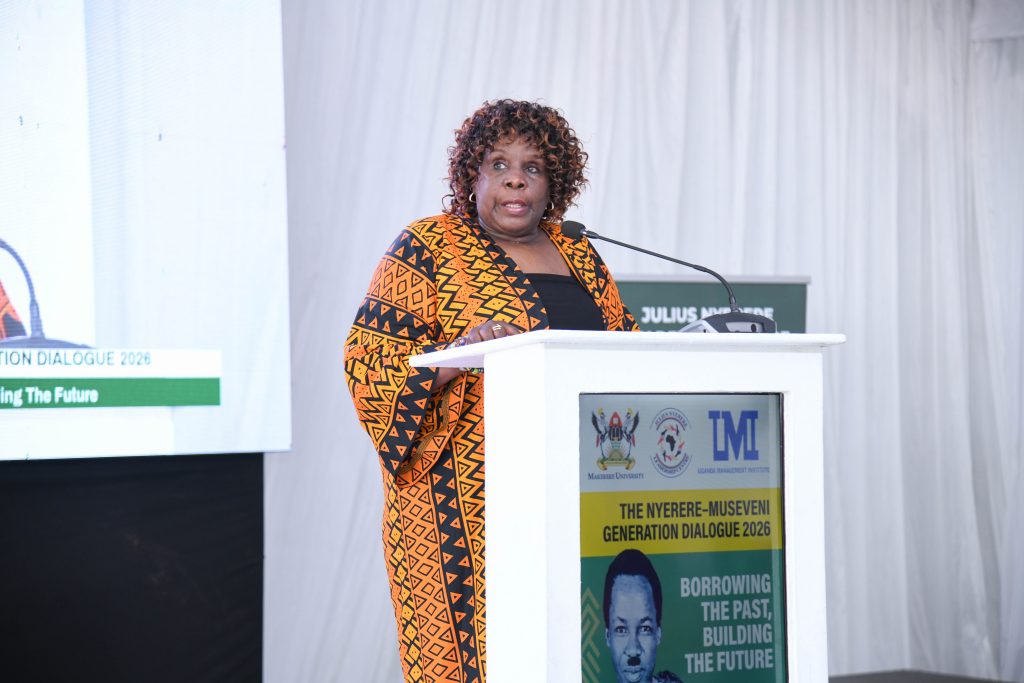
In her remarks, it was observed that training alone is not enough; they are also doing mentorship, to provide opportunities for networking and learning from experienced leaders. There are already testimonies when you visit the Centre wall of fame. To which Dr. Nansozi revealed “leadership development matters when learning becomes service and meaningful action.”
The Centre remains proud of those they have touched and are eager to support as many cohorts.
Julius Nyerere Family Pour their Heart out
Mama Maria Nyerere, addressed the Symposium virtually and commended the Centre for keeping Mwalimu’s values alive.
As a memory of her husband, she reminded the audience that his greatest legacy was anchored on the values by which he lived: service, humility, integrity, unity and love for Africa and its people. She also urged the young people to take up leadership responsibilities and lead with humility, integrity and always remember the people they serve.
Mama Nyerere also advised the youth to learn from those who came before them like her husband with courage to build a better Africa for their generation and those who will come after them.
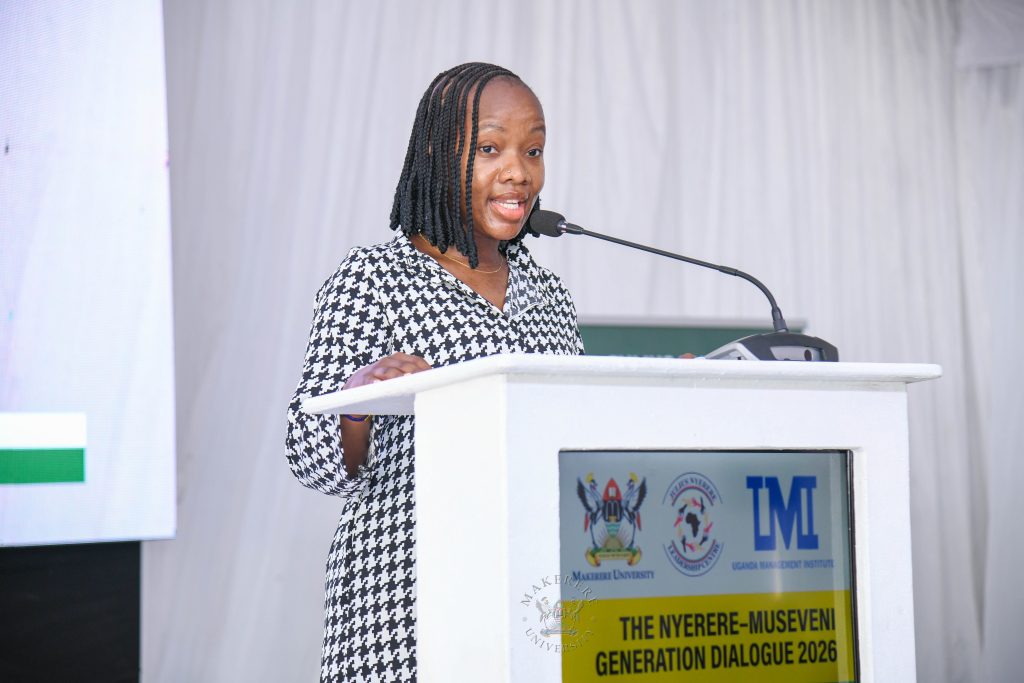
Joining Mama Nyerere, on behalf of the Nyerere family was Ms. Julia Nyerere, a granddaughter, who attended physically and thanked H.E. Kaguta Museveni for supporting the establishment of the Julius Nyerere Centre at Makerere University and also commended the Keynote Speaker Professor Nyamsenda for Critiquing Nyerere’s ideas.
Julia further shared an understanding of her grand-father’s interest in preserving humanity as a moral.
As a family they are happy that his (Nyerere) values and legacies continue to inspire Africa and beyond.
Appreciation for All who Made the Symposium Possible
Addressing the symposium, the Vice Chancellor of Makerere University, represented by Professor Henry Alinaitwe the Deputy Vice Chancellor in Charge of Finance and Administration expressed the University’s appreciation and commitment.
He thanked “the government of Uganda for the support they are giving to the Julius Nyerere Leadership Center,” and requested Dr. Kiyonga to “convey the message to the fountain of honour for this initiative that Makerere University is happy for, and is going on well.”
To the leadership of the Center, he specifically thanked the Director Dr. Nansozi for her focused leadership. He stated, “I commend my friend, Dr. Nansozi, for the work that you are doing.”
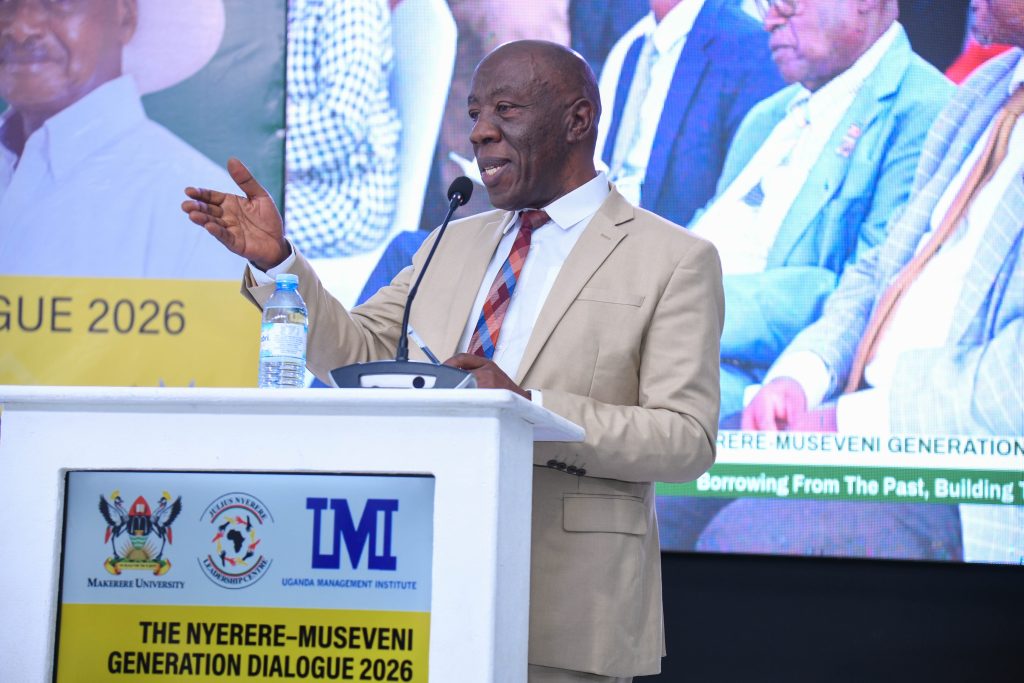
Professor Alinaitwe also emphasized “we” value these symposiums, saying, “as a university, we acknowledge that such activities create great visibility.”
Dr. Kiyonga was also thanked for delivering the President’s message, together with veterans like Professor Kabwegyere, among other distinguished guests and partners that attended.
Professor Tarsis Bazana Kabwegyere as well appreciated all and emphasised the collective duty of the youth in building the next generation.
He advised “your responsibility is to identify and build Africa forward, building on the legacies and foundations of our forefathers,”.
The Professor also argued that “being young on its own is not a virtue. It is what you are when you are young.” He challenges the audience to avoid being ignorant and claim that you are young.
Background of the Nyerere Symposium
The Julius Nyerere Annual Symposium is an intergenerational gathering hosted at Makerere University. For more than six years now, it has been connecting past leadership legacies of Nyerere and other revolutionaries with current regional and continental priorities under the (JNLC) centre.
The Julius Nyerere Leadership Centre (JNLC) serves as a training ground and research hub designed to mentor the next generation of African leaders. Co-hosted by Makerere University and the Uganda Management Institute (UMI), the Centre bridges the gap between older statesmen and youth by focusing on Pan-African ideals, ethical governance, and social transformation.

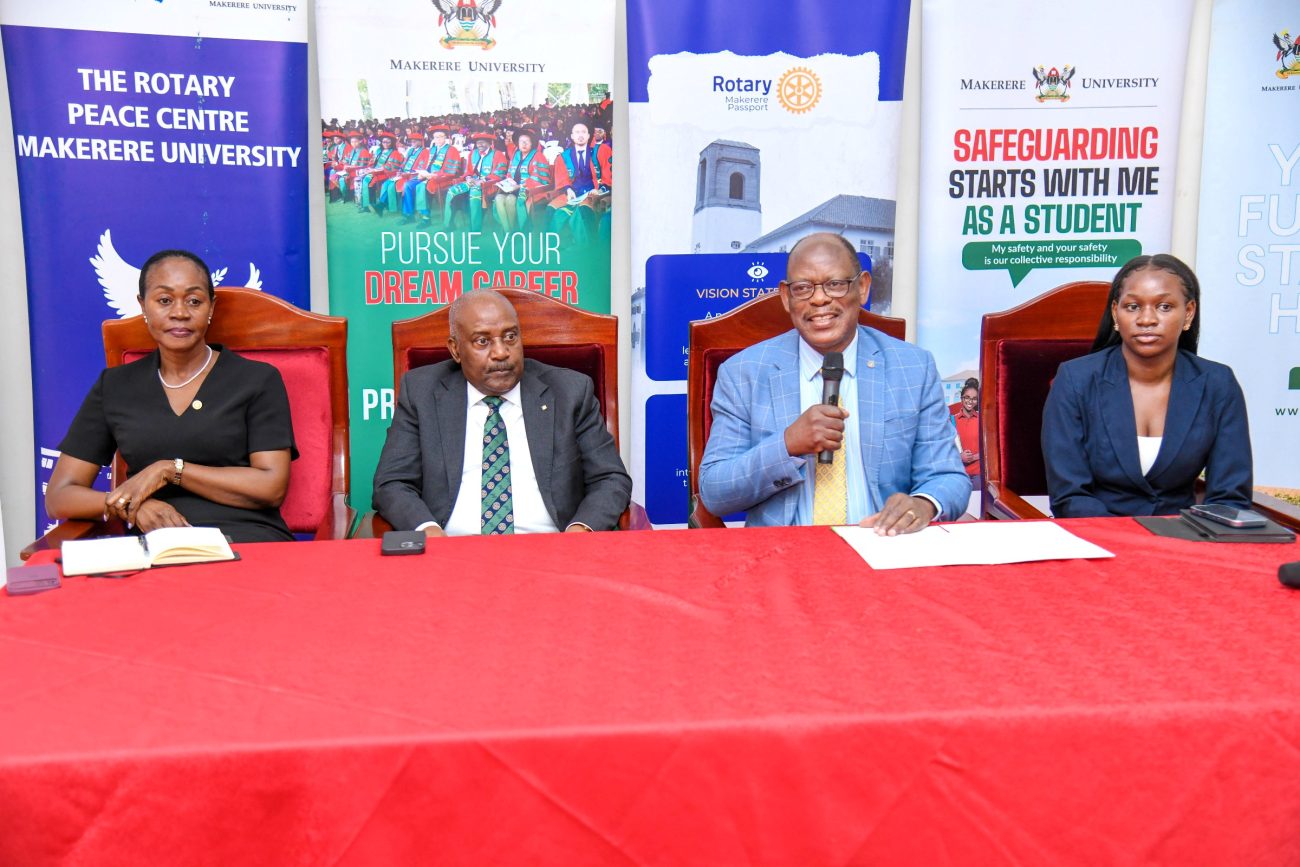
Through the Food for Peace initiative, the Rotary Club of Makerere Passport is stepping in to provide meals to over 200 students who struggle to afford meals, especially during the examination period.
According to Professor Barnabas Nawangwe, the Vice Chancellor of Makerere University and President of the Rotary Club of Makerere Passport, hundreds of students drop out of Makerere University every year due to financial constraints. The reality for those who remain is sometimes tougher, for they struggle to survive.
While addressing the media at a press conference held at Makerere University on November 11, 2026, Prof. Nawangwe shared that many of these students skip meals, a situation that is more frequent during examination periods, when the demands on the brain are much greater.
The University is aware of these reports and in his capacity as Vice Chancellor and President of the Rotary Club of Makerere Passport, Prof. Nawangwe lobbied the club to take action.
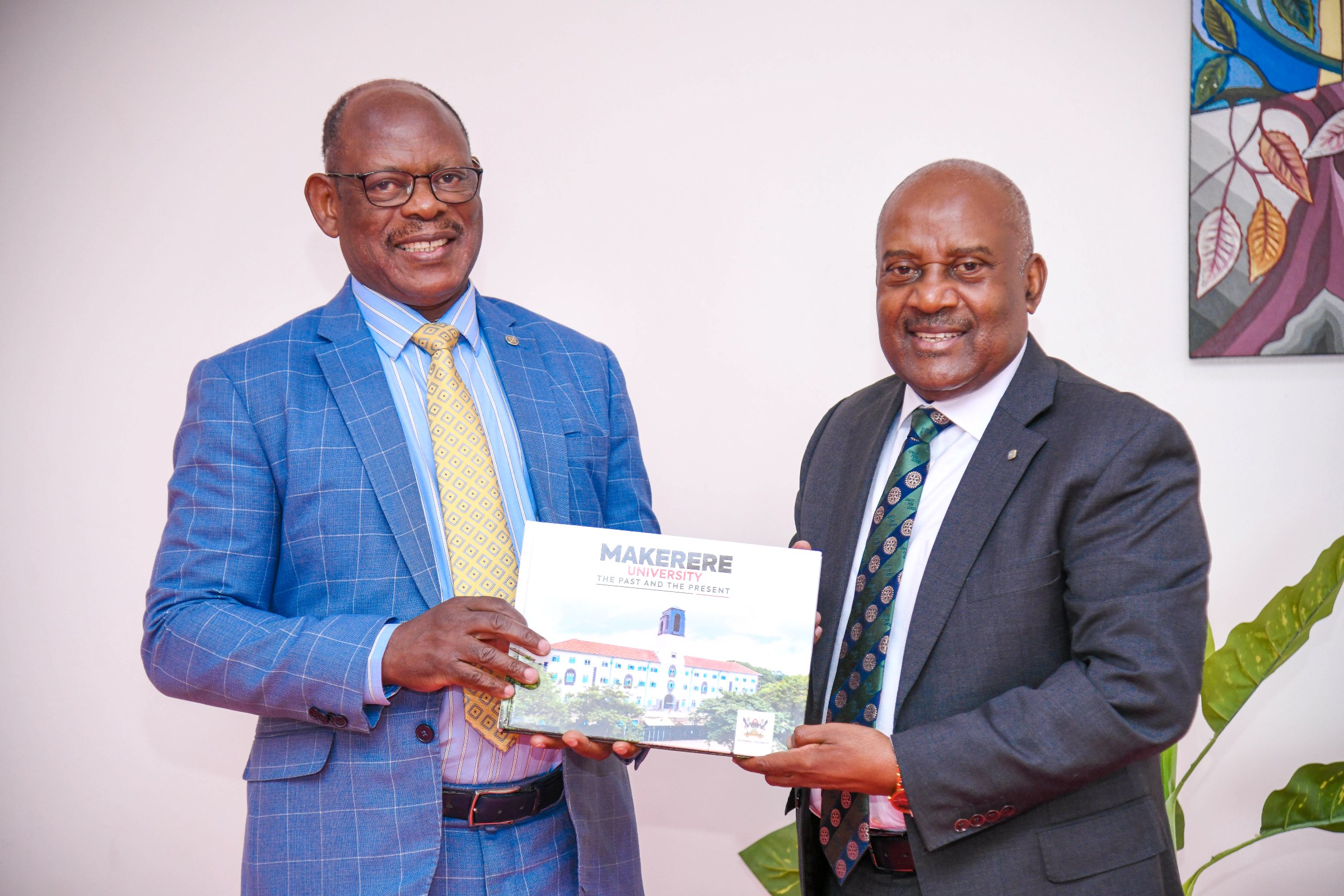
In preparation for intervention, a comprehensive needs assessment was conducted, inviting students to come forward and share their needs. About 200 students responded to the survey, indicating a pressing need for food support during examinations.
The findings birthed a legacy project code-named “Food for Peace”, targeting, for a start, 206 students at Makerere University, regardless of their sponsorship status, as long as they participated in the survey. The Makerere Rotary Peace Centre spearheaded the survey that helped identify the first cohort of those who will benefit from the initiative and guided that for a dignified experience, the beneficially names will remain in records and not disclosed.
Prof. Nawangwe emphasised that the core mission of this cause is to move a step up with efforts to ensure that economically challenged students at Makerere University do not go a day without a meal. Service providers in halls of residence will serve these students their food following a meal card.
Seeding the Project
The Guest of Honour, Mr. Emmanuel Katongole, the Rotary International Director (RID) for Zone 22, while launching the initiative shared his personal experience of facing challenges that almost barred him from attaining an education. He believes education is an equaliser in life and that everyone should have a chance to access it. He reminded those in the room that they were all there together because of education.
RID Katongole highlighted the importance of supporting people, both as individuals and as a community. He expressed pride in being part of the launch of this project because it is going to create many more “Emmanuel Katongoles” through the provision of a meal.
He therefore personally committed to contribute UGX 5 million annually, starting this year, for as long as he lives or until the project ends. He also pledged to remain part of the initiative.
92nd Guild Commends “Service above Self”
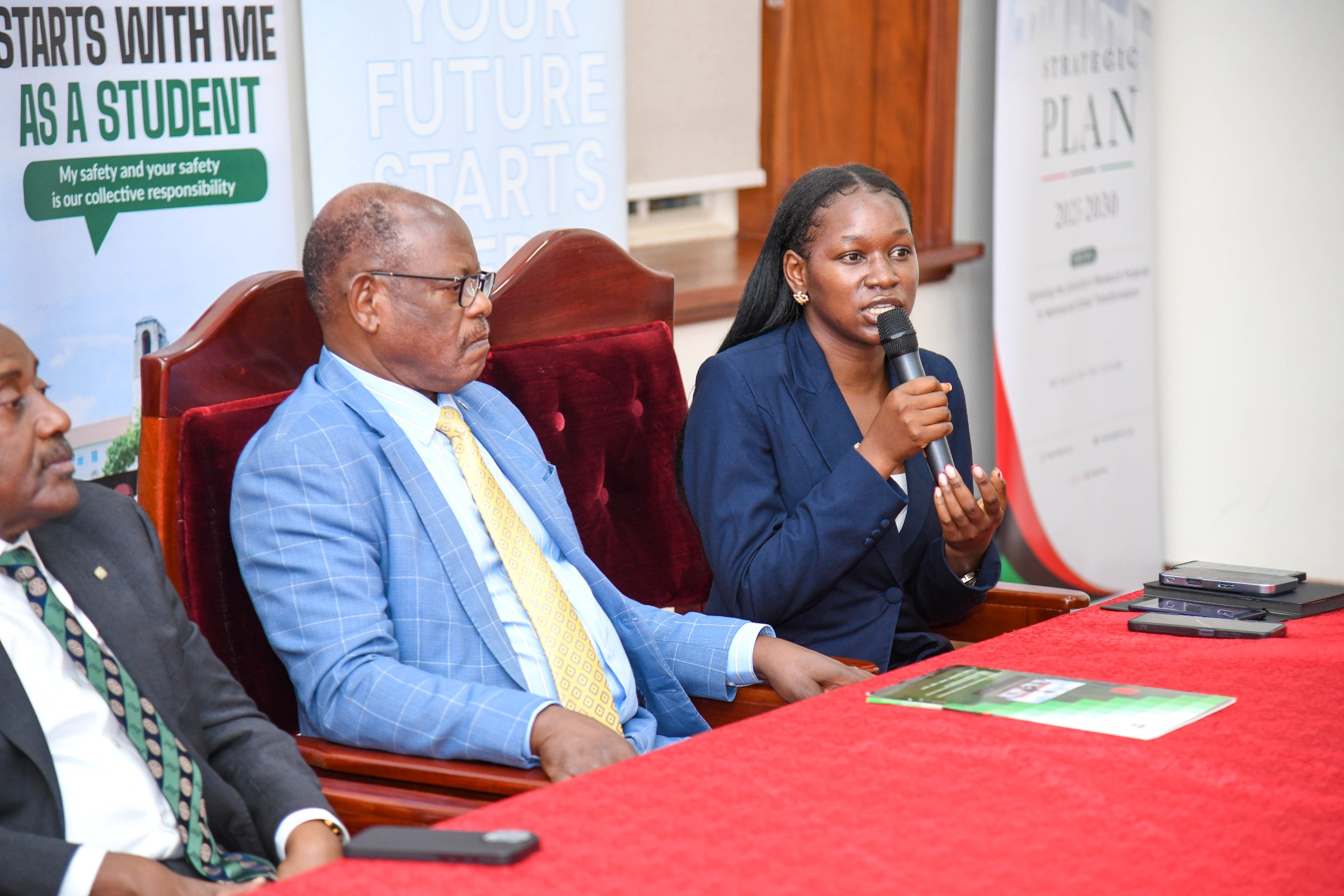
From a student perspective, H.E. Kadondi Gracious, the 92nd Makerere University Guild President, delivered a vote of thanks for the initiative. She noted that students had petitioned Parliament to intervene in the matter and were happy that solutions had started coming from within.
She framed this move not just as charity, but as a way of restoring hope to Makerereans who were unsure of how they were going to maneuver through the examination period without lunch. In appreciation, the Guild President commended Rotary for showing what it actually means to offer service above self.
Sustainability of the “Food for Peace” Project
Although the immediate intervention is directed towards fewer than 300 students who expressed a need for assistance, the vision is bigger and looking beyond the current examination season.
As the Rotary Passport Club President noted, “if this is going to be sustainable, it means we are going to look out for partners to create a fund to sustain this initiative.”
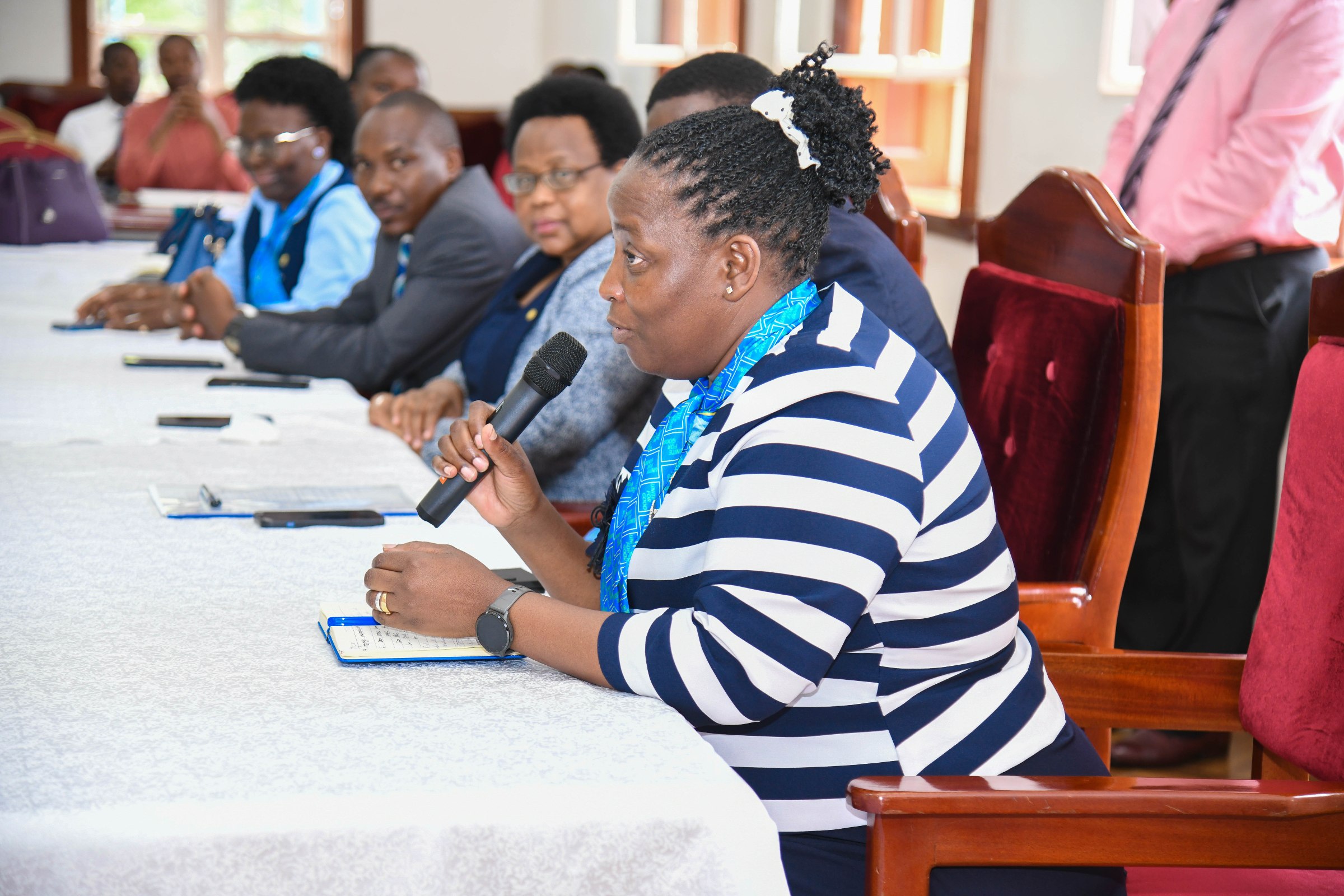
The Club Secretary, Associate Professor Helen Nambalirwa Nkabala, explained that as a legacy project, it is not a one-off. She committed the services of the Passport Club to supporting this legacy project.
Grounding the sustainability move, RID Emmanuel Katongole set the pace by pledging annual cash and in-kind support towards providing consistent assistance to students throughout subsequent academic periods, thereby enhancing student welfare over the long term.
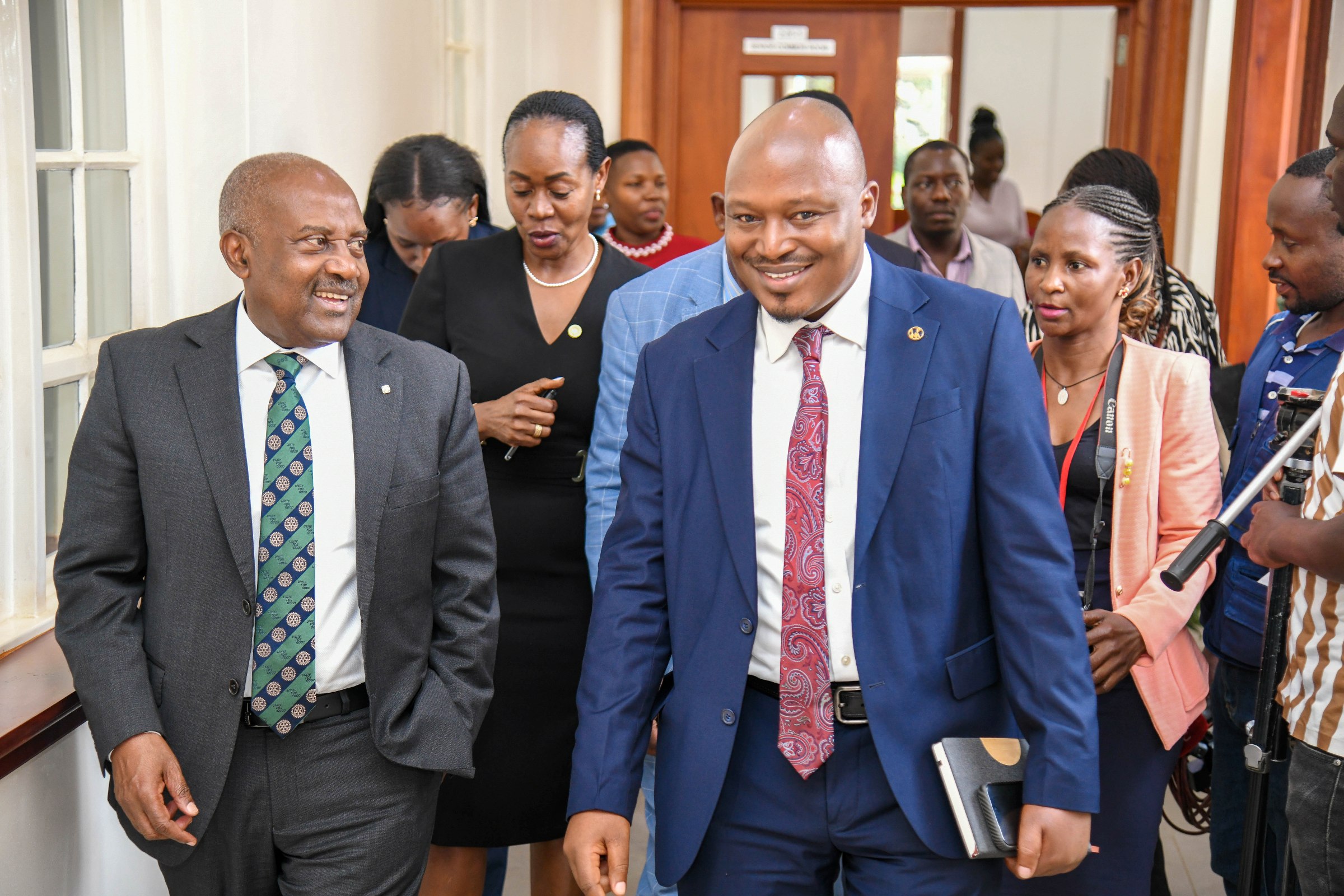
Dr Winfred Kabumbuli, the Makerere University Dean of Students, showed strong support for the initiative since it falls within the core mission of student welfare. She appreciated the collaboration with Makerere University Passport Club, and pledged to rally internal support.
Call to Action and Contributions
The Club President made an appeal to alumni, corporate bodies, development partners, individuals and institutions of goodwill to join this noble cause, intended to ensure that students not only remain at the University but also attain their full potential on a full stomach.
The immediate fundraising goal is UGX 10 million shillings, which is required to implement the initial phase of food support. Excess amounts collected will facilitate an increase in the number of beneficiaries and after the examination period, add to the kitty for subsequent semesters.
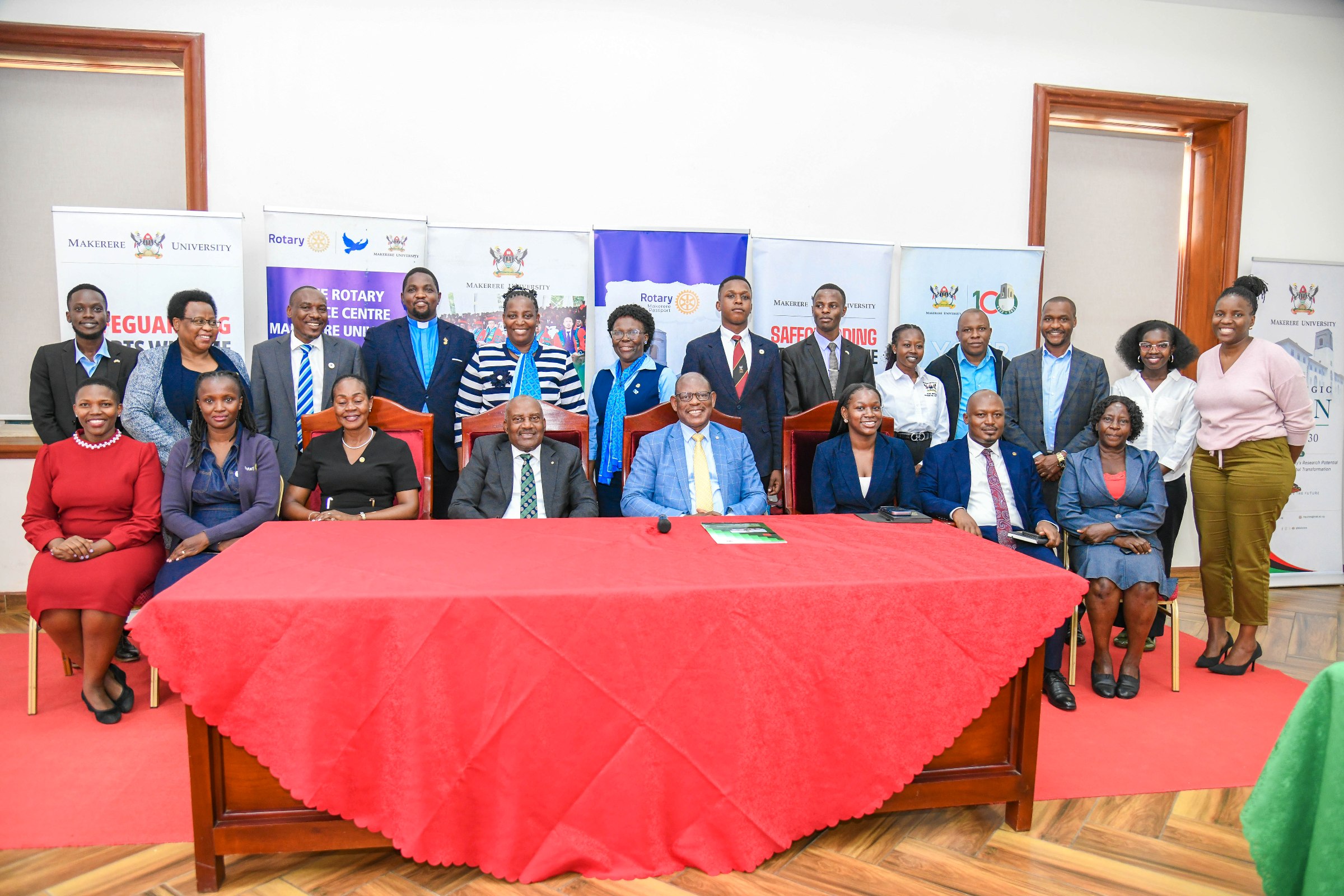
Support and assistance can come in the form of financial contributions, food supplies, corporate partnerships, logistical support, and long-term partnerships.
To facilitate support, the club, through its Charter Treasurer (C.T.), Professor Winston Tumps Ireeta, shared the banking details as follows
Bank: NCBA Uganda Limited.
Account Name: Rotary Club of Makerere Passport
Uganda Shillings (UGX) Account Number: 228129200017
United States Dollar (USD) Account Number: 228129200027
SWIFT Code: CBAFUGKA
Bank Code: 36
Students were left with one final promise from the Chief Guest, “you are no longer alone. You have a partner in the Rotary Club of Makerere Passport.”

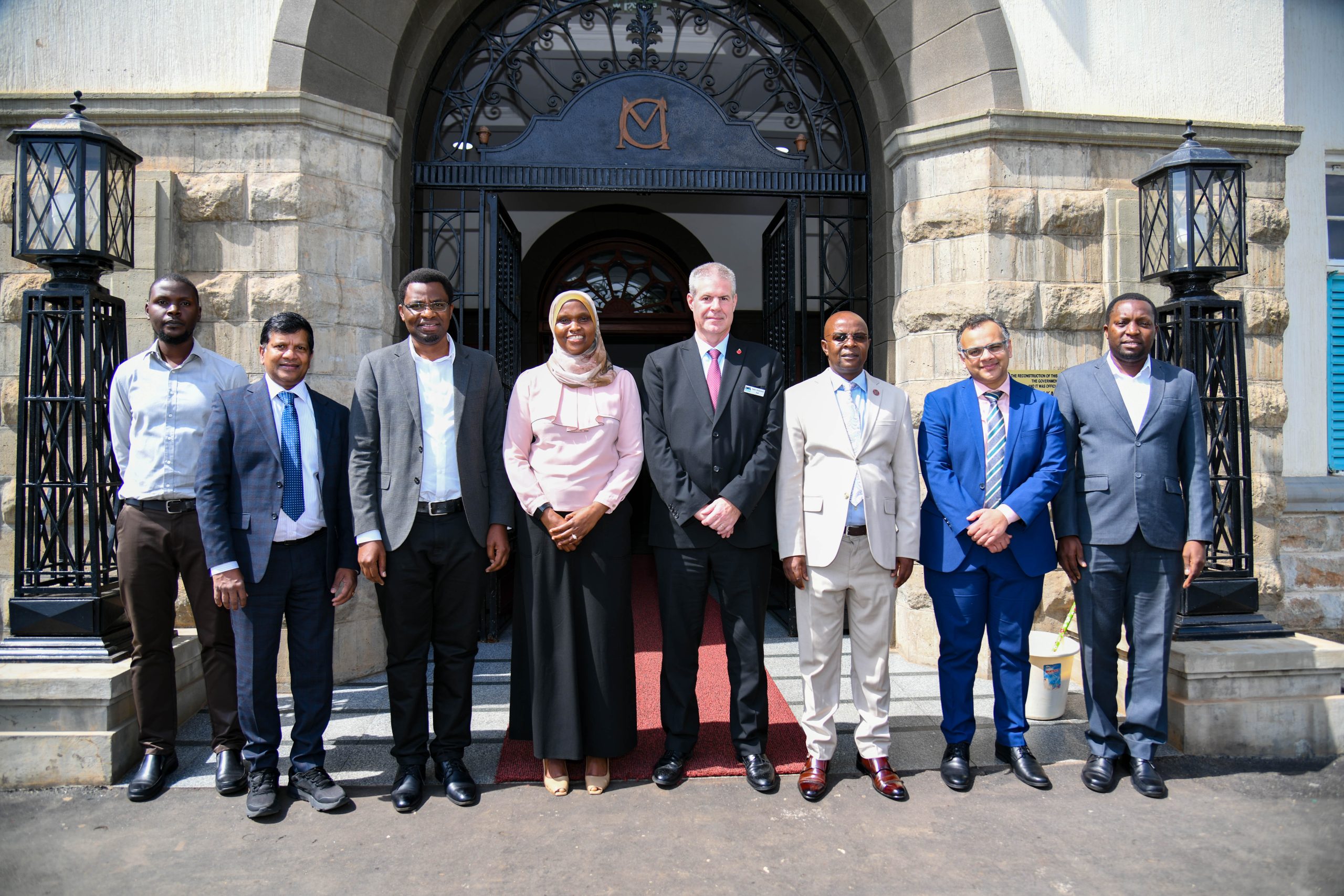
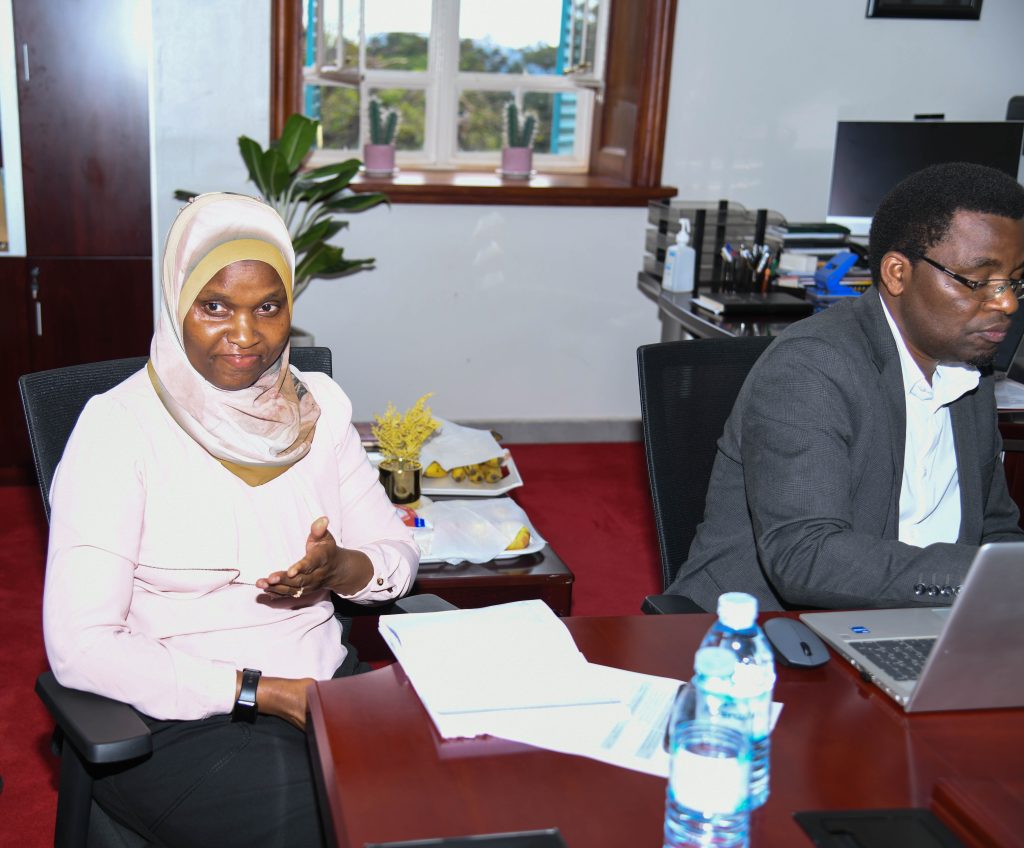
Prof. Edward Bbaale, Acting Deputy Vice Chancellor for Finance and Administration at Makerere University, on November 10 2026 welcomed a delegation from the International Water Association (IWA), led by Mr. Keith Robertson, the Learning and Events Director at International Water Association (IWA). Mr. Robertson, in his remarks, highlighted their visit to Makerere University as a fact-finding mission regarding the potential establishment of a new regional IWA office in Africa to support the continent in solving challenges relating to water.
The International Water Association is a leading global nonprofit organisation and knowledge hub for the water and sanitation sector. Connecting more than 10,000 individual members and 500 corporate entities across 140 plus countries, the association bridges the gap between scientific research and practical engineering to solve global water crises, improve sanitation, and secure clean water systems. Currently, IWA is evaluating potential host cities in Africa; Makerere University in Kampala is the first they have visited out of their three countries and venues earmarked.
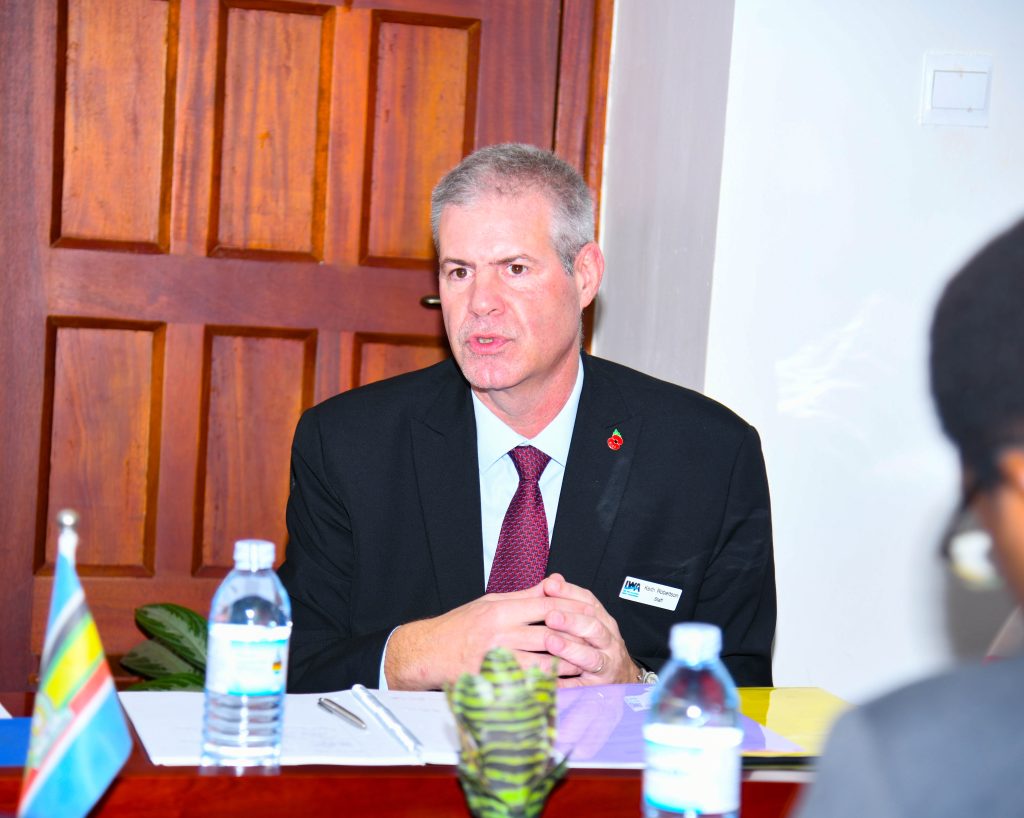
This meeting held at Makerere Main Administrative Building, was attended by university leadership, faculty from College of Engineering, Design, Art and Technology (CEDAT), and representatives from the National Water and Sewerage Corporation (NWSC). Discussions explored possibilities of the yet to be established office bridging the gap between academic research and practical application in the water sector not only in Uganda but also on the continent.
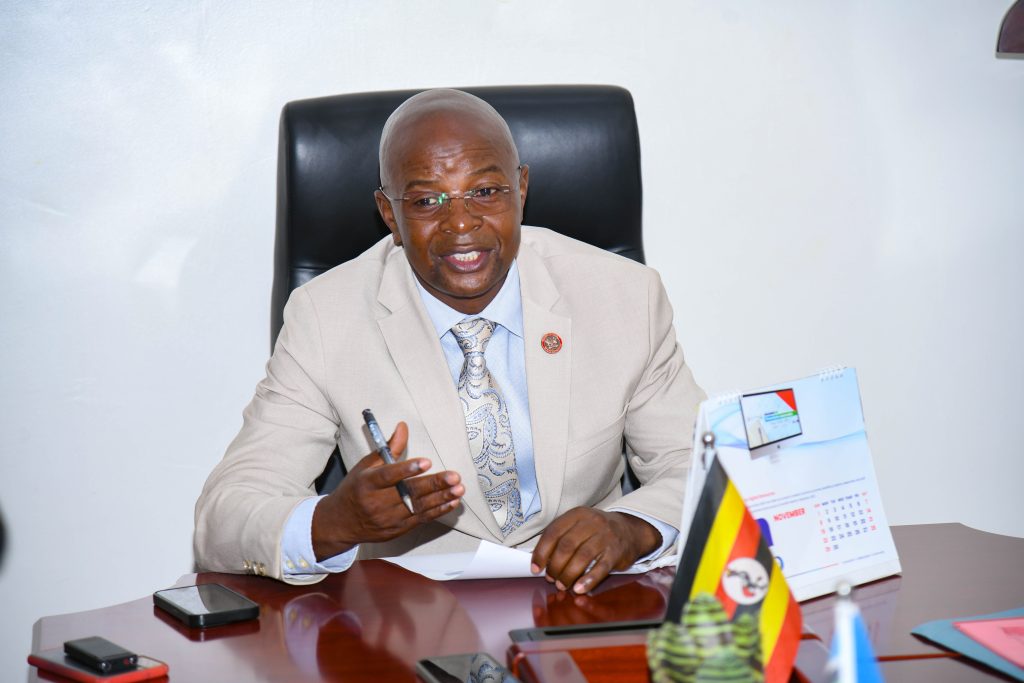
On behalf of University Management, Prof. Edward Bbaale underscored this engagement that focused on possible Water and Sanitation advancement partnership as one that aligns well with the strategic direction of the University.
Projected Impact of a Kampala-Based IWA Office
Dr Philip Nyenje, Head of Department, Civil and Environmental Engineering (DCEE), expressed optimism about the collaboration, saying, “this is a very good opportunity for us to grow our interest in the sector of water and sanitation.”
In addition, Dr Seith Mugume, a Senior Lecturer at DCEE, noted that the regional office would unlock research and innovation opportunities in the real world for our students and also provide incentives for them to pursue projects within local research and innovation angles.
Eng. Zainab Mpakiraba, Acting Senior Manager at NWSC framed Kampala as a very unique venue for the centre and highlighted Makerere as one of the core academic partners for the regional Eastern and Southern Africa hub of the Global Sanitation Graduate School. Eng. Mpakiraba further endorsed Makerere, saying that, as a top-notch university in Uganda and in the region, when it leads on any aspect, it is able to pull most of the other universities.
Makerere’s Strategic Initiatives and Activities so far in the Area of Water
Dr Nyenje noted that his Department has a very strong base in water and sanitation, covering disciplines like water resources, environmental, structural, and highway engineering. Dr. Mugume added that they are conducting research on “modeling of water resource systems, hydrological and hydraulic modeling,” “water quality management,” and “fecal sludge management, sanitation in low-income and peri-urban areas.”
The two also mentioned that the department has introduced a “master’s in sanitation, and also a postgraduate program… a diploma in sanitation” to address growing interest in the sector.
All these strategies have been made possible through good will and funding from the Government of Uganda, strategic partnerships, and International Collaborations that have positioned Makerere as a key player in the region.
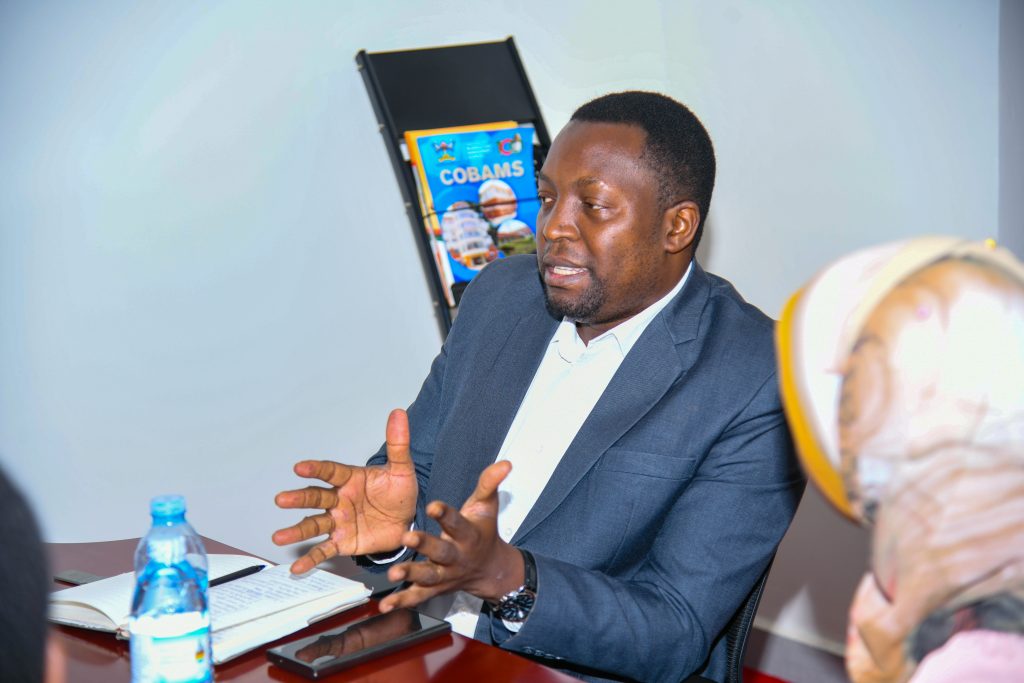
Concluding the session, Prof. Edward Bbaale reaffirmed Makerere’s ability to run this Office when established as the University has human resources in multidisciplinary research, global credibility and working relationships with many organisations and institutions on the continent and far.
-
 General1 week ago
Update On Payment of Endowment Fund Fees
-
 General1 week ago
Institutionalizing ORCID at Makerere University: Strengthening Researcher Identification, Visibility and Research Output Tracking
-
 Business & Management2 weeks ago
Makerere Entrepreneurship Congress Rallies Youth Behind Uganda’s ‘Tenfold Growth’Plan
-
 General2 weeks ago
CoNAS Staff & Students Sensitized on Gender Equality, Sexual Harassment Policies
-
 General2 weeks ago
Scaling on Stability MURBS Declares 12.9% Interest Amidst Comparison Pressures