
Innovation
Call For Applications: MIT Solve – 2021 Elevate Prize















Engineering, Art & Tech
Makerere’s CEDAT Hosts Groundbreaking LIVWA Workshop on Advanced Climate Modelling for Lake Victoria Water Level Management


By Carol Kasujja and Betty Kyakuwa
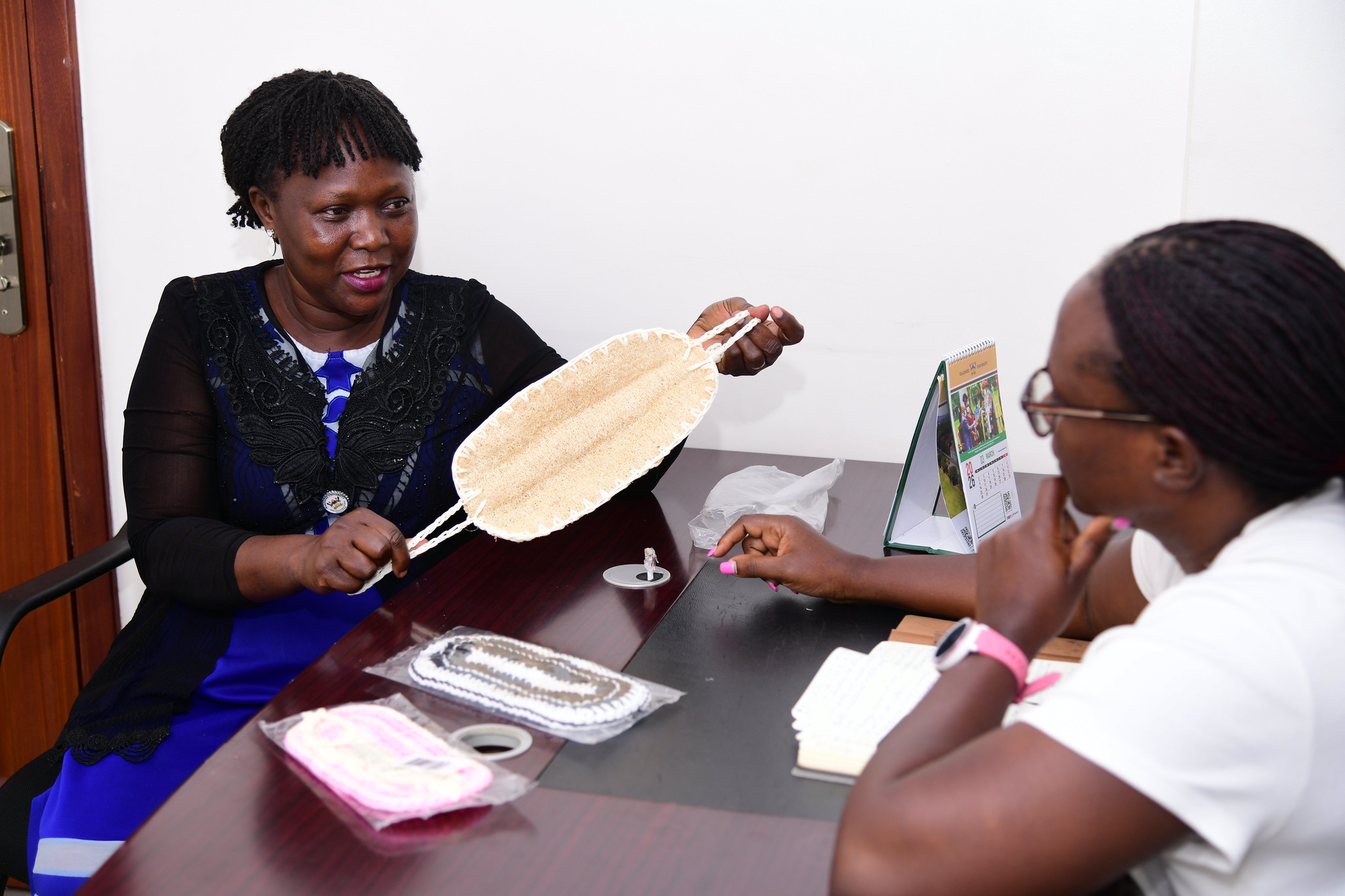
Running a side business alongside full-time employment has become an increasingly popular venture among staff. For many, it is a way to supplement income and build financial resilience. For Ms. Rebecca Talikaza, a 48-year-old custodian, it has become a pathway to transformation. Talikaza successfully balances her office responsibilities with her growing enterprise, Beckiz Bathing Sponge.
“For the years I have been running Beckiz Bathing Sponge, my side business has not affected my work. I have a support system at home, and I have learnt how to utilize my time well,” she explains.
Turning Necessity into Opportunity
Talikaza’s entrepreneurial journey began during the COVID-19 period, when schools reopened. While preparing to take her first-born son back to school, she realized he did not have a bathing sponge. A search in nearby supermarkets in Nakwero proved futile.
“When I failed to get a bathing sponge, I went back home and looked for some material I had bought earlier. I became creative and decided to knit one using skills I had acquired in primary school,” she recalls.
As she worked, a neighbor noticed her and expressed interest. “When I told her I was knitting a sponge, she asked me to make four for her,” Talikaza says. After completing the order, her neighbor paid her UGX 20,000.
That same day, a boda boda rider she had sent on an errand also requested one. “He told me instead of giving him money, I should give him a sponge. That is when it hit me—I could actually make money from this. Every home needs two or three sponges,” she says.
From Small Orders to Supermarket Shelves
Encouraged by the demand, Talikaza approached Babis Supermarket in Nakwero with her sample. She requested to supply her products after noticing the gap in the market. The manager agreed and asked her to produce two dozen sponges for distribution across five branches.
She also secured a similar opportunity with Shop Wise Supermarket in Manyangwa Village. “Both supermarkets accepted, but it took me three weeks to deliver. I had to sacrifice my sleep, sometimes working until 2:00 a.m. to meet the demand,” she says.

Her first delivery earned her UGX 54,000 per dozen, with each sponge retailing at UGX 5,000. Drawing on knowledge from her Postgraduate Diploma in Business Administration at Makerere University Business School, Talikaza realized the importance of branding and packaging. “I knew I had to register my business and package my products well because my target customers value quality,” she explains.
Improved packaging doubled the price of her sponges from UGX 5,000 to UGX 10,000. Since then, the business has steadily grown, enabling her to pay school fees and purchase land.
Challenges Along the Way
Despite her success, Talikaza faces challenges, particularly with delayed payments from supermarkets.
“Some supermarkets take long to pay, yet I need money to buy materials, so I end up using funds from other sources,” she says.
She also points to the difficulty small businesses face in meeting formal requirements. “Some supermarkets require invoices, which is challenging for small businesses like mine. Without them, we are taxed heavily,” she adds.
Advice on Managing a Side Hustle
Talikaza emphasizes discipline, sacrifice, and humility as key ingredients for success. “Never despise humble beginnings. Side businesses do not accommodate laziness. If it means working late, do so to ensure growth and profit,” she advises.
She also stresses the importance of fairness and teamwork, noting that she employs her children and a maid to help with production—and pays them weekly. To maintain professionalism, Talikaza draws a clear boundary between her job and her business.
“Your office work should not suffer because of your side hustle. I do not sell my products at the University. Those who need them can find them in supermarkets,” she says. She recommends careful time management, dedicating working hours to official duties and reserving evenings or weekends for business.
Efficiency, she adds, is critical. “I do not leave work to buy materials. I send a boda boda rider who delivers on time. He even helps monitor stock in supermarkets,” she explains. Above all, Talikaza encourages aspiring entrepreneurs to build businesses around passion and knowledge.
“Understand your business—its strengths, weaknesses, opportunities, and threats. Also know your target market to avoid being cheated,” she says.
At a Glance
Born to Mr. Nathan Magoola and the late Gladys Magoola, Talikaza hails from Iganga District. She attended Iganga Municipal Council Primary School before joining St. Peter’s Secondary School, Naalya, for both O-Level and A-Level.
She later earned a Bachelor’s degree in Social Sciences from Makerere University, followed by a Master’s degree in Gender and Women Studies and a Postgraduate Diploma in Business Administration.
The 10th born in a family of 14, Talikaza is a mother of six children.


-

 General2 weeks ago
Undergraduate Admission Lists 2026/2027
-

 Business & Management2 weeks ago
Makerere University Inaugural Conference on Noonomy Paves way for Centre of Excellence in Africa
-

 Law2 weeks ago
Makerere University School of Law Finishes Second at 35th Christof Heyns All Africa Human Rights Moot Competition
-

 General1 week ago
Makerere University Welcomes a New Cohort of 258 Mastercard Foundation Scholars
-

 Humanities & Social Sciences2 weeks ago
Makerere Marks 250 Years of US Independence