Connect with us

General

Mak Launches RxSolution to Take Health Services to the Top

Published

on

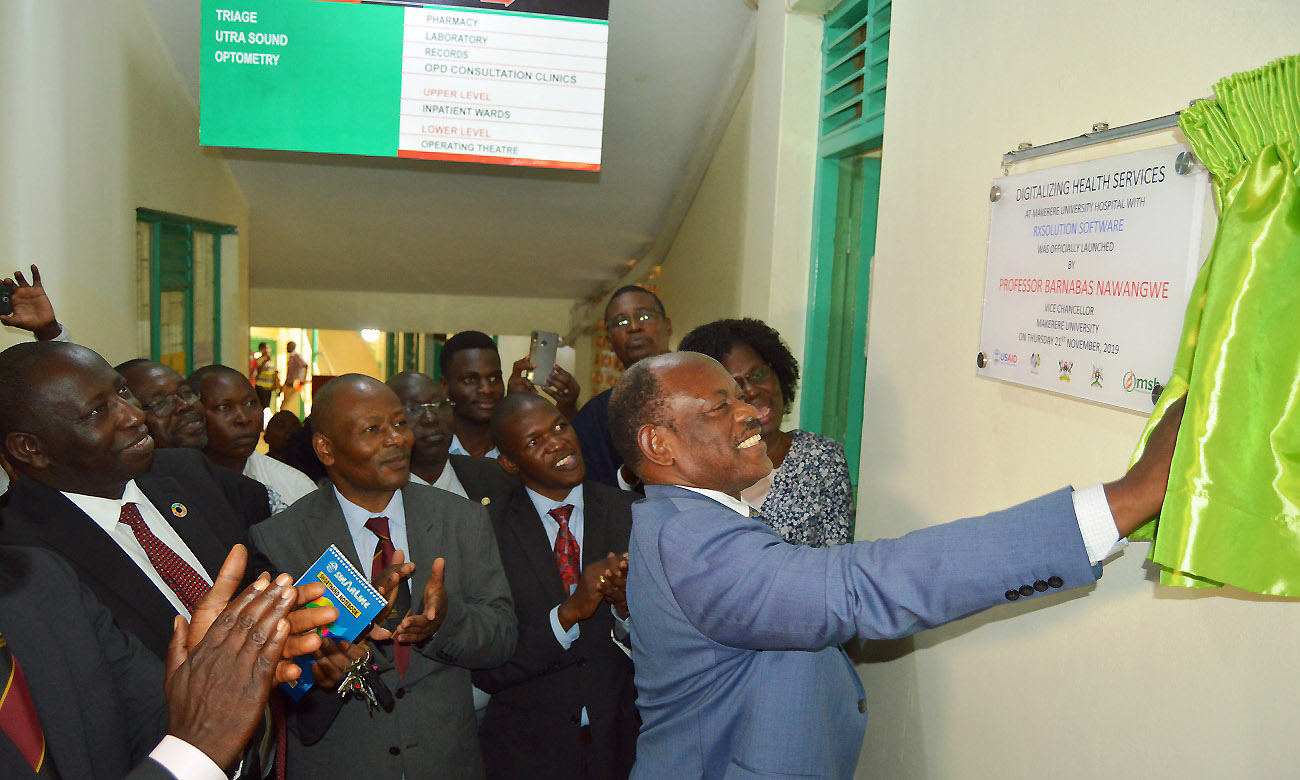
The Makerere University Health Services on Thursday 21st November, 2019 launched RxSolution; an integrated pharmaceutical management software, to improve its three pillars of service delivery, training and research. The solution was implemented with support from the USAID Uganda Health Supply Chain (UHSC) Program through the Ministry of Health (MoH).

According to UHSC’s Mr. Michael Kavuma, Mak Health Services is the first public health facility to implement the RxSolution’s dispensing module, which allows users to trace medicine all the way from the stock to the patient, in order to ensure accountability at dispensing level. The dispensing module is linked to the stock module and allows for computerized stock management tasks at patient service points in the outpatient and inpatient departments, Antiretroviral Therapy (ART) clinic, Tuberculosis (TB) clinic, wards, laboratories and other service points.

Mr. Kavuma further shared that RxSolution has been implemented in 276 of Uganda’s 400 higher-level health facilities with Butabika National Referral Mental Hospital, Masaka Regional Referral Hospital and Kayunga General Hospital as pilots. These public facilities can now order for stocks from the National Medical Stores (NMS) using RxSolution software.

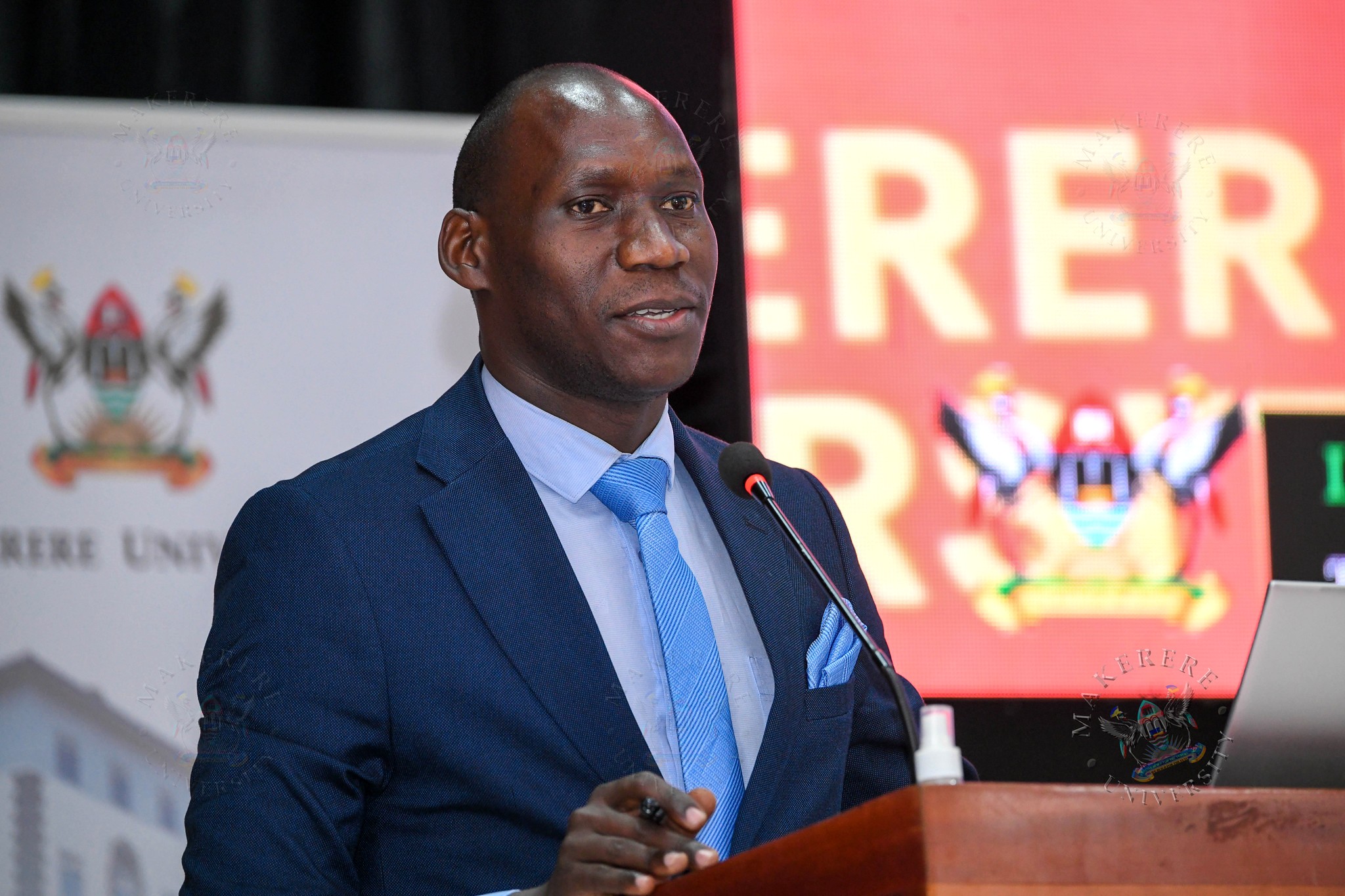
UHSC's Mr. Michael Kavuma highlights the benefits RxSolution will bring to Mak Health Services during the launch on 21st November 2019, Makerere University Hospital, Kampala Uganda.

As a result of implanting RxSolution, Mak’s Health Services now stand to benefit from; enhanced service delivery through the solution’s ability to incorporate clinical guidelines, multiple reports that can inform decision making, streamlined patient management which empowers administrators to make prioritized deployments of staff as well as support to planning and budgeting for drug stocks.

The Director Mak Health Services Prof. Josaphat Byamugisha thanked USAID and UHSC for their support in deploying RxSolution as well as training staff on use of the software. He added that RxSolution will go a long way in enhancing the research pillar of Mak Health Services. “We currently have three postgraduate students from the Department of Radiology and a number of undergraduates, especially those speciliazing in Health Management Information Systems.”

Prof. Byamugisha lauded the Health Services Interim Board for the role played in setting the agenda for the Hospital, adding that the Board’s vision is to take Mak Health Services to the level of the University’s continental ranking.

Prof. Josaphat Byamugisha (2nd Left) takes L-R: Dr. Isaac Okullo, Prof. Barnabas Nawangwe, Prof. Charles Ibingira, Dr. Freddy Kitutu, a visitor, Dr. Muhammad Kiggundu Musoke, Mr. Sserunjogi Emmanuel and Ms. Neville Okuna Oteba on a tour of the Triage at Makerere University Hospital, Kampala Uganda.

“We are committed to looking at Health Services beyond just this hospital. We have clinics at the Makerere University Agricultural Research Institute Kabanyolo (MUARIK) and in Jinja, so as to bring services closer to not only our staff and students but to the surrounding communities as well” he explained.

The Director shared that Mak Health Services are also open to the public, which currently makes up 10% of the total clientele served. He added that the objective was to increase this percentage significantly, so as to generate funds that can be used to further enhance service delivery and boost the facility’s financial sustainability.

The Dean, School of Health Sciences, Dr. Freddy Kitutu could not help but use the occasion to brag about his School’s enviable position of being home to five key disciplines namely; Allied Health Scientists, Dentists, Nurses, Midwives and Pharmacists, despite its relatively small size and young age. He commended the partners for implementing RxSolutions, noting that reports from the system would make it possible for the Pharmacists to carry out detailed reviews on the use of medicines.

Prof. Josaphat Byamugisha (Centre) and Makerere University Health Services Staff were commended for their quick adoption of the RxSolution Software

Dr. Kitutu reminded the audience that the RxSolution Launch within the World Antibiotic Awareness Week (WAAW) 2019 was timely, as this would help Mak Health Services in curtailing the development of Antimicrobial Resistance (AMR) through improved prescribing and dispensing of antibiotics. He nevertheless noted that prevention is better than cure and called for continued promotion of healthy habits like handwashing.

Speaking on behalf of USAID and UHSC, the Chief of Party, Management Sciences for Health (MSH) Uganda, Mr. Phillip Kamutenga, stated that the support to the Ministry of Health by the partners is meant to ensure that there is uninterrupted supply of medicines in the country. “I am therefore proud that we are going to be witnessing the launch of the dispensing module of RxSolution at the Makerere University Hospital today.”

Mr. Kamutenga emphasised that the traceability of medicines across the supply chain from the stores to the dispensing point is very important and Makerere University is going to be a reference point for all Public Health Units in as far as implementing the dispensing module is concerned. “USAID through the Uganda Health Supply Chain Program has donated the RxSolution, provided 20 computers, set up a Local Area Network and trained clinicians on the system to support this.”

Mr. Phillip Kamutenga (Right) and Prof. Barnabas Nawangwe (Centre) are given a guided tour of the Optometry Centre by the Coordinator Mr. Dralega Anguyo (Left) during the RxSolution Software launch on 21st November 2019, Makerere University Hospital, Makerere Hill off Gaddafi Road, Kampala Uganda.

He added that there are never enough resources to finance public health the world over and as such, Public Health Facilities can save a lot by reducing on expiries, stock outs and procuring only what is required by their clients.

The day’s lineup of speakers would have been incomplete without a voice from the student body, the biggest beneficiaries of the Mak Health Services. The President, College of Health Sciences (CHS) and Fifth Year Medicine and Surgery student, Mr. Sserunjogi Emmanuel could not hide his joy at being associated with what he described as “a game changing event.”

He therefore commended his Principal for working with the Mak Health Services to deliver quality diagnosis, treatment and follow-up to the Makerere Community and members of the public through the introduction of RxSolution. “The Makerere University Hospital has today become the epitome of digitizing health services in Uganda.”

The Vice Chancellor-Prof. Barnabas Nawangwe (4th L), Mr. Phillip Kamutenga (5th R), Prof. Charles Ibingira (4th R), Dr. Isaac Okullo (3rd R), Prof. Josaphat Byamugisha (2nd Right) and Dr. Muhammad Kiggundu Musoke with Laboratory Staff at the Makerere University Hospital, Kampala Uganda.

The Principal CHS, Prof. Charles Ibingira could not help but laud his colleagues for taking on the challenge of managing the Mak Health Services. He thanked the University Council and Management for assigning his college this responsibility, noting that health services ought to be prioritized for the good of all in the community.

“This hospital has the greatest potential in the country and region; we have the biggest number of specialists at the College, we admit over 400 doctors and health service officers per year and with our vision to create a health management organization present in all Ugandan cities, we could easily become a leading medical tourism destination for the region” remarked Prof. Ibingira.

He therefore thanked USAID, UHSC and the Ministry of Health for working with Makerere University to augment service delivery, training and research efforts within its health services through the implementation of RxSolution. The Principal nevertheless urged the Director Mak Health Services to develop educational programs for staff and students aimed at promoting healthy lifestyles in the face a growing Non-Communicable Diseases (NCD)s burden.

L-R: A Lab Staff, Mr. Phillip Kamutenga, Ms. Neville Okuna Oteba, Mr. Sserunjogi Emmanuel, Prof. Barnabas Nawangwe, Prof. Charles Ibingira, Dr. Muhammad Kiggundu Musoke and other guests tour the state-of-the-art Lab at the Makerere University Hospital, Kampala Uganda.

Representing the Ministry of Health (MoH), the Commissioner Pharmaceutical & Natural Medicines, Ms. Neville Okuna Oteba shared that her Ministry is currently pursuing all efforts to ensure Universal Health Coverage (UHC) for Uganda and the successful implementation of integrated pharmaceutical management solutions such as RxSolution lies at the centre of these efforts.  

The Commissioner shared MoH’s expectations of Mak Health Services following the successful implementation of RxSolution, with the need to become a Centre of Excellence topping the list. In this regard, she expressed joy that Hospital Staff had already stood out for the exceptional enthusiasm in embracing the rollout of RxSolution. “The College should now ensure that all students visit the Hospital and learn how to use the system before they graduate.”

Ms. Okuna Oteba also stated that MoH expects RxSolution to promote the use investigative health care practices at the Hospital. “Antimicrobial Resistance is a time bomb waiting to happen and all of us are potential victims. We therefore need to talk more about the seriousness posed by poor prescription and dispensing of medicines.”

She concluded by emphasizing that investment in systems should benefit the people, especially as health facilities progress towards paperless patient care management. The Commissioner also asked the Hospital Administration to ensure that all research findings that can inform policy are shared with the Ministry of Health.

The Chief Radiologist Mak Health Services-Dr. Florence Musoke (Right) walks Prof. Barnabas Nawangwe (Centre) and Prof. Josaphat Byamugisha (Left) through the capabilities of the state-of-the-art 3D/4D Ultrasound Unit at the Makerere University Hospital, Kampala Uganda on 21st November 2019.

Delivering the concluding remarks prior to launching the system, the Vice Chancellor, Prof. Barnabas Nawangwe congratulated CHS as well as the Mak Health Services Management and Staff upon transforming the face of the Hospital within a short period of time. He particularly expressed happiness at the reducing number of students seeking treatment outside the hospital, a reaffirmation of the improved services.

The Vice Chancellor commended Staff especially in the clinical sciences for their dedication to ensuring that students are well trained, noting that they are our future leaders. In the same breath, he thanked the Ministry of Health for regularly providing Mak staff with various opportunities especially in the form of consultancies.

He equally thanked USAID and UHSC for support rendered to Mak Health Services through the various collaborations, noting that this would translate into increased reports from satisfied clients. Prof. Nawangwe then went ahead to launch the RxSolution as well as tour the state-of-the-art laboratory and modern 3D/4D ultrasound unit. He also toured the specialized clinics in Otorhinolaryngology (ENT), Antiretroviral Therapy (ART), Optometry, Dental, Psychiatry as well as Obstetrics/Gynaecology.

Article by Public Relations Office

Mark Wamai

Continue Reading

General

Advert for the Position of the Second Deputy Vice Chancellor

Published

on

Front View of the reconstructed Main Building, Makerere University. Date Taken 8th November 2024. Kampala Uganda, East Africa.

Makerere University is governed by the Universities and Other Tertiary Institutions Act, Cap 262. The University is seeking applications from suitably qualified applicants for the position of Second Deputy Vice-Chancellor. The Second Deputy Vice Chancellor holds a pivotal role in financial governance, institutional planning, and administrative leadership.

1.        POSITION:  SECOND DEPUTY VICE-CHANCELLOR

2.        SALARY SCALE: PU2

3:        DUTY STATION: MAKERERE UNIVERSITY

  4.       ROLE

The Second Deputy Vice-Chancellor will report to the Vice–Chancellor and shall:

  1. Assist the Vice Chancellor in performance of his or her functions and in that regard shall oversee the finances and administration of the University;
  2. Be responsible for the Planning and Development of the University and,
  3. Perform such other functions that may be delegated to him or her by the Vice Chancellor or assigned by the University Council.

5.         PURPOSE OF THE JOB

To provide strategic leadership and ensure efficient and sound financial, human and fiscal resources management in the University.

6.         DUTIES AND RESPONSIBILITIES

  1. Provide leadership in Strategic planning and governance, leadership and administrative experience, Human resource and performance Management, Stakeholder engagement and collaboration.
  2. Provide leadership in preparation and implementation of the University’s recurrent and capital budgets.
  3. Monitor the development and implementation of the University’s accounting procedures, manuals and other documents relating to financial control and Management as per approved financial regulations.
  4. Oversee income and expenditure of all income generating units of the University.
  5. Coordinate the production of the University-wide Financial Reports by Colleges and Units.
  6. Management of human resources in the University.
  7. Oversee the management of University Estates and Assets.

7.  CANDIDATE SPECIFICATION

  1. Hold a PhD or any other academic doctorate.
  2. Be at the rank of associate or full professor level in an institution whose academic ranking is comparable with that of Makerere University as accepted by Senate.
  3. Be a Ugandan citizen within the age bracket of 40 to 65 years at the time of application.

7.1 Academic Qualifications

  1. Earned a Ph.D. or equivalent doctorate should be acceptable by Senate.
  2. At least five years of financial or administrative leadership experience at the level of school dean/director or higher in a higher education institution, public service, or corporate institutions.
  3. Supervised at least ten (10) postgraduate students (Master’s and Ph.D.) to completion. At least three of the students must be at the PhD level.

7.2 Strategic Planning and Governance

  1. Experience in leading large administrative teams at the level of dean or higher, demonstrating efficiency and productivity.
  2. Proven record in developing and executing strategic plans, aligning financial and administrative objectives with institutional goals.
  3. Evidence of developing and implementing financial policies that have improved financial efficiency, transparency, and risk management.
  4. Evidence of implementing organisational restructuring or process improvements to ensure operational efficiency.
  5. Ability to develop and implement institutional policies, ensuring compliance with national higher education and financial regulations.

7.3 Leadership & Administrative Experience

  1. Minimum 5 years of senior academic leadership in a recognized institution comparable with that of Makerere University, as accepted by Senate.
  2. Demonstrated experience in managing budgets exceeding UGX 500,000,000=, ensuring financial sustainability and accountability.
  3. Proven ability to mobilize resources, secure grants, and attract external funding to support institutional growth.
  4. Experience in conducting financial forecasting, cost control measures, and investment strategies to optimize institutional resources.
  5. Track record of leading financial audits and compliance assessments in alignment with national and international financial regulations.
  6. Experience in handling procurement, asset management, and infrastructure development, ensuring transparency and value for money.

7.4       Human Resource and Performance Management

a)          Track record of leading workforce planning, recruitment, and talent development strategies, ensuring a high-performance institutional culture.

  • Experience in implementing performance-based appraisal systems, leading to improved staff efficiency and accountability.
  • Proven ability to foster industrial harmony, resolving labour disputes and improving employer-employee relations.

7.5        Infrastructure Development and Resource Optimization

  1. Experience in overseeing capital development projects, ensuring timely delivery and cost efficiency.
  2. Track record of overseeing the maintenance and expansion of university facilities, enhancing institutional infrastructure.
  3. Proven ability to negotiate and manage contracts for outsourced services, ensuring cost-effectiveness and quality standards.

7.6          Digital Transformation and ICT Integration

  1. Experience in integrating ICT solutions in financial and administrative operations, improving service delivery and efficiency.
  2. Evidence steering the automation of financial, procurement, and HR systems, reducing paperwork and improving real-time decision making.
  3. Proven ability to implement cybersecurity measures that safeguard institutional financial and administrative data.

7.7          Stakeholder Engagement & Collaboration

  1. Demonstrated experience in building partnerships with government agencies, donors, private sector investors, and international organizations to enhance institutional funding.
  2. Proven ability to engage faculty, students, and staff in financial decision-making, ensuring transparency and inclusivity.
  3. Experience in negotiating contracts, partnerships, and collaborations that have led to financial and administrative growth.

7.8        Personal Attributes

  1. High level of integrity, transparency, and ethical leadership, with a record of financial prudence.
  2. Strong analytical, problem-solving, and decision-making skills, backed by evidence of successfully managing complex financial and administrative challenges.
  3. Excellent communication, negotiation, and interpersonal skills, ensuring effective stakeholder engagement.
  4. A visionary leader with the ability to drive financial sustainability. administrative efficiency, and institutional growth.

8.         REMUNERATION

An attractive remuneration package that is in accordance with Makerere University terms and conditions of service.

9.         TENURE

The Second Deputy Vice Chancellor shall hold office for a period of five years   and shall be eligible for re-appointment for one more term.  

10.       METHOD OF APPLICATION

Interested applicants are invited to submit their application letters. The following documents shall comprise a complete application:

  1. A signed letter of application;
  2. A vision statement;
  3. Curriculum Vitae with contact details signed and dated by the applicant;
  4. Copies of required minimum number of publications;
  5. Certified copies of academic transcripts and certificates;
  6. Three (3) letters of recommendation;
  7. Copies of letters of appointment to leadership positions at the level of Dean of a School in a national accredited university or other academic institution;
  8.  A copy of the applicant’s National Identity Card or passport;
  9. A copy of the last clearance from the Inspector General of Government or other equivalent national body;
  10. Referees should be advised to send confidential reference letters, addressed to the Chairperson Search Committee for the Position of Second Deputy Vice Chancellor and delivered directly to the address below by 5:00 pm on Tuesday 13th January, 2026;
  11. The references should cover the following areas: the applicant’s academic credential, experience, leadership, managerial and administrative skills and personal integrity.

Both Hardcopy and Electronic (Email) applications shall be accepted.

  • Hardcopy applications: Both confidential letters and sealed applications marked “CONFIDENTIAL: POSITION OF SECOND DEPUTY VICE CHANCELLOR” should be addressed to:

SECRETARY SEARCH COMMITTEE

THE ACADEMIC REGISTRAR

MAKERERE UNIVERSITY

6TH Floor, ROOM 602, SENATE BUILDING

P.O.BOX 7062, KAMPALA, UGANDA

  • Electronic media (e-mail) applications should have all the above documents scanned and emailed to search.dvcfa@mak.ac.ug by 5.00 pm East African Standard Time on Tuesday 13th January, 2026.

Please note that:

  • Incomplete applications or applications received after the closing date and time will not be considered.
  • Only shortlisted applicants shall be contacted.

For more Information and inquiries:  Visit our website https://mak.ac.ug/search-for-dvcs OR email us on search.dvcfa@mak.ac.ug OR Call Telephone number: +256-414-532634 during working hours (between 8:00 am to 5:00 pm Monday to Friday).

MAKERERE UNIVERSITY IS AN EQUAL OPPORTUNITY EMPLOYER

Prof. Mukadasi Buyinza

ACADEMIC REGISTRAR

Mak Editor

Continue Reading

General

Breaking the Silence on Digital and Gender-Based Violence: Male Changemakers Lead Makerere University’s Strides for Change

Published

on

Dr. Winifred Kabumbuli (Right) and Dr. Euzobia Mugisha Baine (Left). Makerere University in partnership with Embassy of Sweden in Uganda and UNFPA in Uganda hosted the "Strides for Change" Activism walk and official unveiling of the 2025 16 Days of Activism campaign on Monday 24th November, 2025.

By Eric Tumwesigye and Cynthia Ayaa Komakec

Introduction

Gender-based violence (GBV) remains one of the most pervasive and entrenched human rights violations in Uganda. Within institutions of higher learning—spaces intended to cultivate intellectual rigor, ethical leadership, and civic responsibility—GBV persists in both visible and covert forms, often sustained by silence, stigma, and institutional inertia. As Uganda’s oldest and most influential public university, Makerere University bears a dual responsibility: to respond decisively to these challenges and to model transformative, ethical leadership for the nation.

It is within this context that the Strides for Change walk, led by 16 male changemakers during the global 16 Days of Activism against Gender-Based Violence, emerges as a strategic and symbolic intervention. The initiative addresses both digital and offline forms of violence against women and girls and aligns with the 2025 global theme, UNiTE to End Digital Violence Against All Women and Girls. It reflects a growing recognition that gendered harm increasingly transcends physical boundaries, manifesting in digital spaces in ways that exacerbate the vulnerabilities of female students, staff, and young women across Uganda.

Makerere University in partnership with Embassy of Sweden in Uganda and UNFPA in Uganda hosted the "Strides for Change" Activism walk and official unveiling of the 2025 16 Days of Activism campaign on Monday 24th November, 2025.

Linking Digital Violence with Physical and Psychological Harm

As Uganda’s digital ecosystem continues to expand, emergent forms of violence have surfaced that intersect with, reinforce, and intensify established patterns of gender-based violence (GBV). Research undertaken by the Makerere University Institute of Gender and Development Studies (IGDS), in collaboration with the Women of Uganda Network (WOUGNET), documents the breadth and complexity of online GBV practices prevalent within the Ugandan context. Their study identifies a wide spectrum of digitally mediated abuses, including the non-consensual dissemination of intimate images (commonly referred to as revenge pornography), online sexual harassment, cyberbullying, stalking, hacking, doxing, digital surveillance, sexist and degrading commentary, trolling, impersonation, identity theft, and threats circulated through social media platforms (IGDS and WOUGNET, 2021, p. 18).

Makerere University in partnership with Embassy of Sweden in Uganda and UNFPA in Uganda hosted the "Strides for Change" Activism walk and official unveiling of the 2025 16 Days of Activism campaign on Monday 24th November, 2025.

Crucially, these manifestations of digital violence are not confined to virtual environments. Rather, they produce tangible and often severe consequences that extend into survivors’ offline lives. Empirical evidence indicates that women are disproportionately targeted by online GBV compared to men, reflecting entrenched gendered power asymmetries that are reproduced and amplified within digital spaces (IGDS and WOUGWET, 2021, p. 34). Survivours frequently experience profound psychological harm, including heightened anxiety, depression, chronic fear, and diminished self-esteem (Monteagudo Martinez et al, 2020). In response to persistent victimisation, many withdraw from social, academic, and professional spheres as a protective strategy, while others face significant economic repercussions, such as job loss or reduced income, arising from stigma, reputational damage, and trauma.

Within university settings, the consequences of digital violence may escalate further, in some instances culminating in threats of, or exposure to, physical harm (Pew Research Center, 2014). Oksanen et al. (2022) demonstrate that online hostility and harassment within academic environments are associated with acute psychological distress and deteriorating social relations at work. As the authors observe, “victims experienced higher psychological distress and lower perceived social support at work—indicative of social isolation and disengagement in academic roles” (Oksanen et al., 2022, pp. 541–567). Such findings underscore the manner in which sustained online harassment undermines not only individual well-being but also academic participation and institutional belonging.

Makerere University in partnership with Embassy of Sweden in Uganda and UNFPA in Uganda hosted the "Strides for Change" Activism walk and official unveiling of the 2025 16 Days of Activism campaign on Monday 24th November, 2025.

Similarly, Cassidy, Faucher, and Jackson’s (2017) examination of cyberbullying in higher education institutions highlights the pervasive sense of insecurity engendered by digitally mediated abuse. Their study reports that “victims reported stress, anxiety, and threats to safety, reinforcing that harassment in academic settings is not merely emotional but also threatens well-being” (Cassidy, et al, 2017, p. 888). These dynamics contribute to academic disengagement, social isolation, and long-term reputational damage, with potentially enduring implications for future employment and career trajectories.  Taken together, this body of evidence illustrates that digital violence functions as an extension of physical and emotional abuse, forming part of a broader continuum of harm. By eroding women’s psychological health, social participation, academic engagement, and professional prospects, online GBV undermines women’s safety, dignity, and capacity to participate fully in public and academic life. Addressing digital violence, therefore, is not merely a matter of regulating online conduct but a critical component of broader efforts to combat gender-based violence in all its interconnected forms.

The Role of Male Changemakers: Transforming Culture and Accountability

The Strides for Change campaign strategically positions men as visible allies in gender equality advocacy—not to displace women’s lived experiences, but to confront and dismantle patriarchal norms from within. Male changemakers play a pivotal role in advancing cultural transformation and accountability through three interrelated contributions.

First, they reframe gender-based violence (GBV) as a structural and societal concern rather than a “women’s issue,” underscoring its profound implications for human rights, social justice, and national development. This perspective is exemplified by Dr. Jimmy Spire Ssentogo, one of the 16 male changemakers commemorated during the 16 Days of Activism Against Gender-Based Violence. Drawing on his experience as an active social media user, he highlights the increasing prevalence of body shaming, slut shaming, and other forms of online abuse that silence girls and women and undermine their meaningful digital participation. He calls on all social media users to recognise, challenge, and reject such harmful language, emphasising that the creation of safe and inclusive online spaces for women is a shared societal responsibility.

Second, male changemakers model positive and accountable masculinities by publicly rejecting norms that equate masculinity with dominance, entitlement, or complicity in abuse. Ugandan musician and producer Navio articulates this stance by acknowledging the cultural power of artistic expression, stating that his lyrics will not perpetuate harm and that consent represents “the rhythm of respect”—not only in creative spaces, but in everyday life. Such public commitments challenge harmful gender norms while offering alternative, ethical frameworks for masculine identity.

Third, male changemakers broaden the reach and effectiveness of advocacy by engaging other men in critical dialogue, often within spaces that women may be unable to access safely or strategically. This engagement is strengthened through intellectual and academic platforms, including presentations at the Makerere University Men’s Forum, where evolving scholarship on masculinity is examined and translated into practical strategies for social transformation. Through this combination of peer engagement, cultural influence, and scholarly reflection, male changemakers contribute meaningfully to the collective effort to prevent GBV and advance gender justice.

Institutional Commitments to Gender Equality and the Elimination of Sexual Harassment

Through the Gender Mainstreaming Directorate (GMD), Makerere University continues to demonstrate institutional leadership in advancing gender equality and addressing sexual harassment. The launch of the Strides for Change campaign reaffirmed the University’s commitment to the following priority areas:

Makerere University in partnership with Embassy of Sweden in Uganda and UNFPA in Uganda hosted the "Strides for Change" Activism walk and official unveiling of the 2025 16 Days of Activism campaign on Monday 24th November, 2025.

Strengthening Reporting and Accountability Mechanisms

Makerere University has established confidential, survivour-centred reporting and redress systems to ensure the timely investigation and adjudication of GBV cases. These mechanisms enforce stringent sanctions, including disciplinary action, against individuals who engage in sexual exploitation, harassment, or the solicitation of sexual favours in exchange for academic or professional advancement. The GMD supports the continuous operationalisation and improvement of these accountability frameworks.

Expanding Psychosocial and Legal Support for Survivours

The University is committed to enhancing access to high-quality psychosocial care, legal aid, and referral services for survivours of GBV. The GMD coordinates capacity-building initiatives for service providers and strengthens partnerships with relevant institutions to ensure comprehensive and survivours-centred support.

Institutionalising Male Allyship and Transformative Engagement

Makerere University is advancing a structured approach to male allyship by formalising male and female champion networks that collaborate in dialogue, advocacy, and behavioural change initiatives. This includes integrating men into gender training programmes and encouraging visible public commitments, such as participation in the Strides for Change walk. The GMD leads the design, implementation, and evaluation of these transformative engagement strategies.

Conclusion

Makerere University’s Strides for Change walk and the male changemakers programme, implemented in partnership with the Embassy of Sweden and the United Nations Population Fund, represent a significant milestone in the fight against gender-based violence.  By confronting the interconnected realities of digital and physical violence, addressing entrenched patterns of sexual harassment, and mobilising male allies as agents of change, the University sets a compelling precedent for institutional and national transformation.

Makerere University in partnership with Embassy of Sweden in Uganda and UNFPA in Uganda hosted the "Strides for Change" Activism walk and official unveiling of the 2025 16 Days of Activism campaign on Monday 24th November, 2025.

Ending GBV is not solely a policy imperative; it is a cultural, structural, and ethical commitment.  These initiatives align with Makerere University’s broader strategic commitment to inclusive excellence, ethical leadership, and safeguarding the well-being of its academic community.

When men stand in solidarity with women, when institutions centre survivours voices, and when society collectively rejects the normalisation of violence, Uganda moves closer to a future in which every woman and girl can pursue her aspirations free from fear, intimidation, and harm. The Strides for Change campaign is therefore more than a march—it is a call to conscience, a model for action, and a promise of a safer and more just society for generations to come.

Acknowledgement

The Gender Mainstreaming Directorate, Makerere University, extends its appreciation to the Embassy of Sweden in Uganda, the United Nations Population Fund (UNFPA), and all development partners who participated in the Strides for Change walk and the series of activities conducted during the 16 Days of Activism against Gender-Based Violence. Together, we reaffirm our commitment to a comprehensive, 360-degree approach towards achieving zero tolerance for gender-based violence.

References:-

  1. Cassidy Wanda, Faucher Chantal and Jackson Margaret (2017): Adversity in University: Cyberbullying and Its Impacts on Students, Faculty and Administrators, International Journal of Environmental Research and Public Health journal, Article 14(8) page 888
  2. Institute of Women and Development Studies and Women of Uganda Network (2021): Not Just a Trend: Assessing the Types, Spread and the Impact of Online Gender Based Violence in Uganda, Research Report.
  3. Monteagudo Martinez (2020): Cyberbullying in the University Setting. Relationship With Emotional Problems and Adaptation to the University, Frontiers in Psychology journal, Article: 10:3074
  4. Oksanen et al. (2022) — Hate and harassment in academia: the rising concern of the online environment, Vol. 84, pages 541 – 567
  5. Pew Research Center (2014): Part 4: The Aftermath of Online Harassment, Pew Research Center, Published on October 22, 2014

Eric Tumwesigye and Cynthia Ayaa Komakec are the Senior Gender Officer and Gender Officer respectively at the Gender Mainstreaming Directorate, Makerere University

Mak Editor

Continue Reading

General

UNDP and JNLC hold training in Fort Portal: Participants equipped with skills in Advocacy and Gender Equality, Team Building, Inclusive Leadership, and Financial Literacy

Published

on

Participants concentrate on a team building exercise on Day 2 of the training. Makerere University, Julius Nyerere Leadership Centre (JNLC) in partnership with the United Nations Development Programme (UNDP), three-day comprehensive leadership training targeting youth, young women, and local council leaders for more than 70 participants starting 5th December 2025 at Mountains of the Moon University (MMU) in Fort Portal City Uganda, East Africa.

By Charles Iga

Fort Portal-Uganda: On 5th December 2025, more than 70 emerging leaders convened to participate in the second day of the United Nations Development Programme (UNDP) and the Julius Nyerere Leadership Centre (JNLC) comprehensive leadership training for youth, young women and local councilors.

Hosted at Mountains of the Moon University (MMU) in Fort Portal, the training focused on deepening the leadership skills of young leaders as they navigate the increasingly complex governance and development landscape.

Building on the knowledge acquired during the first day of the workshop, on the second day (5th December 2025), the participants engaged in interactive sessions covering problem-solving, team building, advocacy, gender equality, media literacy, self-marketing, and financial literacy in leadership.

The discussions challenged the young leaders to sharpen their mindsets, broaden their spheres of influence, and strengthen their capacity to champion inclusive and sustainable community development.

Advocacy and Gender Equality: Understanding gender dynamics and women acceptance in leadership

Facilitators: Professor Consolata Kabonesa (Right) and Ms. Teddy Namutebi (Left). Makerere University, Julius Nyerere Leadership Centre (JNLC) in partnership with the United Nations Development Programme (UNDP), three-day comprehensive leadership training targeting youth, young women, and local council leaders for more than 70 participants starting 5th December 2025 at Mountains of the Moon University (MMU) in Fort Portal City Uganda, East Africa.
Facilitators: Professor Consolata Kabonesa (Right) and Ms. Teddy Namutebi (Left).

Delivering an informative presentation titled, Advocacy and Gender Equality: Understanding Gender Dynamics and Women’s Acceptance in Leadership, the Guest Speaker- Professor Consolata Kabonesa highlighted that women remain underrepresented in leadership due to entrenched power structures shaped by societal norms and cultural traditions.

Professor Kabonesa emphasized that leadership depends not only on individual ability, but also on the systems that determine who is recognized and legitimized as a leader.

“The roles of women in leadership remain under-represented because power is shaped and perpetuated by societal norms and traditions that socialize women and men differently. These norms influence how leadership roles are assumed and who is considered legitimate to lead,” she explained.

How Socialization Shapes Leadership Pathways of Boys and Girls

Professor Kabonesa highlighted that socialization shapes leadership opportunities, with boys typically encouraged to be assertive, while girls are guided towards empathy and collaboration. This unequal conditioning reinforces gender stereotypes, often undermining women’s authority and sustaining male-dominated leadership structures. She advocated for mentorship as a vital tool, illustrating how role models help girls balance assertiveness with empathy.

She noted that early participation in councils, debates, and leadership roles develops skills, challenges biases, and empowers girls to pursue leadership in traditionally male-dominated fields. She articulated that integrating discussions on gender dynamics into educational curricula equips young girls to recognize and challenge societal norms that limit their potential, while fostering resilience against the discouragements they may face.

Inclusive Leadership: Engaging both Women and Men

Professor Kabonesa articulated that achieving gender equality in leadership is not solely an issue for women, but a collective responsibility. She underscored that balancing participation between men and women fosters mutual understanding, shared accountability, and collaborative problem-solving. She pointed out that inclusive leadership models prevent the isolation of women’s perspectives, ensures all voices are heard, and ultimately contribute to stronger, more equitable, and sustainable leadership that reflects the diversity and potential of society.

“Balancing participation across genders is critical. It helps us understand gender issues collectively, prevents the isolation of women’s experiences, and encourages men and women to address biases together. This approach will ensure that women are not left behind and will foster inclusive leadership models that benefit society as a whole.”

Leading within the Existing Leadership Structures

Facilitator: Mr. Henry Kasacca. Makerere University, Julius Nyerere Leadership Centre (JNLC) in partnership with the United Nations Development Programme (UNDP), three-day comprehensive leadership training targeting youth, young women, and local council leaders for more than 70 participants starting 5th December 2025 at Mountains of the Moon University (MMU) in Fort Portal City Uganda, East Africa.
Facilitator: Mr. Henry Kasacca.

Expounding on the existing leadership structures and the power of relationships, Mr. Henry Kasacca, the Director of Dialogue and Democracy, explained that people support leaders not for their titles, but for the meaningful connections they build. He stated that effective leadership depends on listening, connecting, and collaborating across diverse spaces. “Leadership is not about the title you hold; it is about the relationships you build. There are people who will support you simply because you have invested time in connecting with them,” he said.

Mr. Kasacca stressed that leaders must navigate the organizational power structures by understanding where influence lies and how decisions are made. He noted that strategic thinking, long-term planning, and aligning ideas with action are key to effective leadership, while qualities such as listening, collaboration, kindness, and clarity of purpose are essential for achieving meaningful organizational and community impact.

He urged participants to maintain a clear vision, develop well-crafted plans addressing both immediate and long-term needs, and combine relationship-building with an understanding of power dynamics to become effective, and inclusive change-makers.

Strategic Thinking: Decision making and Problem Solving Techniques

Guiding participants on strategic thinking for decision-making and problem-solving techniques for effective leadership, Ms. Allen Baguma, a facilitator at JNLC and Founder of the Future Learning Centre (FLC) emphasized that strong leadership is anchored in intentional thinking, clear judgment, and the ability to translate vision into well-considered action.

“A strong team is built on clearly defined roles, an understanding of team dynamics, and psychological safety. When people feel safe to speak, contribute ideas, and make mistakes without fear, teams perform better,” she said.

Facilitator: Ms. Allen Baguma. Makerere University, Julius Nyerere Leadership Centre (JNLC) in partnership with the United Nations Development Programme (UNDP), three-day comprehensive leadership training targeting youth, young women, and local council leaders for more than 70 participants starting 5th December 2025 at Mountains of the Moon University (MMU) in Fort Portal City Uganda, East Africa.
Facilitator: Ms. Allen Baguma.

Building Strong Teams through Clarity and Trust

Ms. Baguma emphasized the importance of clearly defined roles within teams, explaining that role clarity enhances accountability, minimizes conflict, and boosts overall performance. She observed that effective leadership requires understanding of team dynamics and fostering psychological safety, where members feel valued, respected, and confident to share ideas without fear of judgment.

She added that effective team building fosters social interaction, a sense of belonging, and a shared pro-social purpose. She noted that teams perform best when individuals are united by common goals and mutual trust.

Leadership growth across the five (5) levels

Citing John Maxwell’s five levels of leadership namely position, permission, production, people development, and pinnacle, Ms. Baguma explained that leadership growth is a progressive journey, moving from reliance on position to influence built through relationships, results, people development, and ultimately, value-based leadership that inspires others beyond formal structures.

Applying Strategic Thinking to Real-Life Challenges

Ms. Baguma guided participants through a practical exercise on strategic thinking, tasking them to identify personal challenges, explore innovative solutions, and evaluate their feasibility and impact. The exercise highlighted the importance of strategic decision-making in enabling leaders to address both personal and community challenges effectively.

Team Building for Effective Leadership

Facilitator: Mr. Ronald Ssazi engages participants in a team building exercise. Makerere University, Julius Nyerere Leadership Centre (JNLC) in partnership with the United Nations Development Programme (UNDP), three-day comprehensive leadership training targeting youth, young women, and local council leaders for more than 70 participants starting 5th December 2025 at Mountains of the Moon University (MMU) in Fort Portal City Uganda, East Africa.
Facilitator: Mr. Ronald Ssazi engages participants in a team building exercise.

Mr. Ronald Ssazi, a facilitator and leadership trainer revealed that leadership extends beyond authority and depends on creating genuine connections. He stressed that building a strong and committed team involves engagement of members, which emotionally sparks curiosity and draws people in.

Mr. Ssazi explained that storytelling bridges attention to understanding. He illustrated this with the story of the youngest king of the Toro Kingdom, crowned at the age of three and now navigating life as a father at 33. Such narratives, he observed, showcase growth, resilience, and cultural awareness, humanizing leaders and making leadership relatable. “Leadership is not merely a title, but a journey of responsibility and influence,” he said.

He emphasized that leadership thrives in communities. Effective leaders, he explained, consistently share updates, insights, and experiences with their teams. Strategic use of social media, for example, allows leaders to post short, regular updates capturing daily activities, which builds a loyal and engaged audience that evolves into a network supporting initiatives, sharing knowledge, and amplifying impact.

“Leadership is not solitary; it thrives in communities. Effective leaders consistently share updates, insights, and experiences with their teams and followers. When used strategically, social media becomes a powerful tool for team building,” he said.

Preserving Culture while embracing modernity and team building

Mr. Ssazi highlighted that modern leaders have unprecedented resources at their disposal. He explained that tools such as Artificial Intelligence (AI), social media analytics, and online platforms can be used to strengthen teams. AI, he noted, can help craft content that resonates with audiences and analyze engagement to refine communication strategies. He stressed that leaders who effectively harness these tools can expand their reach and influence while remaining authentic and true to their values.

Mr. Ssazi emphasized that effective leadership balances modern strategies with cultural preservation, using community history and traditions. “Team building and leadership are about values and vision, balancing modern strategies with cultural heritage to foster pride, cohesion, and inspired and well-rounded teams.”

He stated that whereas true leadership is demonstrated through action, effective team building requires creation of genuine opportunities for participation and contribution. “Leaders who share opportunities, invite collaboration, and encourage feedback, transform their teams into active contributors,” he said. He added that assessing engagement, adapting strategies, and celebrating achievements fosters a culture of involvement and accountability.

Media Literacy: Promoting and Marketing Leadership through Social Media

Facilitator: Mr. Ivan Ssegawa Sebastian engaging the participants. Makerere University, Julius Nyerere Leadership Centre (JNLC) in partnership with the United Nations Development Programme (UNDP), three-day comprehensive leadership training targeting youth, young women, and local council leaders for more than 70 participants starting 5th December 2025 at Mountains of the Moon University (MMU) in Fort Portal City Uganda, East Africa.
Facilitator: Mr. Ivan Ssegawa Sebastian engaging the participants.

Describing digital competence as an essential leadership skill, Mr. Ivan Ssegawa Sebastian, rallied participants to effectively utilize social media to promote and market their leadership roles and activities. He observed that most of the participants had smartphones, and were using social media platforms such as Facebook, WhatsApp, LinkedIn, X, Instagram, and TikTok. Noting that the key challenge was not access, he challenged the participants on the intentional, responsible and strategic use of social media tools.

Mr. Ssegawa underscored the influence of social media, citing its vast global and national reach and its role in driving social and political movements. He described the Internet as a new battleground for leadership visibility, and provided guidance on the ethical use of artificial intelligence. He tipped the participants on authentic personal branding and effective content creation using emotion, story-telling, and a clear call to action.

Financial Literacy in Leadership: Managing financial resources for Effective leadership

Facilitator: Mr. David Nyaribi. Makerere University, Julius Nyerere Leadership Centre (JNLC) in partnership with the United Nations Development Programme (UNDP), three-day comprehensive leadership training targeting youth, young women, and local council leaders for more than 70 participants starting 5th December 2025 at Mountains of the Moon University (MMU) in Fort Portal City Uganda, East Africa.
Facilitator: Mr. David Nyaribi.

Mr. David Nyaribi, Specialist at ActionAid International, explored the vital connection between financial literacy and effective leadership. During this session, Mr. Nyaribi focused on equipping participants with essential skills to manage financial resources effectively, both at a personal level, and in leadership roles.

He reminded participants that every leader must navigate the reality of unlimited wants and limited resources—especially time and money. “You may acquire more possessions in life,” he cautioned, “but time once lost is gone forever.”

He described the four dimensions that every human being must manage namely physical, cognitive, spiritual, and socio-economic. He emphasized that the socio-economic aspect, which includes financial capacity, is inseparable from leadership. Quoting Tony Robbins, he reiterated: “You either master money, or money masters you.”

The Flight Analogy: How Financial Choices Shape Life Stages

Mr. Nyaribi used a flight analogy to indicate how financial decisions shape life’s stages. From Preparation (0–20 years), building values, skills, and education, to Take-off (20–30 years), where career choices and earnings begin. Stability (30–50 years) is for investing and building systems, Descent (50–60 years) for consolidating and planning succession, and Landing (70+ years) for reflection and enjoying the results.

Impressed that most of the participants in the UNDP-JNLC leadership training workshop were in the preparation or take-off stages, Mr. Nyaribi advised them to invest in education, skills, and self-development.  “Many people struggle later because they wasted their take-off stage,” he revealed.

Pillars of Personal Finance every leader must master

Mr. Nyaribi reminded the participants that financial literacy is not just a personal asset, but a leadership necessity. Underscoring the power of discipline and mindset, he urged young leaders to focus on both earning money and building true wealth­­­­­­­-assets that empower them to uplift their communities. Mr. Nyaribi highlighted five (5) core financial principles that are essential for responsible leadership:

  • Earning through either services or products;
  • Saving first as a disciplined priority rather than keeping what remains after spending;
  • Investing to turn savings into income-generating assets;
  • Spending wisely to avoid living beyond one’s means; and
  • Protecting gains through careful planning and accountability.

Mak Editor

Continue Reading

Trending