Connect with us

Health

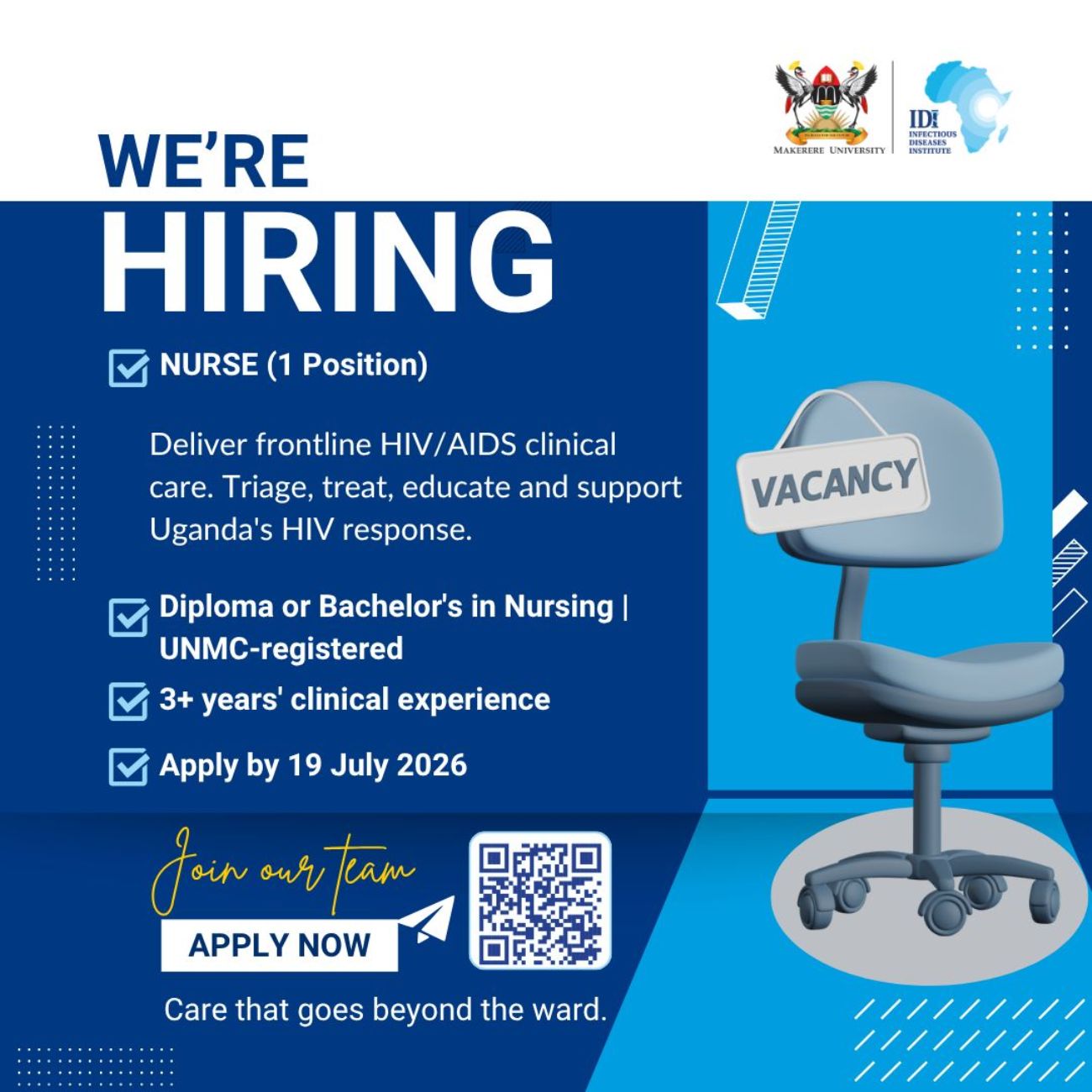
IDI Job Advert: Nurse (1)

Published

on

General Summary

The post holder will be required to provide nursing care to patients attending IDC, provide health education and advise to patients and their family members, provide translation whenever necessary, guide in clinical practice and duties of other nurses. Participate in clinical research studies.

Key Responsibilities

  • Provides nursing care to patients attending the IDC
  • To provide clinical care including triaging, clinical assessment of patients of patient’s problems, investigations to HIV/AIDS patients attending IDI-supported health facilities in line with standard treatment guidelines.
  • Assist in management of very sick patients brought in Urgent care with knowledge, skills and Support appropriate referral of complex patients’ through liaison with immediate team members, senior clinicians and other specialized facilities.
  • Lead education and facility sensitization efforts to continuously build knowledge among clients and the attendants at Urgent care and the general clinic.
  • Participate in identification, implementation and documentation of continuous quality improvement activities along client care and treatment.
  • Assists medical doctors in carrying out clinical procedures.
  • Provides translation services to visiting medical doctors as required
  • Ensures patient flow in the clinic ( IDC)
  • Performs quality assurance and quality control (QA/AC) to ensure completeness of source documents.
  • Participates in giving Medicines when required.
  • Checks medical supply stock and ensures procedure charts are fully equipped
  • Guides the clinical practice and duties of other nursing staff
  • Participates as a full member of the IDC health care team
  •  Attends clinic staff meetings on a daily basis as available
  • Participate whenever requested to do so in clinic research studies.
  • Participate in compilation and submission of accurate activity reports according to the set guidelines.
  • This job description is not exhaustive and the post holder will need to be flexible and to undertake such other duties as may become necessary with the development of the Infectious Diseases Institute.

Academic Qualifications

  • Diploma or Bachelors Degree in Nursing
  • Full and active registration with the Uganda Nurses and Midwives council (Valid general practice license).

Person Specification

  • Completion of Nurses Training in a recognized educational institution with Diploma/ Bachelors
  • Minimum of 3 years work experience in a clinical setting 
  • Full and active registration with the Uganda Nurses and Midwives council (Valid general practice license).
  • Self- motivated and capable of meeting deadlines.
  • Excellent communication skills.
  • Good interpersonal skills and able to interact productively with other team members.

More details

Job Code: NPCT001
No of Positions: 1
Station: IDI-Mulago
Classification: Full-time
Duration: 1 Months
Reports to: NURSE TEAM LEAD
Posted Date: 2026-07-06 09:06:27.000
Closing Date: 2026-07-19 17:00:00.000

View on IDI/Apply Now

Mak Editor

Health

MakSPH Launches Study into Possible Lead Exposure from Domestic Cookware in Kampala

Published

on

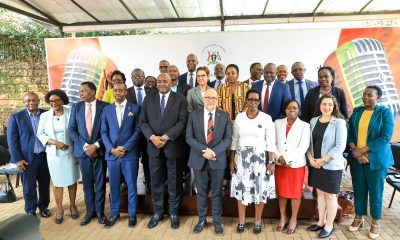
Participants pose for a group photo after the launch of the MakSPH study on possible lead exposure from domestic cookware in Kampala, held on 11 June 2026 at the ResilientAfrica Network in Kololo. Makerere University School of Public Health (MakSPH) launch of year-long study, titled “Assessment of Lead Contamination in Domestic Cookware, Supply Chains, and Exposure Pathways in Informal Settlements of Kampala,” 11th June 2026, ResilientAfrica Network (RAN), Kololo MakSPH Annex, Kampala Uganda, East Africa.

By Muhammad Jjumba and John Okeya

Across Kampala, families use saucepans, cooking pots, frying pans, kettles, and pressure cookers every day. Makerere University School of Public Health is now investigating whether some of these items may expose households to lead, a toxic heavy metal that can enter food during cooking if contaminated materials are used to make them.

The year-long study, titled “Assessment of Lead Contamination in Domestic Cookware, Supply Chains, and Exposure Pathways in Informal Settlements of Kampala,” was launched on 11 June 2026 at MakSPH’s ResilientAfrica Network (RAN) in Kololo. Supported through the Lead Exposure Elimination Project (LEEP), with funding from Bloomberg Philanthropies, and led by Mr. Douglas Bulafu, Mr. Tom Okade, and Dr. Rawlance Ndejjo, the study will assess total and leachable lead levels in commonly used cookware, map how the products are sourced, distributed, and sold, and identify feasible interventions to reduce household exposure to lead.

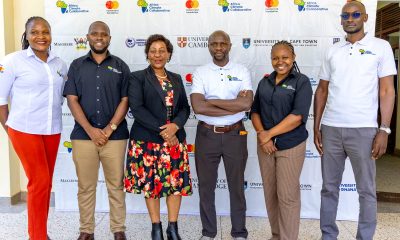
Ms. Prossy Nabaggala, Senior Standards Officer at the Uganda National Bureau of Standards, pictured centre, consults with study co-investigators Mr. Tom Okade and Mr. Douglas Bulafu during the launch of MakSPH’s study on possible lead exposure from domestic cookware in Kampala. Makerere University School of Public Health (MakSPH) launch of year-long study, titled “Assessment of Lead Contamination in Domestic Cookware, Supply Chains, and Exposure Pathways in Informal Settlements of Kampala,” 11th June 2026, ResilientAfrica Network (RAN), Kololo MakSPH Annex, Kampala Uganda, East Africa.
Ms. Prossy Nabaggala, Senior Standards Officer at the Uganda National Bureau of Standards, pictured centre, consults with study co-investigators Mr. Tom Okade and Mr. Douglas Bulafu during the launch of MakSPH’s study on possible lead exposure from domestic cookware in Kampala.

Today, lead remains a major and preventable public health concern globally. WHO reports that no level of exposure is known to be without harmful effects and estimates that lead exposure contributes to more than 3.5 million deaths worldwide, mainly through cardiovascular effects. Children and women of child-bearing age are said to be especially vulnerable, with exposure linked to impaired brain development, reduced learning ability, harm to unborn children, high blood pressure, cardiovascular disease and kidney damage.

In Uganda, lead exposure concerns also extend to household products and informal markets. Aluminium pots and saucepans, particularly low-cost locally fabricated items, may be made from recycled scrap metal. If contaminated materials are used, lead may leach into food during cooking or other food-contact use, creating a possible route of exposure in homes.

During the launch, Assoc. Prof. David Musoke, Head of MakSPH’s Department of Disease Control and Environmental Health, underscored the importance of involving stakeholders throughout the research process. He said engaging stakeholders from the generation of research ideas to implementation and dissemination helps ensure findings do not remain within the University but are translated into evidence that can inform policy, practice, and community action.

“We engage with stakeholders throughout the research process, from developing ideas and designing projects to implementation and dissemination,” Dr. Musoke noted. “I am pleased that this workshop brings together policymakers, the Ministry of Health, non-governmental organisations, Kampala Capital City Authority, academia, staff and students. This helps ensure that research findings do not remain at the University but are beneficial to our stakeholders.”

Assoc. Prof. David Musoke delivers remarks during the study launch, emphasising sustained stakeholder engagement to ensure research findings inform policy, practice and community action. Makerere University School of Public Health (MakSPH) launch of year-long study, titled “Assessment of Lead Contamination in Domestic Cookware, Supply Chains, and Exposure Pathways in Informal Settlements of Kampala,” 11th June 2026, ResilientAfrica Network (RAN), Kololo MakSPH Annex, Kampala Uganda, East Africa.
Assoc. Prof. David Musoke delivers remarks during the study launch, emphasising sustained stakeholder engagement to ensure research findings inform policy, practice and community action.

He observed that the study was timely, as it addresses an important yet under-examined public health concern, arguing that while lead exposure from paint, pipes and drinking water has received considerable attention, exposure through cookware remains less understood despite its widespread use in many households. He added that the new research builds on MakSPH’s broader work in disease control and environmental health and will generate critical evidence to inform action on lead exposure risks in Uganda. Dr. Musoke also commended the study team for initiating this work.

Previously, MakSPH researchers Mr. Abdullah Ali Halage, Mr. Tom Okade, Dr. James Muleme and Dr. Juliet Kiguli, together with Mr. Ahmada Zziwa and Mr. Robert Mugabi, assessed knowledge, perceptions and practices related to heavy metal contamination and health risks among residents living near Kiteezi in Kampala, Katikolo in Mukono and Nkumba in Entebbe. The study, done in 2024, reached 505 residents and captured community and frontline perspectives from people living and working around the dumpsites. It showed how daily contact with dumpsite environments may expose communities to toxic heavy metals such as lead, arsenic, cadmium, and mercury through soil, water, air, food crops, animal products and waste-handling practices.

Evidence from the study, funded by the Government of Uganda through the Makerere University Research and Innovation Fund (MakRIF) and disseminated on 26 June 2025, showed that heavy metal exposure risks around the three municipal dumpsites within the Kampala Metropolitan Area were shaped by both environmental conditions and community behaviour.

Dr. Sabrina Kitaka, Member of the MakRIF Grant Management Committee, pictured centre, with research team members including Mr. Abdullah Ali Halage, Mr. Tom Okade and Dr. Juliet Kiguli, following the dissemination of findings on heavy metal exposure risks around Kampala Metropolitan dumpsites on 26 June 2025. Makerere University School of Public Health (MakSPH) launch of year-long study, titled “Assessment of Lead Contamination in Domestic Cookware, Supply Chains, and Exposure Pathways in Informal Settlements of Kampala,” 11th June 2026, ResilientAfrica Network (RAN), Kololo MakSPH Annex, Kampala Uganda, East Africa.
Dr. Sabrina Kitaka, Member of the MakRIF Grant Management Committee, pictured centre, with research team members including Mr. Abdullah Ali Halage, Mr. Tom Okade and Dr. Juliet Kiguli, following the dissemination of findings on heavy metal exposure risks around Kampala Metropolitan dumpsites on 26 June 2025.

Although residents lived near dumpsites where waste can release heavy metals into soil, water and food chains, 76.4 per cent could not define heavy metals, and only 45.9 per cent had adequate knowledge of contamination and related health risks. Gaps extended to daily exposure pathways, with 38.4 per cent unaware that vegetables grown near dumpsites may contain high heavy metal levels and 39.8 per cent unaware that milk or meat from animals grazed near dumpsites may also be contaminated. More than half viewed dumpsite soils as fertile, 50.7 per cent considered such milk safe, and 51.3 per cent believed dumpsite waste could be used as manure.

The study recommended stronger risk communication, environmental monitoring, safer land-use enforcement and community education. The work on lead in domestic cookware now extends this focus from dumpsite-related heavy metal exposure to a possible household pathway. Mr. Douglas Bulafu, an early-career researcher and Principal Investigator of the study, said the team will examine whether commonly used cooking pots, saucepans and related utensils contribute to exposure, and generate evidence to guide safer cookware use, standards and market oversight.

“Lead contamination has been documented from sources such as paint, fuel and air pollution, but less attention has been given to cookware as a potential pathway of exposure. That is the gap this study seeks to address,” Mr. Bulafu said. “We focused on Kampala because it has many informal settlements, small-scale cookware workshops and a large consumer market where low-cost cookware is widely produced, sold and used. When people buy these products, they often do not know where they were made, what materials were used, or whether they contain lead. The supply chains are also poorly understood, meaning households could be exposed without knowing.”

Mr. Douglas Bulafu, Principal Investigator, speaks during the launch of the MakSPH study on possible lead exposure from domestic cookware in Kampala, highlighting the need for evidence to guide safer cookware use, standards and market oversight. Makerere University School of Public Health (MakSPH) launch of year-long study, titled “Assessment of Lead Contamination in Domestic Cookware, Supply Chains, and Exposure Pathways in Informal Settlements of Kampala,” 11th June 2026, ResilientAfrica Network (RAN), Kololo MakSPH Annex, Kampala Uganda, East Africa.
Mr. Douglas Bulafu, Principal Investigator, speaks during the launch of the MakSPH study on possible lead exposure from domestic cookware in Kampala, highlighting the need for evidence to guide safer cookware use, standards and market oversight.

The study will use a cross-sectional, mixed-methods design to connect laboratory evidence with supply-chain realities in Kampala’s informal settlements. The team will purchase about 100 cookware samples from open-air markets, roadside vendors, retail shops and supermarkets in Kisenyi, Katanga, Bwaise, Namuwongo, Banda and Kasubi, test them for total and leachable lead, and conduct about 30 key informant interviews across the supply chain to understand how cookware is sourced, produced, distributed and used.

Findings will be validated with stakeholders and used to identify feasible interventions, including stronger regulation and enforcement, raw-material control, better manufacturing practices, market surveillance and consumer awareness. The evidence is expected to support standards development, product testing, policy uptake, safer manufacturing practices and public guidance on cookware choices, helping reduce household exposure to lead and associated health risks.

Speaking on behalf of the Ministry of Health, Dr. Didacus Namanya, a health geographer and environmental health expert, welcomed the study, saying scientific evidence on lead exposure is critical because public health decisions can have lasting consequences for life and wellbeing.

Dr. Namanya implored the research team to ensure the evidence from the study informs decisions beyond academia, shaping policy, strengthening public health practice and guiding practical measures to reduce lead exposure in communities. He emphasised that research should not remain in the “ivory tower” but reach decision-makers and the public, so that evidence from the study translates into policy, practice and stronger protection for communities.

Dr. Didacus Namanya, speaking on behalf of the Ministry of Health, delivers remarks during the study launch on 11 June 2026, urging the research team to ensure evidence on lead exposure informs policy, practice and practical community protection measures. Makerere University School of Public Health (MakSPH) launch of year-long study, titled “Assessment of Lead Contamination in Domestic Cookware, Supply Chains, and Exposure Pathways in Informal Settlements of Kampala,” 11th June 2026, ResilientAfrica Network (RAN), Kololo MakSPH Annex, Kampala Uganda, East Africa.
Dr. Didacus Namanya, speaking on behalf of the Ministry of Health, delivers remarks during the study launch on 11 June 2026, urging the research team to ensure evidence on lead exposure informs policy, practice and practical community protection measures.

View on MakSPH

John Okeya

Continue Reading

Health

Makerere University becomes Africa’s new nerve centre in the fight against Ebola

Published

on

Dr Chris Baryomunsi, flanked by Dr Tolbert Nyenswah, Dr Marie-Roseline Belizaire and Dr Andrew Kambugu, cuts the ribbon marking the launch of the Continental Incident Management Support Team at IDI's McKinnell Knowledge Centre, Makerere University. Formal launch of Continental Incident Management Support Team (IMST), a joint Africa Centres for Disease Control and Prevention (Africa CDC) and World Health Organization (WHO) operation racing to contain the Bundibugyo strain of Ebola sweeping through the Democratic Republic of the Congo, 26th June 2026, Infectious Diseases Institute (IDI) McKinnell Knowledge Centre, Makerere University, Kampala Uganda, East Africa.

By Fred Ouma

Kampala — On Saturday, a car park on the campus of Makerere University in Kampala became the stage for a continental emergency response. Delegates, dignitaries and diplomats gathered in the tent outside the Infectious Diseases Institute (IDI), a research institute owned by the university, for the formal launch of the Continental Incident Management Support Team (IMST), a joint Africa Centres for Disease Control and Prevention (Africa CDC) and World Health Organization (WHO) operation racing to contain the Bundibugyo strain of Ebola sweeping through the Democratic Republic of the Congo and, increasingly, Uganda. After the ribbon-cutting, guests were led inside to tour the team’s new home at IDI’s McKinnell Knowledge Centre, where the command offices have now been set up.

Dr Chris Baryomunsi joins delegates for a group photograph at the IMST launch, Infectious Diseases Institute, Makerere University. Formal launch of Continental Incident Management Support Team (IMST), a joint Africa Centres for Disease Control and Prevention (Africa CDC) and World Health Organization (WHO) operation racing to contain the Bundibugyo strain of Ebola sweeping through the Democratic Republic of the Congo, 26th June 2026, Infectious Diseases Institute (IDI) McKinnell Knowledge Centre, Makerere University, Kampala Uganda, East Africa.
Dr Chris Baryomunsi joins delegates for a group photograph at the IMST launch, Infectious Diseases Institute, Makerere University.

The numbers explain the urgency. As of 21 June, more than 1,000 confirmed cases and 269 deaths had been recorded across the two countries, the vast majority in Ituri Province in eastern DRC. Uganda’s tally stood at 20 cases and two deaths, almost all traced to cross-border movement from the DRC. Eighty-two health workers have been infected, 18 fatally, a toll that helped push the WHO to declare a Public Health Emergency of International Concern in May, mirrored days later by Africa CDC’s own continental emergency declaration.

Prof Henry Mwanaki Alinaitwe, Deputy Vice Chancellor for Finance and Administration at Makerere University, with the acting US Ambassador to Uganda and Prof Samuel Luboga, IDI board chair, at the IMST launch. Formal launch of Continental Incident Management Support Team (IMST), a joint Africa Centres for Disease Control and Prevention (Africa CDC) and World Health Organization (WHO) operation racing to contain the Bundibugyo strain of Ebola sweeping through the Democratic Republic of the Congo, 26th June 2026, Infectious Diseases Institute (IDI) McKinnell Knowledge Centre, Makerere University, Kampala Uganda, East Africa.
Prof Henry Mwanaki Alinaitwe, Deputy Vice Chancellor for Finance and Administration at Makerere University, with the acting US Ambassador to Uganda and Prof Samuel Luboga, IDI board chair, at the IMST launch.

Until now, the international response has been coordinated remotely, a patchwork of video calls and scattered logistics that officials admit slowed decision-making. The Kampala launch marks a shift from that fragmented model to a single, physically co-located command centre housed at IDI’s McKinnell Knowledge Centre, bringing case management, surveillance, logistics and risk communication specialists under one roof. From there, the convoy of delegates moved on to Kajjansi, on the outskirts of Entebbe, for the formal activation of the IMST’s regional logistics hub, the facility tasked with staging and rapidly deploying protective equipment and medical supplies across the outbreak zone.

Dr Chris Baryomunsi inspects the newly activated IMST logistics hub at Kajjansi, near Entebbe. Formal launch of Continental Incident Management Support Team (IMST), a joint Africa Centres for Disease Control and Prevention (Africa CDC) and World Health Organization (WHO) operation racing to contain the Bundibugyo strain of Ebola sweeping through the Democratic Republic of the Congo, 26th June 2026, Infectious Diseases Institute (IDI) McKinnell Knowledge Centre, Makerere University, Kampala Uganda, East Africa.
Dr Chris Baryomunsi inspects the newly activated IMST logistics hub at Kajjansi, near Entebbe.

For Uganda’s health minister, Dr Chris Baryomunsi, the symbolism was as important as the logistics. Speaking at the launch, he argued that no nation can consider itself protected until its neighbours are equally prepared, framing cross-border solidarity as an operational necessity rather than an aspiration. He also announced a new memorandum of understanding with the DRC establishing joint Ebola treatment centres and laboratory services in the border towns of Aru and Kasenyi, warning that outbreak response cannot succeed while transmission continues unchecked on one side of a shared frontier.

Dr Chris Baryomunsi speaks as the guest of honour at the launch of the Continental Incident Management Support Team, Infectious Diseases Institute, Makerere University. Formal launch of Continental Incident Management Support Team (IMST), a joint Africa Centres for Disease Control and Prevention (Africa CDC) and World Health Organization (WHO) operation racing to contain the Bundibugyo strain of Ebola sweeping through the Democratic Republic of the Congo, 26th June 2026, Infectious Diseases Institute (IDI) McKinnell Knowledge Centre, Makerere University, Kampala Uganda, East Africa.
Dr Chris Baryomunsi speaks as the guest of honour at the launch of the Continental Incident Management Support Team, Infectious Diseases Institute, Makerere University.

The WHO’s regional emergency director, Dr Marie-Roseline Belizaire, described the unified command structure as transformative, saying it would pool resources across agencies, cut duplication and keep field decisions anchored to scientific evidence. Africa CDC’s Dr Tolbert Nyenswah confirmed the team, specialists in case management, infection prevention, logistics and contact tracing, has now relocated physically to Kampala to work closer to the epicentre. Eleven epidemic-prone African nations, including Rwanda, Burundi, Angola and the Central African Republic, are participating in the preparedness effort even though most have not registered a single case.

Dr Marie-Roseline Belizaire, WHO AFRO's regional emergency director, speaks at the launch of the Continental Incident Management Support Team in Kampala. Formal launch of Continental Incident Management Support Team (IMST), a joint Africa Centres for Disease Control and Prevention (Africa CDC) and World Health Organization (WHO) operation racing to contain the Bundibugyo strain of Ebola sweeping through the Democratic Republic of the Congo, 26th June 2026, Infectious Diseases Institute (IDI) McKinnell Knowledge Centre, Makerere University, Kampala Uganda, East Africa.
Dr Marie-Roseline Belizaire, WHO AFRO’s regional emergency director, speaks at the launch of the Continental Incident Management Support Team in Kampala.

For IDI and Makerere University, hosting the command centre carries weight beyond the immediate crisis. IDI’s executive director, Dr Andrew Kambugu, said the institute had provided a fully equipped space, now installed at the McKinnell Knowledge Centre, enabling real-time communication between field teams, regional governments and international partners in Geneva, and framed the moment as proof that academic institutions can engage directly with pressing societal problems rather than observe from the sidelines.

Dr Andrew Kambugu delivers welcome remarks at the launch of the Continental Incident Management Support Team, Infectious Diseases Institute, Makerere University. Formal launch of Continental Incident Management Support Team (IMST), a joint Africa Centres for Disease Control and Prevention (Africa CDC) and World Health Organization (WHO) operation racing to contain the Bundibugyo strain of Ebola sweeping through the Democratic Republic of the Congo, 26th June 2026, Infectious Diseases Institute (IDI) McKinnell Knowledge Centre, Makerere University, Kampala Uganda, East Africa.
Dr Andrew Kambugu delivers welcome remarks at the launch of the Continental Incident Management Support Team, Infectious Diseases Institute, Makerere University.

That framing matters for a continent whose research infrastructure has often been treated as peripheral to its own health emergencies. By anchoring the IMST’s command function within a Ugandan public university rather than in a foreign capital, the launch signals a modest but symbolic rebalancing: an African-led institution taking custody of an African-led response. The day’s itinerary made the point physically as well as symbolically: from the ribbon-cutting in Makerere’s car park, to the tour of the new command offices, to the drive out to Kajjansi to switch on the logistics hub, delegates traced the full chain of the response they had just committed to running.

Dr Chris Baryomunsi poses with the IMST logistics hub team at Kajjansi, following the hub's formal activation. Formal launch of Continental Incident Management Support Team (IMST), a joint Africa Centres for Disease Control and Prevention (Africa CDC) and World Health Organization (WHO) operation racing to contain the Bundibugyo strain of Ebola sweeping through the Democratic Republic of the Congo, 26th June 2026, Infectious Diseases Institute (IDI) McKinnell Knowledge Centre, Makerere University, Kampala Uganda, East Africa.
Dr Chris Baryomunsi poses with the IMST logistics hub team at Kajjansi, following the hub’s formal activation.

Fred Ouma is the Corporate Communications Specialist, Infectious Diseases Institute (IDI).

Mak Editor

Continue Reading

Health

A Shared Investment in Uganda’s Public Health: The long MakSPH and U.S. Government partnership in training, evidence and health systems

Published

on

From right to left: Then U.S. Ambassador to Uganda H.E. William W. Popp; Prof. Rhoda Wanyenze, Dean, MakSPH; Dr. Diana Atwine, Permanent Secretary, MoH; Dr. Charles Olaro, Director General of Health Services, MoH; and Dr. Adetinuke Boyd, U.S. CDC Country Director for Uganda, during the METS programme handover event in Kampala in March 2026. Makerere University School of Public Health (MakSPH) reflection on long and productive partnership with the people and Government of the United States, spanning more than 35 years. Kampala Uganda, East Africa.

Every 4 July, the United States marks its independence. This year’s commemoration carries added significance as the country celebrates 250 years, offering partners across the world a moment to reflect on relationships built through shared purpose, investment and trust.

For Makerere University School of Public Health (MakSPH), that reflection leads to a long and productive partnership with the people and Government of the United States, spanning more than 35 years. Through U.S. Government agencies and programmes, the collaboration has supported MakSPH’s growth from a national public health training institution into a regional platform for evidence, leadership, health systems strengthening and public health preparedness.

Today, MakSPH stands at a defining point in its institutional journey. Tracing its roots to the introduction of preventive medicine in Makerere University’s then Faculty of Medicine in 1954, the School has grown into a leading public health institution in Africa, training more than 1,000 students across 12-degree programmes, working through district field training sites, contributing to national technical committees, and implementing research and capacity-building work across Uganda and more than 35 African countries.

Hon. Margaret Muhanga, then State Minister for Primary Health Care and Chief Guest, joins Makerere University leaders and partners in cutting the MakSPH@70 anniversary cake during the School's 70th anniversary celebrations in December 2024. Makerere University School of Public Health (MakSPH) reflection on long and productive partnership with the people and Government of the United States, spanning more than 35 years. Kampala Uganda, East Africa.
Hon. Margaret Muhanga, then State Minister for Primary Health Care and Chief Guest, joins Makerere University leaders and partners in cutting the MakSPH@70 anniversary cake during the School’s 70th anniversary celebrations in December 2024.

Its work spans infectious diseases, maternal and child health, noncommunicable diseases, climate and health, digital health, injury prevention, universal health coverage and epidemic preparedness. While grounded in close collaboration with the Government of Uganda, especially the Ministry of Health, this reach has also been shaped by long-standing U.S. Government support. Reflecting on this shared history, MakSPH Dean Prof. Rhoda Wanyenze said the partnership has made a lasting contribution to public health capacity.

“For more than three decades, MakSPH has been privileged to work in strong partnership with the people and Government of the United States. We are grateful for this collaboration, which has made a major contribution to advancing public health training, research and practice in Uganda and across Africa. From the Master of Public Health programme to fellowships, enhanced surveillance, operational research, HIV and infectious disease work, regional networks, innovation, and programmes such as METS, this partnership has helped build the people, evidence and systems that support public health action,” Prof. Wanyenze said.

MakSPH Dean Prof. Rhoda Wanyenze speaks during the UPHIA 2025 launch in Kampala, highlighting MakSPH’s contribution to Uganda’s public health response through research, evidence and technical guidance. Makerere University School of Public Health (MakSPH) reflection on long and productive partnership with the people and Government of the United States, spanning more than 35 years. Kampala Uganda, East Africa.
MakSPH Dean Prof. Rhoda Wanyenze speaks during the UPHIA 2025 launch in Kampala, highlighting MakSPH’s contribution to Uganda’s public health response through research, evidence and technical guidance.

Training Leaders for Uganda’s Health System

In 1994, as Uganda decentralised its administration and public services, the Institute of Public Health, now Makerere University School of Public Health, established the Master of Public Health (MPH) Full-Time programme in response to a clear workforce need for public health leaders who could manage district health systems, investigate outbreaks, conduct needs assessments and respond to emerging health challenges.

Prof. David Serwadda, Professor Emeritus at Makerere University and former Dean of MakSPH, recalls the programme was designed to fill a critical district-level leadership gap. “After a very strong needs assessment by Makerere University and the Ministry of Health, it was found that we needed to train a specific cadre of public health leaders for the districts,” he said. “We needed people with good management skills, people who could investigate an epidemic, do a needs assessment and respond to health challenges.”

Prof. David Serwadda speaks during a departmental retreat in Jinja in June 2026. He served as Director of the Makerere Institute of Public Health from 2003 to 2007 and as the first Dean of MakSPH from 2007 to 2009. Makerere University School of Public Health (MakSPH) reflection on long and productive partnership with the people and Government of the United States, spanning more than 35 years. Kampala Uganda, East Africa.
Prof. David Serwadda speaks during a departmental retreat in Jinja in June 2026. He served as Director of the Makerere Institute of Public Health from 2003 to 2007 and as the first Dean of MakSPH from 2007 to 2009.

Established as a two-year programme, the MPH Full-Time was based on the Public Health Schools Without Walls model and became one of the earliest community-based public health graduate programmes in Africa. Developed through joint commitment by the Institute of Public Health, the Ministry of Health and the Rockefeller Foundation, and with technical support from the U.S. CDC, the programme placed students at district field sites to learn through apprenticeship while working on real public health problems. Other partners, including WHO and UNFPA, later provided scholarship support.

Three decades later, the MPH Full-Time programme remains one of MakSPH’s flagship contributions to Uganda and the region’s public health workforce. It has trained more than 1,000 public health professionals for leadership across districts, Ministry programmes, research, teaching, implementation and technical advisory work. Many graduates have gone on to serve as District Health Officers, commissioners, programme leaders, researchers, lecturers and public health specialists, strengthening Uganda’s health system leadership.

Fellowships That Strengthened Public Health Response

In 2002, MakSPH hosted the first direct cooperative agreement between Makerere University and the U.S. CDC, formalising the workforce development arm of the partnership. Under the Leadership and Investment in Fighting Epidemics (LIFE) initiative, the agreement launched the HIV/AIDS Fellowship Programme, which trained leaders for organisations working in HIV and AIDS. By 2014, the programme had produced more than 100 long-term fellows, more than 200 medium-term fellows, and over 3,000 short-course participants.

Graduates pose with then U.S. Ambassador to Uganda H.E. William W. Popp during the 10th graduation of Advanced Field Epidemiology Fellows and the 2nd graduation of Laboratory Leadership Fellows under the Uganda Public Health Fellowship Programme in January 2026. Makerere University School of Public Health (MakSPH) reflection on long and productive partnership with the people and Government of the United States, spanning more than 35 years. Kampala Uganda, East Africa.
Graduates pose with then U.S. Ambassador to Uganda H.E. William W. Popp during the 10th graduation of Advanced Field Epidemiology Fellows and the 2nd graduation of Laboratory Leadership Fellows under the Uganda Public Health Fellowship Programme in January 2026.

The fellowship platform later transitioned into the Uganda Public Health Fellowship Programme and, through subsequent cooperative agreements in 2016 and 2021, expanded into the broader Public Health Workforce Development Programme. Led by the Ministry of Health through the Uganda National Institute of Public Health, and implemented with the U.S. CDC, districts and MakSPH, the programme now supports advanced field epidemiology, Frontline and Intermediate Field Epidemiology Training, and laboratory leadership.

Fellows are embedded within the Ministry of Health, districts and public health institutions, strengthening surveillance, outbreak investigation, HIV/TB programming, quality improvement, laboratory systems and health informatics. The Field Epidemiology Track has supported an average of about 37 active fellows, including 39 in 2024/2025. That year, fellows provided technical assistance to the Ministry and conducted 84 epidemiological studies and investigations, including work linked to Uganda’s Mpox response.

HIV Evidence That Changed Policy and Practice

UPHIA 2025 laboratory technicians undergo pre-deployment training at MakSPH, delivered with Uganda National Health Laboratory Services, ahead of field data collection on HIV and related health indicators across Uganda. Makerere University School of Public Health (MakSPH) reflection on long and productive partnership with the people and Government of the United States, spanning more than 35 years. Kampala Uganda, East Africa.
UPHIA 2025 laboratory technicians undergo pre-deployment training at MakSPH, delivered with Uganda National Health Laboratory Services, ahead of field data collection on HIV and related health indicators across Uganda.

Uganda’s HIV crisis in the 1980s became one of the earliest tests of MakSPH’s public health mission. The wasting illness, then known as “Slim”, was reported in Rakai in the early 1980s and later identified as HIV/AIDS. Researchers at the Institute of Public Health, now MakSPH, helped advance understanding of the epidemic, with Prof. David Serwadda among the earliest physicians in Uganda to recognise and describe the disease.

That work grew into the Rakai Health Sciences Programme, established in 1989 through collaboration involving Makerere University, Columbia University, Johns Hopkins University, the U.S. National Institutes of Health (NIH) and partners. Over the decades, Rakai became a platform for research, surveillance, service delivery and training in communities deeply affected by HIV.

One landmark contribution showed that safe medical male circumcision reduced female-to-male HIV acquisition by about 60 per cent, helping inform HIV prevention policy in Uganda and globally. PEPFAR support also helped expand treatment in Rakai, where surveillance documented reduced mortality, lower HIV incidence, reduced orphanhood and improved community productivity.

The search for stronger prevention tools continued through MakSPH researchers, including Prof. Noah Kiwanuka, whose work in rural and fishing communities highlighted the need for better options for adolescent girls and young women. From 2022 to 2024, MakSPH managed the Makerere-Kalangala study site with UVRI-IAVI for the Gilead Sciences-led PURPOSE 1 trial, with Prof. Kiwanuka as Site Principal Investigator. The study contributed evidence on lenacapavir, a twice-yearly injectable now recognised as a major advance in HIV prevention.

Surveillance and National Decisions

Then Minister of Health Dr. Jane Ruth Aceng flags off UPHIA 2025 field teams in Kampala on 29 May 2025. The Ministry of Health-led survey is implemented with technical support from MakSPH and partners. Makerere University School of Public Health (MakSPH) reflection on long and productive partnership with the people and Government of the United States, spanning more than 35 years. Kampala Uganda, East Africa.
Then Minister of Health Dr. Jane Ruth Aceng flags off UPHIA 2025 field teams in Kampala on 29 May 2025. The Ministry of Health-led survey is implemented with technical support from MakSPH and partners.

The partnership has also strengthened Uganda’s ability to measure the HIV epidemic and use evidence for national decisions. The Uganda Population-based HIV Impact Assessment (UPHIA) 2024/2025 is the country’s third national household-based HIV impact survey, commissioned by the Ministry of Health with technical support from MakSPH in partnership with UBOS, UVRI, and the U.S. CDC. After two earlier rounds supported by ICAP at Columbia University in 2016 and 2020, the current survey marks a shift to Ugandan leadership in implementation, analysis and use of evidence for the national response.

Funded by the U.S. Government through PEPFAR, UPHIA represents a USD 10 million investment in national evidence generation. Its results, expected in 2026, will provide updated national and subnational estimates of HIV prevalence, incidence, viral load suppression, service coverage and progress toward UNAIDS 95-95-95 targets. The survey covers 6,685 households and about 15,000 people aged 15 years and above, with additional focus on adolescents, noncommunicable diseases among people living with HIV, and barriers among those not virally suppressed.

Related surveillance work through the CRANE Survey has generated evidence on populations at higher risk of HIV and often missed by routine data. Established in 2008 with U.S. Government support through PEPFAR and implemented by MakSPH with the Ministry of Health and U.S. CDC, CRANE is one of Uganda’s longest-running HIV bio-behavioural surveillance platforms. More than USD 7 million in U.S. Government investment has supported evidence used in Uganda’s HIV Investment Case, the National HIV Strategic Plan, national bio-behavioural surveillance guidelines and UNAIDS guidance.

In its third round, conducted in 2023 and disseminated in 2024, CRANE reached 7,947 female sex workers and sexually exploited minors across 12 districts. About one in three participants were living with HIV, rising to 54 per cent among those aged 35 to 49. The survey also documented syphilis, high-risk HPV infection, violence, stigma in health facilities and high levels of depression, strengthening the case for targeted HIV prevention, treatment, mental health support, violence prevention, cervical cancer prevention and access to justice.

Then U.S. Ambassador to Uganda H.E. William W. Popp tours MakSPH exhibition stands with MakSPH and U.S. CDC leadership during the 2024 dissemination of CRANE Survey results in Kampala. Makerere University School of Public Health (MakSPH) reflection on long and productive partnership with the people and Government of the United States, spanning more than 35 years. Kampala Uganda, East Africa.
Then U.S. Ambassador to Uganda H.E. William W. Popp tours MakSPH exhibition stands with MakSPH and U.S. CDC leadership during the 2024 dissemination of CRANE Survey results in Kampala.

Regional Leadership, One Health and Innovation

U.S. Government support extended MakSPH’s contribution from national workforce development to regional public health leadership. In 2005, USAID, through the Higher Education for Development programme, supported the Leadership Initiative for Public Health in East Africa (LIPHEA), led by MakSPH with Muhimbili University of Health and Allied Sciences, Johns Hopkins Bloomberg School of Public Health and Tulane University School of Public Health and Tropical Medicine. The initiative strengthened leadership, competency-based training, faculty development and collaborative research across East Africa.

LIPHEA’s legacy continued through the East Africa HEALTH Alliance, which evolved into the One Health Central and Eastern Africa network and later the Africa One Health University Network (AFROHUN). These platforms brought public health, veterinary, environmental and allied disciplines into shared training and practice, helping build a workforce able to predict, detect and respond to zoonotic diseases, epidemics and other complex health threats.

The regional focus expanded further in 2012, when USAID selected Makerere University, through MakSPH, to lead the ResilientAfrica Network (RAN) under the Higher Education Solutions Network (HESN). Operating in 16 African countries through a network of 20 African universities, RAN connected African universities, U.S. partners and local innovators to strengthen community resilience to disease outbreaks, climate shocks, food insecurity, conflict and natural disasters. Through research, innovation grants, policy engagement and capacity building, it expanded MakSPH’s regional contribution to resilience science, innovation and implementation research.

METS and National Stewardship

MakSPH Dean Prof. Rhoda Wanyenze signs the METS handover board during the transition of digital health systems and assets to the Ministry of Health on 31 March 2026, as then U.S. Ambassador to Uganda H.E. William W. Popp and Dr. Diana Atwine, Permanent Secretary, Ministry of Health, look on. Makerere University School of Public Health (MakSPH) reflection on long and productive partnership with the people and Government of the United States, spanning more than 35 years. Kampala Uganda, East Africa.
MakSPH Dean Prof. Rhoda Wanyenze signs the METS handover board during the transition of digital health systems and assets to the Ministry of Health on 31 March 2026, as then U.S. Ambassador to Uganda H.E. William W. Popp and Dr. Diana Atwine, Permanent Secretary, Ministry of Health, look on.

A recent marker of partnership maturity came through the Monitoring and Evaluation Technical Support (METS) Programme. Launched in 2010 with U.S. Government support through the U.S. CDC and PEPFAR, METS strengthened Uganda’s health information systems, case-based surveillance, monitoring, evaluation and quality improvement for HIV, TB and broader public health programming. Across three five-year grants totalling USD 103.8 million, the programme helped move Uganda from fragmented reporting toward stronger national data systems and more integrated digital health infrastructure.

During its March 2026 handover to the Ministry of Health, METS transferred 16 digital health systems, 725 servers, more than 4,700 computing devices, solar systems for nearly 800 facilities, connectivity equipment for more than 1,300 sites, and network upgrades for regional referral hospitals. The transferred ICT infrastructure was valued at USD 9.3 million. METS also helped improve District Health Information System 2 reporting from 58 per cent in 2020 to 98 per cent by 2025, while Electronic Medical Record coverage expanded to more than 86 per cent nationally, with 1,900 sites using electronic medical records.

Infrastructure and Future Capacity

MakSPH’s new home takes shape near the Eastern Gate at Makerere University Main Campus, supported in part through the USAID ASHA grant. Makerere University School of Public Health (MakSPH) reflection on long and productive partnership with the people and Government of the United States, spanning more than 35 years. Kampala Uganda, East Africa.
MakSPH’s new home takes shape near the Eastern Gate at Makerere University Main Campus, supported in part through the USAID ASHA grant.

MakSPH’s expanding mandate has placed new demands on its infrastructure. With more than 1,000 students, wider regional work and a growing research portfolio, the new MakSPH complex on Makerere University Main Campus is designed to support training, research, policy engagement and innovation at scale. In 2021, USAID, through the American Schools and Hospitals Abroad (ASHA) programme, awarded USD 1.1 million through Johns Hopkins University to support the Makerere University Centre of Excellence for Global Health within the new building.

The infrastructure agenda also points to the next phase of the MakSPH and U.S. Government partnership. After more than three decades of investment in leadership, evidence, surveillance, digital systems, regional networks and response capacity, sustaining these gains will require stronger shared responsibility.

As the United States marks 250 years of independence, MakSPH recognises a partnership that has strengthened Uganda’s public health system and continues to build capacity for the region.

View on MakSPH

John Okeya

Continue Reading

Trending