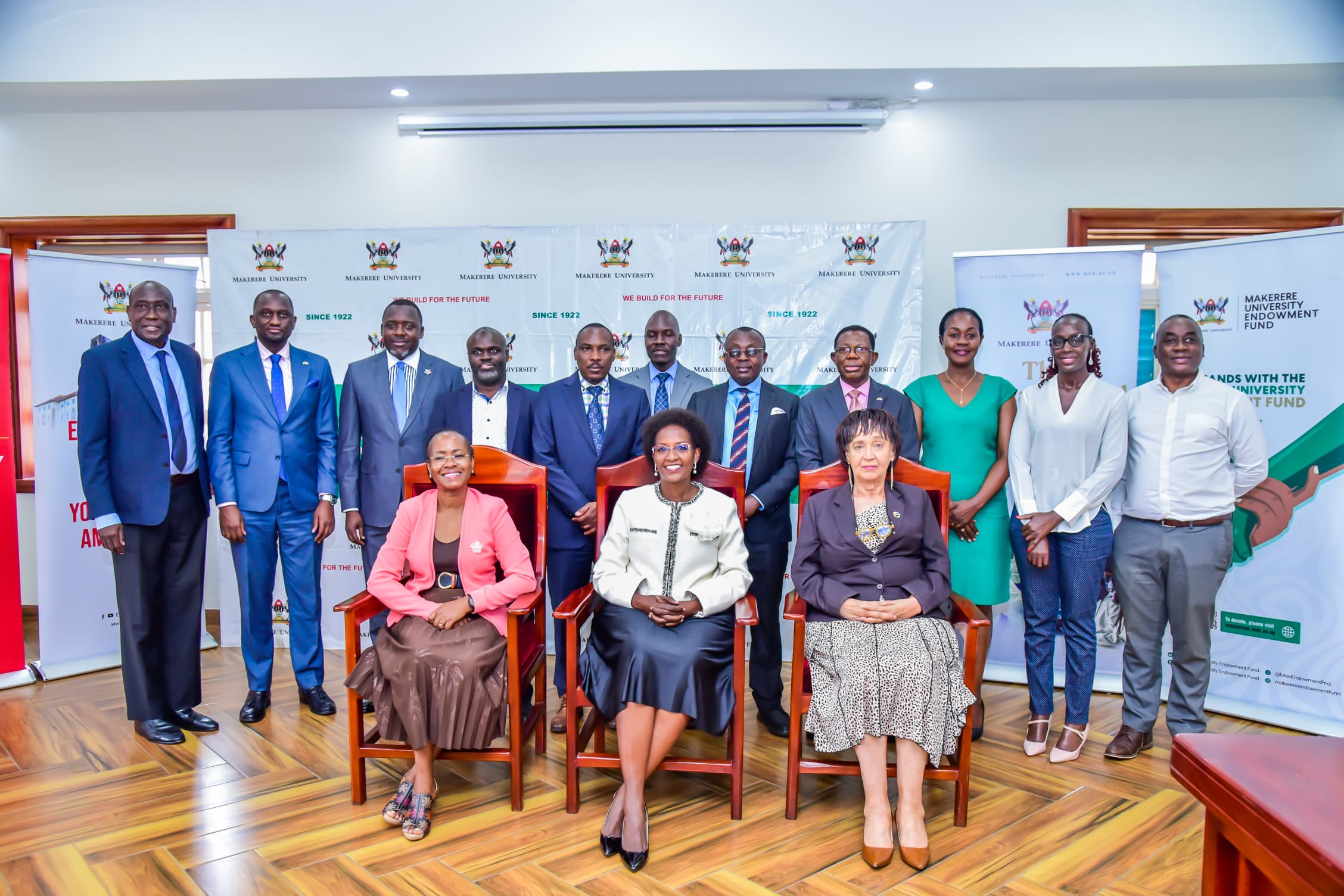
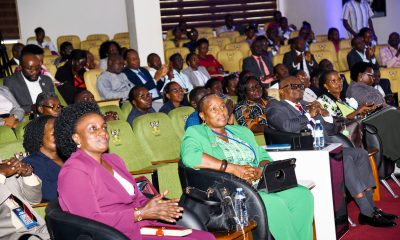
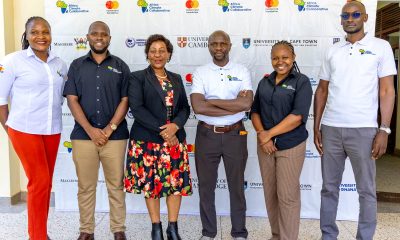
Seated: Mrs. Lorna Magara (Centre) with Prof. Sarah Ssali (Left) and Dr. Margaret J. Kigozi (Right) with other officials (Standing) after inauguration of the 3rd MakEF Board on 23rd October 2025.
The 3rd Board of Trustees of the Makerere UniversityEndowment Fund (MakEF) has been officially inaugurated in a ceremony presided over by Mrs. Lorna Magara, Chairperson of the University Council on 23rd October 2025, and moderated by the Secretary to the Board, Mr. Emmanuel Kitamirike
In her address, Mrs. Magara commended the outgoing board, led by Dr. Margaret J. Kigozi, for their remarkable stewardship that saw the Fund grow from UGX 8.66 billion in 2021 to UGX 14.54 billion in 2025. She underscored the Endowment Fund’s vital role in ensuring the University’s financial sustainability amidst fluctuating public funding, reaffirming the Council’s commitment to providing policy and institutional support. Mrs. Magara further urged the incoming Board to uphold transparency, strengthen alumni engagement, and pursue innovative investment strategies to expand the Fund’s impact as Makerere continues to build for the future.
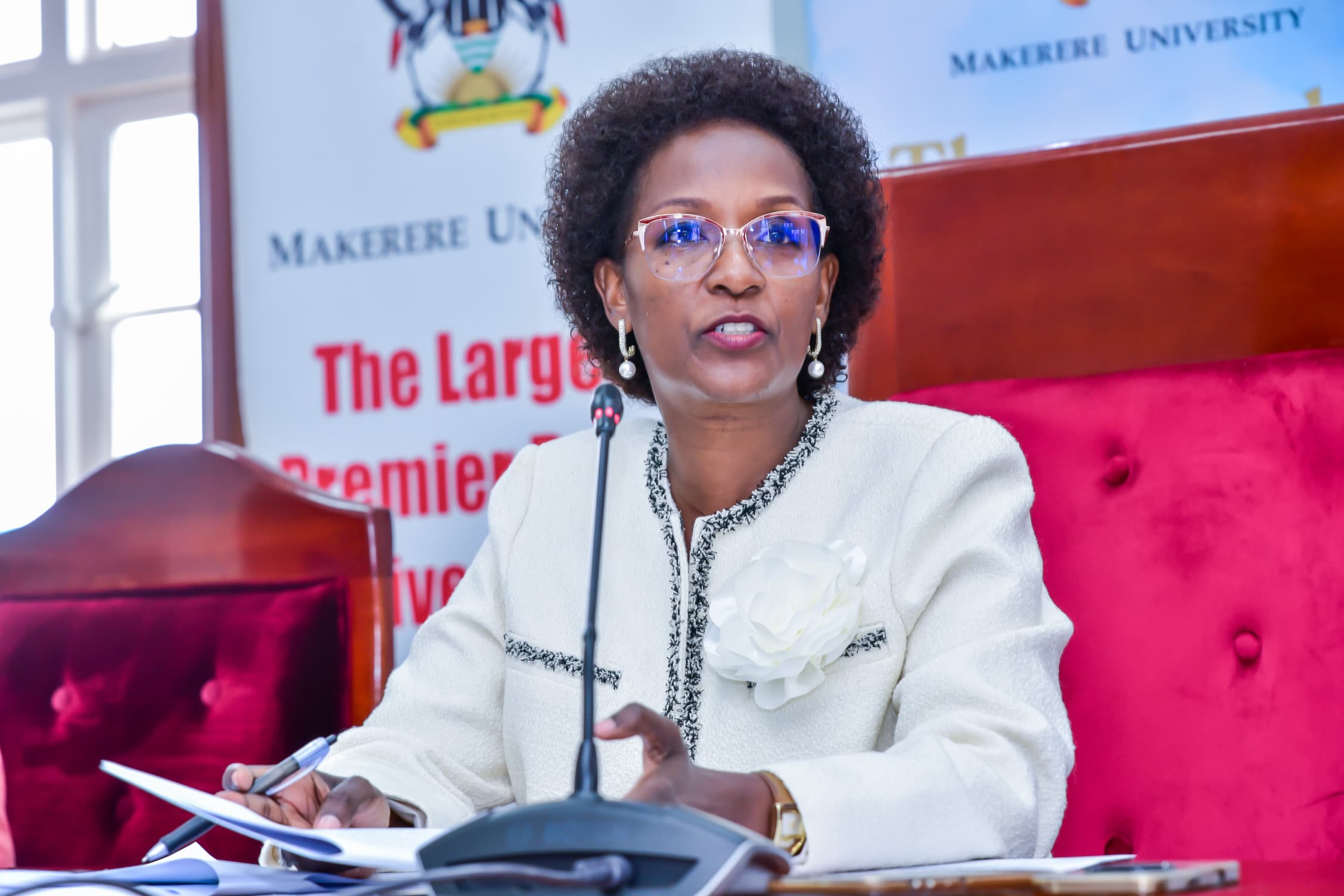
Mrs. Lorna Magara addresses the meeting.
Board composition
The newly inaugurated 3rd Board of Trustees (2025–2029) brings together a team of distinguished professionals whose expertise spans business, academia, finance, governance, and social advocacy. Notably, some members have been reappointed in recognition of their exceptional service and contribution to the Fund’s growth during the previous term. The Board is chaired by Dr. Margaret J. Kigozi, a seasoned business leader and former Executive Director of the Uganda Investment Authority (UIA). She is joined by accomplished members including Ms. Jennifer Mwijukye, CEO and founder of Unifreight Cargo Handling Limited; Mr. Ninsiima John Chris, Director of Programmes at NUDIPU and member of the Makerere University Council; Mr. Kenneth Mugambe, former Director of Budget at the Ministry of Finance; Prof. Buyinza Mukadasi, Makerere University’s Academic Registrar and Professor of Forestry Resource Economics; and Mr. Sam Ayesiga, a governance and investment expert with vast experience across Africa. Their diverse backgrounds and renewed commitment are expected to steer the Fund toward even greater stability, innovation, and impact in the years ahead.
Representing the Vice Chancellor, Deputy Vice Chancellor for Academic Affairs, Prof. Sarah Ssali, commended the outgoing Board of Trustees of the Makerere University Endowment Fund for their exceptional service marked by growth, innovation, and accountability. She noted that the growth of the fund to UGX 14 billion is a clear testament to strategic vision, prudent management, and confidence in Makerere University’s long-term sustainability. Prof. Ssali praised the Board for initiatives that have united thousands of alumni, staff, and partners, notably through the Makerere Run, which has supported disability inclusion and empowerment.
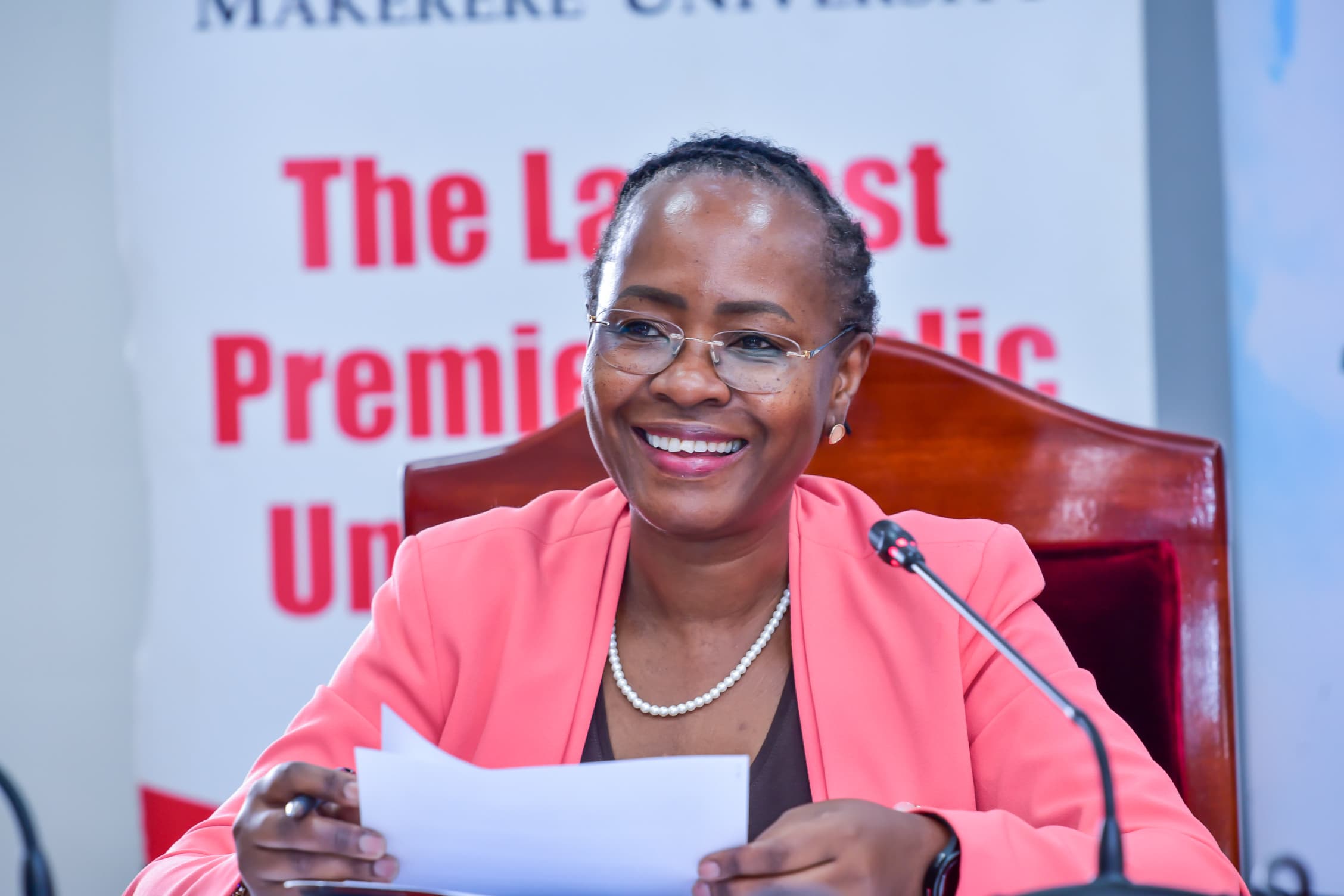
The Acting Vice Chancellor Prof. Sarah Ssali.
She also recognized the introduction of the MakAdvance digital platform as a milestone in promoting efficiency and transparency. She welcomed the incoming Board, and challenged the new team to grow the Fund beyond UGX 25 billion through deeper engagement, innovative fundraising, and stronger partnerships. She reaffirmed Management’s commitment to supporting the Fund within robust governance frameworks that inspire stakeholder confidence, emphasizing the shared vision of building a financially resilient Makerere University.
During the handover ceremony, Dr. Margaret J. Kigozi, the Chairperson, reflected on the remarkable progress achieved under the 2021–2025 term, noting the Fund’s growth from UGX 8.66 billion to UGX 14.54 billion — a 68% increase despite global economic challenges. She highlighted key milestones including the institutionalization of the Makerere Run, establishment of the Makerere Gift and Souvenir Shop, launch of The Legacy e-newsletter, and the creation of the Jawaher Fund for the Advancement of Women’s Education, supported by NAMA Establishment in the UAE. Dr. Kigozi expressed gratitude to the outgoing Trustees and reaffirmed her commitment, alongside the new Board, to advance transformative projects such as the construction of the Makerere University Students’ Centre and development of the Makindye land. She emphasized that the Fund’s goal remains to build a financially sustainable Makerere University capable of supporting innovation, research, and academic excellence for generations to come.
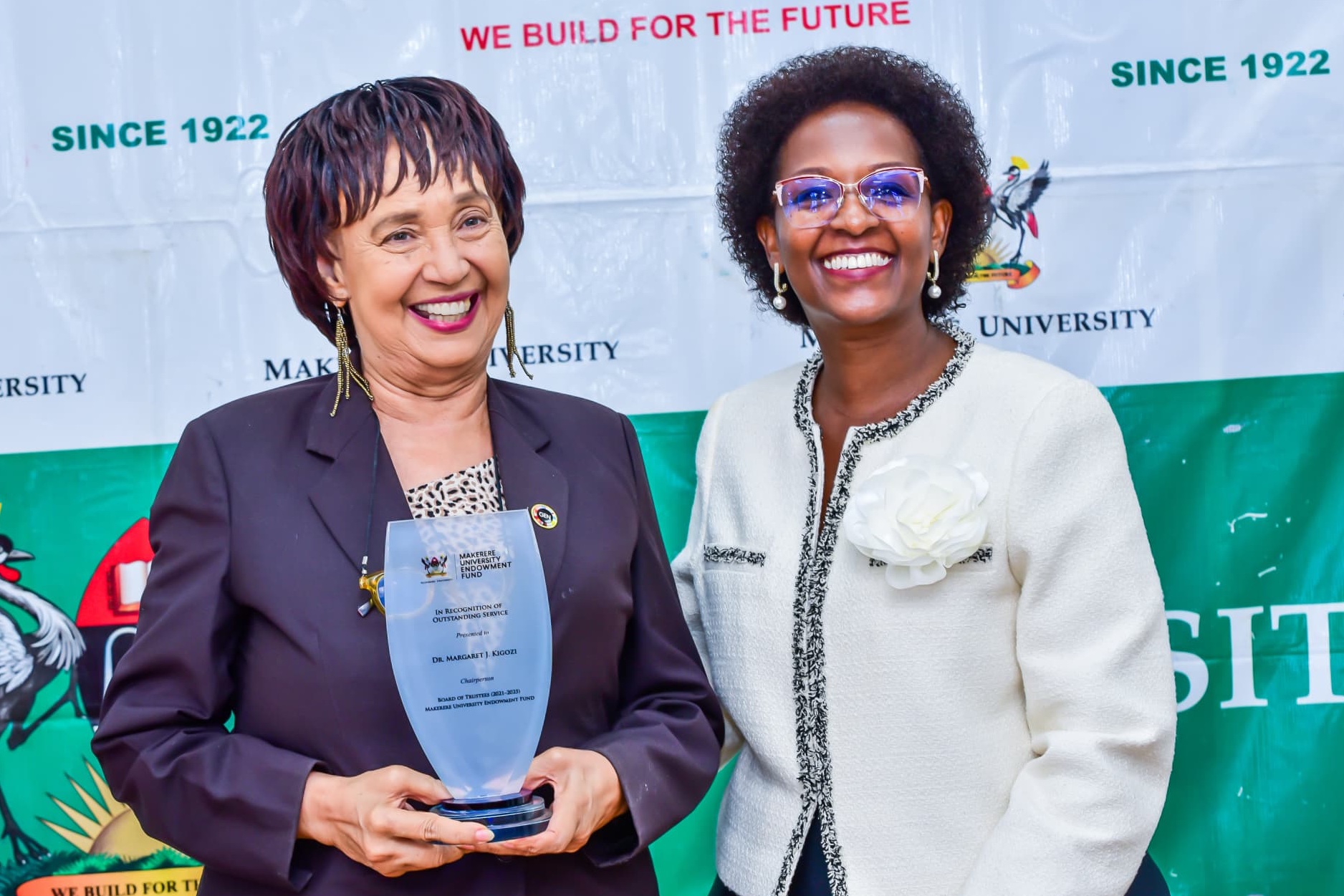
Mrs. Lorna Magara (Right) with Dr. Margaret J. Kigozi and her award for her previous tenure as Chairperson.
At the inauguration, the Deputy Vice Chancellor in charge of Finance and Administration, Prof. Winston Tumps Ireeta underscored the Fund’s central role in ensuring Makerere’s financial sustainability and institutional legacy. He described the Endowment Fund as a cornerstone of the University’s vision—an instrument through which Makerere secures its future, strengthens its independence, and sustains strategic investments in teaching, research, and innovation. He extended heartfelt appreciation to the outgoing Board, chaired by Dr. Margaret J. Kigozi, for their dedicated service and strong leadership that fortified the Fund’s governance, fundraising, and asset management.
Welcoming the new Board, he congratulated the members on their appointment and urged them to continue expanding and mobilizing resources with integrity and innovation. He reaffirmed his office’s commitment to providing administrative and financial support to ensure that the Fund thrives beyond annual budgetary constraints, contributing meaningfully to Makerere’s vision of becoming a research-led, financially resilient, and globally respected institution.
The Makerere University Endowment Fund (MakEF) was established to secure the University’s financial sustainability by mobilizing, investing, and managing resources to support its core functions of teaching, research, and innovation. Originating from donations made as early as the 1930s, the Fund has evolved into a strategic vehicle that aims to reduce dependence on public funding. It is governed by a Board of Trustees appointed by the University Council, responsible for overseeing investments and resource mobilization. Through initiatives like alumni engagement, digital giving, and events such as the Makerere Run, the Fund continues to grow and strengthen Makerere’s vision of being a research-led and financially resilient institution.

The Deputy Vice Chancellor in charge of Academic Affairs (DVCAA) Prof. Sarah Ssali on 15th July 2026 commended the Research and Education Network for Uganda (RENU)’s Industrial Trainee Program, describing it as the perfect hands-on intervention for the future workforce. She made the comments while on a guided tour of RENU’s on-campus Lab facility where ten undergraduate students from Makerere and other Universities are undergoing a two-month practical training.
Origin of tour
The tour was prompted by a 24th June 2026 meeting with a RENU delegation led by CEO, Mr. Nicholas Mbonimpa, aimed at broadening the existing partnership with Makerere University beyond internet service provision to supporting teaching, learning and research activities. During the said meeting, Prof. Ssali expressed Makerere‘s desire to produce graduates that are not only academically grounded but also cognizant of the needs of the job market.
Seated L-R: Prof. Dorothy Okello, Prof. Sarah Ssali, Mr. Nicholas Mbonimpa and Mr. Samuel Mugabi during the 24th June 2026 meeting.
In his response then, Mr. Mbonimpa expressed RENU’s readiness to continue advancing digital transformation through advancing resilient connectivity, research infrastructure, and innovative initiatives that enhance teaching, learning, and research. He shared that the Senate Building’s computer network had been revamped in line with advancing resilient connectivity, and the initiative would be expanded to the College of Engineering, Design, Art and Technology (CEDAT) buildings and other premises subsequently.
The RENU CEO further highlighted that resilient connectivity forms a good basis for the proposed Open Radio Access Network (RAN) Architecture deployment set to be done within six months, so as to boost training of students in 5G and other technologies. Other initiatives discussed included training staff and students on acquisition of Open Researcher and Contributor ID (ORCID) to improve visibility of their publications and research output.
Training Program Lauded
Addressing student interns during the 15th July guided tour, the DVCAA who was accompanied by the 92nd Guild Speaker Rt. Hon. Trevis Mutatiina Muhwezi urged beneficiaries to harness all the technical and social opportunities accorded by the Program. “Not all students in your respective academic programmes had the benefit of being exposed to this kind of training so please make the most of it and utilize skills gained here beyond the classroom setting”.
Mr. Nicholas Mbonimpa (C) with Prof. Sarah Ssali (L) and Rt. Hon. Trevis Mutatiina Muhwezi (R).
The 2026 Industrial Trainee Program is equipping students with skills on how to diagnose and repair ICT equipment based on old and disused stock.
Prof Ssali was also toured the makerspace where solar-powered routers are manufactured and deployed to extend internet connectivity to both rural and urban locations. In 2023, RENU partnered with Mesh++, a Chicago-based connectivity solutions manufacturer, to manufacture solar-powered internet routers in Uganda. Since inception, over 200 units have been manufactured and deployed across various sites in Uganda, while over 80 units have been shipped to various African countries such as Malawi, Rwanda and South Sudan under the RENUMESH Technologies joint venture.
Prof. Sara Ssali inspects the RENUMESH Technologies router.
Partnerships Inspiring New Prototypes
The RENU CEO nevertheless pointed to a long turnaround time for shipping parts from the U.S. as one of the drawbacks hindering the product’s rapid deployment. As a result, RENU, in response to the Ugandan Government’s call for import substitution and local capacity development is developing a solar-powered internet router with some of the components sourced from Ugandan companies Innovex and Chloride Excide.
“Innovex will supply the Internet of Things (IoT) component to help RENU remotely monitor and control the router while Chloride Excide will provide the batteries” Mr. Mbonimpa explained. He added that some of the current lot of trainees were already running simulations on the prototype and proposing how the device can be further refined so as to increase its portability and reduce its price.
Prof. Sarah Ssali with RENU Leadership and Trainees in the makerspace.
A call for Expansion
At the conclusion of the tour, Prof. Ssali who commended the use of modular Ugandan components for the prototype thanked the RENU team to exposing students to real-world technological deployments. She nevertheless urged the CEO and his team to expand the program’s intake beyond ten trainees and duration beyond the current two months so as to give students a richer experience.
The CEO RENUMESH Technologies Mr. Brian Masiga thanked the DVCAA for following up their 24th June meeting with the visit, which demonstrates that the University Management values students’ development of practical skills. He equally thanked Prof. Ssali for Management’s support to RENU activities and pledged to further refine the prototype to produce a cheaper and more portable proudly Ugandan product.
Mr. Brian Masiga (R) walks Prof. Ssali (L) through the layout of the prototype.
First Deputy Vice Chancellor for Academic Affairs, Prof Sarah Ssali on her Right, Prof. Fredrick Muyodi, and Prof. William Tayeebwa at the launch of the Summer School.
Makerere University has officially launched its inaugural writing summer school, a week long professional development program aimed at equipping students, graduates, researchers and staff with practical writing skills required for academic excellence and success in today’s competitive job market. The program jointly organized by the Makerere University Writing Centre and Makerere University Press (MakPress), reflects the University’s commitment to nurturing graduates with not only academic knowledge but also the communication skills needed to thrive professionally.
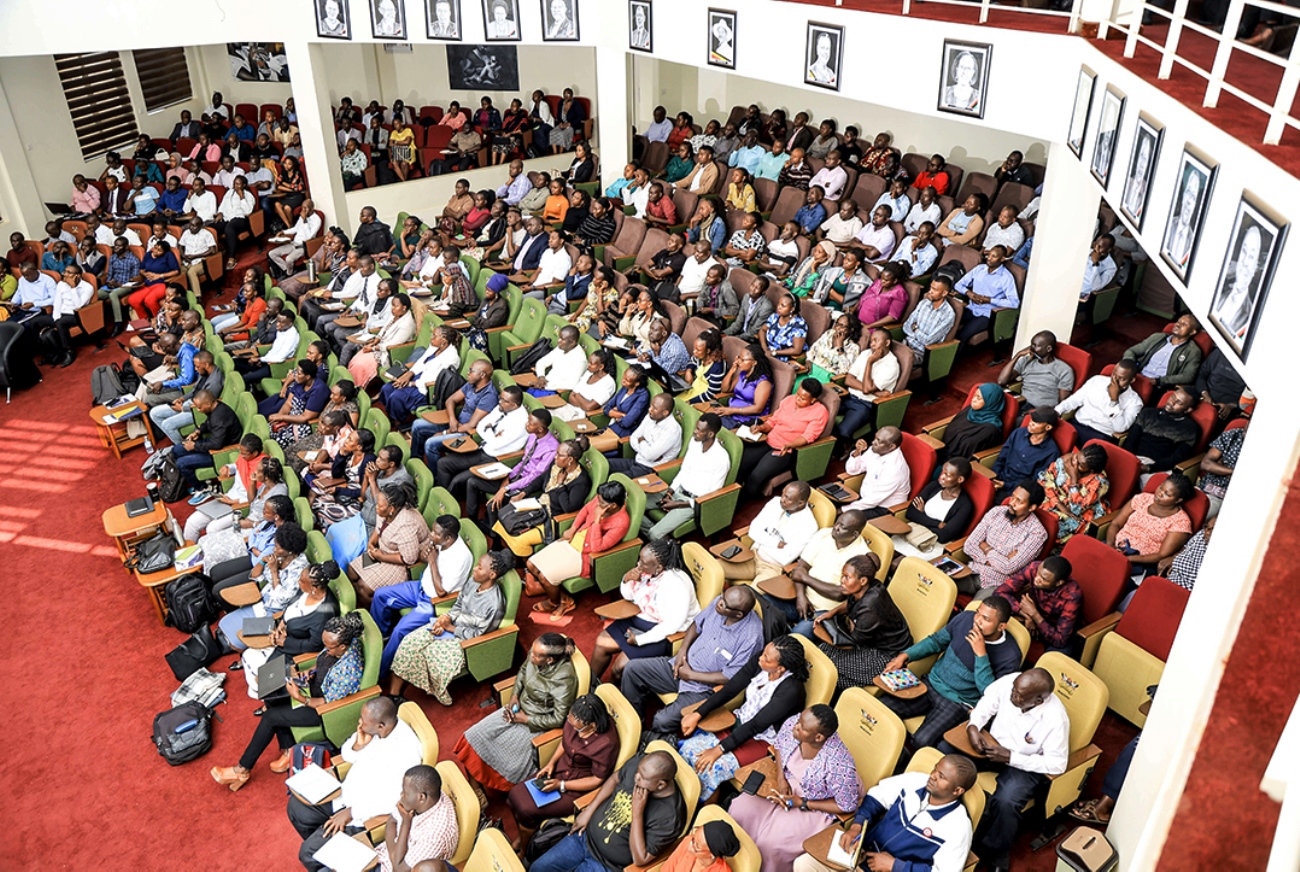
Held virtually, the launch attracted more than 280 participants from Makerere University and other higher education institutions, demonstrating the growing demand for structured writing support beyond the classroom.
Building the Next Generation of Writers.
Speaking at the launch, the Director of Makerere Writing Press, Prof. William Tayeebwa, said the summer school represents an important investment in developing writers before their work reaches publication.
“The press has traditionally focused on publishing books, journals and scholarly work. Today, we are expanding that mission by helping and develop the writers who will produce tomorrow’s publication.
He noted that MakPress continues to support the publication of books and scholarly works produced by members of the Makerere Community. Using recently published books authored by a member of staff and a student as examples, he encouraged participants to submit manuscripts for publishing support rather than relying solely on self publication.
Writing as a Foundation for Academic and Professional Success.
Chairperson of the Makerere University Writing Centre, Prof. Frederick Muyodi, said the center was established to strengthen the writing competences among students, researchers and university staff.
” The Writers Center is here to support every stage of the writing process from CVs and application letters to research manuscripts, grant proposals, reports and responsible use of Artificial Intelligence in writing.”
He explained that the Centre supports writing across multiple disciplines and professional contexts, adding that its long term vision is to extend writing support beyond Makerere University to institutions across Uganda and the East African region.
Equipping Graduates for the Labour Market.
Officially launching the summer school, the First Deputy Vice Chancellor for Academic Affairs, Prof. Sarah Ssali, described the initiative as a strategic investment in preparing graduates for an increasingly competitive labour market.
She observed that while universities successfully impart disciplinary knowledge, many graduates leave campus without the practical writing skills required to secure employment and other professional opportunities.
“We teach content very, but many students are never taught how to write an effective CV, application letter, motivation statement or scholarly essay. Yet these are the documents that often determine whether someone secures an opportunity.”
Prof. Ssali said the writing summer school would bridge the gap between classroom learning and professional practice by equipping participants with market ready communication skills.
Reaffirming her office’s commitment to the initiative, she added:
“My office is pleased to support this initiative as we institutionalize the Writing Summer School to ensure that Makerere graduates leave not only with degrees but also with practical competencies needed to thrive professionally,”
She officially declared the inaugural Writing Summer School open and expressed optimism that future editions would attract even more participants and resources.
Participants Gain Practical CV Writing Skills.
The first technical session was facilitated by Mr. Abdul Noor Luttamaguzi, a PhD student in the Department of Zoology, Entomology and Fisheries Sciences within the School of Bio sciences at Makerere University, a Senior Fisheries Officer with Luweero District Local Government, and the founder and director of the ANL Foundation, an organization that supports youth employment and capacity building.
During the session, he guided participants on developing competitive CVs tailored to specific professionals and employer expectations. He emphasized that applicants should customize their CVs to suit each opportunity instead of submitting the same document for every application. Participants also learned how effectively present their education, work experience, leadership roles technical competencies and professional achievements, while avoiding unnecessary personal information. Practical demonstrations using professional specific CVs provided participants with hands on examples of preparing competitive job application documents.
Looking Ahead.
The Writing Summer School continues throughout the week sessions on application letter writing, responsible use of artificial intelligence, professional communication and other essential writing skills aimed at improving academic productivity and employablity.
Through initiatives such as the Writing Summer School, Makerere University continues to strengthen its commitment to producing graduates who are not academically accomplished but also equipped with practical communication skills that enable them to compete and lead in today’s global workplace.
Makerere University has officially launched its Strategic Plan 2025-2030, reaffirming its commitment to advancing research, innovation, academic excellence and human capital development in support of Uganda’s national transformation agenda.
The Strategic Plan, unveiled by the Minister of Finance, Planning and Economic Development, Hon. Henry Musasizi, provides a road map for strengthening the University’s contribution to Uganda’s Tenfold Growth Strategy through research, innovation, entrepreneurship and the production of highly skilled graduates.
The launch, held at the University’s Main Hall, brought together government officials, members of the University Council, management, development partners, staff and students to witness what leaders described as the beginning of Makerere University’s next phase of institutional transformation.
Positioning Makerere for National Transformation.
Delivering his remarks, Vice Chancellor Prof. Barnabas Nawangwe said the Strategic Plan reflects Makerere University’s ambition to become an even stronger research led institution that responds directly to Uganda’s development priorities.
He noted that the University intends to restore student enrollment to pre COVID levels while significantly increasing postgraduate training to produce more researchers, innovators and professionals capable of addressing national challenges.
Prof. Nawangwe also highlighted the University’s growing research portfolio, commending researchers and research centers that continue to attract substantial international funding.
Prof. Barnabas Nawangwe.
“when you combine the grants won by all our researchers through competitive international funding, the total exceeds US$200 million,” He said.
The Vice Chancellor also pointed to the need to strengthen the University’s academic workforce, noting that although progress has been made, more investment is required to fill approved academic positions, particularly at professor and associate professor levels.
Strategic Plan Sets Ambitious Institutional Targets.
Chairperson of the University Council, Dr. Lorna Magara, described the Strategic Plan as more than an institutional document, calling it “a public covenant with the people of Uganda.”
She said the Plan outlines measurable commitments that will guide the University’s performance over the next five years, including expanding postgraduate enrolment, increasing STEM participation, improving doctoral completion rates and strengthening research productivity.
Dr. Lorna Magara.
“Ambition is precisely what this moment demands. A strategic plan is not measured by the elegance of its language, but by the lives it transforms,” she said.
Dr. Magara emphasized that every investment in Makerere University should translate into tangible benefits for society through research, innovation, leadership and skilled graduates.
She also called for reforms to Uganda’s Universities and Other Tertiary Institutions Act to strengthen university governance and create an enabling environment for innovation and knowledge production.
Government Reaffirms Support.
Launching the Strategic Plan, Hon. Henry Musasizi commended Makerere University for aligning its institutional priorities with Uganda’s Vision 2040, the Fourth National Development Plan (NDP IV) and the country’s Tenfold Growth Strategy.
He observed that universities remain central actors in national development because they produce the knowledge, innovation and skilled workforce required to transform Uganda’s economy.
Hon. Henry Musasizi.
“Universities are central actors in national transformation. they are engines of knowledge creation, innovation and human capital development,” he said.
The Minister emphasized government’s commitment to supporting research, innovation and stronger collaboration between universities and industry to ensure that knowledge generated within higher education institutions contributes directly to economic growth.
Universities Critical to Uganda’s Tenfold Growth Strategy.
Presenting the national development perspective, Samuel Kasule, Senior Planner at the National Planning Authority, explained that the Strategic Plan aligns closely with the Uganda’s long term development framework.
He noted that achieving the country’s ambitious economic growth targets will depend heavily on universities producing competent graduates, expanding research and strengthening innovation ecosystems that support priority sectors including agriculture, tourism, ICT, minerals, manufacturing, and oil and gas.
Kasule further underscored the importance of competency based education and post graduate training in building the human capital required for sustainable national development.
A Shared Vision for the Future.
Throughout the launch, speakers emphasized that Makerere University’s future lies in becoming an increasingly research intensive, innovation driven institution that responds to national and global development challenges.
The Strategic Plan 2025-2030 outlines priorities that include strengthening research excellence, promoting innovation and commercialization, expanding digital transformation, enhancing partnerships with industry, and producing graduates equipped to drive socioeconomic transformation.
Its launch marks a renewed commitment by Makerere University to remain at the forefront of knowledge generation and to contribute meaningfully to Uganda’s long term development aspirations.