Connect with us

Agriculture & Environment

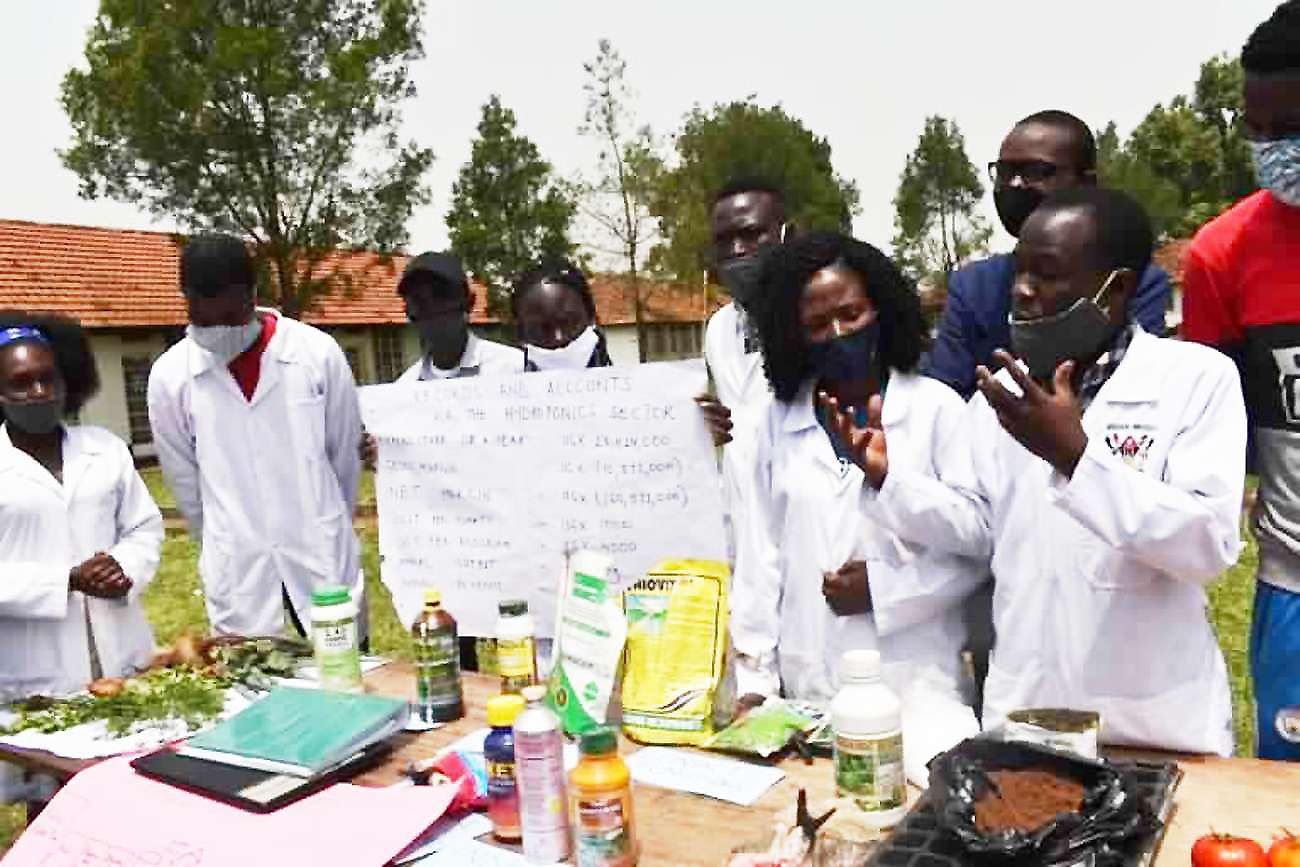
CAES Holds Field Day to mark the end of Recess Term at MUARIK

Published

on

By Jane Anyango

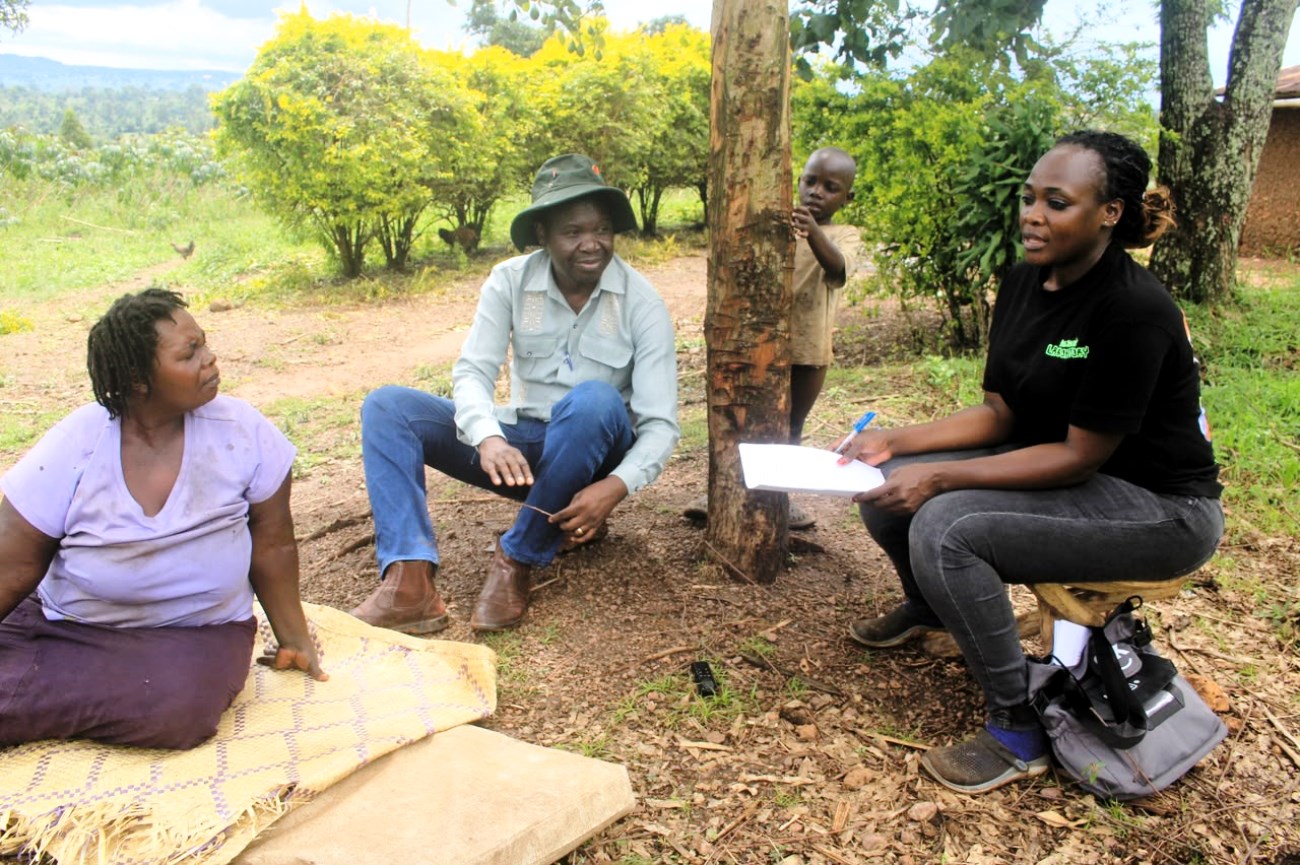
The College of Agricultural and Environmental Sciences (CAES) on Saturday 6th February, 2021 held the Field Day to mark the end of the Recess Term at the Makerere University Agricultural Research Institute Kabanyolo (MUARIK)

The recess term involved students from four programs namely BSc. Agriculture, BSc. Horticulture, BSc. Food Science and Technology and BSc. Agriculture and Rural Innovations (BARI) External.

Previously, the college has been conducting recess term at MUARIK  for  the first three programs without BARI External. From this year, and moving forward BARI External has been integrated into the recess term because the program has very limited time to have face-to-face interaction with the instructors.

This year’s recess term was coordinated by Mr. Tonny Obua from the Department of Agricultural Production assisted by Dr. Sarah Akello Esimu from the Department of Extension and Innovation Studies.

Mr. Obua said, this year, the recess term  has been shortened from 10 weeks to five (5) weeks due to the COVID-19 Pandemic.

Read more

Mark Wamai

Agriculture & Environment

CAES Freshers Urged to Embrace Academic Excellence to Become Agents of National Transformation

Published

on

CAES leaders and staff with the freshers after the orientation ceremony held on 6th August 2026. Orientation of first year students admitted to various undergraduate academic programmes at the College of Agricultural and Environmental Sciences (CAES), 6th August 2026, School of Agricultural Sciences (SAS) Quadrangle, Makerere University, Kampala Uganda, East Africa.

Orientation is an important first step in helping newly admitted students transition into a new academic and social environment. Beyond introducing students to institutional structures and services, orientation provides an opportunity to set expectations, clarify responsibilities and inspire students to approach their university journey with purpose. For the 2026/2027 intake at Makerere University’s College of Agricultural and Environmental Sciences (CAES), the orientation emphasized the importance of making the most of the university experience, pursuing academic excellence, and developing the knowledge, skills, and values needed to become responsible citizens, innovative professionals, and agents of national transformation.

The CAES Freshers’ Orientation, held on Thursday, 6th August 2026, at the School of Agricultural Sciences (SAS) Quadrangle, provided newly admitted students with an opportunity to familiarize themselves with the College’s academic programmes, administrative structures, technological resources, library services, counselling and other student support services. Beyond introducing the freshers to the University environment and the resources available to support their academic journey, the orientation emphasized the broader purpose of university education. Students were encouraged to view their time at Makerere not merely as a pathway to academic qualifications, but as an opportunity to develop relevant competencies, build character, discover their potential and acquire the knowledge and skills necessary to address real-world challenges and make meaningful contributions to society.

CAES: A College of Opportunities

Welcoming the freshers to CAES, the Principal, Prof. Gorettie Nabanoga, urged them to recognize the significance of the opportunity they had received to study at Makerere University and to use their time at the institution wisely.

Prof. Nabanoga reminded the students that university represents a critical stage in their journey towards becoming responsible and productive citizens. She cautioned them against letting the excitement, newfound freedom and social opportunities distract them from their academic responsibilities.

CAES Principal, Prof. Gorettie Nabanoga addressing the freshers. Orientation of first year students admitted to various undergraduate academic programmes at the College of Agricultural and Environmental Sciences (CAES), 6th August 2026, School of Agricultural Sciences (SAS) Quadrangle, Makerere University, Kampala Uganda, East Africa.
CAES Principal, Prof. Gorettie Nabanoga addressing the freshers.

“You are at the tail end of your journey to becoming important citizens, and therefore you need to use your time at the University effectively,” she said, urging the students to begin thinking about what they wish to become from the very beginning of their university education.

She emphasized that success at university requires discipline, commitment and a clear sense of purpose. The freshers were encouraged to take ownership of their education and make deliberate decisions that would contribute to their personal and professional growth.

According to Prof. Nabanoga, CAES is strategically positioned to prepare graduates who can respond to some of the most pressing challenges facing Uganda and the wider world, particularly in food production, agriculture, environmental sustainability and entrepreneurship.

“CAES is at the centre of national development. No life exists without food and a conducive environment,” she noted, describing CAES as a “college of opportunities” where students are equipped with the knowledge and skills to become change agents.

Prof. Nabanoga speaking to the newly admitted students. Orientation of first year students admitted to various undergraduate academic programmes at the College of Agricultural and Environmental Sciences (CAES), 6th August 2026, School of Agricultural Sciences (SAS) Quadrangle, Makerere University, Kampala Uganda, East Africa.
Prof. Nabanoga speaking to the newly admitted students.

“At CAES, we focus on skilling you to become change agents to feed nations and to protect the environment, and to become job creators,” she said.

Prof. Nabanoga further encouraged the freshers to take advantage of the expertise available within the College, particularly by actively engaging with their lecturers and seeking guidance whenever they encounter academic or other challenges.

She also underscored the importance of investing in young people as future leaders and contributors to national development, noting that sustainable transformation requires a generation equipped with the skills, values and capacity to take on leadership and other critical responsibilities.

CAES Human Capital Critical to National Development

Speaking on the relevance of CAES to Uganda’s development agenda, the Deputy Principal, Prof. Bamutaze, highlighted the College’s responsibility to produce the human capital required to drive the country’s socio-economic transformation.

He noted that Uganda’s development priorities, including agro-industrialization, tourism and mineral-based development, require innovative, skilled and dynamic human resources capable of turning opportunities into tangible solutions.

CAES Deputy Principal, Prof Yazidhi Bamutaze addressing the freshers. Orientation of first year students admitted to various undergraduate academic programmes at the College of Agricultural and Environmental Sciences (CAES), 6th August 2026, School of Agricultural Sciences (SAS) Quadrangle, Makerere University, Kampala Uganda, East Africa.
CAES Deputy Principal, Prof Yazidhi Bamutaze addressing the freshers.

“The country desires innovative and dynamic people who can contribute to its socio-economic development,” he said.

Prof. Bamutaze encouraged the freshers to take their education seriously and use their time at Makerere to develop the competencies, creativity and innovative mindset needed to respond to emerging national and global challenges.

Students Urged to Become Problem Solvers

The Dean of the School of Agricultural Sciences, Dr. John Baptist Tumuhairwe, explained that the School is committed to producing graduates capable of identifying challenges and developing practical solutions.

He urged the students to make academic excellence a guiding principle throughout their university journey, emphasizing that consistent effort, discipline and commitment would be critical to their success.

Dr. Tumuhairwe also stressed the importance of respect, encouraging students to respect themselves, their colleagues, lecturers, administrators and the wider University community.

He cautioned the freshers against behaviours and activities that could undermine their academic progress and future prospects, particularly betting, drug abuse and irresponsible sexual behaviour.

Some of the First Year students admitted to CAES. Orientation of first year students admitted to various undergraduate academic programmes at the College of Agricultural and Environmental Sciences (CAES), 6th August 2026, School of Agricultural Sciences (SAS) Quadrangle, Makerere University, Kampala Uganda, East Africa.
Some of the First Year students admitted to CAES.

The Dean further encouraged the students not to underestimate the programmes they had been admitted to. He noted that every programme presents opportunities for success when students remain committed, focused and willing to work hard.

He urged the freshers to take ownership of their academic journeys rather than judging their programmes solely on the basis of perceived popularity or immediate career prospects.

Freshers Encouraged to Settle Down and Focus on Excellence

Representing the Dean of the School of Food Technology, Nutrition and Bioengineering, Prof. Ivan Muzira Mukisa encouraged the freshers to settle into university life quickly and begin working towards academic excellence from the outset.

He cautioned them against wasting time and urged them to develop productive habits early, noting that the routines and discipline established during the first year can significantly influence their academic performance throughout their university journey.

Prof. Mukisa emphasized the importance of effective time management and encouraged students to strike a healthy balance between academic responsibilities and social activities.

Prof. Ivan Muzira Mukisa represented the Dean of the School of Food Technology, Nutrition and Bio-Engineering (SFTNB). Orientation of first year students admitted to various undergraduate academic programmes at the College of Agricultural and Environmental Sciences (CAES), 6th August 2026, School of Agricultural Sciences (SAS) Quadrangle, Makerere University, Kampala Uganda, East Africa.
Prof. Ivan Muzira Mukisa represented the Dean of the School of Food Technology, Nutrition and Bio-Engineering (SFTNB).

He also highlighted the value of teamwork, noting that the ability to work collaboratively is an important skill both within the University and in the professional world.

The students were further encouraged to seek guidance whenever they encounter difficulties instead of struggling with challenges on their own. They were reminded to make use of the academic and student support structures available within the College and University.

Similarly, the Dean, School of Forestry, Environmental and Geographical Sciences, Prof. Revocatus Twinomuhangi urged the students to focus on academic and professional success.

Freshers Introduced to University Services and Policies

In addition to the guidance from College leadership, the orientation familiarized the freshers with important administrative, technological and student support services that will shape their experience at Makerere University.

The College Registrar, Ms. Jofrina Kyohairwe, briefed the students on registration procedures and key academic policies. The session aimed to familiarize the freshers with the administrative requirements they are expected to fulfil and help them avoid challenges arising from failure to comply with University regulations and procedures.

Ms. Jofrina Kyohairwe, CAES Registrar briefing students about the academic policies of the University. Orientation of first year students admitted to various undergraduate academic programmes at the College of Agricultural and Environmental Sciences (CAES), 6th August 2026, School of Agricultural Sciences (SAS) Quadrangle, Makerere University, Kampala Uganda, East Africa.
Ms. Jofrina Kyohairwe, CAES Registrar briefing students about the academic policies of the University.

The students were also introduced to ICT support services by Mr. Albert Muhumuza, who highlighted the importance of effectively using the University’s digital platforms and technological resources to support their learning.

They were further introduced to library services, which provide access to essential academic resources for coursework, research and independent learning.

The orientation also highlighted counselling and guidance services available to students to support them as they navigate academic, personal and social challenges during their university experience.

Pictorial of the orientation:

https://drive.google.com/drive/folders/1DmjNj1pdounFv9juFTDG98p2XQO3tq6b?usp=sharing

Hasifa Kabejja

Continue Reading

Agriculture & Environment

Makerere University, Global Partners Strengthen Biodiversity Education & Research Through Innovation & Field-Based Learning

Published

on

Participants pose for a group photo at the End of Project Workshop held 31st July 2026 at Makerere University. End of Project Workshop for “Strengthening Education and Research Capacity for Enhancing Biodiversity Conservation and Sustainable Natural Resources Use,” Makerere University, in partnership with Rhine-Waal University of Applied Sciences (Germany) and the Central University of Technology (South Africa), 31st July 2026, Kampala Uganda, East Africa.

*****Through a project titled “Strengthening Education and Research Capacity for Enhancing Biodiversity Conservation and Sustainable Natural Resources Use,” Makerere University, in partnership with Rhine-Waal University of Applied Sciences (Germany) and the Central University of Technology (South Africa), has achieved significant milestones in advancing biodiversity conservation education, research capacity, and sustainable natural resource management. The project team disseminated their findings and achievements on 31st July 2026.

Purpose of the project

Biodiversity loss, environmental degradation and the unsustainable use of natural resources continue to pose significant threats to ecosystems, livelihoods and sustainable development worldwide. Addressing these challenges requires a new generation of professionals equipped with scientific knowledge, practical skills, interdisciplinary perspectives and the ability to develop innovative, evidence-based solutions.

In response to this need, Makerere University, in partnership with Rhine-Waal University of Applied Sciences (Germany) and the Central University of Technology (South Africa), in 2023 launched a project to strengthen higher education and research capacities to advance biodiversity conservation and sustainable natural resource management. 

Prof. Justine Namaalwa, Head of the Department of Environmental Management addressing participants. End of Project Workshop for “Strengthening Education and Research Capacity for Enhancing Biodiversity Conservation and Sustainable Natural Resources Use,” Makerere University, in partnership with Rhine-Waal University of Applied Sciences (Germany) and the Central University of Technology (South Africa), 31st July 2026, Kampala Uganda, East Africa.
Prof. Justine Namaalwa, Head of the Department of Environmental Management addressing participants.

Aligned with Sustainable Development Goal (SDG) 15 – Life on Land, the project focused on developing innovative teaching and learning approaches, promoting experiential and field-based learning, strengthening international research collaboration, and generating evidence-based knowledge to address complex environmental challenges.

Beyond its primary focus on SDG 15 (Life on Land), the project contributed to a range of interconnected Sustainable Development Goals, including SDG 1 (No Poverty), SDG 2 (Zero Hunger), SDG 4 (Quality Education) through strengthening education and research capacities, and SDG 8 (Decent Work and Economic Growth). Furthermore, the project supported SDG 12 (Responsible Consumption and Production) by promoting sustainable practices and SDG 13 (Climate Action) through efforts aimed at enhancing the sustainable management and conservation of natural resources and ecosystems.

Prof. John Tabuti, Project Lead at Makerere briefing participants on the activities implemented and achievements registered. End of Project Workshop for “Strengthening Education and Research Capacity for Enhancing Biodiversity Conservation and Sustainable Natural Resources Use,” Makerere University, in partnership with Rhine-Waal University of Applied Sciences (Germany) and the Central University of Technology (South Africa), 31st July 2026, Kampala Uganda, East Africa.
Prof. John Tabuti, Project Lead at Makerere briefing participants on the activities implemented and achievements registered.

The project was supported by the German Academic Exchange Service (DAAD) through its Sustainable Development Goals (SDG) Partnerships Programme, and led by Prof. John Tabuti from the Department of Environmental Management at Makerere University, and Ms. Nele Vahrenhorstfrom Rhine Waal University of Applied Sciences.

End of Project Workshop

On 31 July 2026, the project team convened key stakeholders at Makerere University for a dissemination workshop aimed at sharing the achievements, lessons learned, and experiences gained throughout the three-year implementation period. The workshop provided a platform to reflect on the project’s contributions to strengthening biodiversity conservation education and research, while also discussing strategies for sustaining collaborations and building on the progress achieved.

Participants following the proceedings of the meeting. End of Project Workshop for “Strengthening Education and Research Capacity for Enhancing Biodiversity Conservation and Sustainable Natural Resources Use,” Makerere University, in partnership with Rhine-Waal University of Applied Sciences (Germany) and the Central University of Technology (South Africa), 31st July 2026, Kampala Uganda, East Africa.
Participants following the proceedings of the meeting.

The workshop was coordinated by Prof. John Tabuti, who provided an overview of the project journey, highlighting the major milestones, achievements, challenges encountered, and valuable insights gained during implementation. His presentation underscored the importance of continued partnerships, innovation, and capacity strengthening in advancing biodiversity conservation and sustainable natural resource management. 

Achievements Registered

  1. Strengthening Education Through Innovative Teaching Approaches

One of the major achievements of the project was the integration of real-world conservation and natural resource management challenges into university teaching through the development of case studies.Three Makerere University scientists – Drs. Vincent Muwanika, Josephine Esaete and Kenneth Balikoowa – received specialized training and certification from The Case Centre in the United Kingdom on the development and use of case studies in university teaching and learning. Building on this training, they developed three case studies in collaboration with local small and medium enterprises involved in natural resource value chains.

The cases provide practical learning materials that enable students to engage with real-life challenges, strengthen problem-solving abilities and move beyond theoretical learning towards applying knowledge in real-world contexts. A case development workshop held at Esella Country Hotel brought together more than 30 participants from industry and academia to promote collaboration in curriculum development and product innovation.

Makerere University Director of Research, Innovation and Partnerships, Prof. Robert Wamala addressing participants. End of Project Workshop for “Strengthening Education and Research Capacity for Enhancing Biodiversity Conservation and Sustainable Natural Resources Use,” Makerere University, in partnership with Rhine-Waal University of Applied Sciences (Germany) and the Central University of Technology (South Africa), 31st July 2026, Kampala Uganda, East Africa.
Makerere University Director of Research, Innovation and Partnerships, Prof. Robert Wamala addressing participants.

Through these initiatives, the project strengthened university-industry linkages while supporting the development of graduates equipped with creativity, innovation and practical skills required to address emerging environmental challenges.

  1. Building International Collaboration and Academic Capacity

The project created opportunities for staff and students from Makerere University and Rhine-Waal University of Applied Sciences to participate in exchange programmes, fostering intercultural learning and strengthening academic networks.

Junior staff members Drs. Kayendeke, Juuko, Erima, Ssekuubwa and Mugizi travelled to Germany, where they received training in interactive and digital teaching approaches and developed new teaching materials. The knowledge gained continues to enhance learner-centred teaching practices at Makerere University.

Some of the participants at the end of project workshop. End of Project Workshop for “Strengthening Education and Research Capacity for Enhancing Biodiversity Conservation and Sustainable Natural Resources Use,” Makerere University, in partnership with Rhine-Waal University of Applied Sciences (Germany) and the Central University of Technology (South Africa), 31st July 2026, Kampala Uganda, East Africa.
Some of the participants at the end of project workshop.

The project also facilitated participation in international SDG workshops in Tanzania and South Africa, while stakeholder engagements held in Uganda strengthened collaboration between universities, private sector actors, non-governmental organizations and local communities. These engagements created opportunities for future research partnerships, joint funding proposals and continued collaboration in support of sustainable development goals.

To support modern teaching and research, the project improved institutional infrastructure through the acquisition of three laptops and video conferencing equipment to enhance e-learning and academic collaboration. Plans are also underway to install a weather station to support student research and data collection.

  1. Field Courses Transforming Students into Emerging Conservation Researchers

A key highlight of the project was the implementation of interdisciplinary field courses at Kibale National Park, which provided students with hands-on experience in biodiversity research and conservation practice.

Two joint graduate field courses were conducted in June 2024 and June 2025, bringing together 98 students, including 90 from Makerere University and eight from Rhine-Waal University. Working in intercultural teams under the guidance of lecturers from both institutions, students identified conservation challenges, developed research ideas, designed data collection tools, conducted fieldwork and analyzed data.

Dr. Josephine Esaete presenting the case studies they developed following their specialized training and certification from The Case Centre in the United Kingdom. End of Project Workshop for “Strengthening Education and Research Capacity for Enhancing Biodiversity Conservation and Sustainable Natural Resources Use,” Makerere University, in partnership with Rhine-Waal University of Applied Sciences (Germany) and the Central University of Technology (South Africa), 31st July 2026, Kampala Uganda, East Africa.
Dr. Josephine Esaete presenting the case studies they developed following their specialized training and certification from The Case Centre in the United Kingdom.

The field courses equipped students with advanced tropical biodiversity data collection skills while strengthening teamwork, cross-cultural collaboration and scientific communication. Students gained first-hand experience studying ecosystems, including forest regeneration, indigenous tree species, primates, birds, insects and human interactions with protected areas.

  1. From Field Experience to Advanced Research: Students Share Their Success Stories

The field experiences also generated valuable research ideas and conservation insights, with some students developing their field course projects further into postgraduate research.During the dissemination workshop, two students shared how their field experiences shaped their research interests, strengthened their professional skills and inspired them to contribute to biodiversity conservation.

For Makerere University student Vincent Mbahinzireki, the Kibale field course was a transformative experience that connected classroom knowledge with real-world research. Through collaborative research activities, community engagement and field data collection, he gained practical skills in research design, data analysis and scientific communication.

Dr Kenneth Balikoowa sharing his views on strengthening biodiversity conservation training. End of Project Workshop for “Strengthening Education and Research Capacity for Enhancing Biodiversity Conservation and Sustainable Natural Resources Use,” Makerere University, in partnership with Rhine-Waal University of Applied Sciences (Germany) and the Central University of Technology (South Africa), 31st July 2026, Kampala Uganda, East Africa.
Dr Kenneth Balikoowa sharing his views on strengthening biodiversity conservation training.

The experience also broadened his understanding of conservation as a complex relationship involving ecosystems, wildlife and human communities. Through interactions with local communities, including household interviews, focus group discussions and key informant interviews, Vincent gained valuable insights into human-wildlife conflicts, community reliance on natural resources and the importance of inclusive, community-centred approaches to conservation.

Similarly, Oweka Jenifer, a Master of Science in Environment and Natural Resources Management student at Makerere University, shared how the field course became the foundation for her ongoing research on human-wildlife coexistence around Kibale National Park.

Mr. Omasai Abram, Senior Environmental Officer, Pallisa District sharing his views on political interference and how it can be managed. End of Project Workshop for “Strengthening Education and Research Capacity for Enhancing Biodiversity Conservation and Sustainable Natural Resources Use,” Makerere University, in partnership with Rhine-Waal University of Applied Sciences (Germany) and the Central University of Technology (South Africa), 31st July 2026, Kampala Uganda, East Africa.
Mr. Omasai Abram, Senior Environmental Officer, Pallisa District sharing his views on political interference and how it can be managed.

During the field course, Jenifer and her colleagues identified conservation challenges within the landscape and developed research proposals addressing issues emerging from their observations and community interactions. Her initial field study on community coexistence strategies in Kanyawara Ward later evolved into a broader MSc research project titled “Assessing Locally Driven Strategies for Human-Wildlife Coexistence around Kibale National Park, Uganda.”

The expanded study, which involves 333 households and key informants from conservation organizations and local leadership structures, aims to generate evidence that can strengthen community-driven conservation initiatives, support policy development and promote sustainable coexistence between people and wildlife.

Makerere University student Vincent Mbahinzireki sharing his experience about the relevance of field courses. End of Project Workshop for “Strengthening Education and Research Capacity for Enhancing Biodiversity Conservation and Sustainable Natural Resources Use,” Makerere University, in partnership with Rhine-Waal University of Applied Sciences (Germany) and the Central University of Technology (South Africa), 31st July 2026, Kampala Uganda, East Africa.
Makerere University student Vincent Mbahinzireki sharing his experience about the relevance of field courses.

Jenifer’s research journey highlights the value of experiential learning in nurturing independent research, building scientific capacity and preparing the next generation of conservation professionals to develop practical solutions to complex environmental challenges.

Appreciation from Mak’s Director of Research, Innovation, and Partnerships

In his remarks, Makerere University Director of Research, Innovation and Partnerships, Prof. Robert Wamala, expressed gratitude to the Federal Ministry for Economic Cooperation and Development (BMZ), Germany, for the generous financial support provided to the project. He noted that the investment had significantly strengthened research capacity, fostered international collaboration, and contributed to efforts aimed at conserving and sustainably managing biodiversity and natural resources.

Oweka Jenifer, a Master of Science in Environment and Natural Resources Management student at Makerere University, shared how the field course became the foundation for her ongoing research on human-wildlife coexistence. End of Project Workshop for “Strengthening Education and Research Capacity for Enhancing Biodiversity Conservation and Sustainable Natural Resources Use,” Makerere University, in partnership with Rhine-Waal University of Applied Sciences (Germany) and the Central University of Technology (South Africa), 31st July 2026, Kampala Uganda, East Africa.
Oweka Jenifer, a Master of Science in Environment and Natural Resources Management student at Makerere University, shared how the field course became the foundation for her ongoing research on human-wildlife coexistence.

Prof. Wamala also commended the implementing partners, highlighting the value of cross-border and interdisciplinary collaborations in generating knowledge and innovative solutions that address challenges affecting both local and global communities.

Emphasizing the importance of the project, he observed that for Uganda, where livelihoods and economic development are closely linked to natural resources, protecting biodiversity is not only an environmental responsibility but also an economic and social necessity. “Universities therefore have a critical role to play in generating evidence, developing innovative technologies, training highly skilled professionals, and informing policies that advance sustainable development. The project has made significant contributions towards fulfilling this mandate by going beyond research outputs to strengthen postgraduate education, enhance research capacity, promote international academic partnerships, and equip emerging researchers with the knowledge and practical skills required to address evolving environmental challenges. These achievements align with Makerere University’s commitment to producing graduates and research outcomes that respond to national priorities and global development needs.”

Mr. Wamani Junior, Innovations Officer at Tree Talk Plus Uganda sharing views on how academia-industry partnerships can be leveraged to strengthen biodiversity conservation training. End of Project Workshop for “Strengthening Education and Research Capacity for Enhancing Biodiversity Conservation and Sustainable Natural Resources Use,” Makerere University, in partnership with Rhine-Waal University of Applied Sciences (Germany) and the Central University of Technology (South Africa), 31st July 2026, Kampala Uganda, East Africa.
Mr. Wamani Junior, Innovations Officer at Tree Talk Plus Uganda sharing views on how academia-industry partnerships can be leveraged to strengthen biodiversity conservation training.

Prof. Wamala further noted that the knowledge generated, partnerships established, and capacities built through the project provide a strong foundation for future collaborative research, innovation, policy engagement, and community outreach. “As biodiversity conservation challenges continue to evolve, collective efforts must remain dynamic, innovative, and sustained. There is need for continued efforts to identify practical pathways for sustaining partnerships, scaling successful interventions, mobilizing additional resources, and translating research findings into policies and practices that enhance environmental stewardship and improve livelihoods.

He re-affirmed the Directorate’s commitment to supporting multidisciplinary research, strengthening international partnerships, promoting research excellence, and ensuring that research undertaken at Makerere University delivers meaningful and lasting impact for society.

Remarks from the Head, Department of Environmental Management

Addressing participants, the Head of the Department of Environmental Management at Makerere University, Prof. Justine Namaalwa, appreciated the funders and project team for their unwavering commitment, which culminated in the successful implementation of the project.

“It is one thing to start a project and another to complete it successfully,” she said, explaining that many projects begin with great enthusiasm but require sustained commitment, teamwork and effective leadership to achieve their intended outcomes.

Drawing from his training experience in Germany, Dr. Charles Juuko highlighted the growing availability of digital resources that can transform conservation education. End of Project Workshop for “Strengthening Education and Research Capacity for Enhancing Biodiversity Conservation and Sustainable Natural Resources Use,” Makerere University, in partnership with Rhine-Waal University of Applied Sciences (Germany) and the Central University of Technology (South Africa), 31st July 2026, Kampala Uganda, East Africa.
Drawing from his training experience in Germany, Dr. Charles Juuko highlighted the growing availability of digital resources that can transform conservation education.

Prof. Namaalwa paid special tribute to Prof. John Tabuti for his exemplary leadership throughout the project, describing him as a dedicated researcher who has consistently spearheaded several impactful initiatives within the Department. “Such leadership has strengthened the Department’s research profile, expanded collaborations, and contributed to addressing critical environmental and biodiversity challenges.”

Highlighting the Department’s contribution to Makerere University‘s research agenda, Prof. Namaalwa noted that although the Department has a relatively small number of academic staff, it continues to make a remarkable impact through high-quality research, innovation and community engagement. She attributed this success to the commitment, resilience and collaborative spirit of the staff, who continue to attract competitive research funding and implement projects that generate knowledge and inform policy and practice.

She also briefed the project team on Makerere University‘s Safeguarding Policy, emphasizing its importance in fostering a safe, respectful and inclusive environment for all staff, and project partners. She encouraged all staff to familiarize themselves with the policy and uphold its principles, reaffirming the University’s commitment to ethical conduct, accountability and the protection of vulnerable individuals.

Representatives from partner organizations sharing their views. End of Project Workshop for “Strengthening Education and Research Capacity for Enhancing Biodiversity Conservation and Sustainable Natural Resources Use,” Makerere University, in partnership with Rhine-Waal University of Applied Sciences (Germany) and the Central University of Technology (South Africa), 31st July 2026, Kampala Uganda, East Africa.
Representatives from partner organizations sharing their views.

 Issues Arising from the Dissemination Workshop

The dissemination workshop provided an opportunity for participants from Makerere University and representatives from partner institutions to reflect on the project’s achievements while identifying priority areas for strengthening biodiversity conservation education, research and practice. The following key issues emerged during the discussions:

  1. Strengthen Field-Based Learning and Practical Training:  Participants emphasized that universities need to be more deliberate in increasing opportunities for fieldwork and practical learning. While classroom instruction provides essential theoretical knowledge, field experiences expose students to real conservation challenges, strengthen problem-solving skills and improve their ability to apply scientific concepts in diverse ecological settings. Participants further recommended that practical components should be integrated into all academic programmes through structured in-semester field activities rather than being limited to occasional field courses.
  2. Integrate Learners’ Perspectives into Curriculum Review: The workshop highlighted the importance of giving students a stronger voice in curriculum development and review processes. As the primary beneficiaries of university education, learners can provide valuable insights into emerging skills gaps, learning experiences and industry expectations. Their participation would help ensure that curricula remain relevant, responsive and better aligned with contemporary conservation challenges.
  3. Address Political Dimensions of Conservation: Participants noted that biodiversity conservation is often affected by political interests, competing development priorities and governance challenges. Political interference can undermine conservation initiatives and limit effective management of natural resources. The workshop therefore recommended integrating political economy perspectives into conservation planning and strengthening collaboration between political leaders, policymakers and conservation managers to ensure that conservation decisions are supported by sound governance and long-term sustainability objectives.
  4. Generate Evidence to Influence Policy: The workshop underscored the need for research to produce credible, well-packaged and policy-relevant evidence capable of informing decision-making. Participants observed that meaningful policy change can only be achieved when research findings are communicated in ways that clearly demonstrate their practical value. Universities and researchers were therefore encouraged to strengthen knowledge translation efforts so that scientific evidence effectively informs environmental policies and conservation strategies.
  5. Promote Community-Centred Conservation: Participants emphasized that successful conservation initiatives must take into account the livelihoods and interests of communities living around protected areas and biodiversity hotspots. Conservation interventions should provide alternative livelihood opportunities where access to natural resources is restricted and actively involve local communities in planning and implementation. Such inclusive approaches are essential for fostering community ownership, reducing conflicts and ensuring the long-term sustainability of conservation programmes.
  6. Harness Digital Technologies for Conservation Education: Drawing from his training experience in Germany, Dr. Charles Juuko highlighted the growing availability of digital resources that can transform conservation education. He encouraged universities to make greater use of online learning platforms, automated analytical tools and open data repositories to enrich teaching and research. He also recommended strengthening Geographic Information Systems (GIS) training at the master’s level and expanding student exposure to emerging technologies such as drone applications, air-quality monitoring sensors and geospatial data analysis for environmental monitoring and decision-making.
  7. Strengthen Practitioner Engagement in Teaching and Learning: According to Tumwebaze Adson, Environment Innovations Officer at NEMA, practitioners should play a greater role in developing case studies and practical learning experiences for students. He noted that involving professionals from government, industry and conservation organizations would expose learners to real-world environmental challenges and improve the relevance of university training. He also encouraged students to design research projects that respond directly to contemporary environmental and conservation issues.
  8. Foster Stronger Academia-Industry Partnerships: The workshop reaffirmed the importance of strengthening collaboration between universities, government agencies, conservation organizations and the private sector. Such partnerships can enhance research, facilitate knowledge exchange, provide internship opportunities, support innovation and improve the application of research findings to address biodiversity conservation challenges.
  9. Strengthen Environmental Law Education: Participants expressed concern that many students graduate with limited knowledge of environmental legislation, conservation policies and regulatory frameworks. They recommended integrating environmental law and policy more comprehensively across relevant academic programmes to equip graduates with the legal and institutional knowledge required to support sustainable natural resource management.
  10.  Prioritize Solution-Oriented Research: Participants called on universities to place greater emphasis on research that generates practical solutions to conservation challenges rather than focusing primarily on academic publications. While scholarly outputs remain important, research should increasingly translate into innovations, technologies, management practices and policy interventions that create measurable environmental and societal impact.
  11.  Through strengthened teaching approaches, international partnerships, experiential learning and applied research, the project has laid a strong foundation for producing a new generation of professionals committed to protecting biodiversity and promoting sustainable use of natural resources.

Sustaining the Achievements

While the project recorded significant achievements, implementation was not without challenges. The team navigated disruptions associated with the COVID-19 and Ebola outbreaks, which affected planned activities, including the cancellation of the 2026 joint field course due to an Ebola outbreak reported in some parts of Uganda.

Dr. Dorothy Nampanzira, Head of the Department of Livestock and Industrial Resources at the College of Veterinary Medicine, Animal Resources and Biosecurity (CoVAB) moderated the workshop. End of Project Workshop for “Strengthening Education and Research Capacity for Enhancing Biodiversity Conservation and Sustainable Natural Resources Use,” Makerere University, in partnership with Rhine-Waal University of Applied Sciences (Germany) and the Central University of Technology (South Africa), 31st July 2026, Kampala Uganda, East Africa.
Dr. Dorothy Nampanzira, Head of the Department of Livestock and Industrial Resources at the College of Veterinary Medicine, Animal Resources and Biosecurity (CoVAB) moderated the workshop.

As the funding period comes to an end, partners expressed commitment to sustaining the collaboration. Future areas of cooperation include joint research projects, student co-supervision, continued academic exchanges and pursuit of additional funding opportunities.

Pictorial of the workshop:

https://drive.google.com/drive/folders/1UHmVkq8Hl-g1QQJwR6IieqrBzoijLqHK?usp=sharing

Hasifa Kabejja

Continue Reading

Agriculture & Environment

Call for Applications for PhD positions in Dairy Nutrition & Agroforestry

Published

on

An aerial photo of Clockwise Top Left to Right: St. Francis Chapel, Main Building, CAES, JICA Building, Chemistry Building, Mathematics, School of Statistics, Main Library, Yusuf Lule Central Teaching Facility, CoBAMS, EPRC, IGDS and the Freedom Square. Makerere University, Kampala Uganda, East Africa.

Introduction 

Makerere University, through the Departments of Animal and Range Sciences and Extension and Innovation Studies (CAES), in collaboration with the National Agricultural Research Organization (NARO), specifically the Mbarara Zonal Agricultural Research and Development Institute (MbaZARDI) and Mukono Zonal Agricultural Research and Development Institute (MuZARDI), Bukalasa Agricultural College, Ghent University, KU Leuven, and HOGENT, has secured VLIR-UOS TEAM 2026 funding for the project “Agroforestry-dairy integration for sustainable agri-food systems in peri-urban and rural Uganda.” 

The project aims to strengthen the Ugandan–Flemish partnership in validating and promoting agroforestry-based feeding strategies for crossbred dairy systems in peri-urban Kampala (zero-grazing) and the Southwestern cattle corridor (paddock systems). To support this work, applications are invited from eligible Makerere University and NARO staff for two PhD positions. 

PhD Position 1: Physiological validation of tree-based, nutrient-specific feeding strategies in crossbred or exotic dairy systems 

Research focus: This PhD will evaluate the physiological and production responses of crossbred/exotic dairy cows to tree-based, nutrient-specific feeding strategies under peri-urban zero-grazing systems around Kampala and paddock systems in the Southwestern cattle corridor. 

Building on previous studies that identified nutrient deficiencies and promising tree-based feed resources, the research will assess the effectiveness of locally formulated supplements in improving the productivity of early-lactating crossbred dairy cows across contrasting production systems and seasons. Blood profiling and production monitoring will be integrated to evaluate animal responses. The PhD will be jointly supervised by Makerere University, NARO and Ghent University. 

PhD position 2: Socio-economic feasibility and adoption of agroforestry-based dairy feeding strategies 

Research focus: This PhD will investigate the socio-economic feasibility and adoption of agroforestry-based feeding strategies in mixed crop–livestock systems. Using a mixed-methods approach, the study will combine household surveys, stakeholder interviews and gender-segregated focus group discussions to evaluate the adoption of fodder and multipurpose trees. 

The research will compare existing tree use with new planting options, assess economic viability, labour requirements, land constraints, gender roles, market access and knowledge systems, and identify factors influencing adoption under contrasting dairy production systems. Comparisons between peri-urban Kampala and the Southwestern cattle corridor will provide evidence on scalability and inform policy and extension strategies. 

Scholarship and conditions 

Successful applicants will receive a sandwich PhD scholarship under the VLIR-UOS TEAM 2026 programme only for the period in Belgium. 

Key terms 

  1. Duration: Between 48 and 58 months, with research conducted in Uganda and Belgium. Candidates will spend up to 22 months (4 visits spread over 5 years). 
  2. Funding: During research stays in Belgium, candidates will receive a living stipend and support for four international return flights. While in Uganda, candidates are expected to remain employed by Makerere University or NARO, where the salary is guaranteed for the whole duration of the PhD. 
  3. Research support: The project will cover approved research costs in Uganda, including fieldwork and essential research materials. 
  4. Degree award: KULeuven will confer the PhD degree. Candidates will be jointly supervised by Ugandan and Belgian partners and must satisfy the admission and graduation requirements of KULeuven. 

Application procedure for both vacancies

Interested applicants should submit one merged PDF document containing: 

  1. A cover letter (maximum two pages) indicating the PhD position applied for (Dairy Nutrition or Agroforestry) and summarising the applicant’s motivation and suitability. 
  2. 3-5-page concept note relevant to the selected PhD topic. 
  3. Scientific curriculum vitae, including a brief description of the applicant’s contribution to multi-authored papers (where applicable). 
  4. Names and contact details of two academic referees

Separate PDF documents: 

  • Certified academic transcripts and degree certificates (BSc and MSc). The transcripts should list all courses taken and the grades obtained, together with an explanation of the grading system. Where available, the student’s ranking within the cohort should also be included. 
  • A copy of the Master’s thesis. 
  • Copies of publications (where applicable). 
  • Female candidates are strongly encouraged to apply. 

Submission: Applications must be submitted by Friday 14th August 2026 at 5:00pm, through e-mail to Dr. Pius Lutakome and Mrs Sylvia Decocker. Contact details:  

  1. Dr. Pius Lutakome 
    Project Contact Person, Makerere University 
    pius.lutakome@mak.ac.ug/plutakome@gmail.com      
  2. Mrs. Sylvia Decocker Administrative Contact Person, Ghent University Sylvia.Decocker@UGent.be

Administrative Contact Person, Ghent University 

Sylvia.Decocker@UGent.be 

Late or incomplete applications will not be considered. 

Selection process and timeline 

The project evaluation committee will evaluate applications and shortlist candidates. 

Shortlisted candidates will be informed on 1st September 2026

Shortlisted candidates are expected to: 

  • Be available to complete an online assessment between 1st and 7th September 2026. 
  • Be available for an online interview on 14th September 2026. The exact interview time will be communicated in the invitation sent on 1st September 2026. 

The successful candidates are expected to: 

  • Commence the PhD on 6th November 2026. 
  • Undertake their first research visit to the Belgian host university in February 2027

Hasifa Kabejja

Continue Reading

Trending