Connect with us

General

Sendaula, Msgr Kanyike in luncheon for Kyengera church

Published

on

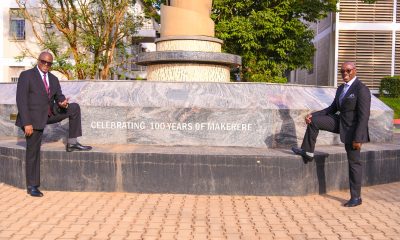
The new church,which markedly resembles Makerere University’s http://mak.ac.ug St Augustine’s chapel, is expected to seat 700 people, twice as many as the previous one. Monsignor Larry Kanyike, the Kyengera parish priest, and a committee led by former Finance Minister Gerald Sendaula, have now organized a fundraising luncheon

Denis Wamala

Continue Reading

General

Guild Mama: The Woman Behind the Students

Published

on

H.E. Ssentamu Churchill James assisted by Ms. Norah Nalubowa takes oath as 91st Guild President of Makerere University. Ssentamu Churchill James and Kadondi Gracious inaugurated as the 91st Guild President and Vice President, 21st March 2025, Main Hall, Main Administration Building, Makerere University, Kampala Uganda, East Africa.

Long before the title “Guild Administrator” became synonymous with her name, Norah Nalubowa was simply a young administrator finding her footing at the university. It was 2006 when she joined the Dean of Students’ Department, unaware that she was beginning a journey that would see her become one of the most beloved figures on campus.

Today, many students do not know her by her official title. To them, she is simply “Guild Mama.”

“I learned very early,” she says, “that when dealing with students, you must listen more and speak less. These students need to be loved.” That philosophy would come to define her work, and her identity.

From ‘Head Girl’ to ‘Mama’

In her early days, students fondly referred to her as “Head Girl,” a nod to her youthful presence and approachable demeanor. As the years passed, the names evolved—“Kazende,” a term of respect, then “Mama,” and eventually “Guild Mama.”

Each name told a story. Each reflected a deepening relationship.

“I decided to befriend them,” she recalls. And for nearly two decades, she has lived up to that role, often going far beyond the call of duty.

A Job That Never Ends at 5:00 PM

For Norah, student affairs do not end when the workday does. Some of the most critical moments unfold after hours, late into the night. She remembers one such moment vividly.

At 3:30 a.m., she received information about a planned student strike. Without hesitation, she picked up her phone and called the student leader.

“We had already agreed during the day that issues should be resolved through dialogue,” she says. “So I reminded him.”

What followed was a long, patient conversation, one that ultimately diffused the situation before it escalated. “I thank God he listened,” she adds quietly.

It is in these unseen moments, phone calls in the middle of the night, quiet interventions, careful listening, that her impact is most deeply felt.

Carrying More Than a Job Title

Beyond administration, Norah has become counselor, mediator, and, in many cases, a lifeline.

Students come to her with everything, from leadership disputes to deeply personal struggles.

Some come with nothing at all. “There are students who lack basic things,” she explains. “Soap, sanitary towels… sometimes even food.” In such moments, policy gives way to compassion.

“You may have little,” she says, “but you share what you have.”

Her guiding principle is simple yet profound: “If a student comes to my office crying, they should leave with a smile.”

Inside the World of Guild Politics

Having overseen Guild elections for over a decade, Norah has witnessed the highs, the tensions, and the transformation of student politics.

She recalls one particularly intense election season when eight strong candidates competed fiercely, each backed by large crowds and vibrant campaigns.

But it was not strategy or strength that ultimately shifted the race—it was a rumor or what students popularly refer to as ‘chemical’. The candidate that had been favored to win, lost the election.

“By morning, everything had changed,” she says. “That is the power of perception.”

Moments like these have shaped her approach, grounding it firmly in fairness, guidance, and adherence to policy.

Over time, the elections themselves have changed. Once marked by physical campaigns and, at times, violence, they have since transitioned to virtual platforms following tragic incidents.

“It was a necessary shift,” she reflects. “Safety had to come first.”

One campaign moment still makes Norah smile. She recalls a candidate whose slogan stood out for its simplicity and rhythm: “Allow me, to allow you to sing a song, Dangote.”

“It was catchy,” she says, laughing softly. “Students connected with it immediately.”

The slogan quickly gained traction across campus, echoing through campaign trails and student gatherings. More than just words, it created a sense of participation and excitement among the electorate. “That message helped him win,” Norah notes.

Years later, she still remembers it, not just as a slogan, but as a reminder of how creativity, timing, and connection with students can define a campaign.

Lessons in Leadership and Life

After years of working closely with students, Norah has come to believe that leadership is both innate and cultivated. “Some are natural leaders,” she says. “But others grow into it.”

Her advice to aspiring Guild Presidents is practical: stay academically grounded, understand student needs, and work within university policies. But beyond that, her deeper lesson is one of humanity, of empathy, patience, and presence.

A Legacy Written in Lives Touched

Ask Norah about her proudest moments, and she does not mention titles or milestones.

Instead, she speaks of the students. The messages she receives. The quiet “thank yous.” The moments when a student says her guidance changed their path.

One memory stands out—when students with disabilities chose to recognize her among all administrators, presenting her with an accolade. “That meant the world to me,” she says.

More Than a Mother at Work

Outside the university, Norah finds joy in farming; growing coffee, cocoa, bananas, maize, and beans. It is a practice she describes with the same care and intentionality she brings to her work.

“Even one acre,” she says, “can be productive if you plan well.”

At home, she is a mother to one biological child, but in her heart, she carries many more. “I have six children at home and many more on campus” she says with a smile. And perhaps that is the simplest way to understand her story.

In lecture halls, in offices, in late-night phone calls and quiet acts of kindness, Norah has built something far greater than a career. She has built a family.

Grounded in Gratitude

As our conversation comes to a close, Norah pauses, not to speak about herself, but to give thanks.

“I am very grateful for the opportunity to share my story,” she says. “But more importantly, I thank the University management. It is not easy to sit in meetings and constantly think about the welfare of students and the institution. Their work should never be taken for granted.”

She is equally quick to acknowledge those who have guided her journey. “I have served under several Deans of Students, and each one has mentored me in a special way. Whenever I face a challenge, I still reach out to them for guidance.” Her appreciation extends to her colleagues—the wardens and staff in the Dean of Students’ Department, whom she credits for their teamwork and vigilance.

And finally, she turns to the students themselves, the very reason her journey began. “I thank all the student leaders, past and present. Many of them call to say thank you, and to tell me that something they learned from me has helped them. That feedback means everything.”

Betty Kyakuwa
Betty Kyakuwa

Continue Reading

General

How the Disability Centre Is Transforming Student Lives

Published

on

Fatuma Nabulime graduated with the Bachelor of Social Work and Social Administration during the 76th Graduation Ceremony. Makerere University Newsletter Jan-Mar 2026. Kampala Uganda, East Africa.

At Makerere University, the journey toward inclusive education is steadily gaining ground, thanks in part to the establishment of the Disability Support Centre, an initiative that is already reshaping the experiences of students with disabilities.

For Fatuma Nabulime, a recent graduate with a Bachelor’s Degree in Social Work, the centre represents more than just a physical space on campus, it is a symbol of dignity, access, and possibility.

“I was very excited when it was launched,” she recalls. “I knew it would help bridge the gap between students with disabilities and the university system.”

A Journey Marked by Resilience

Fatuma, who uses a wheelchair, joined Makerere University in 2022 under the disability scheme. Like many students with disabilities, her academic journey was defined by both determination and structural barriers.

While she describes her overall university experience as positive, thanks largely to supportive lecturers and peers, she is candid about the challenges that existed before the centre was established.

Accessing study materials, for instance, was often a struggle. “Sometimes we were required to buy printed notes from far places, and I didn’t always have the money,” she explains. “There was also limited access to assistive devices.”

Physical accessibility posed an even greater challenge. Some lecture rooms were located in buildings without ramps or functioning elevators. On several occasions, Fatuma had to be carried upstairs to attend lectures, a situation she describes as both inconvenient and humiliating.

A Turning Point for Inclusion

The introduction of the Disability Support Centre marked a turning point.

Today, students like Fatuma can access printed notes, use computers for research, and receive academic support tailored to their needs. For students with visual or hearing impairments, the centre provides assistive devices and services that were previously unavailable.

Beyond these practical interventions, the centre is also playing a crucial role as a bridge between students and academic staff.

“There are lecturers who may not fully understand how to support students with disabilities,” Fatuma notes. “The centre helps to mediate and create understanding.”

In one instance, when she faced challenges with her research project, staff from the centre intervened and engaged her supervisors to ensure she received the support she needed. “That really made a difference,” she says.

Changing Attitudes, Building Awareness

Equally important is the centre’s role in challenging misconceptions and raising awareness across the university community.

Fatuma points to an incident where a lecturer dismissed a sign language interpreter, unaware of the student’s needs. Such experiences, she says, highlight the continued need for sensitization.

“Awareness is improving, but more still needs to be done,” she emphasizes.

Despite these gaps, Fatuma acknowledges a growing culture of empathy among students. “Many students are supportive. Someone can offer you a seat or assist when needed,” she says, though she adds that occasional bias and misunderstanding still persist.

The Work Ahead

While the Disability Support Centre has made significant strides, Fatuma believes that true inclusion will require sustained effort.

She calls for improved physical infrastructure, ramps, elevators, and accessible buildings across campus, as well as continued awareness campaigns targeting both staff and students.

“The university needs to become fully accessible,” she says. “Not just in policy, but in practice.”

A Future Inspired by Inclusion

For Fatuma, the impact of the centre goes beyond her academic success. It has shaped her confidence and career aspirations.

“My university experience taught me how to overcome challenges and speak up for myself,” she reflects. “It inspired me to pursue social work so I can support others and advocate for inclusion.”

As she looks ahead, she hopes to work with communities and organizations that promote access to education and social services for people with disabilities.

A Centre That Changes Lives

The story of Fatuma is just one among many, but it captures the transformative potential of inclusive initiatives within higher education.

The Disability Support Centre at Makerere University is not merely addressing barriers, it is redefining what is possible for students with disabilities. By fostering access, dignity, and opportunity, it is ensuring that no student is left behind.

And for students like Fatuma, that change is already life-changing.

FACT FILE

  • The centre was opened in July 2024 with support from MasterCard Foundation
  • The University has 156 Students with disabilities
  • The centre has received equipment worth Shs60m from the Endowment Fund/ Mak Run
  • The university has received a bus from Kiira Motors to transport students with disabilities across the university 
  • Service provided by the centre include;  
    • Accessible Computers installed with Screen readers (JAWS AND FUSION)
    • Braille Embossing
    • Large Printing
    • Access to refreshable braille displays
    • Audio book reading etc.

Betty Kyakuwa
Betty Kyakuwa

Continue Reading

General

Makerere University DVCFA Accomplishments will continue – Prof. Alinaitwe

Published

on

Prof. Helen Nambalirwa Nkabala (2nd R) receives a plaque on behalf Prof. Winston Tumps Ireeta from Prof. Sarah Ssali (2nd L) as Prof. Henry Alinaitwe (R) and CPA Agnes Khwaka (L) witness on 4th May 2026. Handover of Office of Deputy Vice Chancellor (Finance and Administration)-DVCFA from Prof. Winston Tumps Ireeta to Prof. Henry Alinaitwe, 4th May 2026, Council Room, Main Building, Makerere University, Kampala Uganda, East Africa.

The handover of Makerere University’s Office of Deputy Vice Chancellor (Finance and Administration)-DVCFA from Prof. Winston Tumps Ireeta to Prof. Henry Alinaitwe was marked by appreciation of accomplishments registered during the former’s term and reassurance of their continuation by the incoming office bearer. The ceremony, held during the Top Management meeting of 4th May 2026, was presided over by the Acting Vice Chancellor, Prof. Sarah Ssali and guided by the Deputy Chief Internal Auditor, CPA Agnes Khwaka as Members of Top Management witnessed.

Prof. Nambalirwa Nkabala (L) presents the handover report to Prof. Henry Alinaitwe. Handover of Office of Deputy Vice Chancellor (Finance and Administration)-DVCFA from Prof. Winston Tumps Ireeta to Prof. Henry Alinaitwe, 4th May 2026, Council Room, Main Building, Makerere University, Kampala Uganda, East Africa.
Prof. Nambalirwa Nkabala (L) presents the handover report to Prof. Henry Alinaitwe.

Presenting the handover report on behalf of Prof. Ireeta who is away on duties related to the Materials Research Society, Prof. Helen Nambalirwa Nkabala shared a number of accomplishments from 20th February 2025 to 30th April 2026. They included:

  • Increase in parking revenue from UGX6million to UGX100million per month
  • Increase in rental income from UGX 286.3million to UGX612.3million per annum
  • Implementation of Digitization and performance-based systems that improved accountability, staff engagement and service deliver
  • Enforcement of the Staff Housing Policy
  • Strengthening of the Financial Management System, Advancement of e-procurement and Integration of institutional systems that improved efficiency, transparency and decision making
  • Online processing of Staff Housing Applications and advancements in development of the Student Accommodation System
  • Improved Security and Campus Management through enhanced surveillance courtesy of improved CCTV systems, improved coordination and enforcement operations  
  • Improved Student Accommodation through renovation of Halls of Residence, introduction of Resident Tutors and removal of illegal occupants
  • Strengthened Grants Mobilisation and Management supported by strong grants portfolio and development of digital systems for improved structure and compliance in collaboration with the Directorate for ICT Support (DICTS)
  • Repositioning Makerere University Holdings Limited to strengthen asset management and revenue generation
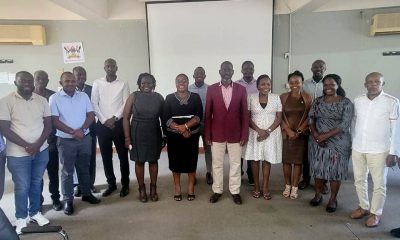
Some of the Members of Top Management that witnessed the handover ceremony. Handover of Office of Deputy Vice Chancellor (Finance and Administration)-DVCFA from Prof. Winston Tumps Ireeta to Prof. Henry Alinaitwe, 4th May 2026, Council Room, Main Building, Makerere University, Kampala Uganda, East Africa.
Some of the Members of Top Management that witnessed the handover ceremony.

Prof. Alinaitwe who previously served as Acting (Ag.) DVCFA from 16th November 2021 to 19th February 2025 congratulated Prof. Ireeta upon the various accomplishments registered during his term. He equally pledged to work with colleagues who vied for the same position i.e. Prof. Ireeta and Prof. Eria Hisali to bring their ideas on board for the good of Makerere University. On behalf of the University Management, Prof. Sarah Ssali presented Prof. Ireeta (in absentia) with a plaque in appreciation of his dedicated and exemplary service as Ag. DVCFA.

Mark Wamai

Continue Reading

Trending